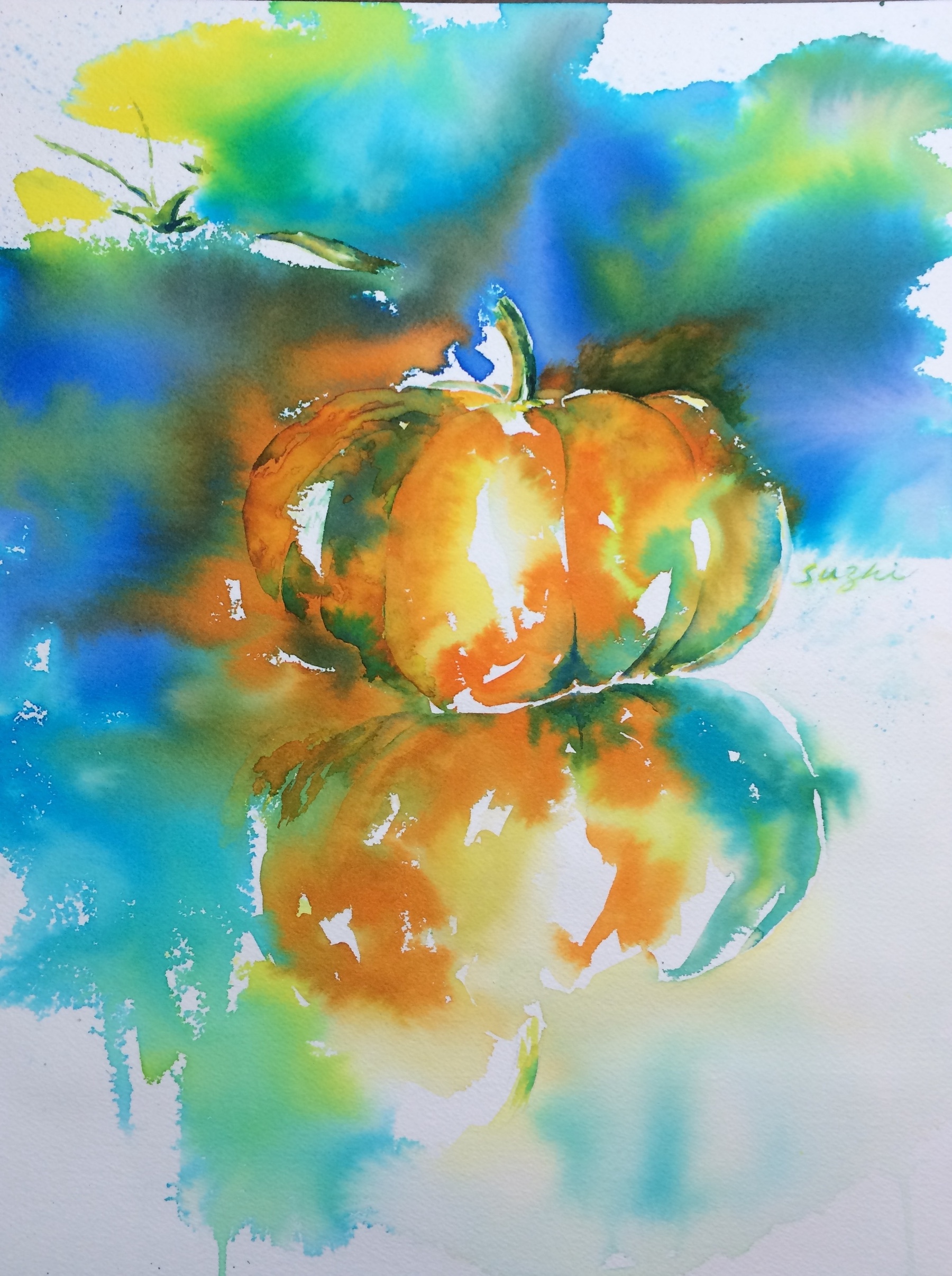
Nothing spooky here, just an old pumpkin! I can’t recall when I did this, maybe 10 years ago, when I could still feel the “water” in watercolor. Time flies!
Pumpkin, watercolor on paper, 9 x 12, 2015
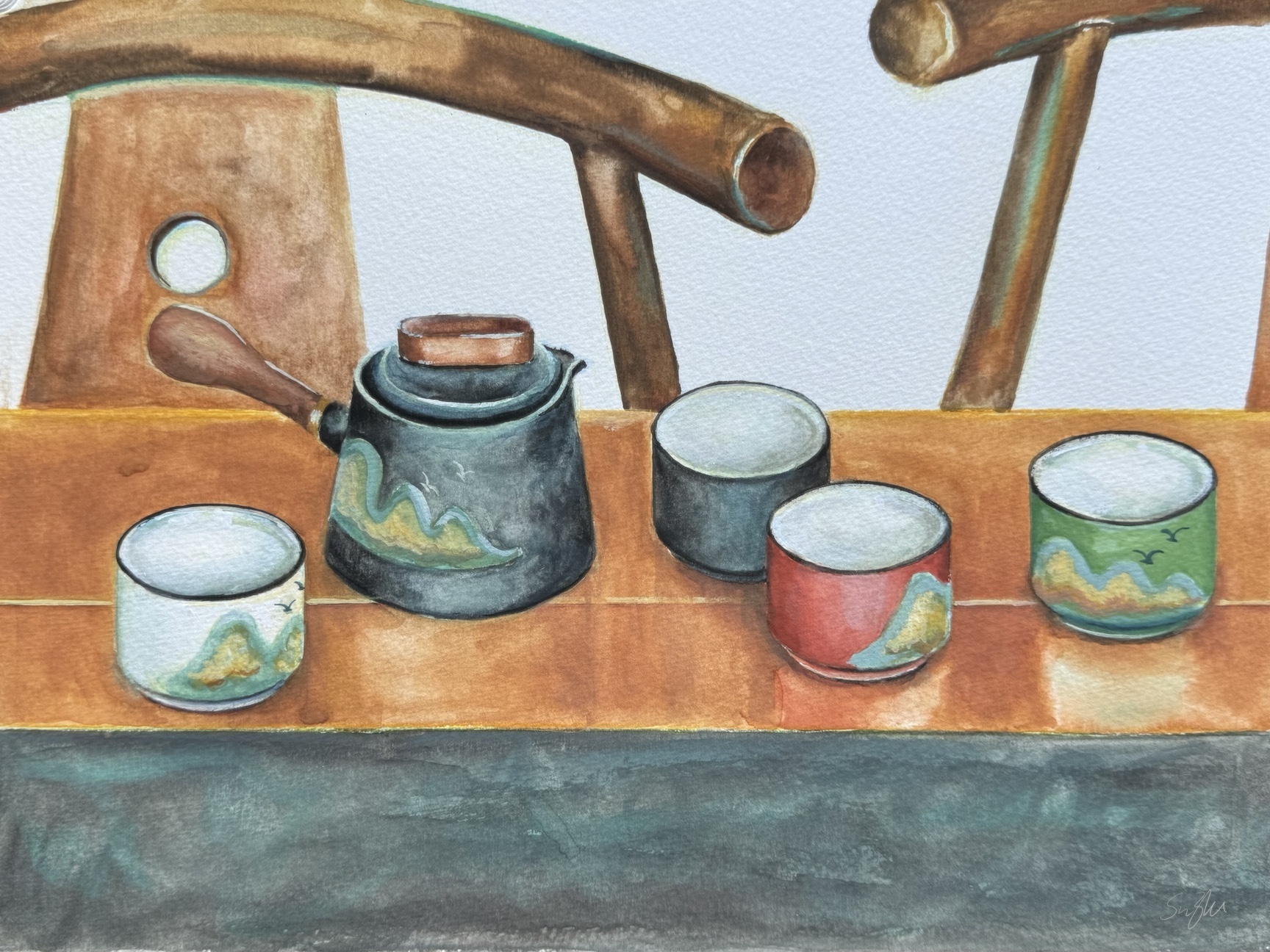
In the past, when I travelled, even with those lengthy stays abroad, I didn’t do any art. These past months when I stayed in China, inspired by all the art shows I attended (I will talk about these more in the future), I thought I should have kept things going. Oil being too troublesome, I managed to find watercolor paper and paint. My intention was to do some quick sketches or simple paintings, and these are what I’ve done:
Tea-set, watercolor on paper, 9 x 12, Sept. 2024Fruit plate, watercolor on paper, 9 x 12, Oct. 2024
I found myself using watercolor the same way I use oil paint – controlled and layered. Despite their tight look, I didn’t spend that much time on each of these pieces, mainly because I gave up. I could have fine-tuned a lot more details, further emphasized the shadows and highlights, etc., but that was not what I set out to do. I missed the singing and dancing of colors in water.
In a way, the old pumpkin painting was not finished either, and the values probably don’t make sense. However, it was fun, and in my mind, it was what watercolor is supposed to be.
I am not upset though. I haven’t practiced watercolor for a while so a bit lack of touch is fair game. I like my compositions and color choices, and that’s something. Most importantly, I didn’t let the trip completely cut off my art practice, and that’s quite a step forward!
Recently in Beijing, I had the chance to visit Eternal Spiral IV, an exhibition by Taiwanese-American artist James Jean. It was a revelation. Jean began his career working for DC and Marvel, before transitioning fully to fine art in 2008. This exhibition showcases more than 200 pieces spanning over two decades of his creative journey, including paintings, sculptures, animations, installations, and even tapestries—a true multimedia experience.
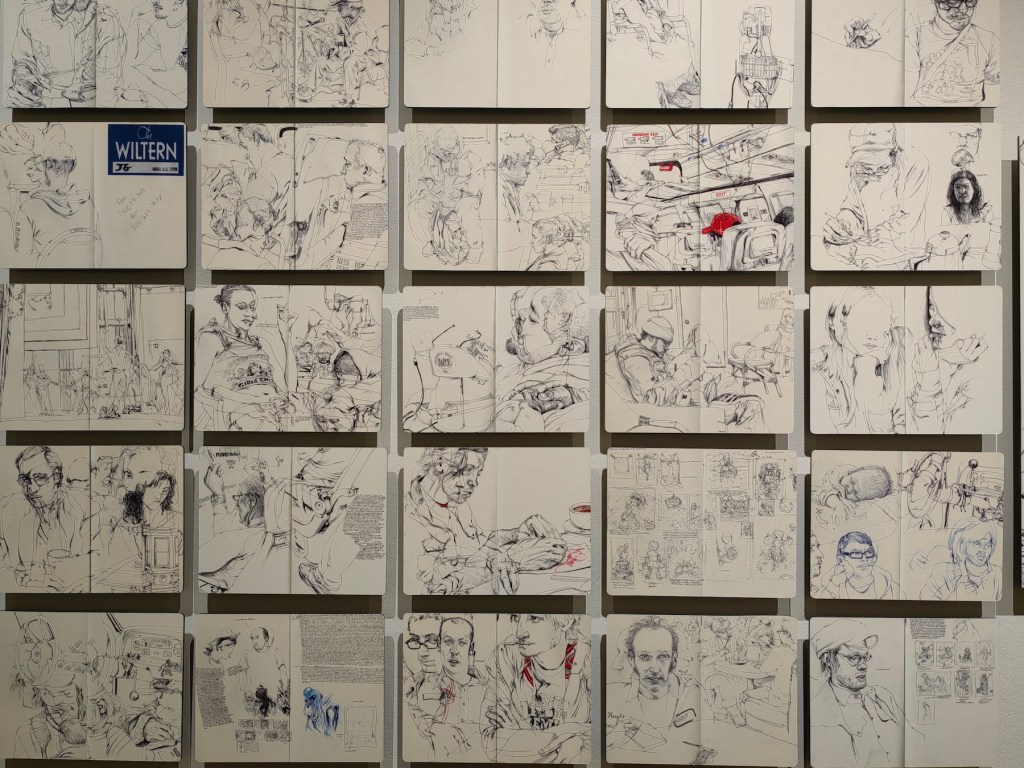
The exhibition begins with Jean’s sketchbooks and drafts. These aren’t just technical studies; they offer a rare glimpse into his process. His lines are filled with energy, precision, and constant revision. As someone who has always been afraid to sketch freely, seeing how even a master like Jean frequently changes his mind, makes mistakes, and abandons ideas was oddly reassuring. It made me realize that sketching is a form of exploration, a space to make mistakes and grow, not something to shy away from due to fear of imperfection.
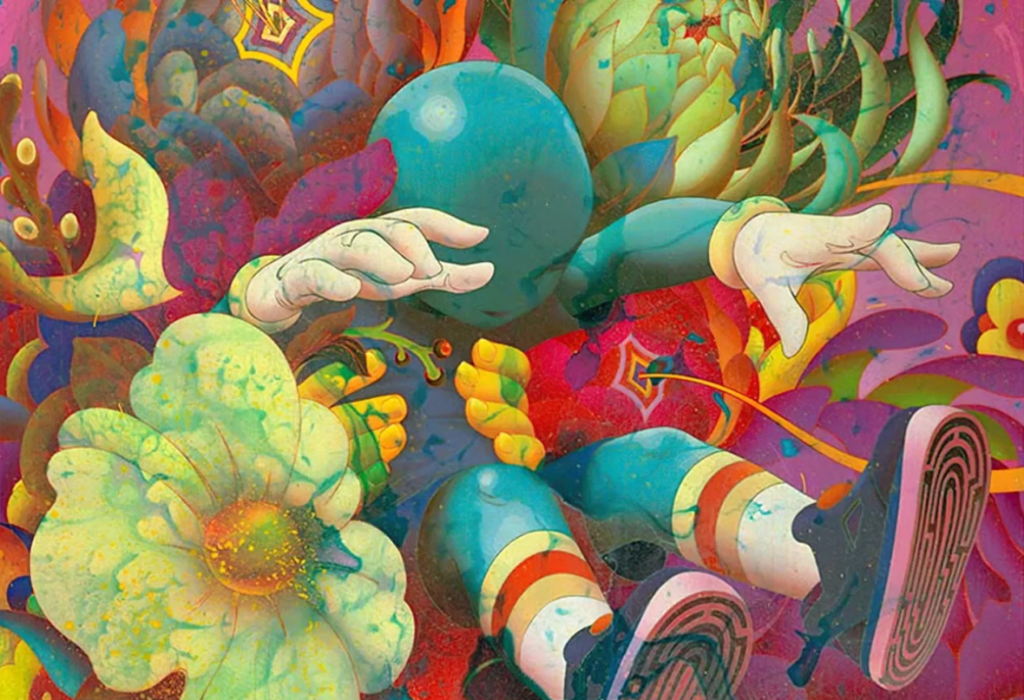
From sketches, the exhibition moves into Jean’s paintings, mostly done in acrylic. His style is a fusion of cultural influences that reflects his identity as a “cultural nomad.” He draws from sources as varied as Chinese scroll paintings, Japanese woodblock prints, and Baroque art, blending them seamlessly with contemporary culture and digital techniques. The result is a layered, intricate narrative that feels at once both timeless and modern. His dream-like compositions often depict creatures and plants spilling out of the canvas, creating fantastical worlds where reality and fantasy blur together. These hallucinatory landscapes are vibrant yet tranquil, chaotic yet serene—like stepping into someone else’s dream. He plays with delicate lines and bold colors, using vibrant pinks, blues, oranges, and golds to make his worlds feel alive. “I enjoy making colors vibrate against each other to create sparks in the eye,” Jean said.
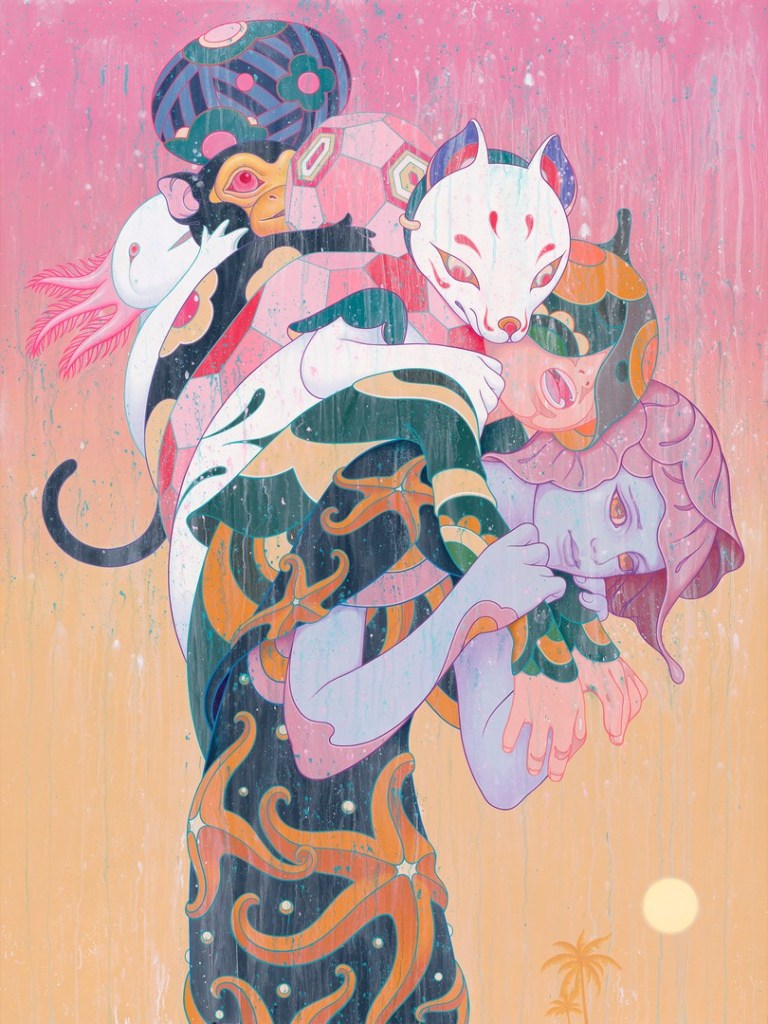
BanquetIIPiggiback
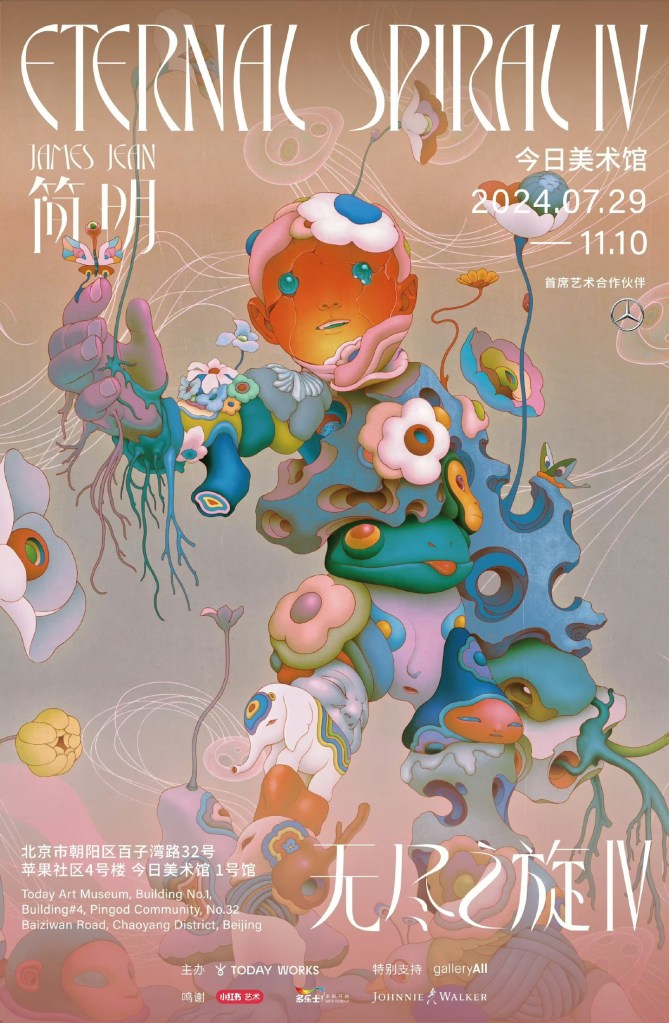
The keynote painting of the show was Jean’s newest piece, Chimera, inspired by a visit to the Kaiyuan 开元 Temple in Quanzhou 泉州, Fujian 福建. The temple’s “Kirin Wall” and the tangled banyan roots influenced the composition, which also weaves in Jean’s personal family history. His ancestors were from Fujian, but much of that history was lost when his grandparents moved to Taiwan. In Chimera, the roots reach out, searching for something to grasp, much like Jean’s own search for his heritage. Quanzhou happened to be my ancestral home too, and I have visited Kaiyuan Temple as a child. To some extent, I resonate with the tension between the desire to search for one’s root and the acute sense of disconnection. Jean has talked about the creation of this painting on his Instagram.
Chimera as the poster of Eternal Spiral IV
One particularly unique aspect of this exhibition is how it integrates social media. Jean, who has over a million followers on platforms like Instagram and Xiaohongshu 小红书, included 11 time-lapse videos of his creative process. I’d never seen social media incorporated into a gallery setting like this before, and it added an intriguing link between the fantasy world create by the artist and the mundane modern life.
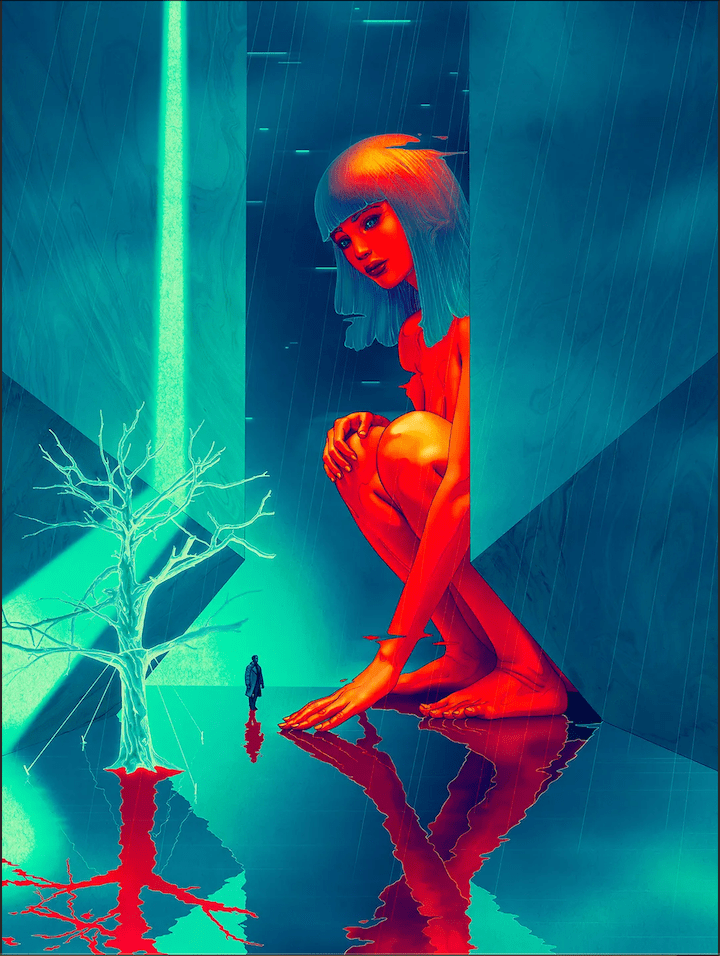
The show includes prints of Jean’s series “Seven Phases,” a collection of 7 paintings representing each member of the beloved K-pop group BTS in the “spirits of flowers”. There are also prints of posters he designed for films like Everything Everywhere All at Once and The Shape of Water. Guillermo del Toro personally asked him to create the poster for the latter, which he rendered in vivid charcoal. My favorite is his poster for Blade Runner 2049— romantic and surreal. Jean’s ability to move between fine art and pop culture, and across different media, speaks to his versatility and boundless creativity.
7 PhasesBlade Runner 2049
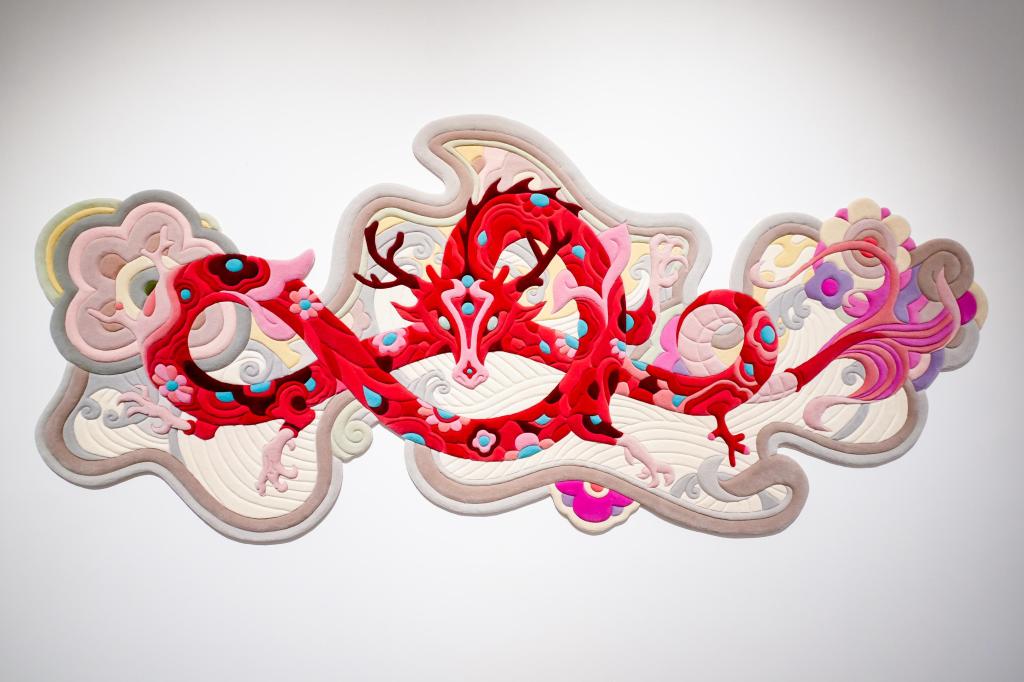
A surprise for me was Jean’s love for tapestries. He has engaged with this unconventional medium for a while and his 2024 piece Year of the Dragon made its debut here. It features a dragon—one of the most powerful figures in the Chinese zodiac—woven from a mix of flowers and plants. The dragon symbolizes strength, but Jean reinterprets it in his signature style, making it feel both traditional and personal. This reimagining of cultural symbols is a recurring theme in his work.
Jean’s versatility doesn’t stop with tapestries. His sculptures, some standing over three meters tall, bring characters from his paintings into the physical world. They blend European myths, Asian folklore, and fairy tale elements. Some sculptures are based on the artist’s painting, and shown with large-scale animation, completing the cycle from 2D to 3D to “4D.”
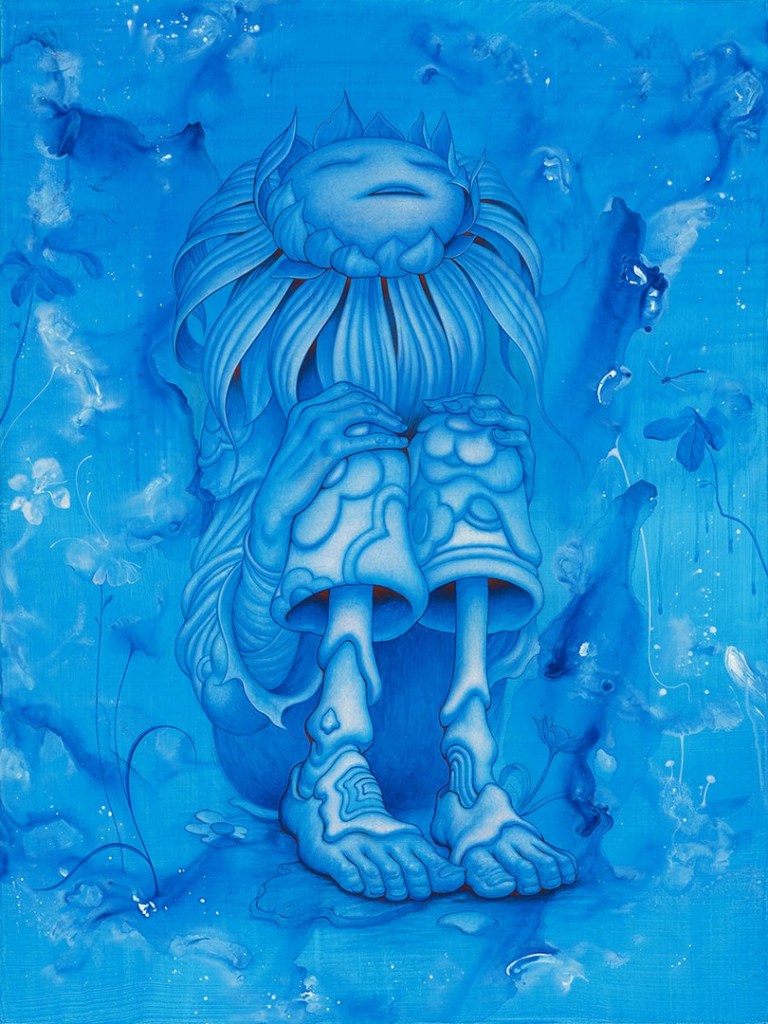
Sunflower (Painting)Sunflower (Sculpture)Sunflower (Animation, please click the image to see the video)
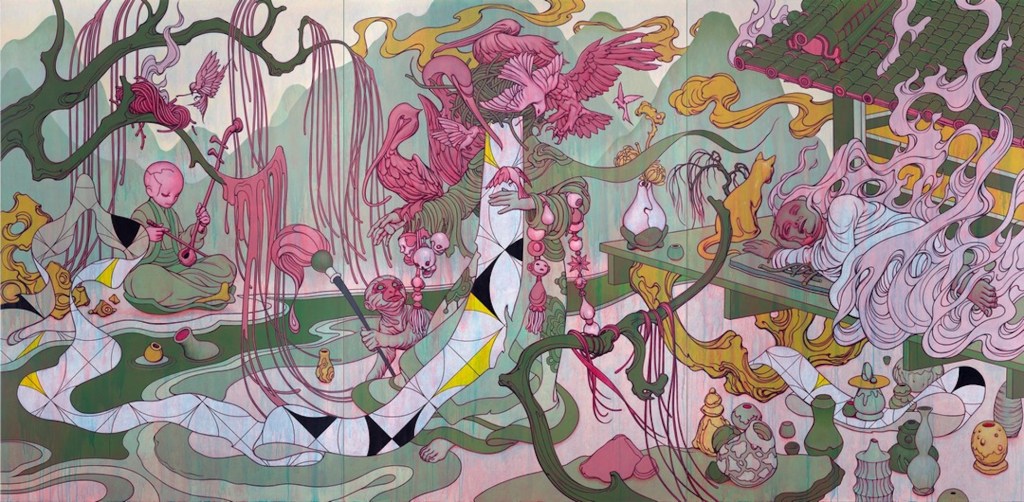
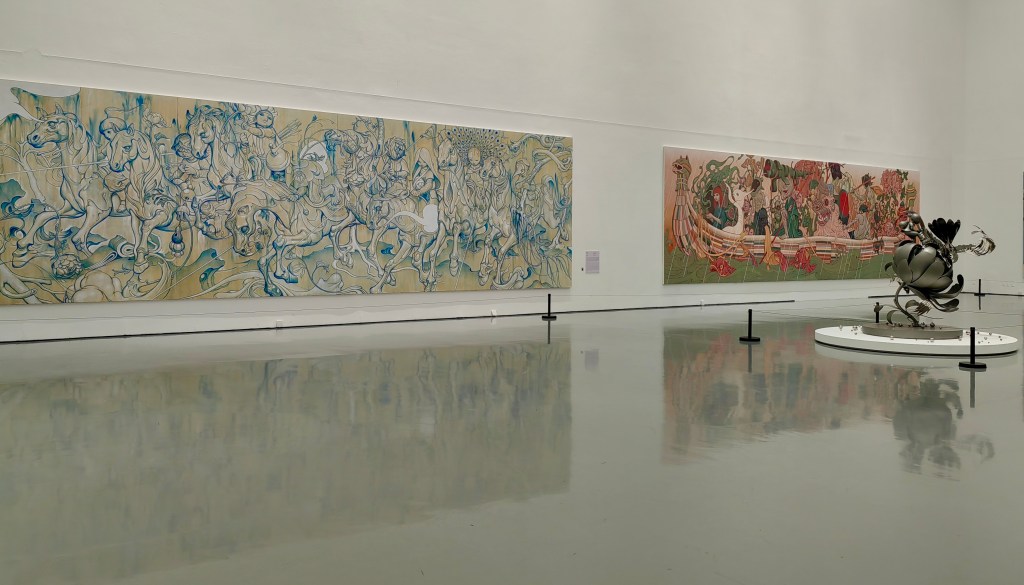
The final room of the exhibition left me in awe. Six massive paintings, each over 10 meters long, sprawling yet detailed, demonstrating Jean’s ability to create on both an epic and intimate scale. Descendants—Blue Wood, inspired by Seoul’s Lotte World Tower and the fairy tale Jack and the Beanstalk. Aviary depicts an imagined world inspired by Chinese folk legends. Monks, bird deities, erhu … many traditional Chinese elements intertwine, emerging from the mind of a sleeping monk enveloped in flames. An enigmatic dreamscape!
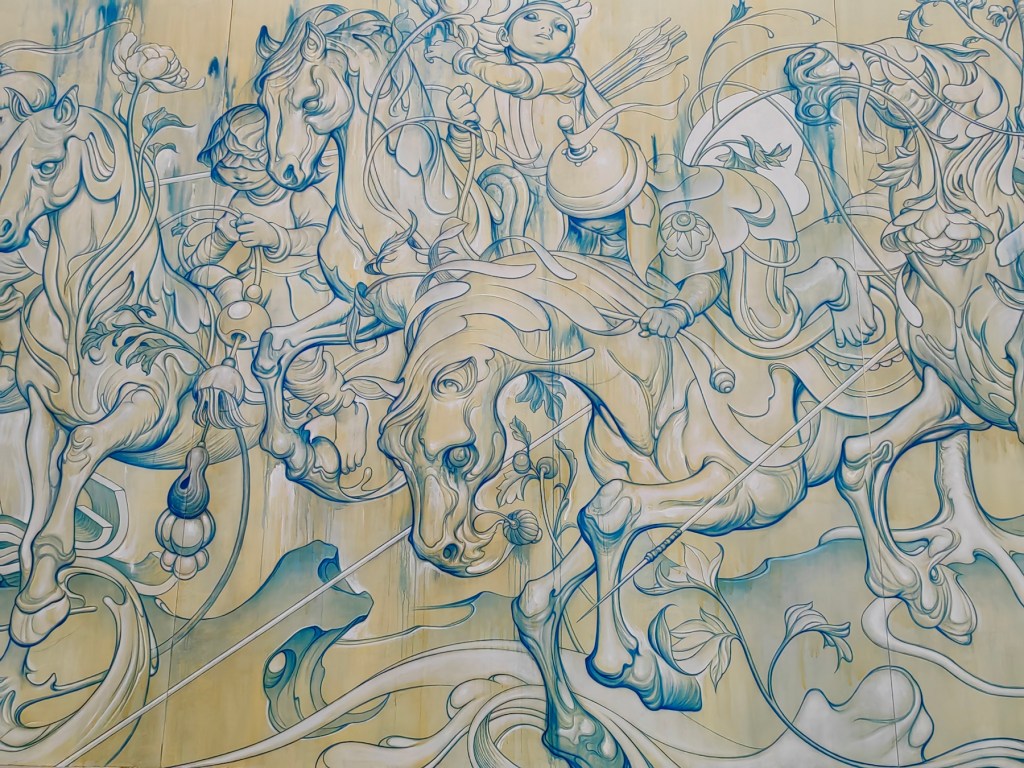
Aviary, acrylic on three canvases, 246 x 120”Stampede and PassageStampede (detail), acrylic on four canvases, 432 x 132”, 2019
Eternal Spiral IV is more than just an exhibition of James Jean’s talent; it’s an invitation into his ever-shifting, multi-dimensional world where dreams, myths, and reality collide. It left me in awe and inspired. In Jean’s own words, “ultimately, it’s about having the freedom to create whatever imagery I want.” I believe that freedom comes from his impeccable skill and dedication to art. While Jean’s art has a distinct style, but he has managed to breakthrough with constant searching for both meaning and new ways of expression.
Did I mention that his first NFT “Slingshot” was sold at $469,696.35? I have also picked up my long abandoned sketchbook. 🙂
Slingshot (3m tall statue, part of the “Pantheon” collection in the show)






 ZHI SU