Category Archives: Ramblings

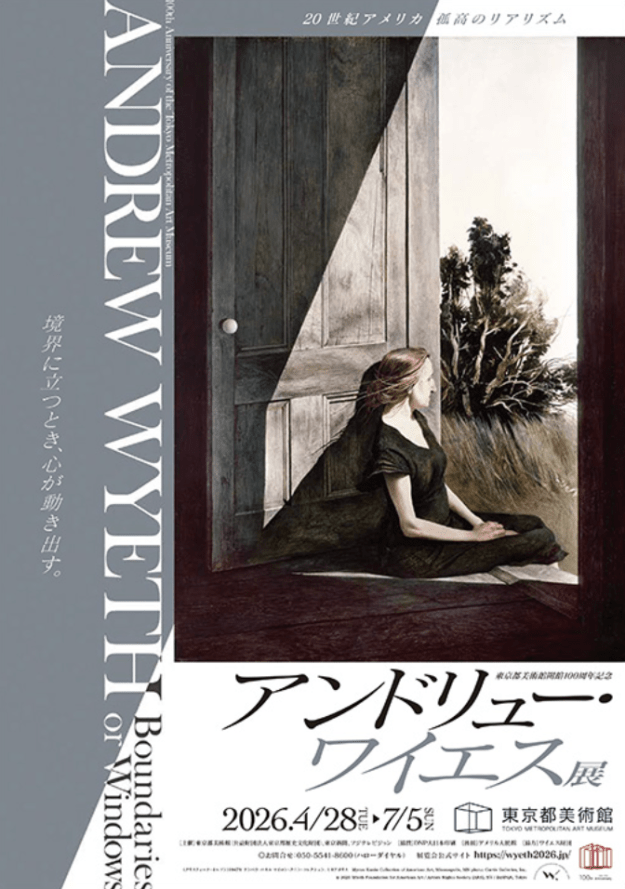
Chasing Andrew Wyeth Across Continents: The Tokyo Show and What Lingers

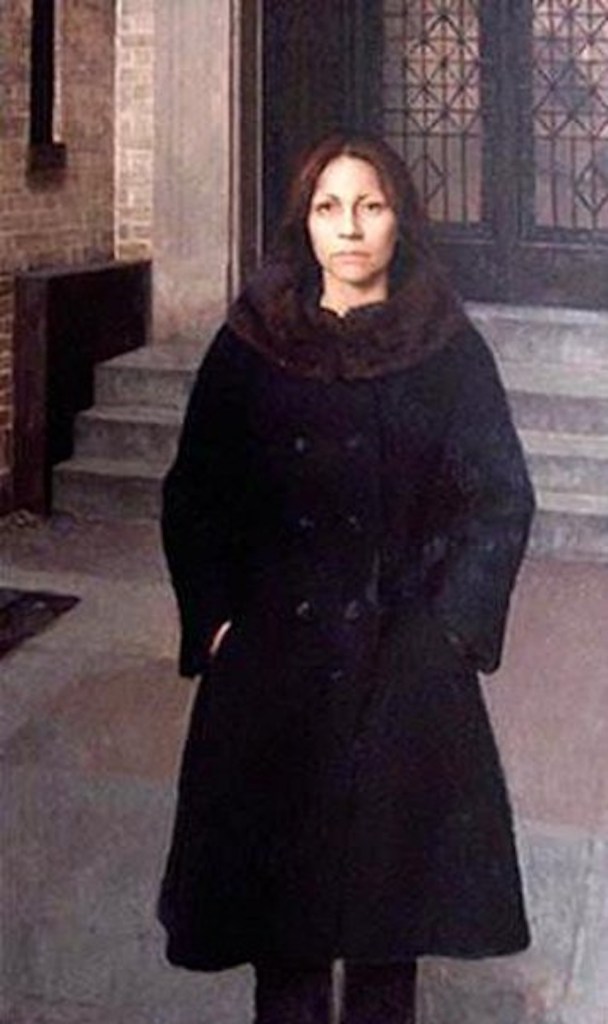
There are two museums in America that hold major collections of Andrew Wyeth (1917–2009). The Farnsworth Art Museum in Maine and the Brandywine Museum of Art in Pennsylvania. The latter happened to be on my way from Ithaca to Philadelphia. I had every intention of stopping by, but life (and flight schedules) had other ideas. Instead, I found myself in Tokyo two weeks later, standing in the crowded galleries of the Tokyo Metropolitan Art Museum for their major retrospective, Andrew Wyeth: Boundaries or Windows. It felt fitting, almost inevitable, like I was chasing Wyeth around the globe to catch another facet of his quiet, persistent vision.

The show had already been running for six weeks but was still packed. The audience ranged in age and felt noticeably younger than some of the more sedate crowds I have seen in San Francisco museums. The exhibition was organized around the theme of “boundaries,” a motif that appears repeatedly throughout Wyeth’s work through windows, doors, frozen waterways, and distant landscapes. Rather than following a strict chronological order, it was divided into five sections: The Painter Andrew Wyeth, Light and Shade, The Olson House in New England, An Expanding vision, Boundaries or Windows. This arrangement let the show move from who Wyeth was and how he worked, through the way light and shadow carried ideas of life and death, to the central role of the Olson House, then outward to a broader vision, and finally to the boundaries theme that pulled everything together. It was well-curated and thoughtfully organized around that single idea, and it gave me plenty to think about long after I left.

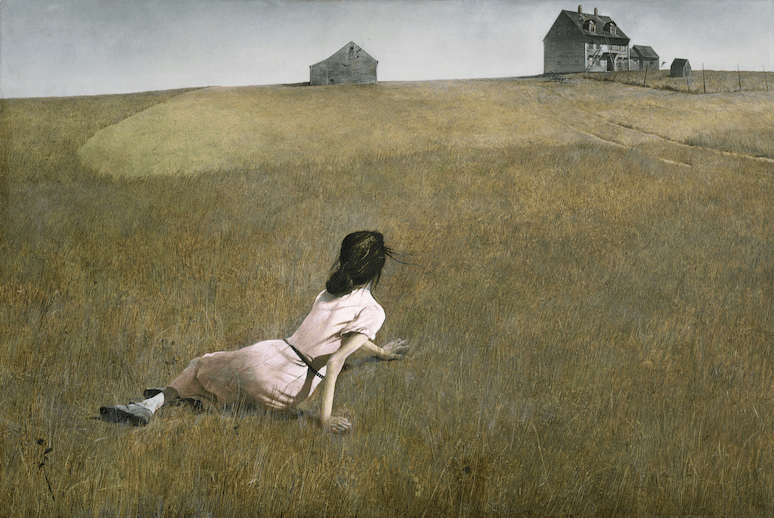
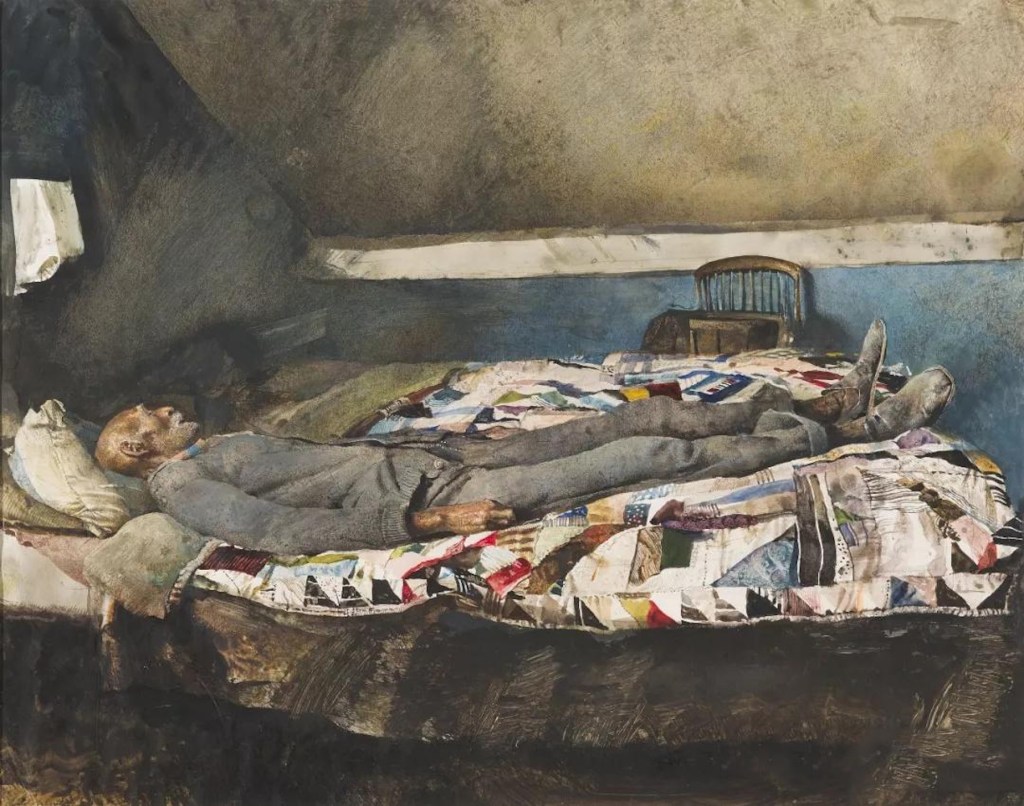
My initiation with Wyeth came in a composition class where we studied famous paintings using the concept of notan, trying to divide the composition into black and white. Artists like Winslow Homer, Norman Rockwell, and Wyeth were the easiest to analyze because they rely on strong value contrast and clear geometric divisions. With Wyeth especially, many paintings feel built from big, simple shapes and stark light-dark separations. Yet the closer I looked, the more questions appeared. Christina’s World (1948) and Garret Room (1961) are powerful, deeply humane images, but what about the sharp edges on that distant house, or the way the brightest white almost pushes out of the frame? Where does that quiet uneasiness come from?

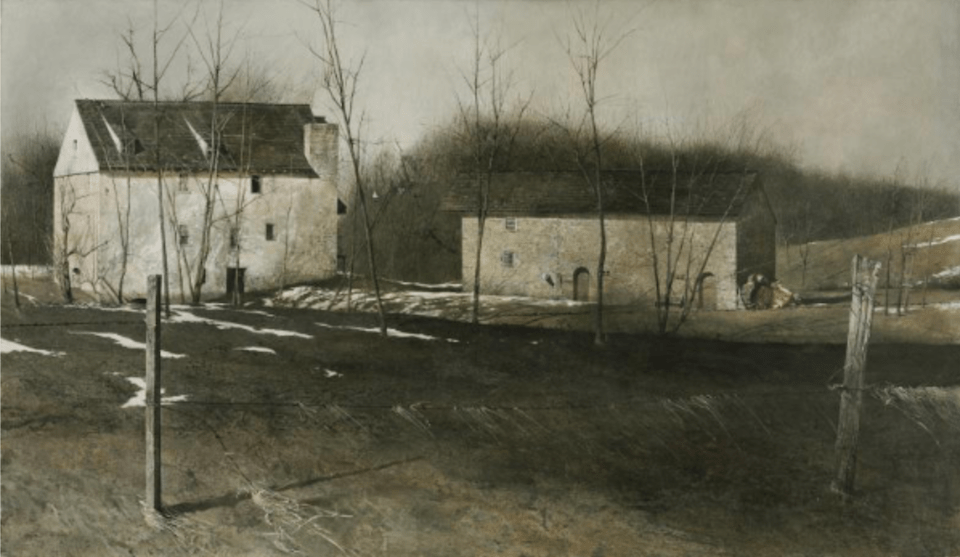
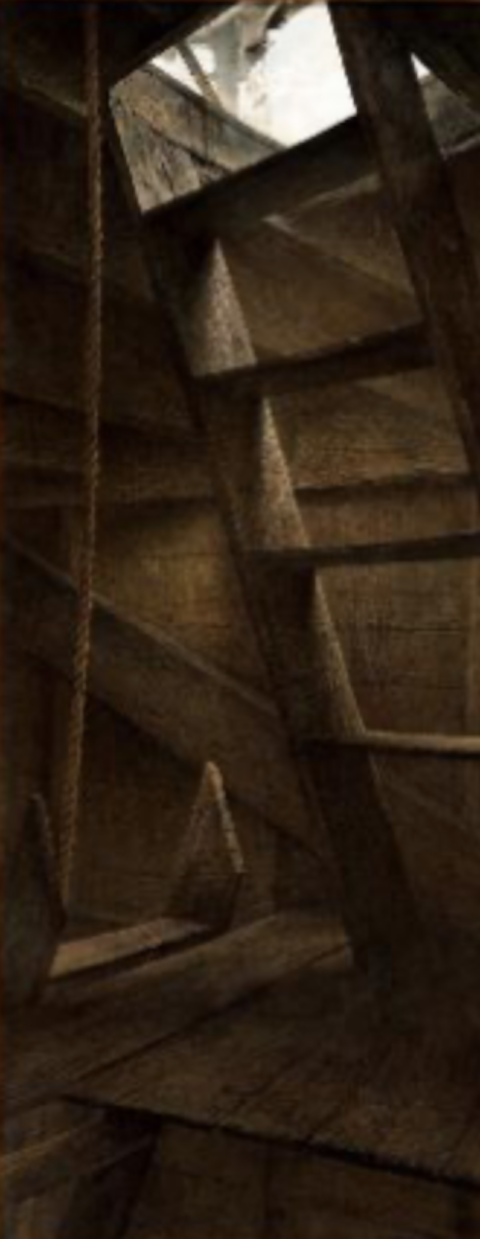
The Mill, 1962

Standing in the Tokyo galleries, the first thing that struck me was the wintery, subdued color palette. The lack of bright color gives the work a certain pressure and presence, but it also feels familiar, almost like the restraint of traditional Chinese or Japanese ink painting. Most of Wyeth’s subjects come from just two places: Chadds Ford, Pennsylvania, where he was born and lived much of his life, and Cushing, the small coastal town in Maine where he spent summers for decades. His work grew out of the narrative tradition of Winslow Homer and Victorian storytelling, but he turned it toward the hunters, farmers, and ordinary country people of those two specific landscapes. He captured the lingering spirit of frontier values, the loneliness of labor, the struggle with nature, and the quiet will to endure. To some critics it looked merely regional. To the wider public, it reads deeply American, and it traveled. 

Though his father, the famous illustrator N.C. Wyeth, taught him directly, Wyeth grew up feeling somewhat overlooked in that large artistic household. He had a solitary, introspective childhood. You might assume the pale palette mirrors that inner life, but he always insisted he was simply staying true to what he saw in nature. He once remarked that he had complained more than once about his paintings looking too pale and washed out, yet the colors he chose matched the country he lived in. Winter colors here are exactly like that. If he came across a blue robin or anything bright and colorful he liked it, of course, but for him the colors of nature were always best.

Then there is the composition I had already noticed in class. Strong value contrasts, clearly defined shapes, and big masses of dark and light create tension and focus. Wyeth himself said the sense of movement in his pictures came from careful arrangement and composition rather than expressive brushwork. From a distance many of the paintings read like abstract arrangements of shape and value. His unconventional cropping and vantage points echo experiments I saw in Utagawa Hiroshige’s (1797-1858) ukiyo-e prints “One Hundred Famous Views of Edo” at the Ota Memorial Museum of Art, another crowded Tokyo show that made the connection feel alive.

Close looking reveals his process. He started many works with loose, quick watercolor washes, then shifted into tempera, using drybrush on the elements that mattered most to him. “Drybrush is layer upon layer,” he explained. “It is what I would call a definite weaving process. You weave the layers of dry brush over and within the broad washes of watercolor.” Some people think painstaking realism signals emotional detachment. With Wyeth the opposite is true. The care feels like deep attention, almost tenderness. He often ignored the rules art teachers drill into students. Perspectives can feel skewed or emotionally distorted rather than optically correct. Edges sometimes stay sharp or textured even in the distance. The brightest highlights or deepest shadows land where they create the strongest feeling, not where conventional light logic would place them. These choices make his subjects feel a little uncanny, charged with psychological weight rather than simple description. His realism was never just a polite counterpoint to Abstract Expressionism. It was its own distinct thing, rooted in feeling, memory, and inner projection. The works read like personal novels that somehow remain universal.

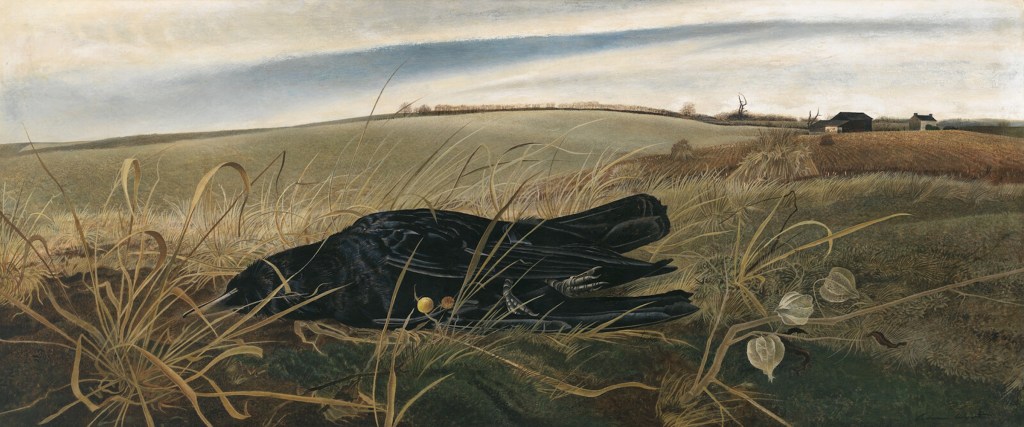
Winter Fields, 1942

Take Winter Fields (1942). The composition and brushwork are stylized, not strictly true to life, yet the painting still feels natural and real. It shows a dead, frozen crow he found near his home in Chadds Ford. He brought the bird into the studio, sketched it, and painted it in exquisite detail from a low, worm’s-eye view that makes the small creature loom large against its surroundings. The painting was made during World War II, and the stark image of a dead bird in a bleak field recalls dead bodies on battlefields. Despite the apparent precision, the distant trees are rendered as sharply as the crow in the foreground, something the human eye would not actually see. The effect compresses space toward the picture plane and is strengthened by the delicate, overlapping blades of grass that form a lace-like surface pattern. In the middle of the war he once remarked that you do not need to paint tanks and guns to capture its feeling. You should be able to paint it in something as simple as a dead leaf falling from a tree. In remote Chadds Ford he did exactly that, letting nature and landscape carry poignant narratives of loss.

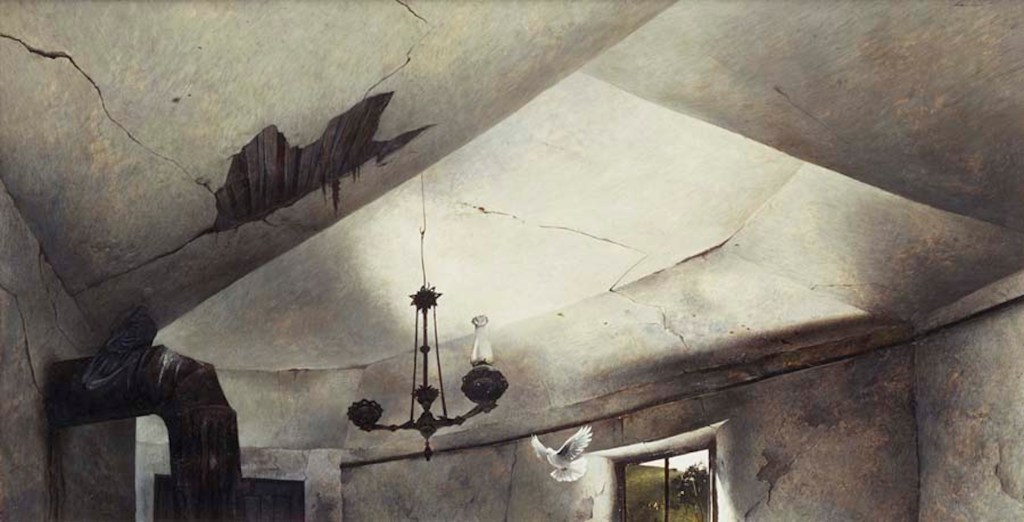
Mother Archie’s Church, 1945
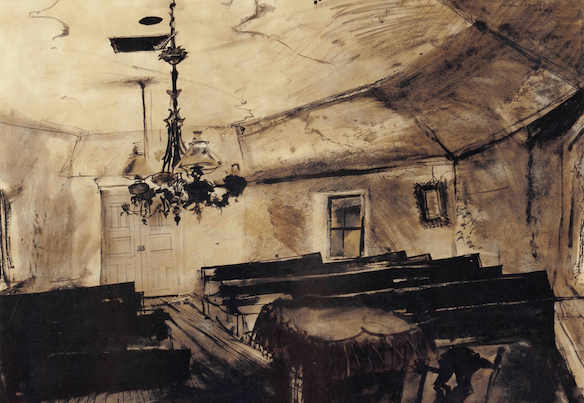
Mother Archie’s Church Study, 1945 (Not in the Tokyo show)

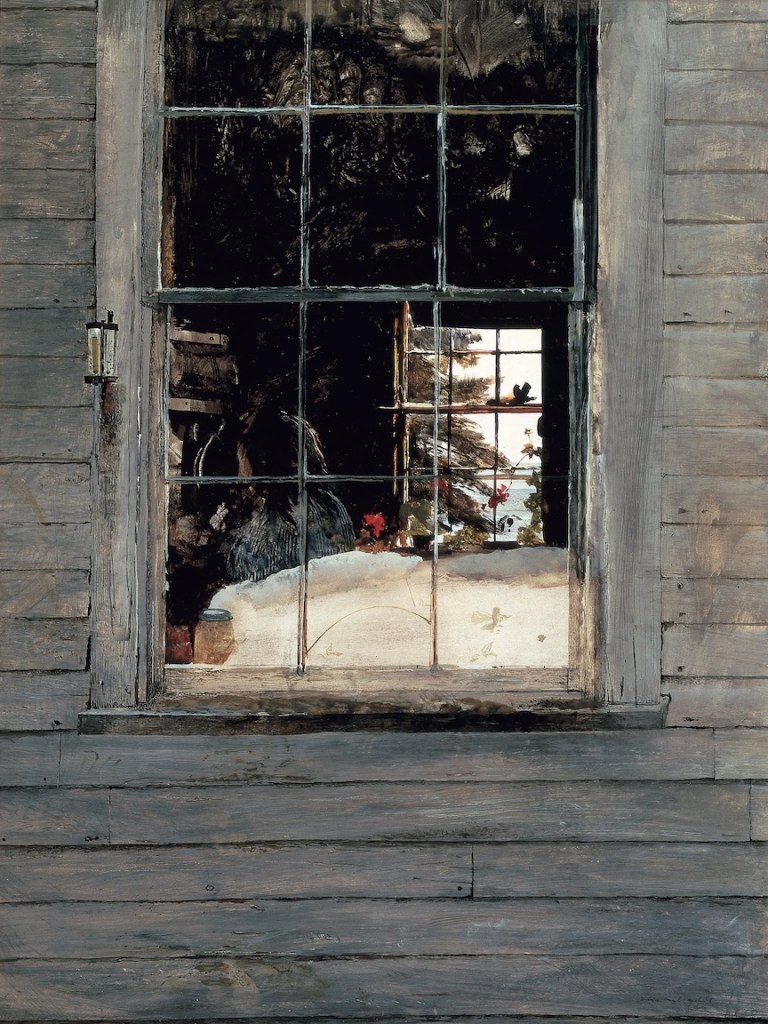
Grass is not the only place he hid a bird. In Mother Archie’s Church (1945), do you see the crow in the shadow? Without the white pigeon, the painting would read almost as an abstract play of shapes and value. The old Quaker meetinghouse stood on the site of the bloody Battle of the Brandywine and later became a church for the local Black community. By the time Wyeth painted it the building was already collapsing. He remembered attending services there occasionally, but eventually the building collapsed. As if reluctant to dwell in the sense of loss, the light illuminates and animates the pigeon and lifts the whole image into something more allegorical and cinematic. Especially when you track down the preparatory study for the work, the storytelling becomes more obvious. In fact, a lot of his paintings remind me of the cinematography in The Assassination of Jesse James by the Coward Robert Ford. Lingering lights, vast bleakness, solitary figures, all pregnant with narratives. Time feels slowed and charged with things left unsaid.

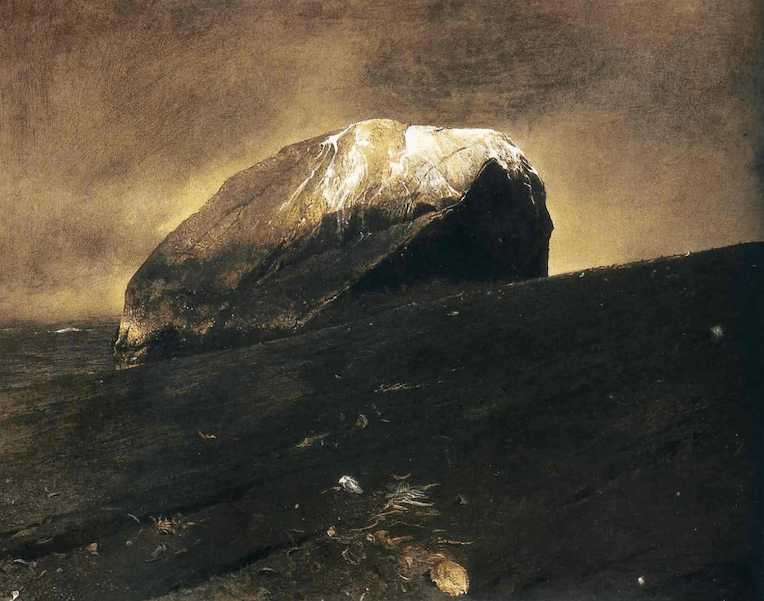
Flint, 1975

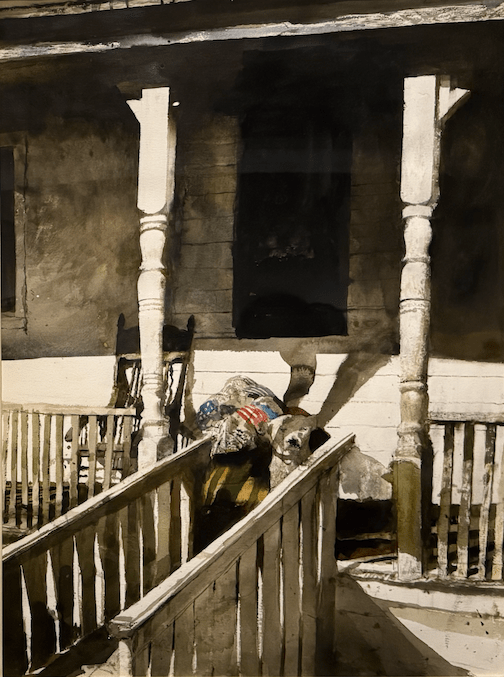
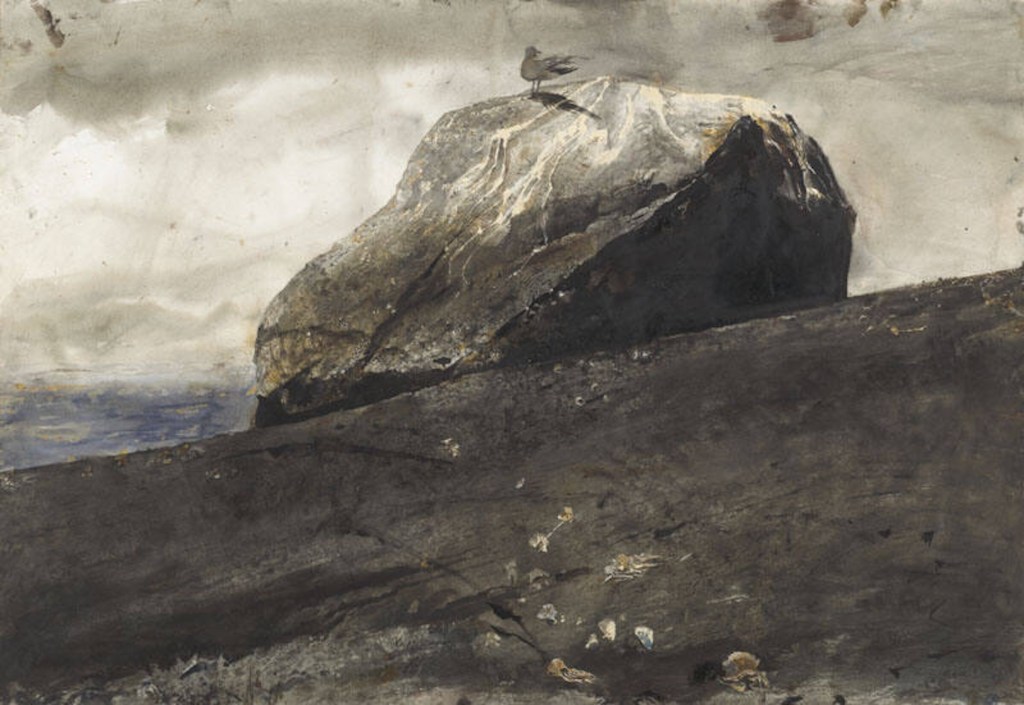
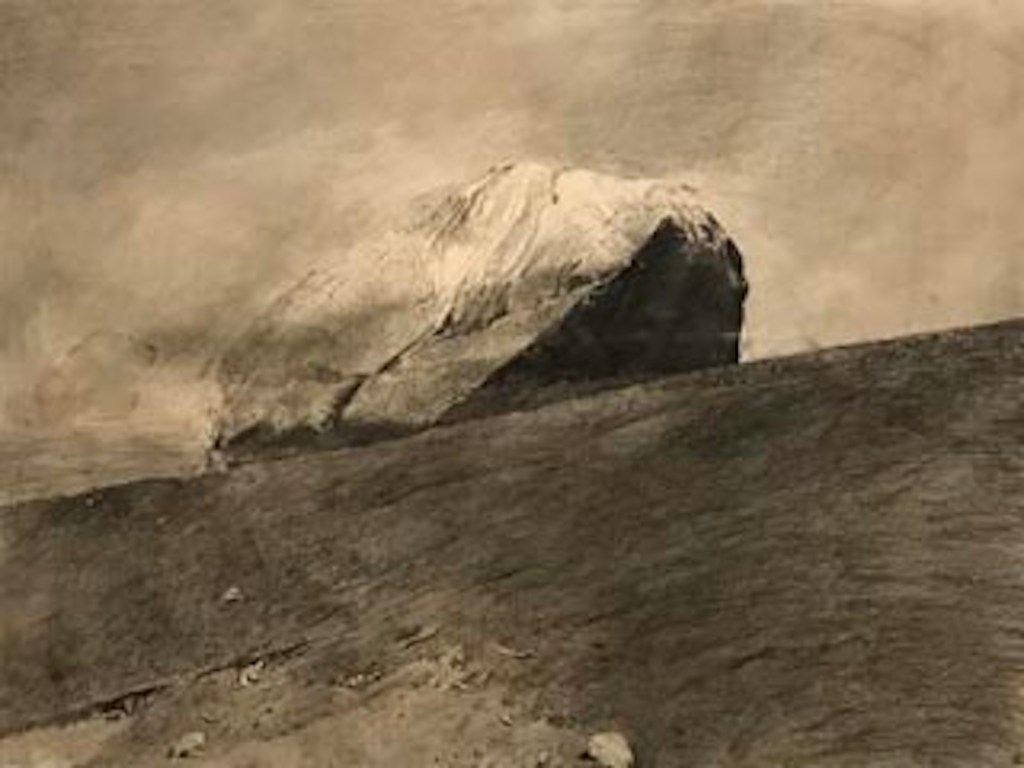
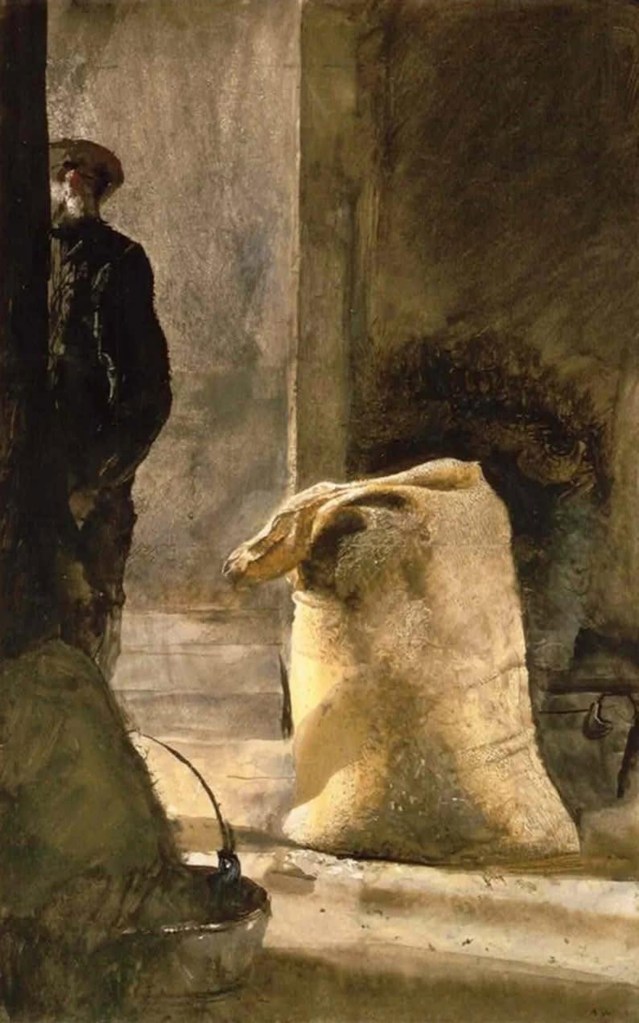
Flint (1975) is another case in point. Wyeth made several studies for it. In one the stone sits dead center with a seagull perched on top. In the final version he shifted the stone slightly off center, removed the bird, and added delicate highlights to the shells and fish bones in the foreground. The flint still reads as monolithic and eternal. The single dramatic light from above turns it into the central character of its own small drama. In Wyeth’s imagination, things like rocks or boats could stand in as metaphorical portraits or even self-portraits. He often drew parallels between the rocky Maine shore and the weathered lobstermen and fishermen he knew. Grain Bag from 1961, for example, he considered a portrait of Alvaro Olson, Christina’s brother. 

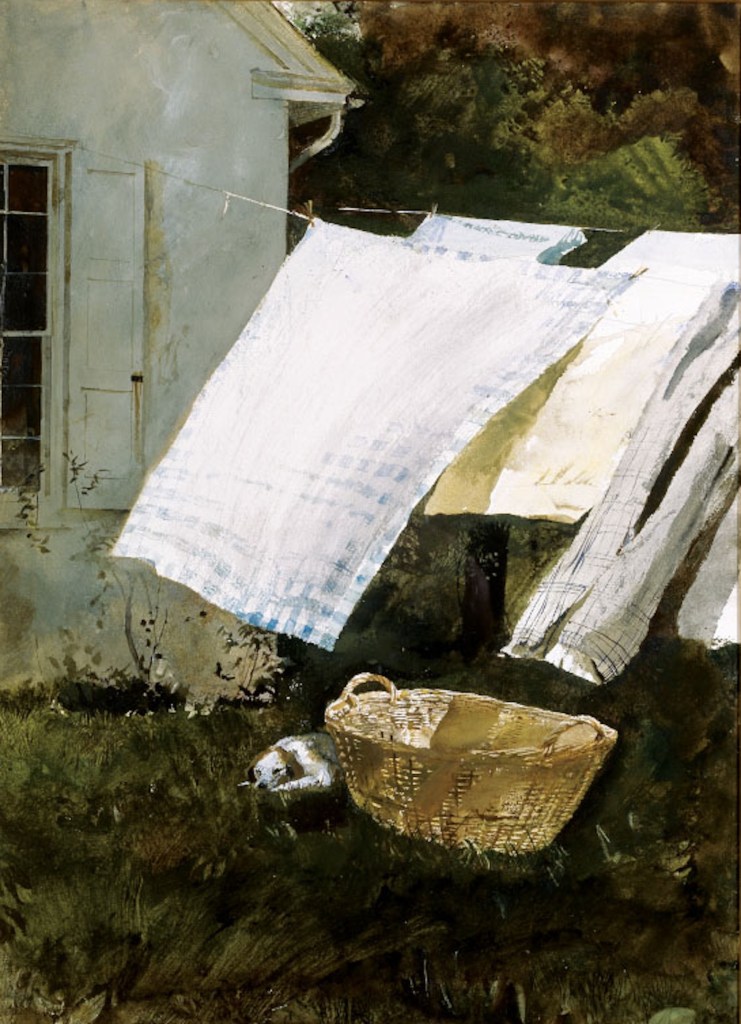
Wyeth once said, “I’m very conscious of the ephemeral nature of the world. There are cycles. Things pass. They just do not hold still.” It is almost as if his task was to eternalize a passing moment. The statuesque flint does that. So does the wind in Light Wash from 1961. The scene is set in Chadds Ford and shows the back of a house with a laundry line full of clothes drying in the breeze. A small dog rests behind a straw laundry basket. The contrast between the light-colored laundry and the darker surroundings is carved out with sharp lines, almost like a boundary. Yet the two worlds are not frozen apart. The wind is clearly moving the laundry, blurring and crossing that division. The basket below hints at the moment just before or after, while the dog, the only living presence, could stir at any second. He catches solitude, movement, and something more.

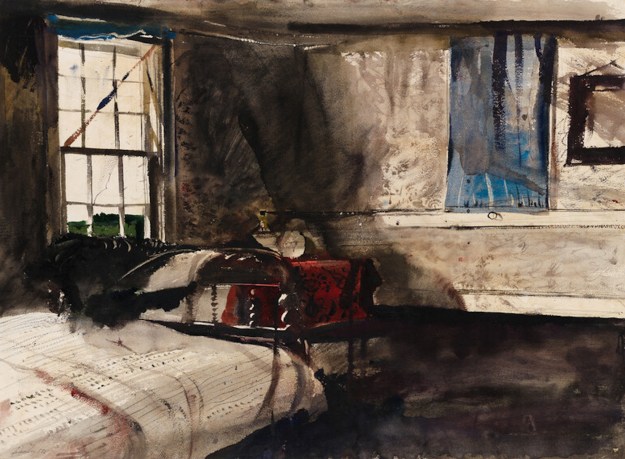
Spool Bed, 1947

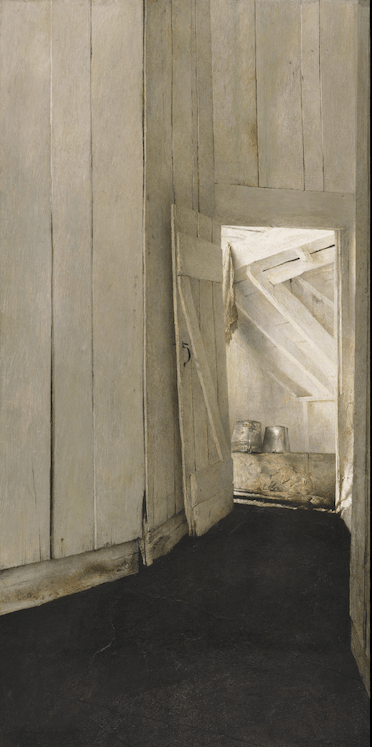
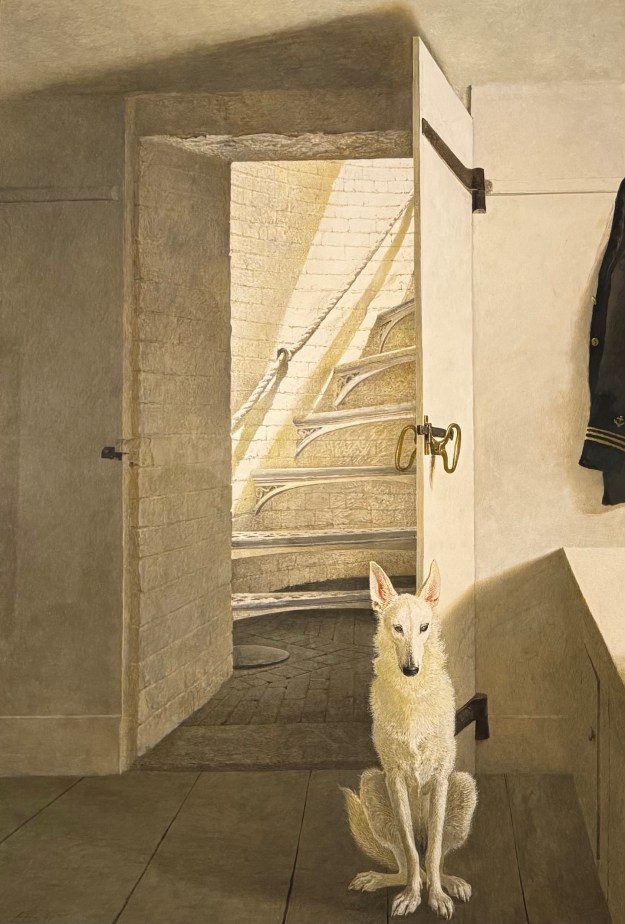
Two of my favorites from the show were both interiors, one earlier and one later. Spool Bed from 1947 has a muted overall palette but uses more saturated color for accents. The wet areas feel less controlled. Black ink bleeds softly into the surrounding space. Broad, expressive brushstrokes and lines of varying weight run and cross, yet what comes through is a dead silence, a sense of desolation. Light Station from 1983 shows the interior of a lighthouse on tiny Southern Island, Maine, which the Wyeths owned. The family dog Nome sits obediently in front of a door that opens onto a staircase leading up. Light from the lighthouse spills down from above. Positioned by the entrance, Nome seems to guard it. If the spool-bed painting carries a ghostly, abandoned feeling, this one feels meticulously kept and watched over. Notice where Wyeth placed his darkest dark and his whitest white. The painting still holds its balance. While you look at the elegant dog, your mind keeps wondering where the owner of that half-shown sailor jacket went, and where those stairs actually lead.

Light Station, 1983

I kept thinking how naturally all of this sits with certain East Asian sensibilities. The quiet melancholy, the sense of accumulated time and memory, the way life and death feel continuous rather than opposed, the faint hope glimmering inside desolation. It resonates with ideas of impermanence and the Japanese sense of mono no aware

Wyeth’s deep independence, his refusal to chase whatever happened to be fashionable, reads as profoundly American. That same independence also spoke to artists in China in the 1980s. At a time when many young painters were still working under the long shadow of Soviet-style revolutionary realism, Wyeth’s pictures arrived like a revelation. His quiet, desolate yet poetic style, focused on the inner life of ordinary people, offered something different: a way to hold on to hard-won figurative skills while leaving room for personal feeling, small sorrows, warmth, and poetry. The “Wyeth wind” that blew through Chinese art circles back then has not entirely died down. As one observer put it, his work showed that art did not have to be about t grand historical or ideological themes. It could simply attend to the small joys and sorrows of everyday life with honesty and craft. Wyeth’s simplicity and seclusion feel almost like the ancient Chinese hermits. As Tao Yuanming put it, “There is true meaning here, yet when I try to speak of it I forget the words.”

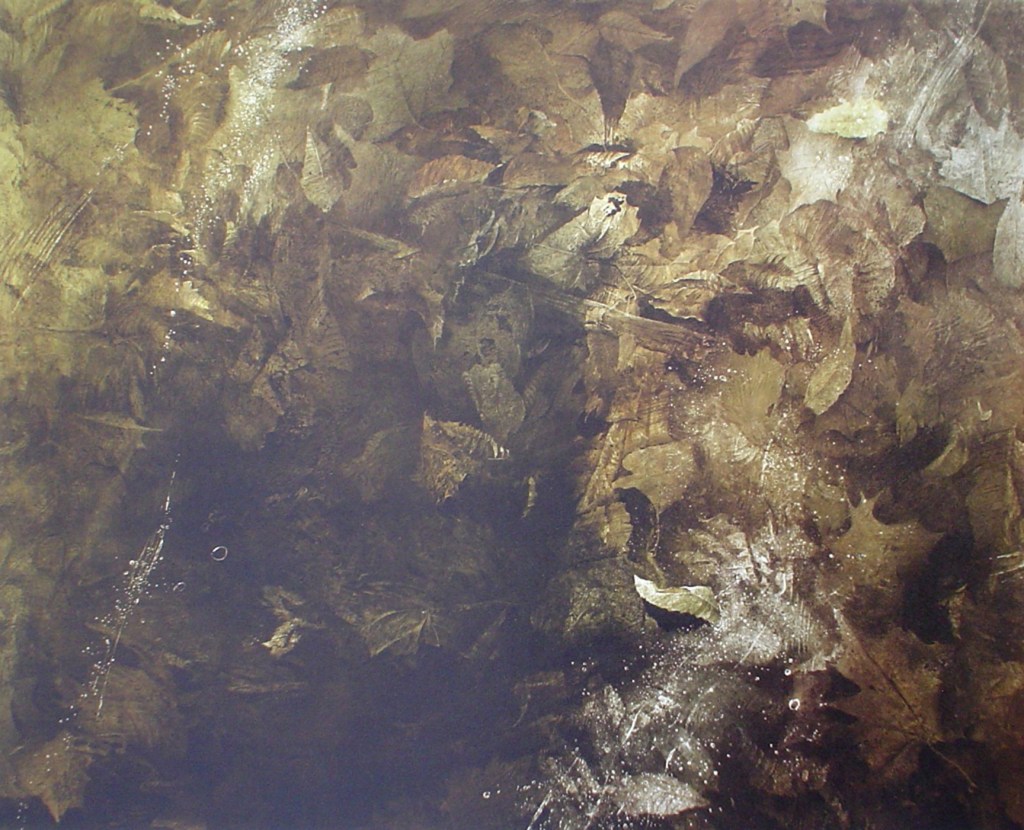
Thin Ice, 1969

That possibility still feels radical. These days contemporary sections in museums across continents can start to blur together, concept-heavy, visually thin, strangely interchangeable. Wyeth’s stubborn commitment to place, technique, and inner truth stands out. He stayed true to himself, to the tools he mastered, and to the emotional and philosophical weight he wanted to carry. The result is work that still draws crowds of all ages in Tokyo, work that feels both deeply local and quietly global.

I left the museum thinking that chasing Wyeth had been worth every detour. His pictures do not shout. They linger. And in that lingering they keep offering the same generous question they have been asking for decades: What if the old tools, handled with care and feeling, are still more than enough? It comes down to purity of heart and a deep, wholehearted passion for art. 

Year-end Ramblings: Shanghai, Installation Art, and More

My previous trips to Shanghai were defined by the city’s kinetic buzz—skyscrapers, street food, and endless energy. This time, however, I dedicated the trip entirely to the city’s rich art scene.

Positioning itself as a hub connecting China and the world, Shanghai offered a diverse array of experiences. I moved from the “30-year Retrospective of the China Oil Painting Society” to the “Guangdong Art Centennial Exhibition,” and then to the “Wonder of Patterns” exhibition from the Louvre. I saw Shanghai’s attempts to bridge time and space: “Comienzo 1922,” connecting Salvador Dalí’s origins in Madrid to the construction of the Bund City Hall, and “Waves in Motion,” a dual solo exhibition by Hong Kong designers Alan Chan and Craig Au-Yeung Ying Chai, which explored the cultures of many Chinese cities. I also saw Shanghai’s tribute to the Fluxus movement that influenced China: “Flux’s, by Chance.”

But the centerpiece of the trip was supposed to be the famous Shanghai Biennale. Founded in 1996 as mainland China’s first international contemporary art biennale, it has long been one of Asia’s most influential cultural events. After a positive experience at the Chongqing Biennale last year, my hopes for Shanghai were high.

This year’s edition, titled “Does the Flower Hear the Bee?”, aimed to operate at the intersection of human and nonhuman intelligence, featuring over 250 works by 67 individual artists from around the world. Most exhibits were installation or multimedia works that occupied vast spaces, often incorporating sound. They were meant to provide an “immersive experience” —the exhibition buzzword of the decade. Yet, walking through the Power Station of Art, I felt a profound emptiness and noisiness at the same time. The installations were not much different from the student shows I have seen at the Central Academy of Fine Arts (CAFA) over the last two decades. Obscure intentions, clichéd designs, and soundscapes meant to be unique to each piece instead bled into one another. I know it is also a cliché to criticize modern art as “flash” or “trying too hard to shock,” but I genuinely felt these works were demanding my attention without providing much in return. There was not much to see, only fatigue.

At the same venue, I saw Lin Tianmiao’s “There’s No Fun in It.” As a pioneer of Chinese installation art, Lin’s work was slightly more compelling than the Biennale. The two thematic axes unfolding in the exhibition—“Body” and “Everyday Objects”—presented a panoramic view of the artist’s continual experimentation with new materials and modes of expression. The “Body” constituted the core of her inward perception and self-reflection, while “Everyday Objects” functioned as vehicles for observing and responding to the external world. The exhibition was intended to invite viewers “to reconsider the fraught entanglements of body and everyday life.” Yet, the amount of space it demanded did not match the experience it provided. Lin Tianmiao states: “Bodily sensation is often the most reliable. It is not only the source of perception but also the material and medium of creation.” While I appreciated the point, I still believe that with great artistry, one can achieve that sensation in the small space of a single painting. That said, the show was coherent in meaning and proficient in technique; I enjoyed it more than the Biennale.

To understand my skepticism regarding installation art, I have to take you back a few decades to when the medium first arrived in China. It burst onto the scene in the mid-1980s amid the modern art wave, heavily influenced by American artist Robert Rauschenberg. Young artists credited him with bringing postmodernism to China, believing it would shape the landscape of Chinese art for decades to come. For these young artists, these new concepts were weapons to shatter the rigid, Soviet-influenced art systems in the post-Cultural Revolution era.

In February 1989, the China/Avant-Garde Exhibition opened at the National Art Museum of China. Growing up next door to the venue, this show was my initiation into installation art. The official record paints a vivid picture: banners paved across the plaza, condoms scattered in exhibition halls, and artists hatching eggs on the second floor. The museum eventually had to remove fake notices hung in restrooms, and the show was famously shut down after artist Xiao Lu fired gunshots into her installation Dialogue. I was young and not particularly art-literate. To me, it looked like a collection of weird stunts, but it was great fun. What young soul doesn’t enjoy chaos and the out-of-the-ordinary?

Little did I know at the time that this show was the epitome of the early stage of China’s installation art. After the events of 1989, modern art in China hit a nadir. Publications folded, and artists fled to France, the US, and Japan. It wasn’t until the mid-90s that artists returning from overseas revived the medium, shifting focus from grand political discourse to individual experience. Still, the National Art Museum never hosted anything that avant-garde again. In China, installation art became categorized within the broader framework of “Conceptual Art.” Due to the indifference and wariness of mainstream art circles, it remained marginalized in the allocation of resources. Some young artists mistakenly believed that only installation art was true avant-garde and that painting was dying, leading their practice to become purely performative.

In the 1980s and 90s, installation and multimedia art were radical challenges to traditional forms. But can they still claim that subversive power in 2025? Today, “immersive” is a commercial cliché. It is the part of the venue that sells the most expensive tickets. And while an installation strives to provoke bodily sensation—an immersive experience—people can simply walk through projections of Starry Night or watch an animated Mucha. Why do I need to read a three-paragraph wall text to understand your grievance or why a pile of bricks is a masterpiece, when I can enjoy the new form of a time-tested beauty? To me, most of the installation art can be summarized as “There’s No Fun in It.” 

This is not to say I am entirely against installation art. Over the years, some exhibitions have left a positive impression. In 2015, UCCA at 798 hosted William Kentridge’s Notes Towards a Model Opera. It was a comprehensive retrospective including works from nearly every major project the artist had undertaken up to that moment. The exhibition spanned a vast array of media: ink and charcoal drawings, kinetic sculptures, multi-channel video artworks, and a large-scale installation in the form of an operatic model. In his hand-drawn animations, he filmed the incremental creation, erasure, and reworking of drawings. The technology involved was called for by the art, not added to call attention to itself. One of the centerpieces was the Soho Eckstein cycle, a combination of art, storytelling, technology, and political messaging—a true interdisciplinary masterpiece. You could say these were postmodern artworks that were actually beautiful and therefore relatable. Art can be weird or shocking, but it must possess an aesthetic language that connects viscerally. What makes art “art” still matters even in postmodernism, and an installation only becomes powerful when it delivers both meaning and beauty, not just statement or protest in a different form.

With my expectations tempered, I walked into the Rockbund Art Museum to see “The Great Camouflage.” The venue itself is an Art Deco gem, built in 1933 for the Royal Asiatic Society. The exhibition layout was obscure and chaotic. At one point, I was told there was more to see in an elevator hall, and only found the piece after bumping into a janitor’s closet and a fuse box. The artwork consisted of three fliers with poorly printed words: “What time is it on the clock of the world,” posted on a window.

But then, I found it.

The piece that gripped me was Wang Tuo’s Distorting Words (2019), a three-channel 4K video installation running about 24 minutes. It is the second chapter of his Northeast Tetralogy, a critical examination of the geopolitical, ideological, and cultural transformations of Northeast China.

Distorting Words weaves together four stories to create a disorienting portrait of historical recurrence:

  1. The Martyr (1919): Guo Qinguang, a student activist in the May Fourth Movement, died of exhaustion after the protest, though it was widely believed at the time that he died of police violence. His death evoked immense public anger toward the government.
  2. The Avenger (2019): The execution of Zhang Koukou, a man who killed three neighbors to avenge his mother’s death decades prior. His death triggered intense debate regarding societal duty and justice.
  3. The Ghost: A retelling of “The Hanging Ghost” from the classic Strange Tales from a Chinese Studio (Liaozhai Zhiyi). In this version, a scholar with a hidden death wish repeatedly witnesses a woman hanging herself. Wang Tuo uses this to suggest that our internal desires summon historical traumas—we are not just watching the past; we are willing it to return.
  4. The Shaman: A story adapted from anthropologist Claude Lévi-Strauss regarding a Zuni boy accused of sorcery. To survive torture, the boy invents a story, “confessing” to being a shaman and performing a trick to “lose” his powers. He survives because he gave the crowd the performance they needed to validate their beliefs.

Wang Tuo uses these threads to explore “Pan-Shamanism.” He suggests that figures like Guo Qinguang and Zhang Koukou are not just individuals, but mediums—shamans forced to perform the roles of “martyr” or “avenger” to satisfy the collective psychological needs of society. The video is beautifully shot, skillfully edited, and accompanied by an evocative soundtrack by the underground band Manchufeierzi. This was an installation where the narrative, the aesthetic, and the philosophy coalesced perfectly. It did what great art should do: it bypassed my cynicism and connected directly.

The logical next step was trying to find where I could watch the other installations in the series, but another aspect of installation art struck me: the works were nowhere to be found. Unless there is another physical exhibition in my vicinity, I may never be able to see them.

I hadn’t thought about the transient nature of installation art before. Many works are site-specific, even perishable—dismantled after the show, most never sold. While Wang Tuo’s video installations can be reassembled and shown again, many cannot. I understand that part of the agenda is to challenge permanence (and my idea that there is a universal beauty standard) and to challenge commodification, much like Banksy’s self-destructing Girl with Balloon, an artwork shredded itself upon sale. The irony is that the most rebellious form has become the most exclusive. Contrast this with traditional fine art, which is easily reproduced and disseminated; installations are available only to those who have the time, money, and proximity to visit a museum in a major city. While traditional fine art can reach audiences through a smartphone, installation art’s dependence on traditional gatekeepers—like museums, galleries, and public institutions—is absolute.

This distinction feels increasingly vital in the age of AI. Tools like Midjourney can generate “Van Gogh-style” swirls or “Dalí-esque” dreams. The Mona Lisa is an image that permeates culture; you can own it on a postcard, a puzzle, a T-shirt, or a screen. Technology and commercialization have democratized fine art, and in doing so, destroyed traditional gatekeeping. What protest could be louder and more effective than this? Who are the true rebels now?

Maybe VR and the Metaverse can finally help installation art catch up.

As the tagline on the high-speed rail—an inspiration for Wang Tuo—reads: “The high-speed rail sets off at dusk and arrives at dawn, covering 2,000 km a night.”

We are moving fast. There will be a different world in the morning.

Happy New Year! Here’s my first installation art, brought to you by Grok Imagine:

November’s Bits and Pieces

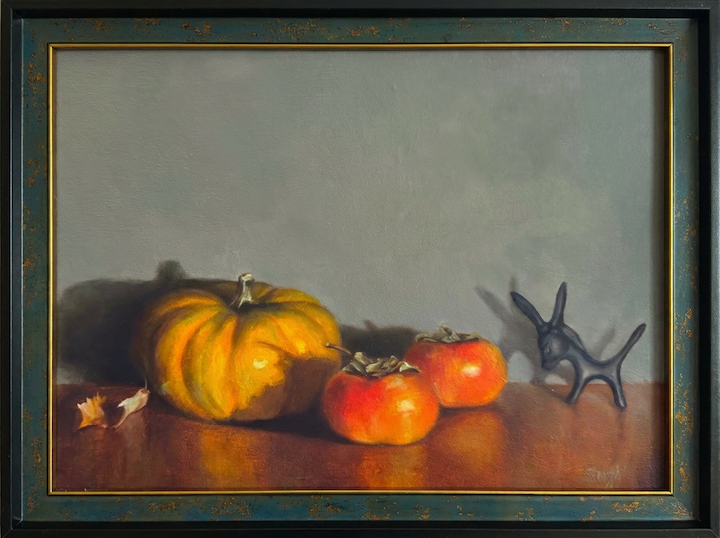
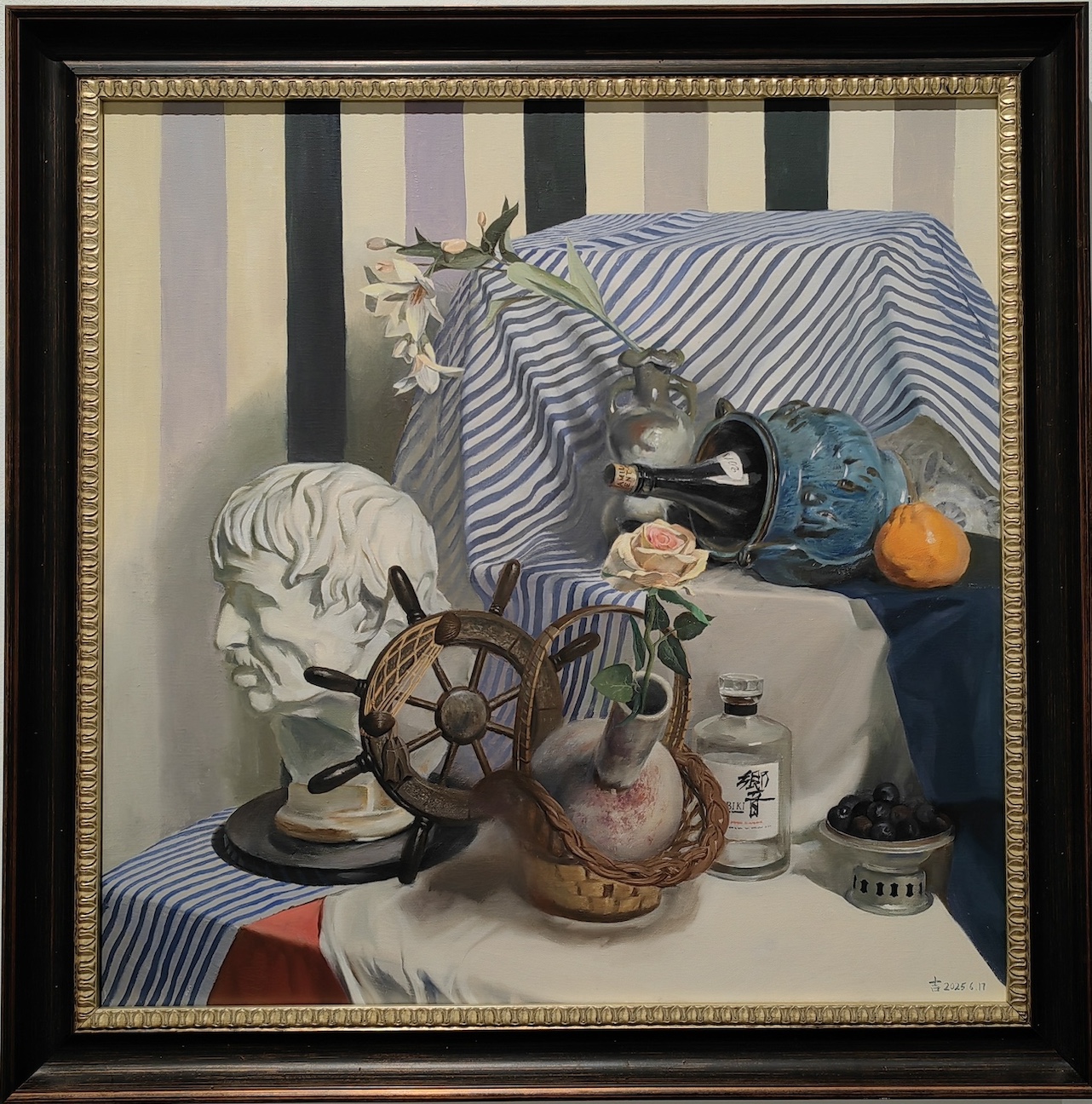
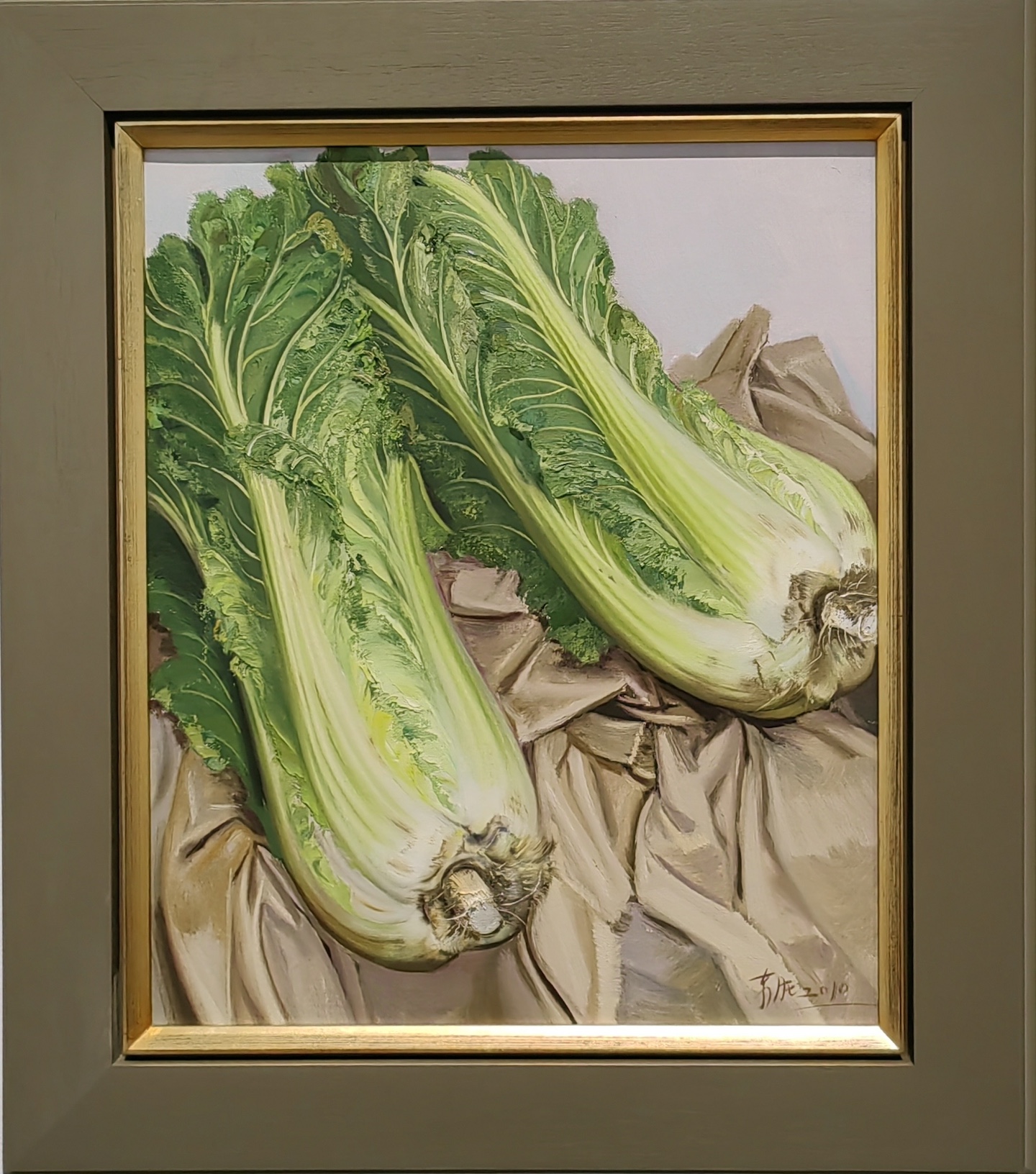
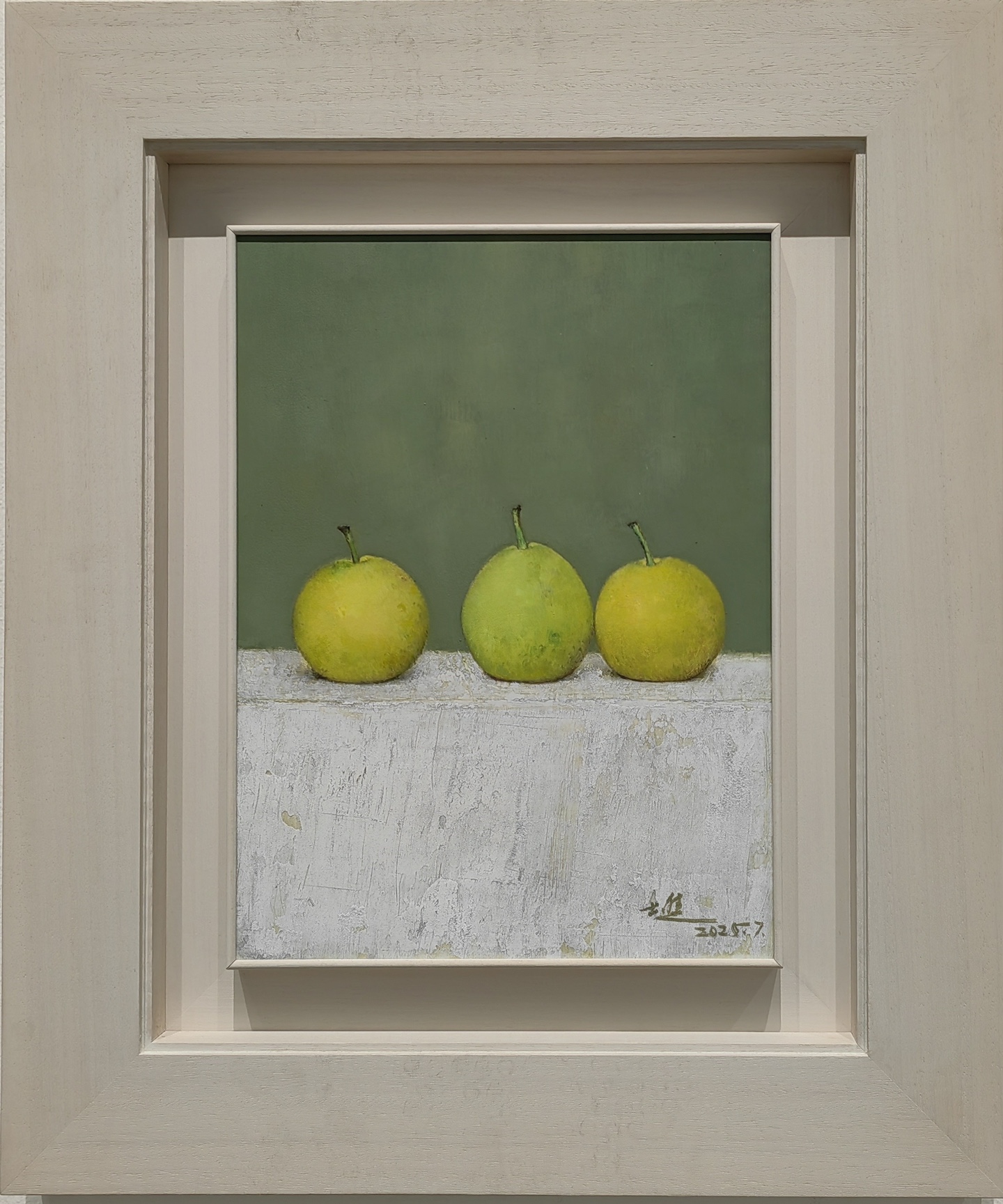
November had me on the other side of the globe again. This time I packed a couple of recent paintings to give as gifts for family. Lucky for me, framing in Beijing is much cheaper than in the States. I can afford to elevate my paintings a bit, which definitely makes the presentation better and adds to my confidence. Here are some of the paintings I gifted:

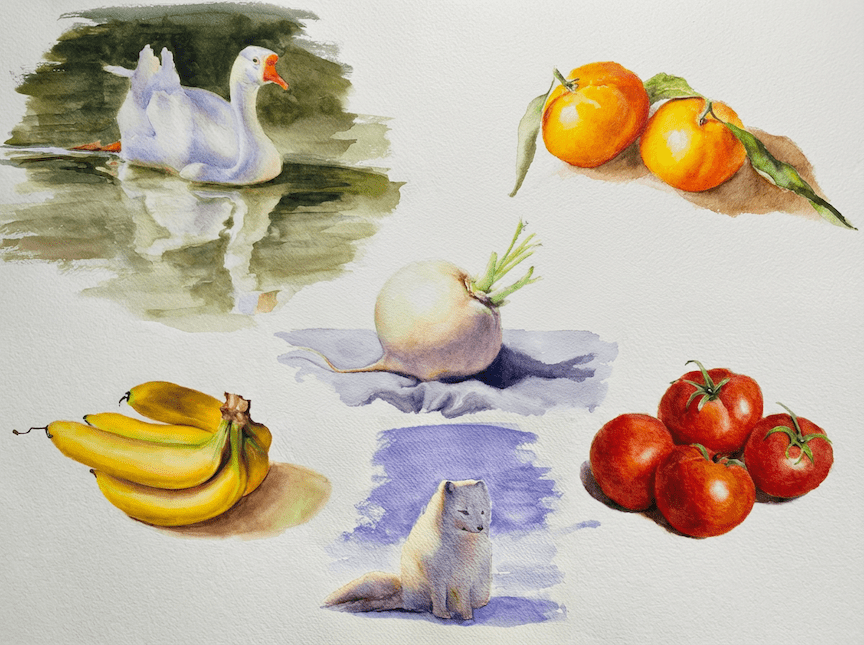
During my last long stay in Beijing, I decided to make the most of the situation by practicing watercolor. Oil wasn’t an option and watercolor stuff barely takes up any room. I am happy to report that I’ve actually stuck with the plan. My current goal in practice is trying to keep the colors clean. Small steps, but still moving forward.

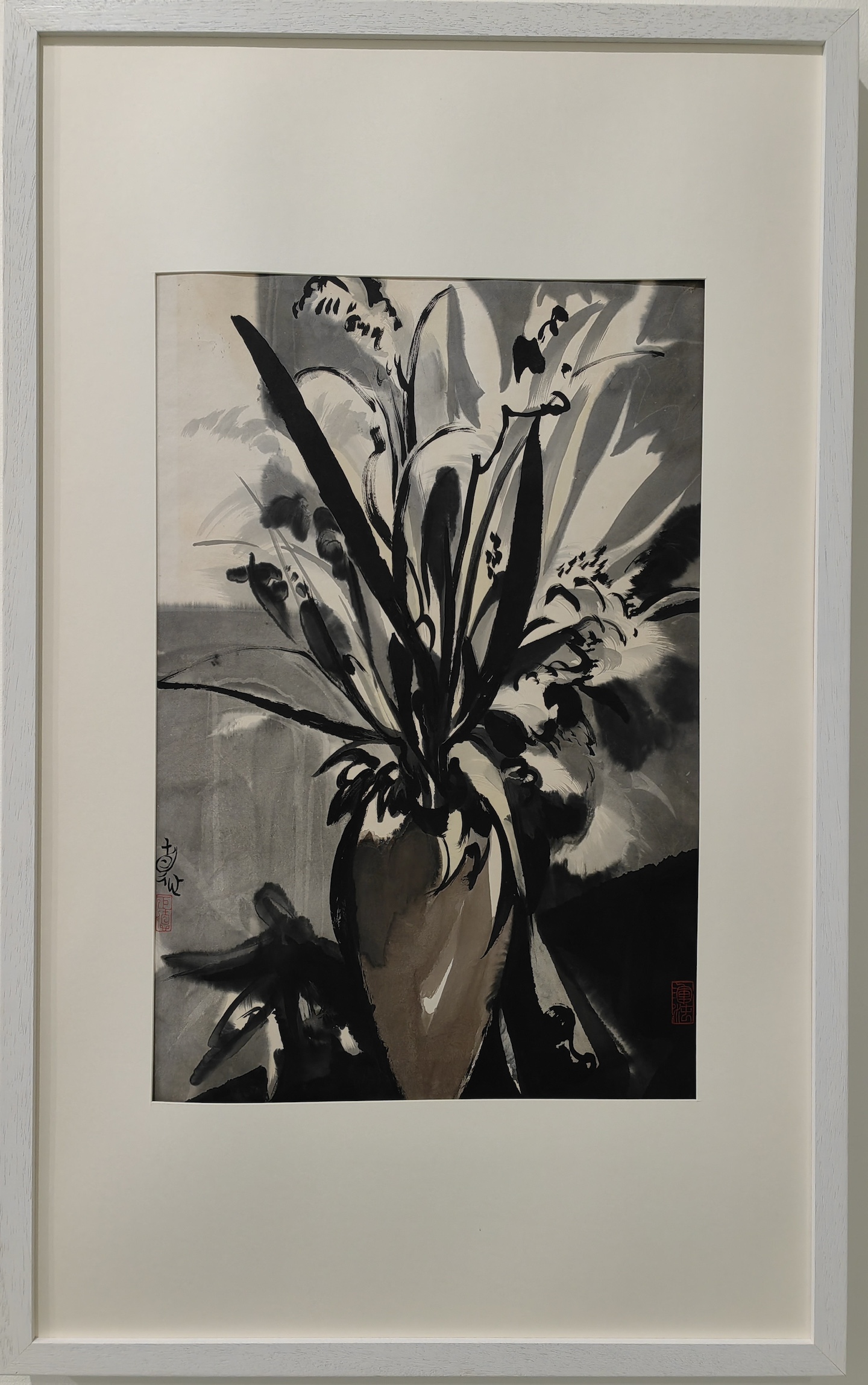
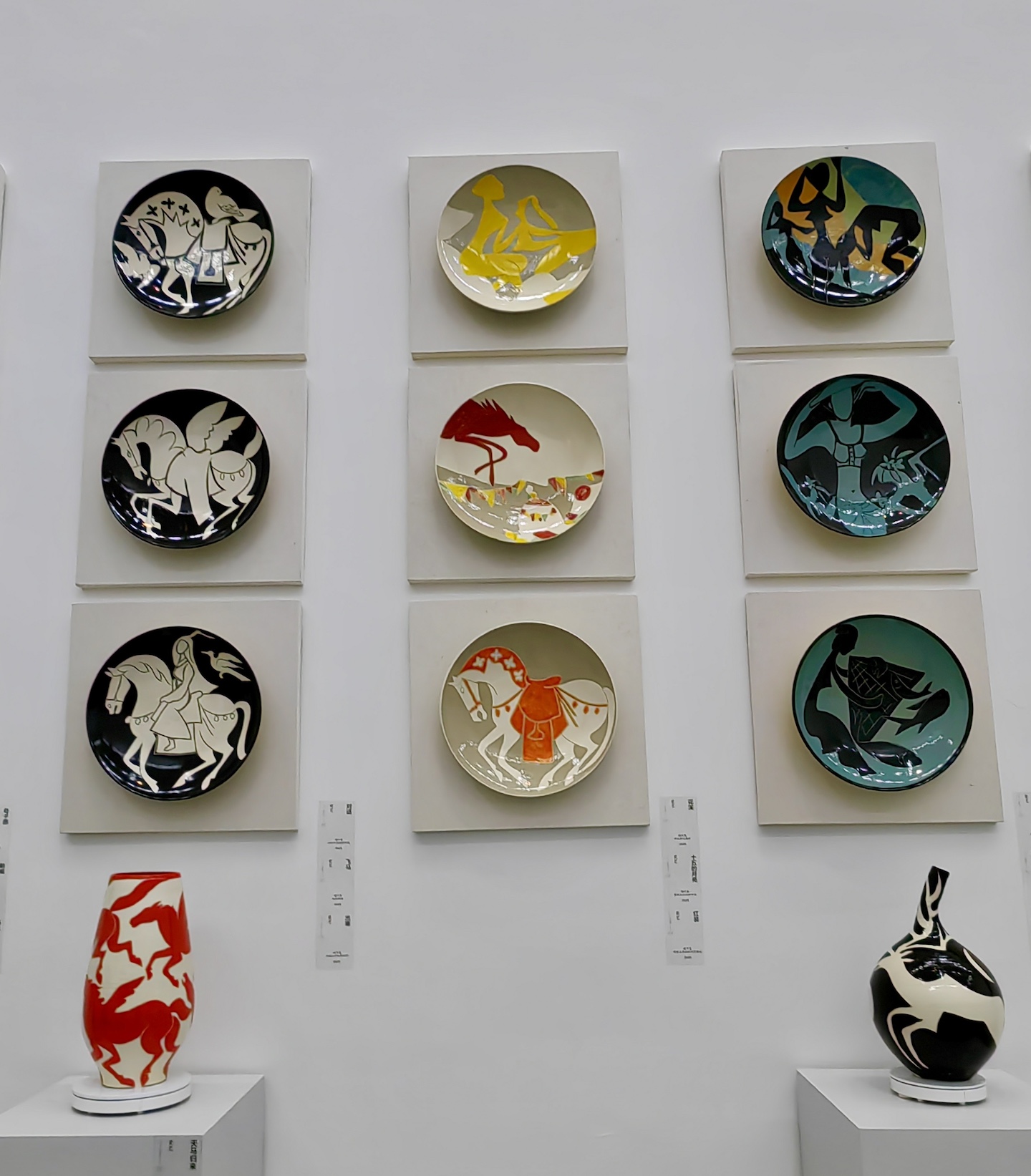
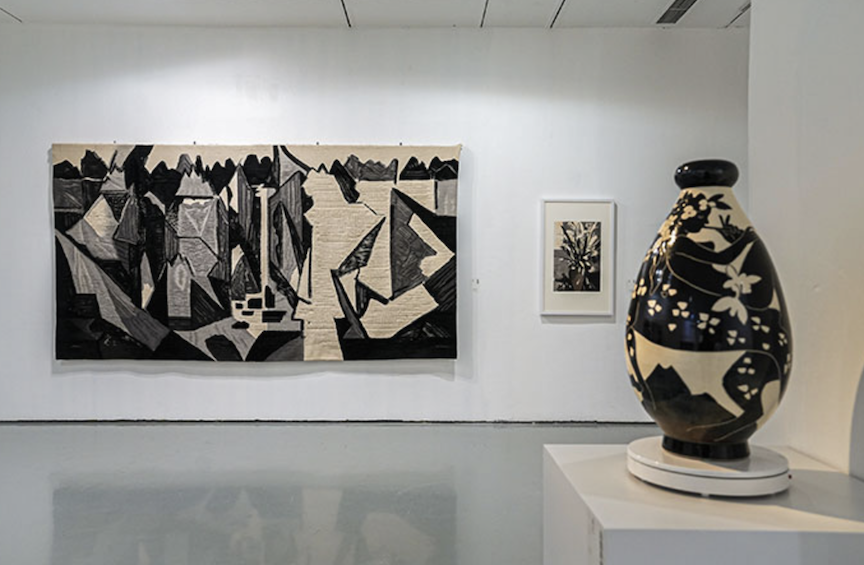
Gallery-wise, I saw Liu Jude’s 刘巨德 solo show at the Today Art Museum: Hearts Aflame for the Firmament. Liu studied at the Central Academy of Craft Art in 1965 and later worked under Pang Xunqin 庞薰琹 (1906 – 1985) in 1978, researching the comparison between traditional Chinese decorative art and Western modern art. He believes that painting should imitate the Tao that births all things: using the invisible Tao to paint visible objects, and using visible objects to paint the invisible Tao. His art isn’t constrained by the classification of genre or technique; he adheres to the traditions of Chinese decorative art but modernizes that formal beauty, making him unique in the Chinese art world. The exhibition featured over 200 new pieces by Liu and more than 100 ceramic debuts. Divided into “Ode to Peace” and “Ode to Hometown,” the show presented a kind of “chaotic beauty” and deep emotions for his roots.

In his artist statement, Liu mentioned: “Every time I paint, on the clean Xuan paper, I always put down thick black ink first, trying to occupy, grasp, and stabilize the whole space. As for what object that ink block, dot, or line represents, it is ambiguous, and I am not entirely clear. It is precisely this uncertain relationship of abstract points and lines that triggers me, pulling me to wander with it.”

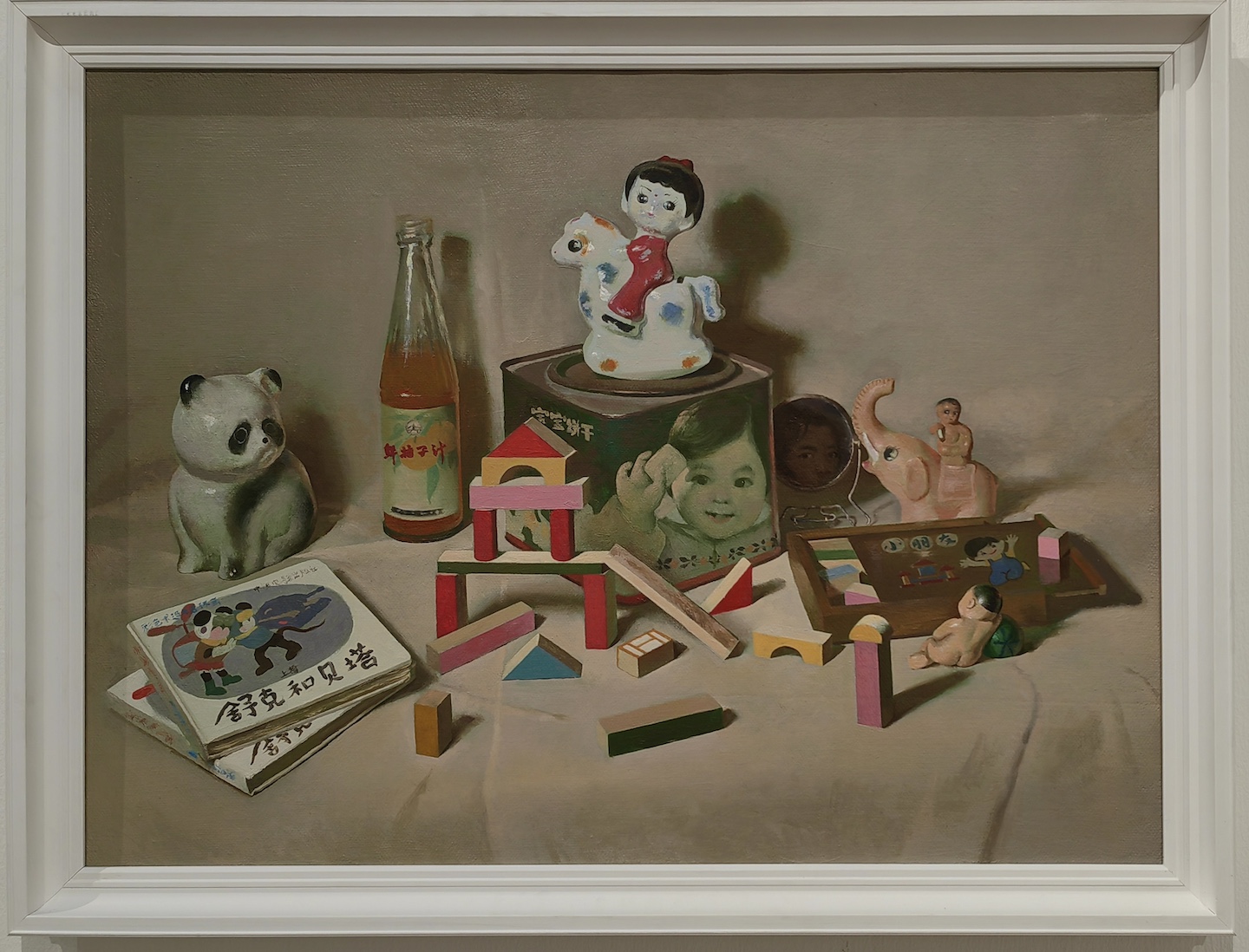
In comparison, the National Still Life Exhibition hosted by the Chinese Academy of Oil Painting felt … fine. Technically solid, just not particularly exciting.

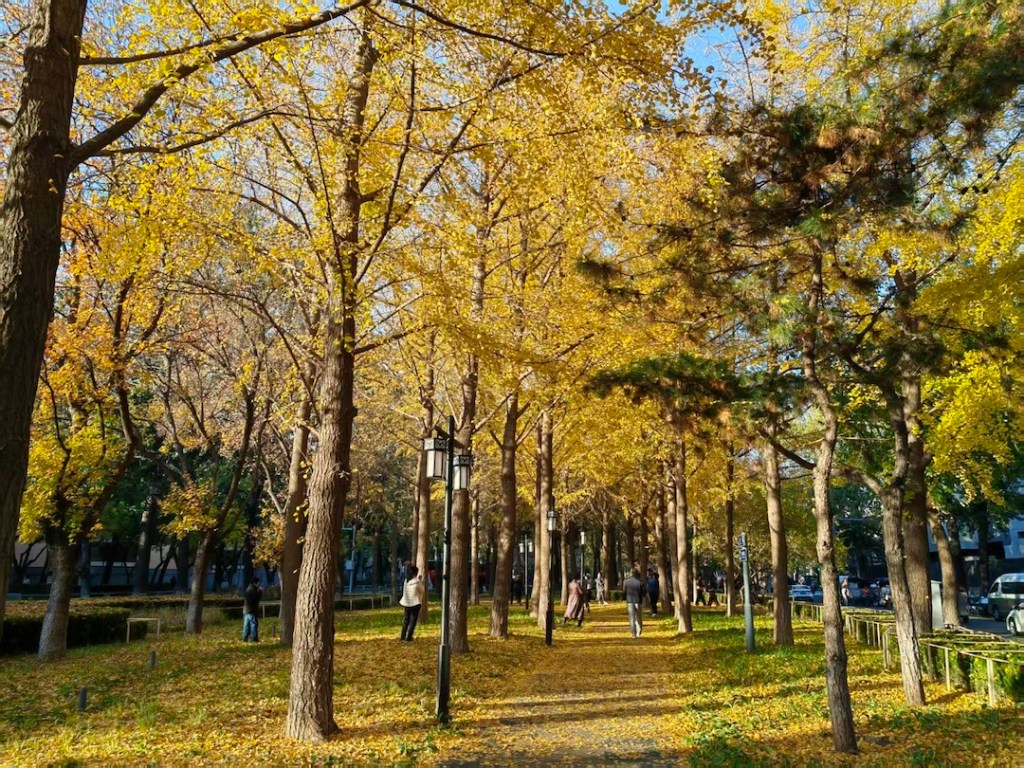
Finally, on one perfectly sunny mid-November day, I took this photo of a path covered in golden ginkgo leaves, a staple scene in Beijing’s autumn. Doubao, ByteDance’s (owner of TikTok) AI app, turned it into a watercolor painting. Love it or hate it, AI art will be a staple of the art world.

A Stronghold for Realism: The New Salem Museum and Academy of Fine Art

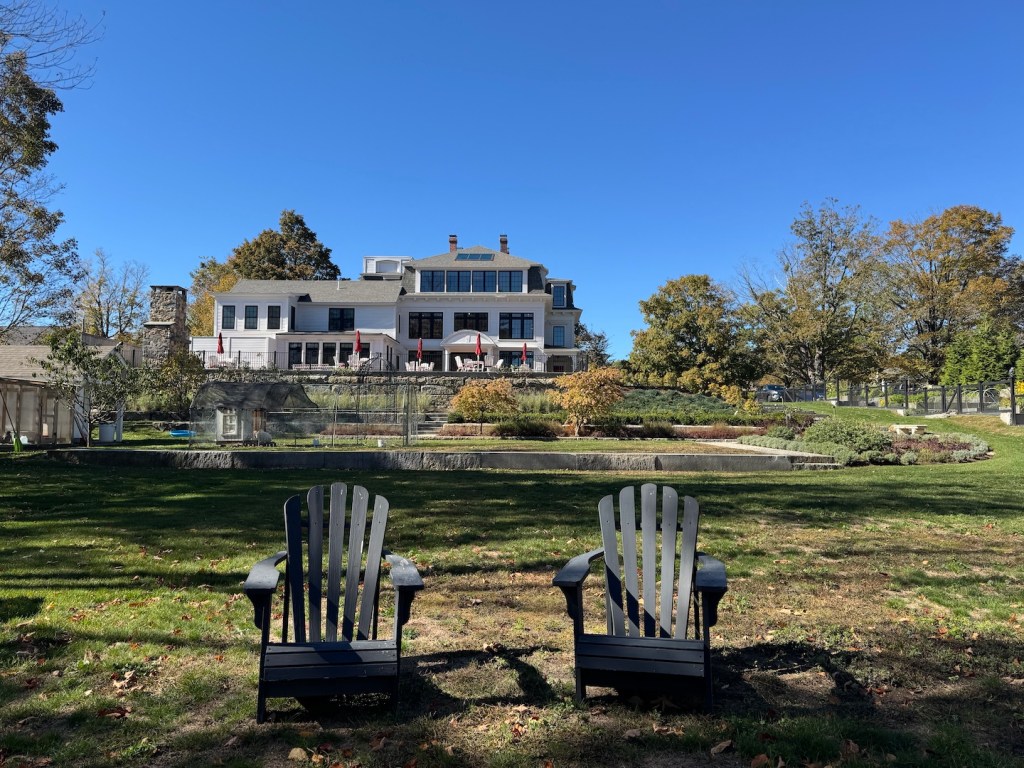
If you’re driving from Boston westward—say, toward Ithaca like I was—take a detour to New Salem, Massachusetts. Nestled in the vibrant fall foliage of a classic New England town, the New Salem Museum and Academy of Fine Art (NSMA) is a treat for anyone who loves realist art.

The NSMA sits on 2 acres, surrounded by a vegetable and rose garden and a serene pond. The three-story 19th-century building was once part of the New Salem Academy. In 2023, Laura and Vincent Barletta purchased it, turning their passion for art into a public treasure. Their journey as collectors began 20 years ago when they fell in love with Michael Klein’s painting “Leaving Home” in a New York gallery. Two decades later, Klein, a leading artist in the revival of representational painting in America, was enlisted to curate and direct the museum and its academy. Their mission is to create a stronghold for contemporary realist art.

The museum, housed on the first two floors, showcases a collection of contemporary realist masterpieces, primarily from living artists, such as Jeffrey T. Larson, Jordan Sokol, Jeremy Lipking, Colleen Barry, Michael Klein, Kate Lehman, Oliver Czarnetta, Daniel Sprick and more. It also features historical gems by John Singer Sargent and Andrew Wyeth, connecting the past and present. The Barlettas’ commitment to sharing their private collection with the public sets NSMA apart. Many artworks, once acquired by private collectors, end up hidden in storage. By opening their collection, the Barlettas ensure these works remain vibrant and accessible.

The museum represent the Barlettas’, especially Laura’s taste in art, but it also embodies Michael Klein’s curatorial vision. Like his paintings, the display is a thoughtful and gentle invitation to experience truth and beauty. It is intimate but not small. Strolling from one gallery to another, you enjoy a natural flow of richness in substance and dynamic cohesion. The value of the art and the quality of the setting are in perfect harmony.

The collection is rotated and expanded regularly. I watched YouTube walkthroughs of past exhibitions, and the displays were different from what I saw, making NSMA a destination worth multiple trips.

The third floor houses the NSMA Academy, a hub for aspiring artists. It offers workshops and classes led by professionals like Rachel Li for painting and Stephen Saxenian for sculpting. The academy fosters creativity and skill development, creating a space for artists to grow and connect. NSMA also hosts an annual International Painting Competition with a sizable award, welcoming all subject matters in representational art. You can view the 2025 finalists on their website or watch a video review by artist David Kassan.

Following a tip from NSMA’s website, I visited the nearby New Salem General Store, a charming spot that’s part convenience shop, post office, and bakery. I grabbed a couple of freshly baked energy cookies and a hot apple cider, then picnicked in NSMA’s back garden. The view of the pond, paired with the treats, was unforgettable, a perfect complement to the museum visit.

The Pond

Michael Klein once said, “Painting is a luxury that brings joy to our lives; it allows us time to sit in front of nature and be awed by the beauty that exists.” (“Art, God, and Beauty”, Realism Today) NSMA is the perfect manifestation of that. Whether you’re an art enthusiast or just looking for a unique stop, NSMA delivers inspiration and beauty.

Petal Progress Continued

July kept the floral theme in my studio, with petals and my learning progressing. 

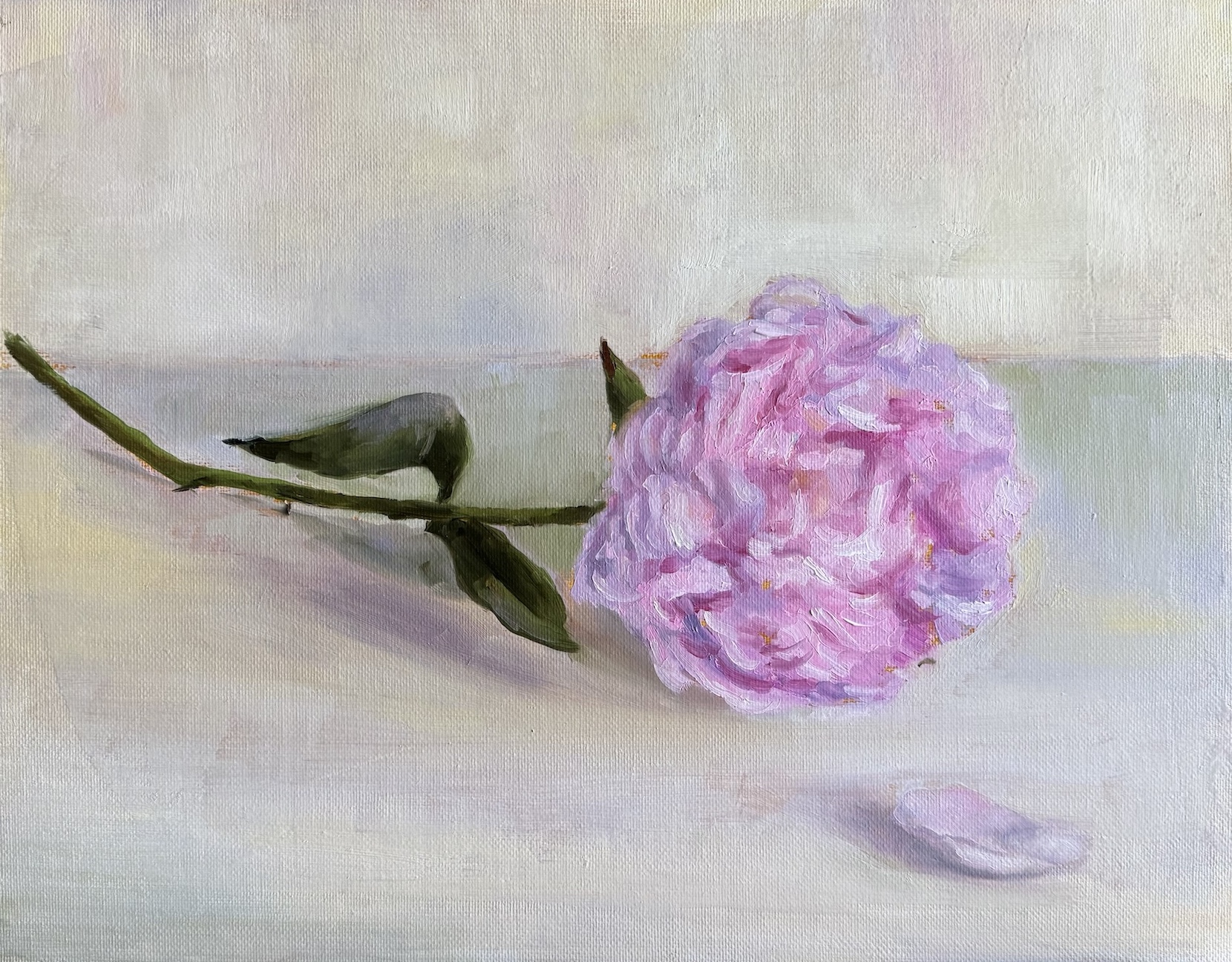
First up, I tried my hand at a peony. As I have mentioned before, Michael Klein is a big influence to me in the floral adventure, and peonies are featured in many of his creations. Those fluffy blooms look dreamy, but they’re a nightmare to paint and arrange. Petals were numerous and messy, dropping faster than I could arrange them in any manageable shape — whether in vase or on canvas. Soon I gave up my grand vision of a complex still life, and managed a simple single flower sketch.

Peony, oil on canvas board, 11 x 14, July 2025

To comfort myself afterwards, I moved back to roses, a familiar subject. I thought a Trompe l’oeil (French: deceive the eye) would make the painting of a single rose more challenging and fun. The idea was basically a hyper realistic painting. Getting the shadows and texture just right was trickier than I expected. My rose still looks like a painting. Here I have a better understanding of why people always say you don’t paint exactly what you see, even in a realistic painting. I used ambient room light in my setting, and the rose was largely in a unified color. To make it “pop”, I need to accentuate the value contrast, vary the saturation, and better define the edges. To make it look real, I need to invent the reality – how ironic! As you can see, I didn’t go through these steps. I am not entirely sure I have the skill to reach the final goal, and honestly, I like the painting as is now. Sometimes you call it done and move on.

Yellow Rose, oil on canvas board, 9 x 12, July 2025

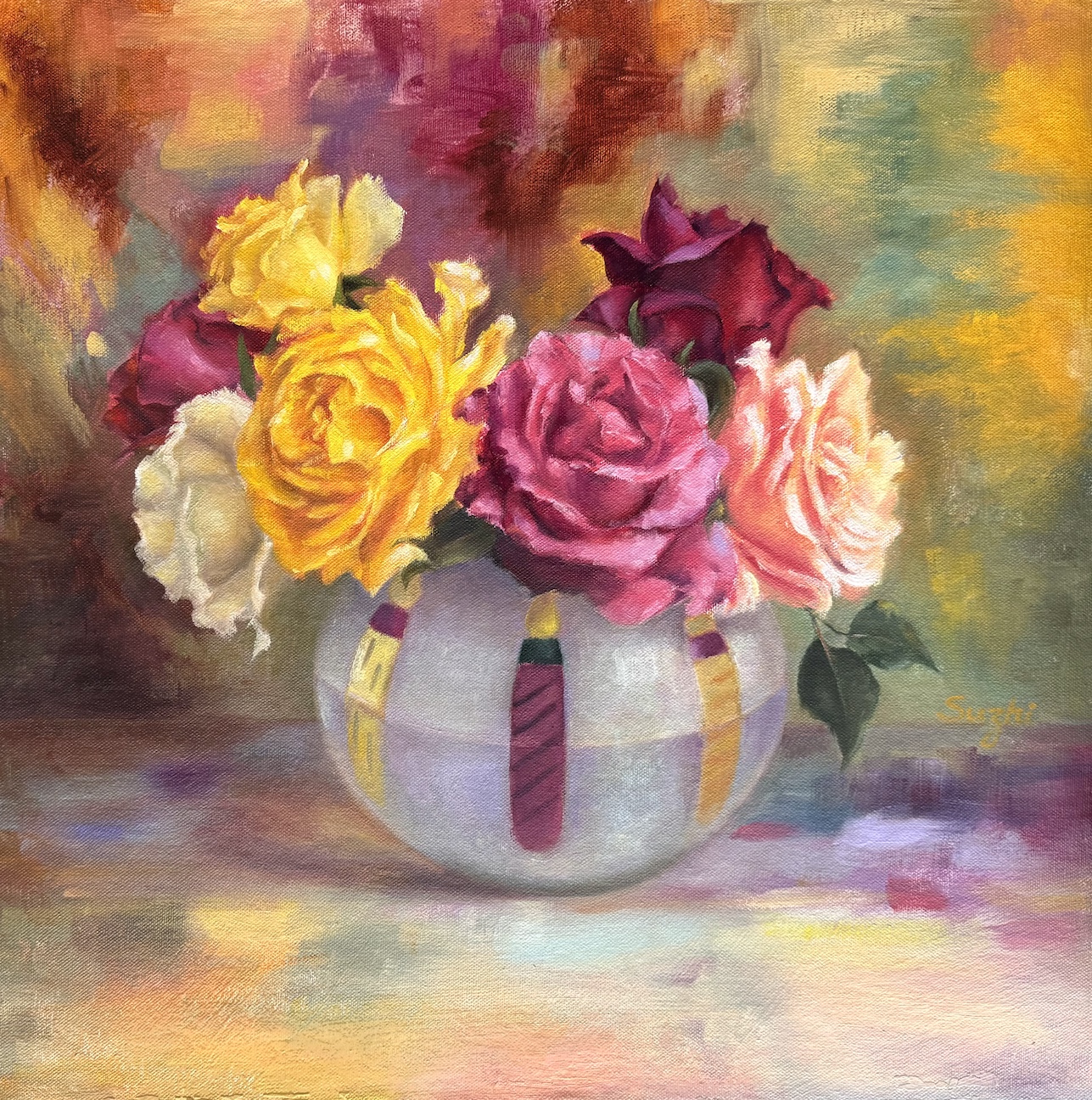
Next came a colorful bouquet, and my strong desire to paint something vibrant. In setting up the reference, my first thought was a dark, solid background for contrast. It worked, but it felt too safe. Leaning into the chaos, I draped a multicolored scarf behind the bouquet. I painted the scarf and surface in an abstract style, playing with saturation and value to keep things lively but balanced. 

Colorful, oil on canvas board, 18 x 18in, July 2025

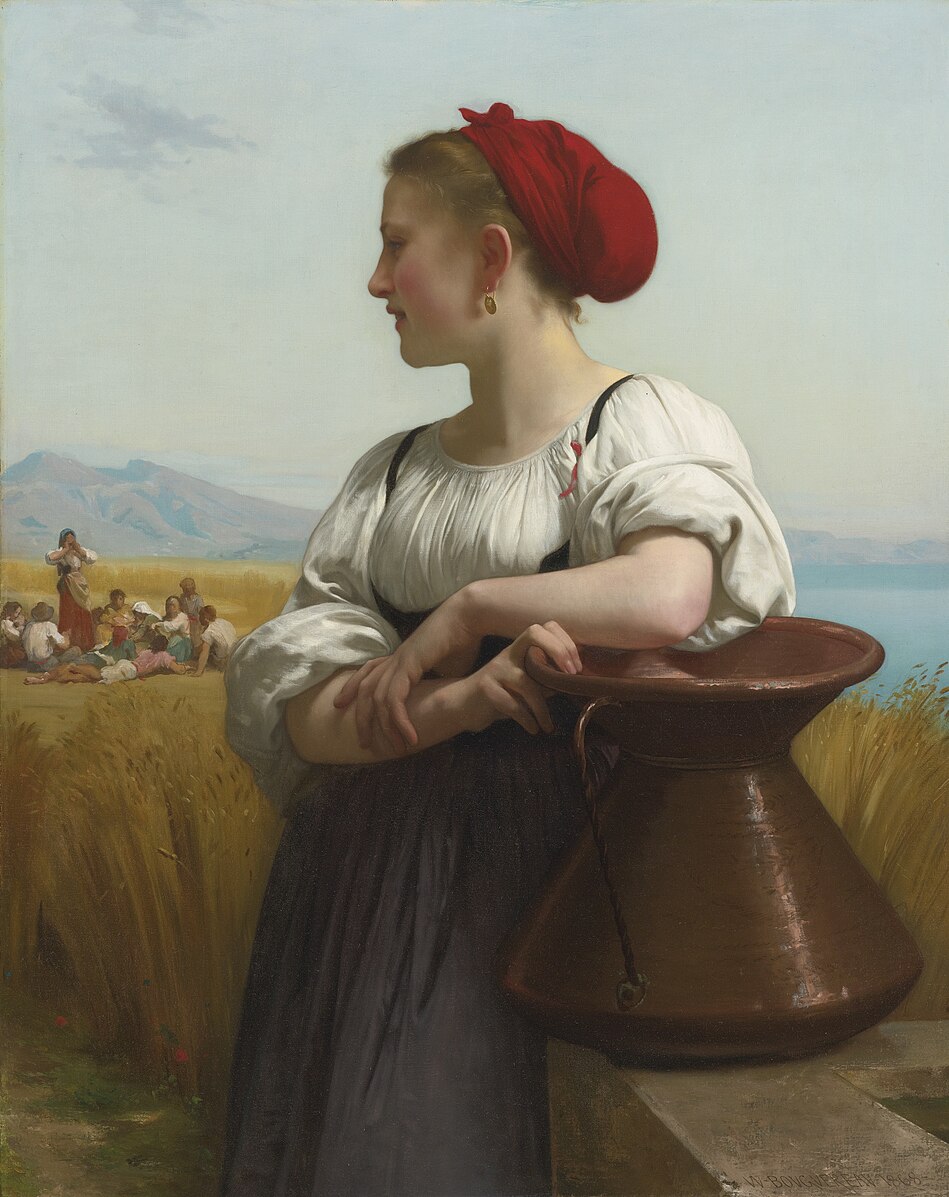
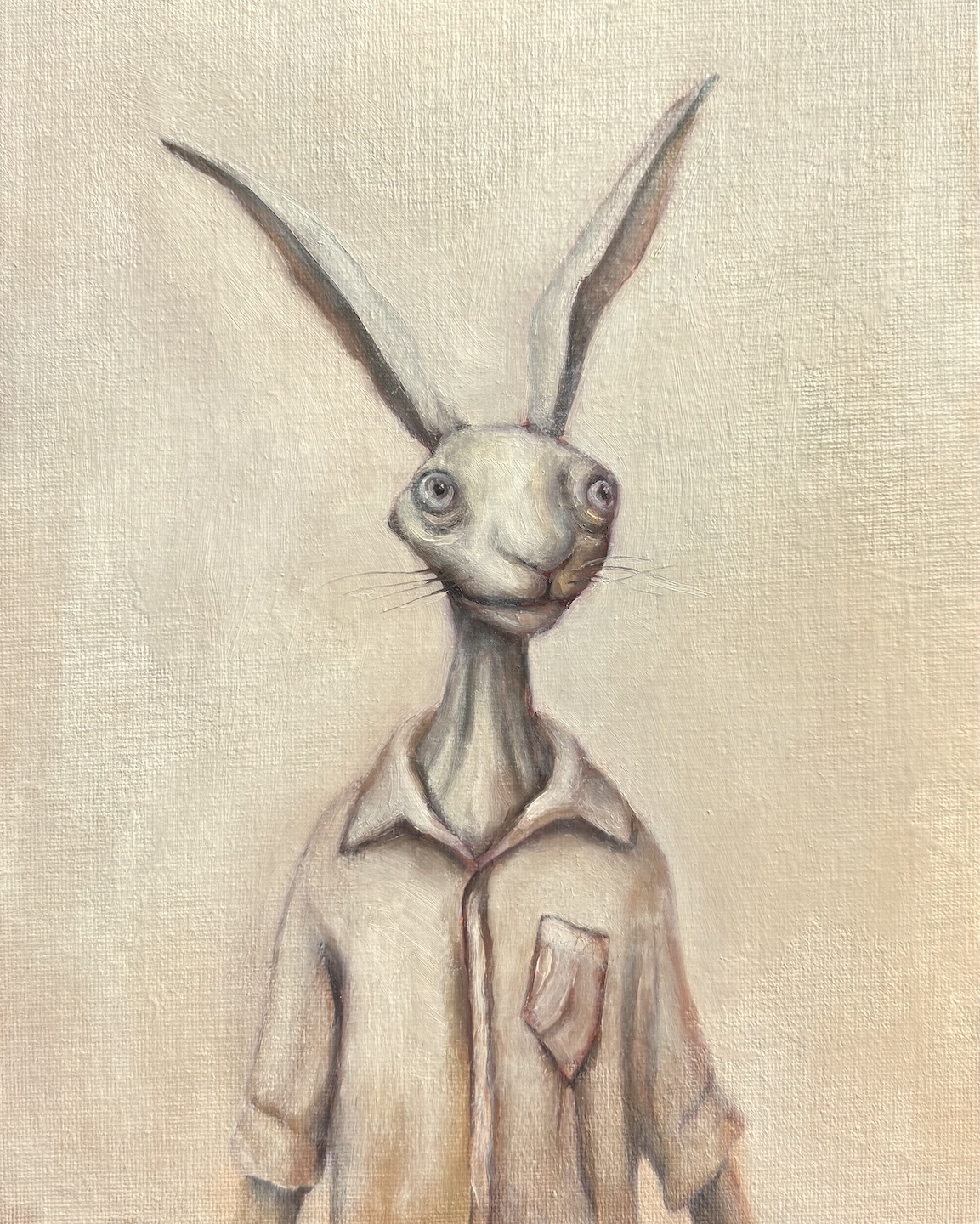
Between these floral adventures, I did a partial study of a Bouguereau painting. I’ve always admired his delicate and subtle handling of human faces, and this is also a study of handling backlighting. The softness is achieved through close value and gentle brushwork. When the entire face is away from light, the values are further condensed – something I still need to work on. I also painted a “selfie” as an alternate character—don’t ask. I was hoping for a Morandi-ish low-chroma tranquility… or, a quirky experiment in calm tones.

Selfie, oil on canvas board, 8×10 in, July 2025

Lastly, MidJourney has pushed out video generation in recent months, and now you can upload your own image for animation (see the painting for the first video here). Like these:

Don’t laugh. The bizarreness comes from my own skill issues – both in painting and in prompting. Look at the shadows in the second video, that wisdom wasn’t from me. There are millions of fantastic generative videos out there for us to see the potential of extending and alternating the life of our paintings. Always more things to experience and explore!

The Making of a Still Life Painting in Times of AI and More

I don’t know what sparks the initial idea for a painting in other artists. For me, oftentimes, it has nothing to do with art. As someone genetically at high risk for diabetes, the only way I could justify buying a bag of cookies was to tell myself, “I’m going to use them in a painting!” 

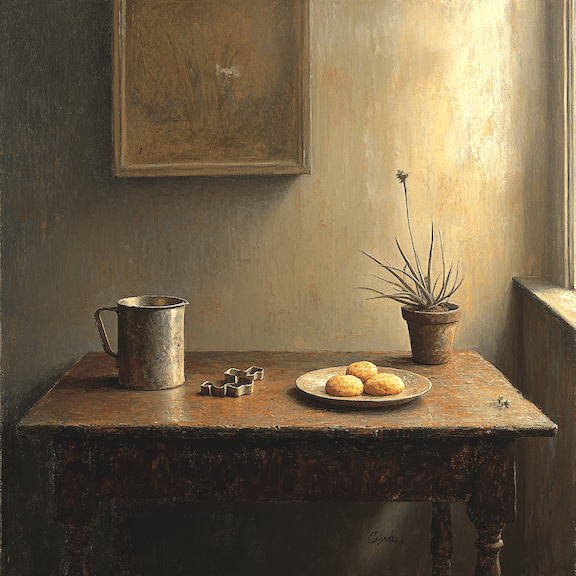
And so it began. Adding a few related items – a cookie cutter, a mug, a wooden table -I threw the ingredients into the AI pot of MidJourney. Among the results it generated, one caught my eyes. 

MidJourney v6.1

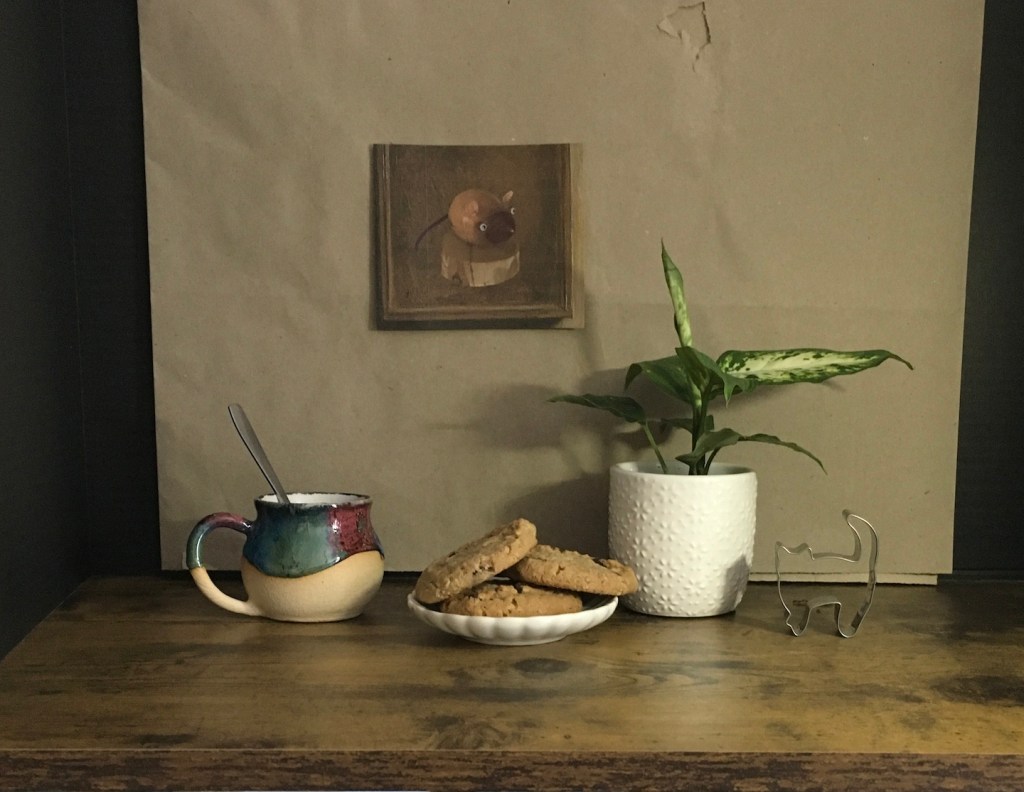
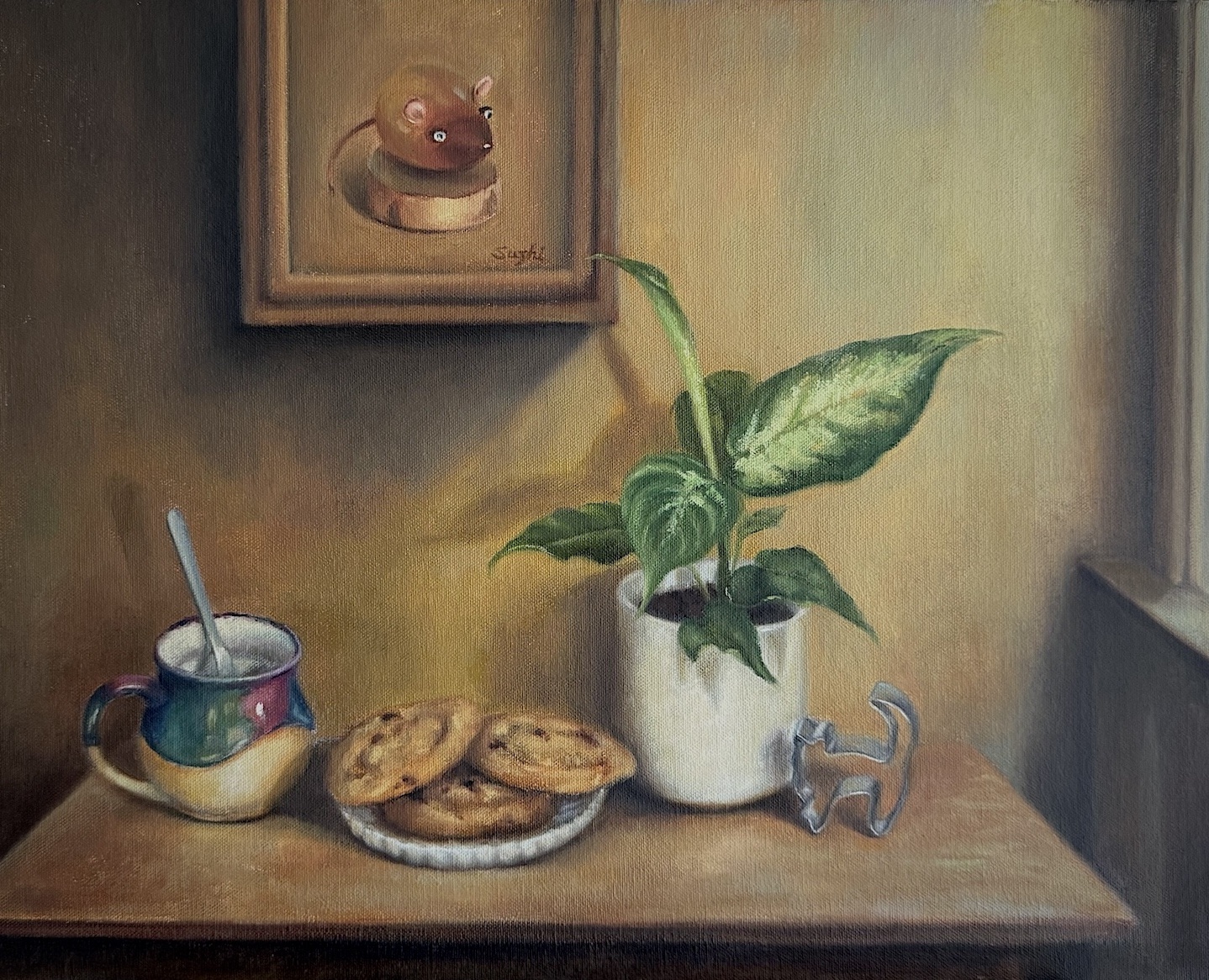
Using it as a guide, I set up my own reference: a small plate to hold the cookies, the new mug I just acquired from a craft show, and a potted plant I picked up from Home Depot. However, I didn’t care much about the background I devised. Why didn’t I just borrow MidJourney’s! I liked the idea of a painting hanging behind the objects, but I didn’t want it to feel generic. One of my cookie cutters was cat-shaped, so to add some fun, I featured a wooden mouse in the painting. The mouse is my zodiac sign, and the little wood carving was a gift from my daughter. This is how a still life became a self-portrait! 

Photo of my setup

When mixing reality with “fantasy,” lighting is the tricky part. I placed a light source on the right, but whether it replicated the effect in the AI-generated image is a question mark. Whether the lighting in the AI generation was accurate to begin with is an even bigger question mark. I decided to make the painting less about light and shadow!

After the plant’s leaves grew bigger and shifted positions, and after the cookies were replaced several times, I finally completed the painting.

Cookies, oil on canvas, 14 x 18 in, April 2025

The cookies were actually durable enough, but how else could I nibble an entire bag away without guilt? Though the painting is not strictly realistic, its atmosphere and staging accurately reflects my mood during the process. The objects were dear to my heart and the whimsical dynamism is quintessentially me. I’m grateful to live in a time with more tools to find inspiration and support in creating art.

PS: 

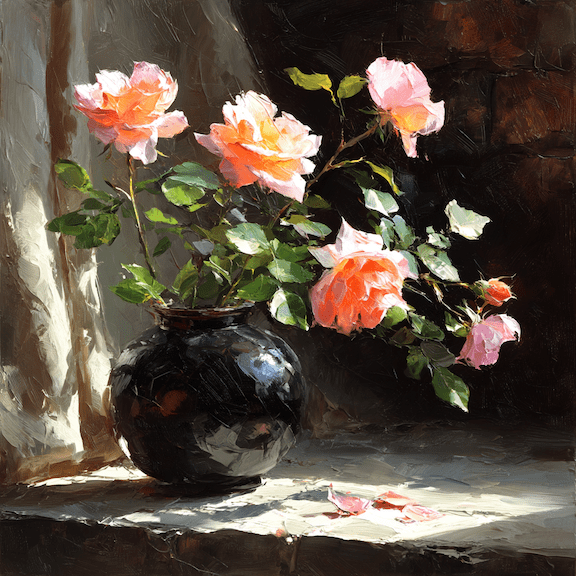
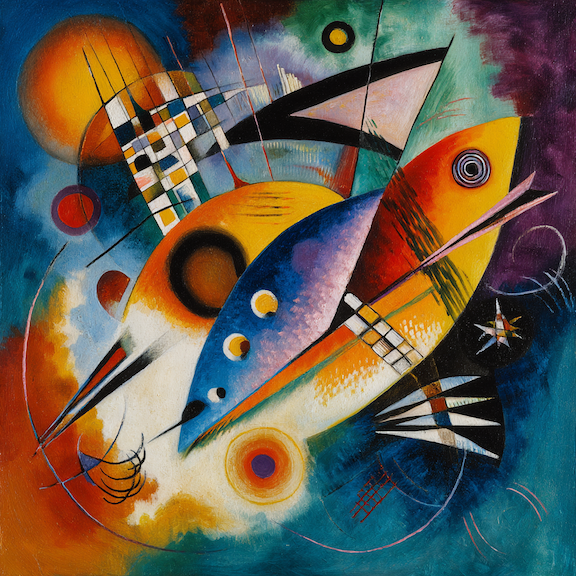
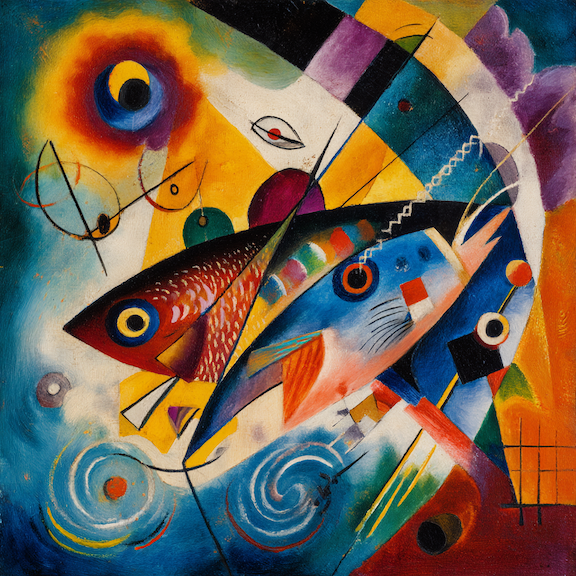
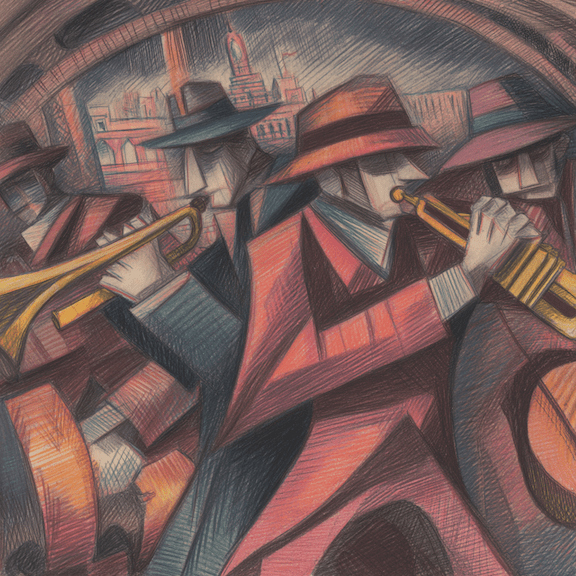
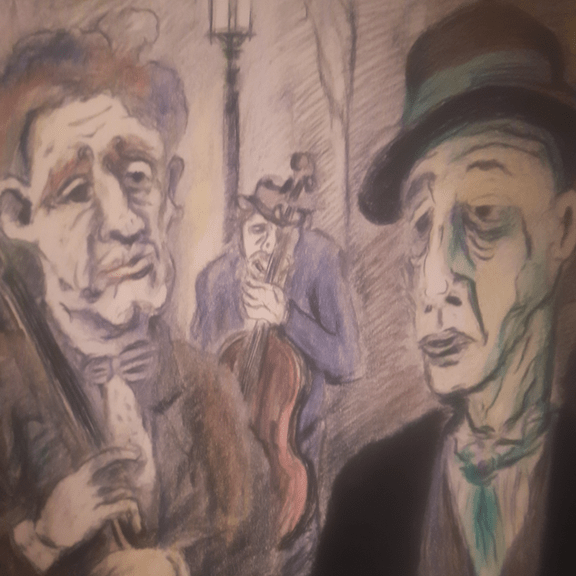
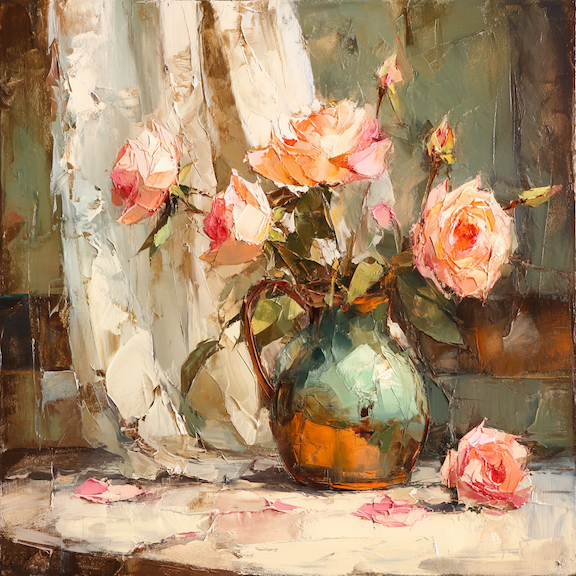
MidJourney has come a long way since I first used it, and I recently ran another comparison test by revisiting some old prompts. (Please see my first and second tests. )

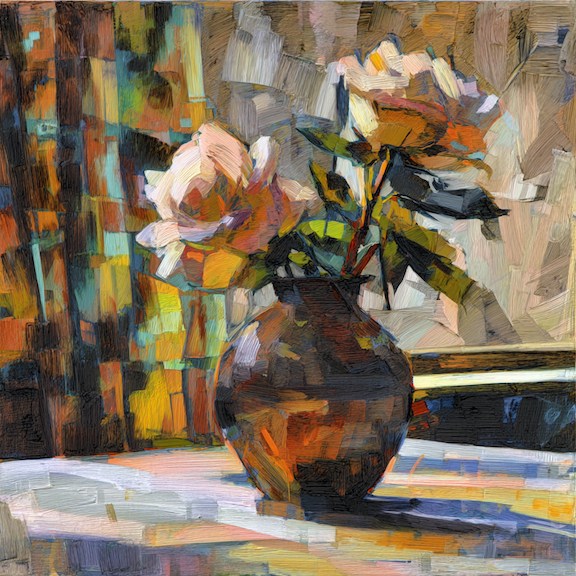
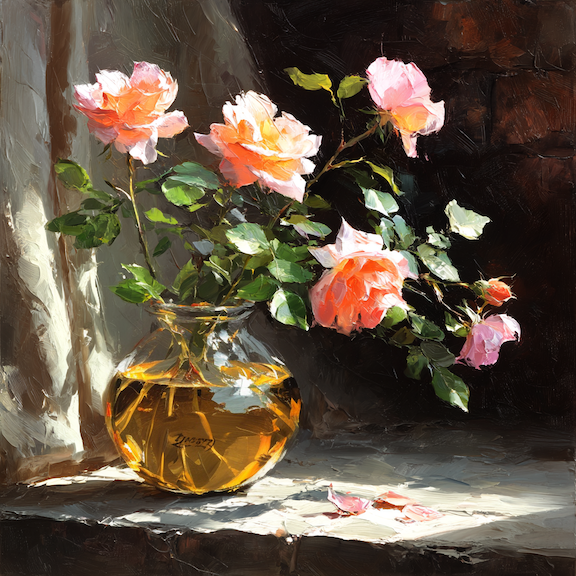
For “oil painting, still life, bronze vase, light pink roses, curtain, table, realism, expressive strokes, zorn palette,” now I got these:

For “kandinsky with expressive bold strokes, fish, abstract colors:”

For “André Masson drawing, colored pencil, street musicians, metro, gloomy:”

This isn’t entirely a fair comparison because, as the model becomes more sophisticated, there are more ways to manipulate prompts for varied results. If you are willing to spend some time rating images, MidJourney builds a profile of your preferences, so the results start reflecting your taste, to some extent, regardless of the prompt.

with my profile added

You can also add style references to prompt for more control over the generated style:

You can even edit the result to your liking – not quite Photoshop yet, but the result can be wild. 

replaced the vase with a glass one using MidJourney Editor

What’s interesting is that, when comparing the Kandinsky and Masson results, it’s not always clear that the newer models are better.

Alphonse Mucha: Art, Destiny, and the “Brilliant and Epic” Exhibition

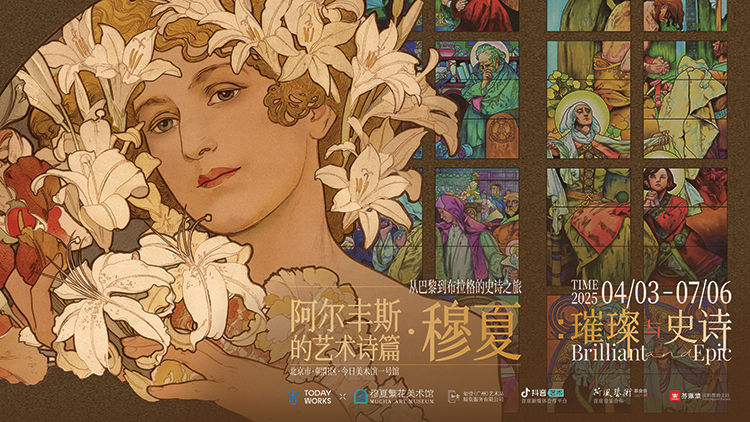
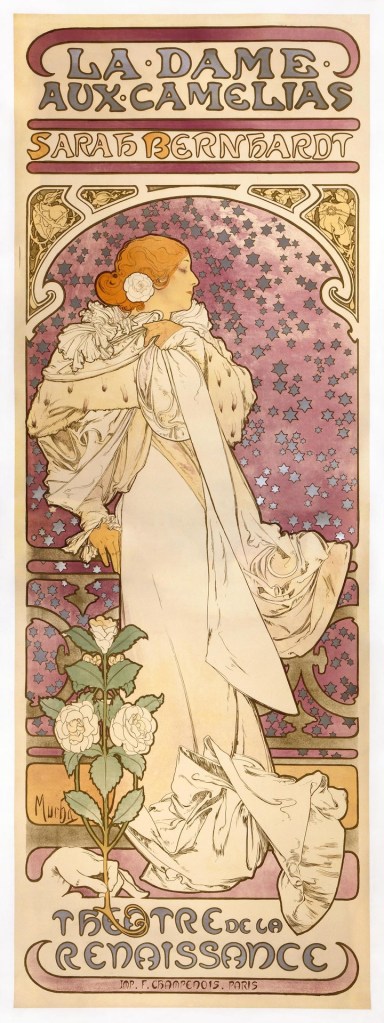
The Today Art Museum in Beijing recently hosted “Brilliant and Epic,” an Alphonse Mucha exhibition showcasing nearly 200 original works, from posters and paintings to drawings and decorative designs. Intertwining the splendor of Mucha’s commercial art with the grandeur of his nationalistic narratives, the show intended to reveal the duality of his legacy: a master of Art Nouveau’s aesthetic revolution and a spiritual chronicler of Slavic heritage. Inspired by this exhibition, I offer not a formal review but a personal reflection on Mucha’s art, his destiny as an artist, and the enduring resonance of his vision.

A Personal Encounter: Mucha’s Painterly Mastery

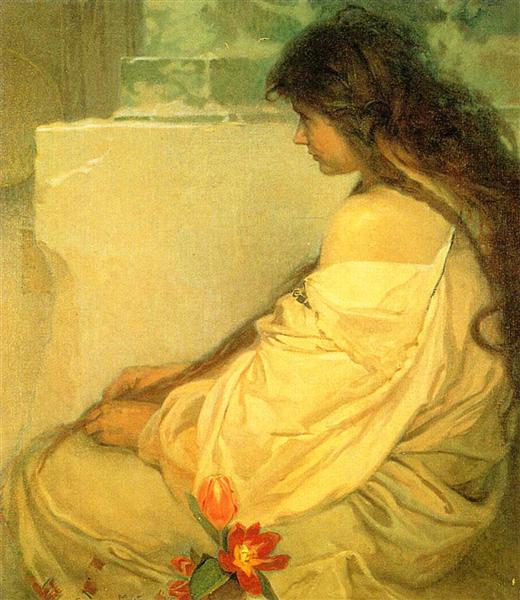
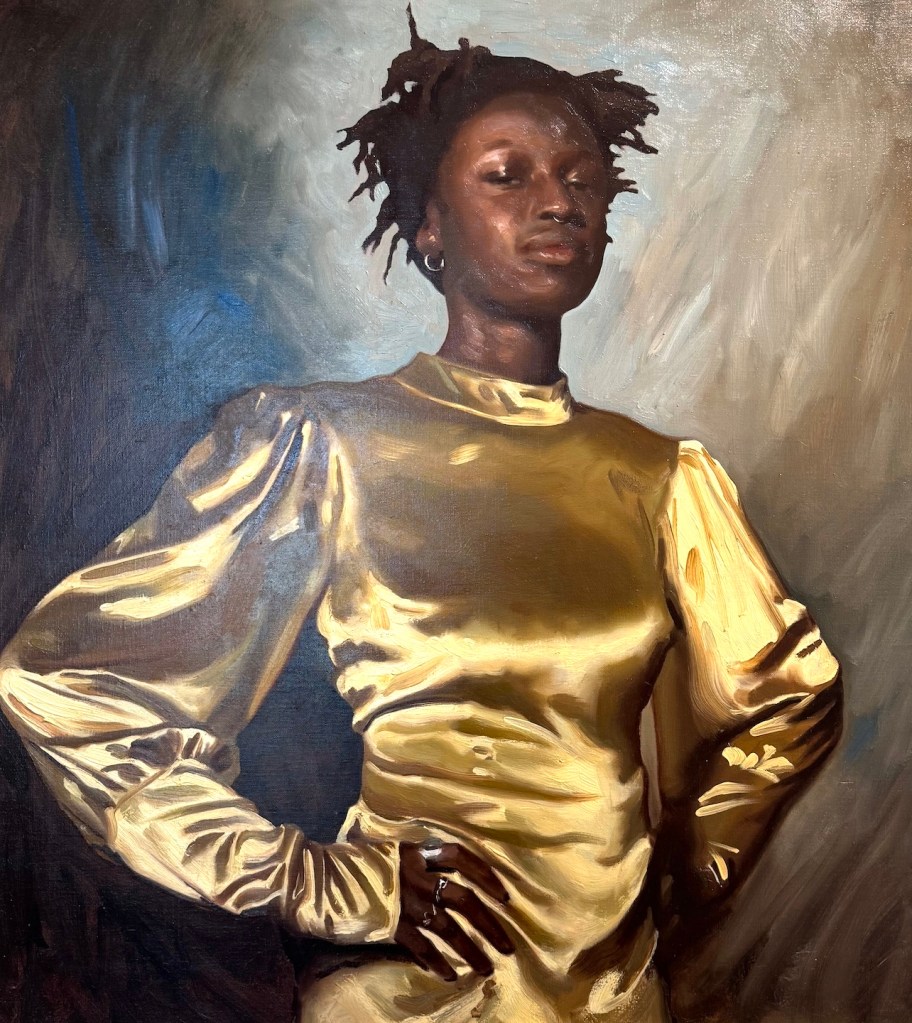
My first encounter with Alphonse Mucha was not through his iconic posters but in a composition class, where I studied two of his 1920s oil paintings: Fate (1920) and Girl with Loose Hair and Tulips (1920). These works captivated me with their bold compositions and nuanced value choices. In Girl, the natural curvature of the seated figure contrasts with the geometric wall behind her, while her cascading hair divides the canvas into expansive shapes. The intricate folds of her dress and the unruly texture of her hair play against the wall’s emptiness, with muted tones punctuated by the vibrant red of a tulip. The result is a serene yet vibrant harmony, a balance of peace and subtle tension. Similarly, Fate juxtaposes a vast cream-white space above with the intricate patterns and folds below, the woman’s intense gaze and powerful hands set against the soft texture of the fabric. Every inch of these paintings feels deliberate, a testament to Mucha’s skill. 
My composition teacher remarked that Mucha’s fame as a decorative artist often overshadows his prowess as a painter. I was struck by Mucha’s use of liubai (leaving blank space), a technique central to traditional Chinese painting, where open spaces balance intricate details to achieve a minimalist-maximalist harmony, while guiding the viewer’s eyes without overwhelming them. Walking through the exhibition, it was obvious that the posters and designs reinforced how this harmony, rooted in liubai 留白, distinguishes Mucha’s work across mediums. Furthermore, both his painterly and decorative works were grounded in realistic sketches and live models, revealing a traditional approach beneath his stylized designs.

My composition teacher remarked that Mucha’s fame as a decorative artist often overshadows his prowess as a painter. I was struck by Mucha’s use of liubai (leaving blank space), a technique central to traditional Chinese painting, where open spaces balance intricate details to achieve a minimalist-maximalist harmony, while guiding the viewer’s eyes without overwhelming them. Walking through the exhibition, it was obvious that the posters and designs reinforced how this harmony, rooted in liubai 留白, distinguishes Mucha’s work across mediums. Furthermore, both his painterly and decorative works were grounded in realistic sketches and live models, revealing a traditional approach beneath his stylized designs.

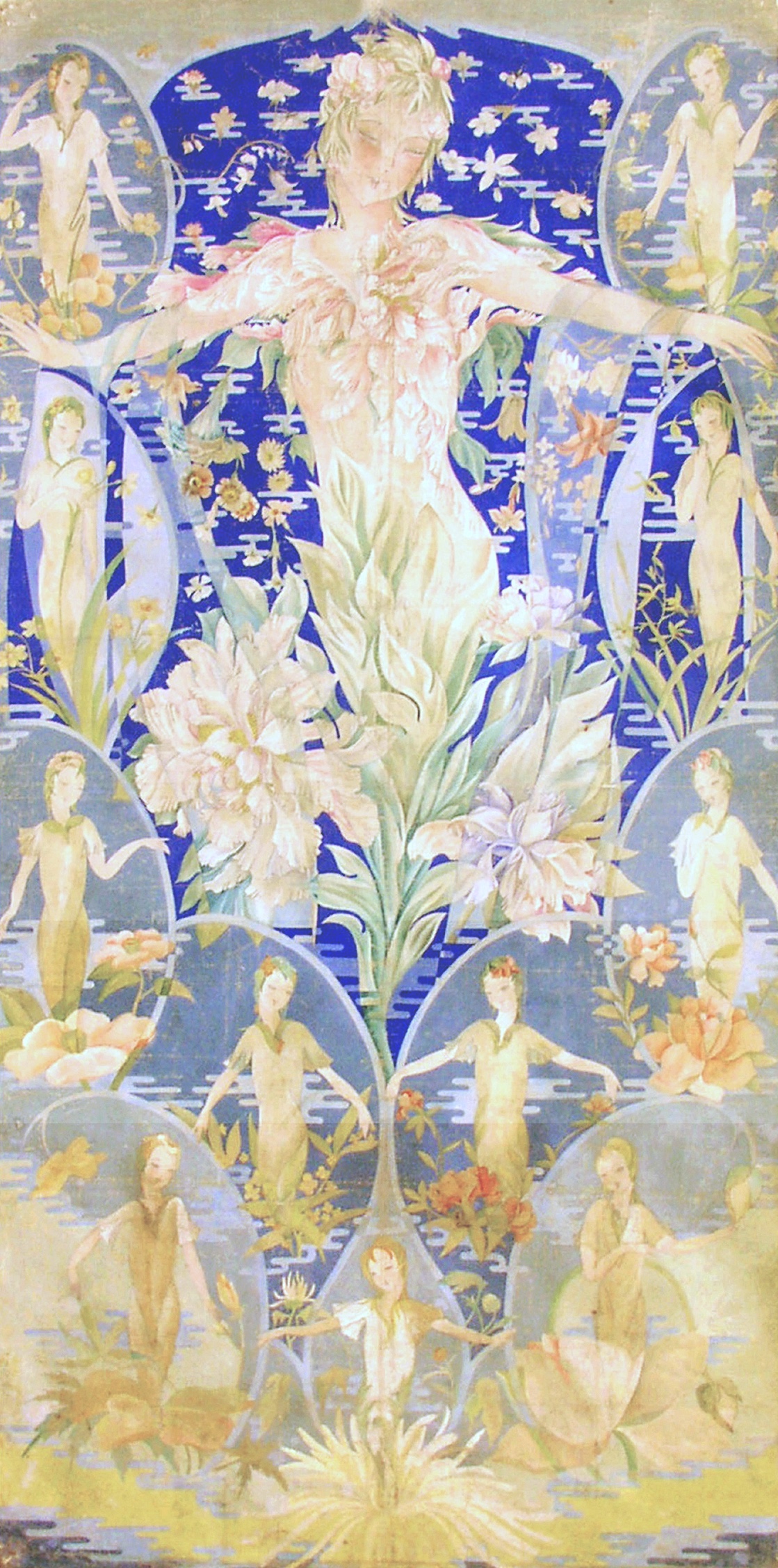
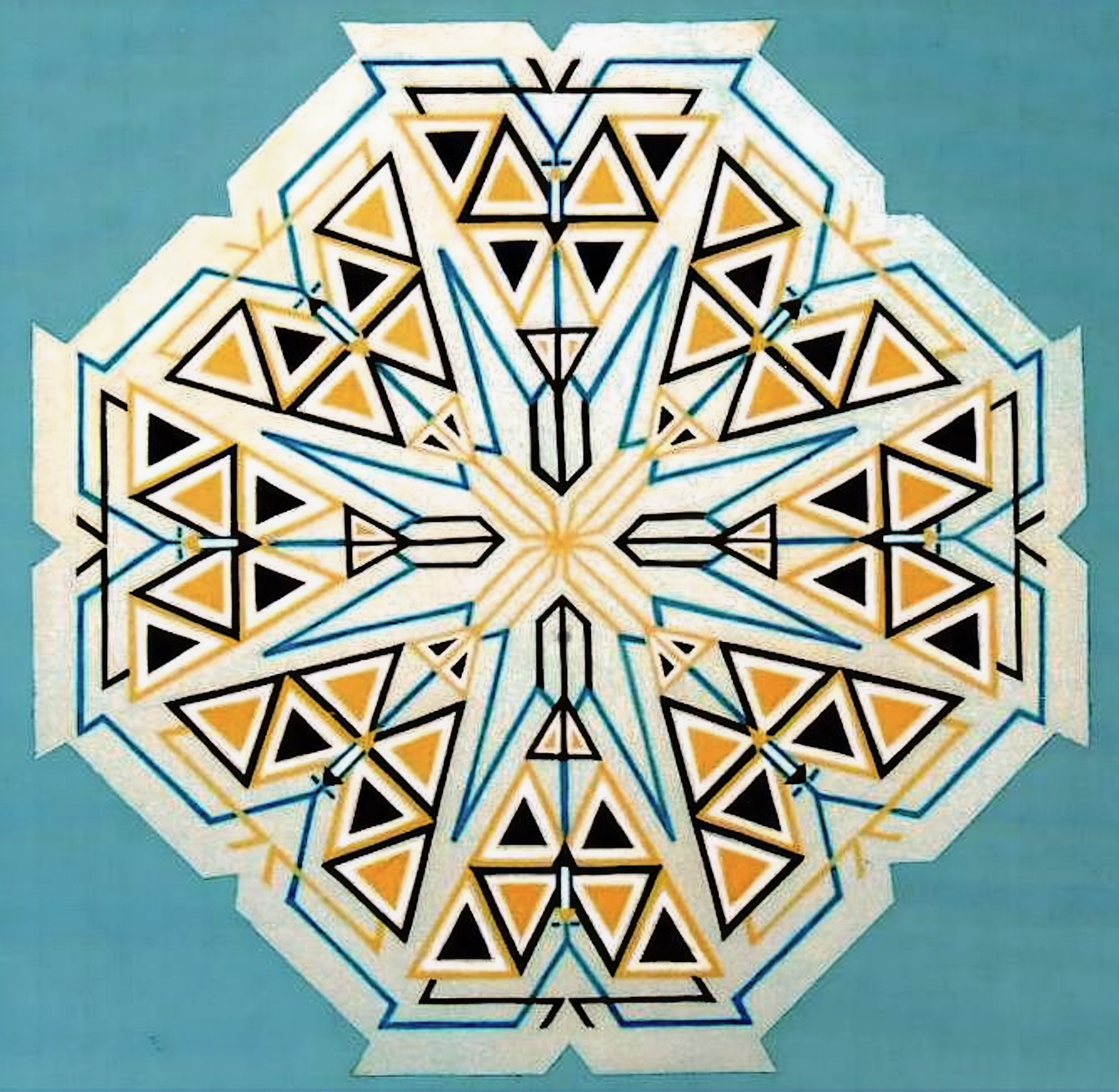
There’s also a personal layer in my appreciation of Mucha’s art. My own maternal grandparents were both decorative artists active in China during the 1930s and 40s. Though I never met them, seeing their surviving works instilled in me an early fascination with design and pattern. One of my grandmother’s paintings (“Peony, King of Flowers”), features twelve female figures representing the flowers of each month, with peonies at the center, echoing Mucha’s fusion of women and blossoms into a harmonious union of humanity and nature. (See more about my grandma’s art and life at Xuying Art Gallery)

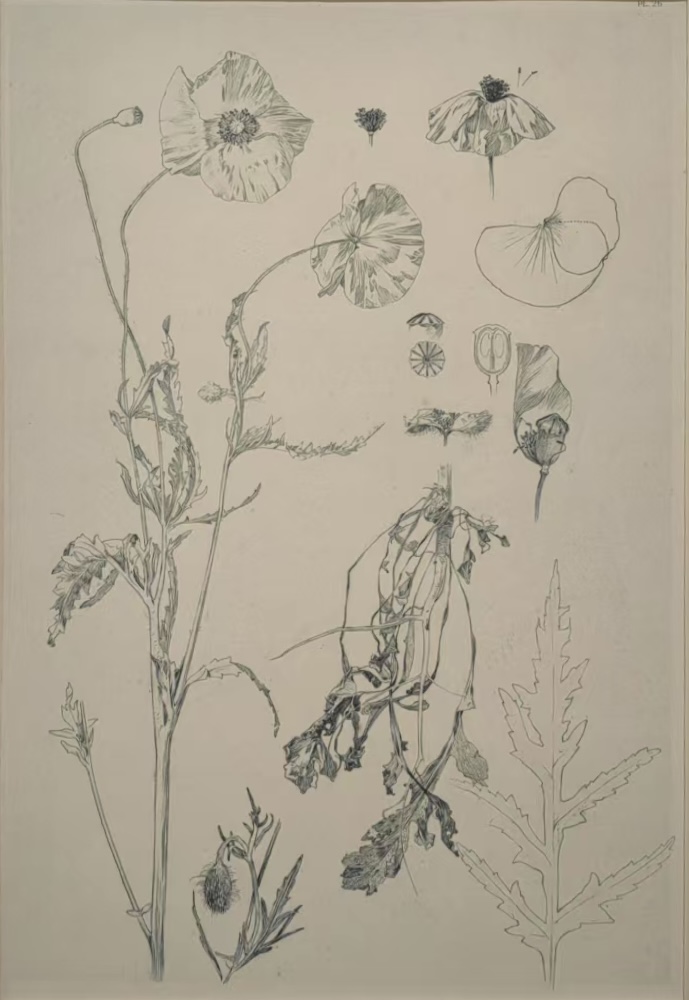
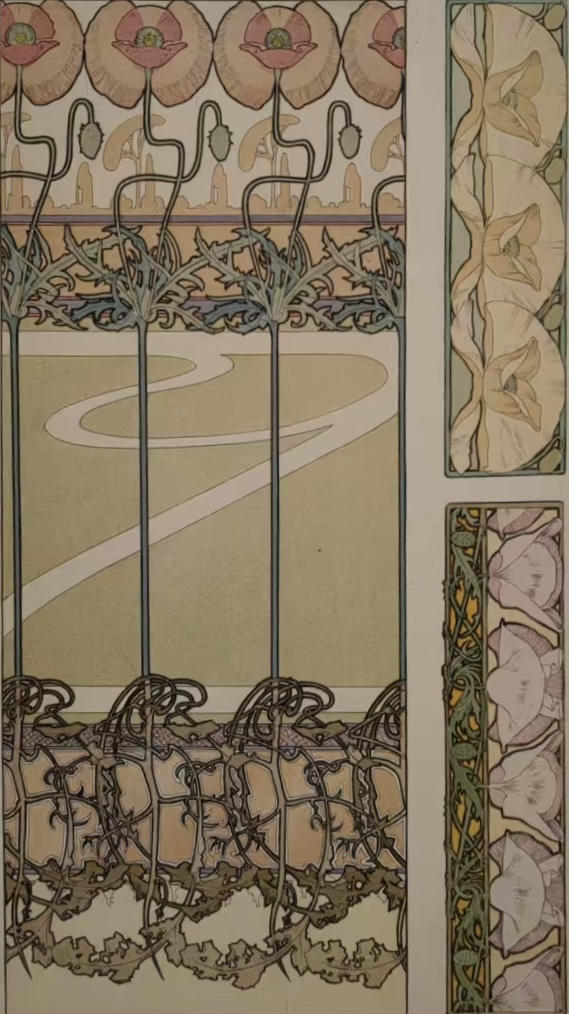
The Beijing exhibition also included Mucha’s Documents Décoratifs (1902) and Figures Décoratives, which illuminate his design process. Starting with naturalistic drawings, he stylized the forms into patterns, further abstracted the pattens to space-filling shapes, and finally applied it to various objects. My grandmother’s sketches, found in her archived drafts, follow a similar path. 

The overlapping principles and methods Mucha and my grandparents used in creating artworks make me think that the divide between fine art, decorative art, and even commercial art is so arbitrary – barriers the entire Art Nouveau movement sought to break. Whether painting or designing, for a product or for a gallery, there’s no shortcut to achieving an effective artwork. As long as the artist stays true to his craft and vision, there’s no high or low in the process.

Mucha’s Destiny: Art for the People

Born in 1860 in Ivančice, Moravia, Alphonse Mucha rose from modest beginnings to become the king of Art Nouveau, yet his ambitions reached beyond artistic movements. Trained in Munich and Paris, his career soared with the 1894 Gismonda poster for Sarah Bernhardt, launching the “Style Mucha”—sinuous lines, floral motifs, and idealized women. But Mucha saw his talent as a divine gift, carrying a responsibility to serve a higher purpose. He declared, “I wish to be an artist who paints for the people, rather than one who pursues art merely for art’s sake.” With this conviction, Mucha created posters not just for products but as art for all, choosing the format to democratize beauty. Works like The Seasons (1896) or The Arts (1898), with no commercial tie, were affordable and visible on Paris streets, meant to uplift the masses. Yet, his vision faced irony. The models for his elegant figures were often poor women, whose reality was far removed from the flowing bouquets, lace, and ornate garments of his art. His idealized style became a fashion for wealthy salons, an escapism that defined Art Nouveau’s allure. Mucha lamented this disconnect: “I saw my works decorating the salons of high society… My time, my most precious time, consumed on these, while my homeland was like a stagnant pool drying up. In my soul, I knew I was sinfully squandering what belonged to my people.”
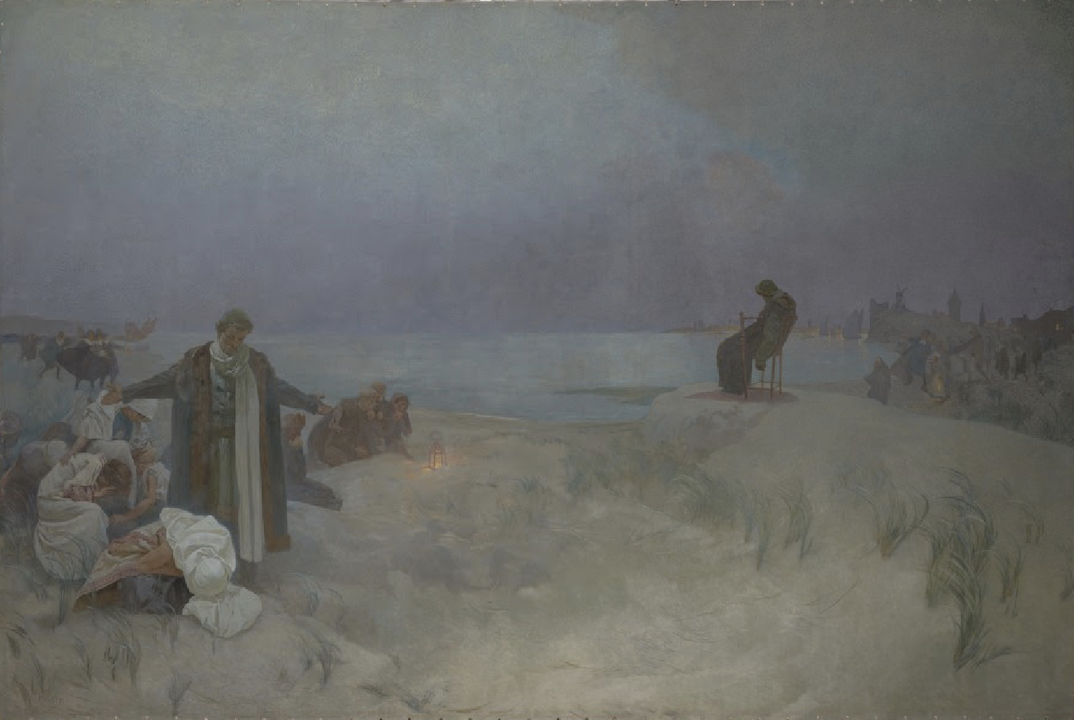
The Last Days of Jan Amos Komenský in Naarden, oil on canvas, 8.1 x 6.1 m, 1912

This frustration drove him to create The Slav Epic (1912–1926), a series of 20 monumental canvases celebrating Slavic history and identity. Donated to Prague in 1928, it responded to the formation of Czechoslovakia, reflecting Mucha’s Czech pride and vision of Slavic unity. The Beijing exhibition’s final section featured a digital, animated version of the Epic on a large screen, a choice I found misguided. In The Last Days of Jan Amos Komenský in Naarden, the original’s somber stillness conveys profound hope, but animating the grass or figures dilutes its emotional weight. Perhaps I am old-fashioned, but I believe each art form has its own language, and I am never a fan of the popular trend of “immersion” experience where famous paintings are translated into 3D projection. On the other hand, I can sympathize with the show organizers’ intention in doing so – likely an attempt to draw a larger, younger crowd with modern technology. Given his own efforts to democratize art through accessible posters, one could argue that Mucha might very well embrace all the novel methods to spread beauty!
Mucha’s Legacy: Beauty, Unity, and Revival

Mucha believed truth, love, and beauty formed the foundation of the human spirit. Art Nouveau, with its organic forms and curves, rose against the academic rigidity and the drabness of industrialization. Mucha’s flowing lines and harmonious designs offered an antidote, a vision of creation rathe than destruction. Yet, by the 1930s, as modernism embraced abstraction, his style fell out of favor, seen as outdated. After his death in 1939, his work was neglected, with The Slav Epic stored away until the 1960s.

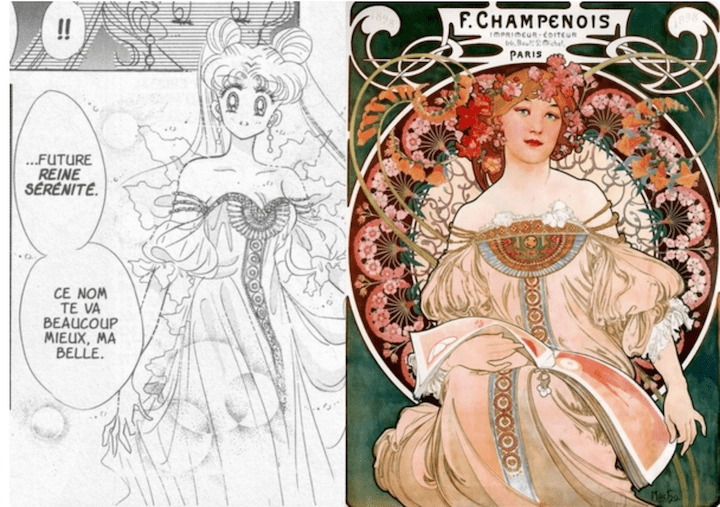
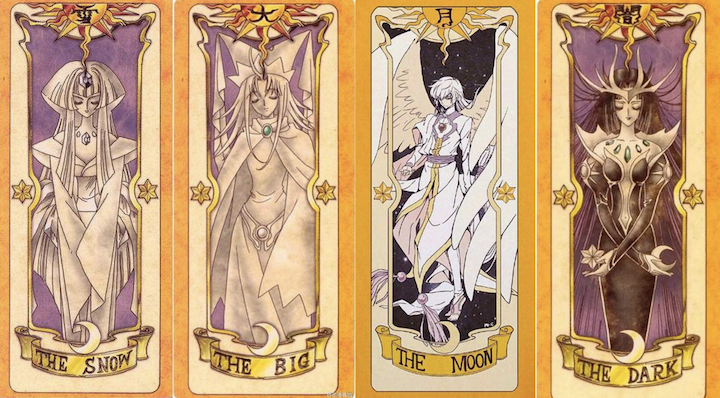
The 1960s counterculture revived Mucha’s aesthetic, his sinuous lines inspiring psychedelic rock posters and album covers. His influence extended to Japanese manga, particularly among the “Year 24 Group” of female artists in the 1970s, who pioneered shōjo manga. Works like Naoko Takeuchi’s Sailor Moon and CLAMP’s Cardcaptor Sakura echo Mucha’s floral backgrounds, geometric halos, and vine-wrapped compositions. Mucha’s influence on popular art laid the groundwork for his global resurgence, evident in recent exhibitions worldwide. This is also not the first time Mucha has been exhibited in Beijing. In fact, Mucha is so loved by the Chinese that there’s a museum dedicated to him in central China. I believe Mucha’s resurgence reflects more than stylistic appeal. Much of postmodern aesthetics prioritize incomprehensibility or deconstruction, while rejecting traditional beauty. Mucha’s art, rooted in continuous creation and human connection, offers a counterpoint. He wrote, “We must hold on to the hope that humanity can unite as one, and the more we understand each other, the closer this hope will become a reality.” His revival signals a yearning for love, beauty, and unity in a fragmented world.

The Making of a Selfie

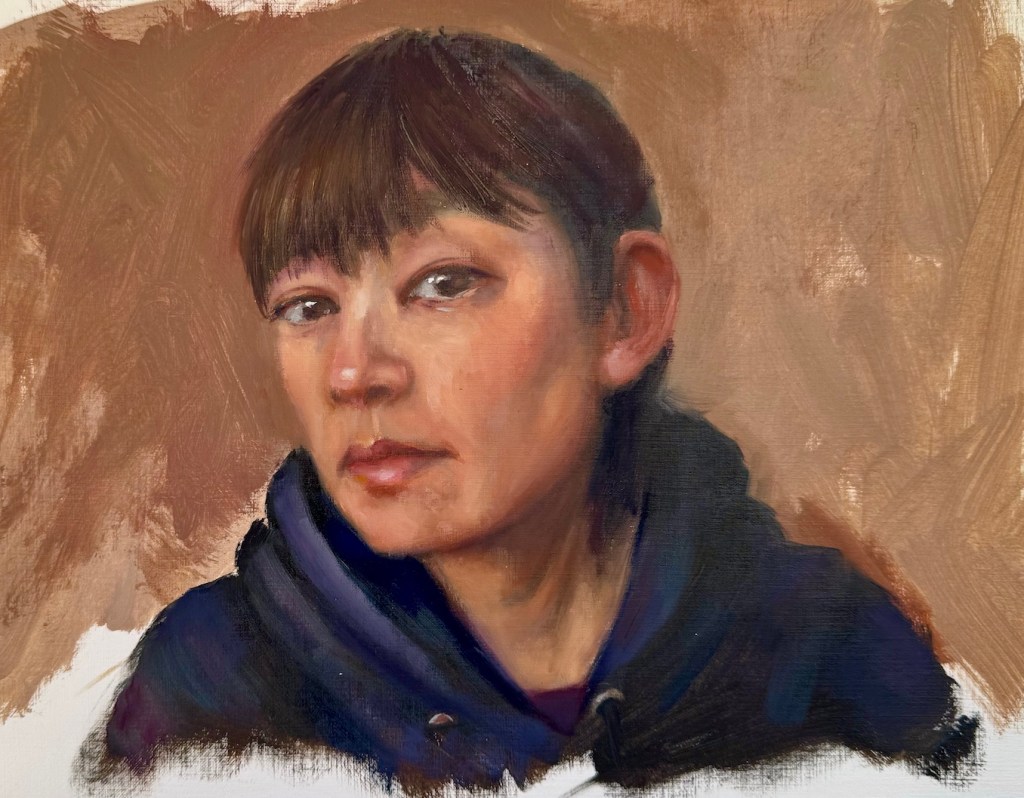
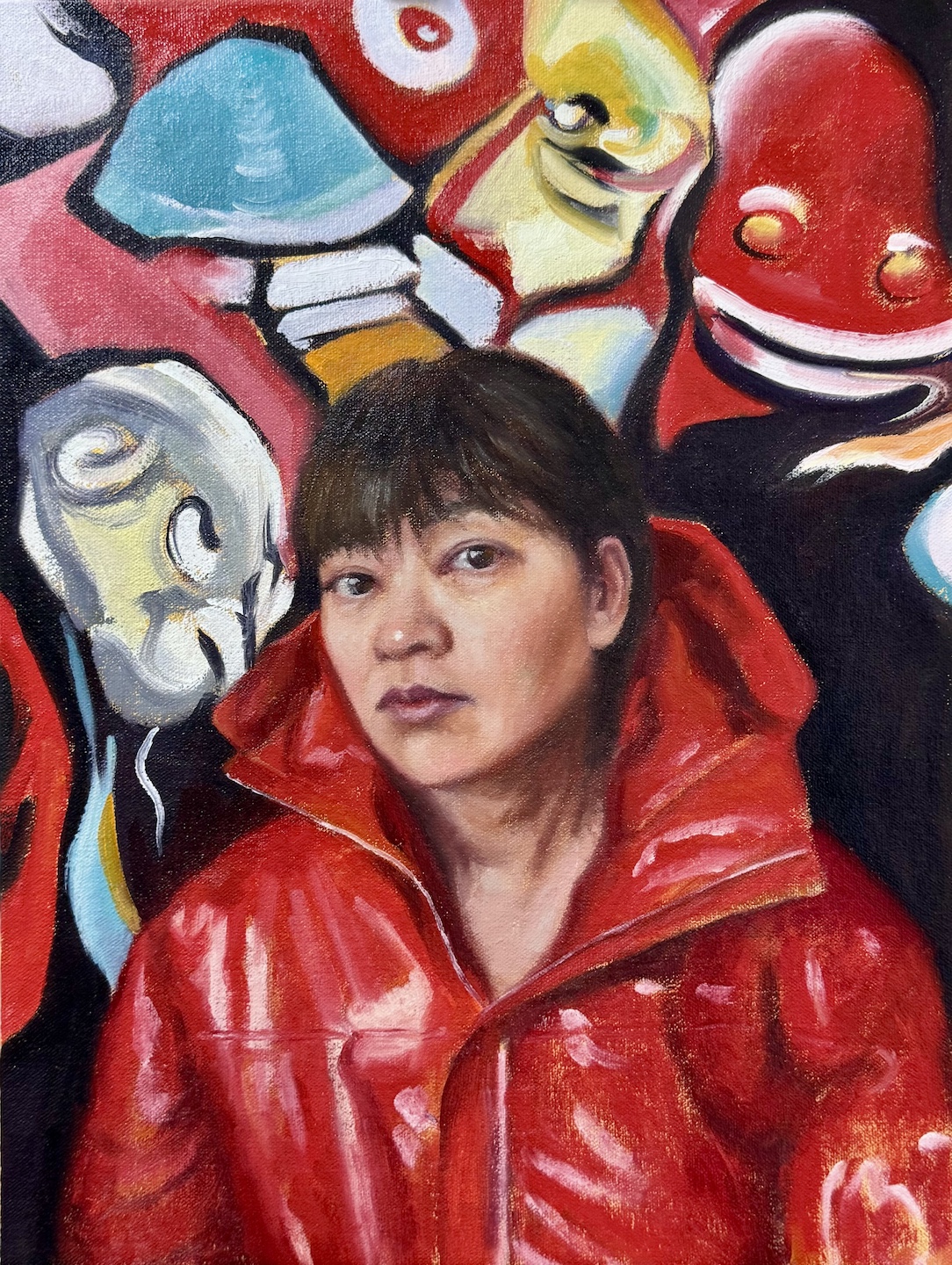
Two things have become a common practice for me. One: after a break from art making, I get back into the practice with some quick portrait sketches. Two: when I’m stumped for ideas, I turn the brush on myself and paint a self-portrait. Back in January, after a string of trips, I followed this pattern. I painted a series of head sketches. One of them was me – live model with a fresh hair cut, why not?

Each time I painted myself, the likeness never feels right, and limited by the using of a mirror, the expression and posture often come out stiff and uninspired. So, did this sketch have the potential to be developed into a real painting? What could I do to make it better and more engaging?

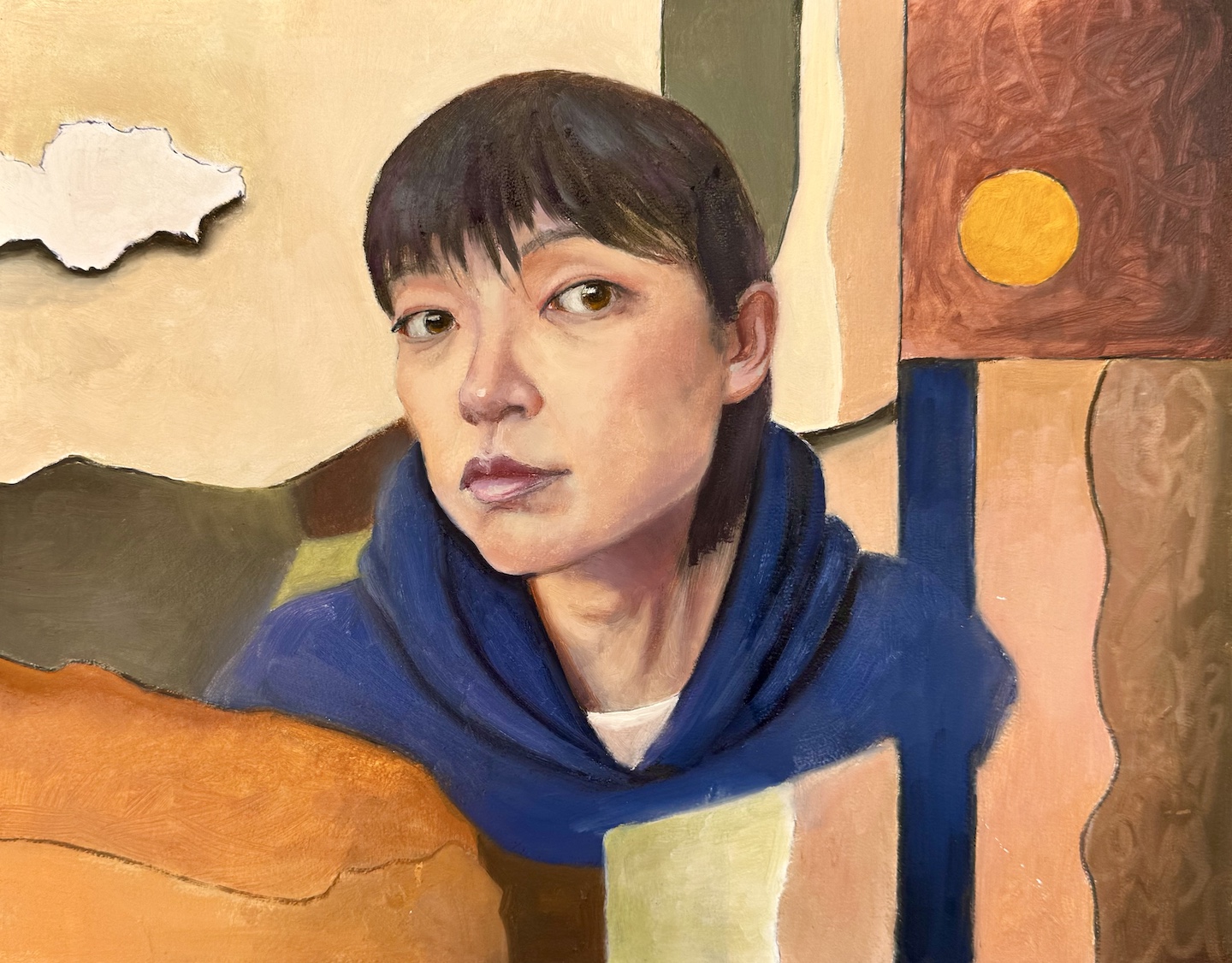
In a more serious attempt, I envisioned a flatter and more stylized approach. I picked warm tones close to my skin color for the background – partly for harmony, partly to pop against my blue hoodie. I used abstract shapes to balance the realistic face. To lean into the flat design, I outlined everything with a Sharpie first, and then filled in the colors, letting some of the black lines show through. The collage-like result is a step up from the sketch. I wanted the face to stay more stylized and almost blend into the fragmented background, but the more I worked on it the more it slid back into a standard realistic portrait. Eventually, I just stopped.

Me, oil on board, 11 x 14 in, Feb. 2025

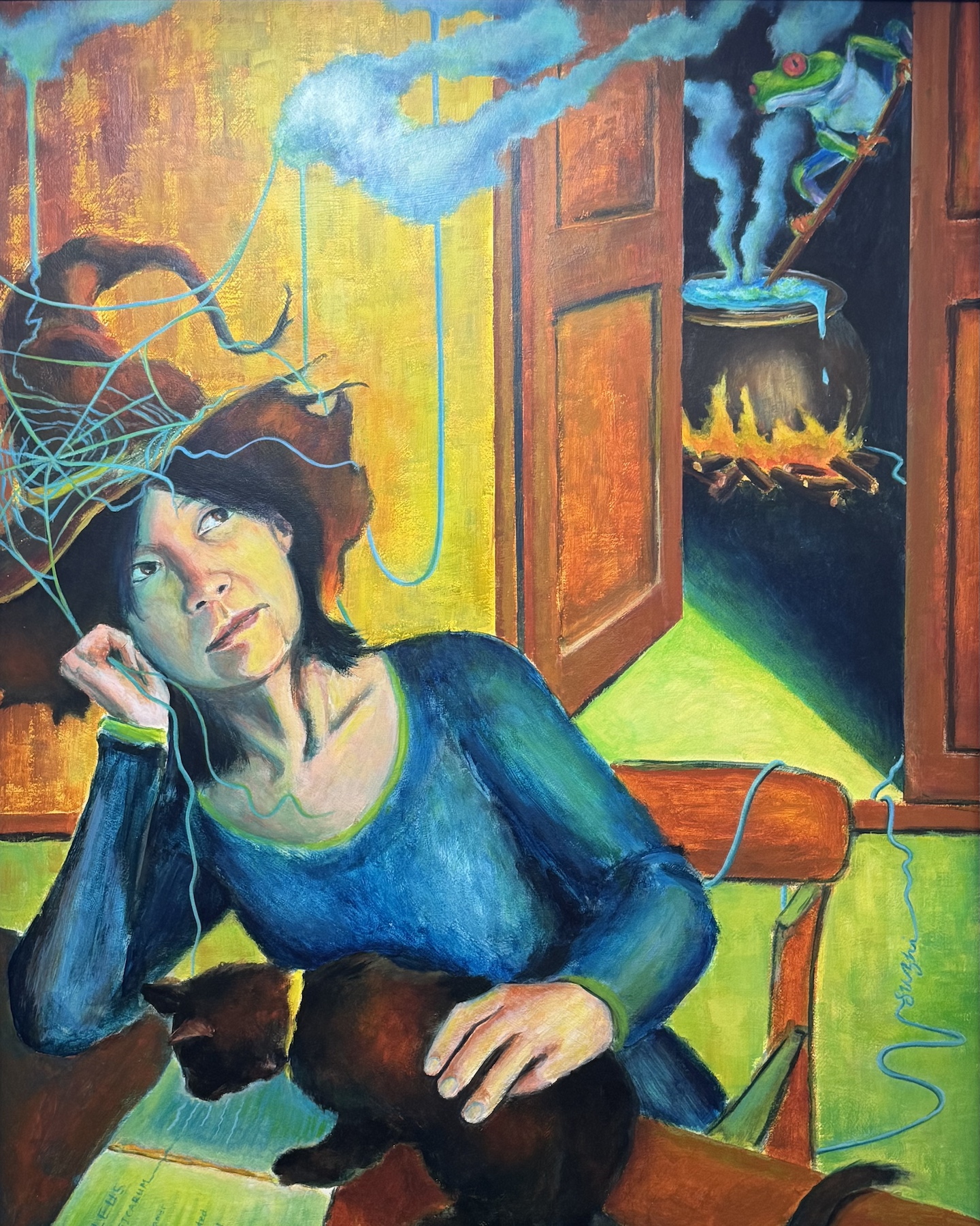
That got me thinking: Is aesthetic the only thing I could work on? What else could I do to make the painting a bit more meaningful? I recalled a self-portrait I did years ago in a class. The teacher told us to paint ourselves in a different role. I went with a witch – surrounded by classic witchy themes with my own spin: a frog brewing potions and a black cat reading the Malleus Maleficarum (often considered the first major anti-witchcraft document). While the painting was crude in execution, but dreaming it up and piecing it together was a blast.

Me, acrylic on board, 30 x 24i in, April 2020

So why not give it some character? Pick a costume I’d never wear in real life (I’m a muted-hoodie kind of person), or visualize some thoughts I usually keep under wraps? I went for a bolder color and more dynamic palette. I still wanted the face to feel like part of the design, but this time, I let it be drowned by the unsettling shapes, vibrant colors and swirling energy. I kept the ideas of black outlines but used the paint instead of Sharpie this time, allowing more varied and expressive marks. That hint of punk—is it just wild imagination, or a quiet piece of me sneaking out?

Me, oil on canvas board, 12 x 16 in, March 2025

In retrospect, neither of my paintings addressed the likeness or posture issues that bothered me in the first place. In the process of further creation, they became irrelevant. Painting’s at its best when it’s a journey—when it’s messy, exploratory, and forces you to reckon with yourself.

Art Podcasts – My Short List

Most of the time when I paint, I listen to audiobooks and podcasts on a variety of topics—philosophy, technology, economics, even geopolitics—the majority of which aren’t art-related. I find music distracting, as if the two art forms are vying for my attention. The eclectic mix of subjects I explore keeps me engaged, and even when I don’t fully grasp the discussion, the thrill of learning something new oddly fuels my creativity and deepens my focus on painting.

That said, I do follow a handful of art podcasts from time to time. My initiation to this experience was The Draftsmen Podcast, hosted by artists and instructors Stan Prokopenko and Marshall Vandruff. They dive into the craft of drawing, painting, and image-making, offering practical advice for aspiring artists—especially those skipping art school—on finding resources, building a self-learning system, and promoting their work. The podcast ran for three seasons before pausing due to the hosts’ busy schedules, but all episodes are still available on YouTube. Even if you don’t listen to the old talks, check out their channel for the episode covers—hilarious parodies of famous paintings featuring the duo. It’s a clever, arty touch.

The Week in Art from The Art Newspaperis my go-to for global art news. It delivers insider insights into exhibitions, museums, and auctions. Sometimes it  also covering major copyright lawsuits and policy changes that ripple through the art world—content I’d otherwise overlook. It’s the one podcast I can truly “listen” to without needing visuals.

My favorite and the most relevant is The Undraped Artist, hosted by Jeff Hein, a master realist painter himself. His guests are some of the world’s most accomplished traditional artists—like Jeffrey T. Larson,Michael KleinScott Christensen, Alex Venezia, and Mario A. Robinson. Interviews typically begin with the artist’s early days in art, trace their career paths, and explore insights on painting techniques and professional growth. Jeff often examines the guest’s work on air, offering comments and asking questions. For this reason, watching on YouTube—especially during these segments—is ideal, though the audio alone is still rich with inspiration.

A fresh addition to my list is Idiosyncratic Nightmare, where hosts Michael Klein and Stephen Bauman—both highly accomplished realist artists—interview a guest while creating their portrait. In the first two episodes, Bauman sketches with graphite, and Klein paints in oil. It’s like watching two master demos unfold simultaneously, paired with a thoughtful conversation. The candid interview with Tania Rivilis taps into the struggles almost all artists experienced. It is a comfort and encouragement at the same time. This one’s a must-watch on YouTube, and do stay till the end of each episode where the duo speed painting their portrait to a more finished stage. I’m rooting for this podcast to take off.

Finally, there’s Talk Art, recommended by my pal Grok3. Hosted by actor Russell Tovey and gallerist Robert Diament, it’s possibly the longest-running art podcast around, now in its 24th season. I haven’t tuned in yet, but I’m excited to explore its extensive interviews with artists of various caliber—also not just realists, but a broader mix of voices from the art scene. With so many back episodes, it’s a goldmine for anyone needing something to listen to while painting.

Share your favorite and happy listening—and watching!

Happy New Year! Still Life and Brushes

Between trips and holidays, I only managed a few small paintings, and here they are:

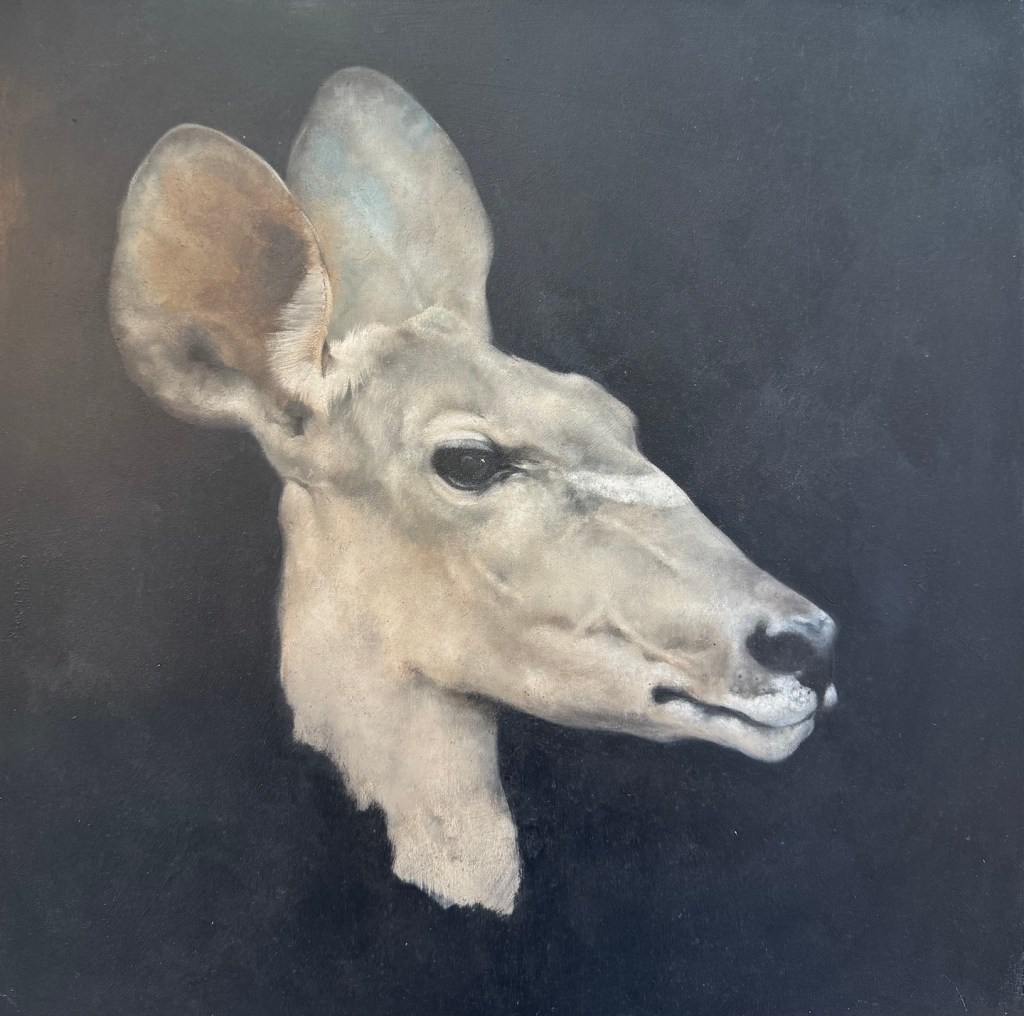
Turtle, oil on canvas, 12 x 16 in, Fall 2024
Bottle and Cups, oil on canvas board, 11 x 14, Fall 2024
Tea Time, oil on canvas board, 9 x 12, November 2024
Peaches, oil on paper, 9 x 12, Fall 2024

The turtle one shows my natural noisiness. I have doubts about the subjects all the way: I believe the arrangement works compositionally, but is it too manipulated? I also know I was sloppy with the flowers. Overall, however, there’s a delightful tone from the piece that makes me like it. I guess that’s my Happy Holidays!

With the bottle and the teapot ones, I was really going for a sense of tranquility and harmony. I hope I am at least close. The peaches one is about texture. I wanted to capture that fuzzy and velvety glow of both the fruit and the plastic bag. Did I? 

I have given up on washing my brushes with soap for a couple of years. Each time after painting, I clean my brushes with Gamsol, wipe them dry with a paper towel, dip them in a mixture of safflower oil and clover oil (98:2), and lie them flat in a tray with a cover. The recipe is from Draw Mix Paint. Ever since I adopted this method, I haven’t destroyed any brush yet. Since my last trip was a long one, before I left, I covered my brushes with the mixture, put them in a sealed palette box, and store the whole thing in the refrigerator. Two and a half months later, they are fresh and ready to go. Yay!

Happy 2025 and happy painting!