I almost missed it.
The first time I went to Ueno Park, I visited the Tokyo National Museum, accidentally dropped into Tokyo University of Arts’ Sunday Museum for their 50th anniversary retro exhibition, and spent the rest of the day with Andrew Wyeth at the Tokyo Metropolitan Museum of Art. The National Museum of Western Art (NMWA) wasn’t even on my list. A few days later, heavy rain cancelled my Hakone plans and suddenly gave me extra museum hours. I figured I should go, if only for the building. The New York Times had called it something with “artistic significance and beauty” that could rival the paintings inside, but my expectations were low.
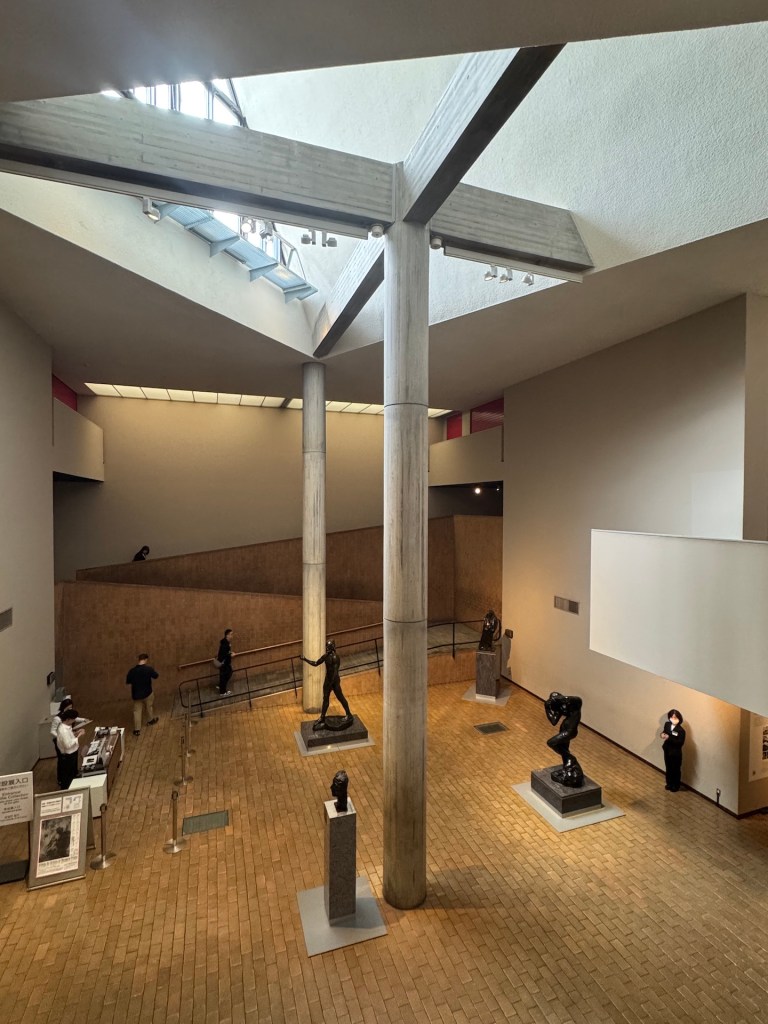
The main building of NMWA was designed by Le Corbusier (1887-1965), his only project in the Far East. It’s a concrete poem of his Five Points of Architecture. Pilotis lift the whole structure off the ground for an open, airy entrance. Inside, the square-spiral plan wraps around a central courtyard that pours natural light from above, exactly the “Museum of Unlimited Growth” he liked to dream up. Reinforced concrete with those textured precast panels gives it an honest, almost sculptural presence. Le Corbusier even asked for details of the collection while designing so the spaces would feel right for the art. It didn’t outshine what was inside, though.
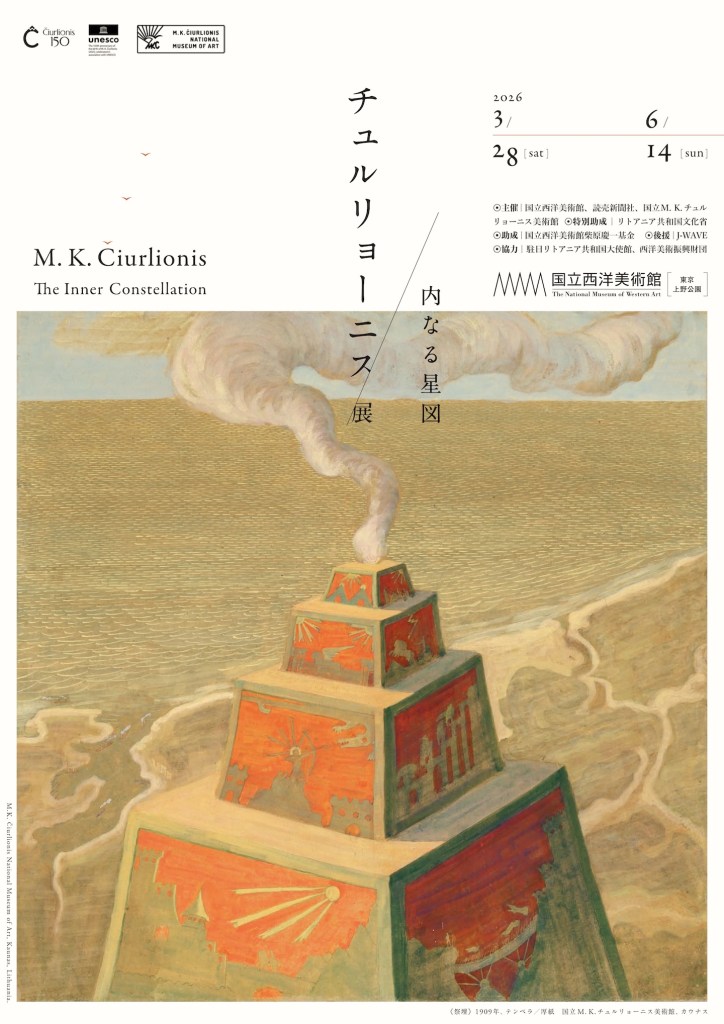
I first followed the crowd to the special exhibition: M. K. Čiurlionis: The Inner Constellation, a retrospective of the Lithuanian artist to commemorate his 150th birthday. This was the first time I’d heard of him. Čiurlionis (1875-1911) is Lithuania’s national treasure, a composer and painter whose life was cut short at 35. He composed some 400 pieces of music and, in just six years of serious painting, left more than 300 works. His musical training and talents were woven straight into his canvases: polyphony, sonatas, fugues, and he even titled works after musical structures. His paintings draw from Lithuanian nature, history, and ancient folk tales while also reaching into theosophy and astronomy to explore the human spirit and cosmic mysteries. The show puts special focus on the synthesis of the arts and synesthesia.
The exhibition is loosely structured in chapters: Prologue, Rhythm of Nature, Symphonic Paintings, Fantasy Dedicated to Lithuania, and Epilogue. What hit me first was the overall atmosphere. The paintings carry a close, harmonious value range with subtle shifts in tone that keep everything unified and quietly luminous. Contours do not push hard, and lines are fine and incredibly delicate. There’s a strong Art Nouveau decorative sensibility running through them, but it is not merely ornamental. Some pieces feel like picture-book illustrations with a hint of contemporary art.
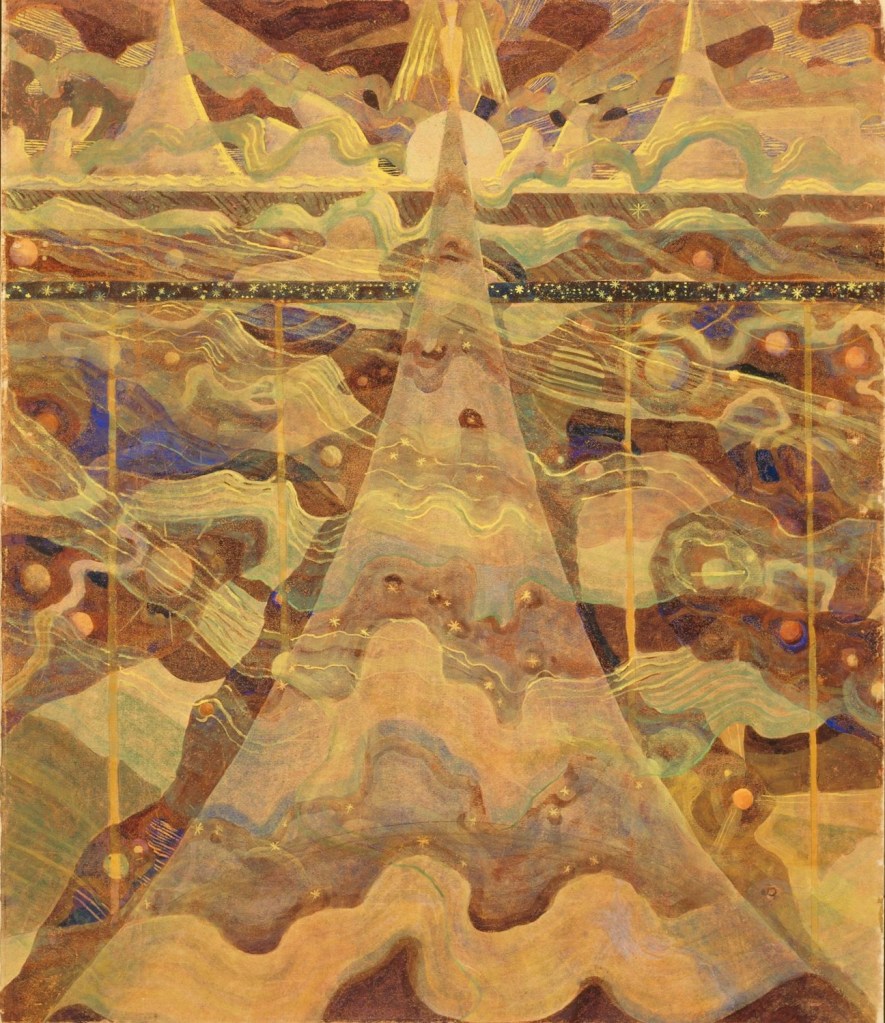
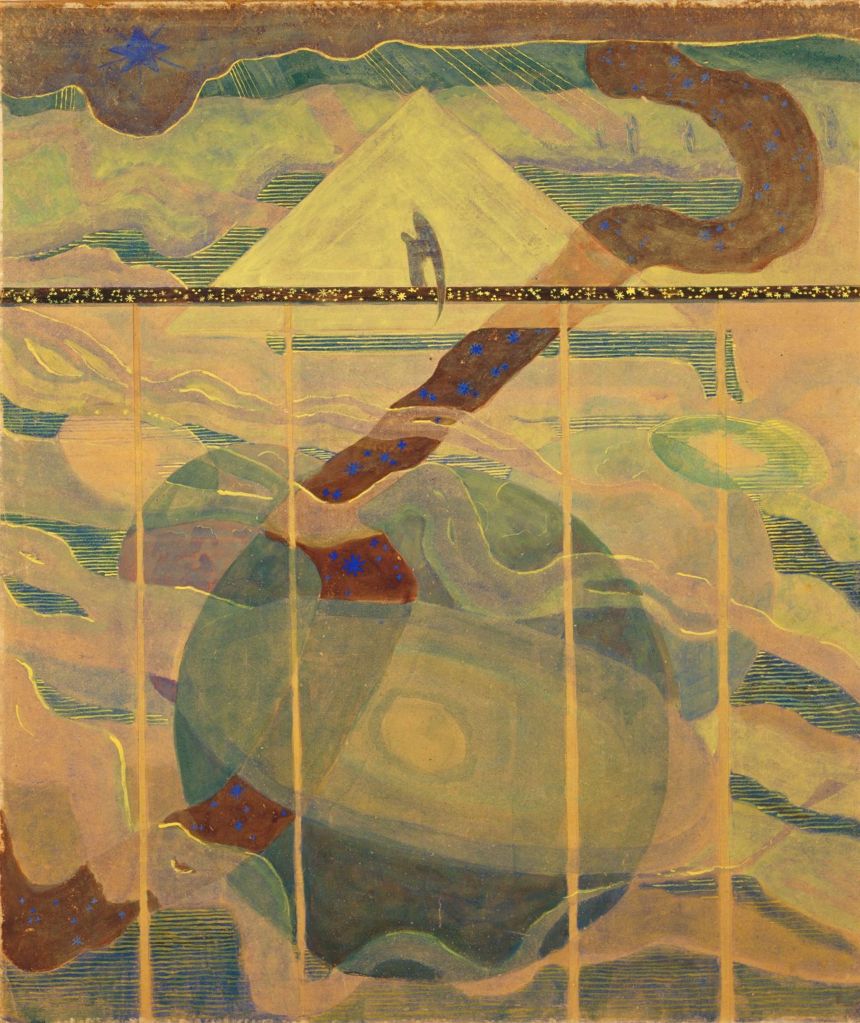
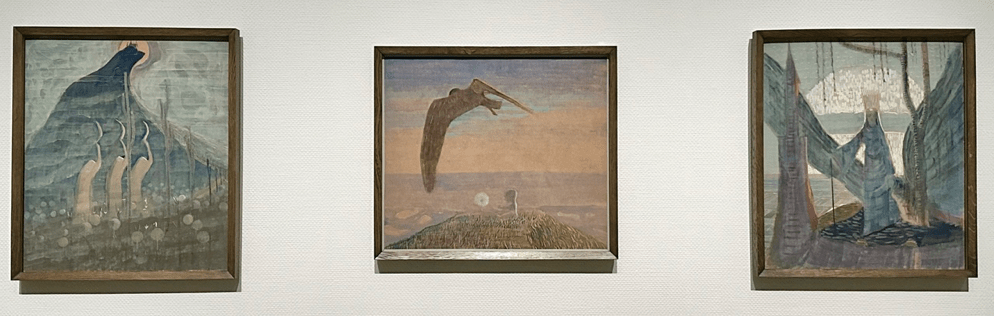
That musicality comes through most clearly in the sonata series. The show includes three of the seven he created: the Third (Serpent Sonata), Fifth (Sea Sonata), and Sixth (Sonata of the Stars), all from 1908. Each movement is named after a musical tempo. The Sixth Sonata (Sonata of the Stars) is an artistic envision of outer space. Allegro depicts a chaotic yet beautiful cosmic space with galactic mists. A single horizontal band studded with stars runs across the composition like a Milky Way ribbon suggestive of space undulating as it intersects with planets and stars, generating a rhythm that resolves what initially appears to be chaos into harmony. There is strong vertical symmetry disrupted by oceanic whorls cascading through the composition, creating a sense of unity. Čiurlionis layers tempera to create rich, complex color in golds, warm browns, reds, and deep blues. In Lithuanian tradition the Milky Way is the path traveled by the souls of the dead, who continue living somewhere beyond it. The angel’s figure echoes that infinite journey. Of course Čiurlionis did not paint music literally but used rhythm of line and plane, flexibly waving forms, overlapping levels of landscape to create an effect of expanded space. When you look at the sonatas in sequence you start to feel the movement structure. These are high-level multimedia pieces before the term existed.
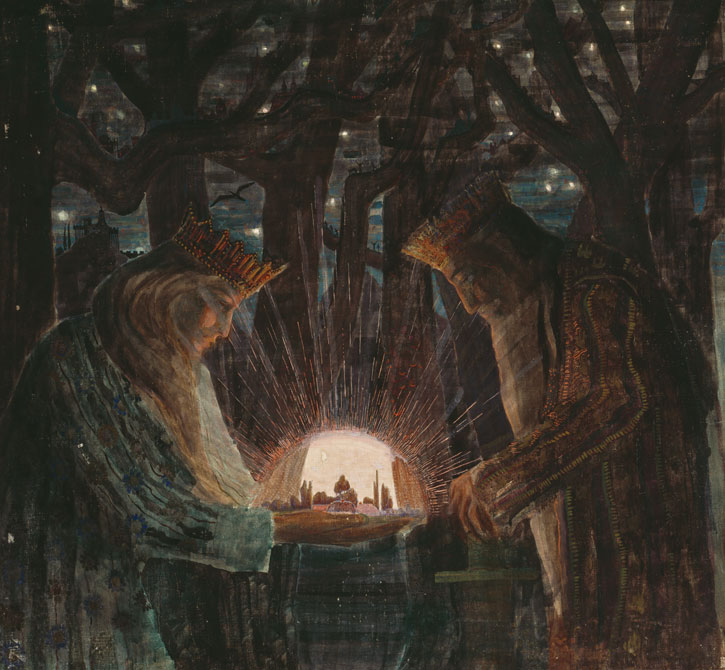
From 1907 onward Čiurlionis developed his own “fairy tale” vein— magical worlds, kings, princesses, knights, journeys, roads. In Fairy Tale of the Kings (1909), two kings face each other in a night forest, gazing at a glowing dome that contains Lithuania’s beautiful natural scenery and countryside. They embody a kind of duality, worldly rulers yet guardians watching over small Lithuania from outside.
Historian Greta Katkeviciene notes that the Lithuanian countryside and nature were very important to Čiurlionis, and the folklore coming from it dictated many of his subjects. This was at a time when Lithuanians were trying to define their identity under the Russian Empire, so the idea of a national art rooted in folklore was more than aesthetic; it was necessary.
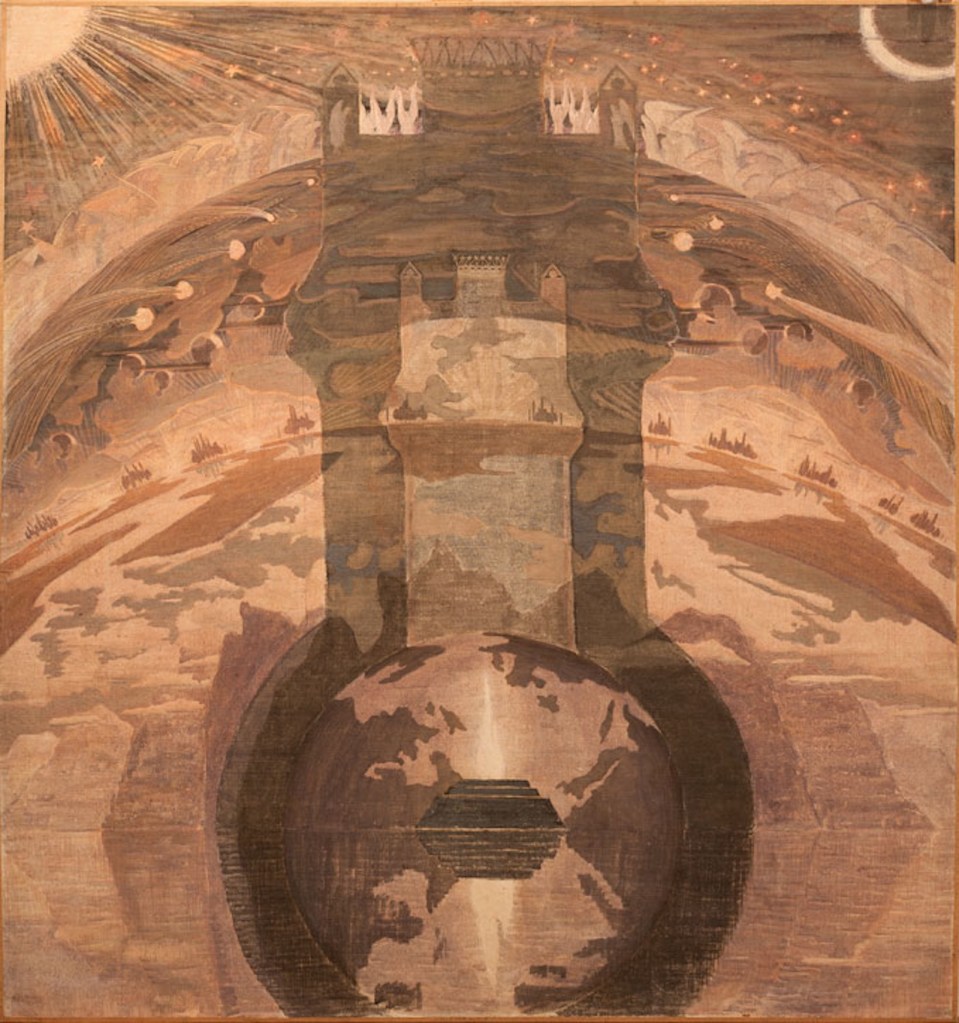
The exhibition closes with his largest and perhaps most iconic work, Rex (1909). This piece most fully shows his thought and formal explorations. On a canvas woven from beautiful tonal light and shadow, the four elements, fire, water, earth, and air are condensed. Under a structure as intricate as a grand symphonic poem, countless stars, angels, and trees repeat in layers while a double, semi-transparent king sits on the earth as if vertically piercing the cosmos. The whole composition has the feel of an intricate pattern or tapestry. Čiurlionis fused everything he had absorbed, Lithuanian nature worship, Hinduism, Egyptian mythology, theosophy, astronomy, and natural science, into one narrative system.
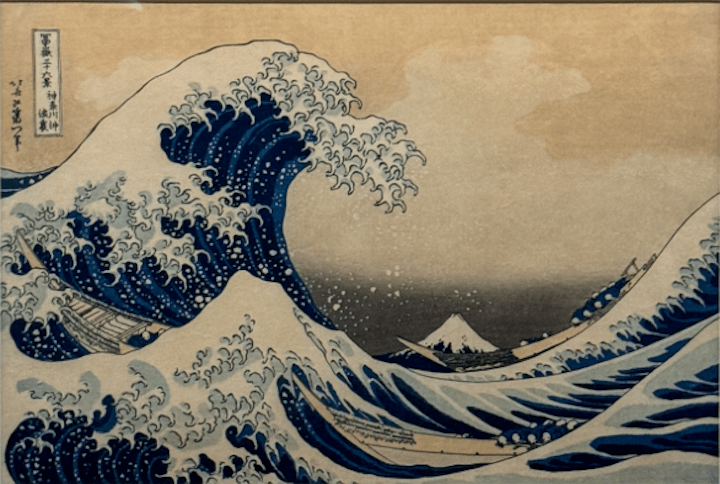
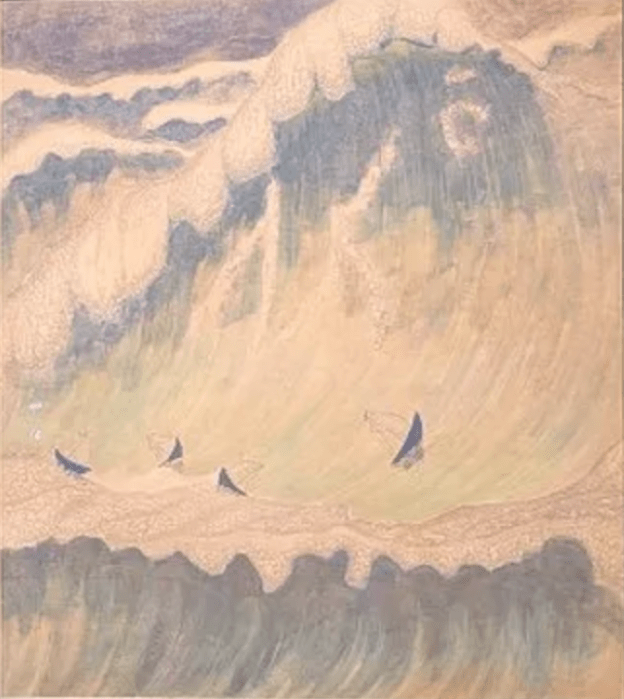
Čiurlionis was not widely traveled, but the influences of Symbolism, Art Nouveau, Japonisme, Whistler, and early Kandinsky are all there. It was almost too perfect that a major exhibition of Katsushika Hokusai’s (1760-1849) most famous Thirty-six Views of Mount Fuji was running at the same time. Though a Japanese artist, Hokusai’s work had profound influence among the Impressionist movement and beyond in the West, even on Čiurlionis. When one walks out of the subdued Čiurlionis directly into the saturated and clearly defined world of Hokusai, contrast is the first feeling. Yet you can see the resemblance in some pieces right away. For example, the finale of Čiurlionis’s Sea Sonata (Sonata No. 5), where a rugged large wave engulfs some boats, reminiscent of Hokusai’s Great Wave off Kanagawa. Superficial similarity aside, the way two artists compressed space into a decorative flatness, the subtle rhythmic quality, and the pictorial schemes all resonate. Seeing the two exhibitions side by side in Tokyo felt like a gentle wink from the universe, or at least from very thoughtful curators.
After the special exhibitions I visited the permanent collection of NMWA. It’s uncommon to find an entire museum devoted to Western art outside the West, and the permanent collection here punches well above its modest size. The museum holds roughly 4,500 to 6,000 works, including paintings and sculptures from the Renaissance through the mid-20th century. The core is the Matsukata Collection, which features Western works (heavy on French Impressionists and Rodin) gathered in Europe by Japanese industrialist Kōjirō Matsukata, but it is thoughtfully broader and still adding each year. Because of limited space they rotate the permanent displays from time to time, which is actually a nice invitation to come back. Every piece seems chosen with a clear eye for artistic quality and draftsmanship. You get the sense of a curator well-versed in Western art history who also understands a Japanese audience and takes care to build the bridge.
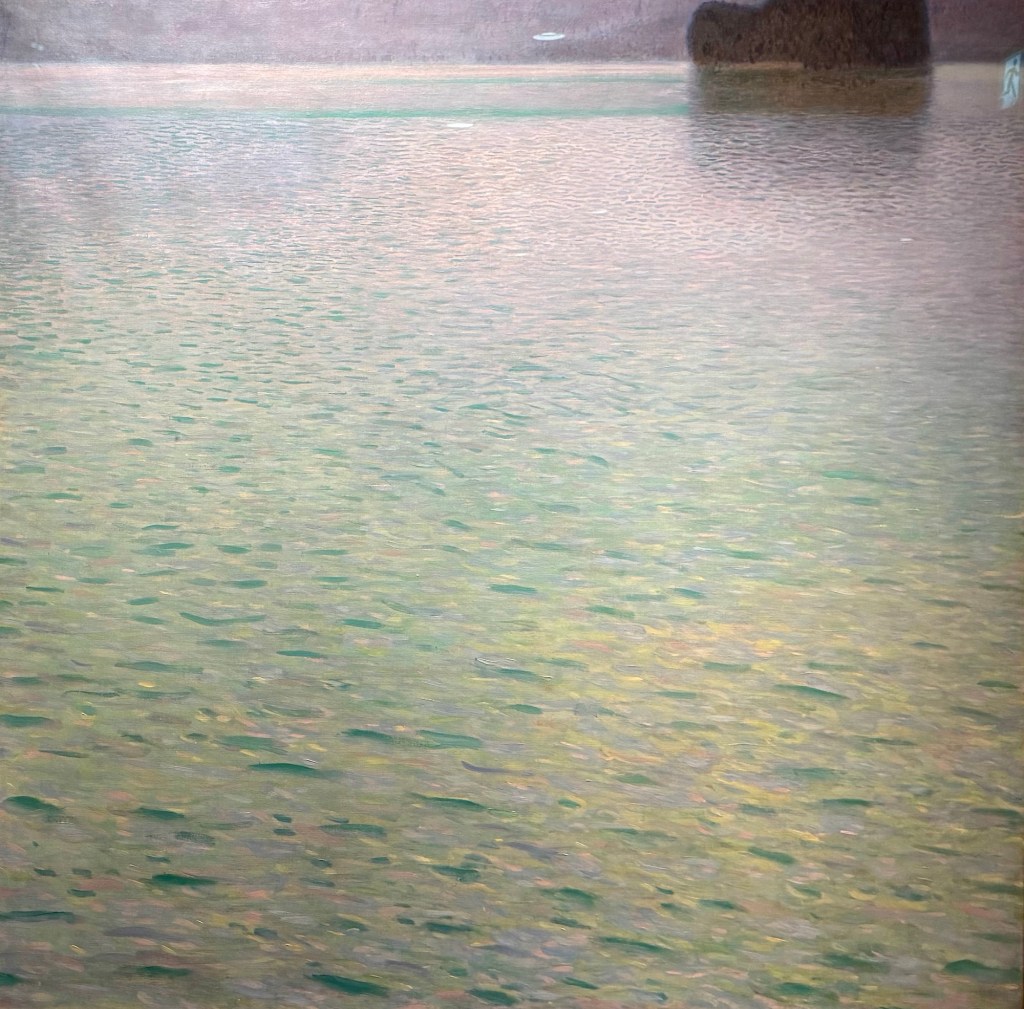
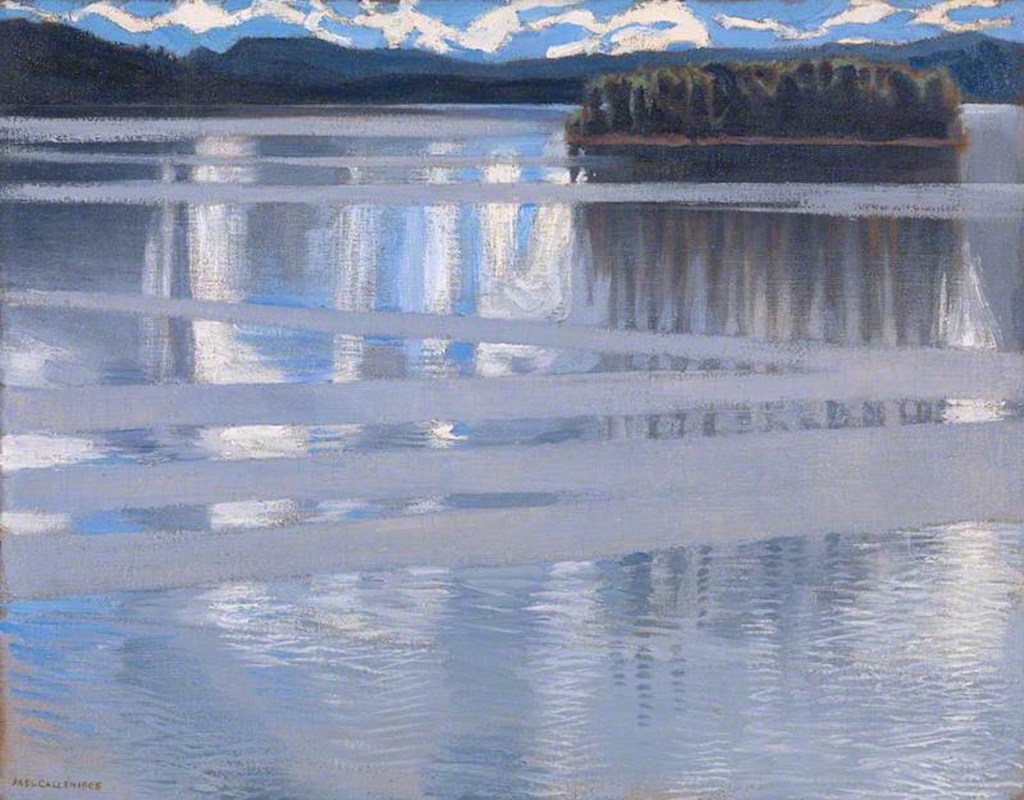
A perfect example is how they’ve paired Klimt’s Island in the Attersee with Akseli Gallen-Kallela’s (1865–1931) Lake Keitele. This isn’t the most iconic Klimt (no glittering golden portraits here), but it’s high quality and pivotal in his career. It is a calm landscape with hidden rhythm. Around the turn of the century, after the clamor surrounding his more allegorical works, Klimt created these lake images almost as a way to escape into a quieter world. The square format and the way he builds rhythm through repetitive yet irregular short brushstrokes that visualize ripples and light reflection on the water feel like pure artistic experimentation. Beside it is Lake Keitele, a work of similar subject and even similar composition, yet with completely different energy. Akseli Gallen-Kallela was a Finnish artist, less familiar to the world in comparison. This is one of his most recognized pieces. It is energetic, with zigzag linear forms that suggest wind across the water and the wake of a boat, evoking Väinämöinen, the poet-hero of the Finnish saga Kalevala. It’s nation-making, almost political, yet also introspective, with an awareness of the primitive world and a tendency toward abstraction. Not the shiniest pieces, but there is so much to appreciate and chew on. You leave having seen a famous name from a fresh angle and discovered a gem you might not have sought out otherwise. They also sit comfortably with Japanese aesthetic sensibilities, subtle, atmospheric, and and in tune with a contemplative spirit.
Museums don’t have to be the size of the Louvre or the Met to matter. In fact, the smaller scale here is part of the appeal. You get high-quality work without the pressure to “do everything.” The architecture itself (a UNESCO-listed Le Corbusier building) becomes part of the looking. You encounter artists who might get lost in bigger institutions, or the lesser-known aspect of a famous one. You’re invited to linger with niche perspectives but deeply original voices. High-quality draftsmanship, thoughtful arrangement, rotating displays, and with local audience in mind make the whole place feel welcoming, alive and generous.
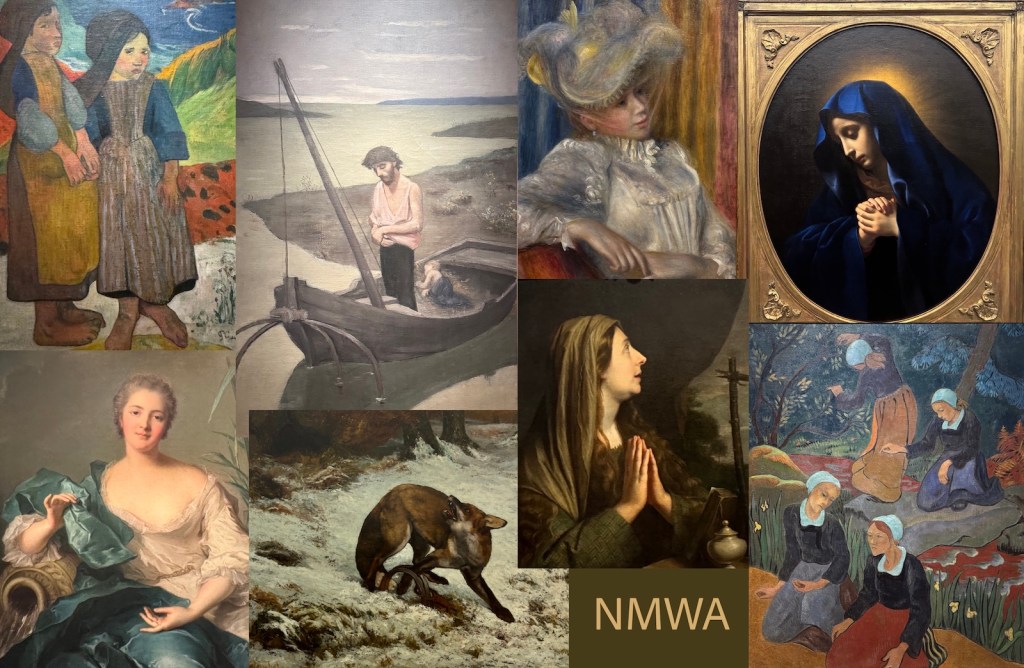
I left feeling refreshed, and quietly grateful that Tokyo had made space for this particular meeting of unexpected connections. NMWA is a solid museum for Western art, a showcase for Japanese deep understanding and appreciation of Western culture, and a window for us to see how the West is presented and perceived from outside. Sometimes the most meaningful stops happen in the places you almost skip.

