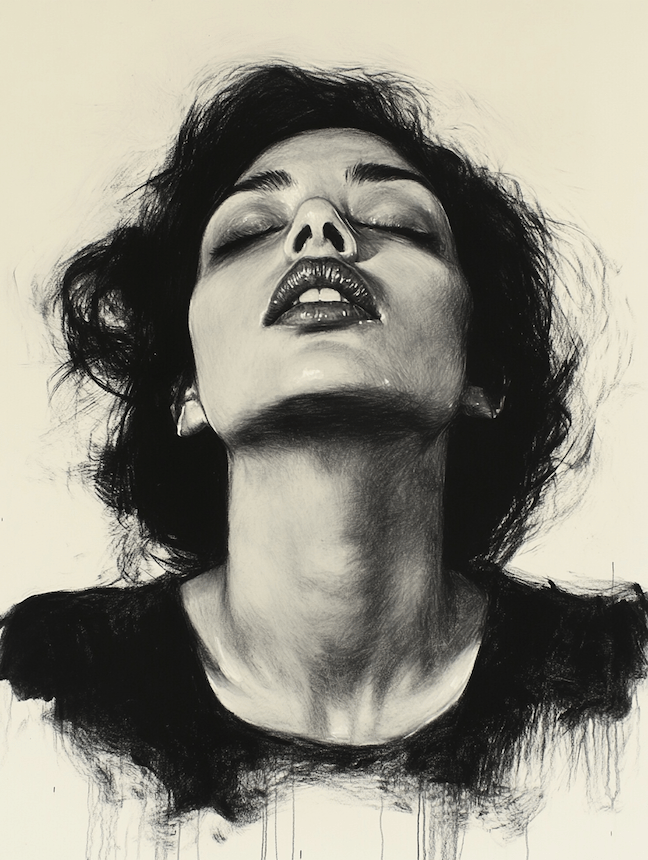
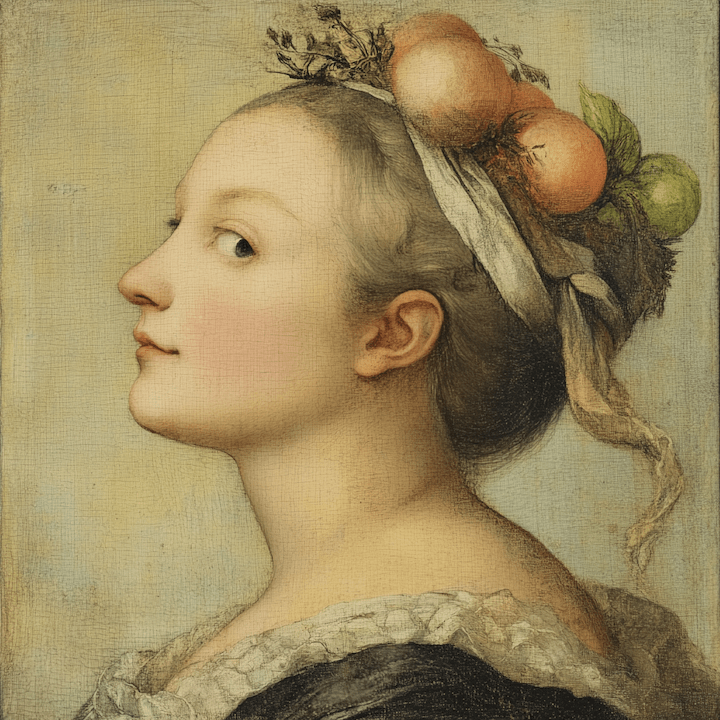
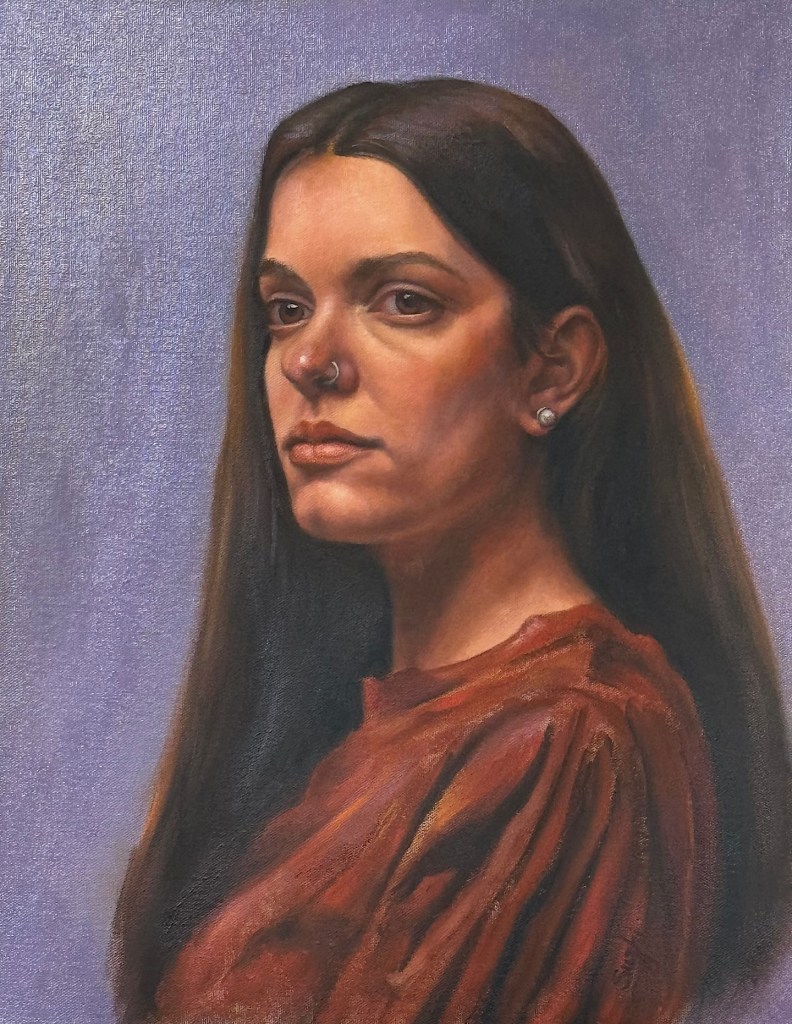
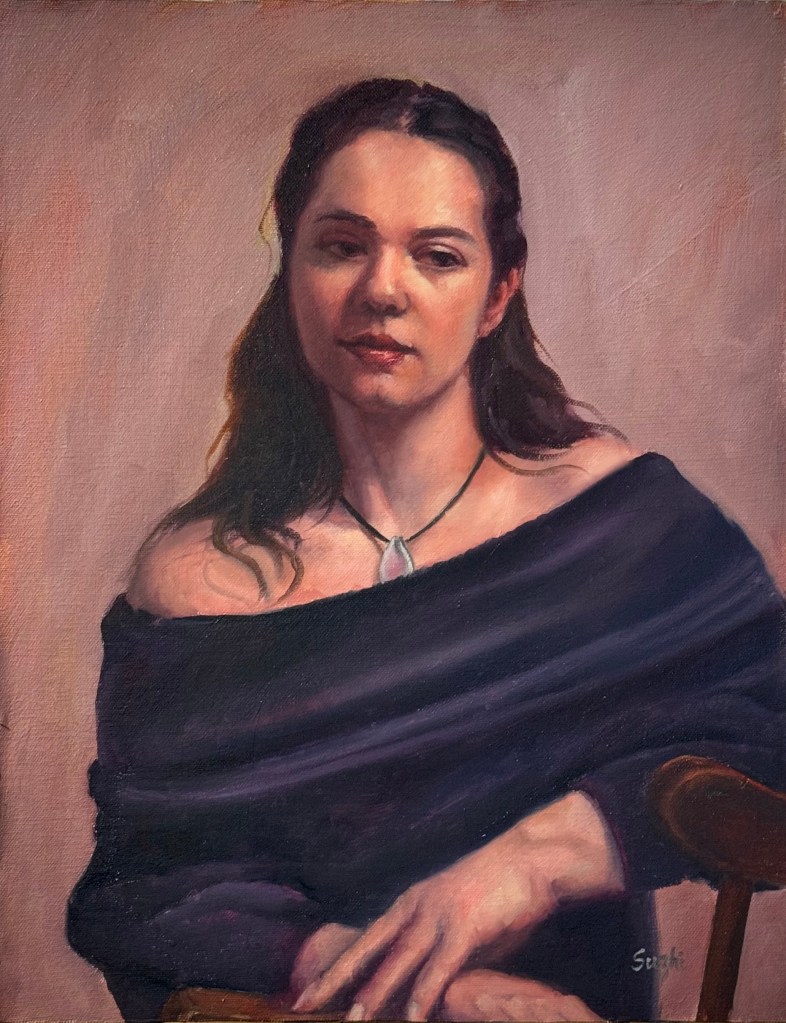
Category Archives: #portrait

Experimenting with Portrait Creation

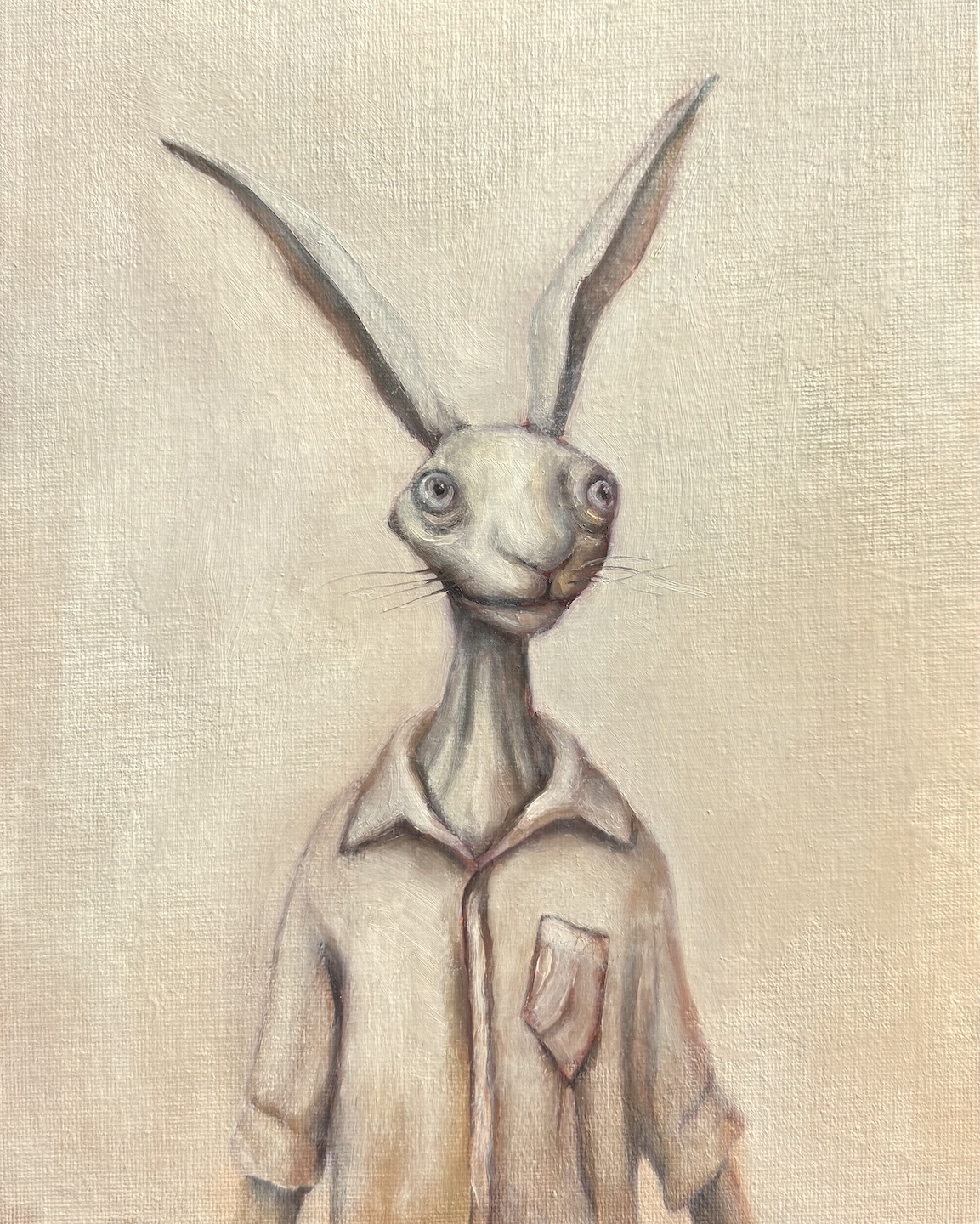
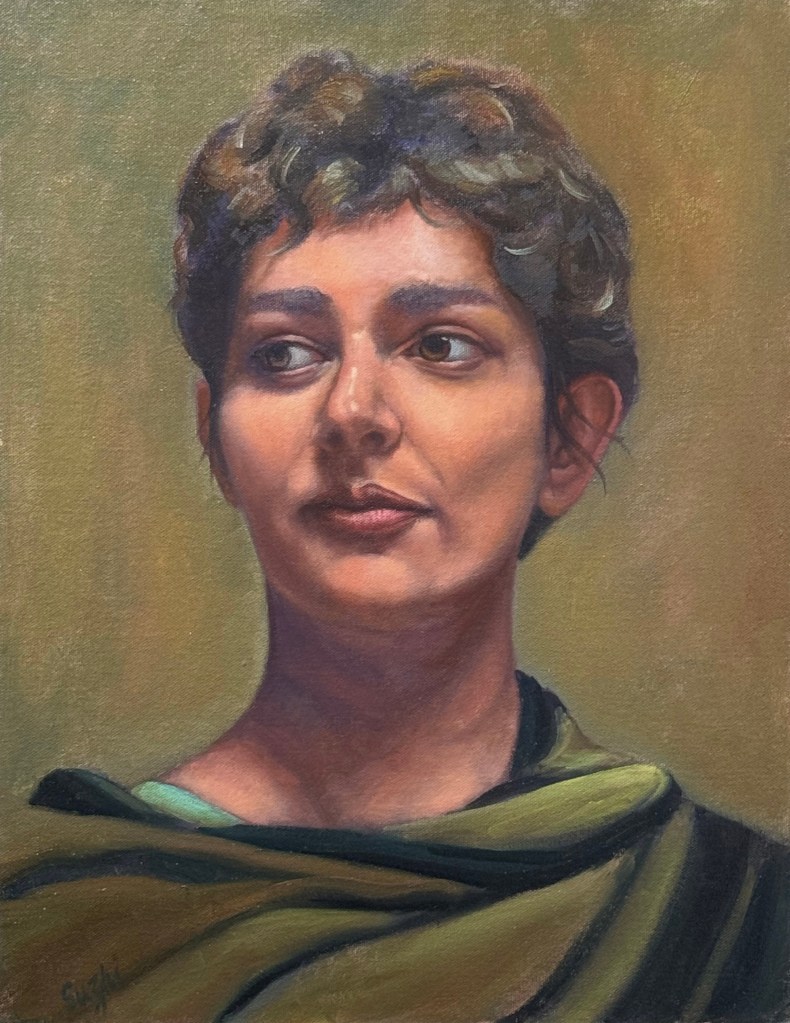
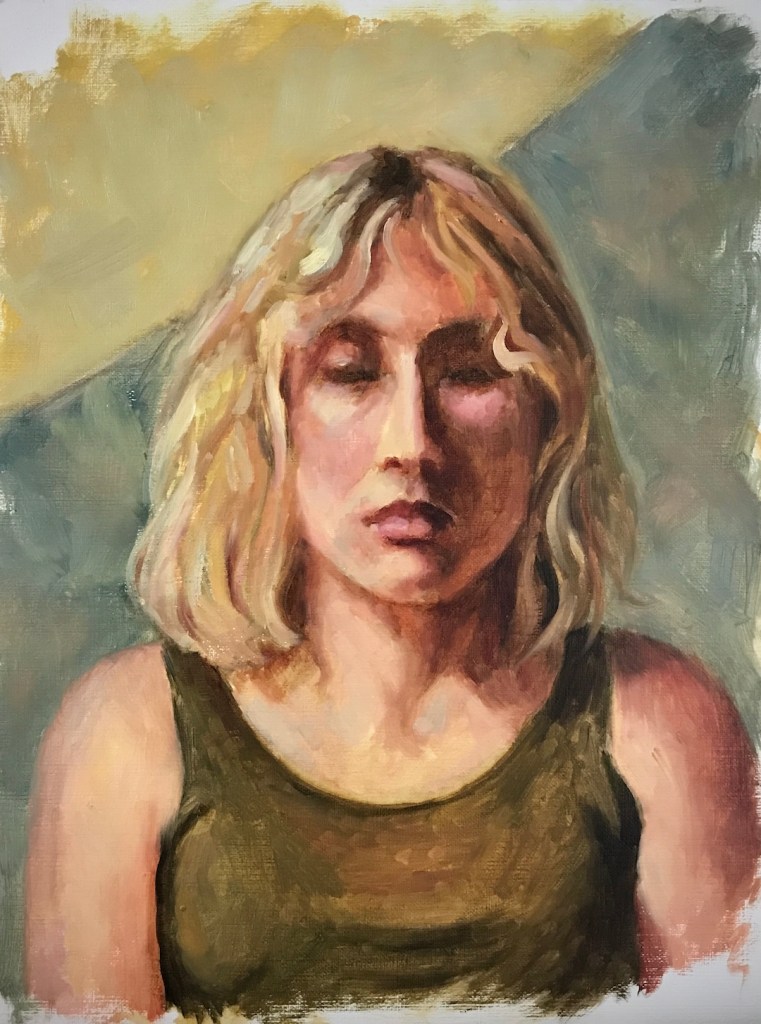
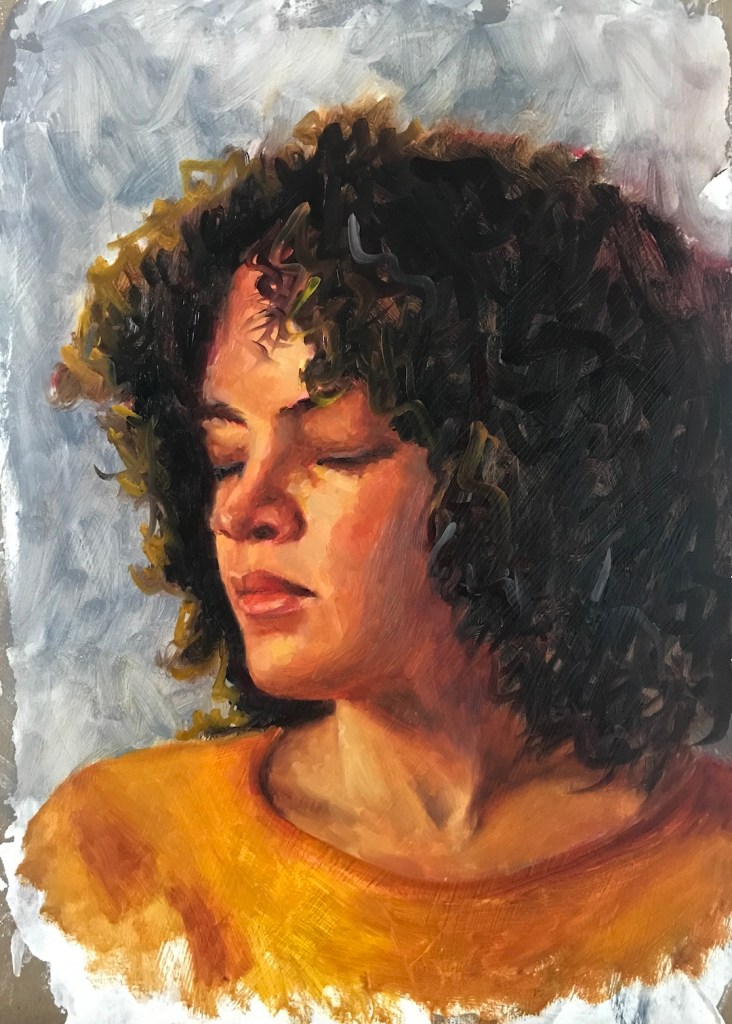
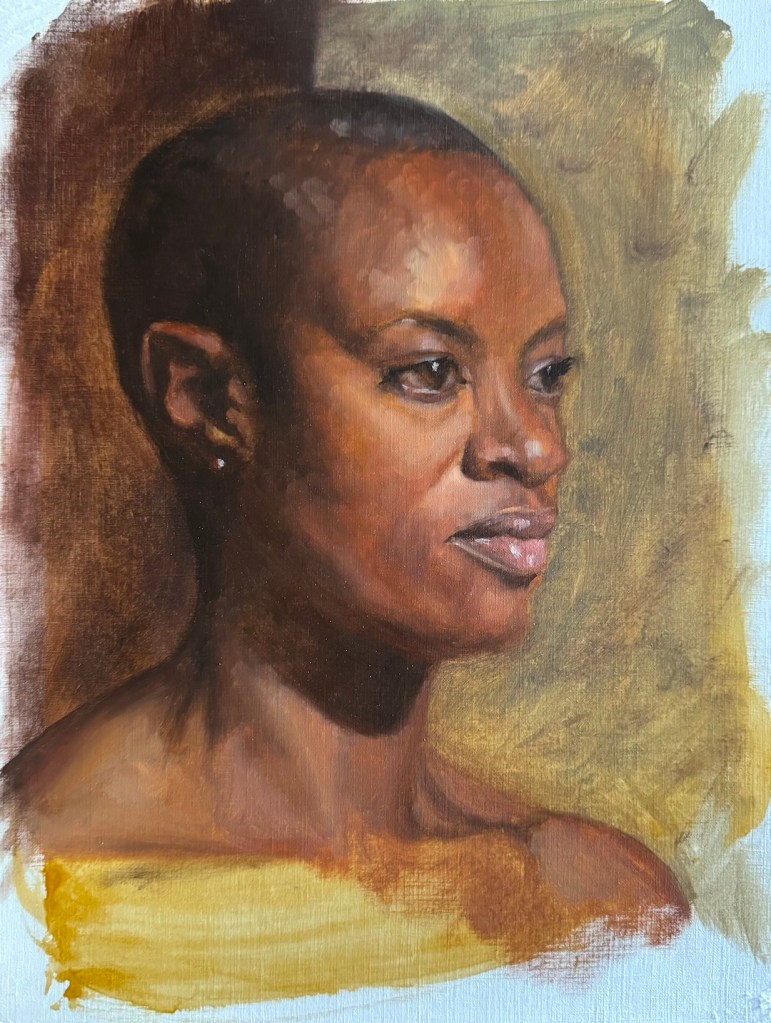
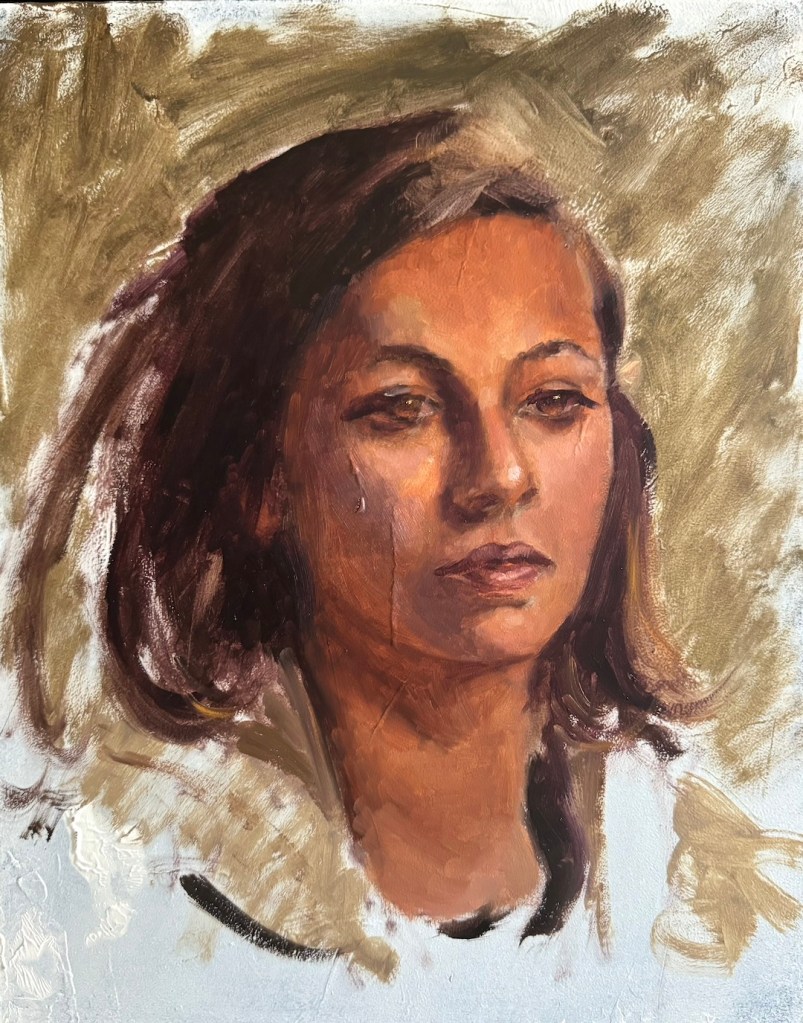
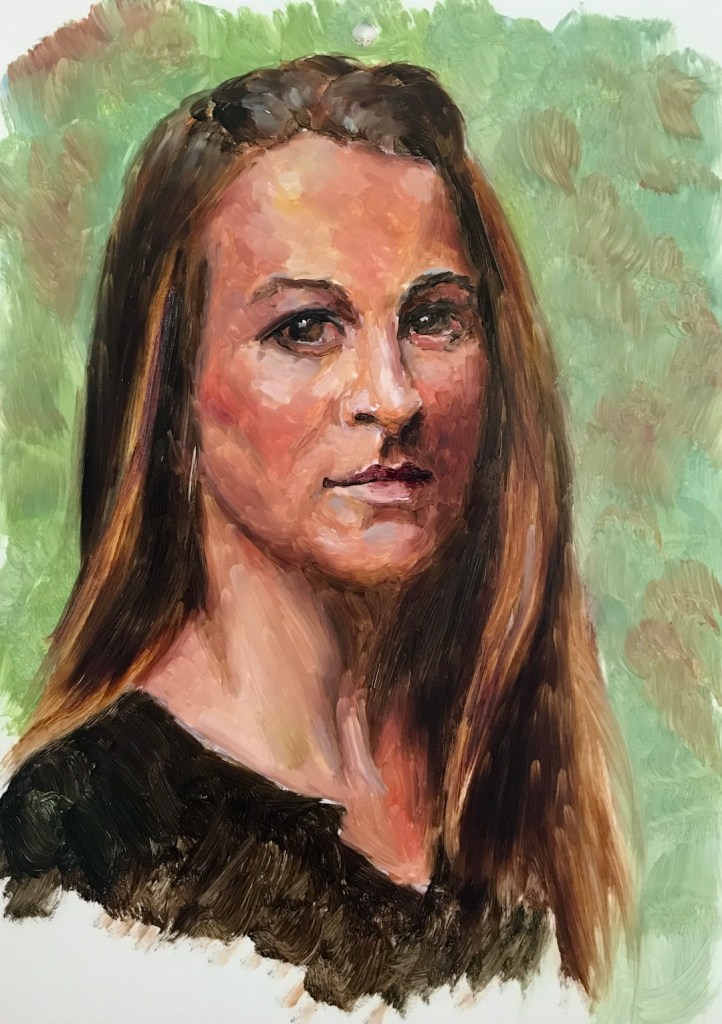
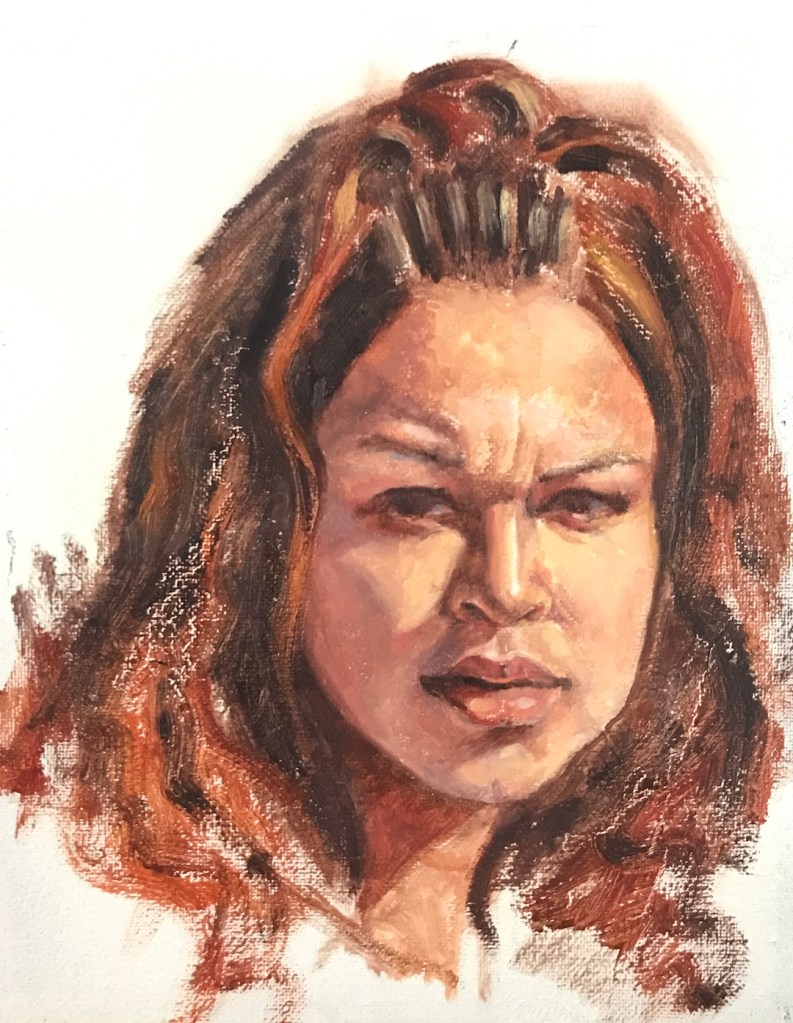
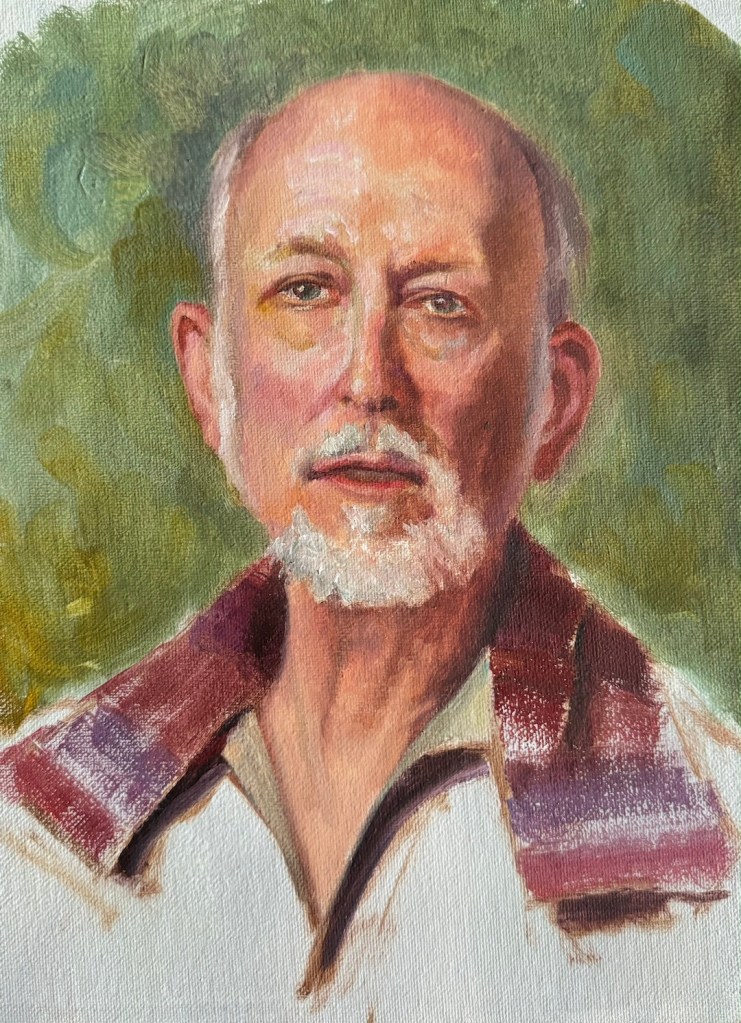
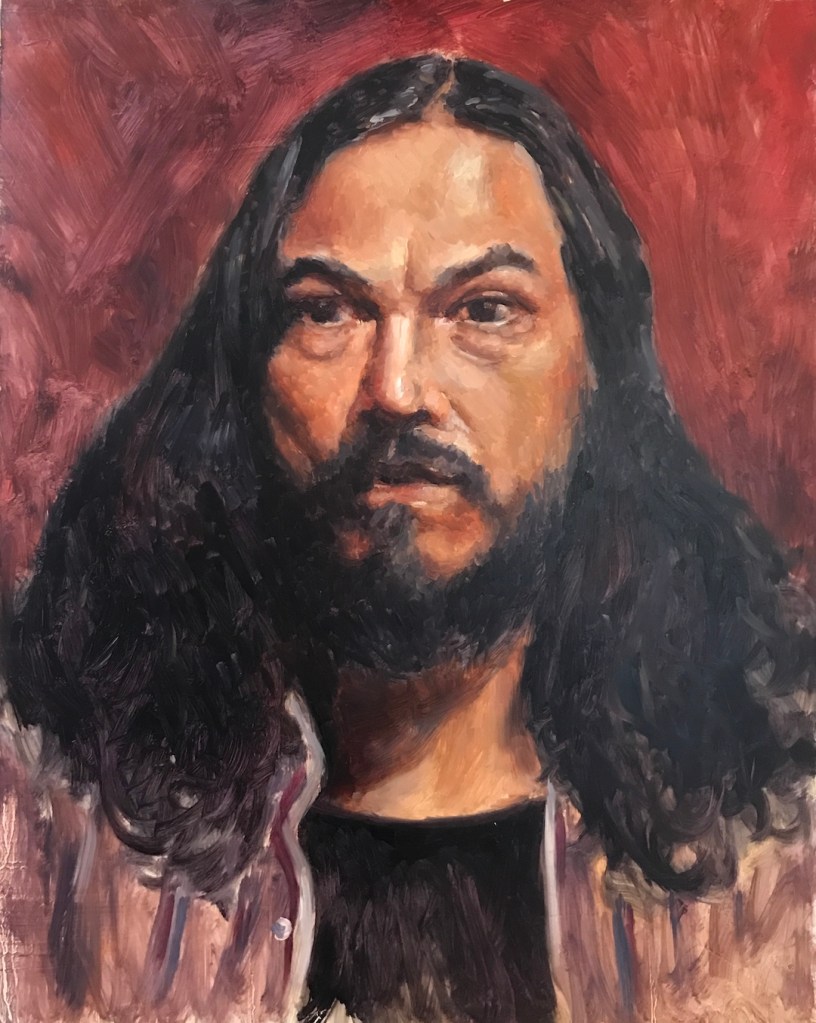
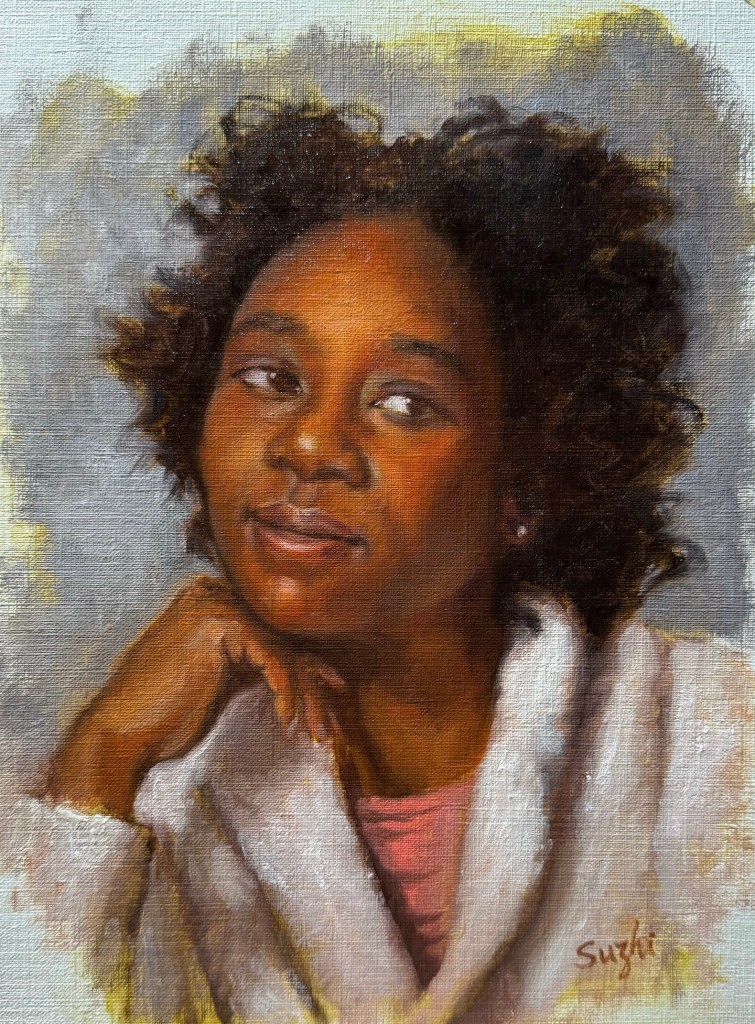
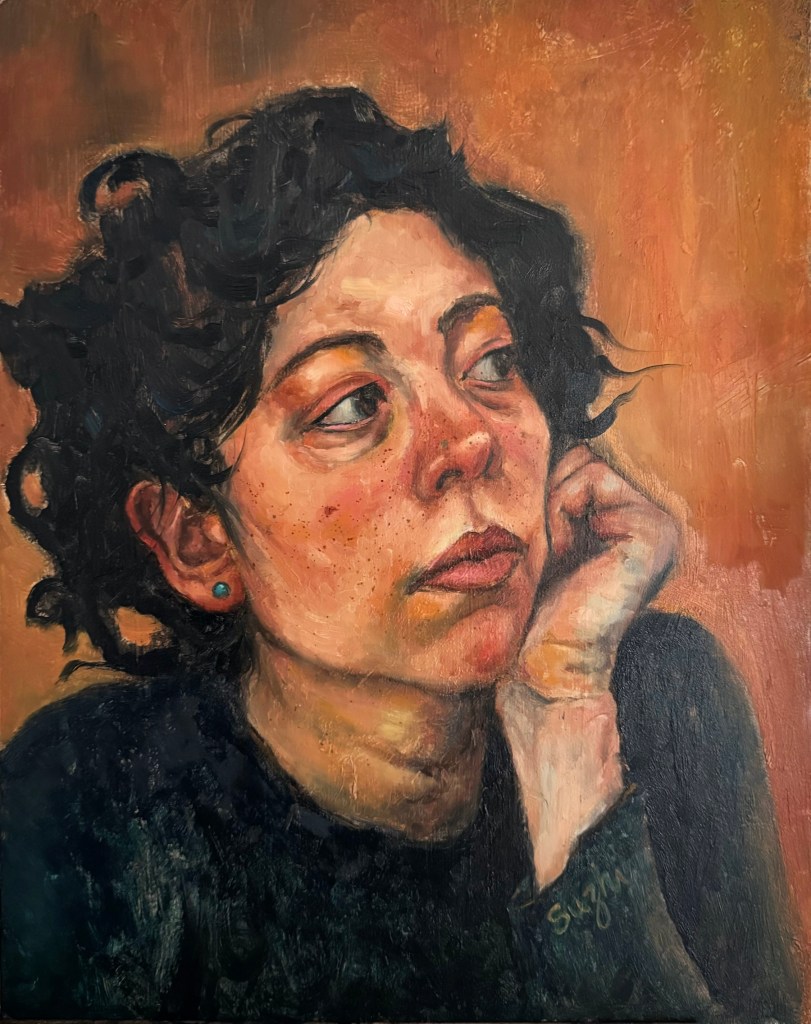
The freedom I enjoyed while painting the last sketch in August encouraged me to keep experimenting along the same path. I began September by completely abandoning human references. My logic was simple: if I didn’t have a photo to lean on, I could concentrate on artistic expression. Too often, when I started a portrait, I had ideas beyond likeness and accuracy, but as the work progressed, those ideas got lost in the pursuit of a “correct” painting.
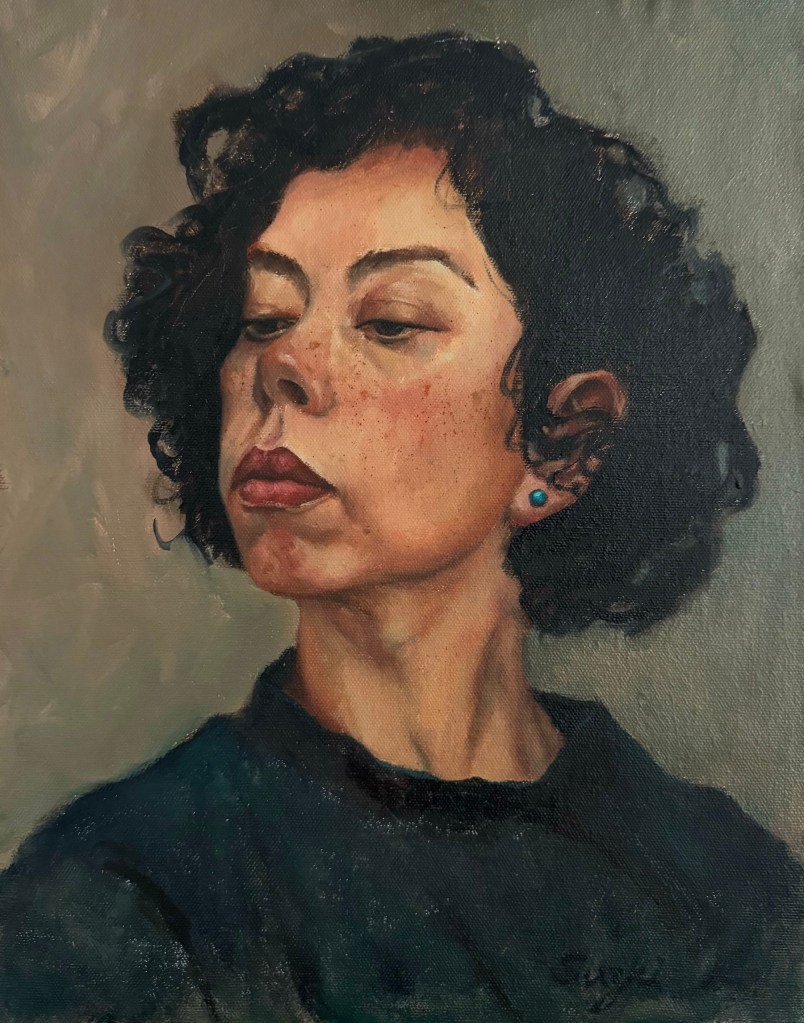
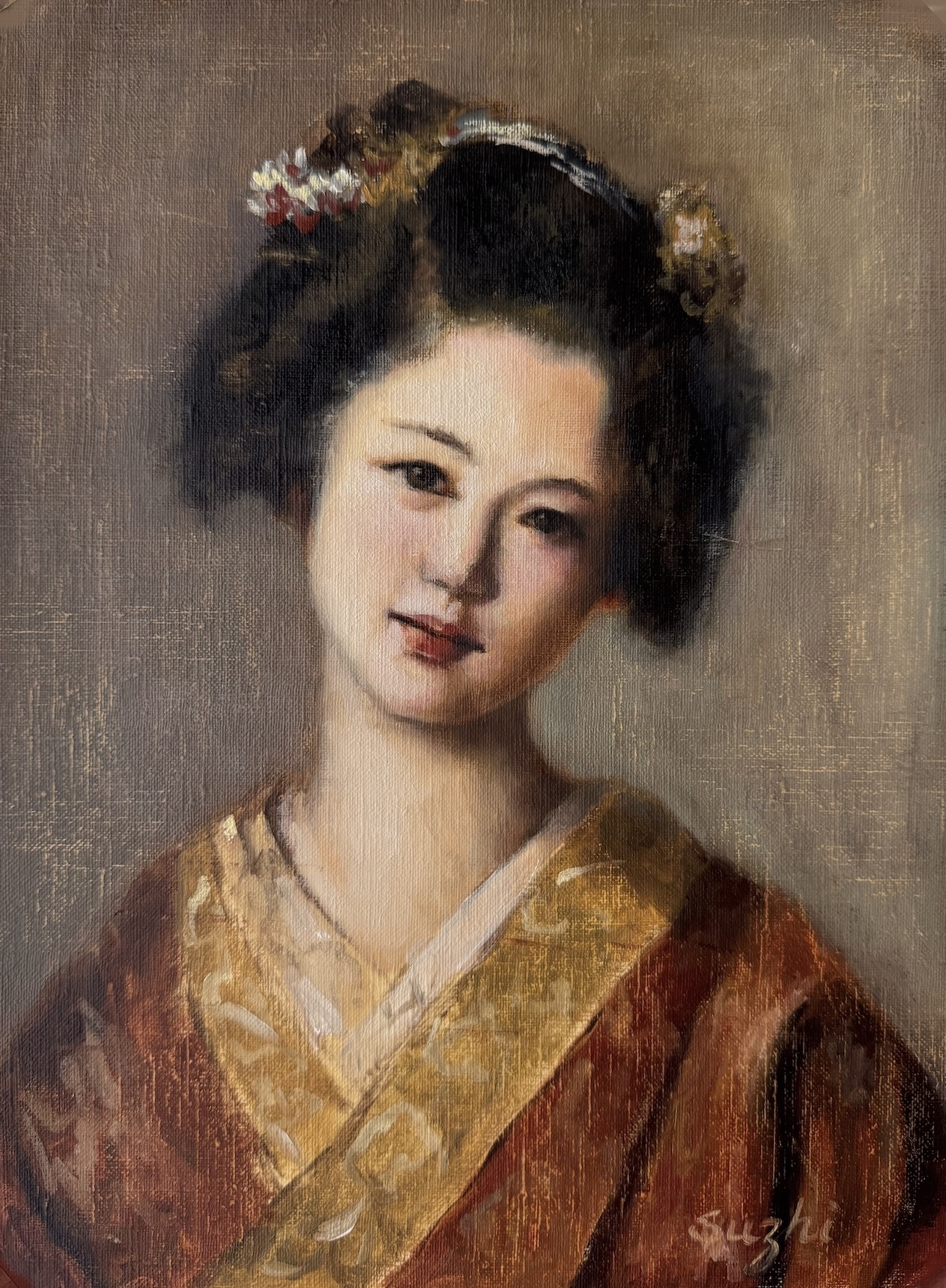
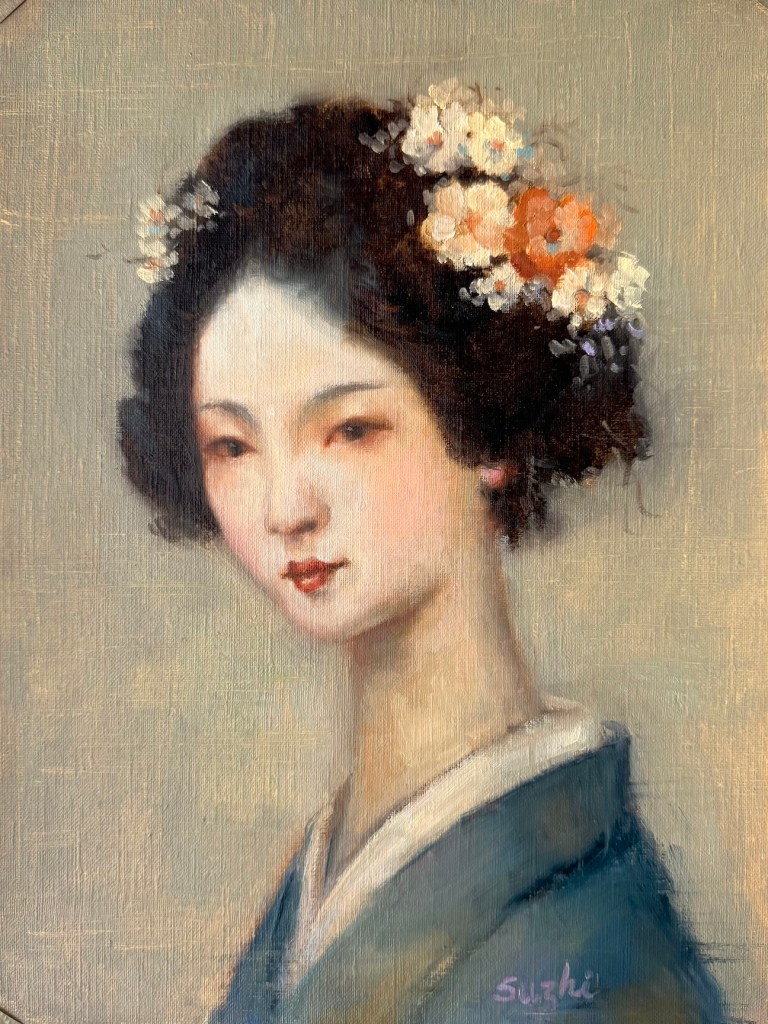
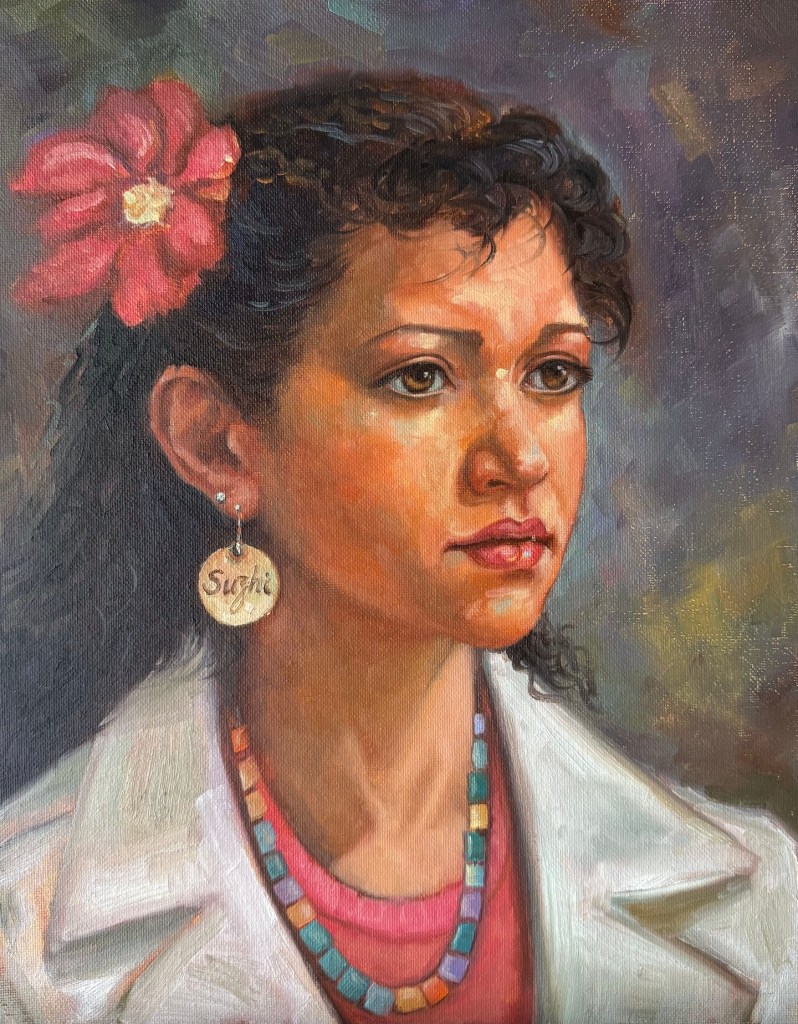
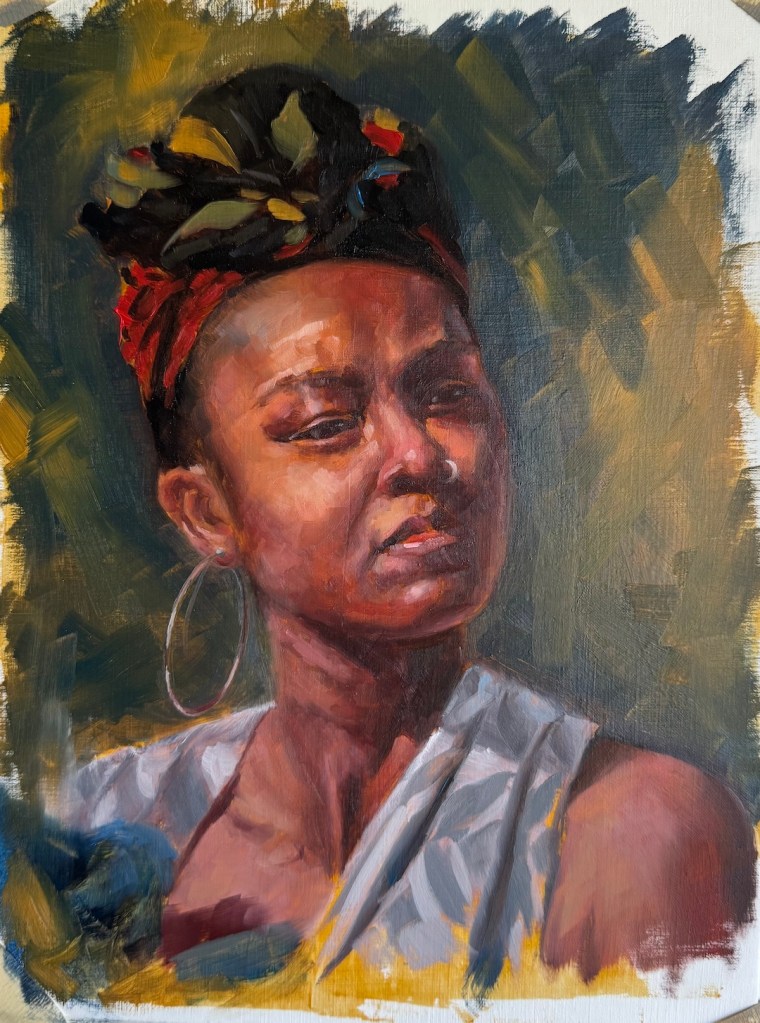
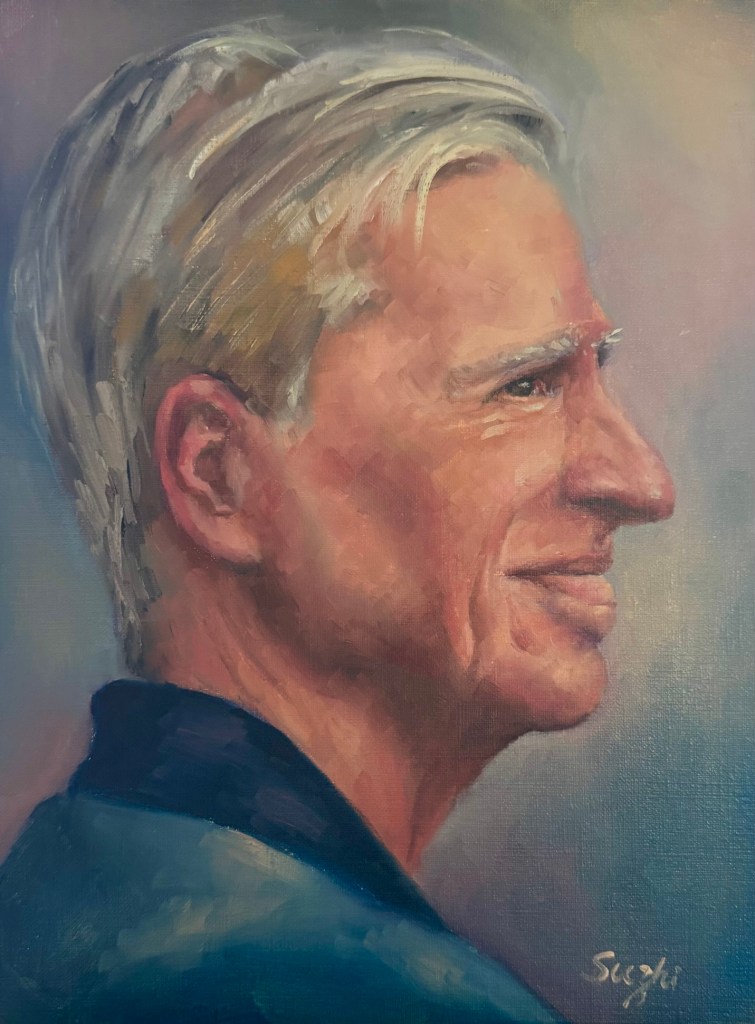
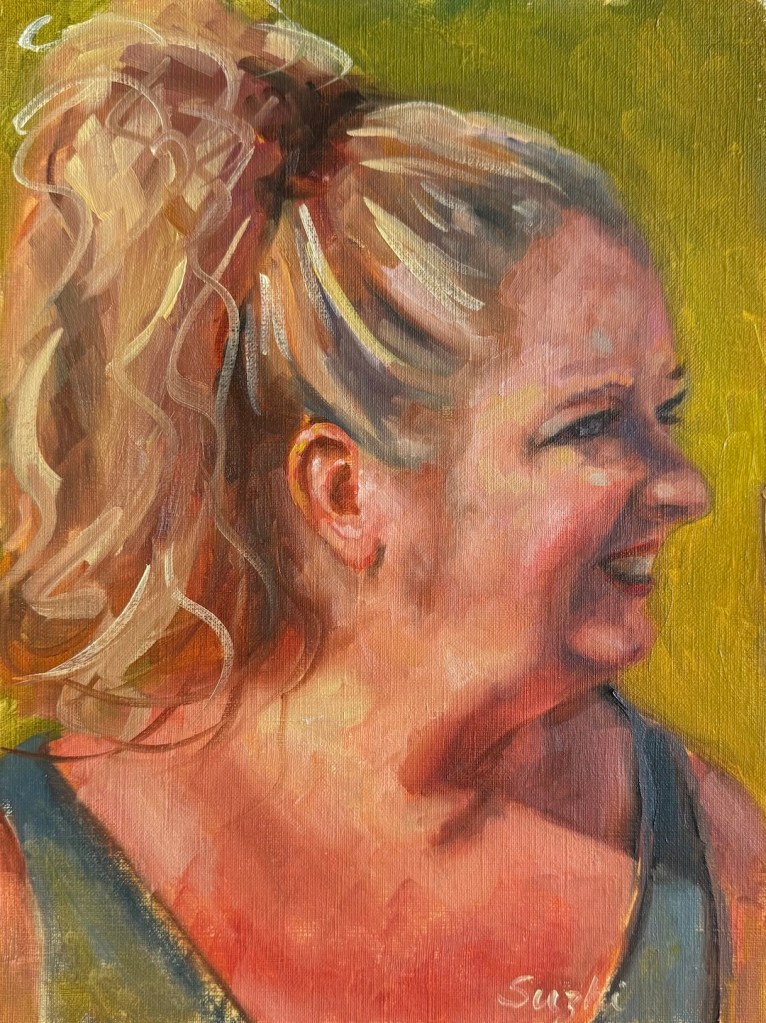
I began with two portraits of traditional Japanese women, aiming for an atmosphere of softness and antiquity. Next came two modern women, with a focus on expressiveness. Here are the paintings:

To some extent, I think I achieved what I set out to do—especially in the paintings of the modern women. Looseness has always been difficult for me when a photo sits in front of me. But these exercises also revealed a problem: without a reference to a real person, my “inventions” tend to drift toward the generic and idealized. If I kept going this way, the future paintings might all start looking alike.

So in the next piece, I returned to reworking an actual photo reference. While I liked the result, the painting tightened up compared to those done without references.

Then I tried something in between. I didn’t use a photo, but I did use a face I know very well. Instead of inventing features from scratch, I largely followed what I thought was me (with plenty of upgrades, of course). The result was also somewhere in between. It’s not as loose as the invented portraits, but more relaxed than those painted from a photo. And to be honest, I really like my new look.

One more thing delighted me in these experiments: I’ve been thinking and tried in recent years about returning watercolor (without abandoning oil). In some of these works, I managed—at least partly—to capture the fluidity of watercolor I’ve missed so much. It’s not perfect, but it’s got me excited to keep playing around.
Portrait Sketches +

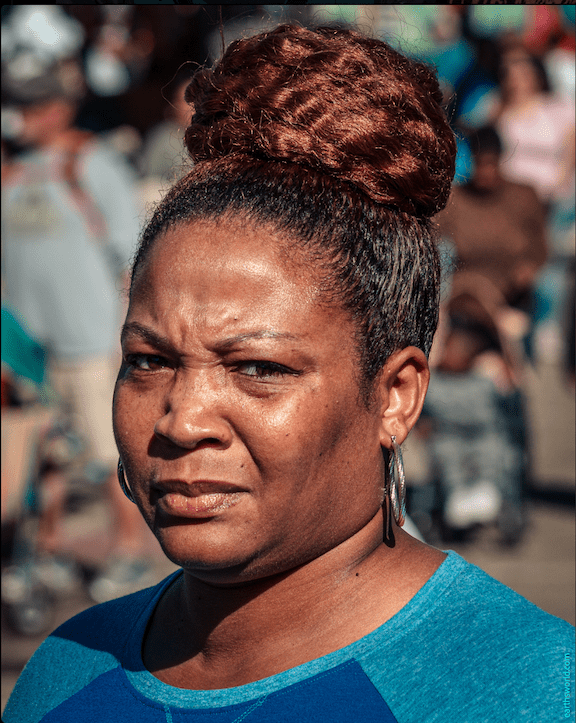
August was a busy month for everything except art. I only managed a few portrait sketches. It’s been a while since I focused on this genre, so for inspiration, I turned to my beloved photographer, Earthsworld, whose work I referenced in a small series called “Turquoise in Earth’s World.”

Unlike those turquoise painting, this time I spent at most 2 to 3 hours on each piece. I started every one with a Zorn palette, but sometimes deviated from it later on for convenience. Some sketches are on paper, others on canvas board. In most of them, I aimed for a resemblance to the reference, and only simplified the backgrounds or clothing patterns for aesthetics and to save time. The exception is the last one, where I attempted something creative – I used Earthsworld’s photo only as an inspiration to reinvent a character in my mind. As you can see, the neck area doesn’t make much sense anatomically, and if this becomes a full painting, I need to and will spend more time figuring it out. Enjoy:

The last one:

Petal Progress Continued

July kept the floral theme in my studio, with petals and my learning progressing. 

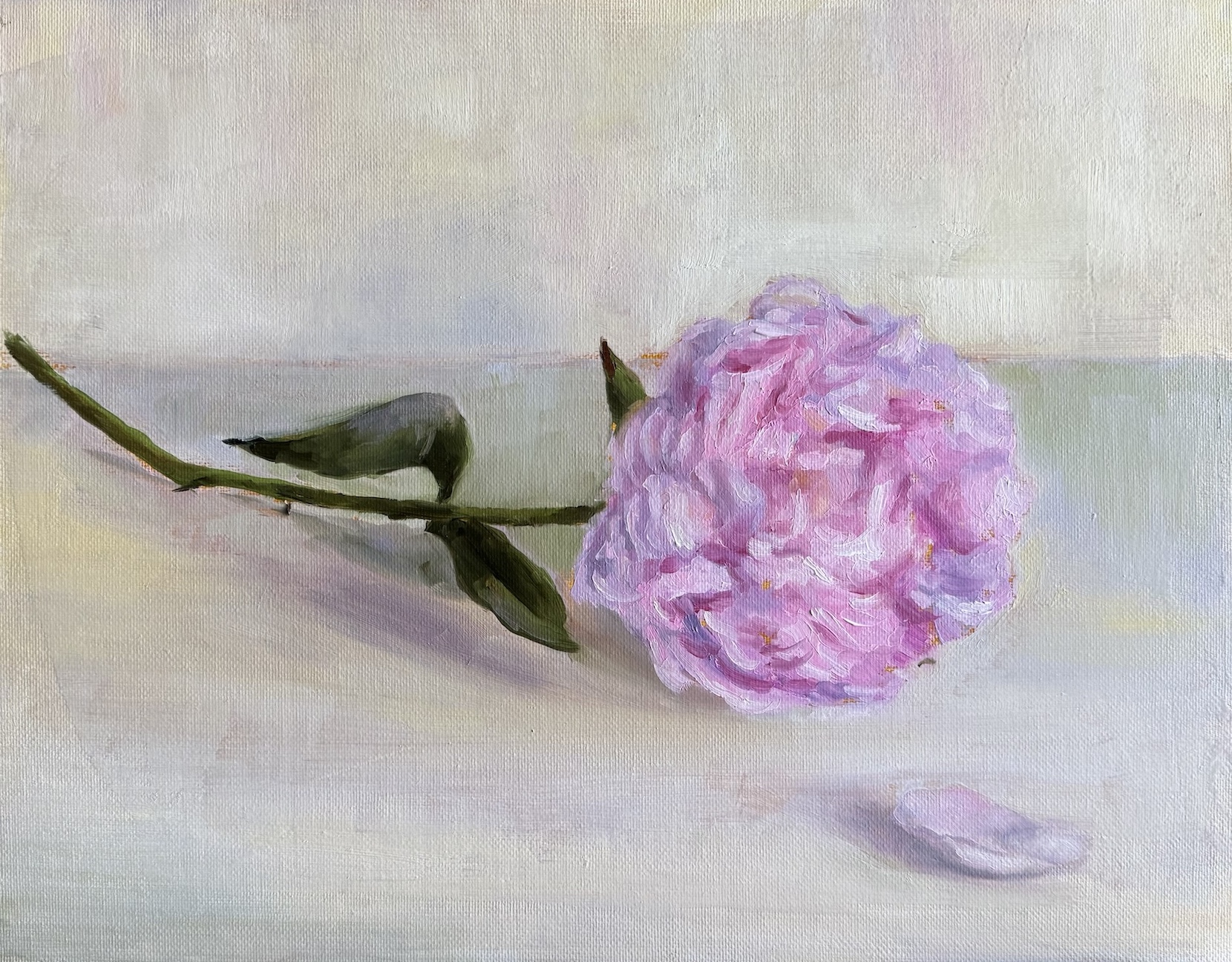
First up, I tried my hand at a peony. As I have mentioned before, Michael Klein is a big influence to me in the floral adventure, and peonies are featured in many of his creations. Those fluffy blooms look dreamy, but they’re a nightmare to paint and arrange. Petals were numerous and messy, dropping faster than I could arrange them in any manageable shape — whether in vase or on canvas. Soon I gave up my grand vision of a complex still life, and managed a simple single flower sketch.

Peony, oil on canvas board, 11 x 14, July 2025

To comfort myself afterwards, I moved back to roses, a familiar subject. I thought a Trompe l’oeil (French: deceive the eye) would make the painting of a single rose more challenging and fun. The idea was basically a hyper realistic painting. Getting the shadows and texture just right was trickier than I expected. My rose still looks like a painting. Here I have a better understanding of why people always say you don’t paint exactly what you see, even in a realistic painting. I used ambient room light in my setting, and the rose was largely in a unified color. To make it “pop”, I need to accentuate the value contrast, vary the saturation, and better define the edges. To make it look real, I need to invent the reality – how ironic! As you can see, I didn’t go through these steps. I am not entirely sure I have the skill to reach the final goal, and honestly, I like the painting as is now. Sometimes you call it done and move on.

Yellow Rose, oil on canvas board, 9 x 12, July 2025

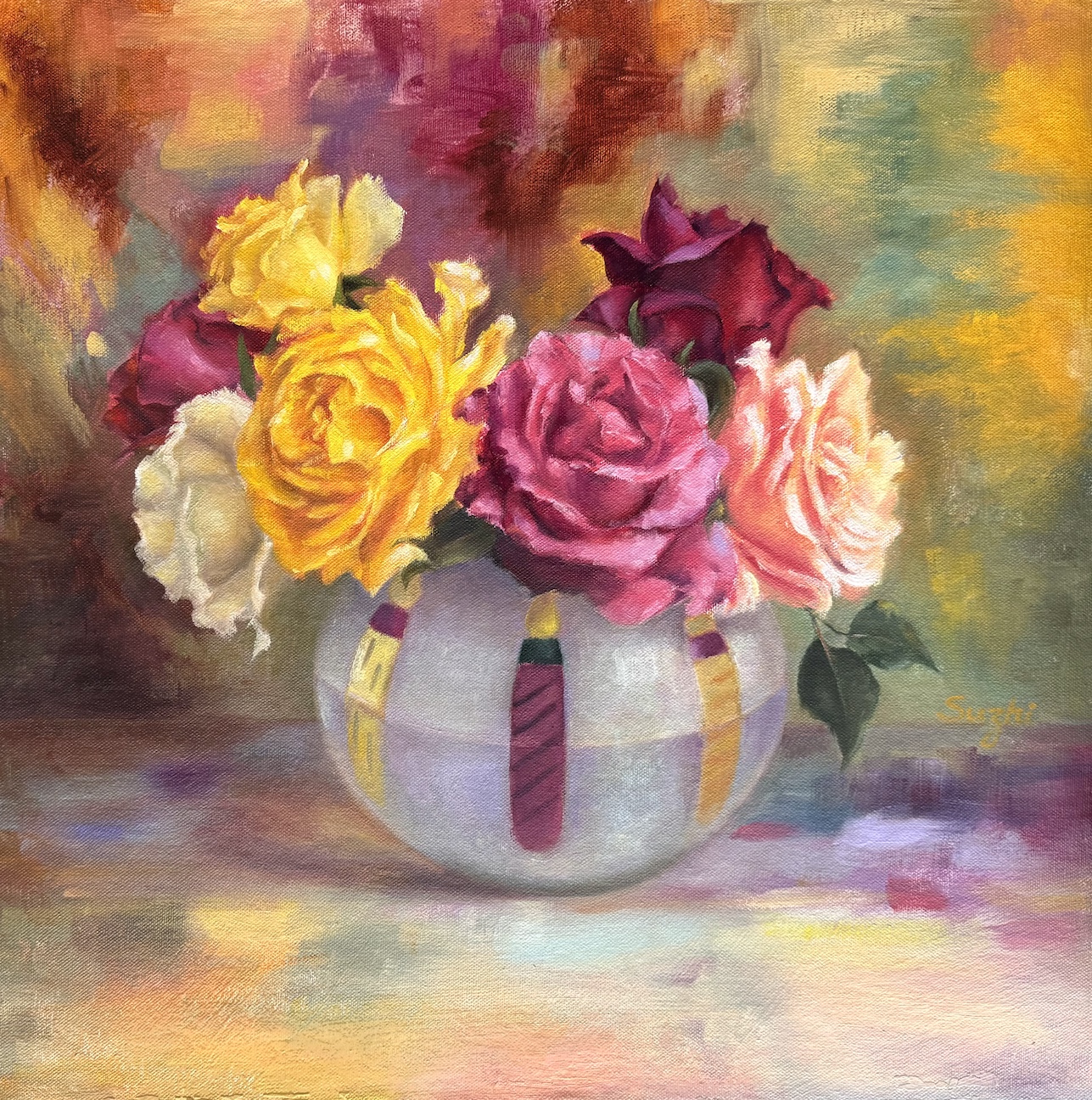
Next came a colorful bouquet, and my strong desire to paint something vibrant. In setting up the reference, my first thought was a dark, solid background for contrast. It worked, but it felt too safe. Leaning into the chaos, I draped a multicolored scarf behind the bouquet. I painted the scarf and surface in an abstract style, playing with saturation and value to keep things lively but balanced. 

Colorful, oil on canvas board, 18 x 18in, July 2025

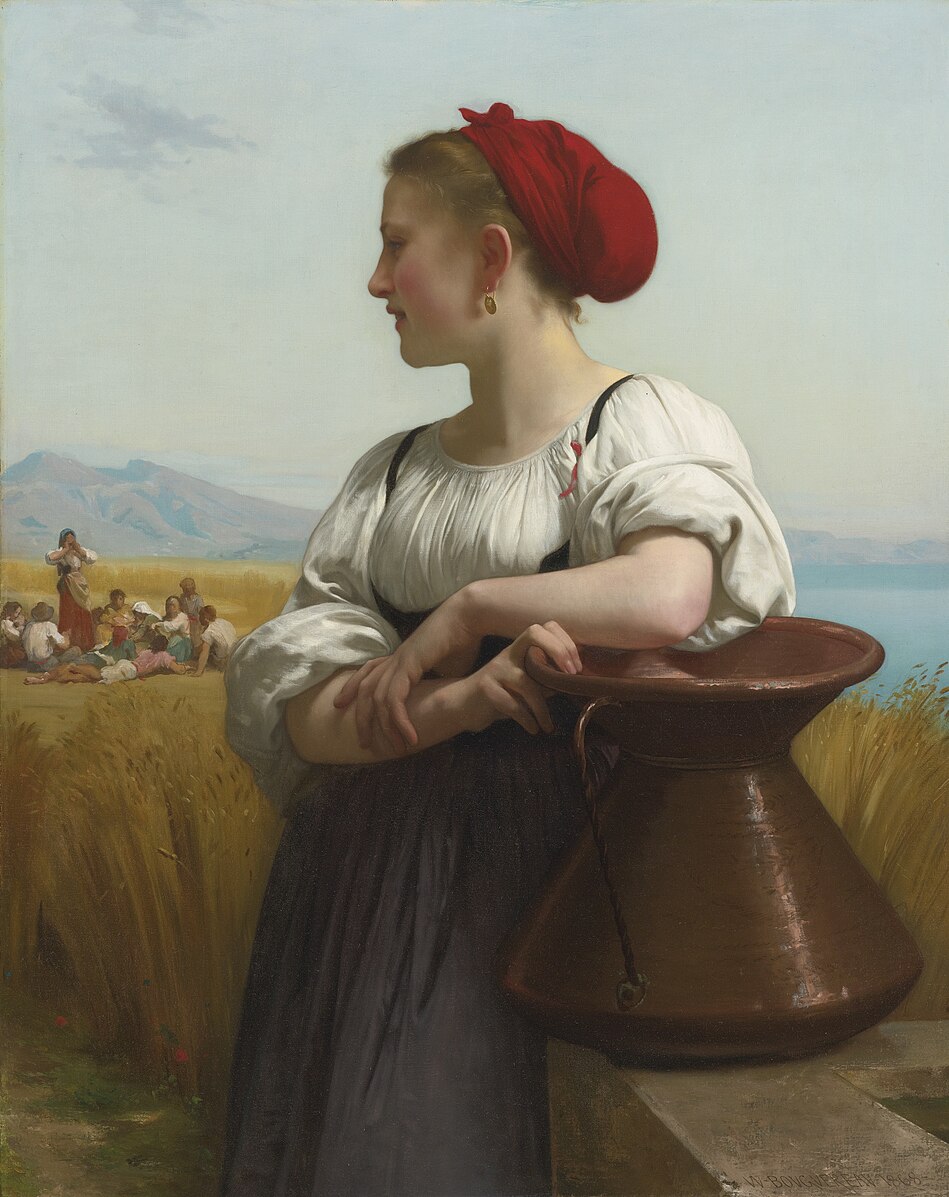
Between these floral adventures, I did a partial study of a Bouguereau painting. I’ve always admired his delicate and subtle handling of human faces, and this is also a study of handling backlighting. The softness is achieved through close value and gentle brushwork. When the entire face is away from light, the values are further condensed – something I still need to work on. I also painted a “selfie” as an alternate character—don’t ask. I was hoping for a Morandi-ish low-chroma tranquility… or, a quirky experiment in calm tones.

Selfie, oil on canvas board, 8×10 in, July 2025

Lastly, MidJourney has pushed out video generation in recent months, and now you can upload your own image for animation (see the painting for the first video here). Like these:

Don’t laugh. The bizarreness comes from my own skill issues – both in painting and in prompting. Look at the shadows in the second video, that wisdom wasn’t from me. There are millions of fantastic generative videos out there for us to see the potential of extending and alternating the life of our paintings. Always more things to experience and explore!

The Making of a Selfie

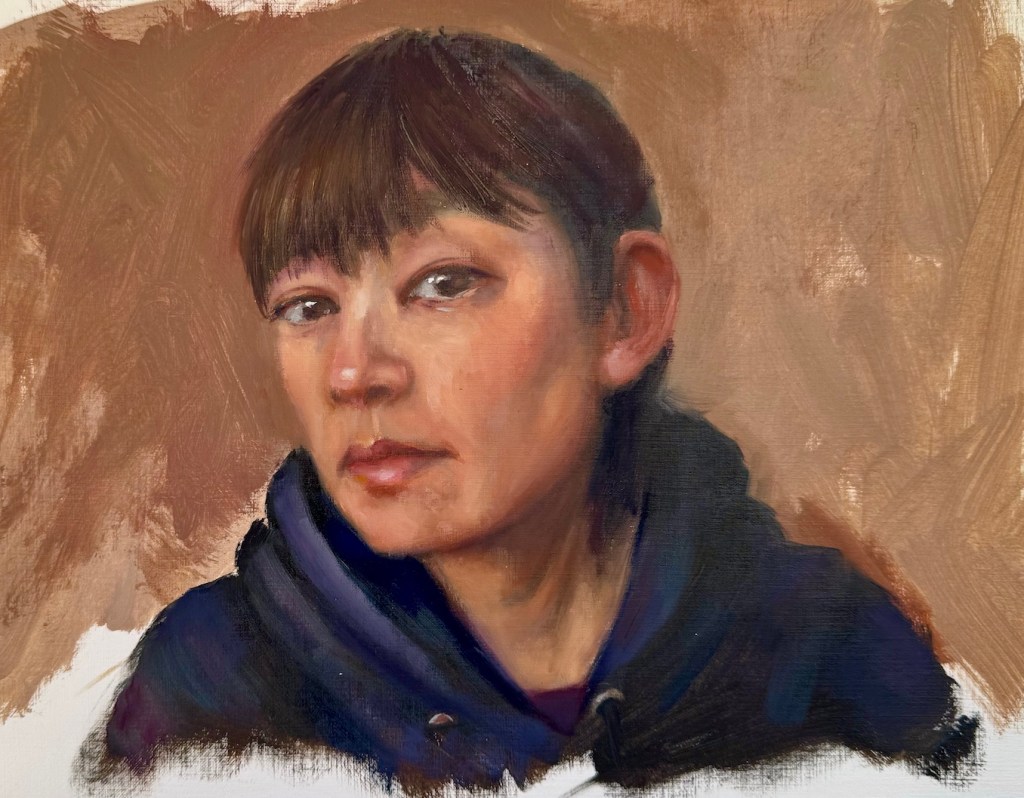
Two things have become a common practice for me. One: after a break from art making, I get back into the practice with some quick portrait sketches. Two: when I’m stumped for ideas, I turn the brush on myself and paint a self-portrait. Back in January, after a string of trips, I followed this pattern. I painted a series of head sketches. One of them was me – live model with a fresh hair cut, why not?

Each time I painted myself, the likeness never feels right, and limited by the using of a mirror, the expression and posture often come out stiff and uninspired. So, did this sketch have the potential to be developed into a real painting? What could I do to make it better and more engaging?

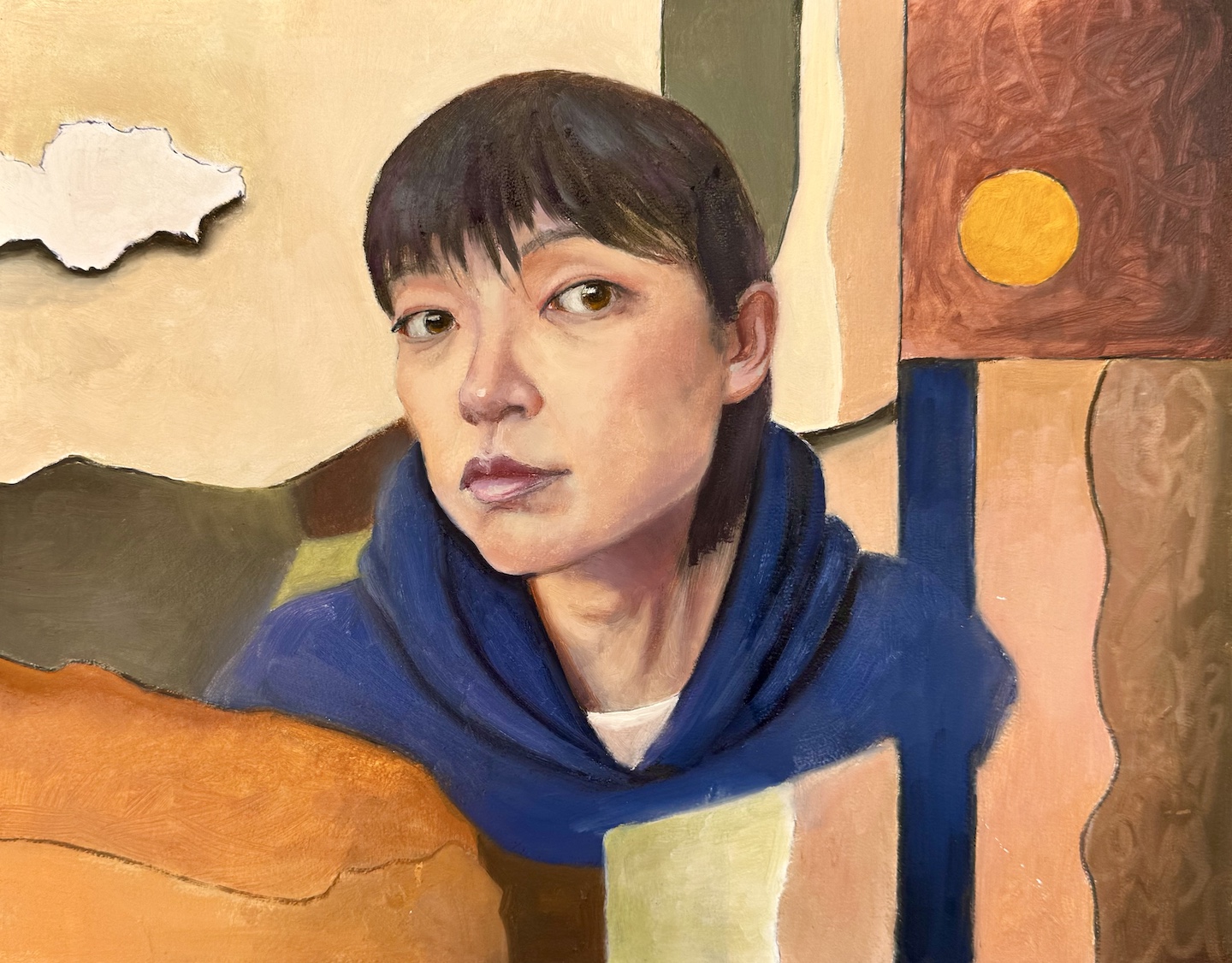
In a more serious attempt, I envisioned a flatter and more stylized approach. I picked warm tones close to my skin color for the background – partly for harmony, partly to pop against my blue hoodie. I used abstract shapes to balance the realistic face. To lean into the flat design, I outlined everything with a Sharpie first, and then filled in the colors, letting some of the black lines show through. The collage-like result is a step up from the sketch. I wanted the face to stay more stylized and almost blend into the fragmented background, but the more I worked on it the more it slid back into a standard realistic portrait. Eventually, I just stopped.

Me, oil on board, 11 x 14 in, Feb. 2025

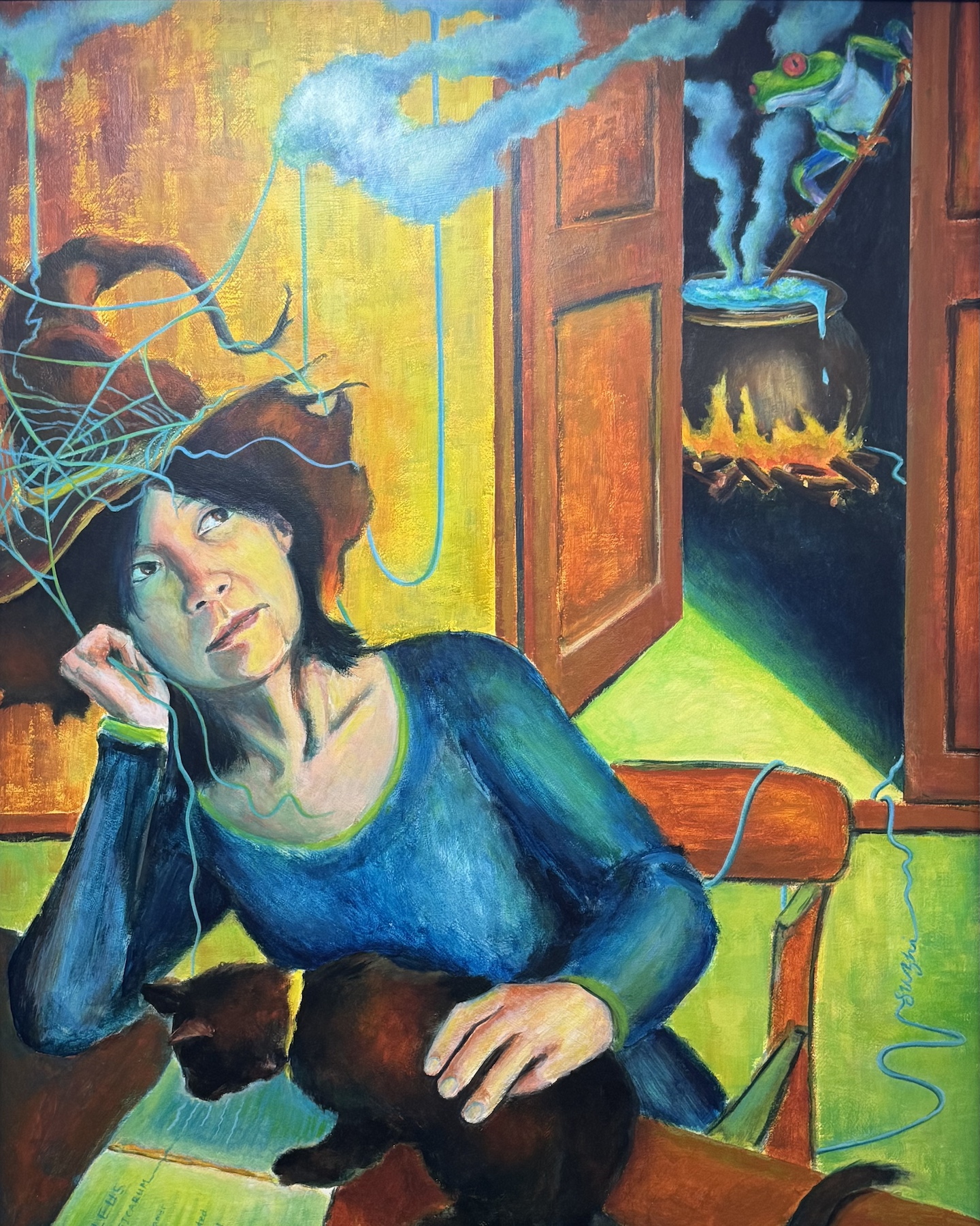
That got me thinking: Is aesthetic the only thing I could work on? What else could I do to make the painting a bit more meaningful? I recalled a self-portrait I did years ago in a class. The teacher told us to paint ourselves in a different role. I went with a witch – surrounded by classic witchy themes with my own spin: a frog brewing potions and a black cat reading the Malleus Maleficarum (often considered the first major anti-witchcraft document). While the painting was crude in execution, but dreaming it up and piecing it together was a blast.

Me, acrylic on board, 30 x 24i in, April 2020

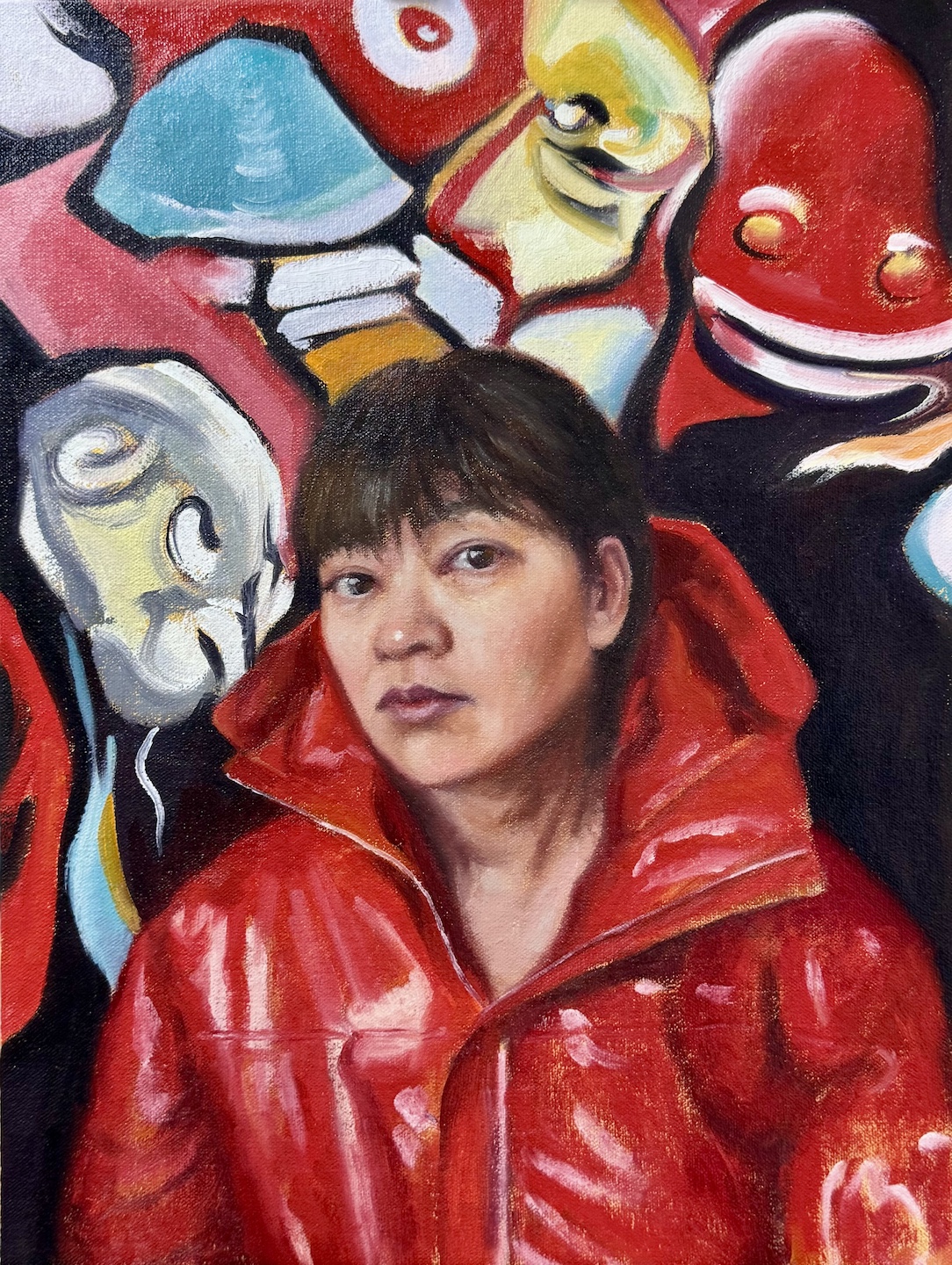
So why not give it some character? Pick a costume I’d never wear in real life (I’m a muted-hoodie kind of person), or visualize some thoughts I usually keep under wraps? I went for a bolder color and more dynamic palette. I still wanted the face to feel like part of the design, but this time, I let it be drowned by the unsettling shapes, vibrant colors and swirling energy. I kept the ideas of black outlines but used the paint instead of Sharpie this time, allowing more varied and expressive marks. That hint of punk—is it just wild imagination, or a quiet piece of me sneaking out?

Me, oil on canvas board, 12 x 16 in, March 2025

In retrospect, neither of my paintings addressed the likeness or posture issues that bothered me in the first place. In the process of further creation, they became irrelevant. Painting’s at its best when it’s a journey—when it’s messy, exploratory, and forces you to reckon with yourself.

Art Podcasts – My Short List

Most of the time when I paint, I listen to audiobooks and podcasts on a variety of topics—philosophy, technology, economics, even geopolitics—the majority of which aren’t art-related. I find music distracting, as if the two art forms are vying for my attention. The eclectic mix of subjects I explore keeps me engaged, and even when I don’t fully grasp the discussion, the thrill of learning something new oddly fuels my creativity and deepens my focus on painting.

That said, I do follow a handful of art podcasts from time to time. My initiation to this experience was The Draftsmen Podcast, hosted by artists and instructors Stan Prokopenko and Marshall Vandruff. They dive into the craft of drawing, painting, and image-making, offering practical advice for aspiring artists—especially those skipping art school—on finding resources, building a self-learning system, and promoting their work. The podcast ran for three seasons before pausing due to the hosts’ busy schedules, but all episodes are still available on YouTube. Even if you don’t listen to the old talks, check out their channel for the episode covers—hilarious parodies of famous paintings featuring the duo. It’s a clever, arty touch.

The Week in Art from The Art Newspaperis my go-to for global art news. It delivers insider insights into exhibitions, museums, and auctions. Sometimes it  also covering major copyright lawsuits and policy changes that ripple through the art world—content I’d otherwise overlook. It’s the one podcast I can truly “listen” to without needing visuals.

My favorite and the most relevant is The Undraped Artist, hosted by Jeff Hein, a master realist painter himself. His guests are some of the world’s most accomplished traditional artists—like Jeffrey T. Larson,Michael KleinScott Christensen, Alex Venezia, and Mario A. Robinson. Interviews typically begin with the artist’s early days in art, trace their career paths, and explore insights on painting techniques and professional growth. Jeff often examines the guest’s work on air, offering comments and asking questions. For this reason, watching on YouTube—especially during these segments—is ideal, though the audio alone is still rich with inspiration.

A fresh addition to my list is Idiosyncratic Nightmare, where hosts Michael Klein and Stephen Bauman—both highly accomplished realist artists—interview a guest while creating their portrait. In the first two episodes, Bauman sketches with graphite, and Klein paints in oil. It’s like watching two master demos unfold simultaneously, paired with a thoughtful conversation. The candid interview with Tania Rivilis taps into the struggles almost all artists experienced. It is a comfort and encouragement at the same time. This one’s a must-watch on YouTube, and do stay till the end of each episode where the duo speed painting their portrait to a more finished stage. I’m rooting for this podcast to take off.

Finally, there’s Talk Art, recommended by my pal Grok3. Hosted by actor Russell Tovey and gallerist Robert Diament, it’s possibly the longest-running art podcast around, now in its 24th season. I haven’t tuned in yet, but I’m excited to explore its extensive interviews with artists of various caliber—also not just realists, but a broader mix of voices from the art scene. With so many back episodes, it’s a goldmine for anyone needing something to listen to while painting.

Share your favorite and happy listening—and watching!

Master Studies and Some More

Charles-Joseph Natoire (1700-1777), a prominent French Rococo painter and draftsman, was celebrated for his decorative paintings, mythological scenes, and religious paintings. Natoire was one of the artists who helped popularize the use of pastels in the 18th century. He often employed delicate pinks, blues, and greens to create a light, airy atmosphere in his works. His paintings are characterized by their pastel hues, delicate brushwork, and a playful charm.

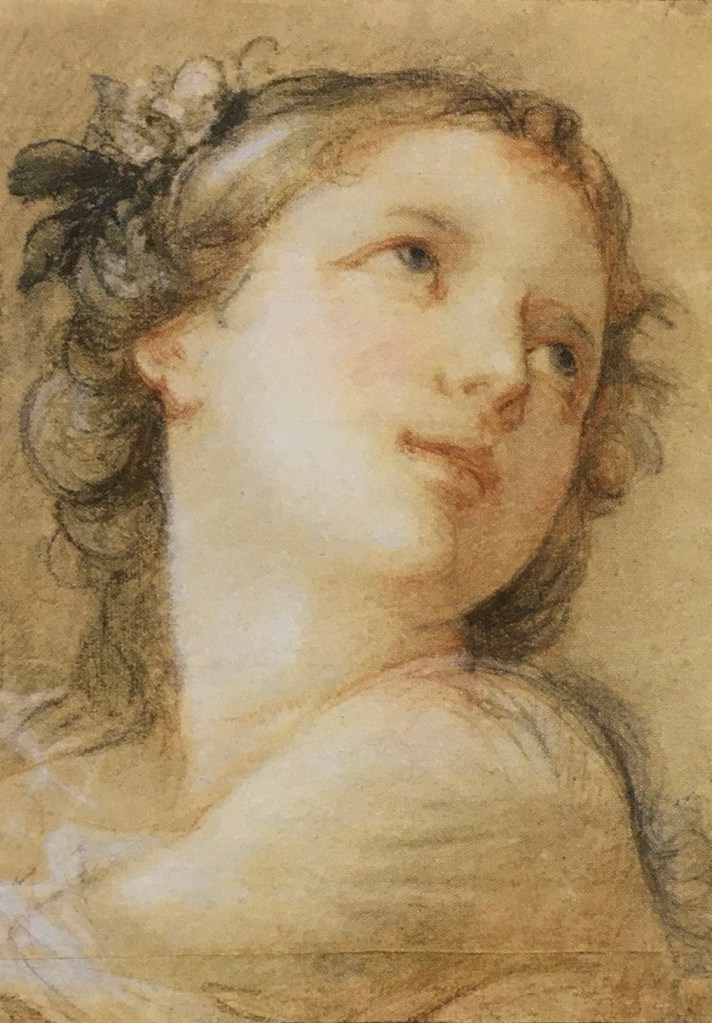
“Head of a Bacchante” (1741) is a fine example of his mastery in pastels. A bacchante, a female follower of Bacchus, the Roman god of wine, fertility, and theatrical performance, is often depicted in art as ecstatic or in states of divine possession.  Pastel allows for a softness and blendability not easily achieved with oil paints, making it ideal for capturing the delicate features and expressions of mythological figures.

I saw this painting at the Getty Center, where I was drawn to Natoire’s emphasis on grace, charm, and a certain lightness. The luminous quality of the skin tones, achieved through soft, atmospheric light, created a sense of intimacy and warmth. His fluid, graceful brushwork contributed to the overall elegance, and a well-controlled value range allows smooth transitions between forms.

In attempting a master copy, I focused on replicating the subtle value changes. I have a tendency of using high contrast and high saturation in my own portrait painting. I hope, by compress and control the two, I could achieve a softness and luminous effect that is missing in my works. While oil paint is not as ideal to achieve this goal as pastel, I figured I would still learn a lot by pushing it as far as I could. I started a bit too heavy handed, and later had to spend layer upon layer to lighten things up, and contract the range of values. The result still felt too defined in some places, lacking the ethereal quality of Natoire’s original. Some of the airiness of the original comes from Natoire’s dancing line work, which I don’t have the skill to imitate with a brush. While Natoire captured a goddess, I painted a mortal – a lovely one, I think. 

After Natoire, oil on canvas board, 9 x 12 in. August, 2024

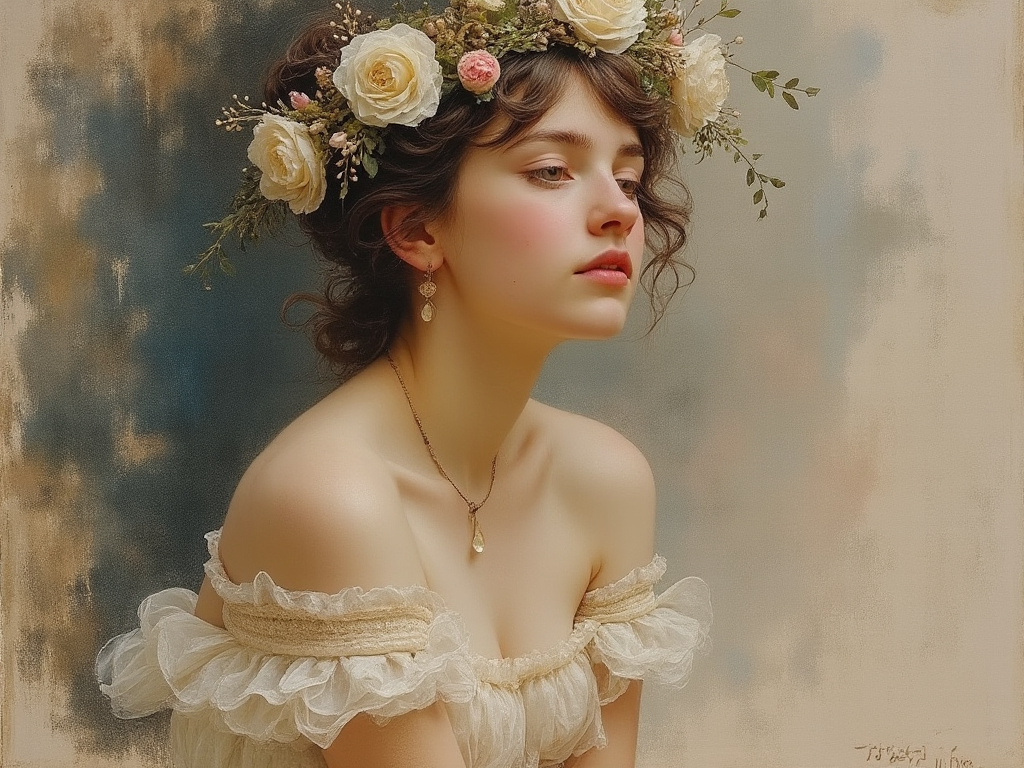
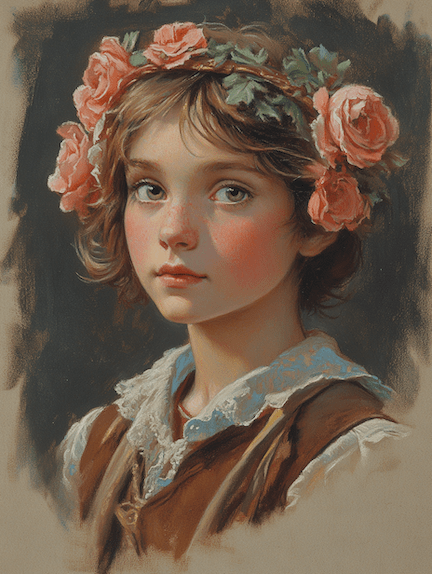
Curious about modern interpretations, I requested a pastel painting of a bacchante from both Grok 2 and MidJourney 6.1. Grok gave me a photo-realistic beauty with a somewhat painterly background. It seems Grok doesn’t respond well to traditional medium. MidJourney, on the other hand, at least attempted to emulate ‘a painting.’ 

One can also twig the many perimeters MidJourney offers to achieve varied result: 

If I provide Natoire’s original as a prompt, MidJourney could fake a couple of masterpieces:

Me and my bots, we all had fun!

Some Filler Projects

There are a couple of still life projects ongoing, and in between, I completed a few portraits using models from East Oaks Studio’s live streaming. Previously I focused on trying to finish the sketch, smaller in size, within 2 to 3 hours, aligning with each streaming session. This time, I used bigger panels, and allowed myself as much time as I wanted. The results are more rendered and complete-looking pieces:

Evee, oil on canvas panel, 14 x 18 in, July 2024
Tina, oil on canvas panel, 14 x 18 in, July 2024
Kailey, oil on canvas panel, 14 x 18 in, July 2024

A few notes:

  • I call these “filler projects” because they were not part of my summer plan. However, I find that while waiting for a layer to dry, or stalling at certain stages of the painting, doing something different alleviates my anxiety. It’s so much better than idling around not achieving anything!
  • I neither went for close likeness nor the exotic look in my previous Schiele-ish attempt. However, I do feel that Schiele exercise has left its mark.
  • For me, the greatest gain from these paintings is that I have started to consolidate my method. In each case, I started with a Zorn palette, and added to it as I went on.
  • Mix it up and never stop painting!

Channeling a Bit of Schiele?

Feeling a bit lost with my portrait practice recently, I ventured to try something new. I was attracted to the works of the Austrian Expressionist, Egon Schiele (1890 -1918) by his unique use of colors and lines, and his focus on conveying strong emotions. After indulging myself with his art for a while, I have a desire to break from likeness and accuracy and focus on a feeling, a mood, or an air. Hence the following:

Monica, oil on canvas board, 11 x 14, May 2024
Still Monica, oil on canvas board, 11 x 14, May 2024
Annie, oil on canvas board, 11 x 14, May 2024

A few notes:

  • These are not done as studies of Schiele. I personally don’t think his style is replicable.
  • I tried to manipulate the mood with different color schemes.
  • I deviated from the reference a lot, with invented or exaggerated expressions.
  • As always, I found my shaky mastery of anatomy and the lack of understanding of the light effects the biggest barriers to go further in creation.
  • I am not sure where I go with this: it is fun to do something different, but it is also a painful reminder that I need to practice the basics more.
  • But again, did I say it is fun? So at least once in a while …

Portrait Sketches (2)

Painting along a live stream (even a recorded one) is like painting with companies or painting while listening to podcasts. It makes the practice fun and is quite addictive. I have to refrain myself from doing just that as my daily painting routine. Right now, I limited the portrait sketches to one or two per week as an addition to personal projects.

Here are some of the things I have learned from doing these sketches so far:

  • Get everything ready before starting: palette, surface, easel position, brushes to use, lighting, drinking water, etc.
  • Keep it simple: I use a limited palette – my go-to one is the Zorn palette, but it could be even simpler. Susan Lyon recommended Ultramarine Blue, Transparent Red Oxide, and Titanium White. I could try a different combo each time or play with one set to further extend.
  • Make use of old painting surfaces: old watercolor, acrylic, and oil paintings were gessoed or oil grounded – things that are no longer loved but not yet thrown away find a new life. Oil painting paper is also good, especially with a thin layer of shellac on it. Now, this is of course, assuming I am practicing, not selling.
  • Aim to finish within the time limit: To achieve this, I need to take my time in the beginning to do a decent drawing. Meanwhile, this will force me to forego a lot of details and focus on big forms. On one occasion, I didn’t get a good reference and had to take a low-quality screenshot from the streaming. That turned out to be one of my favorite sketches – I was forced to let go more!

Here are some of the 2 to 3 hours sketches I have done:

For comparison, this is a portrait done in 5 hours:

Model From East Oaks Studio, oil on paper, 9 x 12, November 2023

Portrait Sketches (1)

It is always a mystery to me how long it takes an Alla Prima painter to finish her work. Most of the demos I watched online were one to three hours long, and never did an artist claim it as a finished work. It is also hard to tell if the artist doing the demo was aiming at a complete work or just an oil portrait sketch. Plus, how do you even define the completeness of a piece? Those lovely and highly admired vignettes by the late Richard Schmid, are they finished works? 

When I was taking online classes at Watts Atelier, Jeff’s demo was usually a one-hour video, and he expected students to finish their piece in no more than 1.5 to 2 hours. That was a guideline I rarely followed. Not that I wasn’t willing to; I just didn’t have the adequate skills and mindset to achieve it. I took a video lesson from Susan Lyon earlier this year thanks to my East Oak Studio subscription. She advocates an exercise of doing a live portrait within one hour and then doing the same pose 2 more times in a row. The idea is to focus on the essence – what you can see when you squint. With repetition, you could improve your focus along the way. You go into these exercises with good preparation. She used a limited palette – transparent red oxide, ultramarine blue, and white, and she would premix colors into a value scale. The most important part is the mental preparation. You decide in advance where your darkest dark and lightest light is, and if they appear in multiple places in your reference (more than often, that’s the case), you must choose one. You also need to decide where the strongest edge would be – where the sharp contrast is (because when values are close to each other, the edge disappears). Other things that need to be considered include composition, what atmosphere to create, what types of strokes you want to employ, etc. I would say this is a great checklist to start any painting. Festina lente – as Sean Cheetham said, “Take your time on everything if you want to paint fast.”

East Oak Studio does a monthly free streaming called “Oil Painting from Life.” You can paint portraits and sometimes still life along with their resident artists and hear them chat. Most sessions are between 2 and 3 hours. I enjoyed the program very much, but I find myself constantly struggling when the time is up. Should I leave it as it is or keep working on it?  Deep down, I see myself as an indirect painter. I like to take my time and work in layers, just like most artists at East Oak, but they all vouched for the benefit of doing these shorter Alla Prima paintings. Leaving those paintings as they are is against my nature, but keeping going could yield diminishing returns. So far, I have managed to not go beyond the streaming timeframe. Before each painting, I reviewed the decision list from Susan Lyon’s lessons and tried to make my practice more effective. 

From the Portrait Society of America’s auction page, we can see artists do sell their sketches. Who knows, maybe after a million hours of practicing, someday, I will look at my two-hour painting and think, “Yep, that’s a thing.”

Here are some recent sketches I did, most of them are 9 x 12 or 11 x 14 and done within 2.5 hours: