Category Archives: Ramblings

Some Filler Projects

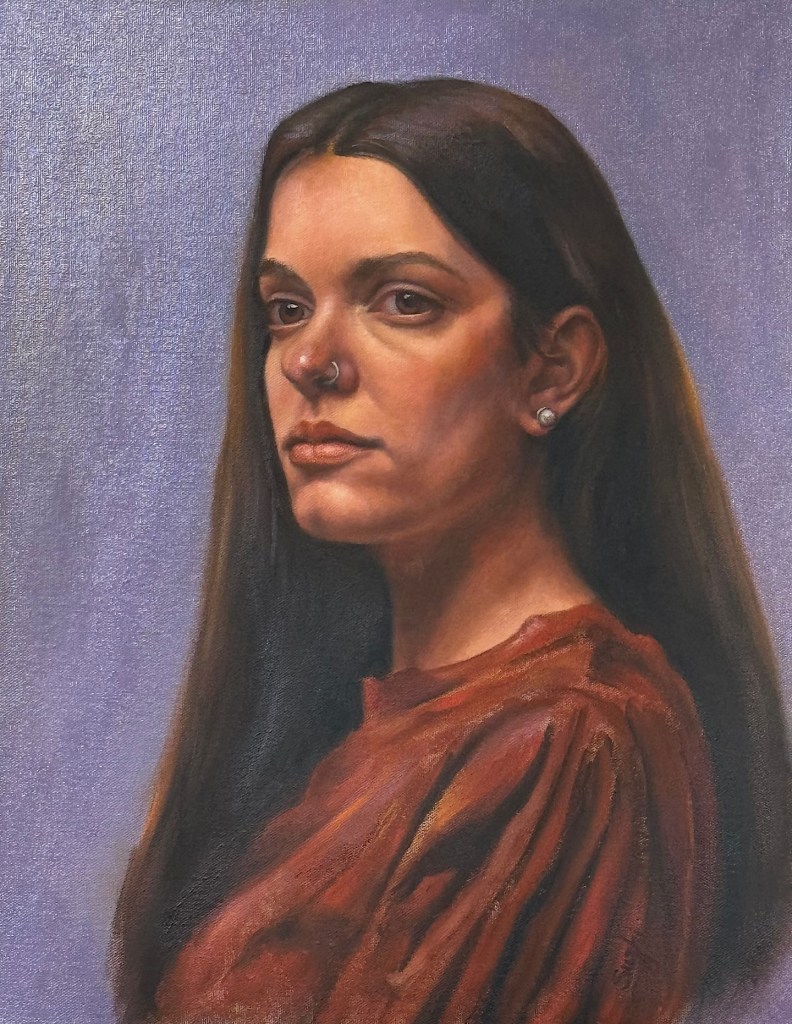
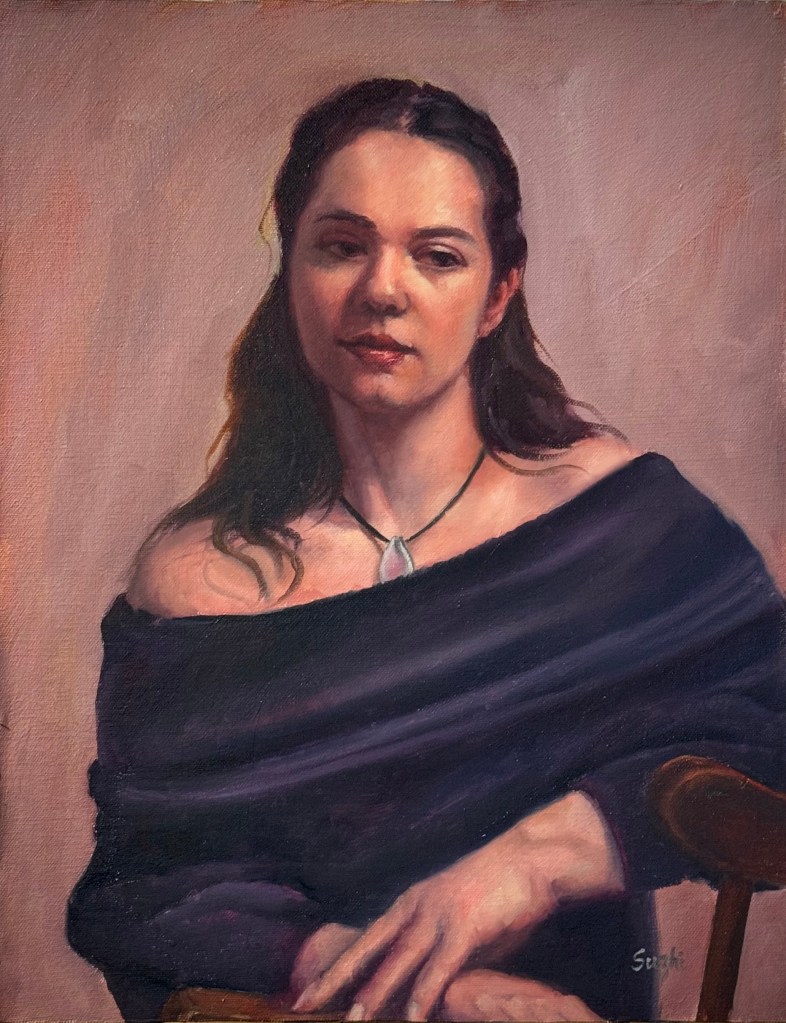
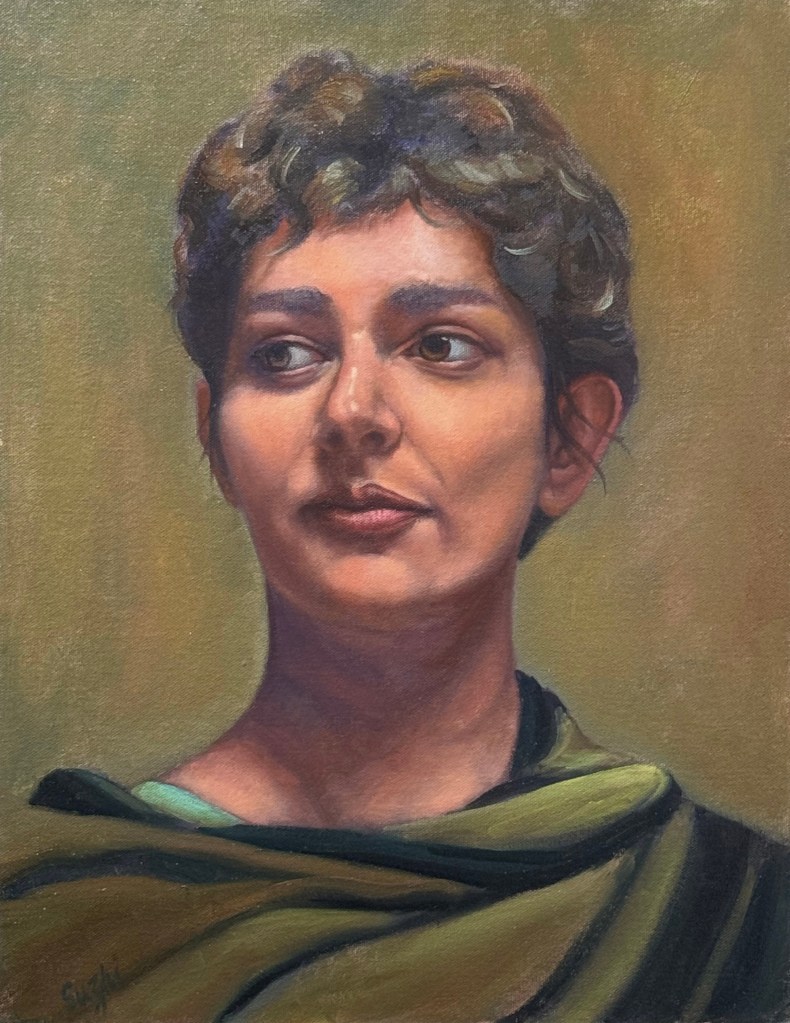
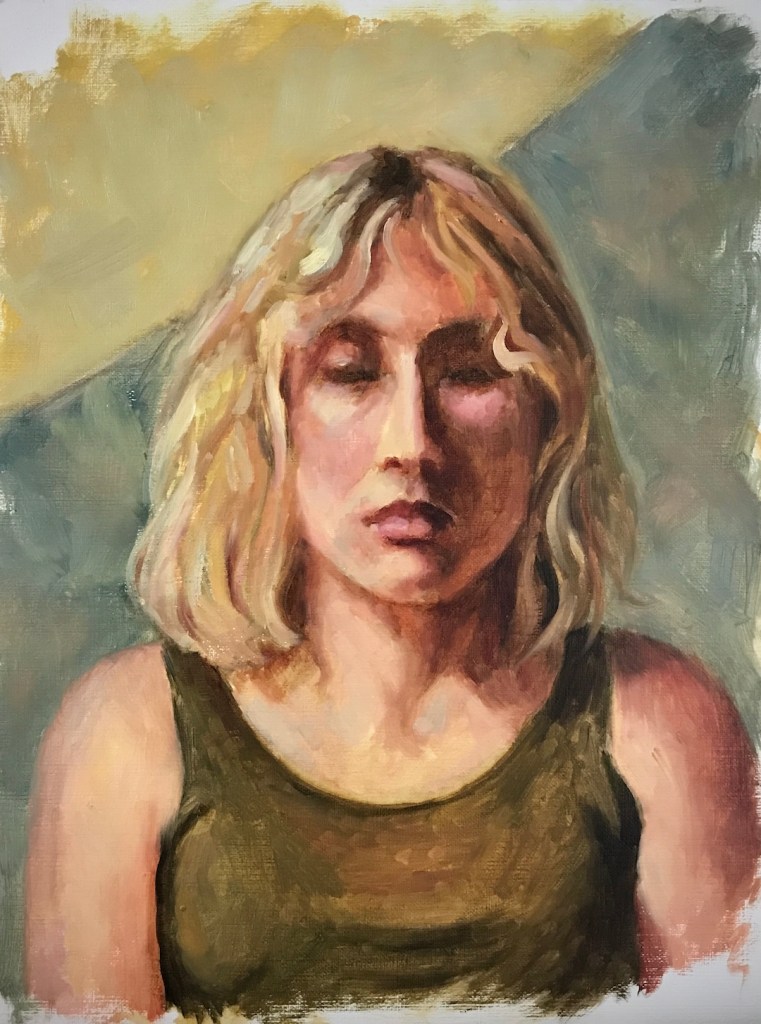
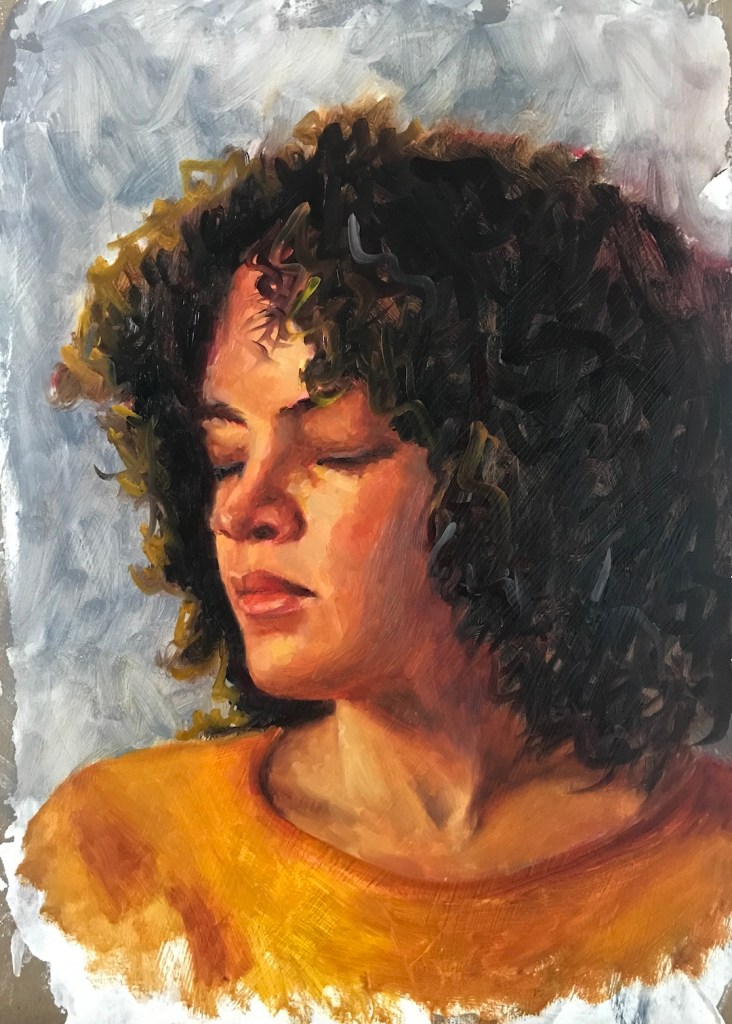
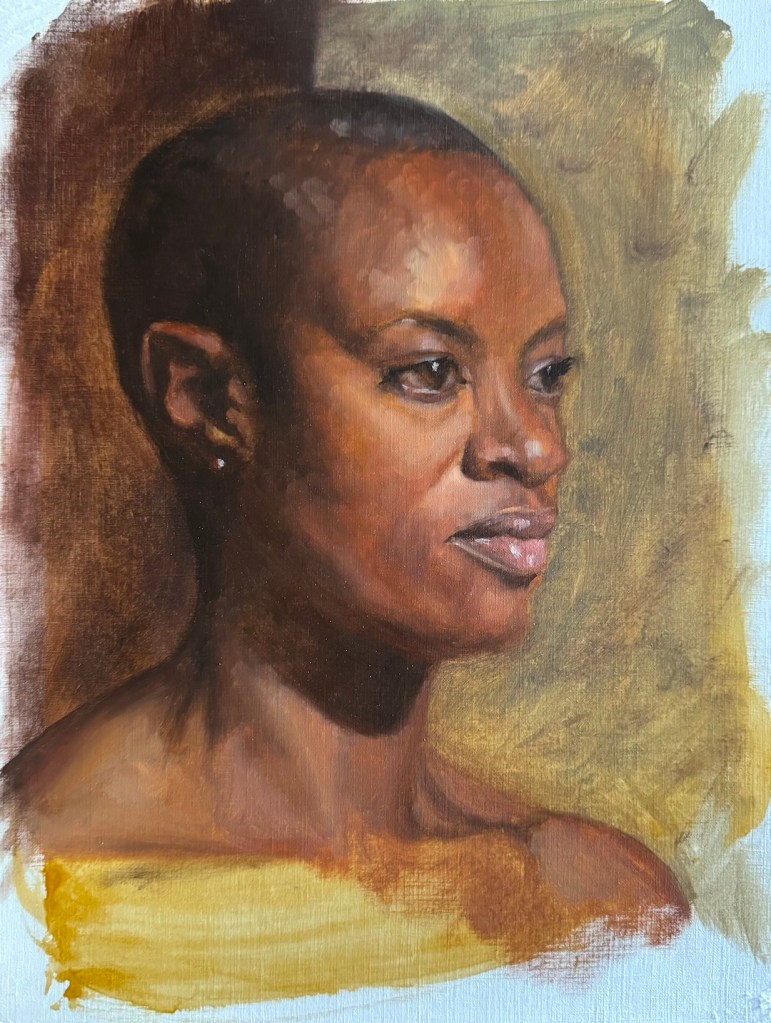
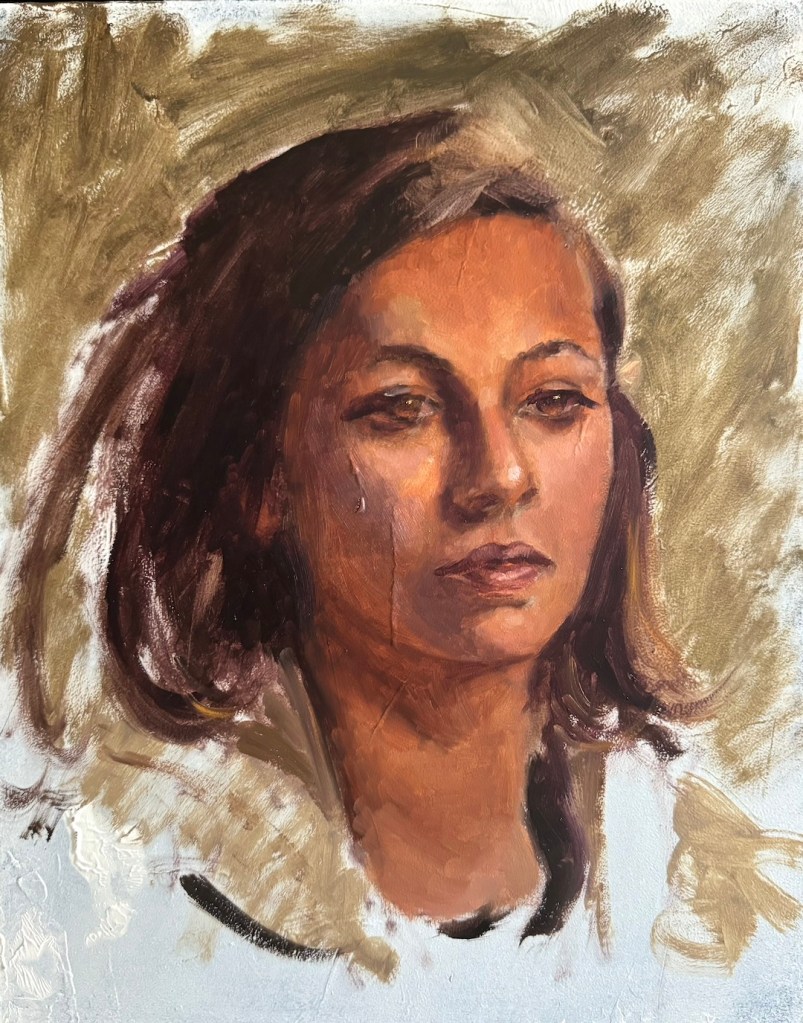
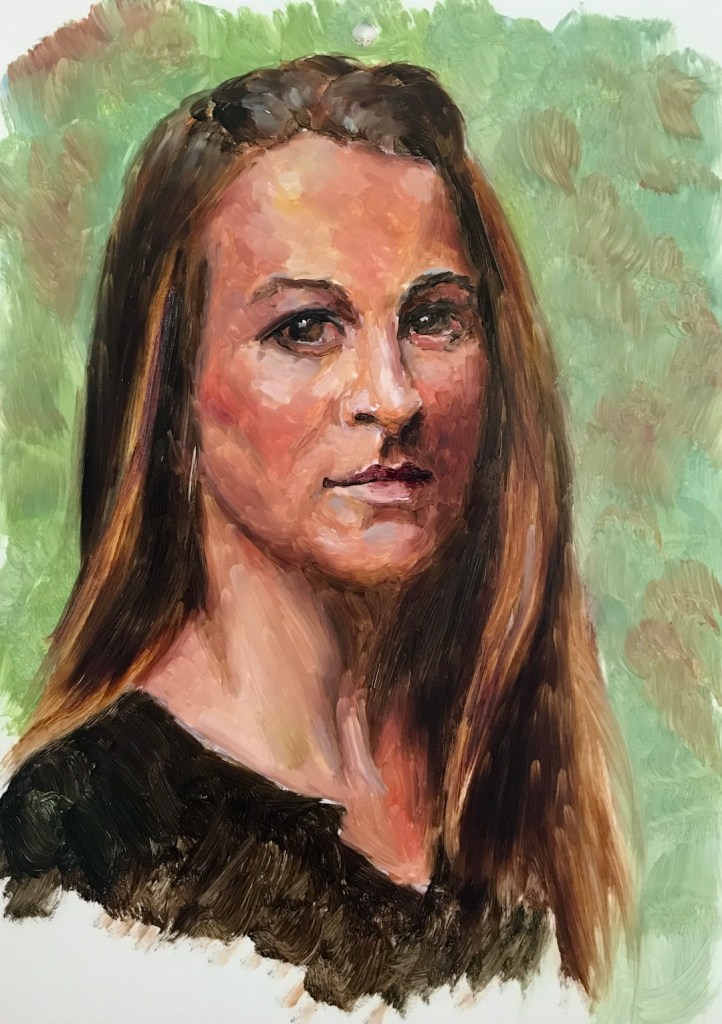
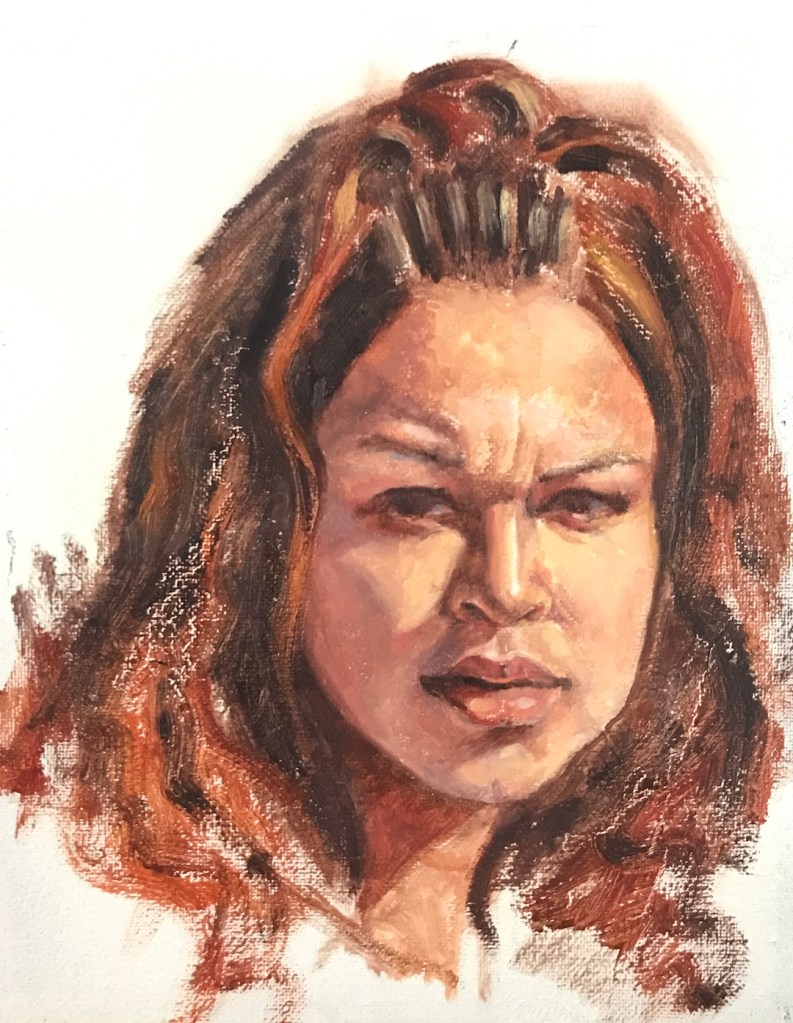
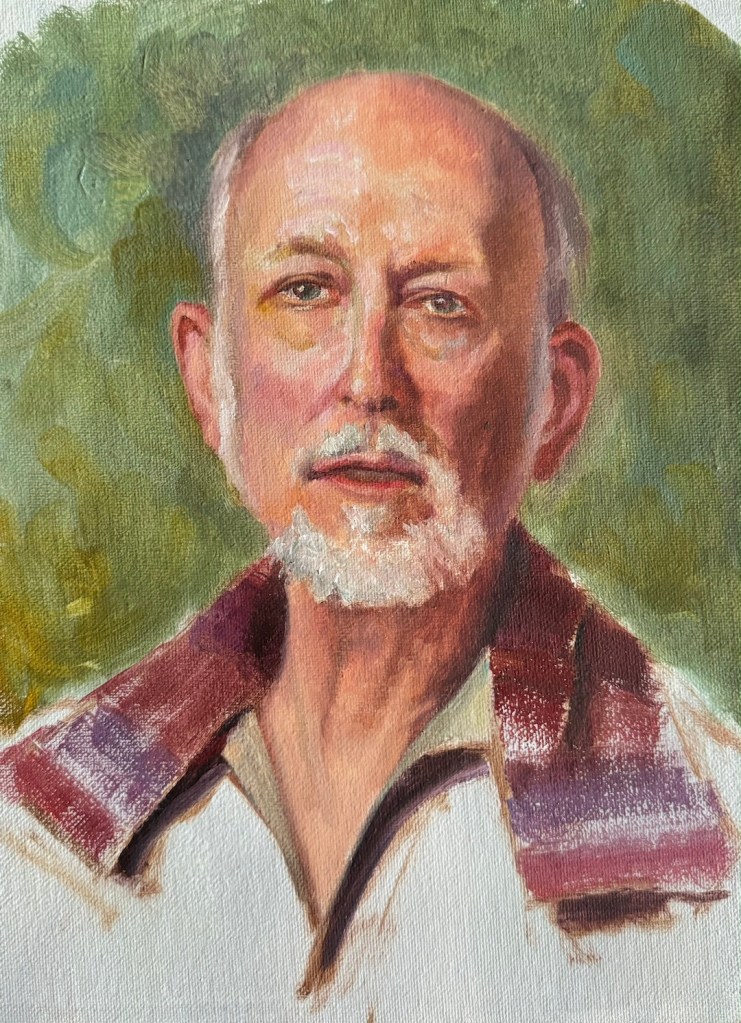
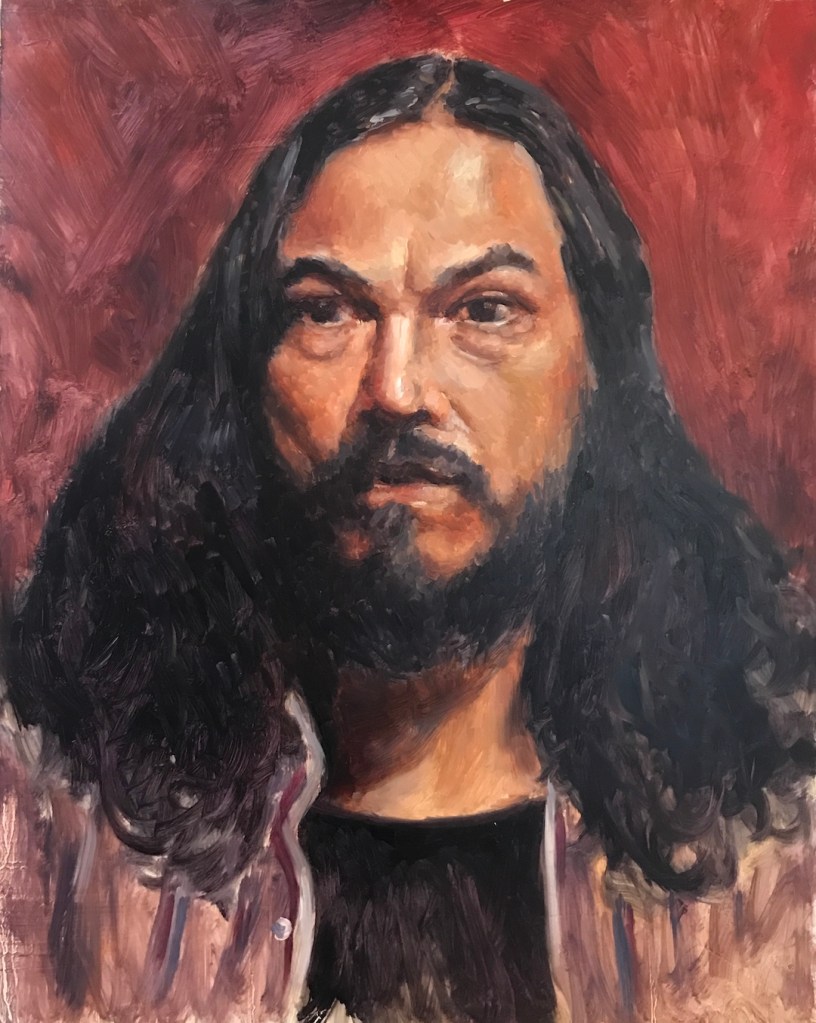
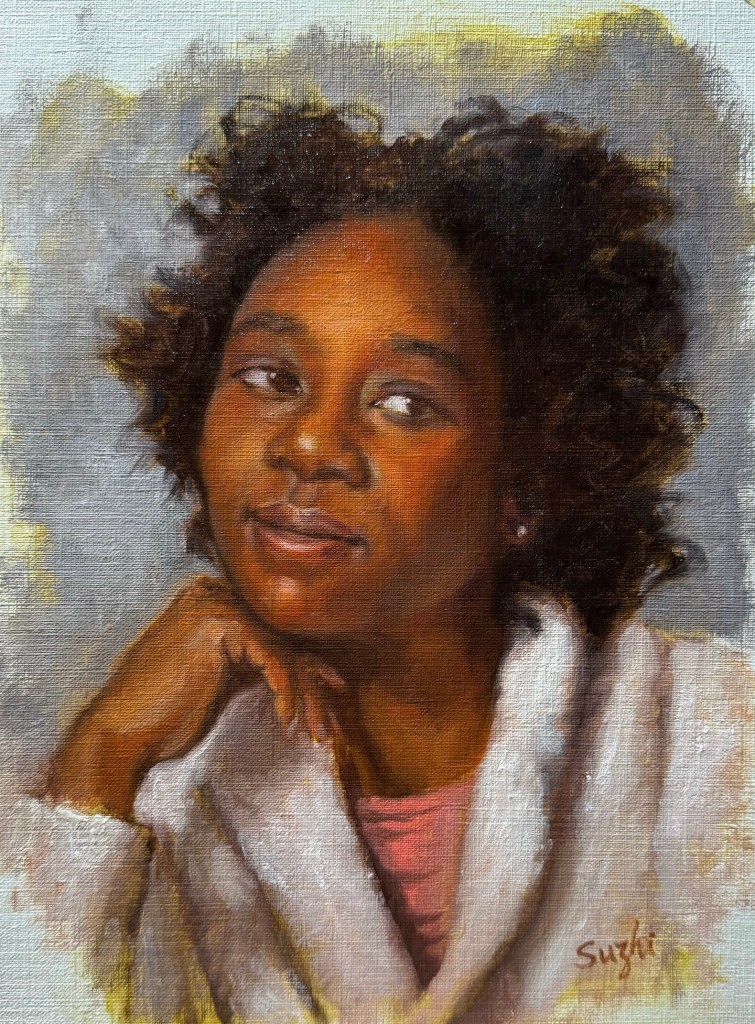
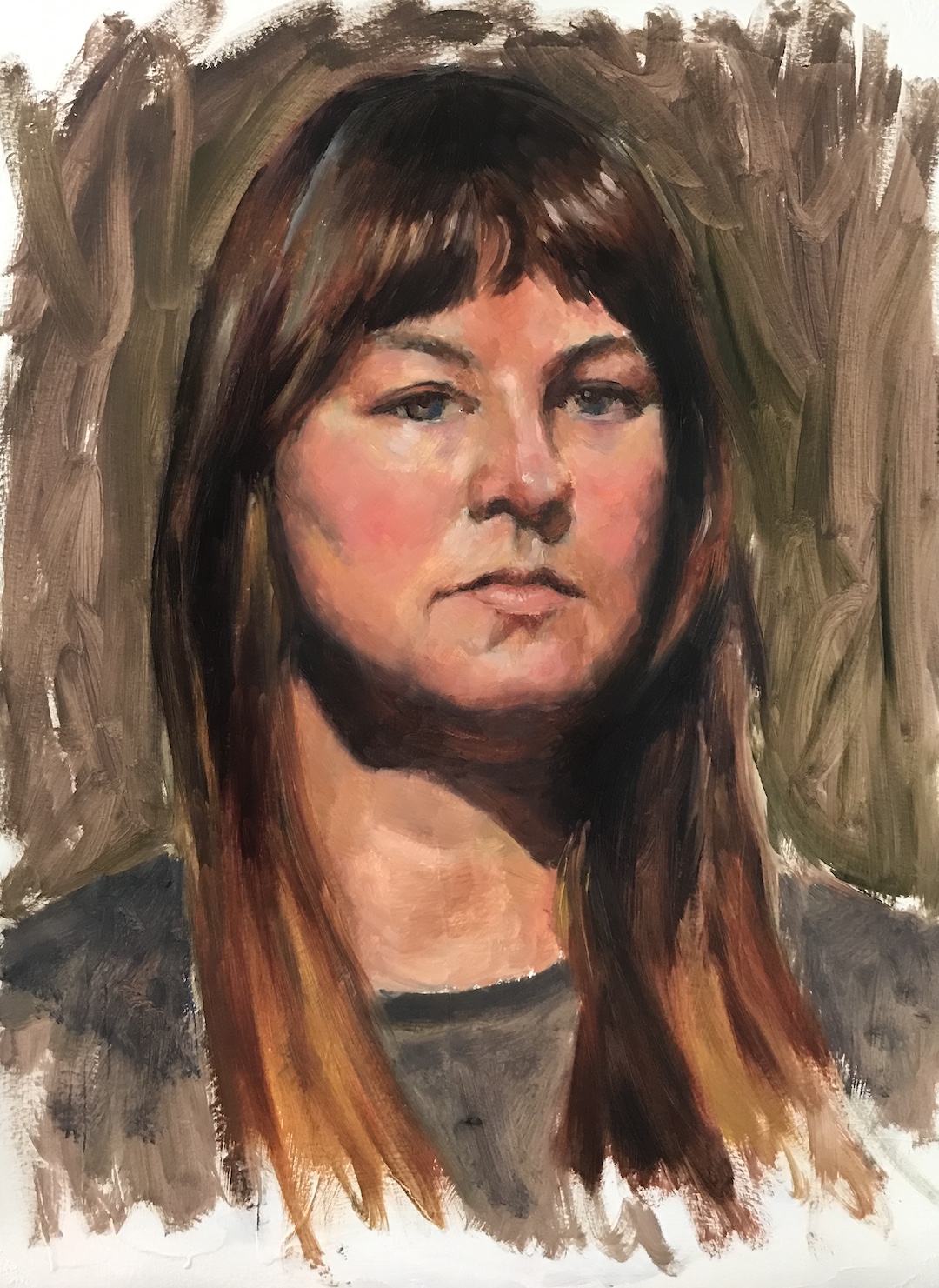
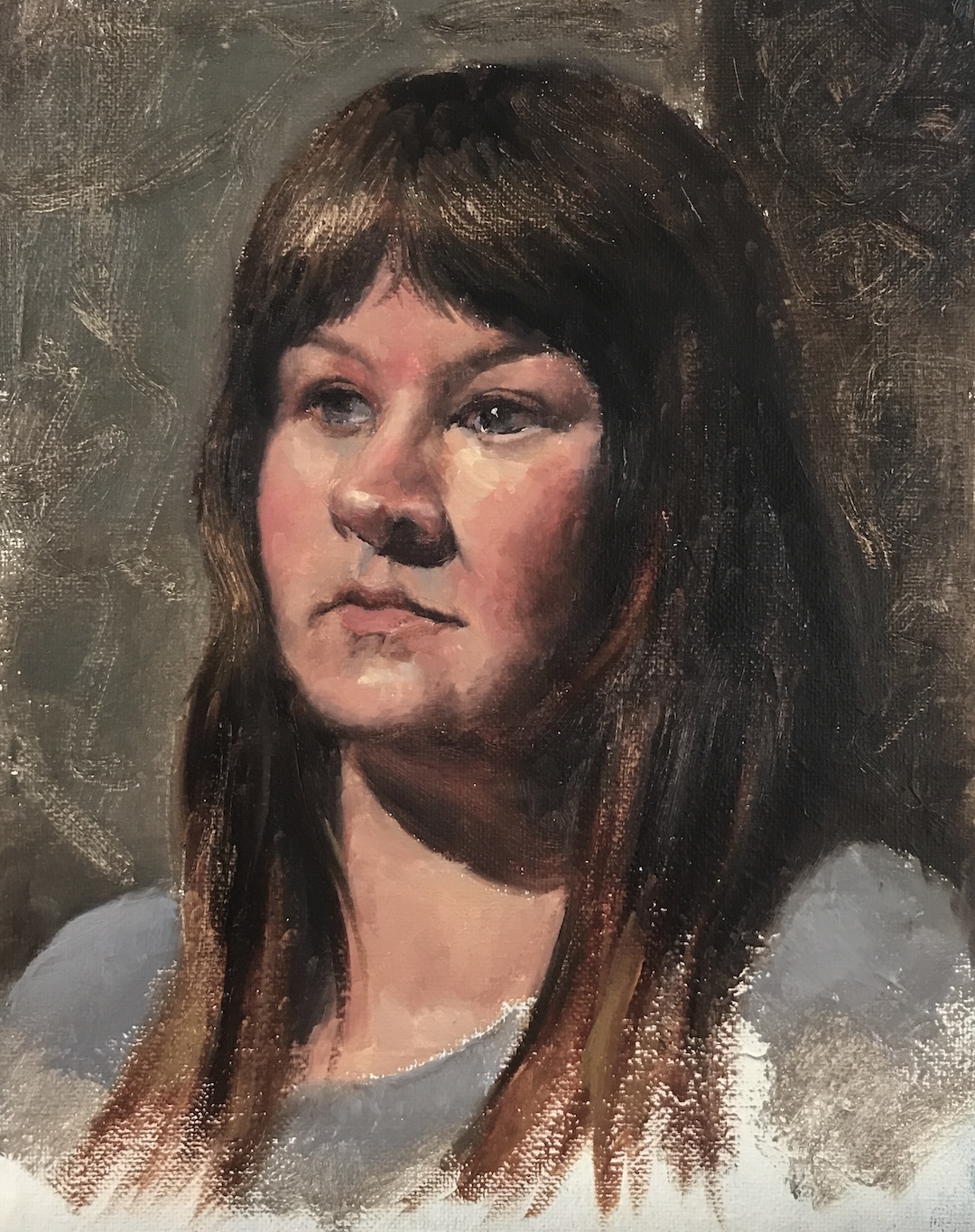
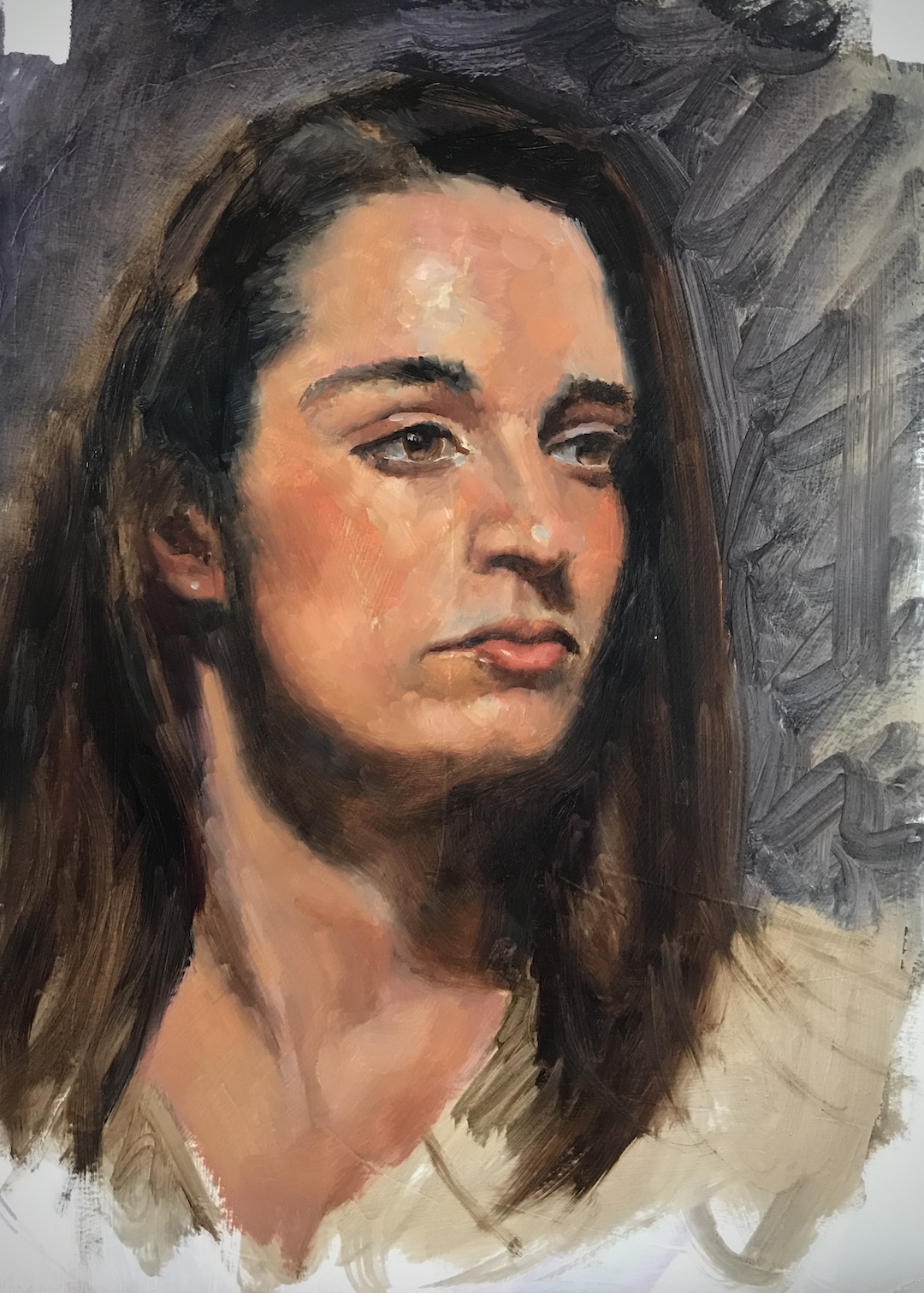
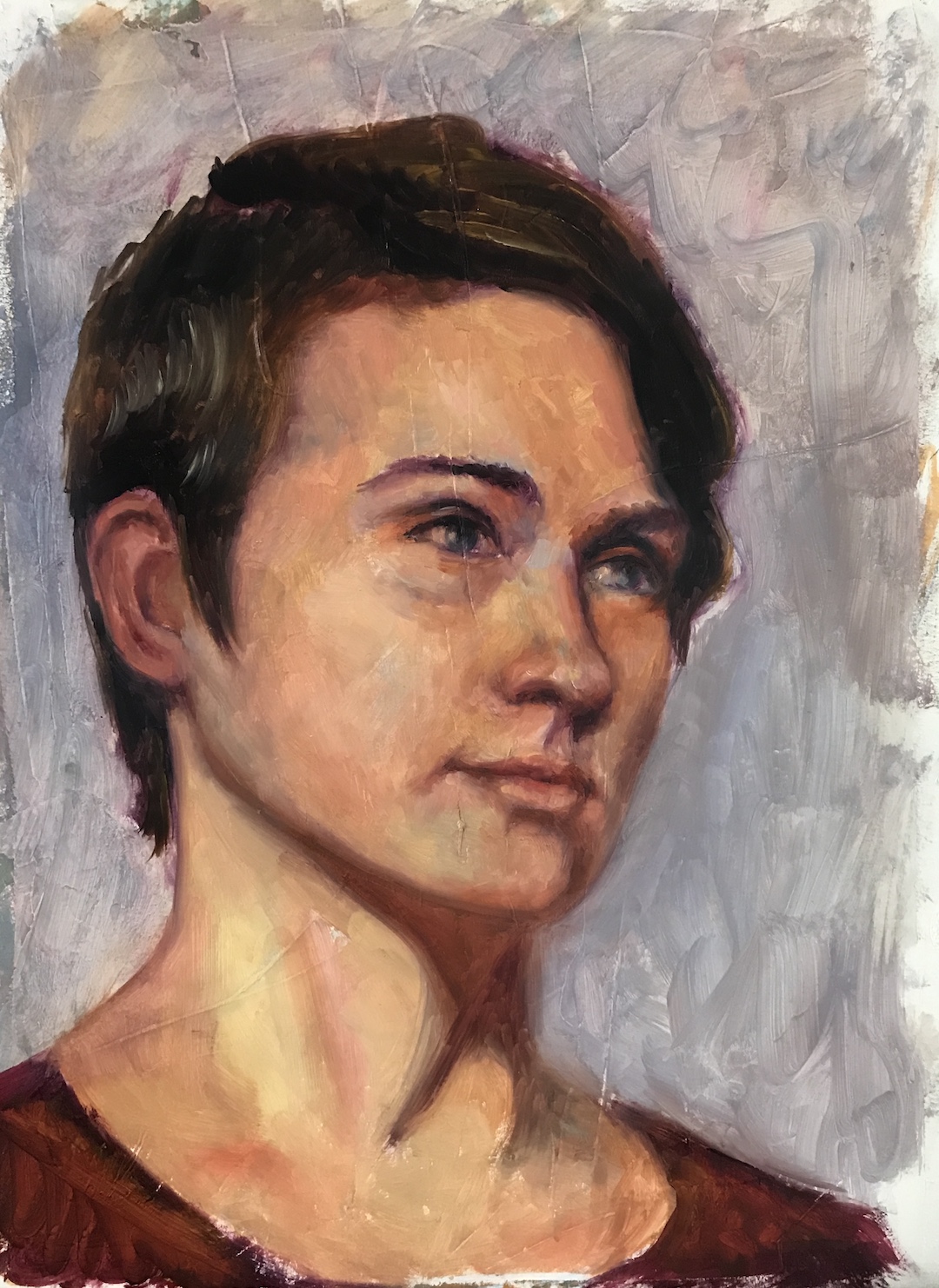
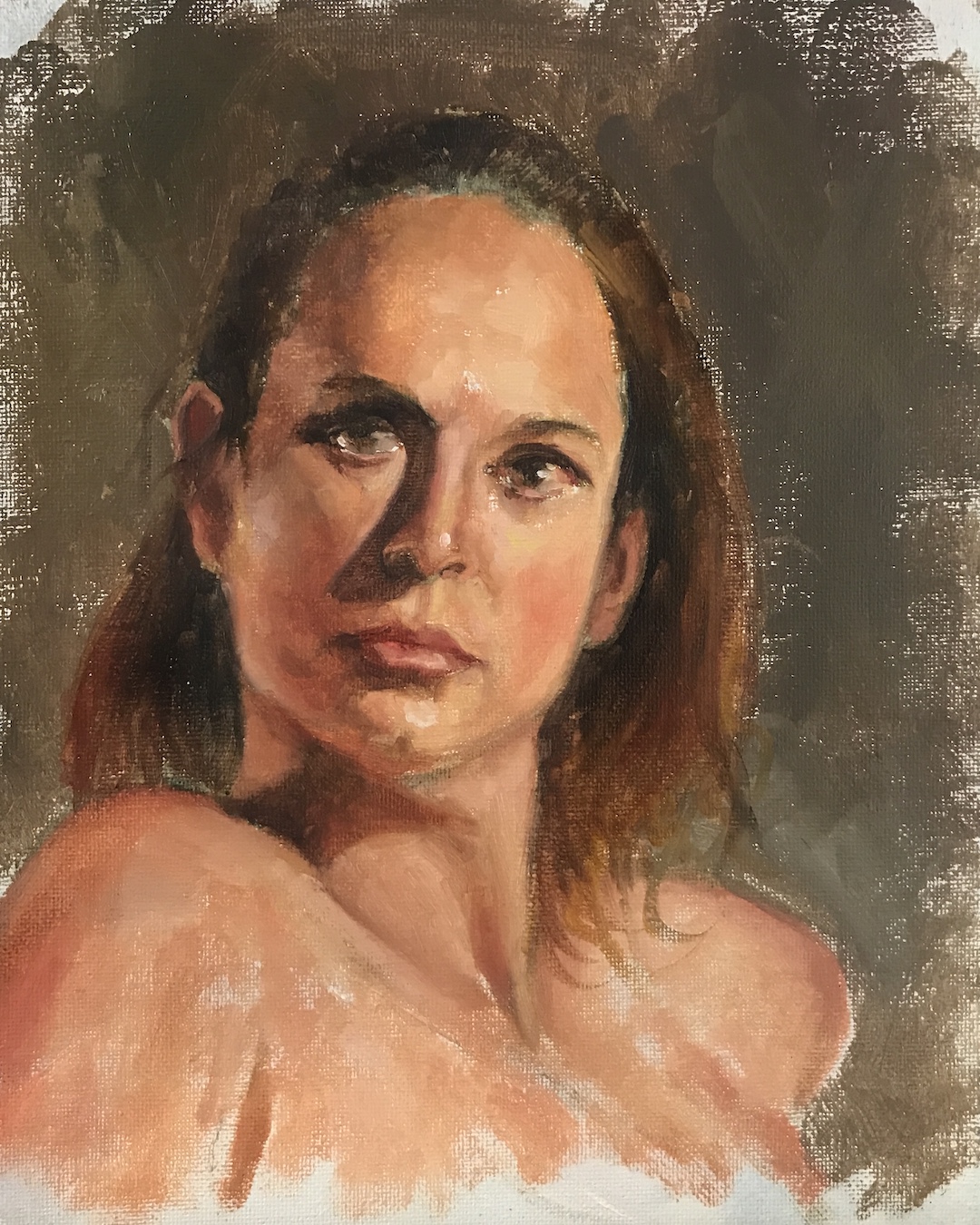
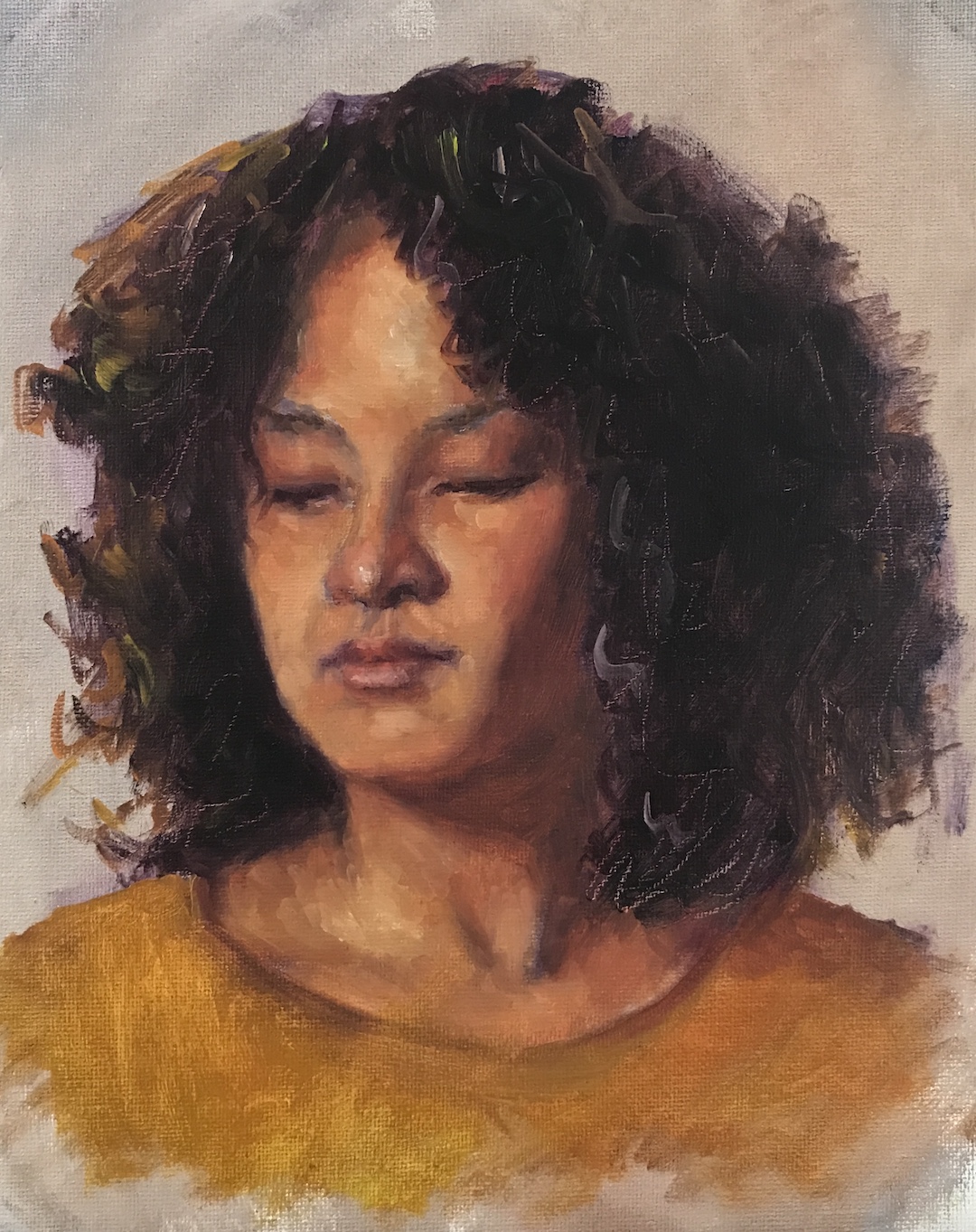
There are a couple of still life projects ongoing, and in between, I completed a few portraits using models from East Oaks Studio’s live streaming. Previously I focused on trying to finish the sketch, smaller in size, within 2 to 3 hours, aligning with each streaming session. This time, I used bigger panels, and allowed myself as much time as I wanted. The results are more rendered and complete-looking pieces:

Evee, oil on canvas panel, 14 x 18 in, July 2024
Tina, oil on canvas panel, 14 x 18 in, July 2024
Kailey, oil on canvas panel, 14 x 18 in, July 2024

A few notes:

  • I call these “filler projects” because they were not part of my summer plan. However, I find that while waiting for a layer to dry, or stalling at certain stages of the painting, doing something different alleviates my anxiety. It’s so much better than idling around not achieving anything!
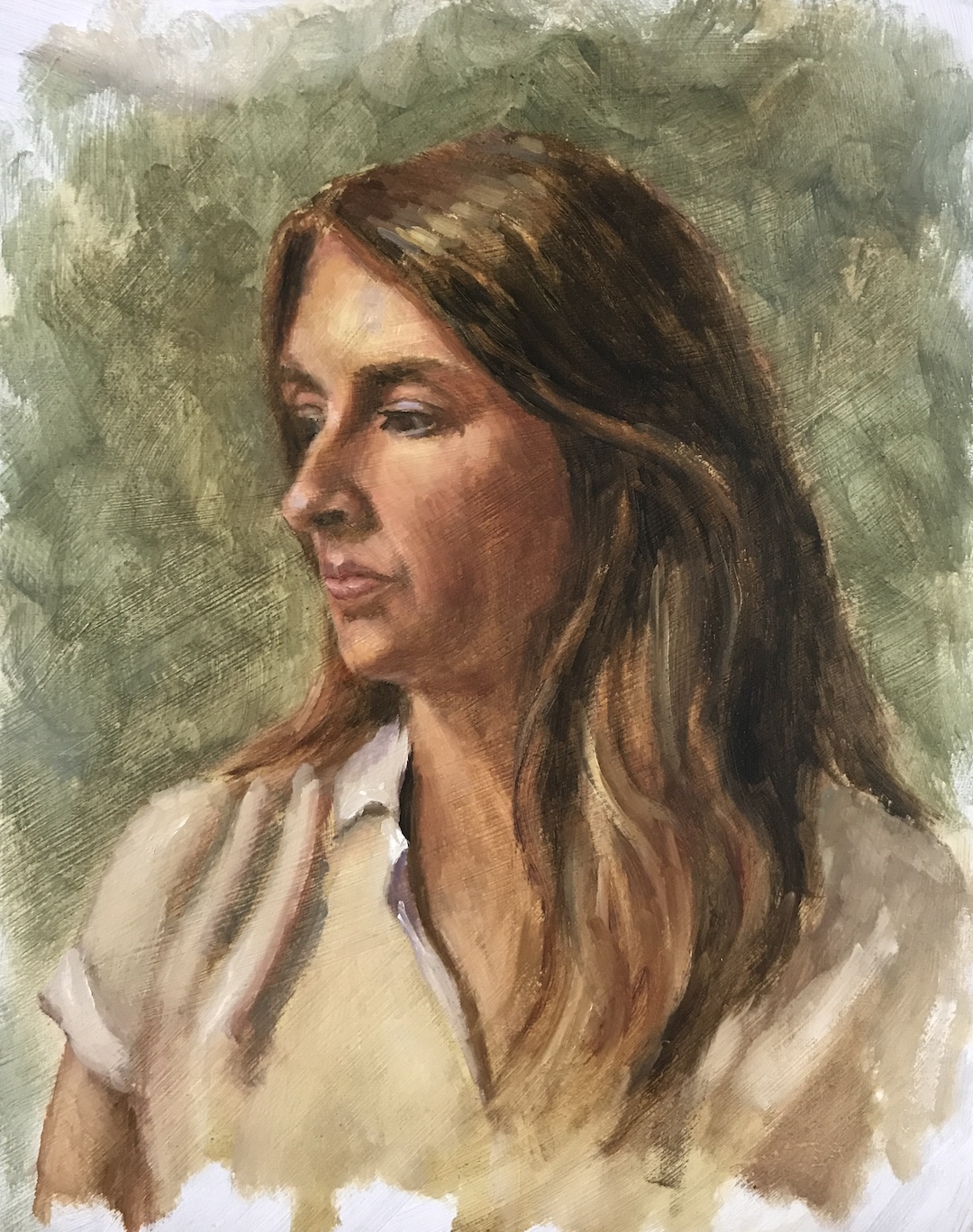
  • I neither went for close likeness nor the exotic look in my previous Schiele-ish attempt. However, I do feel that Schiele exercise has left its mark.
  • For me, the greatest gain from these paintings is that I have started to consolidate my method. In each case, I started with a Zorn palette, and added to it as I went on.
  • Mix it up and never stop painting!

When to Stop – Never?

I have a vivid memory of my early watercolor classes. As we busily worked on our pieces, our teacher, peeking from behind, said suggestively, “Know when to stop! Don’t ruin it…” We all felt nervous, guessing if it is “me” she was insinuating. Knowing when to stop becomes a thing always rings in the back of my mind when I am painting in watercolors. Understandably, it is not easy to remove the paints when they are on paper. Even when I moved to acrylic and oil, in theory you can keep piling paints on, I still hear that question being asked in classes and workshops. The obvious answer is you should stop when a piece works, but do you always know that? Then let’s say, you know it doesn’t work yet, should you keep trying or move on to the next one?

In one of the East Oaks’ early livestream, Michael Klein answered both parts of the question. I am paraphrasing here: I always know what kind of result I want to achieve and there’s no such a thing as overworking a piece. If you think a piece is overworked, it probably means you haven’t worked enough yet. You only stop when a painting works, and it is better to make the current one works before moving on to the next piece. If you haven’t solved the problem with the current piece, how could you make the next one better? 

Mr. Klein’s remarks shook me, but it also makes perfect sense. The concept that there was a moment in the past that the painting was perfect is faulty. If you don’t know where to end, should you even start? If you do know, what made you keep working on it in the first place? 

Klein’s answer also reminds me what Jeff Watts repeated in some of his demo videos, that you should paint each painting as if this is the one by which the world would judge you. Dale Zinkowski, whose tutorial I am following nowadays, echoed something similar. In a way, this is inline with the concept of “holding yourself responsible” that we discussed previously. We learn from making and correcting our own mistakes. 

So, to know when to stop, before starting each painting, sort out your goal as clear as possible in terms of the mood and aesthetics you want to achieve. Traditionally, you do that with thumbnails or draft paintings. Nowadays you can employ Photoshop or ProCreate in the design and drafting process. You can modify the digital version till it looks like the painting you want before you start, judge the progress against it, and keep working on it until you reach the goal. When not sure, put the painting aside and look at it from time to time. I used to do that for days or weeks, but according to the talented and prolific Scott Burdock, he sometimes leave a piece open-ended for years. You don’t need to decide if a painting is done on spot. Give it time, and then give it more time. (Unless you are working on something with a deadline, then the deadline calls for you.)

This process is more challenging for a watercolorist. Watercolor paper, however high quality, only takes so much beating. The innovative artist Niel Murphy found a way to expand the design process to the entire art making process. He started with a watercolor painting, scan it into Photoshop to keep working on it digitally, then print it out and paint more on top of that. This process is very expandable – you can work on the piece forever – at least in theory. 

A logistic problem rises. If every painting has the potential to be worked into something, we should only work with the best materials we could afford at any time, right? What if? This is the advice many artist give. Do not waste your time on poor materials. It is very against my stingy nature, but I find using better materials help to hold myself responsible. I am less likely to give a half-hearted effort or abandon a piece by telling myself it is just a practice. I just need to find more affordable but good materials. MDF or aluminum board, limited palette, there are some options. 

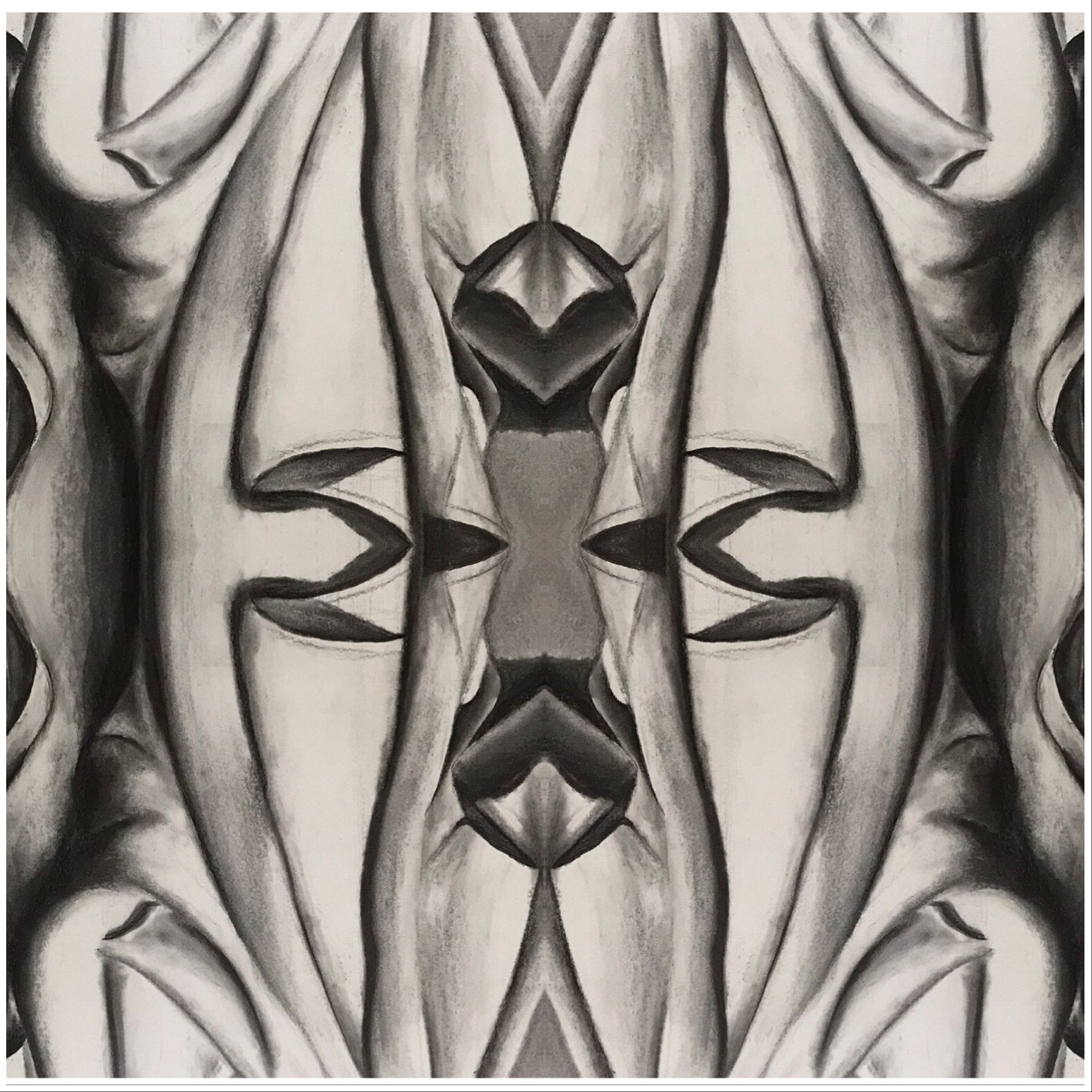
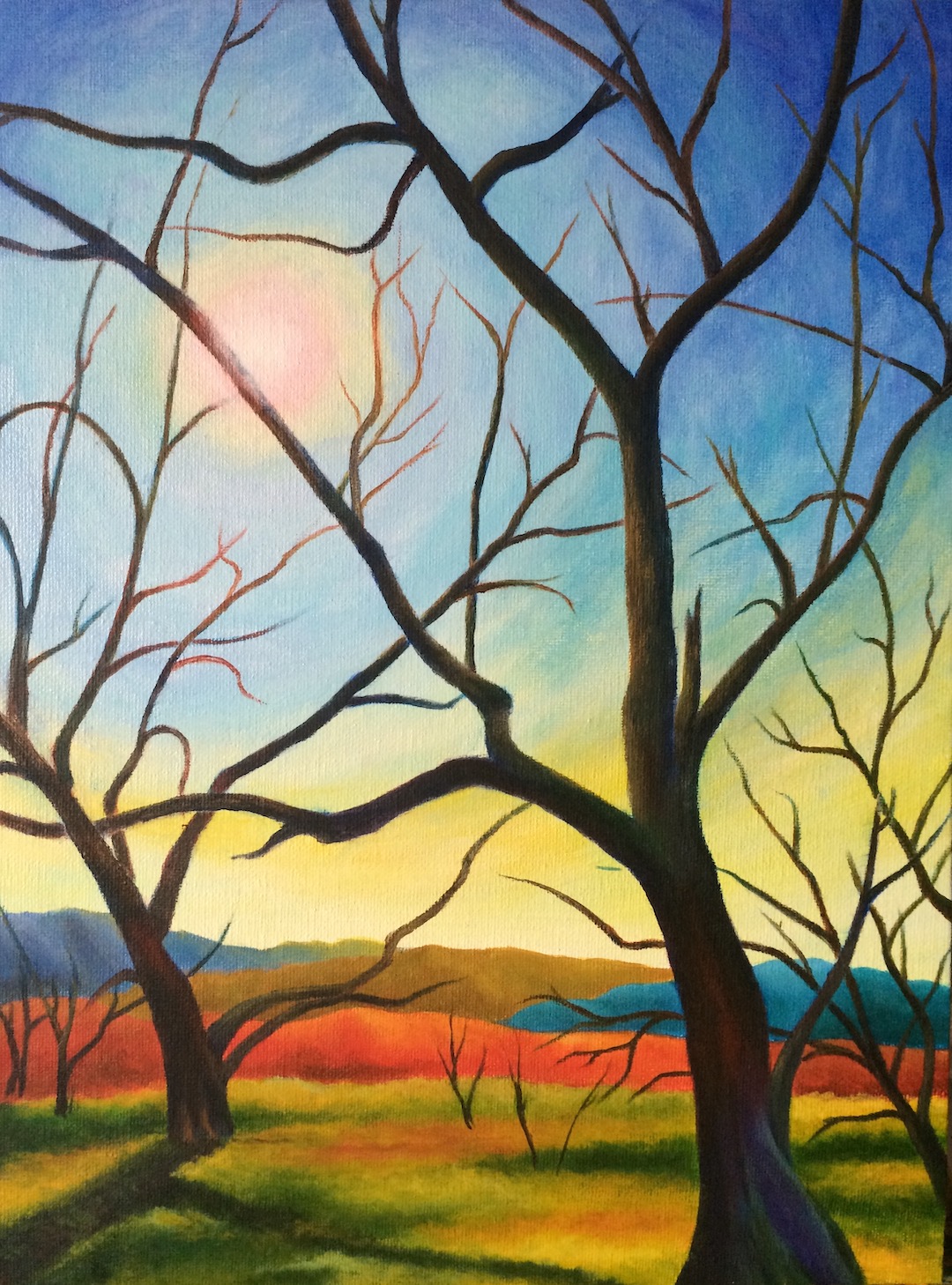
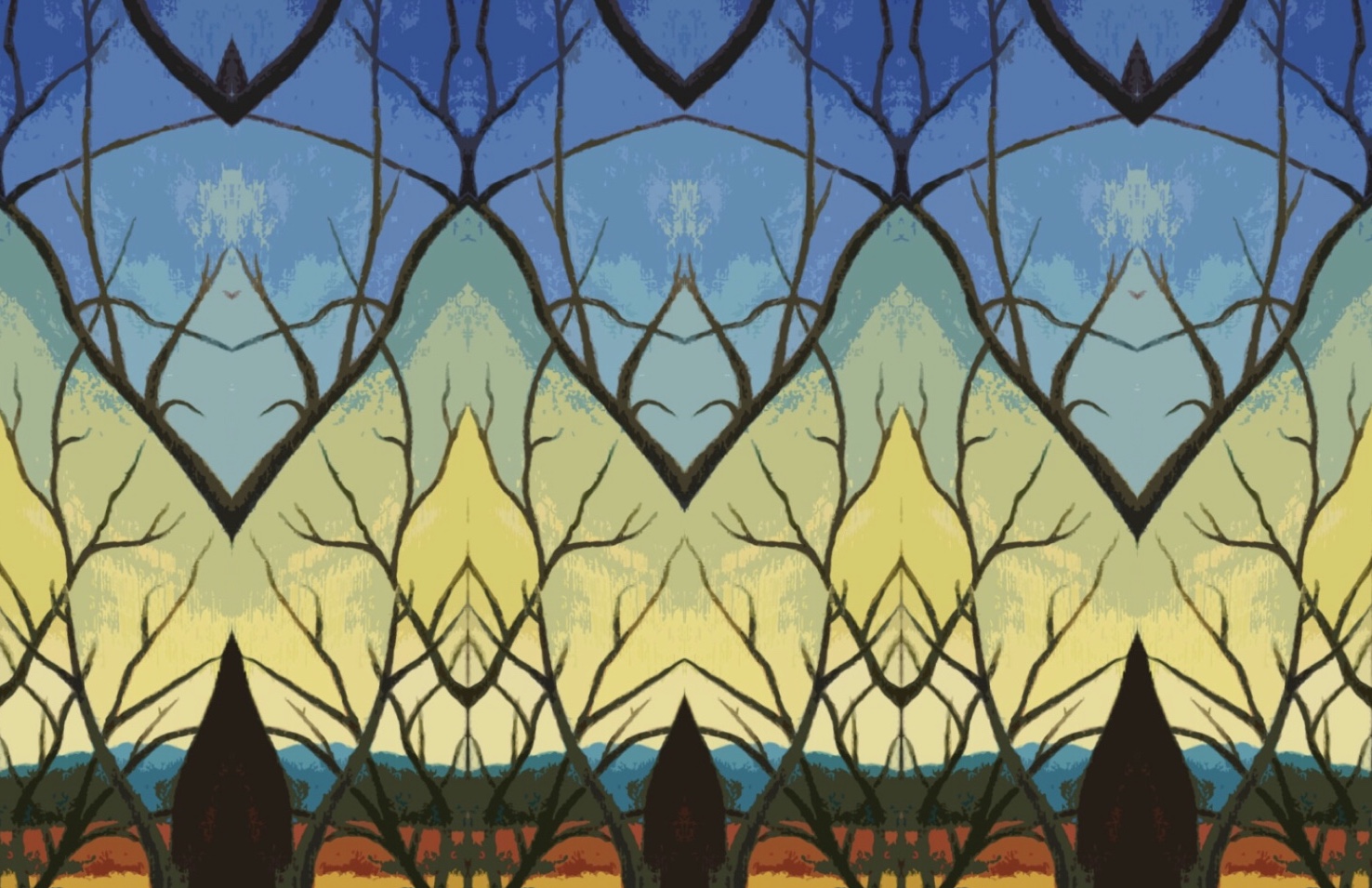
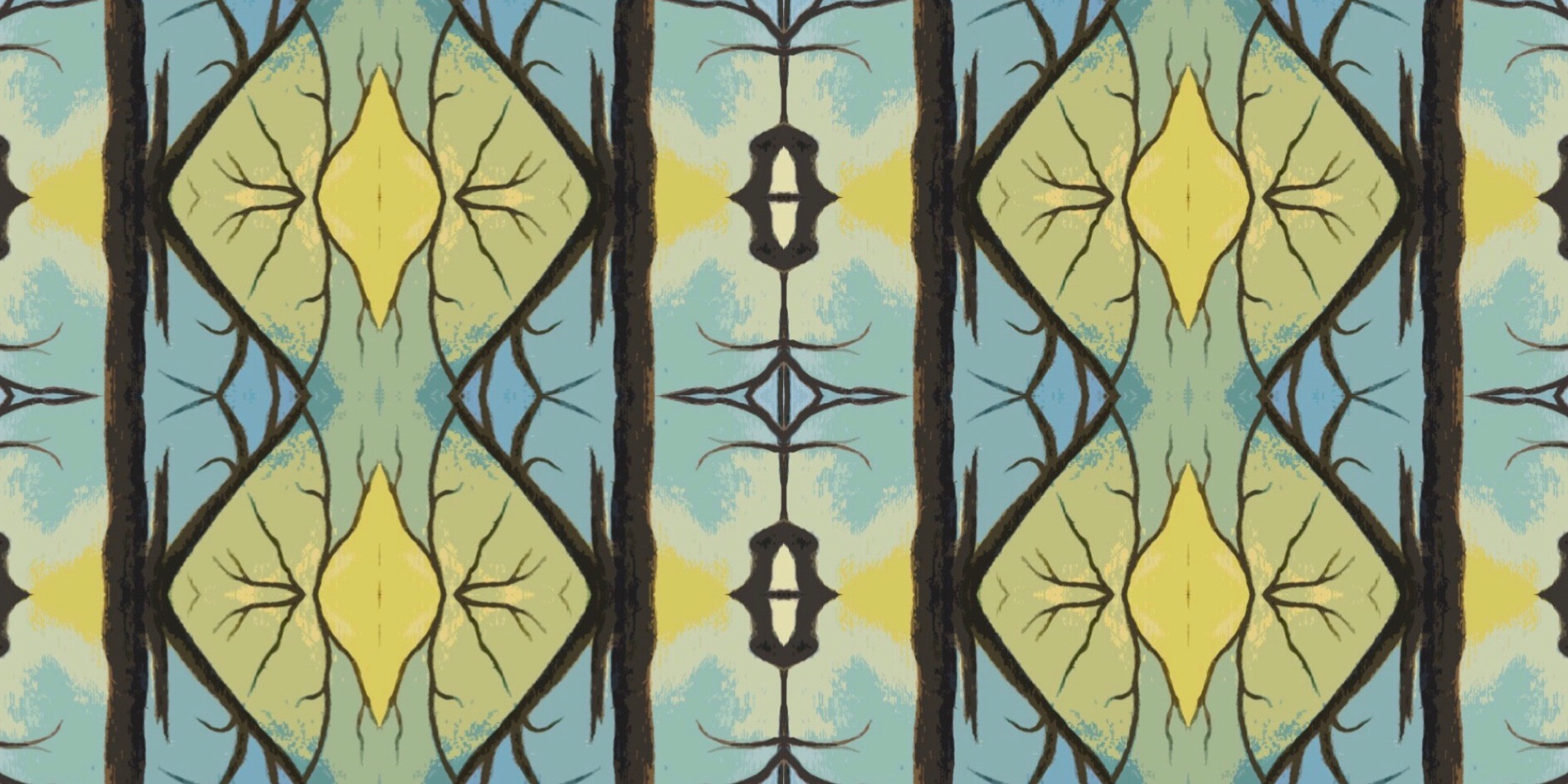
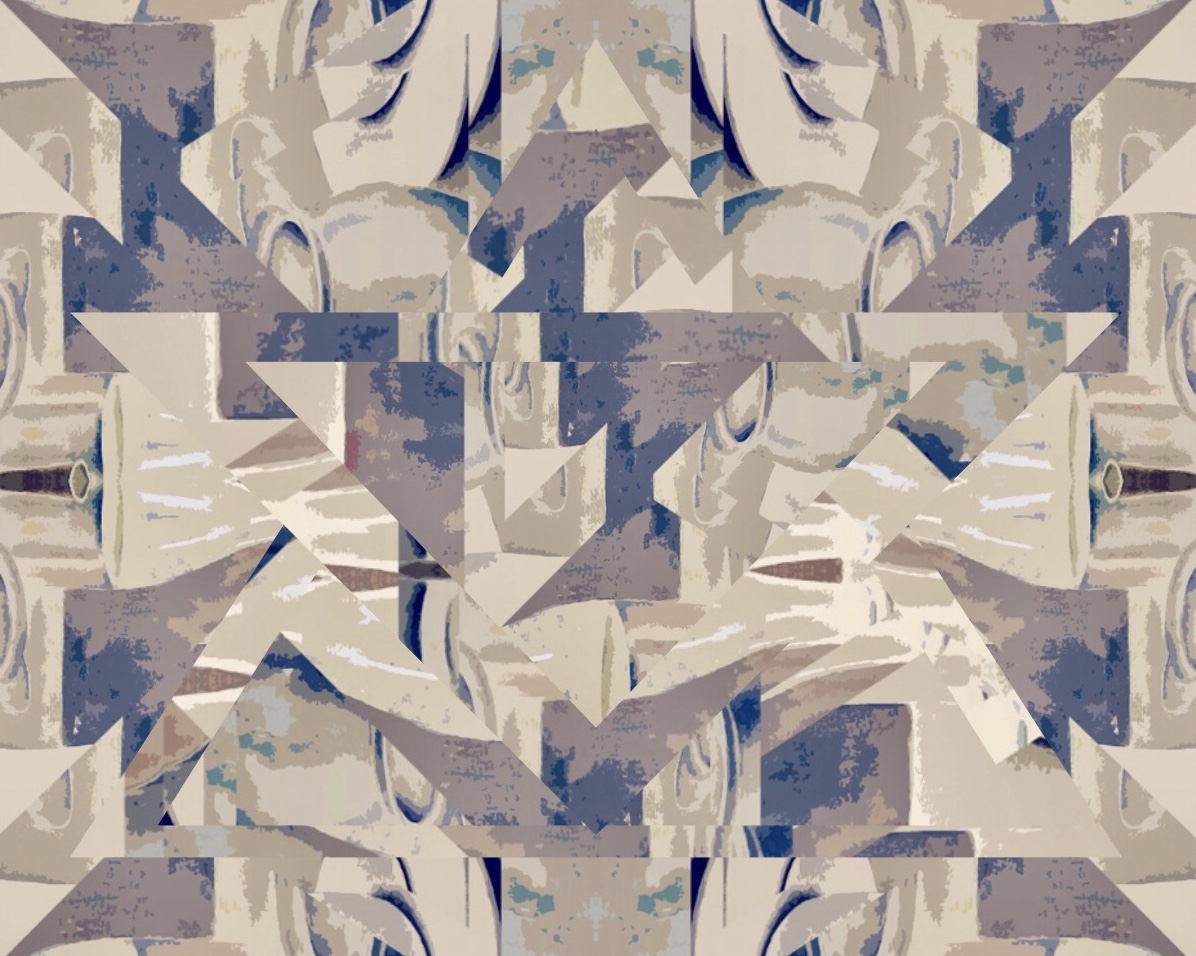
Of course in the process of learning and practicing, not every initiative marches toward a gallery.    I can’t possibly make everything work as it intended to be, but there are ways to keep options open. I used to throw out or paint over the old paintings. I still do, but I remember to keep a digital copy. In the days that I am too languid to pick up a brush, but feel obligated to do something art related, I turn the into digital patterns.

Any piece of art has the potential to morph into longevity. 

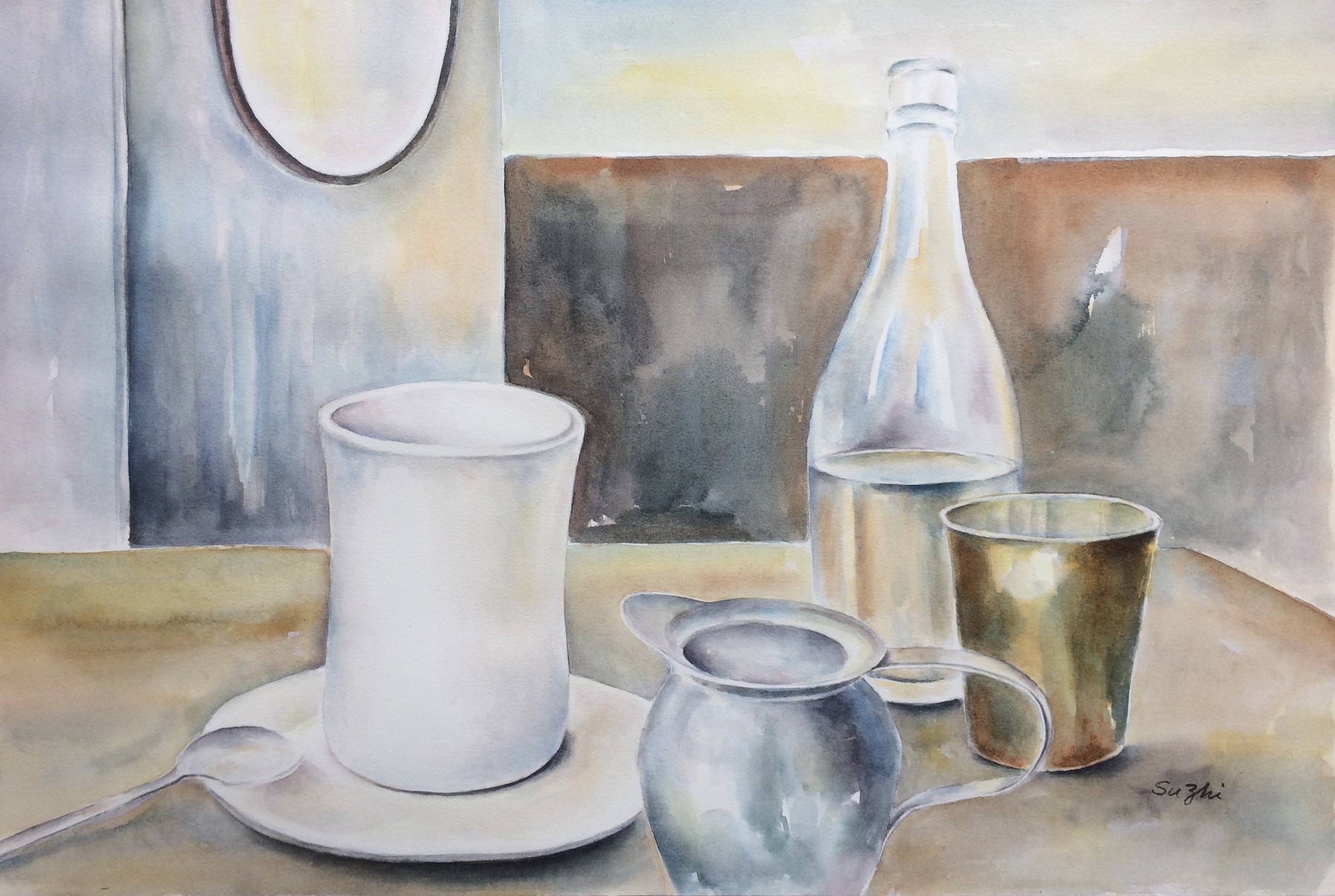
Here are some of the patterns I made from old art pieces (shown first):

Review: Fashioning San Francisco

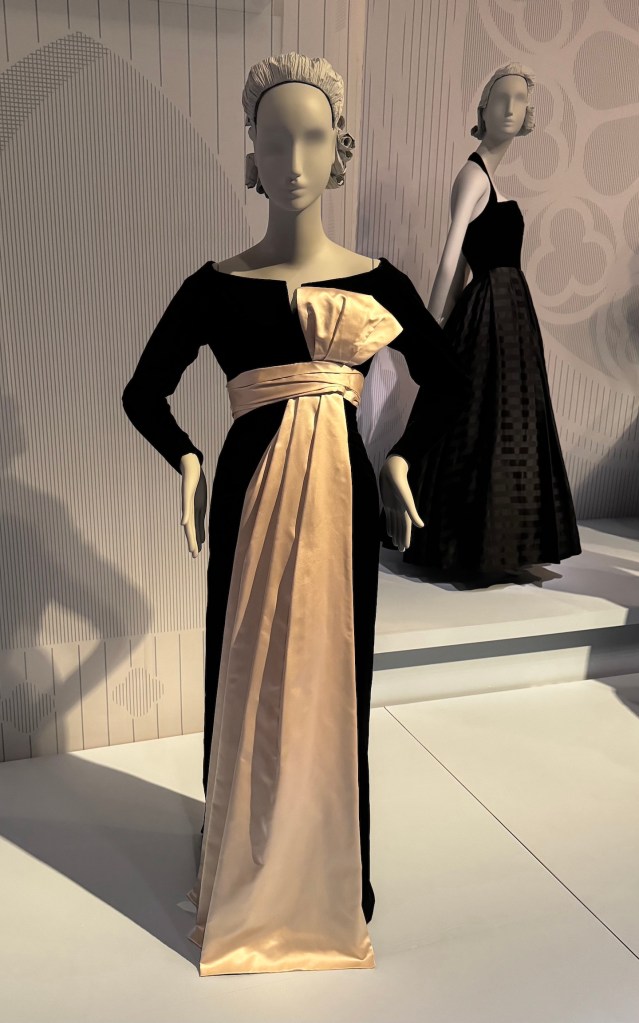
The de Young Museum’s Fashioning San Francisco: A Century of Style promised to whisk us away on a stylish journey through San Francisco’s fashion history. It ambitiously aimed to cover over a century of women’s fashion through the works of more than 50 designers, from French couturiers to Japanese avant-garde designers, including Christian Dior, Alexander McQueen, Christopher John Rogers, Comme des Garçons, and Rodarte. But, let’s just say, it didn’t quite strut the runway as expected.

For starters, the vibe was off. Compared to the dazzling Guo Pei: Couture Fantasy, the vibrant Patrick Kelly: Runway of Love, or the elegant Contemporary Muslim Fashions (2018), Fashioning San Francisco felt more like a stroll through a dimly lit memory lane. The gallery’s lighting did the exhibit no favors; it was too dark, making it hard to appreciate the nuances and craftsmanship of the pieces. This shadowy ambiance, rather than creating an intimate setting, unfortunately, accentuated the weariness of the ensembles, making the fashion scene feel somewhat muted and dull. Ironically, the museum’s own catalogue of the show were taken in much flattering lighting. Mannequins with disproportional large head is another feature of the show.

The exhibition starts with the city’s recovery from the devastating earthquake and fire of1906, followed by its reassertion on the global stage with the exponential growth of international trade and the rise of department stores, and finally became the playground for the avant-garde. From the legendary “little black dress” by stars like Karl Lagerfield and Valentino to rad pieces by Japanese designers like Rei Kawakubo and Issey Miyake. The intend is to showcase the city’s role in the global fashion dialogue. The exhibition also pays homage to the “power suits” of working women and the significant role of footwear in expressing individual identity.

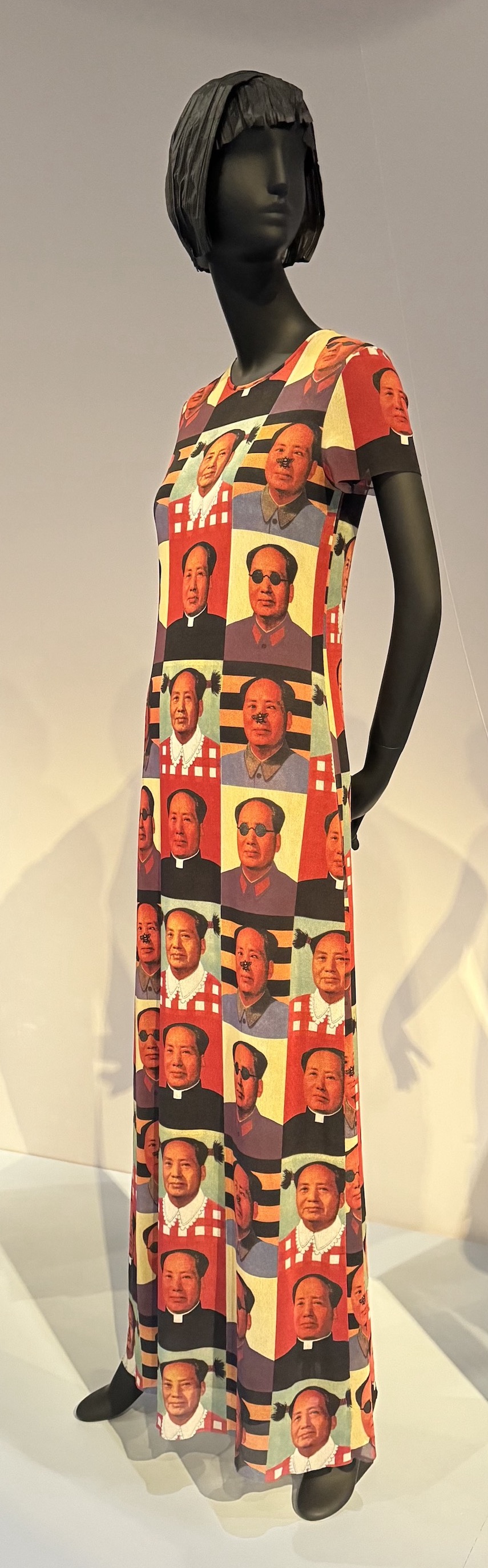
However, in a lay person’s eye, Fashioning San Francisco inadvertently painted the city as a lesser European town becoming a mediocre melting pot. De Young claims “The designs on view, many never shown before, reflect San Francisco’s long-standing tradition of self-expression through fashion.” If there’s anything uniquely San Francisco in it, I failed to grab. This Vivienne Tam’s 1995 “Chairman Mao” dress with print of the Chinese dictator by Zhang Hongtu is as interesting as it gets, but it could also be from anywhere with a Chinese tie. Maybe I need to see a similar show for NYC, Paris, etc. to finally see the underline identity.

The foundation of the exhibition is the 2018 gift of more than 500 ensembles the museum by Palo Alto author and fashion collector Christine Suppes. Suppes’ donations span the past 35 years. I wonder if the taste of the collector shapes the outlook of the show. 

The show will run into August this year. 

Hold Yourself Responsible

One reason I avoided painting people when I started making art was that I knew if the drawing was off, everyone could tell, regardless of training. Still-lifes or landscapes, however, are more forgiving. You still need to achieve a decent eclipse and get the essential perspective right. Yet, unless I show you the reference photo, it’s not apparent the actual size of my apple and its distance from the mug; it’s not evident that the tree has more branches or the buildings are intricately designed. This applies not only to drawing, but also to colors and values. I can make things up as I go, and that’s my creative freedom, right?

I recently viewed some demos from the renowned still life and portrait artist Dale Zinkowski. He painted a simple setup of eggs in the span of 4 hours. I was surprised that during those 4 hours, he devoted the entire first hour to the drawing, not even a complicated one. Most of this time was spent measuring to ensure the accurate positioning of the eggs. Really? Is such meticulousness necessary? Who would notice? As if hearing my question, he began explaining his rationale for taking the time to get the drawing right. It was to hold himself responsible when nobody was watching. His comment makes me think a lot about my own practice. Indeed, in a realist painting, an artist’s job is not to religiously copy everything seen. However, when you spend time designing the setup (Dale said he spent a lot of time putting the eggs in a desirable position), you don’t dismiss it without a good reason. Every observation, measurement, and comparison sharpen your visual acuity. Every drawing revision to align more closely with what you see enhances hand-eye coordination. By holding yourself responsible, you improve the efficiency of your practice, and you get more from each painting experience. It’s not about having to replicate the exact color of the egg before you, but striving for a matching color enriches your skill set, and ultimately, it gives you more freedom in artistic creation. 

This practice might be a simple truth for many, but having taken excessive liberty with my drawing for so long, I’ve wondered why I haven’t made sufficient progress. For me, this was a light bulb that just went on moment. What ensues is implementing this practice. 

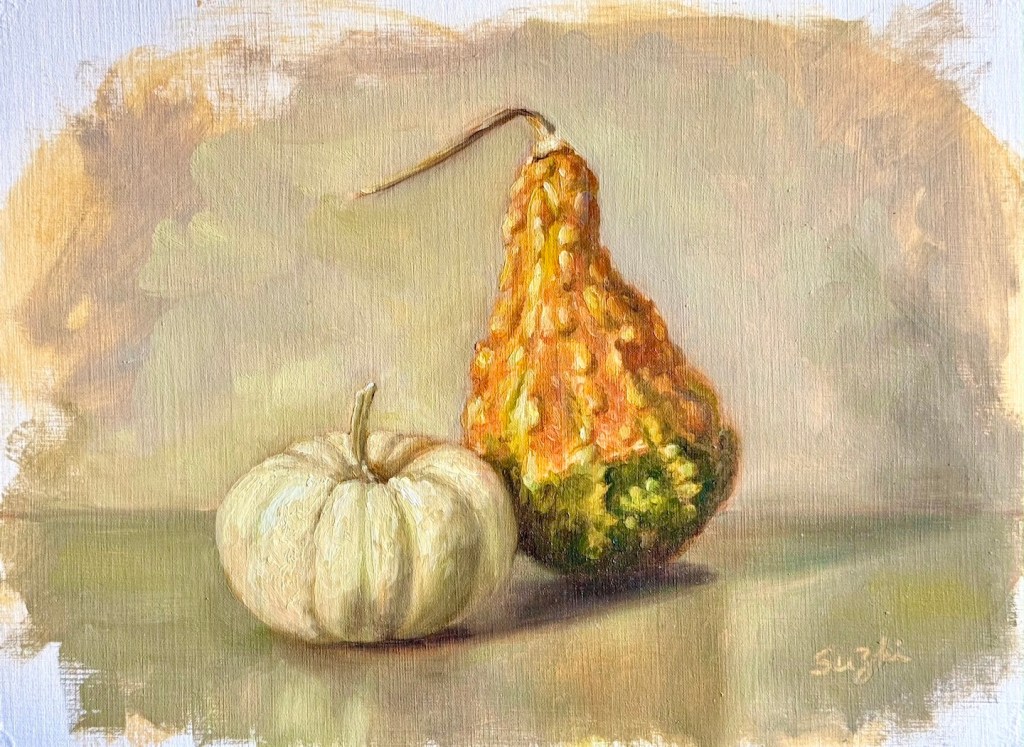
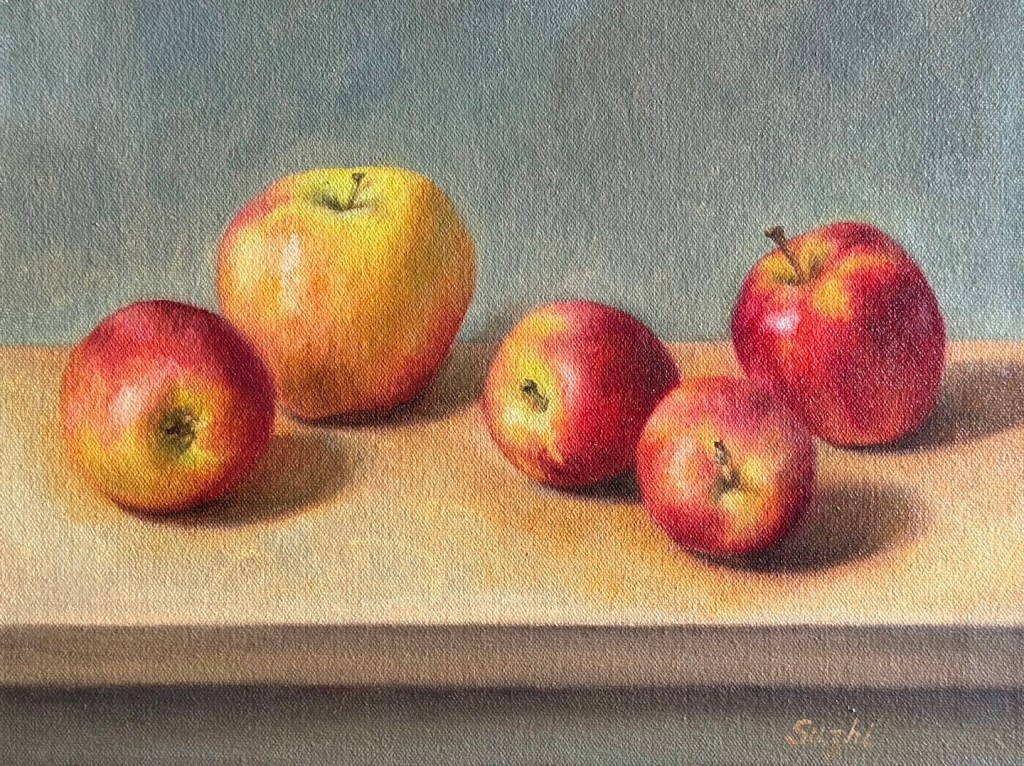
Share a few of my recent still life paintings:

Pumpkin Couple, oil on paper, 9 x 12, 2023
Apples, oil on canvas board, 11 x 14, 2023
Vase and Scarf, oil on canvas board, 11 x 14, 2024

MidJourney Revisited and Happy New Year!

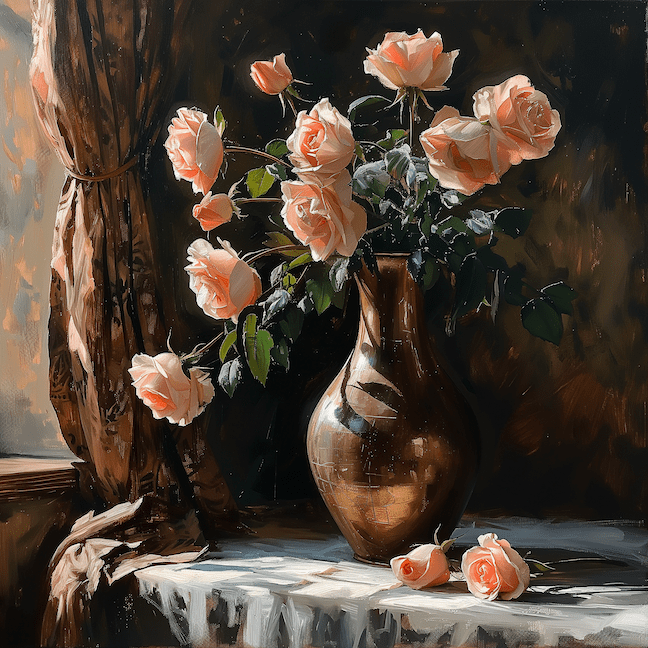
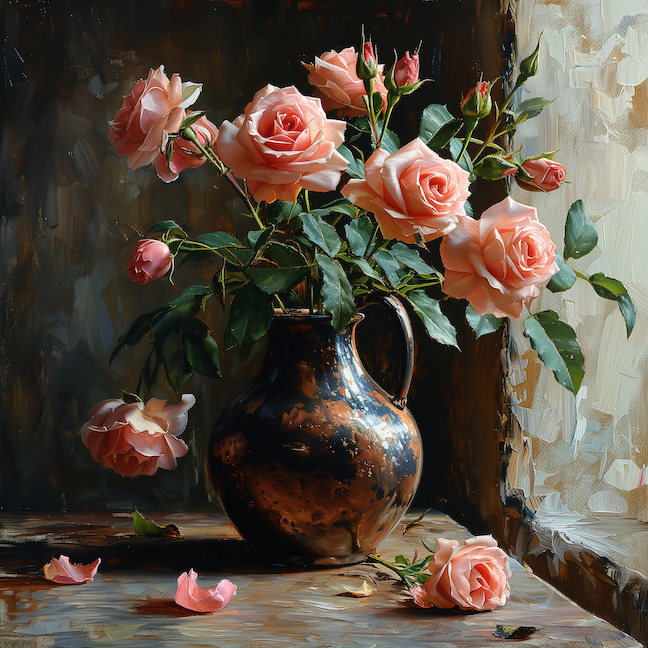
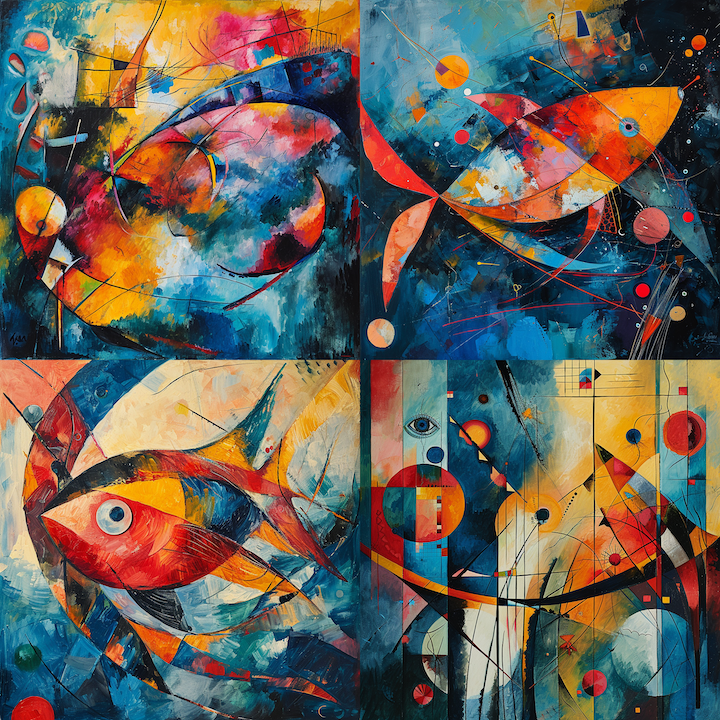
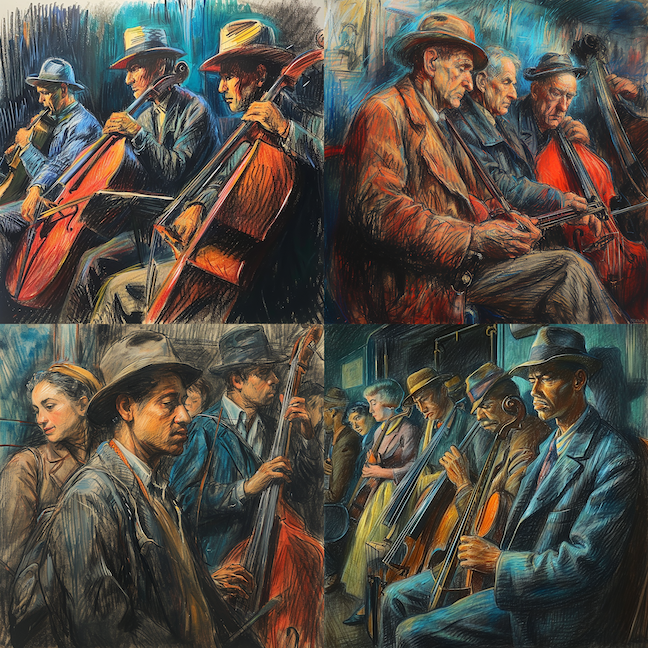
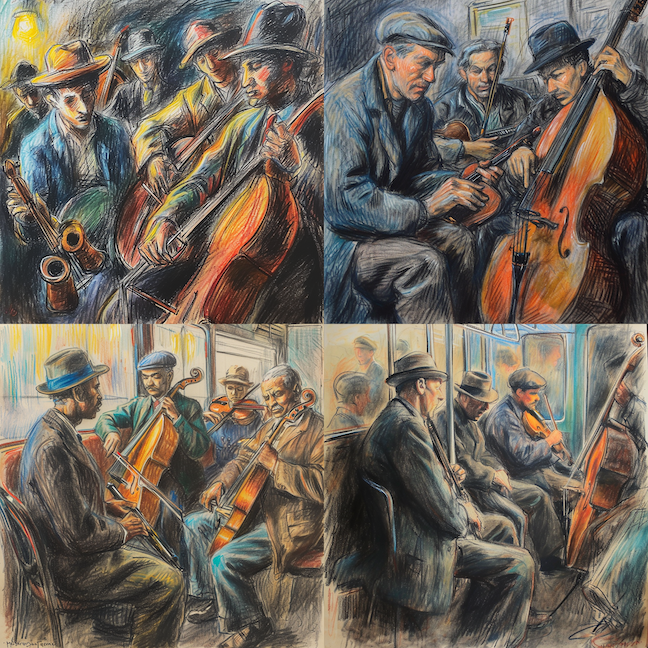
In July 2022, I wrote a post about MidJourney AI art. That was version 3. Recently, MidJourney released its latest version 6. I thought it would be fun to check the progress of this “artist.” I ran the same prompts I used before, and these are some of the artwork it generated: 

For “oil painting, still life, bronze vase, light pink roses, curtain, table, realism, expressive strokes, zorn palette:”

For “kandinsky with expressive bold strokes, fish, abstract colors:”

For “André Masson drawing, colored pencil, street musicians, metro, gloomy:”

I am not an AI artist, and there are now more perimeters to manipulate for better results. What I have here is definitely not the best MidJourney could do. However, we can still see how far it has become and the direction it goes. It has a better understanding of human language and more accuracy in rendering. If you go to any AI art community, you’ll see the strength of these tools lies in realistic and fantasy art. While it can mimic many other mediums and styles, I wouldn’t necessarily see the V6 Kandinsky and Masson pieces as progress. 

In comparison, this is what DALL-E (OpenAI) created in response to the same prompts for rose:

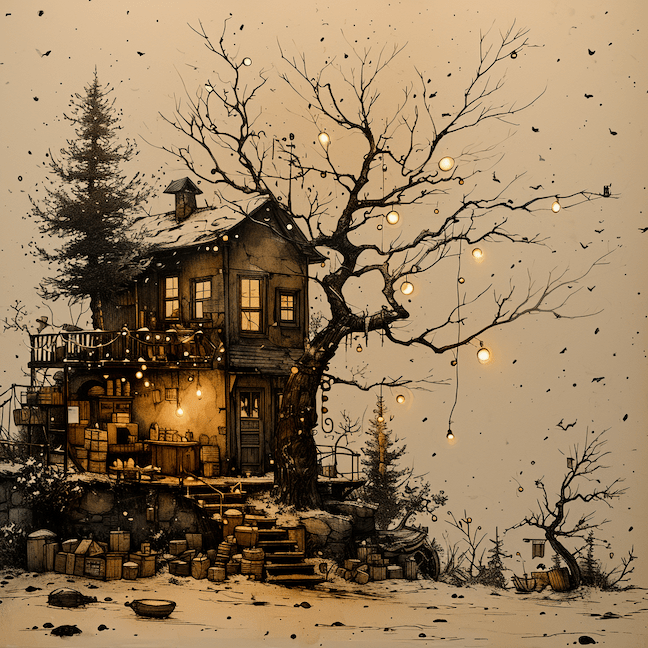
With my limited experience, DALL-E is a lesser artist, but it can understand human language much better. Instead of thinking about writing “prompts,” you can just rant. So, if you are to create an illustration for a story, give the story to it, ignore the picture it generates, ask for what prompts it uses, and give those prompts to MidJourney with some modification. That’s how I got the “Winter Evening” and “Solitude:”

By the way, DALL-E refused to work on the Kandinsky and the Masson prompts because they are against their content policy. I look forward to all the discussions and lawsuits in the AI realm. 

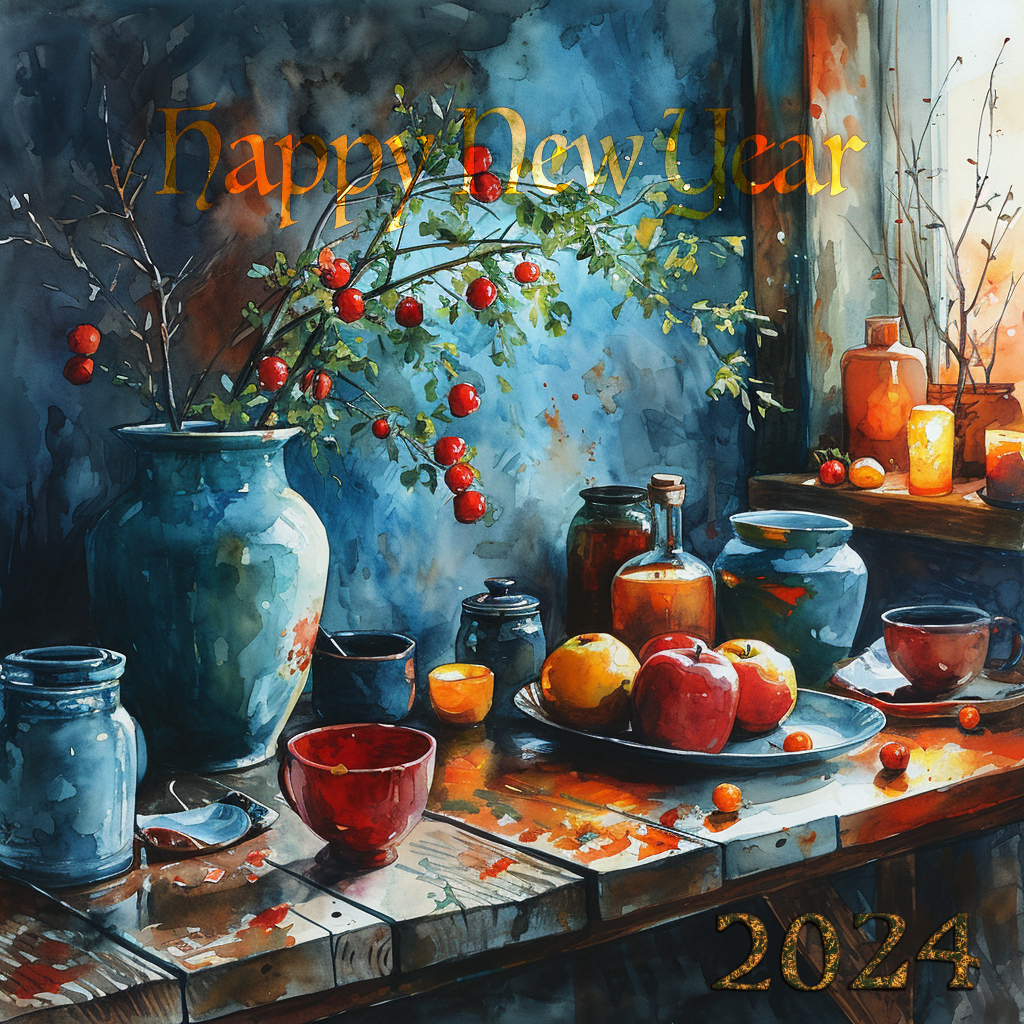
Finally, a very Happy New Year brought to you by MidJourney and Photoshop, with a poem by ChatGPT (based on the painting):

Twilight hues and earthenware, 
Berries red as the first blush of the year. 
Glass and glaze in silence share 
The quiet hope of joy sincere.

In this still life, time’s gentle pause,
Apples ripe with the future’s gaze. 
A tableau set without applause,
Whispers of the New Year’s haze.

Let vessels, stark, in patience wait, 
For mirth to fill them to the brim. 
In silent grace, they contemplate 
The dance of days about to begin.

LOL

Portrait Sketches (2)

Painting along a live stream (even a recorded one) is like painting with companies or painting while listening to podcasts. It makes the practice fun and is quite addictive. I have to refrain myself from doing just that as my daily painting routine. Right now, I limited the portrait sketches to one or two per week as an addition to personal projects.

Here are some of the things I have learned from doing these sketches so far:

  • Get everything ready before starting: palette, surface, easel position, brushes to use, lighting, drinking water, etc.
  • Keep it simple: I use a limited palette – my go-to one is the Zorn palette, but it could be even simpler. Susan Lyon recommended Ultramarine Blue, Transparent Red Oxide, and Titanium White. I could try a different combo each time or play with one set to further extend.
  • Make use of old painting surfaces: old watercolor, acrylic, and oil paintings were gessoed or oil grounded – things that are no longer loved but not yet thrown away find a new life. Oil painting paper is also good, especially with a thin layer of shellac on it. Now, this is of course, assuming I am practicing, not selling.
  • Aim to finish within the time limit: To achieve this, I need to take my time in the beginning to do a decent drawing. Meanwhile, this will force me to forego a lot of details and focus on big forms. On one occasion, I didn’t get a good reference and had to take a low-quality screenshot from the streaming. That turned out to be one of my favorite sketches – I was forced to let go more!

Here are some of the 2 to 3 hours sketches I have done:

For comparison, this is a portrait done in 5 hours:

Model From East Oaks Studio, oil on paper, 9 x 12, November 2023

Portrait Sketches (1)

It is always a mystery to me how long it takes an Alla Prima painter to finish her work. Most of the demos I watched online were one to three hours long, and never did an artist claim it as a finished work. It is also hard to tell if the artist doing the demo was aiming at a complete work or just an oil portrait sketch. Plus, how do you even define the completeness of a piece? Those lovely and highly admired vignettes by the late Richard Schmid, are they finished works? 

When I was taking online classes at Watts Atelier, Jeff’s demo was usually a one-hour video, and he expected students to finish their piece in no more than 1.5 to 2 hours. That was a guideline I rarely followed. Not that I wasn’t willing to; I just didn’t have the adequate skills and mindset to achieve it. I took a video lesson from Susan Lyon earlier this year thanks to my East Oak Studio subscription. She advocates an exercise of doing a live portrait within one hour and then doing the same pose 2 more times in a row. The idea is to focus on the essence – what you can see when you squint. With repetition, you could improve your focus along the way. You go into these exercises with good preparation. She used a limited palette – transparent red oxide, ultramarine blue, and white, and she would premix colors into a value scale. The most important part is the mental preparation. You decide in advance where your darkest dark and lightest light is, and if they appear in multiple places in your reference (more than often, that’s the case), you must choose one. You also need to decide where the strongest edge would be – where the sharp contrast is (because when values are close to each other, the edge disappears). Other things that need to be considered include composition, what atmosphere to create, what types of strokes you want to employ, etc. I would say this is a great checklist to start any painting. Festina lente – as Sean Cheetham said, “Take your time on everything if you want to paint fast.”

East Oak Studio does a monthly free streaming called “Oil Painting from Life.” You can paint portraits and sometimes still life along with their resident artists and hear them chat. Most sessions are between 2 and 3 hours. I enjoyed the program very much, but I find myself constantly struggling when the time is up. Should I leave it as it is or keep working on it?  Deep down, I see myself as an indirect painter. I like to take my time and work in layers, just like most artists at East Oak, but they all vouched for the benefit of doing these shorter Alla Prima paintings. Leaving those paintings as they are is against my nature, but keeping going could yield diminishing returns. So far, I have managed to not go beyond the streaming timeframe. Before each painting, I reviewed the decision list from Susan Lyon’s lessons and tried to make my practice more effective. 

From the Portrait Society of America’s auction page, we can see artists do sell their sketches. Who knows, maybe after a million hours of practicing, someday, I will look at my two-hour painting and think, “Yep, that’s a thing.”

Here are some recent sketches I did, most of them are 9 x 12 or 11 x 14 and done within 2.5 hours:

Daffodils 

I know it’s the wrong season. I started these paintings in early spring, when Trader Joe’s still carried those cheap bunches of daffodils. It is a nostalgic flower for me; my father used to raise them around Spring Festivals. It is also a challenging flower to paint – yellow is not an easy color to keep clean. In addition, I wanted to try doing a quick preliminary study beforehand, a practice many accomplished artists advocate. 

Here they are:

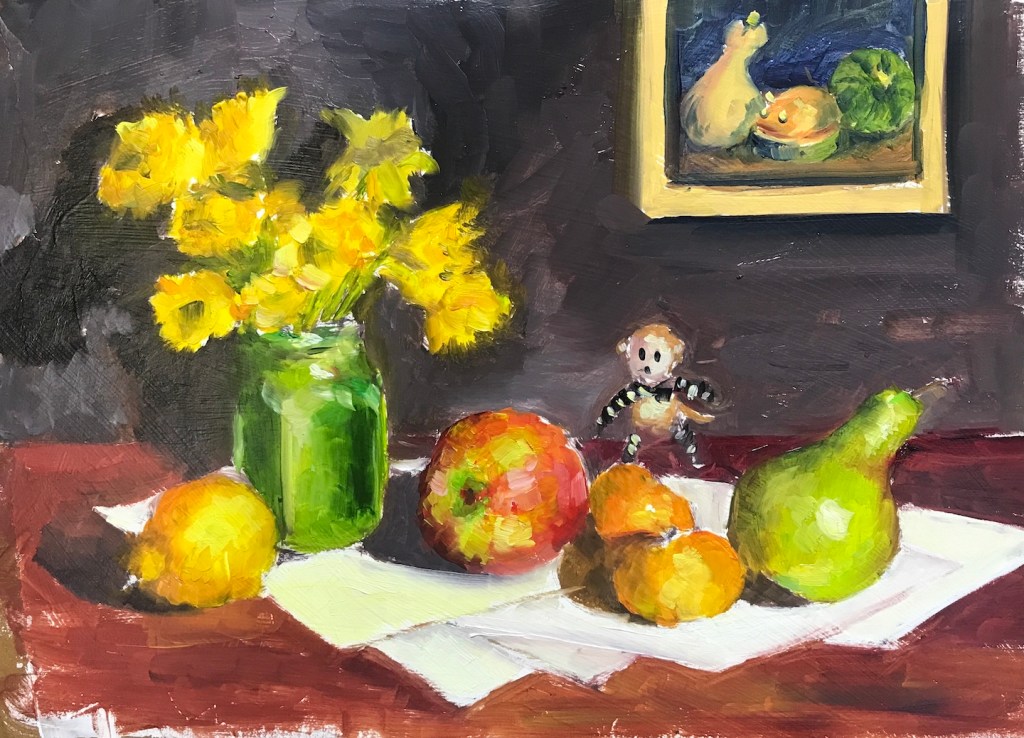
Daffodils and Fruits, oil sketch on paper, 9 x 12 in. 2023
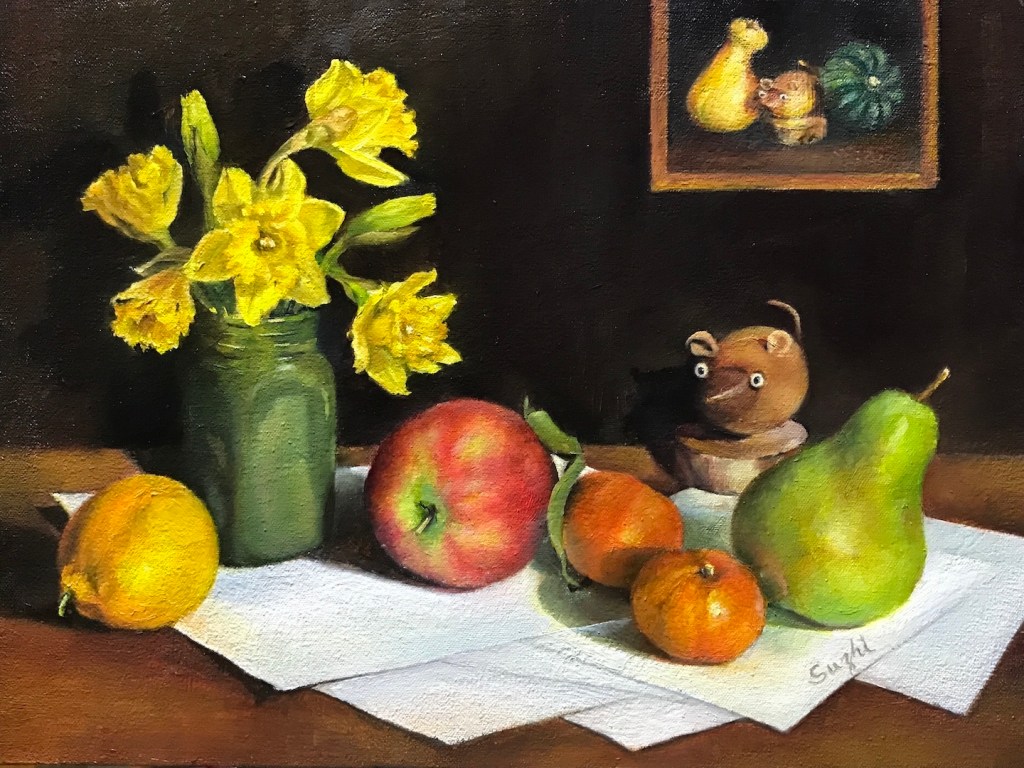
Daffodils and Fruits, oil on canvas board, 12 x 16 in, 2023
Daffodils and Eggs, watercolor sketch on paper, 10 x 10 in, 2023
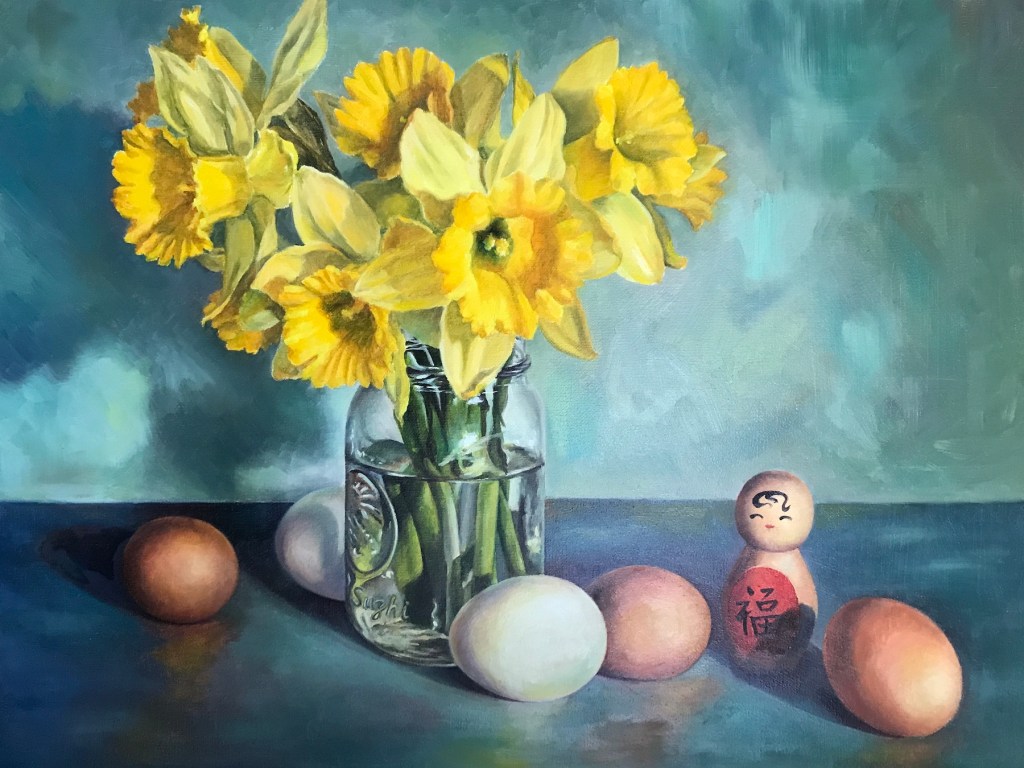
Daffodils and Eggs, oil on canvas, 18 x 24 in, 2023

And here’s what I got from this experience:

  • As your can see, I did a one hour oil sketch before Daffodils and Fruits, and I liked the sketch better than the final painting itself. The looseness brings out a movement and a sense of humor that diminished in the meticulously rendered final painting. I am seriously  considering setting a timer for my future paintings.
  • The study for Daffodils and Eggs was done in watercolor and it was overworked for the purpose.
  • The blue overtone was an improvisation. The original setting was dull and it worked better with the watercolor than oil medium. I wanted to add some drama and energy to the rather mundane setup. I feel I made the right choice.
  • For me, doing a study beforehand took a bit of freshness out of the final painting process. It could be I was just doing it for the sake of doing it rather than as a process of exploring.
  • It occurred to me that still life as a genre that could be the most expressive for a realistic artist. You don’t get to do that much “directing” in portraiture or landscape. Though at this state, my main focus is still honing my technique, I need to be more thoughtful in choosing and orchestrating the subjects.
  • I did put a signature on Daffodils and Eggs. Can you find it?

Summer and Peppers

For the first time in four years I was able to travel to Beijing and hence the absence of new posts. At the first glance the city seems largely unchanged, except for the long lines outside every gallery and museum. I don’t know if people are just hungry for art or it is the “lipstick effect” of the flagging economy, but the never ending queues didn’t go well with the scorching weather on record. Soon I noticed an apparent missing of international tourists, and a lack of liveliness in general everywhere we went. People are getting by, but not looking forward too much. It could be the weather, or the “laying back” that everyone was talking about. Regardless, I ended up not doing too much.

The couple of exhibitions I did managed to attend shared some commonalities in a strange way. The Graduation Show from The Central Academy of Fine Art – China’s most prestigious art academy was an expose of vibrant young minds. Walking among a hodgepodge of contemporary media, we were constantly attacked by explosions of lights, sounds, and immersive installations. While traditional techniques were not completely forgotten, they took a back seat to ideas and functions behind art.

Meanwhile, the National Gallery of China celebrated its 60th anniversary with a display of its permanent collection. For the domestic part, the media were conservative and the contents were propagandistic. The international part featured many crafts from the “One Belt One Road Initiative” member countries. It could very well be the most diverse exhibition I have ever seen. In terms of media and the ideas represented, this was the opposite of the students’ show above mentioned. However, art was equally sidelined in both cases, which brought to mind an online comment on Chinese rock music I once read, “I heard the rock, but where’s the music?”

The shows also caused a little panic inside when I looked back on my extremely lack of “idea” art, for example:

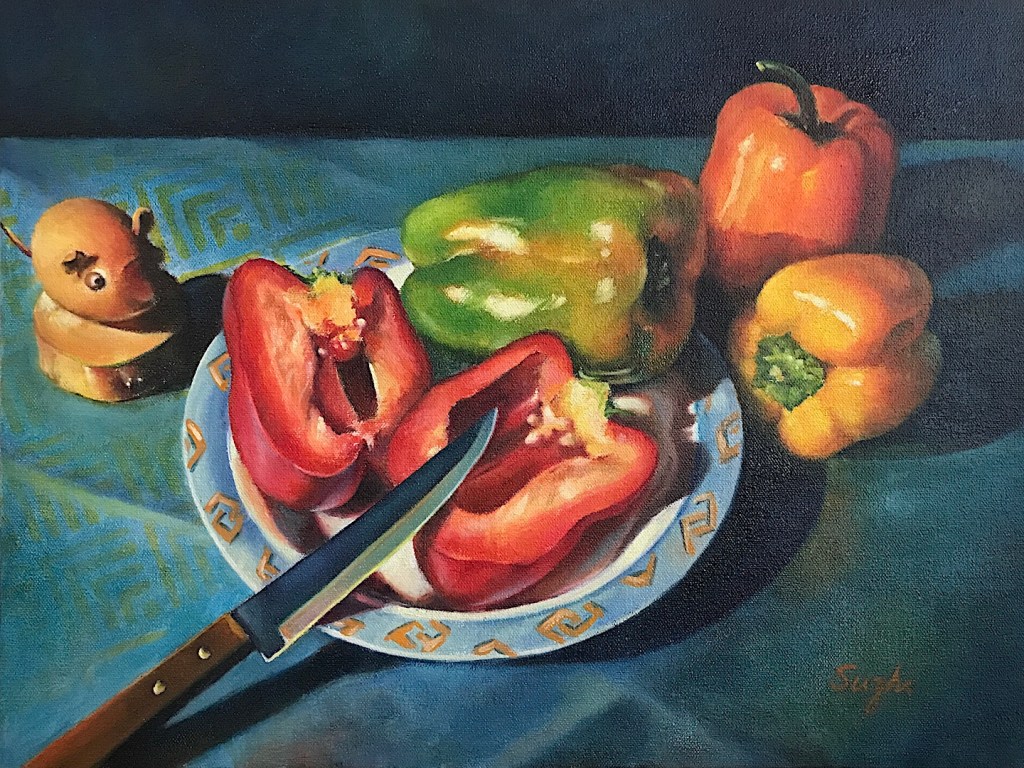
Three Peppers, oil on canvas board, 9 x 12 in., 2023
Peppers, oil on canvas board, 11 x 14 in, 2023

I’ve always cherished the simple joys of composition and color harmony, but these exhibitions had me questioning—do I need to dig deeper? Must I have something grander to say? Do I truly have something to say? In an era that one can put ideas into MidJourney and let it generate a picture, does this make the traditional artistic skills obsolete, or on the contrary, make them more important in defining what is art?

In China, schools commence each year on September 1st. It seems fitting to conclude may summer idling and wondering on this day. Time to get back to the basics, back to work (and leave the thinking part to GPT)! 🙂

Cézanne – Reading Notes (2)

Among the books I read on Cézanne, two of them focuses on his watercolor. They are Cézanne in the Studio: Still Life in Watercolors by Carol Armstrong, and Cézanne’s Watercolors: Between Drawing and Painting by Matthew Simms.

The two watercolor books are a rich collection of the artist’s sketches, finished and unfinished works in the medium. Watercolor and gouache were often used by old masters as studies for a bigger oil piece, and it seems to the be case for Cézanne early on. However, later in his life, when his reputation began to be established, he increasingly make watercolors as independent works of art.

Cézanne’s watercolor is as unconventional as his oil paintings. The charcoal drawings, the white of the paper, and even the artist’s changing thought all become part of the composition. We see the draft, the negotiating and the final status on one page. This provides a unique window into the artist’s painting and the thinking process.

Still life with Green Melon, watercolor on paper, c.1906
Still Life with Apples, a Bottle and a Milk Pot, watercolor on paper, c. 1904

Unlike J. M. W. Turner (1775 – 1851) and other watercolorists, Cézanne adopts a touch by touch and color by color method. He layers translucent patches with gestural brushwork, resulting in a vibrant and casual overall appearance, with fragmentary and kaleidoscopic details. However, the actual process was deliberate and labor-intensive.

Still Life with Blue Pot, watercolor and graphite on paper, 48.1 x 632 cm, c 1900-1906

Contemporary figurative artist Ted Nuttall also employs transparent patches of colors to create energetic and vibrant paintings. While both artists are deliberate in their approach, Nuttall’s use of dots helps complete the painting, whereas Cézanne’s colors, used as lines, remain exploratory.

Africa, Ted Nuttall, watercolor on paper.

On a side note, for those interested, Cézanne uses a limited palette, as revealed by this nerdy study: “An Investigation of Paul Cézanne’s Watercolors With Emphasis on Emerald Green.”