Category Archives: still life

November’s Bits and Pieces

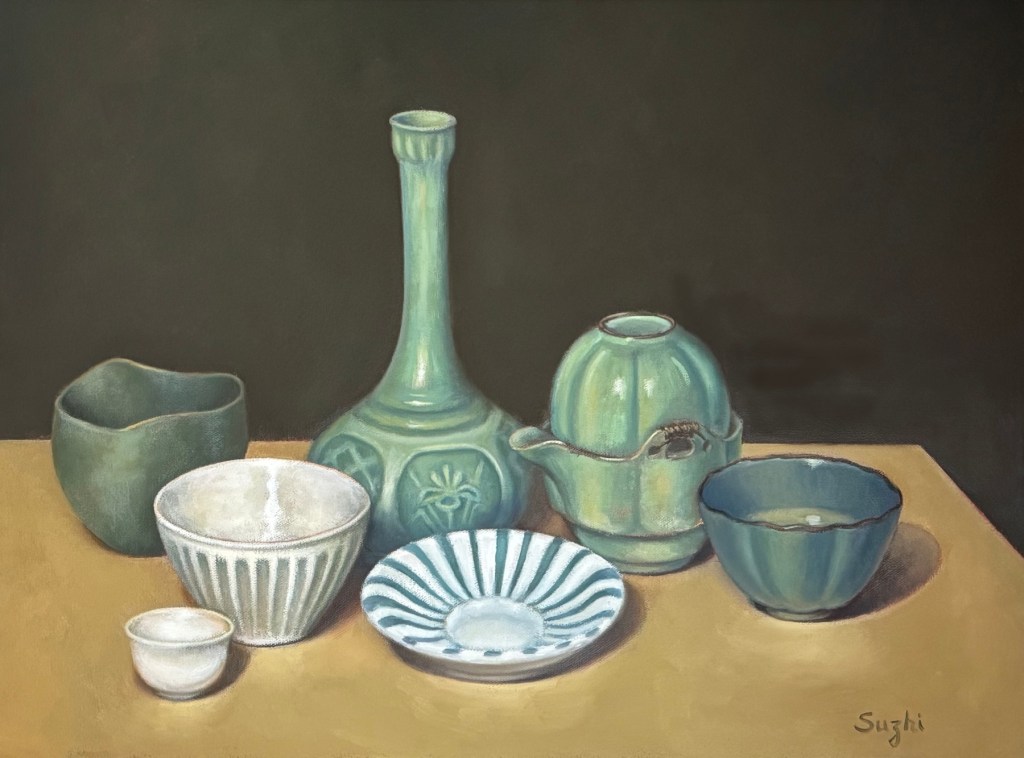
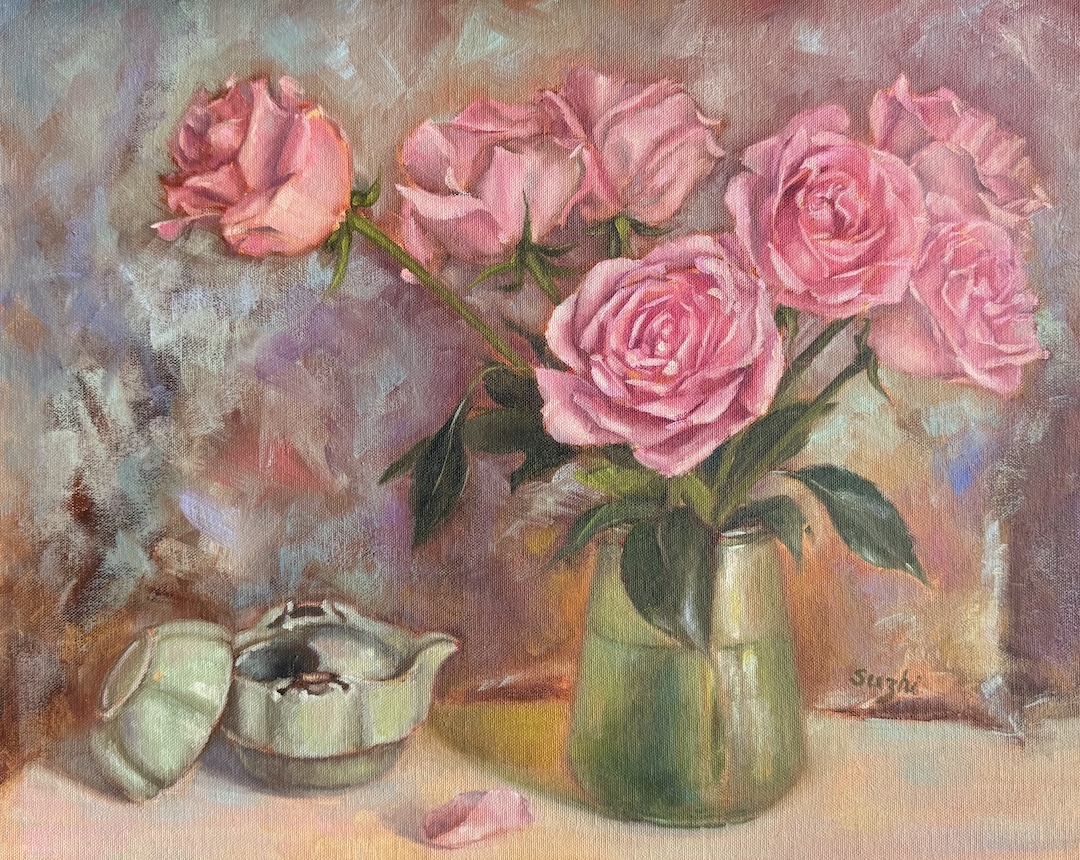
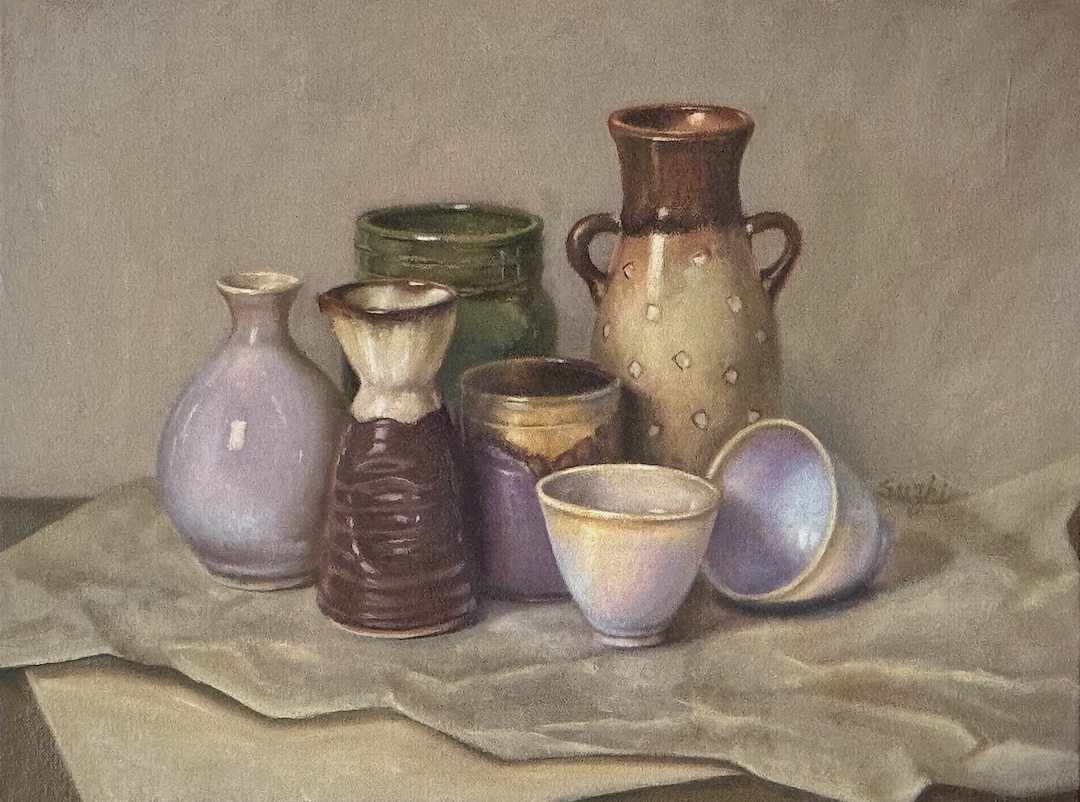
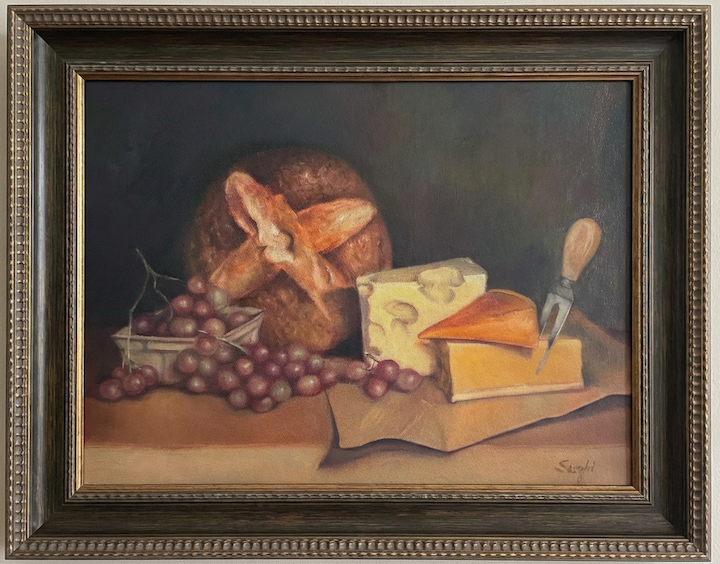
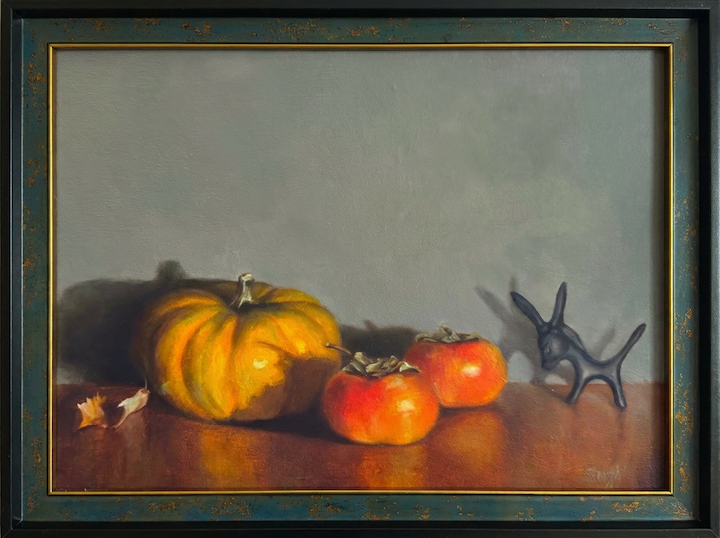
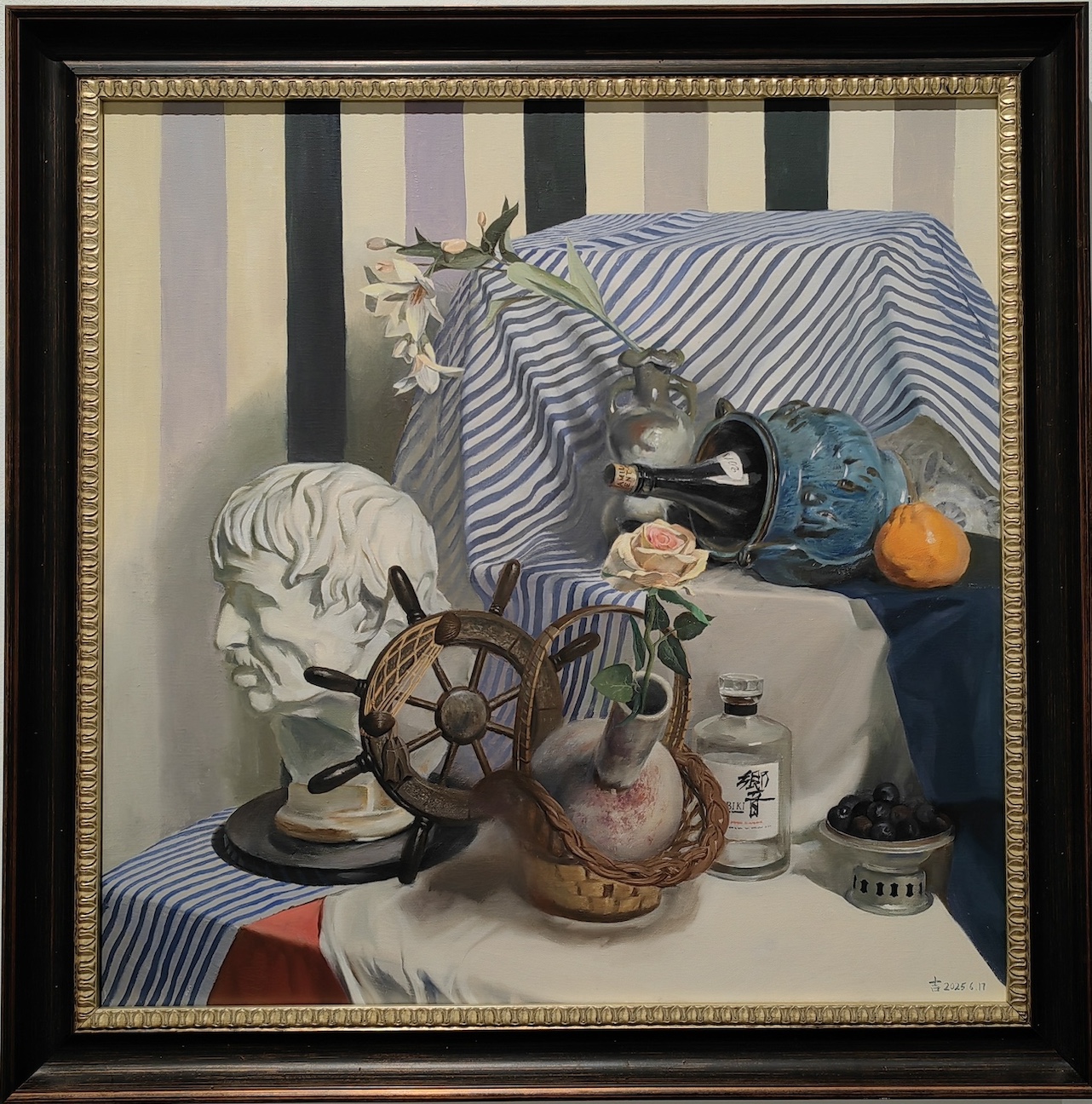
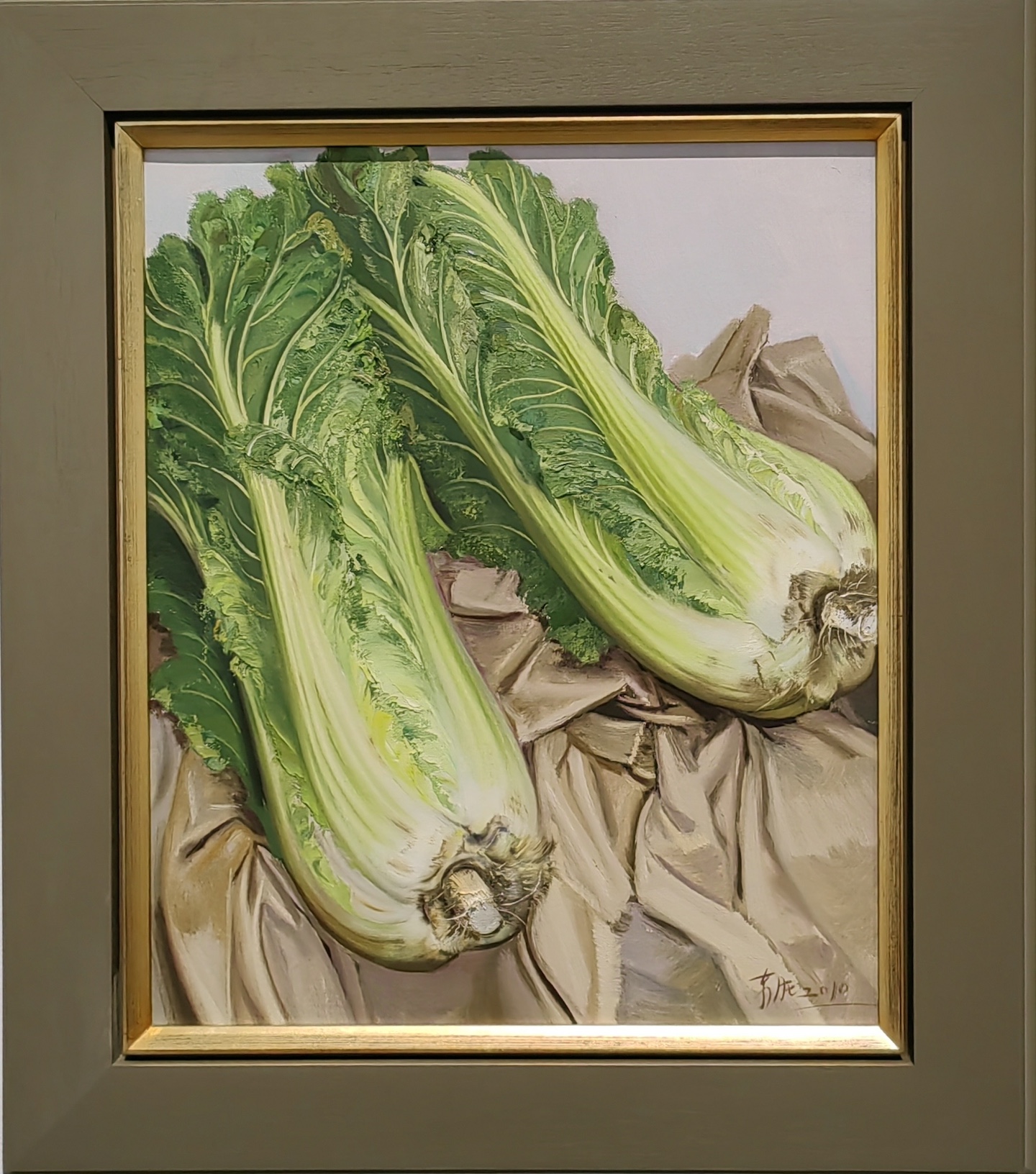
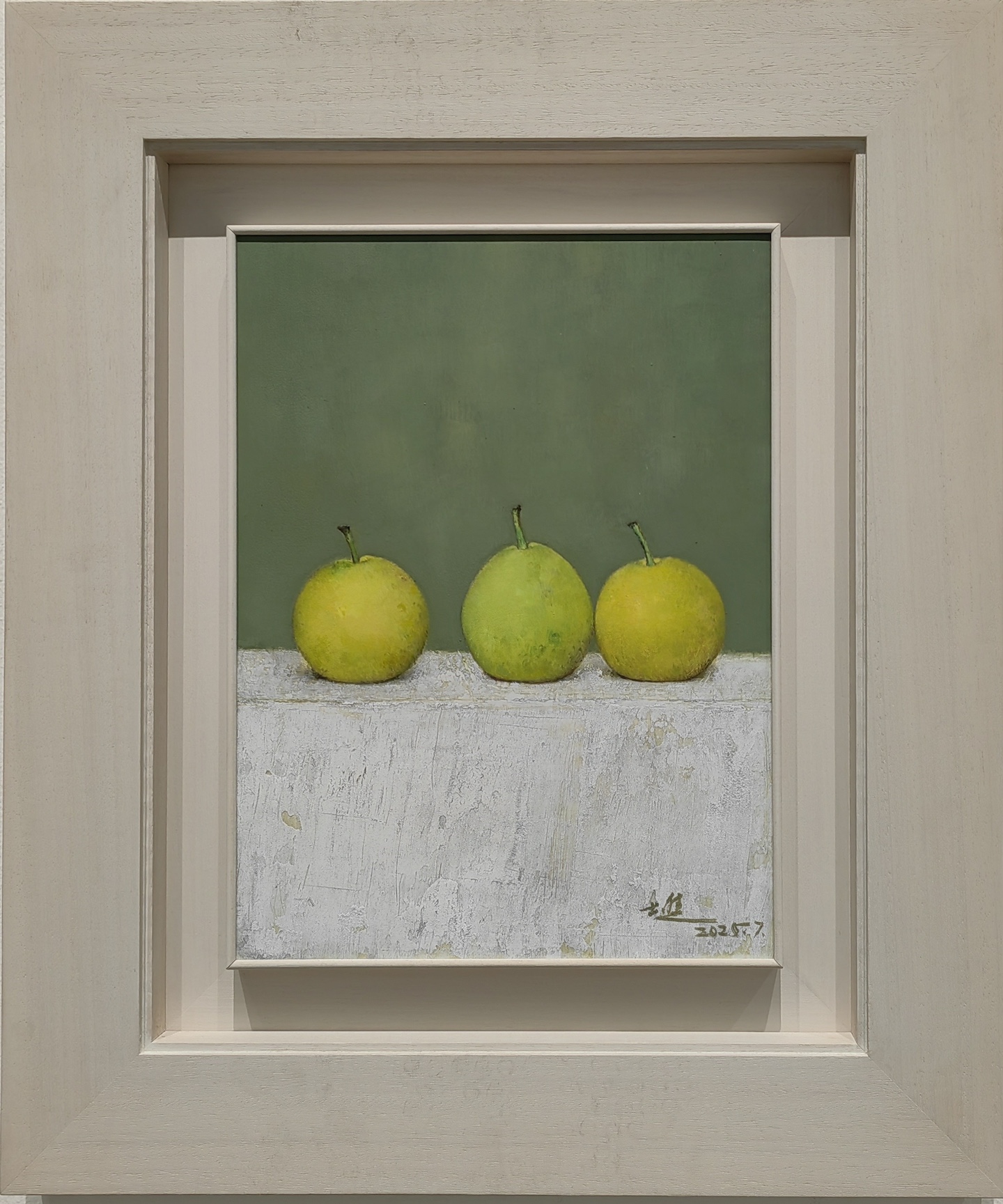
November had me on the other side of the globe again. This time I packed a couple of recent paintings to give as gifts for family. Lucky for me, framing in Beijing is much cheaper than in the States. I can afford to elevate my paintings a bit, which definitely makes the presentation better and adds to my confidence. Here are some of the paintings I gifted:

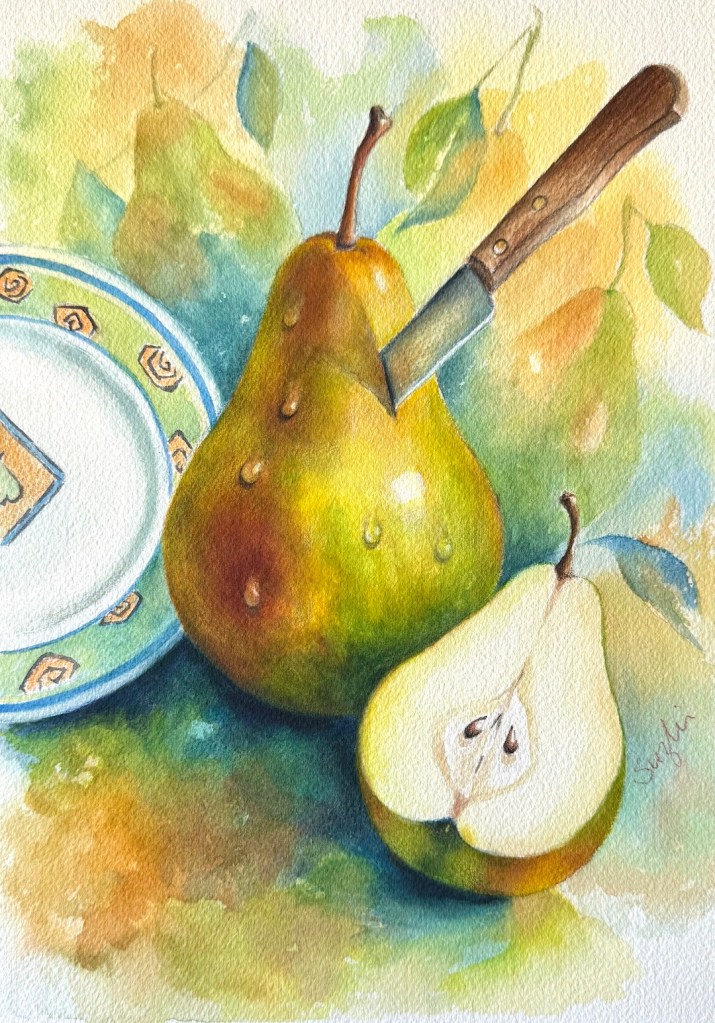
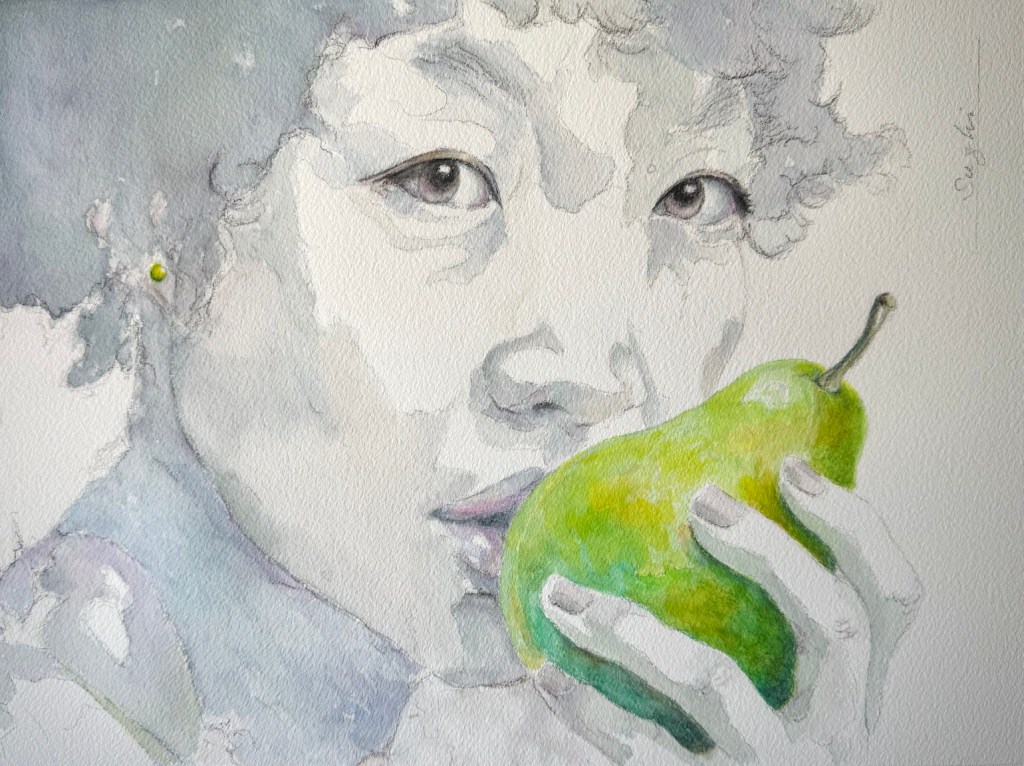
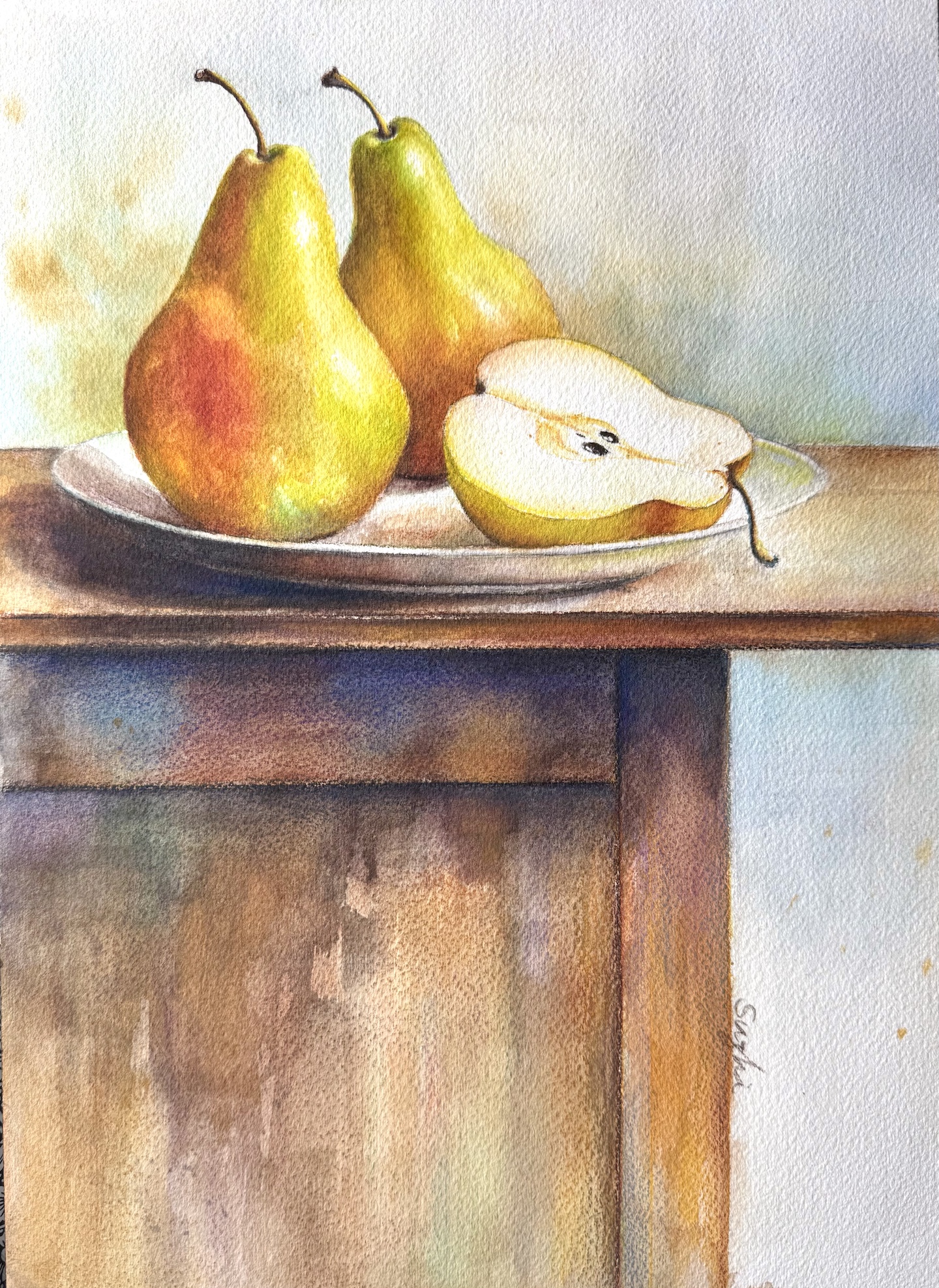
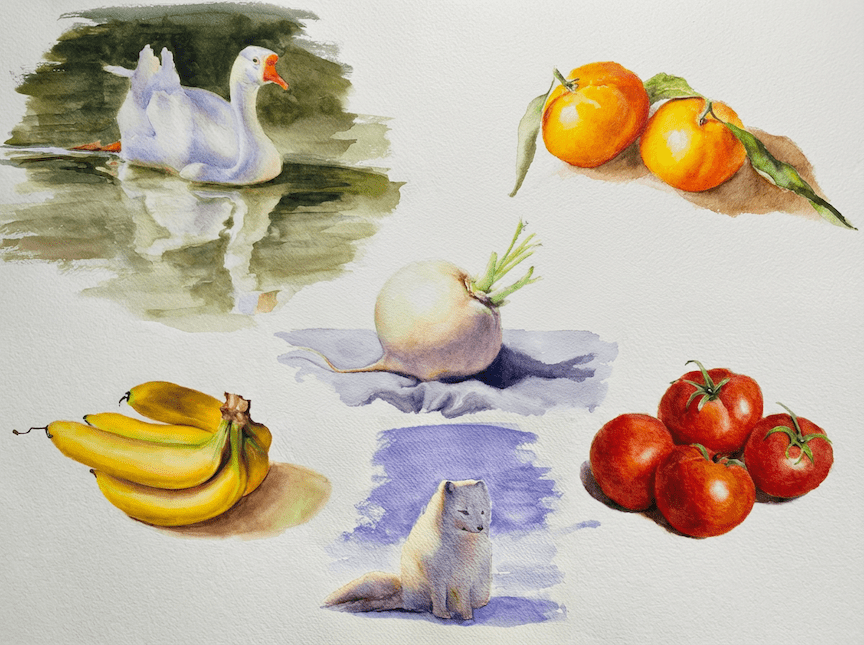
During my last long stay in Beijing, I decided to make the most of the situation by practicing watercolor. Oil wasn’t an option and watercolor stuff barely takes up any room. I am happy to report that I’ve actually stuck with the plan. My current goal in practice is trying to keep the colors clean. Small steps, but still moving forward.

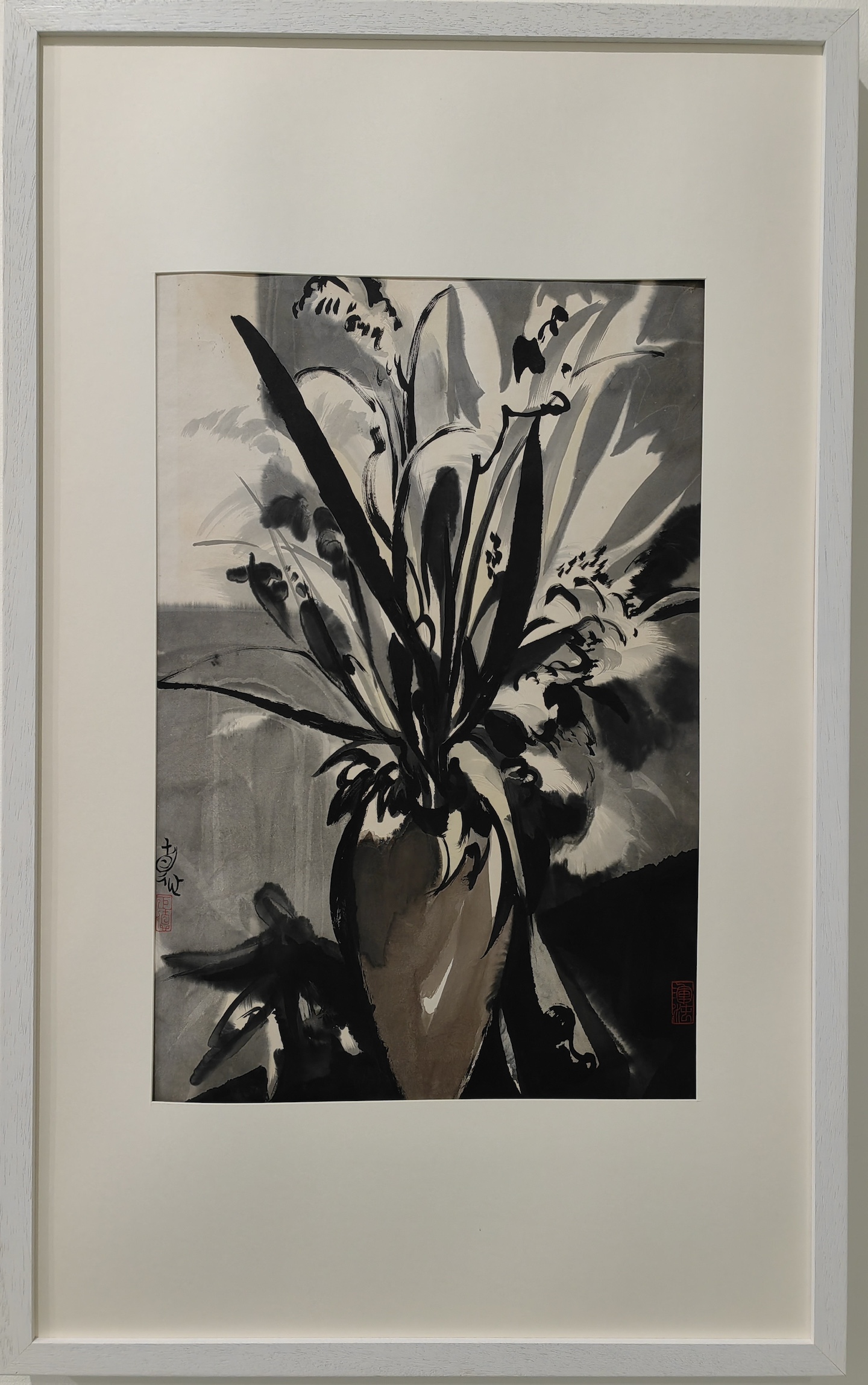
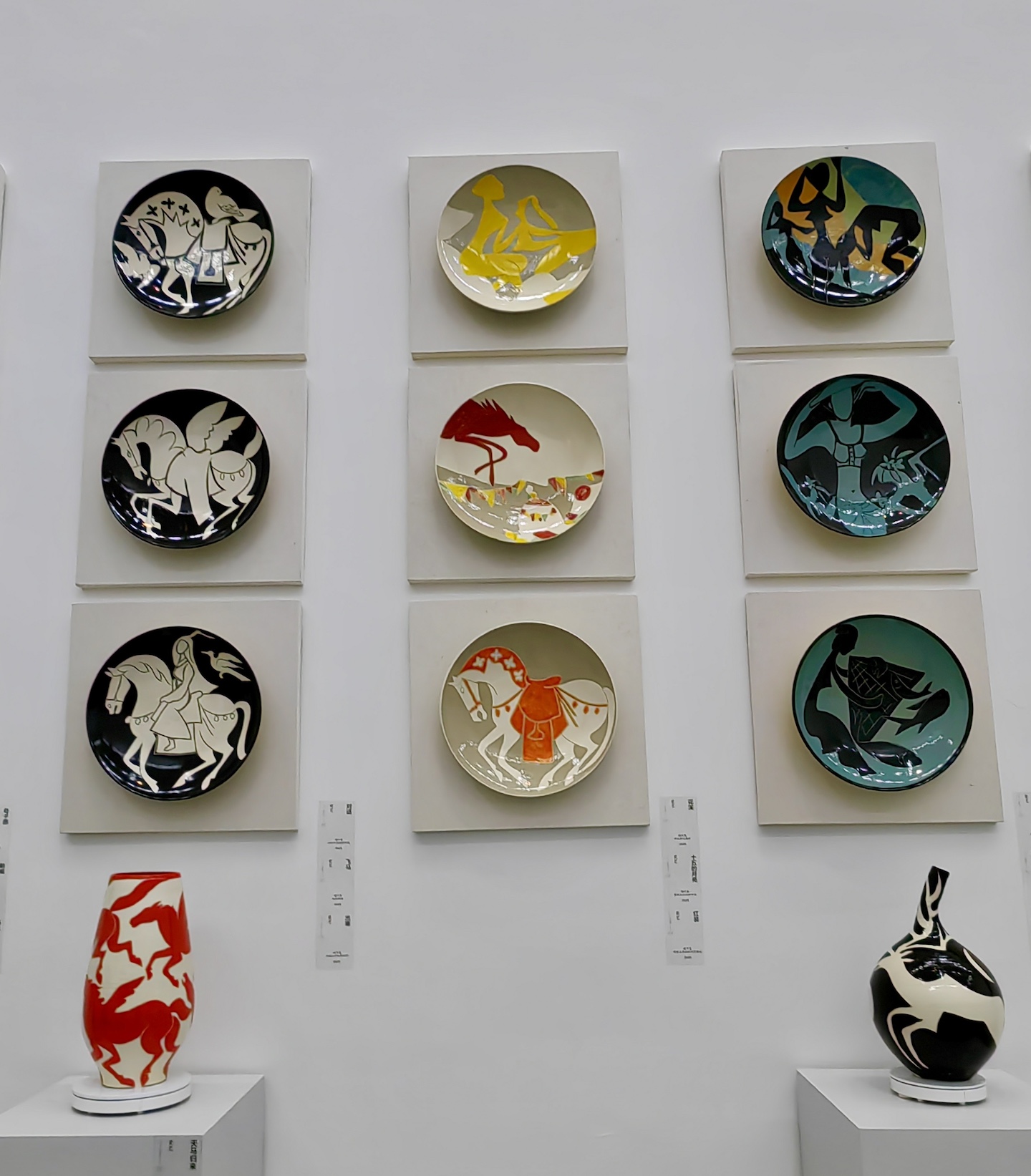
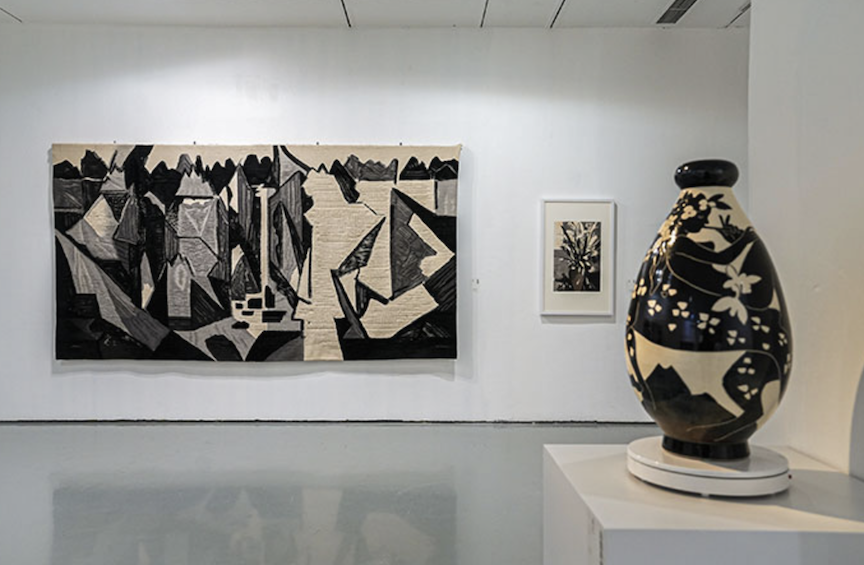
Gallery-wise, I saw Liu Jude’s 刘巨德 solo show at the Today Art Museum: Hearts Aflame for the Firmament. Liu studied at the Central Academy of Craft Art in 1965 and later worked under Pang Xunqin 庞薰琹 (1906 – 1985) in 1978, researching the comparison between traditional Chinese decorative art and Western modern art. He believes that painting should imitate the Tao that births all things: using the invisible Tao to paint visible objects, and using visible objects to paint the invisible Tao. His art isn’t constrained by the classification of genre or technique; he adheres to the traditions of Chinese decorative art but modernizes that formal beauty, making him unique in the Chinese art world. The exhibition featured over 200 new pieces by Liu and more than 100 ceramic debuts. Divided into “Ode to Peace” and “Ode to Hometown,” the show presented a kind of “chaotic beauty” and deep emotions for his roots.

In his artist statement, Liu mentioned: “Every time I paint, on the clean Xuan paper, I always put down thick black ink first, trying to occupy, grasp, and stabilize the whole space. As for what object that ink block, dot, or line represents, it is ambiguous, and I am not entirely clear. It is precisely this uncertain relationship of abstract points and lines that triggers me, pulling me to wander with it.”

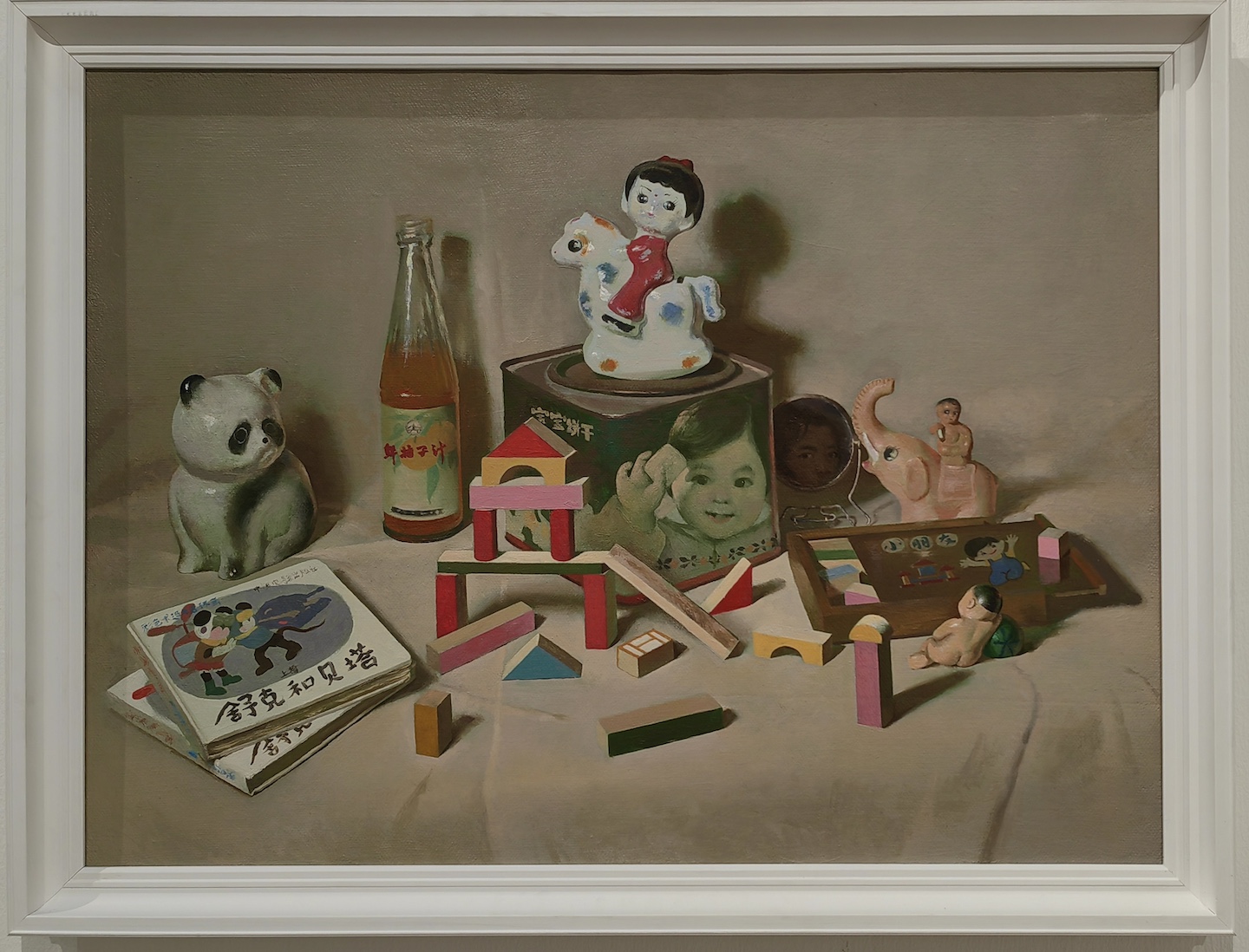
In comparison, the National Still Life Exhibition hosted by the Chinese Academy of Oil Painting felt … fine. Technically solid, just not particularly exciting.

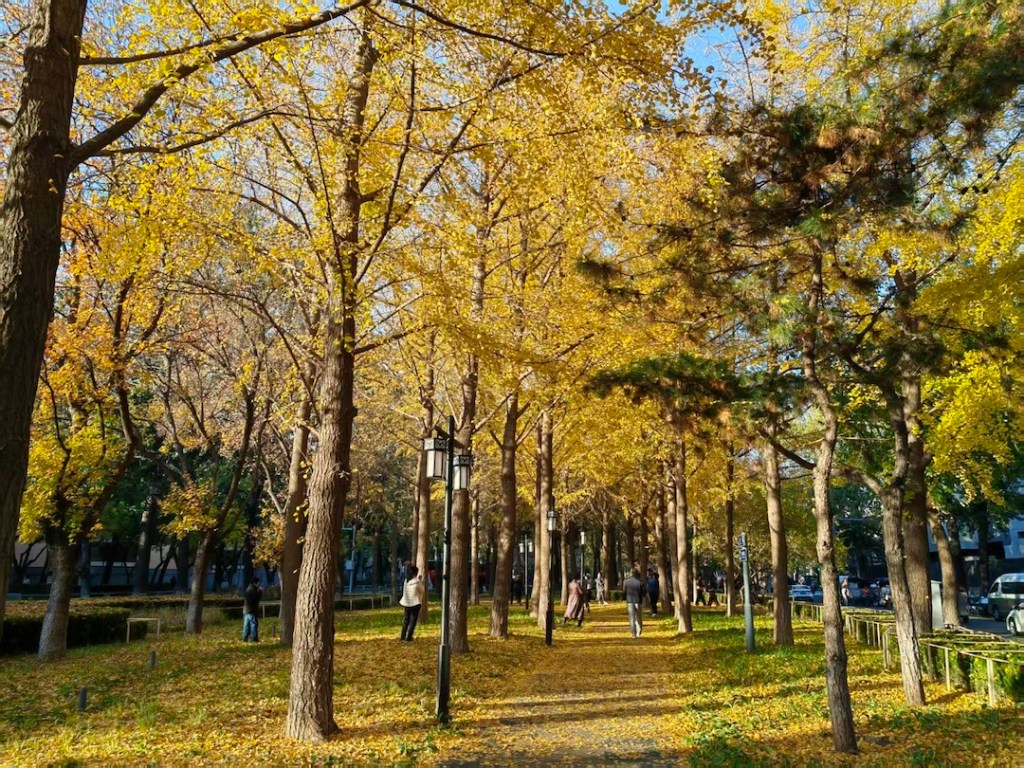
Finally, on one perfectly sunny mid-November day, I took this photo of a path covered in golden ginkgo leaves, a staple scene in Beijing’s autumn. Doubao, ByteDance’s (owner of TikTok) AI app, turned it into a watercolor painting. Love it or hate it, AI art will be a staple of the art world.

Petal Progress Continued

July kept the floral theme in my studio, with petals and my learning progressing. 

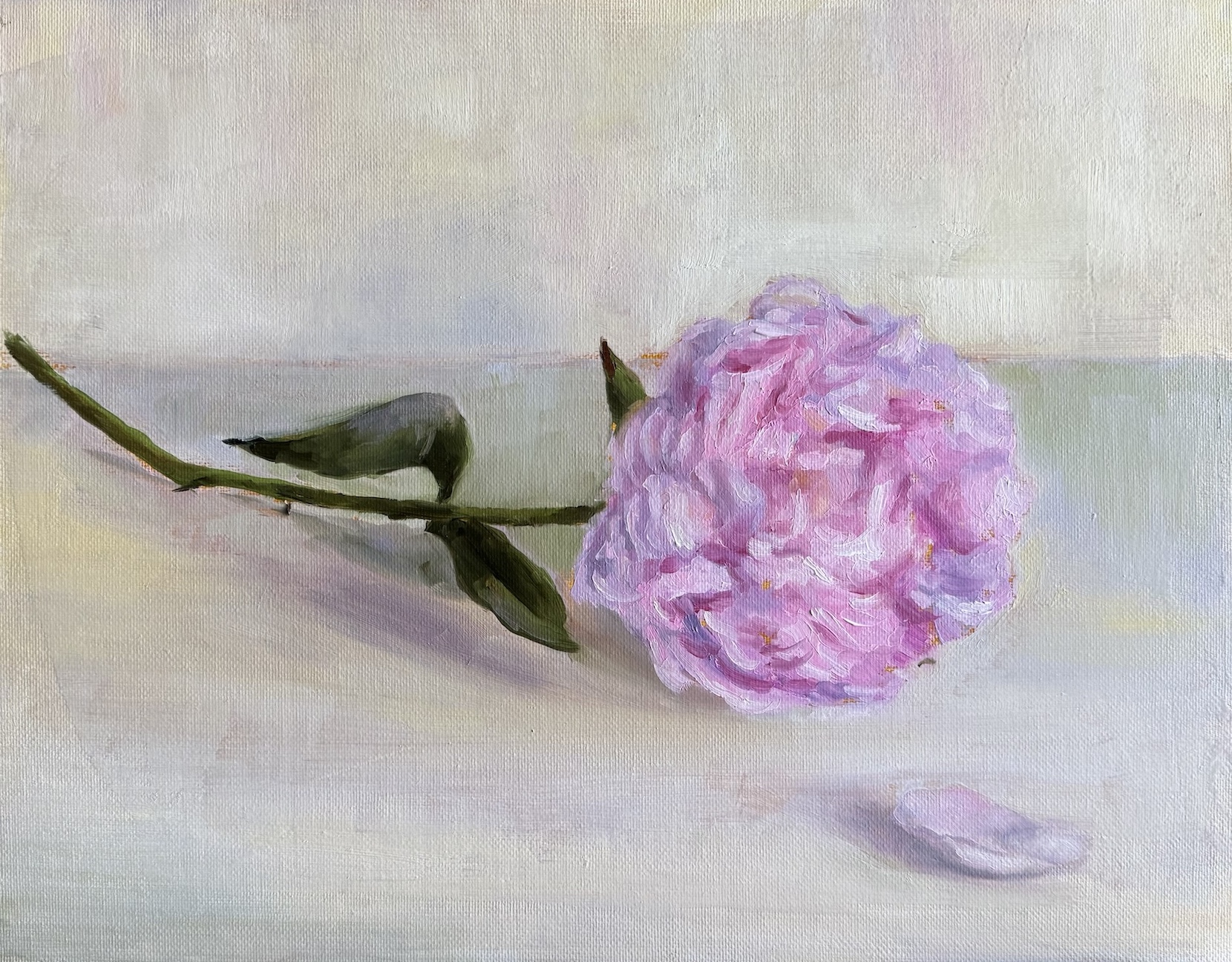
First up, I tried my hand at a peony. As I have mentioned before, Michael Klein is a big influence to me in the floral adventure, and peonies are featured in many of his creations. Those fluffy blooms look dreamy, but they’re a nightmare to paint and arrange. Petals were numerous and messy, dropping faster than I could arrange them in any manageable shape — whether in vase or on canvas. Soon I gave up my grand vision of a complex still life, and managed a simple single flower sketch.

Peony, oil on canvas board, 11 x 14, July 2025

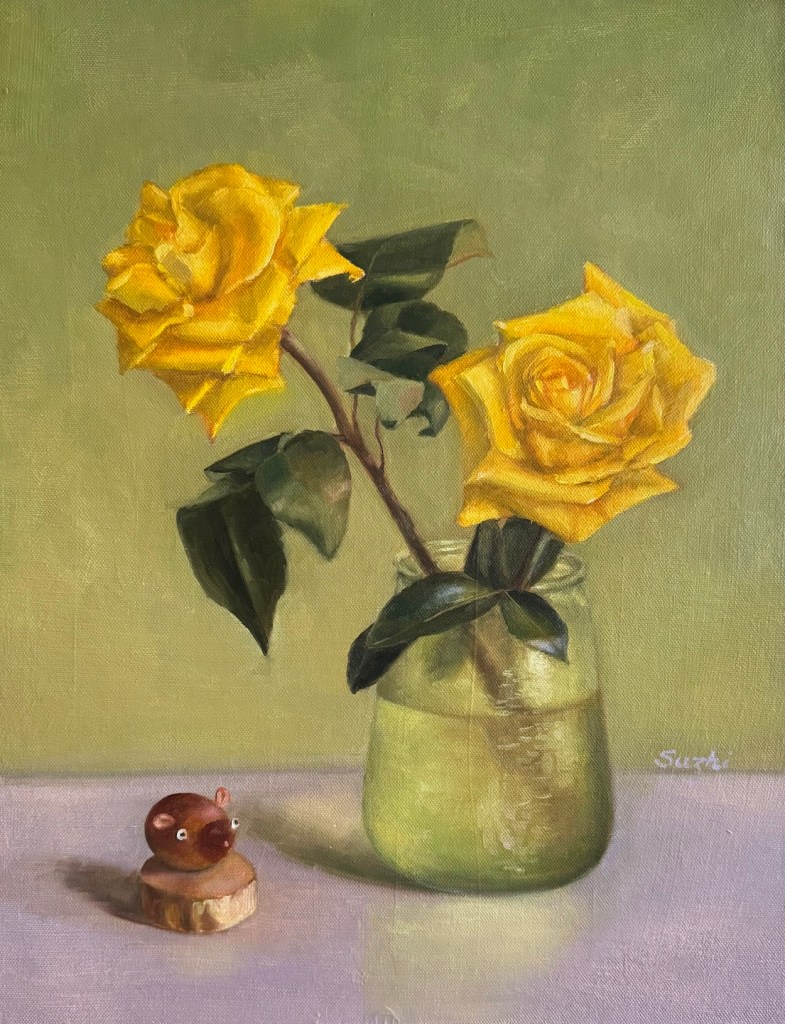
To comfort myself afterwards, I moved back to roses, a familiar subject. I thought a Trompe l’oeil (French: deceive the eye) would make the painting of a single rose more challenging and fun. The idea was basically a hyper realistic painting. Getting the shadows and texture just right was trickier than I expected. My rose still looks like a painting. Here I have a better understanding of why people always say you don’t paint exactly what you see, even in a realistic painting. I used ambient room light in my setting, and the rose was largely in a unified color. To make it “pop”, I need to accentuate the value contrast, vary the saturation, and better define the edges. To make it look real, I need to invent the reality – how ironic! As you can see, I didn’t go through these steps. I am not entirely sure I have the skill to reach the final goal, and honestly, I like the painting as is now. Sometimes you call it done and move on.

Yellow Rose, oil on canvas board, 9 x 12, July 2025

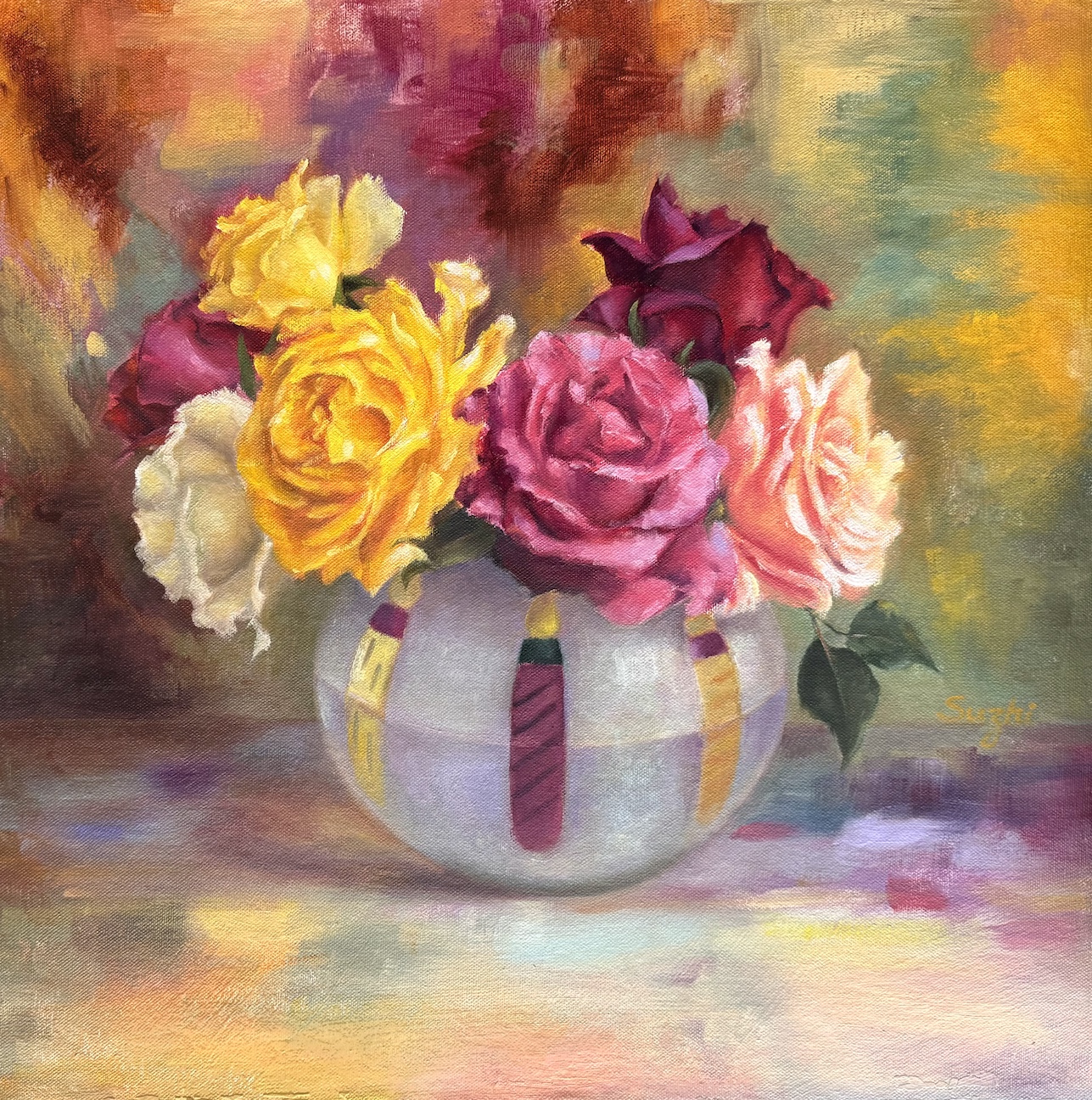
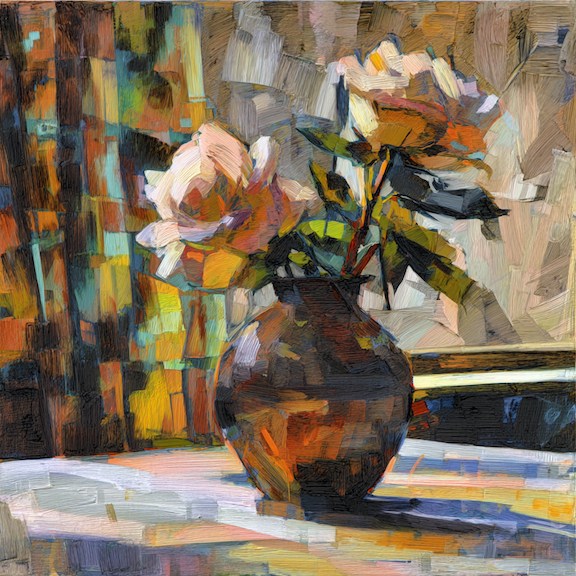
Next came a colorful bouquet, and my strong desire to paint something vibrant. In setting up the reference, my first thought was a dark, solid background for contrast. It worked, but it felt too safe. Leaning into the chaos, I draped a multicolored scarf behind the bouquet. I painted the scarf and surface in an abstract style, playing with saturation and value to keep things lively but balanced. 

Colorful, oil on canvas board, 18 x 18in, July 2025

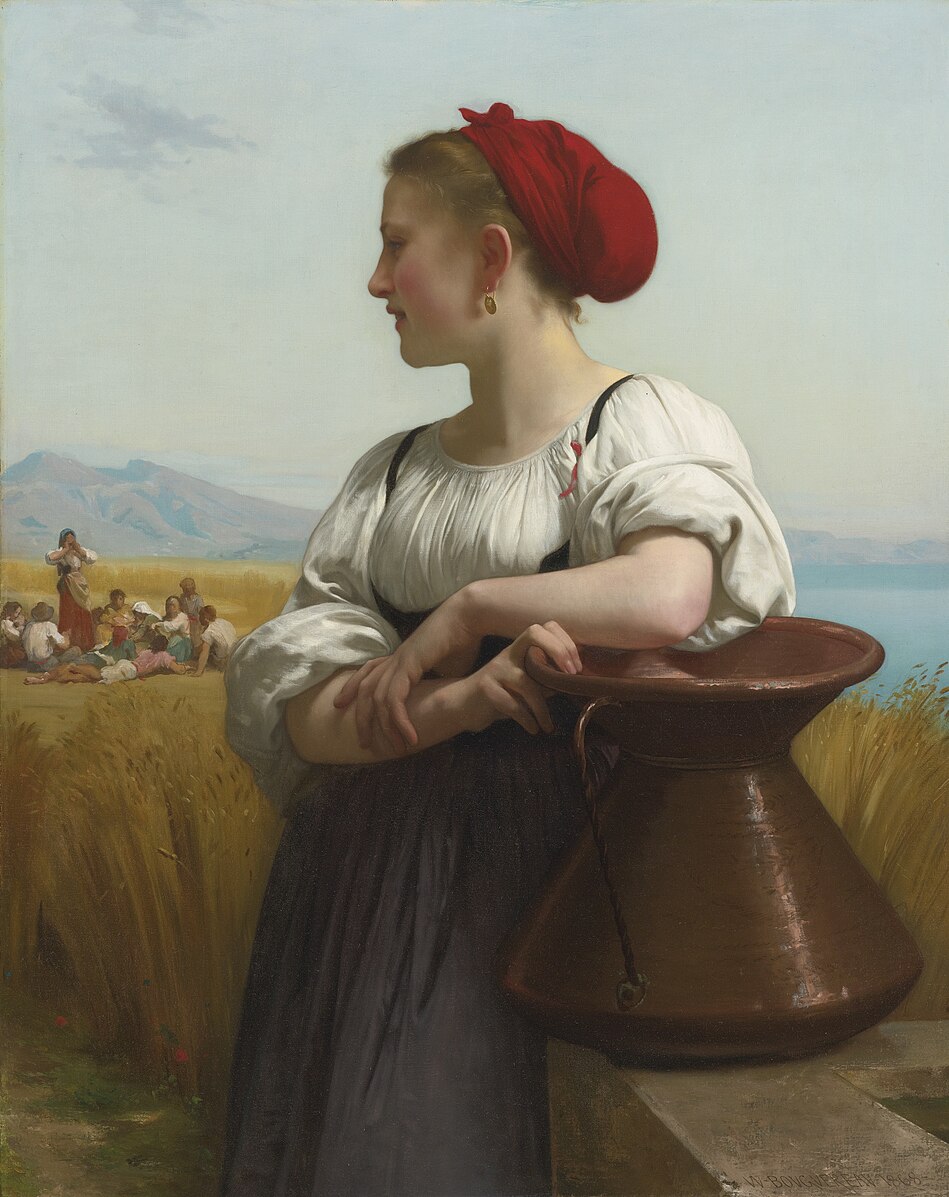
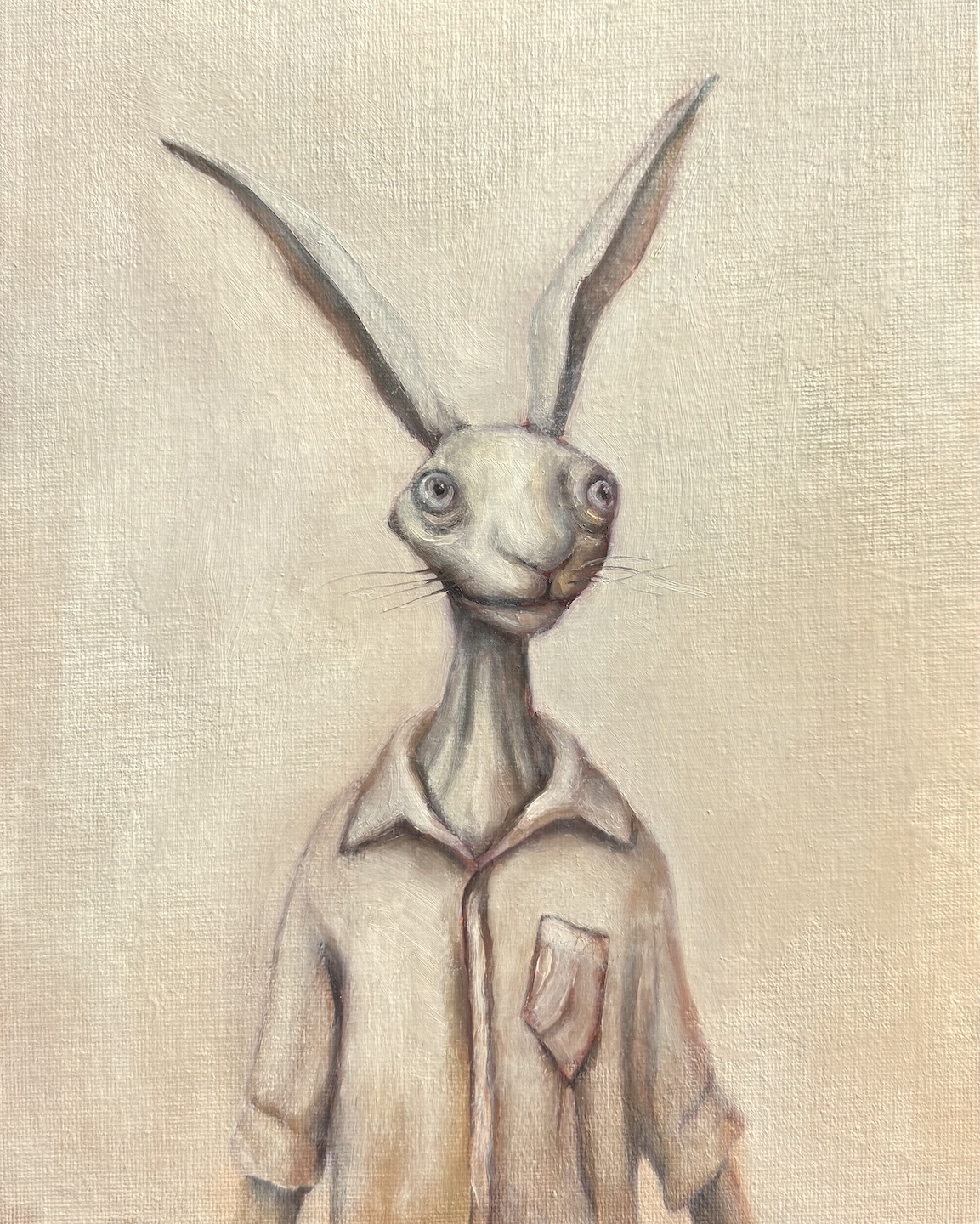
Between these floral adventures, I did a partial study of a Bouguereau painting. I’ve always admired his delicate and subtle handling of human faces, and this is also a study of handling backlighting. The softness is achieved through close value and gentle brushwork. When the entire face is away from light, the values are further condensed – something I still need to work on. I also painted a “selfie” as an alternate character—don’t ask. I was hoping for a Morandi-ish low-chroma tranquility… or, a quirky experiment in calm tones.

Selfie, oil on canvas board, 8×10 in, July 2025

Lastly, MidJourney has pushed out video generation in recent months, and now you can upload your own image for animation (see the painting for the first video here). Like these:

Don’t laugh. The bizarreness comes from my own skill issues – both in painting and in prompting. Look at the shadows in the second video, that wisdom wasn’t from me. There are millions of fantastic generative videos out there for us to see the potential of extending and alternating the life of our paintings. Always more things to experience and explore!

Petal Progress – An Abundance of Roses

Floral still life painting, though a major genre, never quite resonated with me. An early teacher once said that flowers were boring— it’s just petal after petal, repetitive work. The elaborate Dutch master bouquets, which I never loved, seemed to confirm his view. Over time, I discovered artists like Shirley Trevena, with her vibrant, stylized designs, and Richard Schmid, with his fresh, organic blooms. Their work—whether bold or subtle—was far from dull. My perspective began to shift.

While taking online courses at Watts Atelier, I followed Jeff Watts’ still life exercises (more here) and realized flowers are a great way to practice color mixing. I’ve created a few floral paintings with varying success (eg 1, eg 2), but even with the setup in front of me, I often relied too much on photos. Photos help capture the ever-changing shapes of the fresh flowers, but lose the subtle hues and shades in the petals, especially in shadow areas. Recently, I watched some videos of Michael Klein and Ashwini Bharathula painting, and their skillful, thoughtful process captivated me. There’s no tedious repetition; each stroke results from careful evaluation and beautiful execution. Inspired, I embraced florals and decided to focus on them for a while. I deliberately avoided taking photos of the setup this time to train my eyes. 

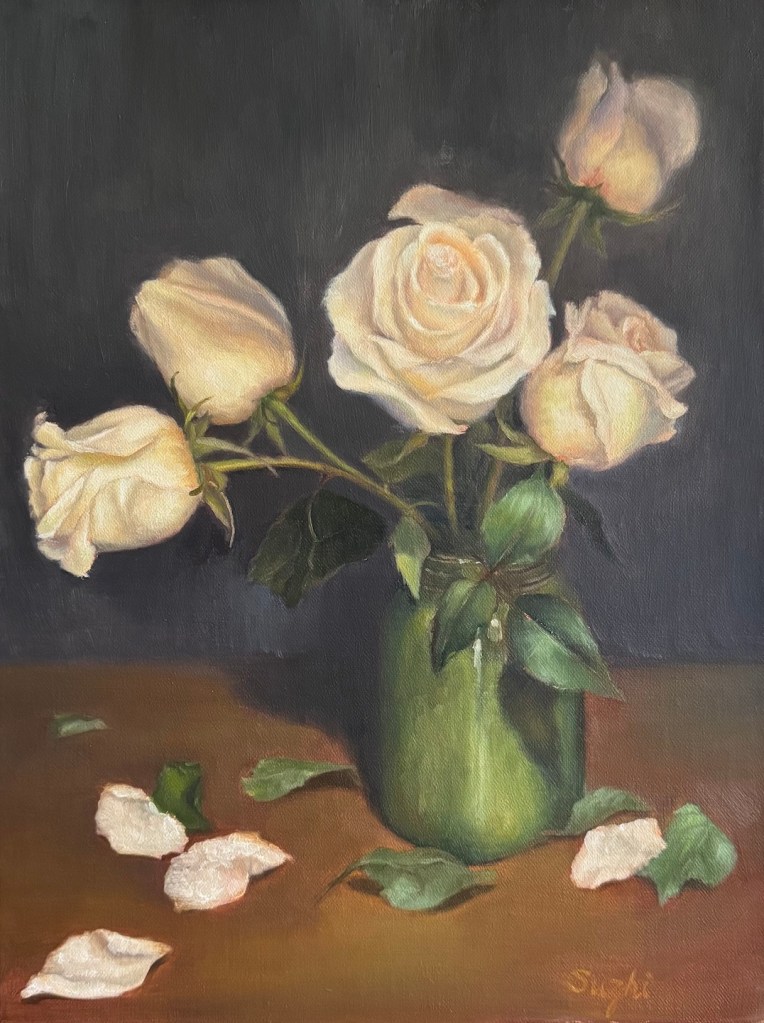
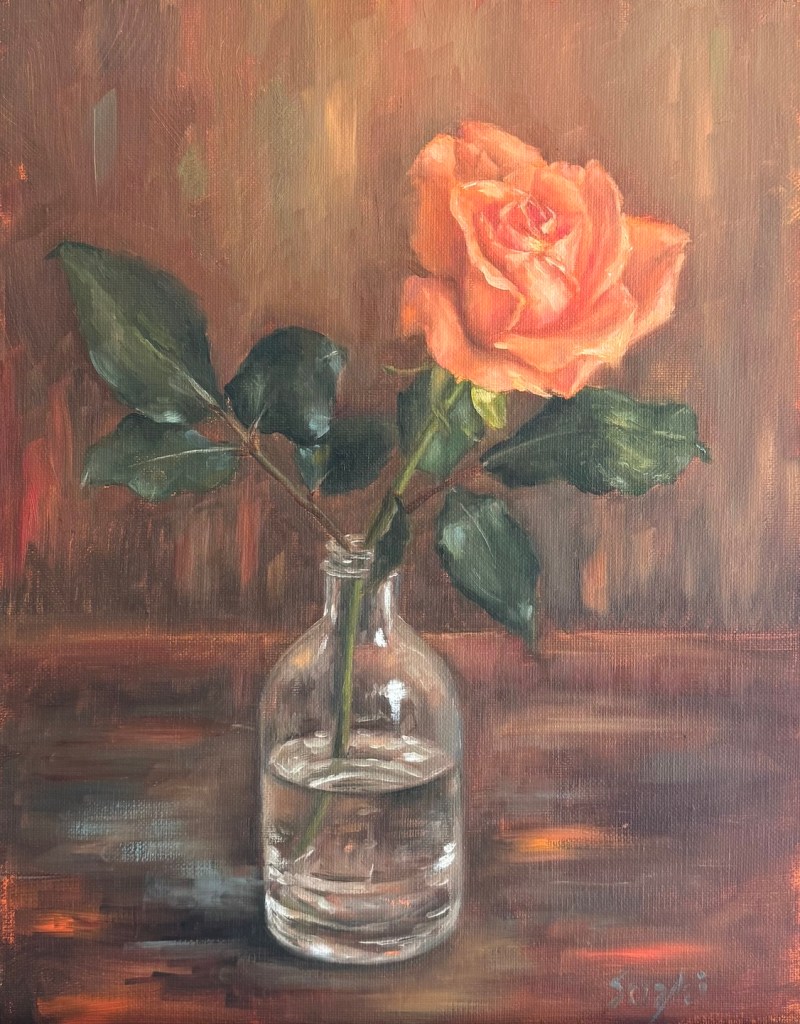
Here are my recent paintings:

The two with whitish roses were the most challenging. Reflecting on it, white is such a difficult color—catching every bit of light—that I probably should’ve tackled it later with more experience. In the green vase painting, I struggled to make the flowers stand out. Up close, they look fine, but from afar, they’re flat. I had to darken the petal shadows more than I thought I saw to give them depth. The glass vase piece, with its scattered, broken petal pattern, was hard to unify. In the end, I leaned into the chaos, using short strokes to disrupt the background and table too, hoping this fragmented style would tie everything together.
Overwhelmed by the whites, I turned to a warm-colored flower next. The background in the setup had neutral tones and the lighting was plain daylight, but I warmed the surroundings up to match the flower’s glow.

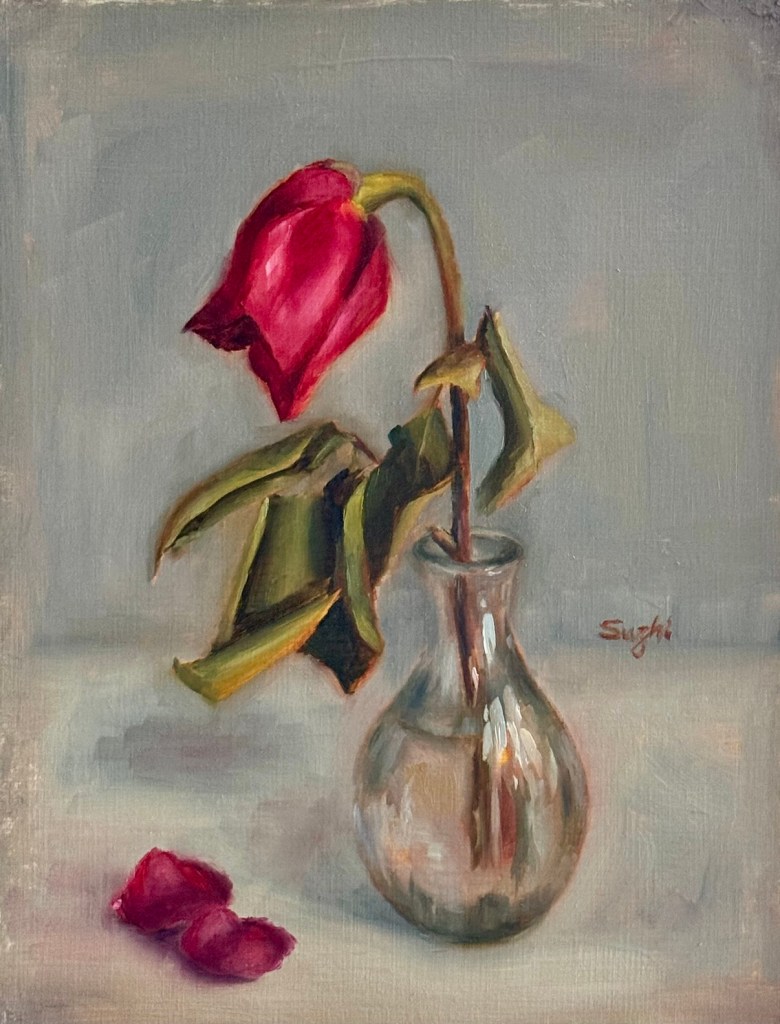
The red rose bud painting brought me the most joy—a small piece I finished in one sitting. Aiming for a quick study, I used bold, decisive strokes to lay down contrasting color blocks. Pleased with the result, I carried this approach into the yellow roses painting, giving it a slightly stylized feel.

That’s my June wrapped up! With summer just beginning and flowers in full bloom, I’m excited to keep exploring.

The Making of a Still Life Painting in Times of AI and More

I don’t know what sparks the initial idea for a painting in other artists. For me, oftentimes, it has nothing to do with art. As someone genetically at high risk for diabetes, the only way I could justify buying a bag of cookies was to tell myself, “I’m going to use them in a painting!” 

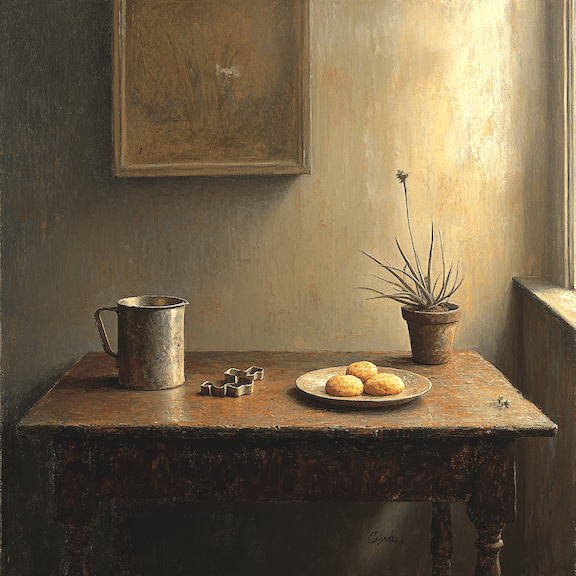
And so it began. Adding a few related items – a cookie cutter, a mug, a wooden table -I threw the ingredients into the AI pot of MidJourney. Among the results it generated, one caught my eyes. 

MidJourney v6.1

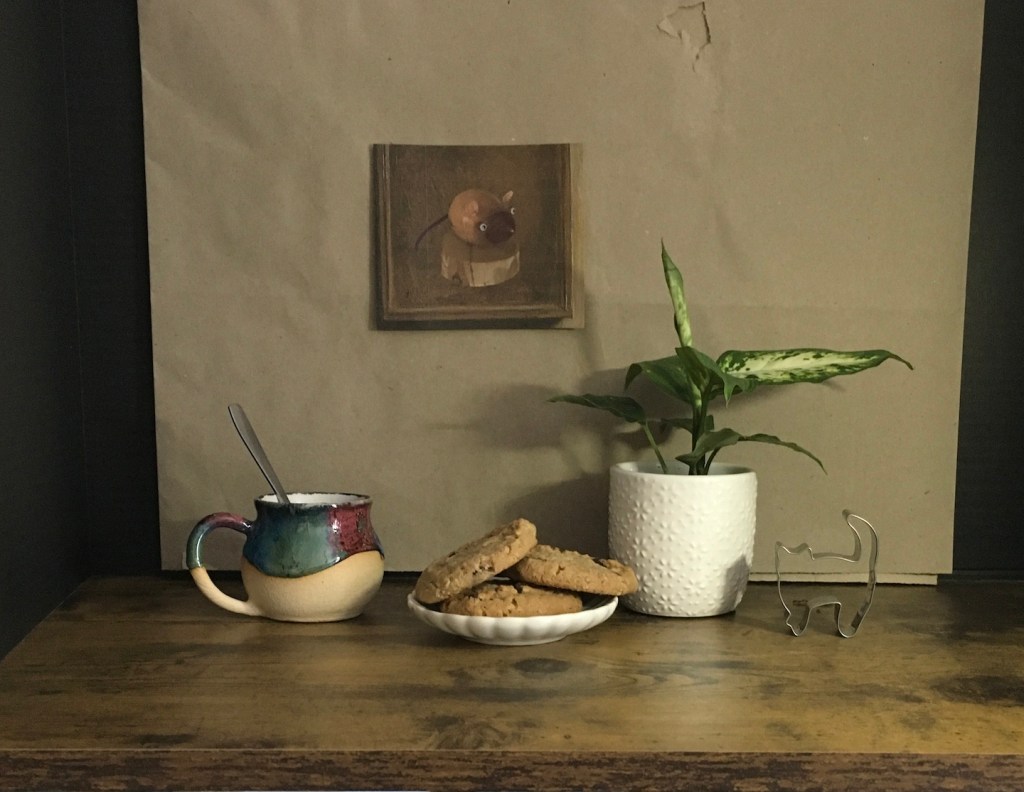
Using it as a guide, I set up my own reference: a small plate to hold the cookies, the new mug I just acquired from a craft show, and a potted plant I picked up from Home Depot. However, I didn’t care much about the background I devised. Why didn’t I just borrow MidJourney’s! I liked the idea of a painting hanging behind the objects, but I didn’t want it to feel generic. One of my cookie cutters was cat-shaped, so to add some fun, I featured a wooden mouse in the painting. The mouse is my zodiac sign, and the little wood carving was a gift from my daughter. This is how a still life became a self-portrait! 

Photo of my setup

When mixing reality with “fantasy,” lighting is the tricky part. I placed a light source on the right, but whether it replicated the effect in the AI-generated image is a question mark. Whether the lighting in the AI generation was accurate to begin with is an even bigger question mark. I decided to make the painting less about light and shadow!

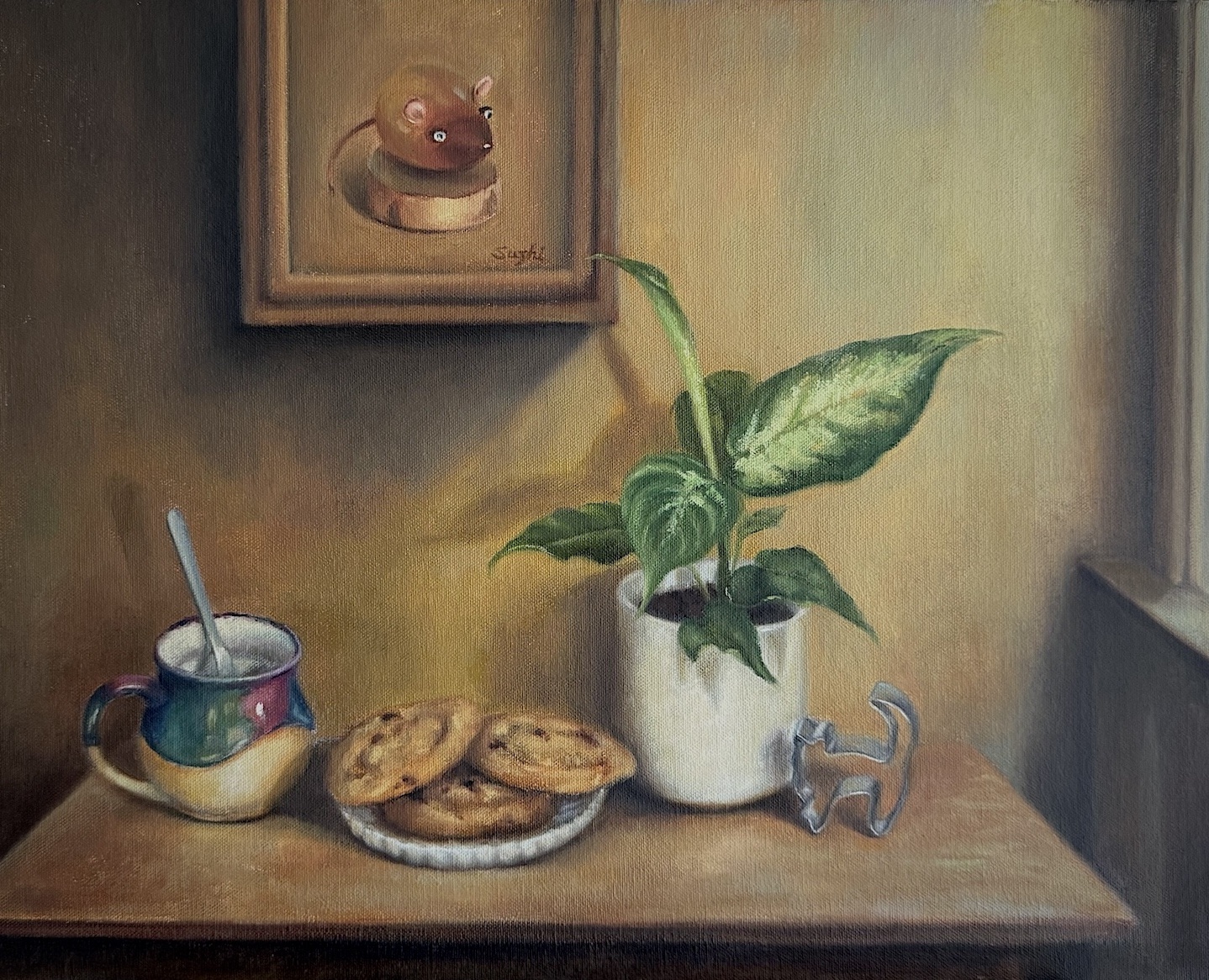
After the plant’s leaves grew bigger and shifted positions, and after the cookies were replaced several times, I finally completed the painting.

Cookies, oil on canvas, 14 x 18 in, April 2025

The cookies were actually durable enough, but how else could I nibble an entire bag away without guilt? Though the painting is not strictly realistic, its atmosphere and staging accurately reflects my mood during the process. The objects were dear to my heart and the whimsical dynamism is quintessentially me. I’m grateful to live in a time with more tools to find inspiration and support in creating art.

PS: 

MidJourney has come a long way since I first used it, and I recently ran another comparison test by revisiting some old prompts. (Please see my first and second tests. )

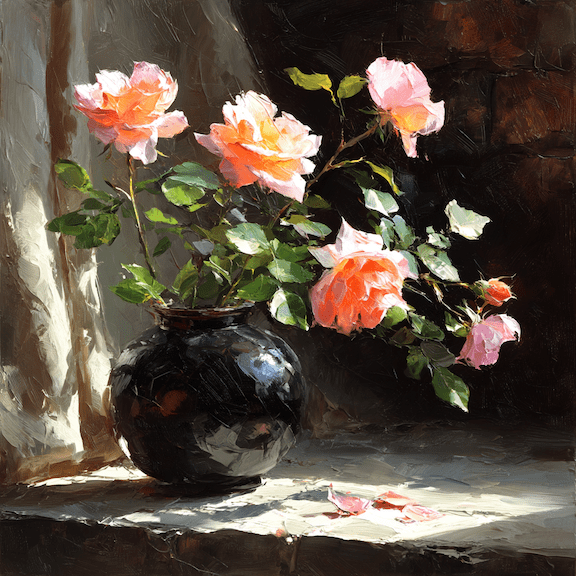
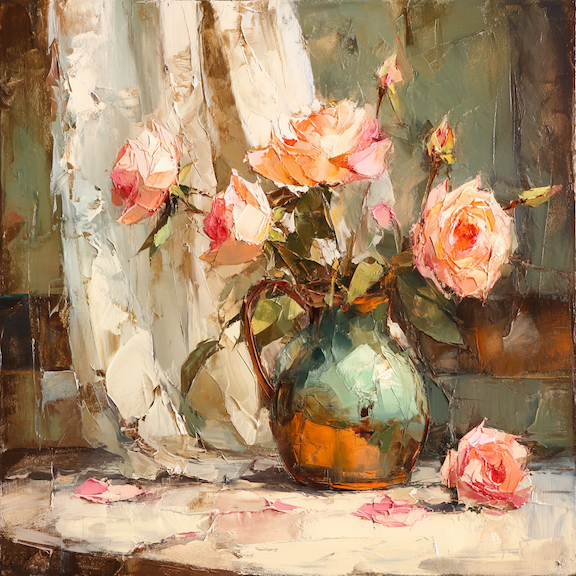
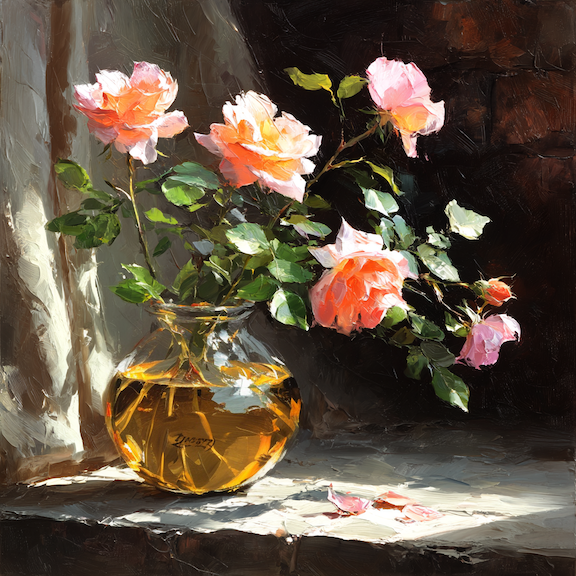
For “oil painting, still life, bronze vase, light pink roses, curtain, table, realism, expressive strokes, zorn palette,” now I got these:

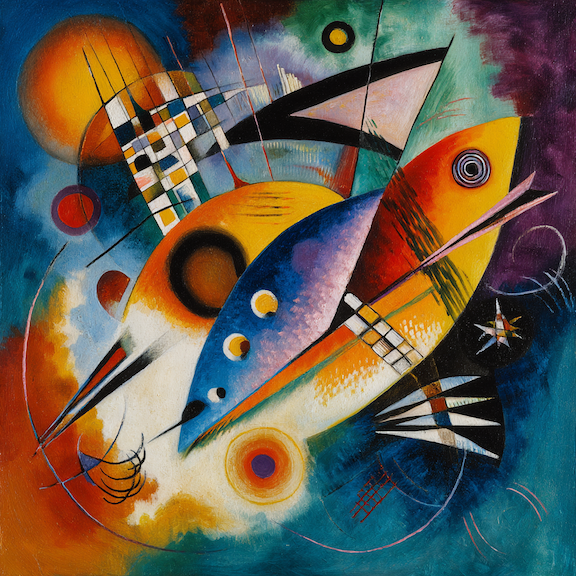
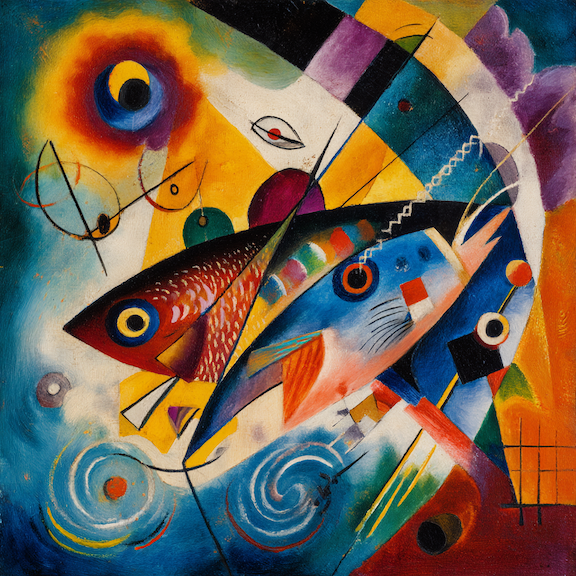
For “kandinsky with expressive bold strokes, fish, abstract colors:”

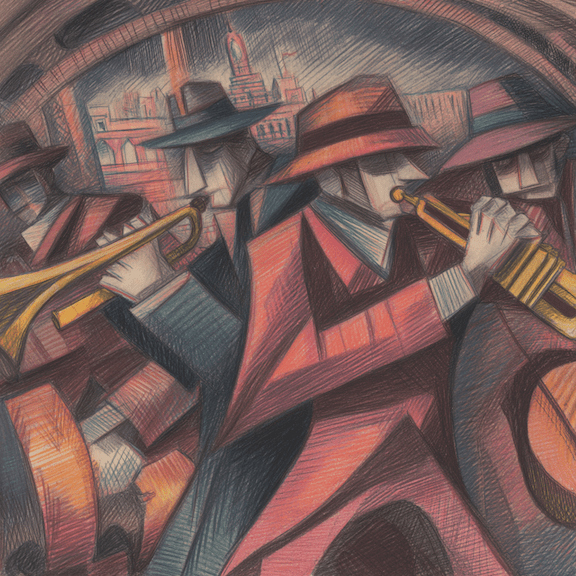
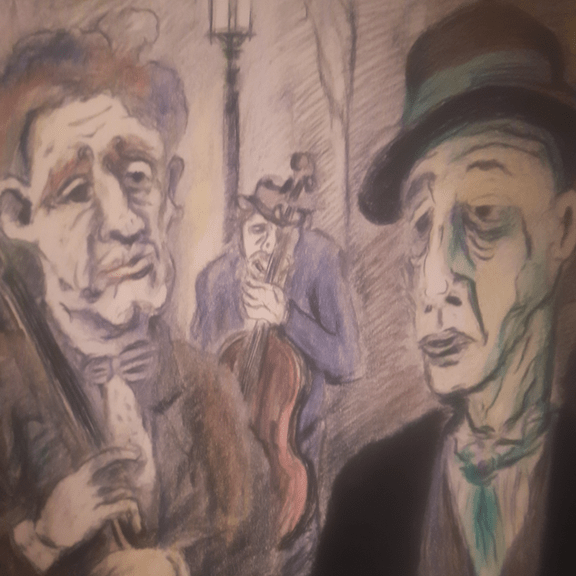
For “André Masson drawing, colored pencil, street musicians, metro, gloomy:”

This isn’t entirely a fair comparison because, as the model becomes more sophisticated, there are more ways to manipulate prompts for varied results. If you are willing to spend some time rating images, MidJourney builds a profile of your preferences, so the results start reflecting your taste, to some extent, regardless of the prompt.

with my profile added

You can also add style references to prompt for more control over the generated style:

You can even edit the result to your liking – not quite Photoshop yet, but the result can be wild. 

replaced the vase with a glass one using MidJourney Editor

What’s interesting is that, when comparing the Kandinsky and Masson results, it’s not always clear that the newer models are better.

Happy New Year! Still Life and Brushes

Between trips and holidays, I only managed a few small paintings, and here they are:

Turtle, oil on canvas, 12 x 16 in, Fall 2024
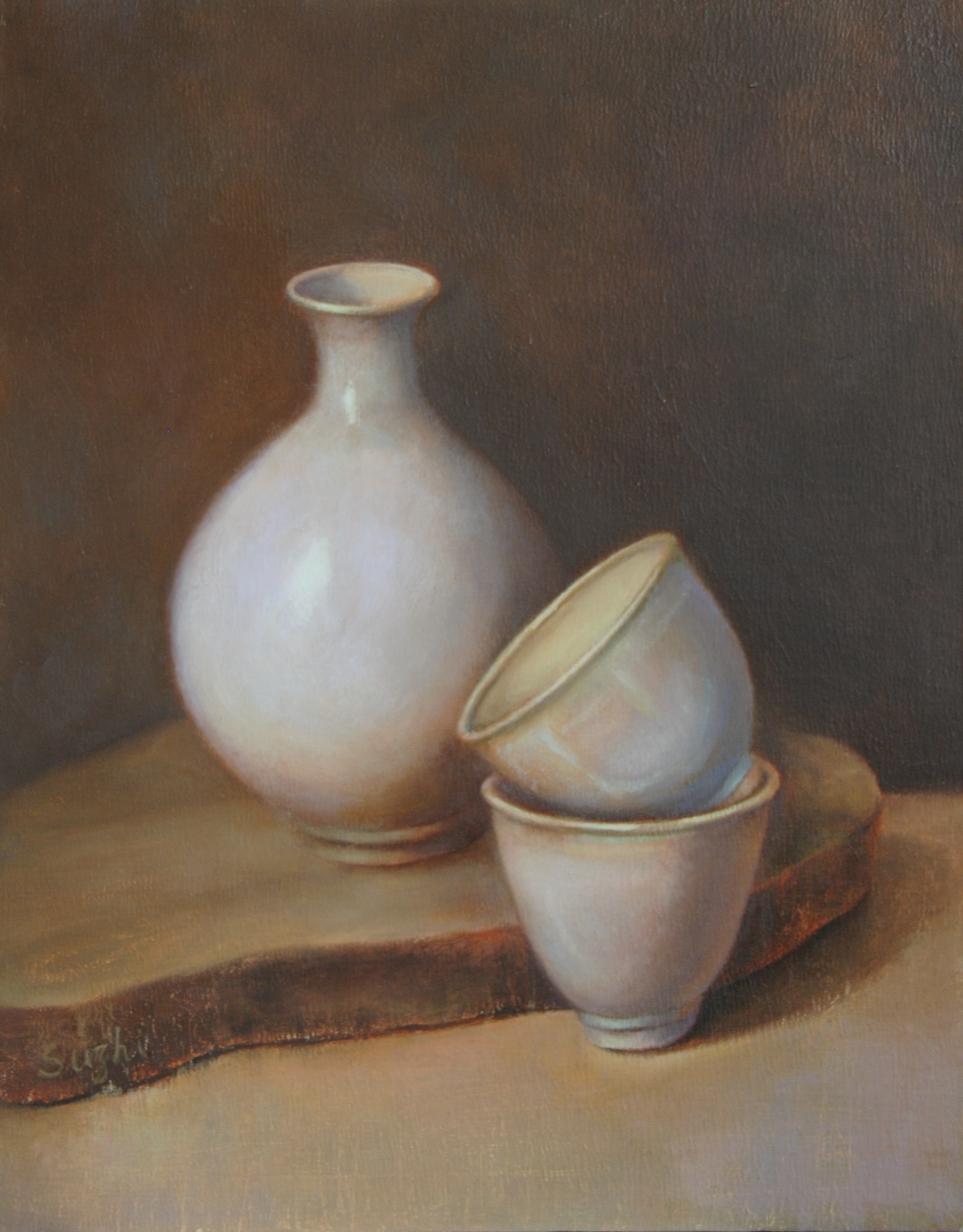
Bottle and Cups, oil on canvas board, 11 x 14, Fall 2024
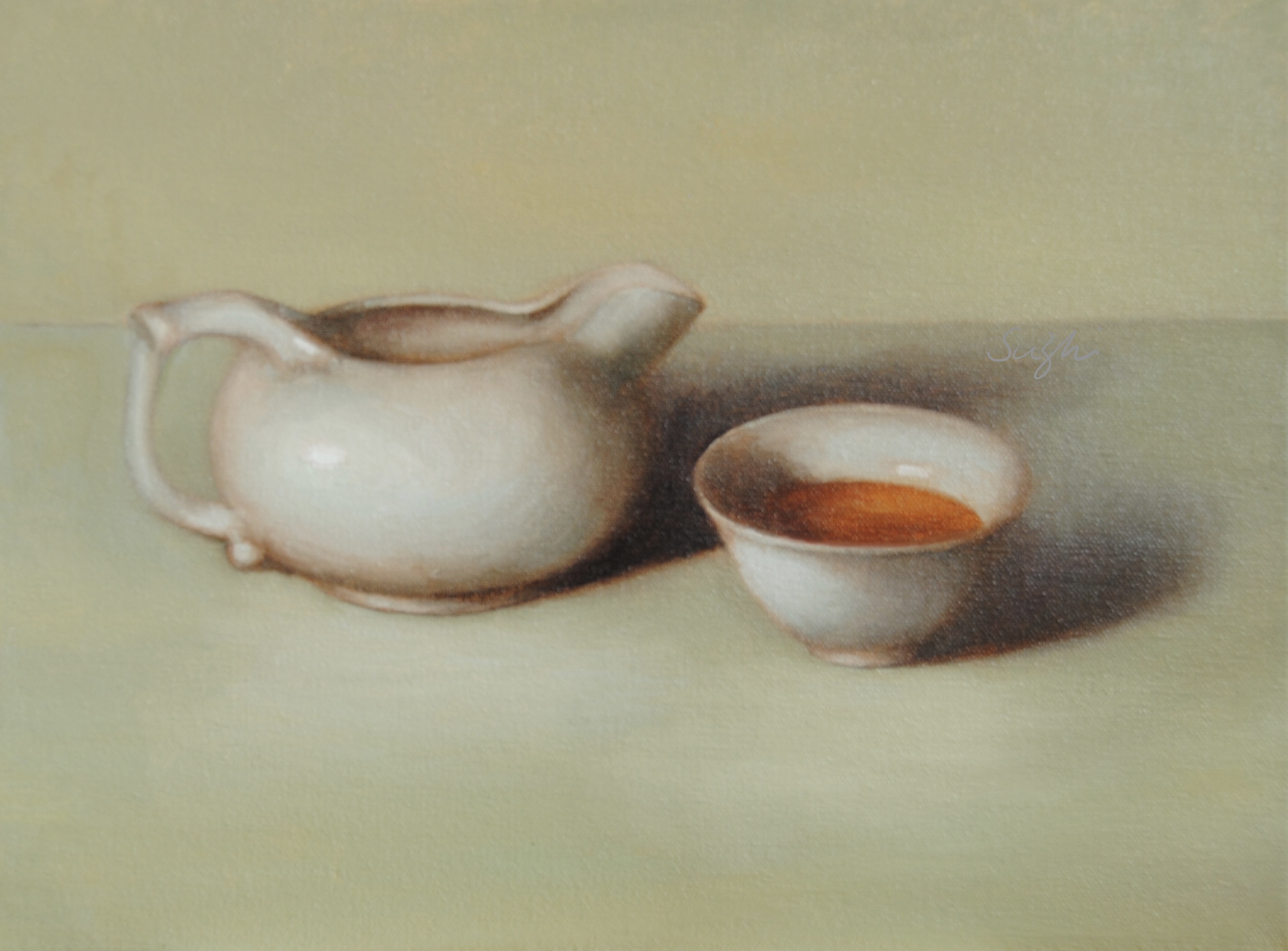
Tea Time, oil on canvas board, 9 x 12, November 2024
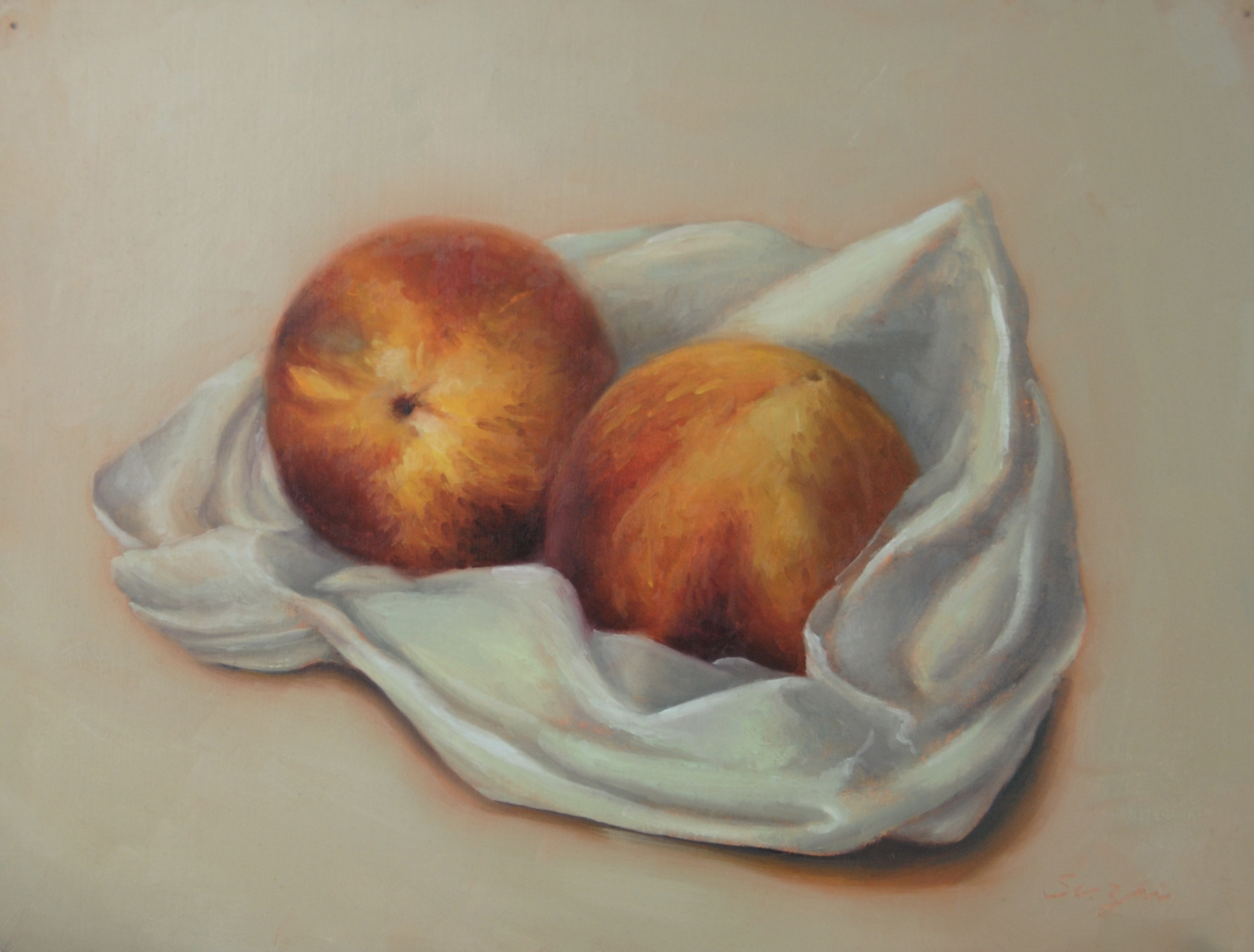
Peaches, oil on paper, 9 x 12, Fall 2024

The turtle one shows my natural noisiness. I have doubts about the subjects all the way: I believe the arrangement works compositionally, but is it too manipulated? I also know I was sloppy with the flowers. Overall, however, there’s a delightful tone from the piece that makes me like it. I guess that’s my Happy Holidays!

With the bottle and the teapot ones, I was really going for a sense of tranquility and harmony. I hope I am at least close. The peaches one is about texture. I wanted to capture that fuzzy and velvety glow of both the fruit and the plastic bag. Did I? 

I have given up on washing my brushes with soap for a couple of years. Each time after painting, I clean my brushes with Gamsol, wipe them dry with a paper towel, dip them in a mixture of safflower oil and clover oil (98:2), and lie them flat in a tray with a cover. The recipe is from Draw Mix Paint. Ever since I adopted this method, I haven’t destroyed any brush yet. Since my last trip was a long one, before I left, I covered my brushes with the mixture, put them in a sealed palette box, and store the whole thing in the refrigerator. Two and a half months later, they are fresh and ready to go. Yay!

Happy 2025 and happy painting!

Happy Halloween and the Forgotten Watercolor

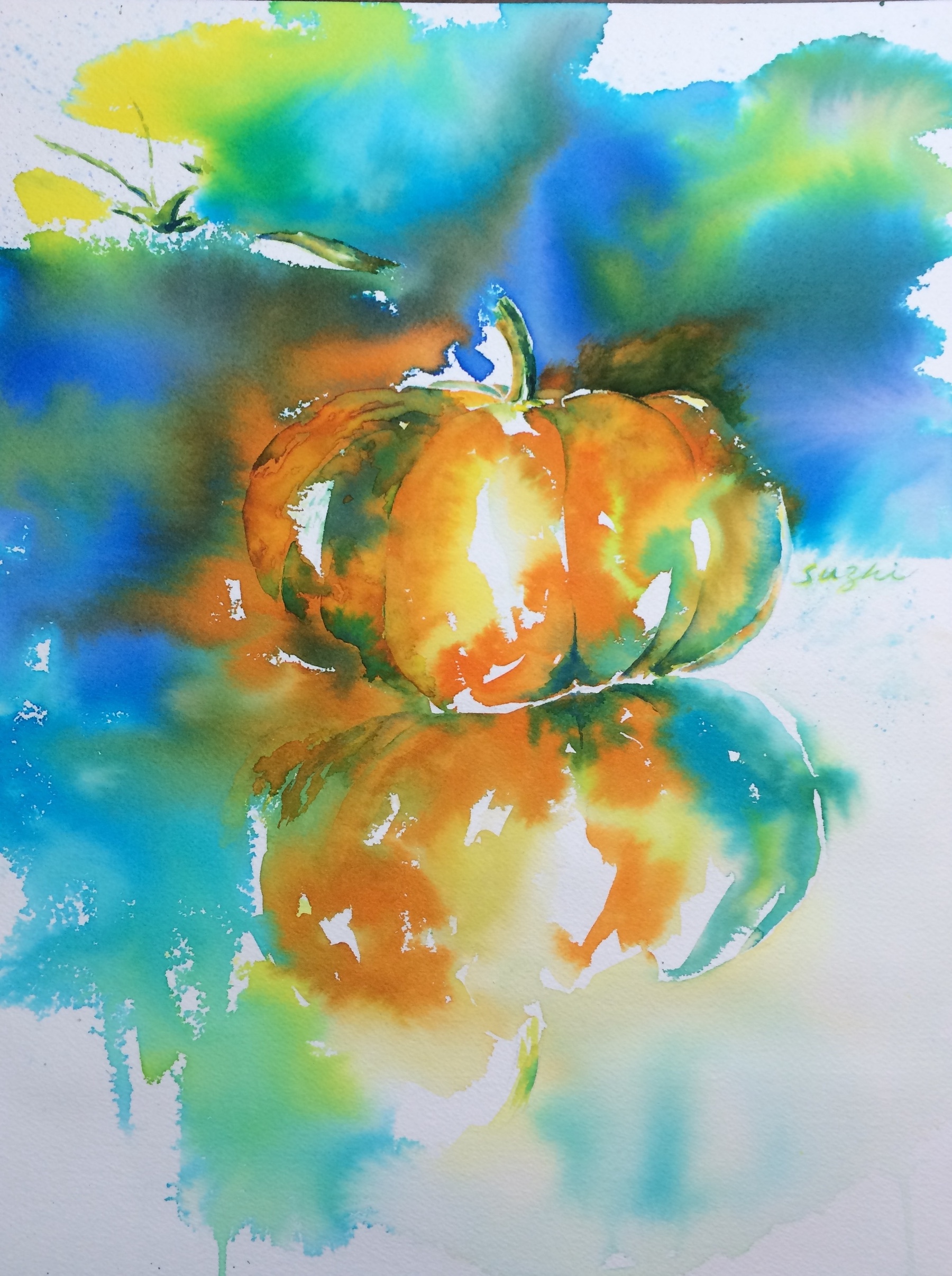
Nothing spooky here, just an old pumpkin! I can’t recall when I did this, maybe 10 years ago, when I could still feel the “water” in watercolor. Time flies!

Pumpkin, watercolor on paper, 9 x 12, 2015

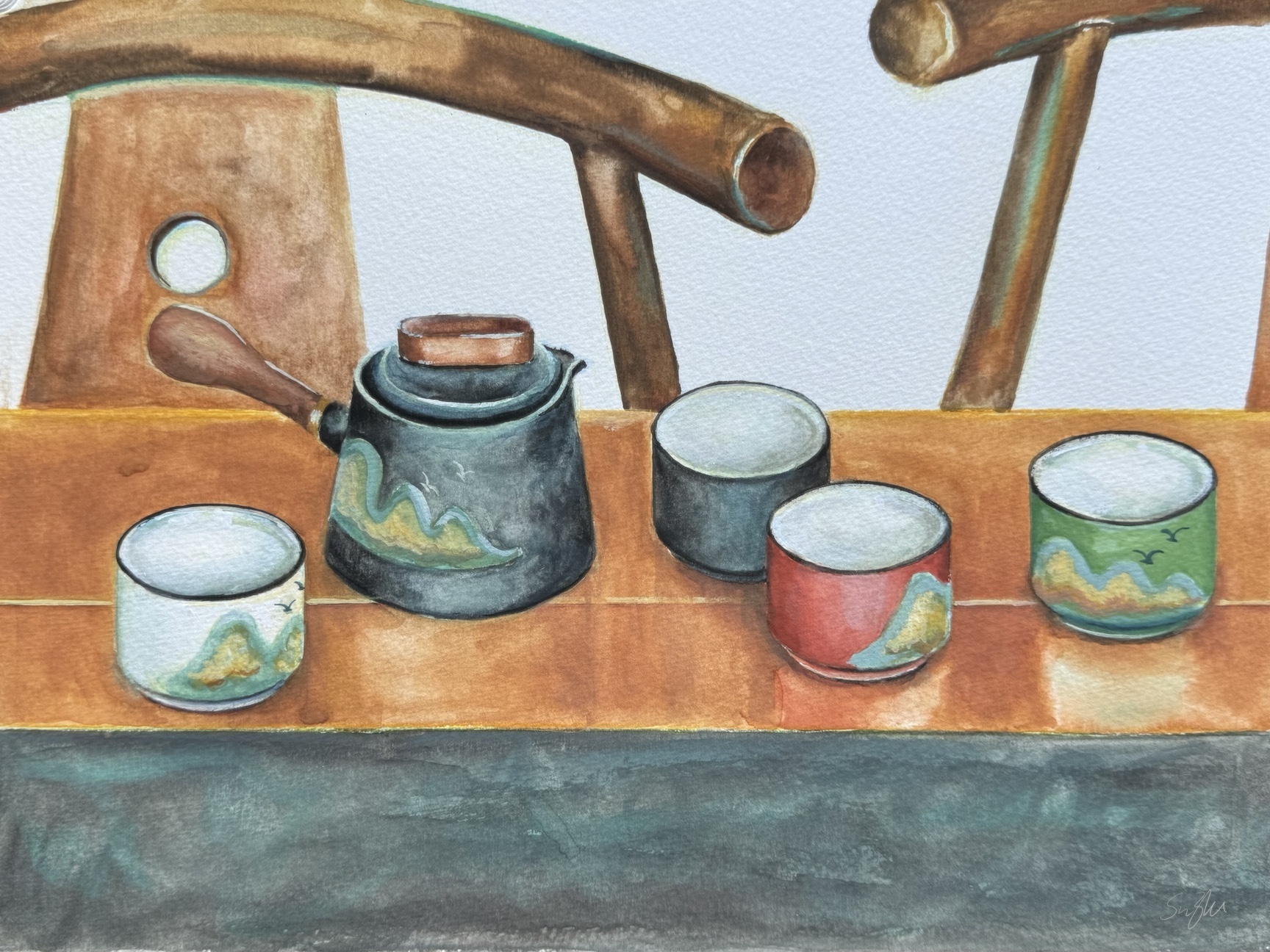
In the past, when I travelled, even with those lengthy stays abroad, I didn’t do any art. These past months when I stayed in China, inspired by all the art shows I attended (I will talk about these more in the future), I thought I should have kept things going. Oil being too troublesome, I managed to find watercolor paper and paint. My intention was to do some quick sketches or simple paintings, and these are what I’ve done:

Tea-set, watercolor on paper, 9 x 12, Sept. 2024
Fruit plate, watercolor on paper, 9 x 12, Oct. 2024

I found myself using watercolor the same way I use oil paint – controlled and layered. Despite their tight look, I didn’t spend that much time on each of these pieces, mainly because I gave up. I could have fine-tuned a lot more details, further emphasized the shadows and highlights, etc., but that was not what I set out to do. I missed the singing and dancing of colors in water.

In a way, the old pumpkin painting was not finished either, and the values probably don’t make sense. However, it was fun, and in my mind, it was what watercolor is supposed to be. 

I am not upset though. I haven’t practiced watercolor for a while so a bit lack of touch is fair game. I like my compositions and color choices, and that’s something. Most importantly, I didn’t let the trip completely cut off my art practice, and that’s quite a step forward!
Fruits, Eggs, and More

Moderate still life endeavors on various surfaces:

Wooden Cup, oil on canvas board, 11 x 14, Spring 2024
Oil and Orange, oil on MDF board, 9 x 14, Spring 2024
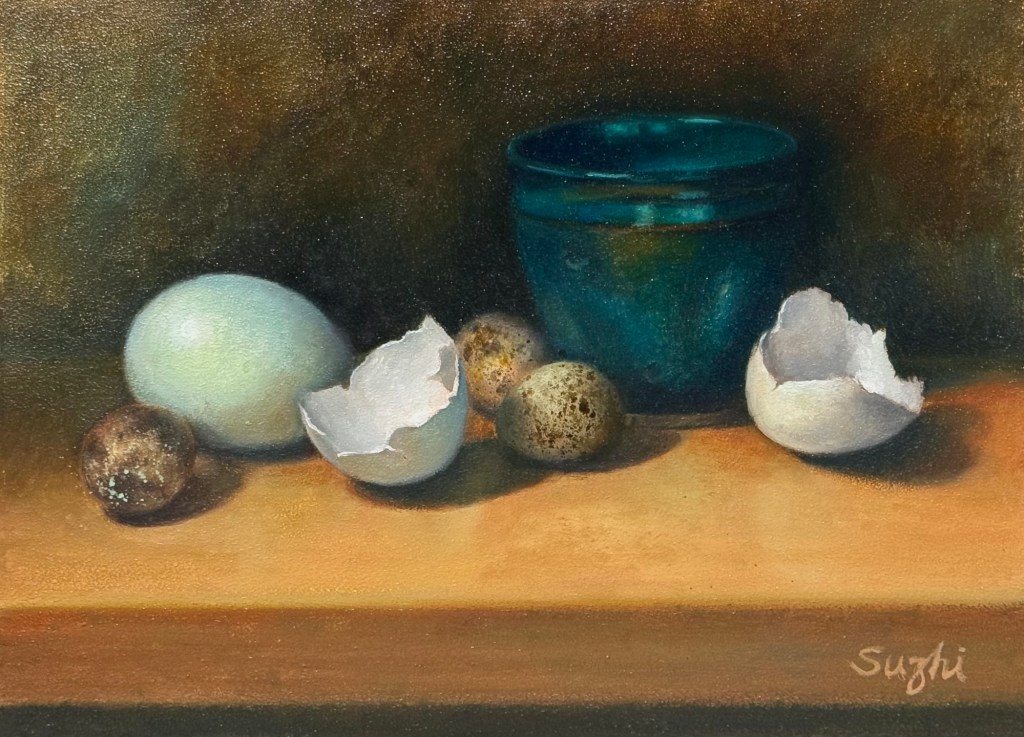
Quail Eggs and Shells, oil on aluminum board, 9 x 12, Spring 2024

Two things I am struggling with:
1. Sunken-in: it is the appearance of a dull matte area in a section of an oil painting, usually caused by overly absorbent grounds, too much solvent, or earthy pigments. In my case, it is the umber and the black. I tried oiling out – apply one part Gamsol + one part Galkyd to the dull area. It helps for a while, but overtime, it might go back a little. Varnishing is supposed to be another way to improve, but so far I find that even less helpful. The process is demanding of patience too, for you need to wait till the paints touch dry to apply the rescue, and then wait for the rescue to dry to see if it actually works.
2. Taking a decent photo. I assume it would be better if the I wait long enough for the paints to be drier, and somehow there’s no sunken-in – the shine is even. Or, invest in a better than iPhone camera? 😳

Hold Yourself Responsible

One reason I avoided painting people when I started making art was that I knew if the drawing was off, everyone could tell, regardless of training. Still-lifes or landscapes, however, are more forgiving. You still need to achieve a decent eclipse and get the essential perspective right. Yet, unless I show you the reference photo, it’s not apparent the actual size of my apple and its distance from the mug; it’s not evident that the tree has more branches or the buildings are intricately designed. This applies not only to drawing, but also to colors and values. I can make things up as I go, and that’s my creative freedom, right?

I recently viewed some demos from the renowned still life and portrait artist Dale Zinkowski. He painted a simple setup of eggs in the span of 4 hours. I was surprised that during those 4 hours, he devoted the entire first hour to the drawing, not even a complicated one. Most of this time was spent measuring to ensure the accurate positioning of the eggs. Really? Is such meticulousness necessary? Who would notice? As if hearing my question, he began explaining his rationale for taking the time to get the drawing right. It was to hold himself responsible when nobody was watching. His comment makes me think a lot about my own practice. Indeed, in a realist painting, an artist’s job is not to religiously copy everything seen. However, when you spend time designing the setup (Dale said he spent a lot of time putting the eggs in a desirable position), you don’t dismiss it without a good reason. Every observation, measurement, and comparison sharpen your visual acuity. Every drawing revision to align more closely with what you see enhances hand-eye coordination. By holding yourself responsible, you improve the efficiency of your practice, and you get more from each painting experience. It’s not about having to replicate the exact color of the egg before you, but striving for a matching color enriches your skill set, and ultimately, it gives you more freedom in artistic creation. 

This practice might be a simple truth for many, but having taken excessive liberty with my drawing for so long, I’ve wondered why I haven’t made sufficient progress. For me, this was a light bulb that just went on moment. What ensues is implementing this practice. 

Share a few of my recent still life paintings:

Pumpkin Couple, oil on paper, 9 x 12, 2023
Apples, oil on canvas board, 11 x 14, 2023
Vase and Scarf, oil on canvas board, 11 x 14, 2024

MidJourney Revisited and Happy New Year!

In July 2022, I wrote a post about MidJourney AI art. That was version 3. Recently, MidJourney released its latest version 6. I thought it would be fun to check the progress of this “artist.” I ran the same prompts I used before, and these are some of the artwork it generated: 

For “oil painting, still life, bronze vase, light pink roses, curtain, table, realism, expressive strokes, zorn palette:”

For “kandinsky with expressive bold strokes, fish, abstract colors:”

For “André Masson drawing, colored pencil, street musicians, metro, gloomy:”

I am not an AI artist, and there are now more perimeters to manipulate for better results. What I have here is definitely not the best MidJourney could do. However, we can still see how far it has become and the direction it goes. It has a better understanding of human language and more accuracy in rendering. If you go to any AI art community, you’ll see the strength of these tools lies in realistic and fantasy art. While it can mimic many other mediums and styles, I wouldn’t necessarily see the V6 Kandinsky and Masson pieces as progress. 

In comparison, this is what DALL-E (OpenAI) created in response to the same prompts for rose:

With my limited experience, DALL-E is a lesser artist, but it can understand human language much better. Instead of thinking about writing “prompts,” you can just rant. So, if you are to create an illustration for a story, give the story to it, ignore the picture it generates, ask for what prompts it uses, and give those prompts to MidJourney with some modification. That’s how I got the “Winter Evening” and “Solitude:”

By the way, DALL-E refused to work on the Kandinsky and the Masson prompts because they are against their content policy. I look forward to all the discussions and lawsuits in the AI realm. 

Finally, a very Happy New Year brought to you by MidJourney and Photoshop, with a poem by ChatGPT (based on the painting):

Twilight hues and earthenware, 
Berries red as the first blush of the year. 
Glass and glaze in silence share 
The quiet hope of joy sincere.

In this still life, time’s gentle pause,
Apples ripe with the future’s gaze. 
A tableau set without applause,
Whispers of the New Year’s haze.

Let vessels, stark, in patience wait, 
For mirth to fill them to the brim. 
In silent grace, they contemplate 
The dance of days about to begin.

LOL

Daffodils 

I know it’s the wrong season. I started these paintings in early spring, when Trader Joe’s still carried those cheap bunches of daffodils. It is a nostalgic flower for me; my father used to raise them around Spring Festivals. It is also a challenging flower to paint – yellow is not an easy color to keep clean. In addition, I wanted to try doing a quick preliminary study beforehand, a practice many accomplished artists advocate. 

Here they are:

Daffodils and Fruits, oil sketch on paper, 9 x 12 in. 2023
Daffodils and Fruits, oil on canvas board, 12 x 16 in, 2023
Daffodils and Eggs, watercolor sketch on paper, 10 x 10 in, 2023
Daffodils and Eggs, oil on canvas, 18 x 24 in, 2023

And here’s what I got from this experience:

  • As your can see, I did a one hour oil sketch before Daffodils and Fruits, and I liked the sketch better than the final painting itself. The looseness brings out a movement and a sense of humor that diminished in the meticulously rendered final painting. I am seriously  considering setting a timer for my future paintings.
  • The study for Daffodils and Eggs was done in watercolor and it was overworked for the purpose.
  • The blue overtone was an improvisation. The original setting was dull and it worked better with the watercolor than oil medium. I wanted to add some drama and energy to the rather mundane setup. I feel I made the right choice.
  • For me, doing a study beforehand took a bit of freshness out of the final painting process. It could be I was just doing it for the sake of doing it rather than as a process of exploring.
  • It occurred to me that still life as a genre that could be the most expressive for a realistic artist. You don’t get to do that much “directing” in portraiture or landscape. Though at this state, my main focus is still honing my technique, I need to be more thoughtful in choosing and orchestrating the subjects.
  • I did put a signature on Daffodils and Eggs. Can you find it?