Tag Archives: #art

Cézanne – Reading Notes (2)

Among the books I read on Cézanne, two of them focuses on his watercolor. They are Cézanne in the Studio: Still Life in Watercolors by Carol Armstrong, and Cézanne’s Watercolors: Between Drawing and Painting by Matthew Simms.

The two watercolor books are a rich collection of the artist’s sketches, finished and unfinished works in the medium. Watercolor and gouache were often used by old masters as studies for a bigger oil piece, and it seems to the be case for Cézanne early on. However, later in his life, when his reputation began to be established, he increasingly make watercolors as independent works of art.

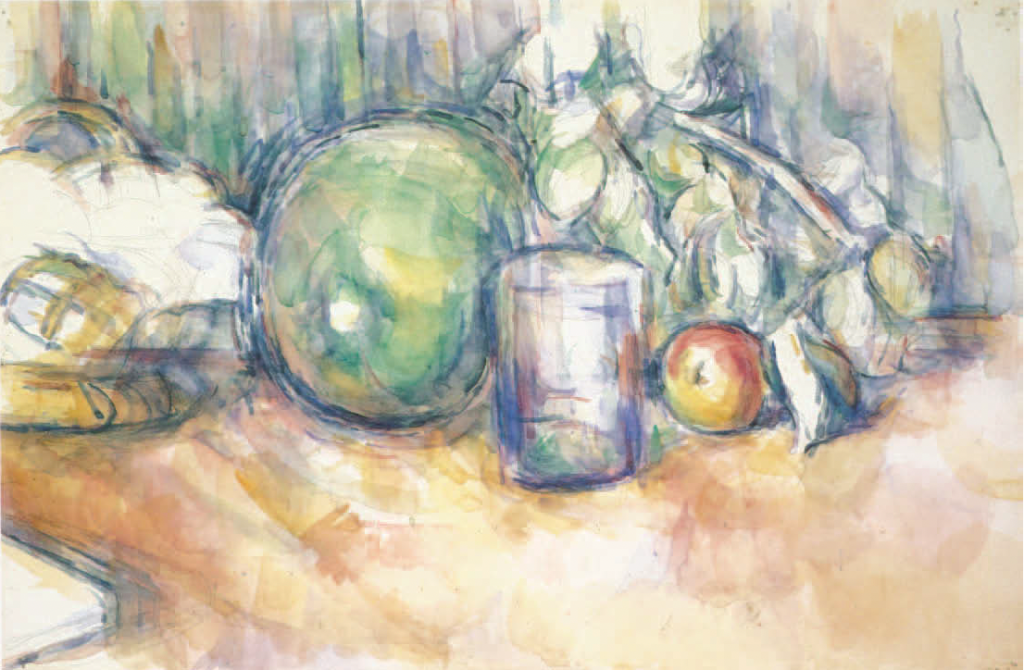
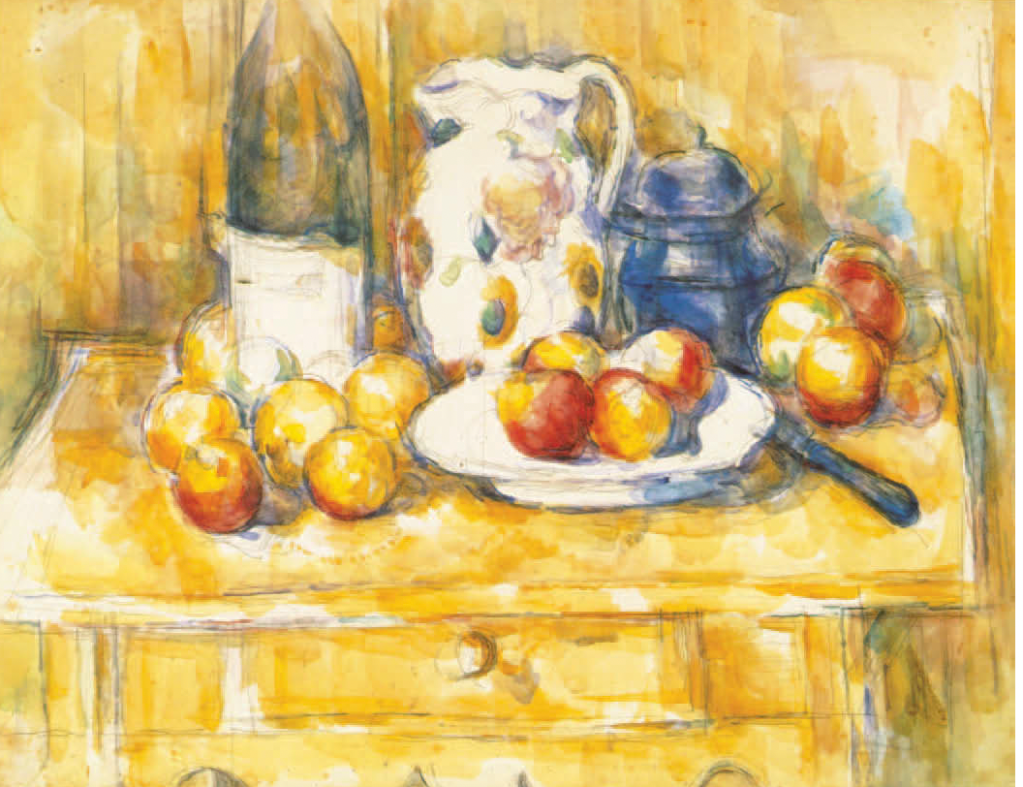
Cézanne’s watercolor is as unconventional as his oil paintings. The charcoal drawings, the white of the paper, and even the artist’s changing thought all become part of the composition. We see the draft, the negotiating and the final status on one page. This provides a unique window into the artist’s painting and the thinking process.

Still life with Green Melon, watercolor on paper, c.1906
Still Life with Apples, a Bottle and a Milk Pot, watercolor on paper, c. 1904

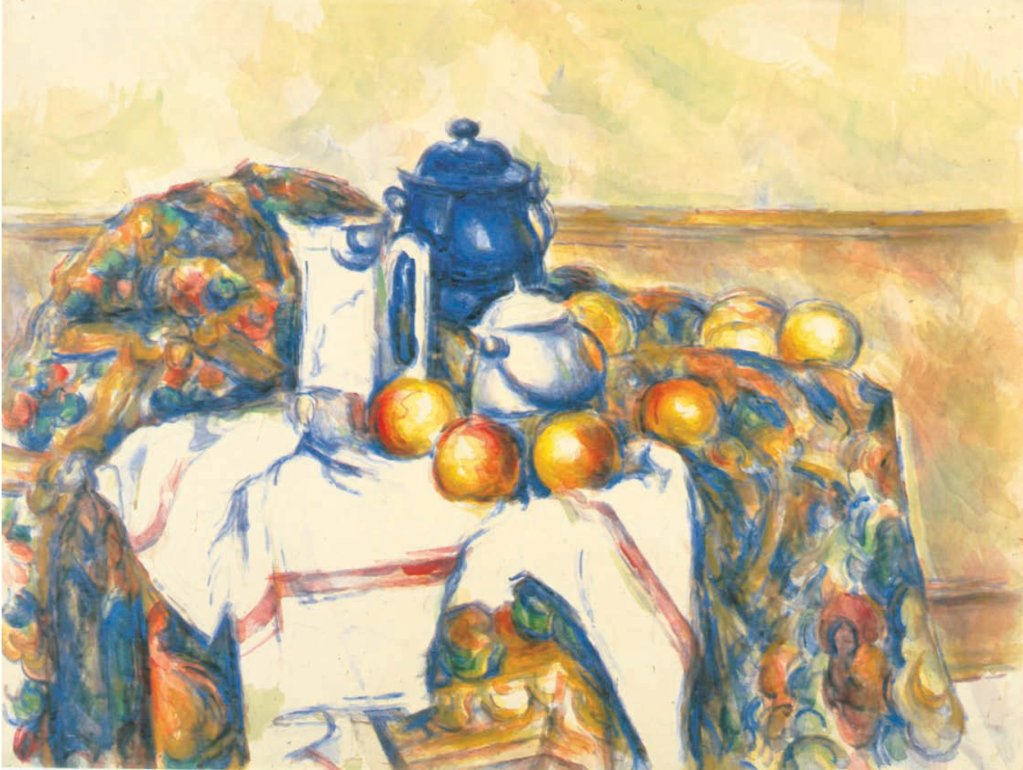
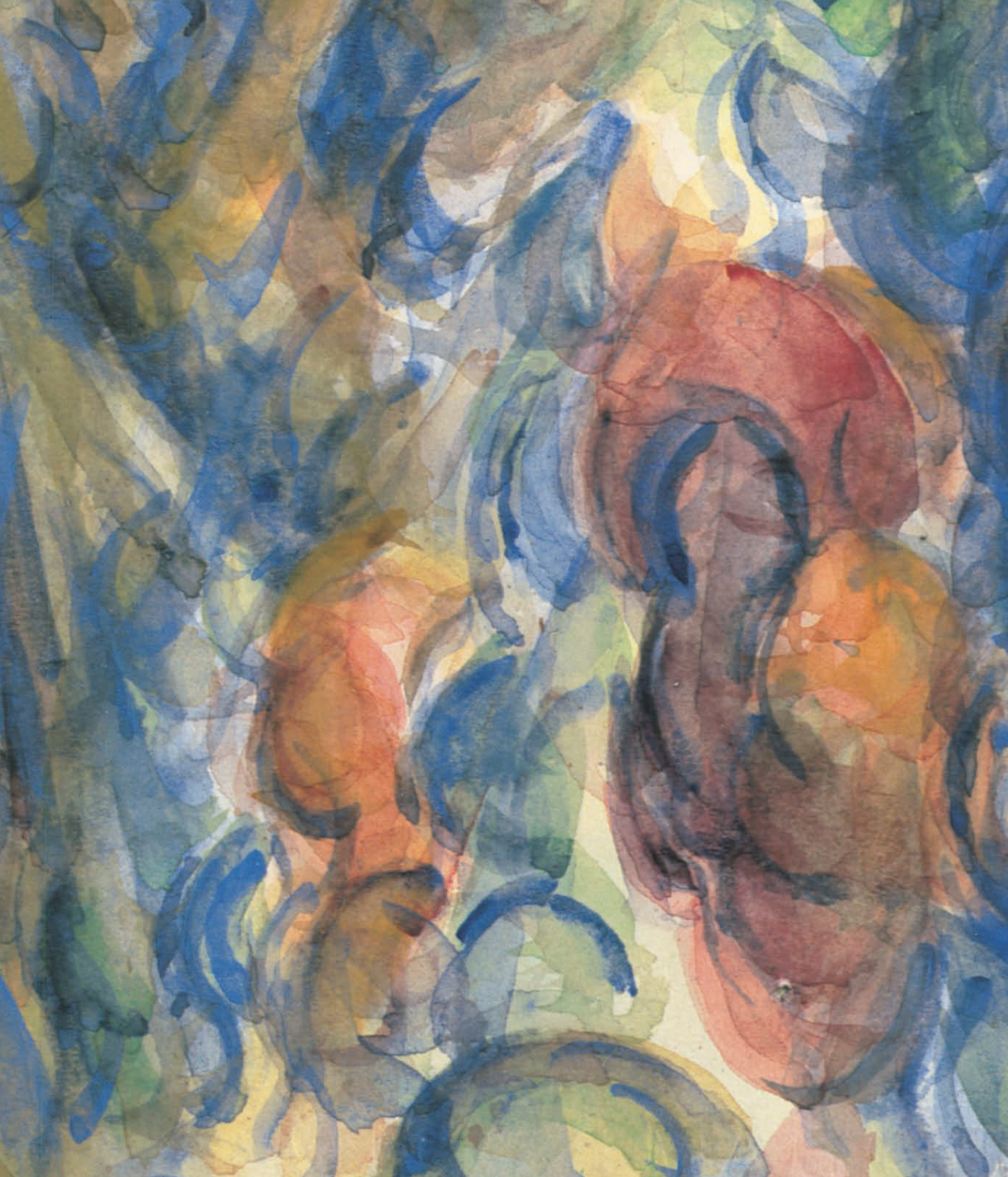
Unlike J. M. W. Turner (1775 – 1851) and other watercolorists, Cézanne adopts a touch by touch and color by color method. He layers translucent patches with gestural brushwork, resulting in a vibrant and casual overall appearance, with fragmentary and kaleidoscopic details. However, the actual process was deliberate and labor-intensive.

Still Life with Blue Pot, watercolor and graphite on paper, 48.1 x 632 cm, c 1900-1906

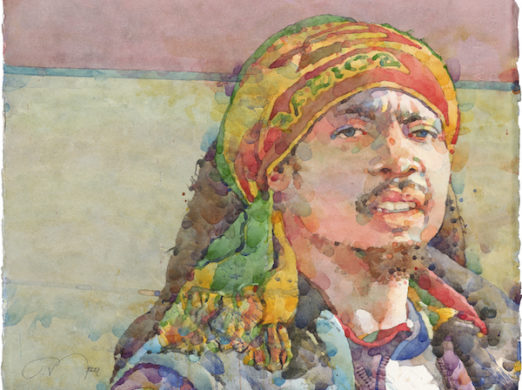
Contemporary figurative artist Ted Nuttall also employs transparent patches of colors to create energetic and vibrant paintings. While both artists are deliberate in their approach, Nuttall’s use of dots helps complete the painting, whereas Cézanne’s colors, used as lines, remain exploratory.

Africa, Ted Nuttall, watercolor on paper.

On a side note, for those interested, Cézanne uses a limited palette, as revealed by this nerdy study: “An Investigation of Paul Cézanne’s Watercolors With Emphasis on Emerald Green.”

Show News

Here are the group shows I participated recently:

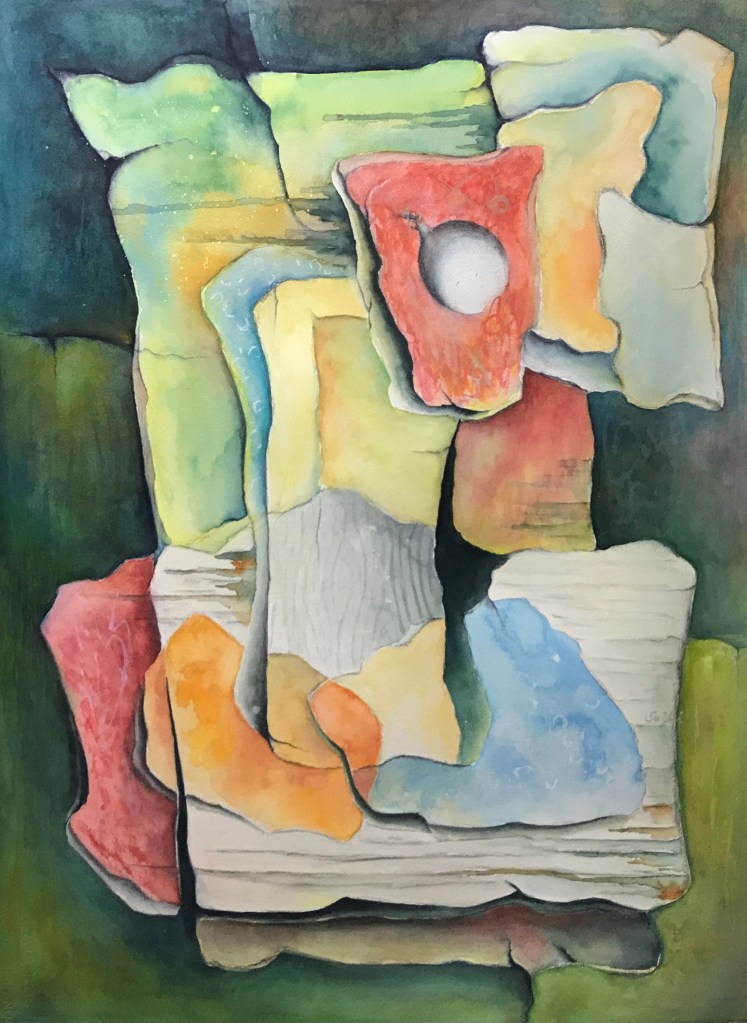
“Works on Paper” exhibition, currently on view at the Pacific Art League:

Memory, watercolor on paper, 23 x 29 in.

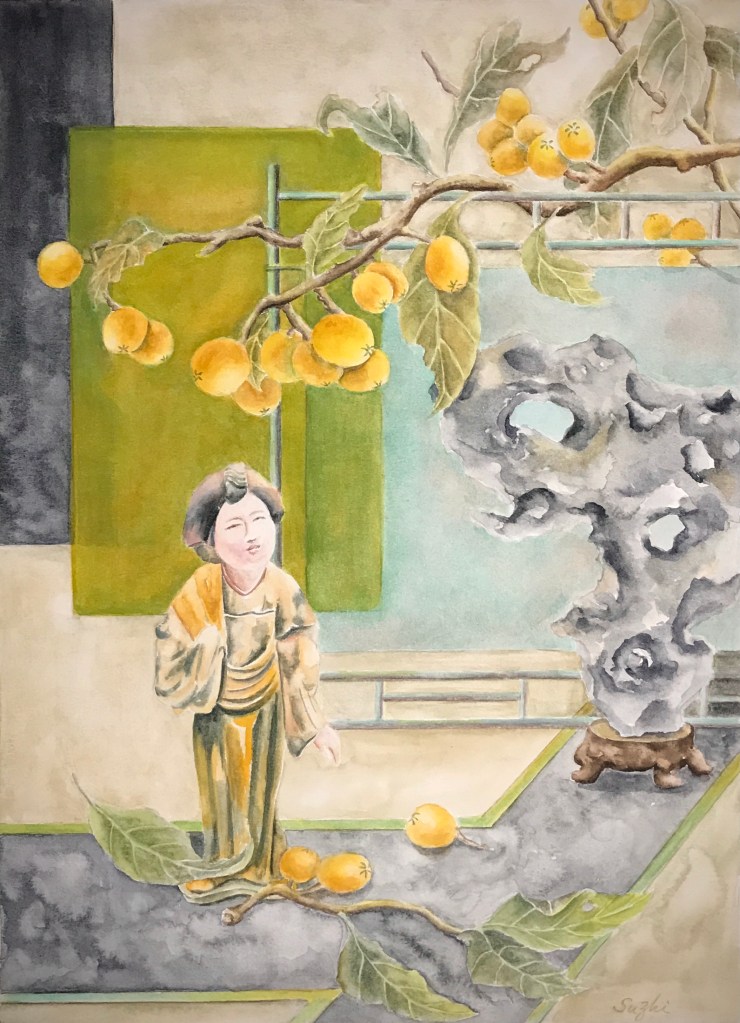
Santa Clara Valley Watercolor Society 55th Annual Member’s Exhibition:

Once Upon A Time, watercolor on paper, 10.5 x 14 in.

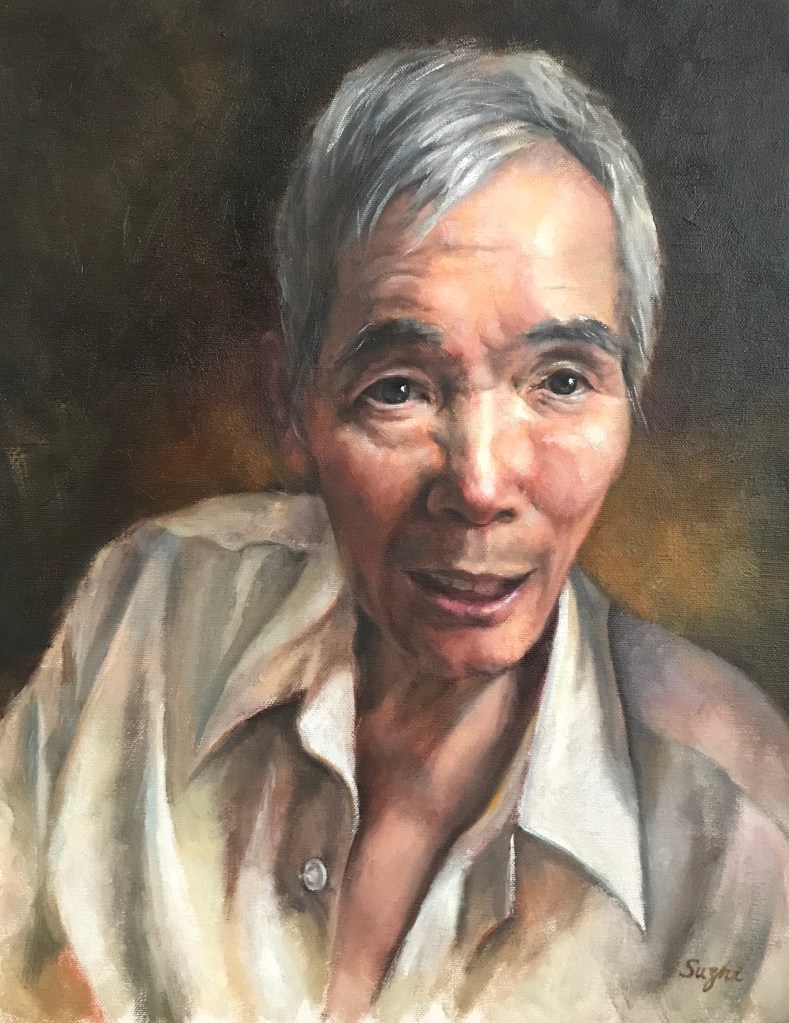
“Portrait” Art Competition at Art Room Gallery:

Father, oil on canvas board, 14 x 18 in., February, 2023
Me, oil on canvas, 18 x 24 in, January 2023

A few notes:

  • The watercolors were originally painted a couple of years ago, but I did some major revisions this year before the shows. I have yet to figure out how to date works like these.
  • The experiment of revising past works gave me a lot of ideas. Some of the old paintings may find a new life, and some of the creating processes may never end!
  • The portraits are the first time I entered my oil paintings to a show. They both received “Honorable Mention.”
  • I feel lucky that the “Portrait” is an online show, because none of the pieces I entered is completely dry. Northern California was darn wet this past winter!

Some Breakfast …

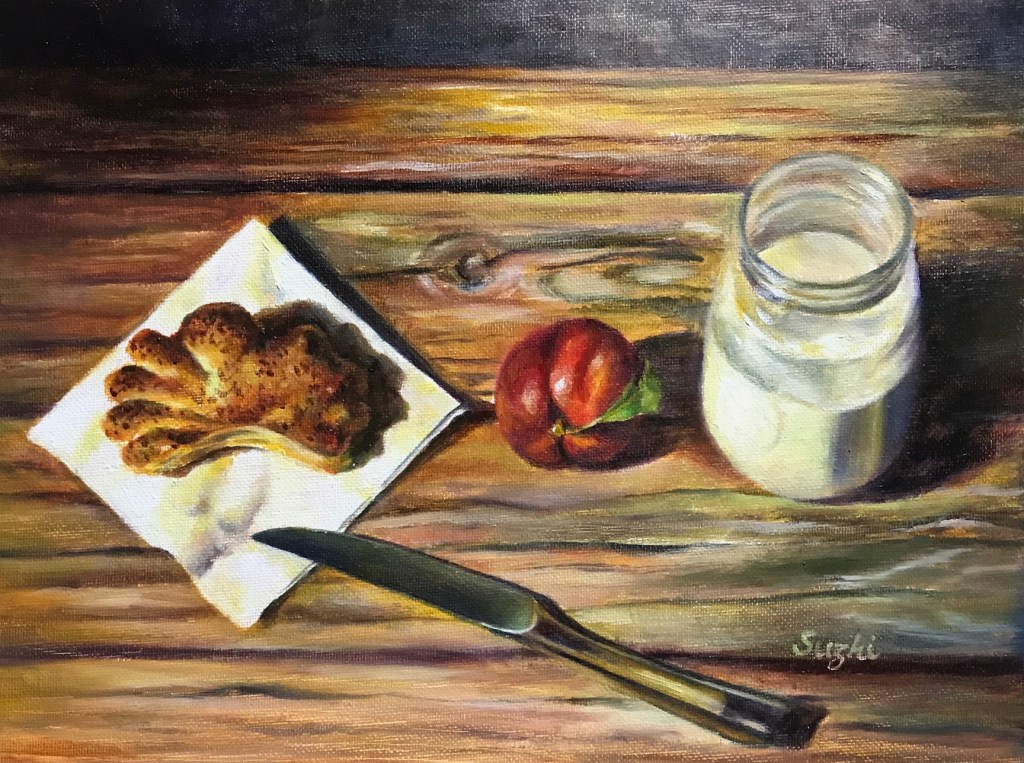
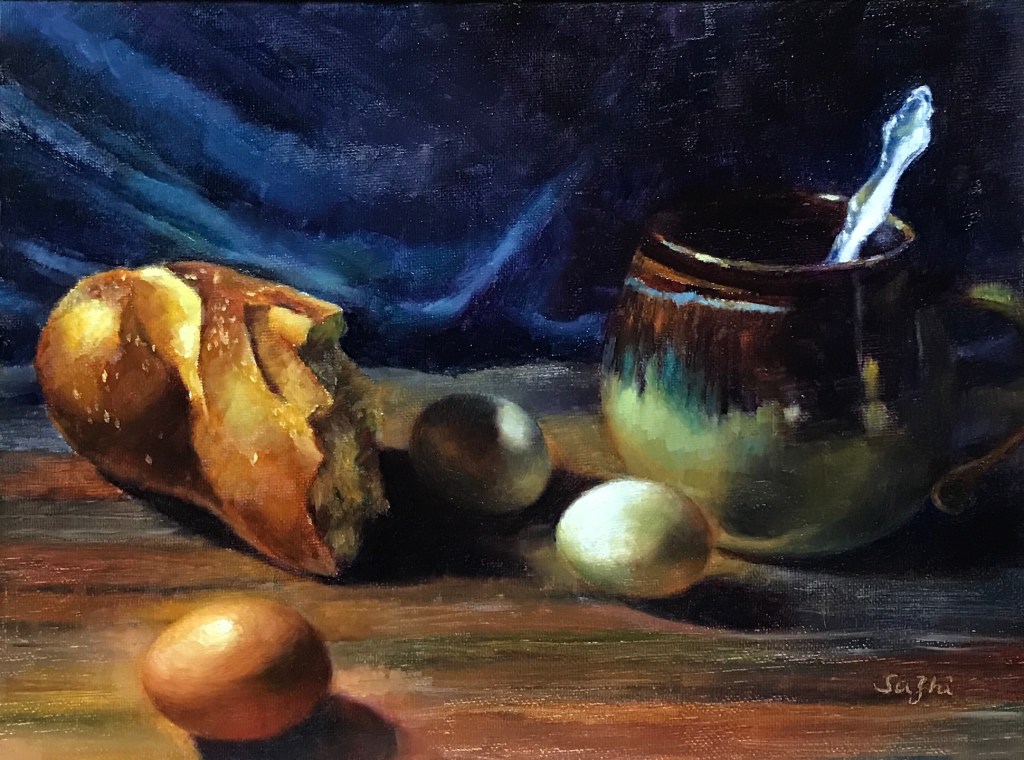
As promised, eggs and jars and some more:

A few notes:

  • All these are oil on canvas board, 11 x 14 in. I want to keep the studies small so that I could do more.
  • Eggs are difficult, either in terms of shape, value or solidity. There’s a fabricated story in China about how Da Vinci was forced by his master to sketch hundreds of eggs. Well, I do see the need of it.
  • My problem with over saturation manifested itself best with the bread. I probably wouldn’t eat that last one :))).

Some Flowers

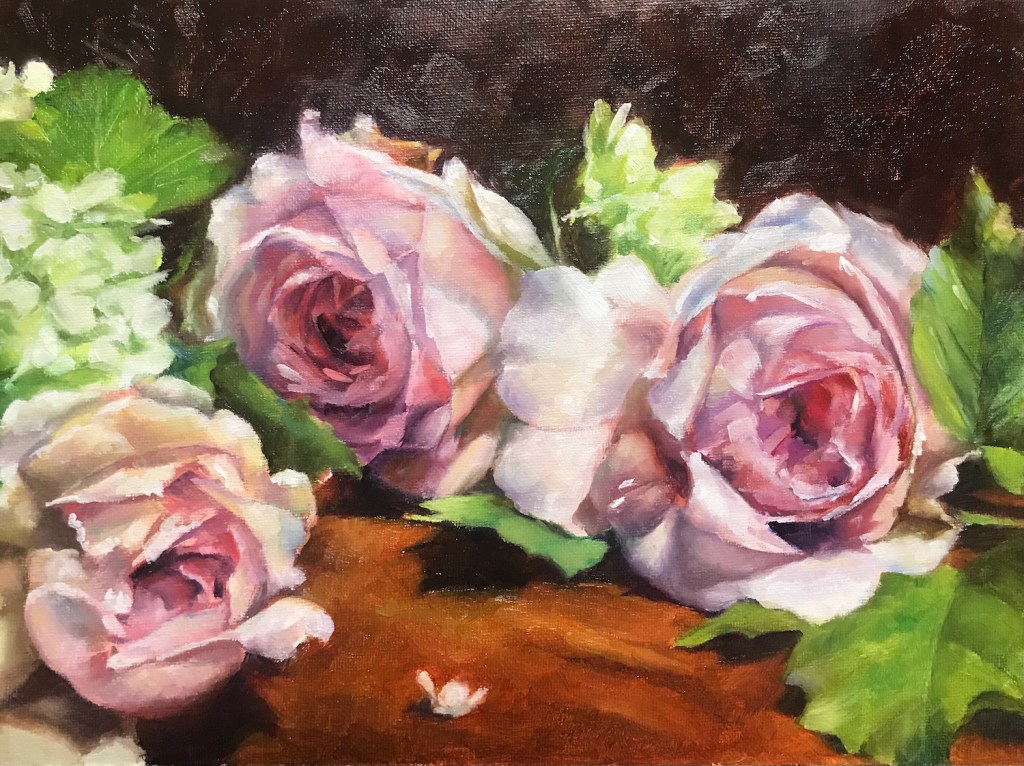
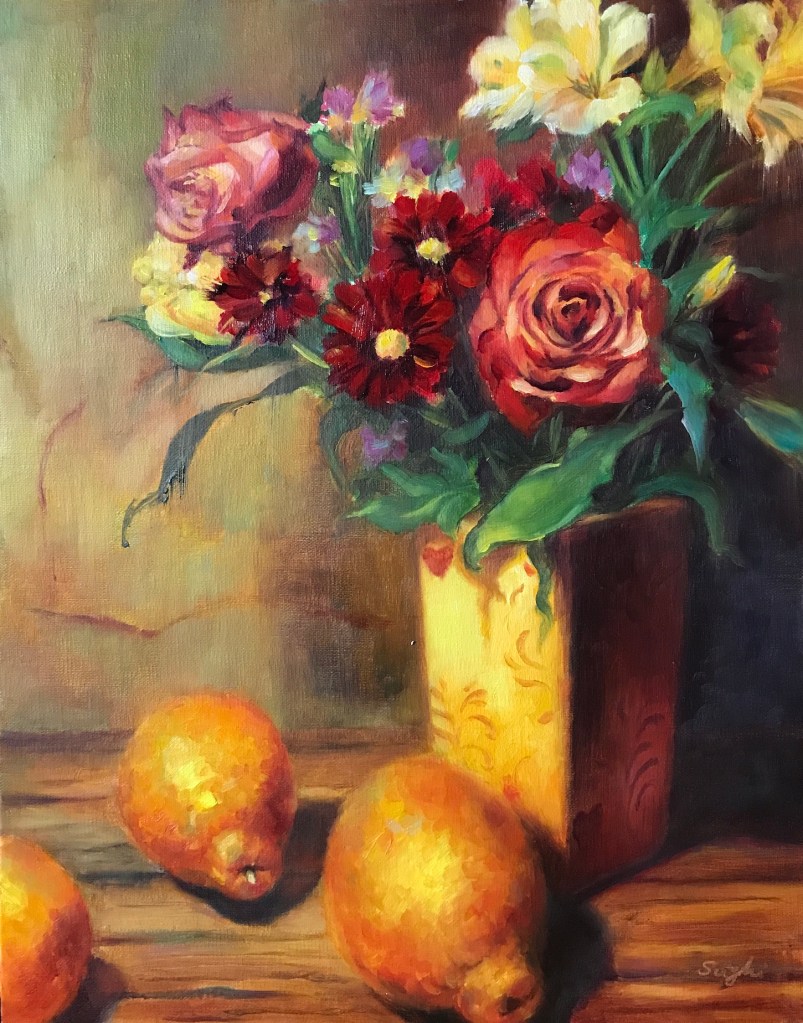
Late 2022 I started a few personal projects that were build upon whatever I learned at Watts. The plan was to start with some small paintings of florals, eggs, jars etc., and gradually grow into bigger more complicated arrangements.

I am happy to report that for the most part, I have been on schedule. Here are the florals I have done so far, and I hope they are proper celebration for the New Year and the Spring Festival:

Peonies, oil on canvas, 9 x 12 in. 2022
Sumo Oranges and Flowers, oil on canvas, 11 x 14 in, 2022
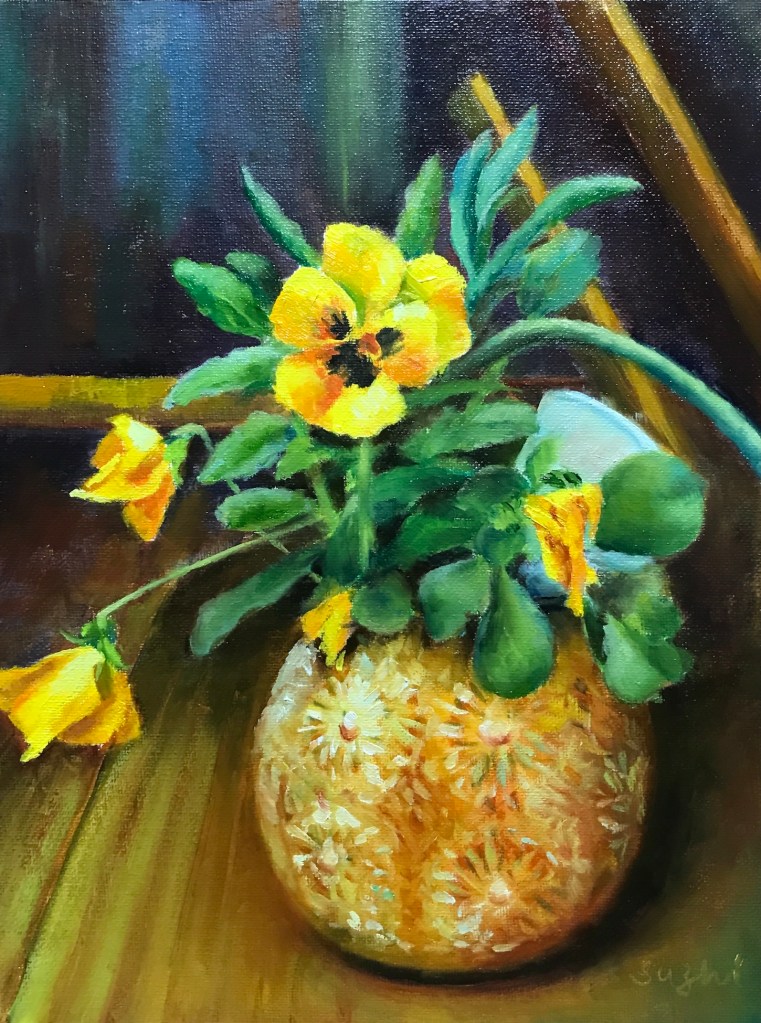
Flower Pot, oil on canvas board, 9 x 12 in. 11 2022
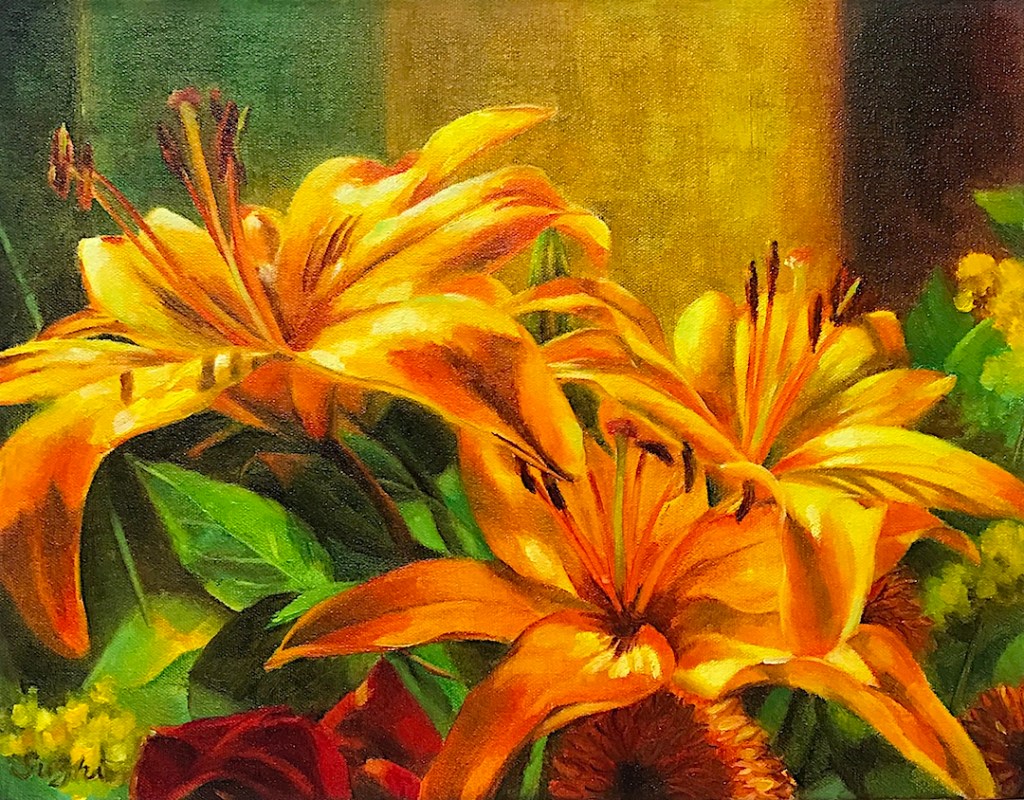
Lilies, oil on canvas board, 11x 14 in, 12 2022

Stay tuned for the eggs and jars! 🙂

Portrait of Abby and More

In early 2021, I audited an online workshop by artist Joseph Todorovitch (see a brief description here). At the time I felt the content was too advanced for me. It may still be. It came to my knowledge recently that the artist had a more fundamental series in 2020 called “Painting the Portrait with Ease.” It is a nearly 9 hours video series featuring step by step painting of the portrait of Abby. You can buy or rent (for 48 hours) from Vimeo.

It is more fundamental because the portrait involves no complex background and clothing, and the palette is limited (not as monochromatic as it seems though). The “ease” part comes from the artist’s clear explanation of his choices and thought process. If you are looking for shortcuts circumventing learning and practices, there’s none. In fact the artist’s approach is quite meticulous and laborious. He shows no hesitation in scraping off the “finished” part of a painting and going at it again. While there are plenty basic information on portrait painting for a student, the process he used is the same for completing advanced works. This is a series that deserves revisit from time to time.

Here’s the painting I did while following along the series:

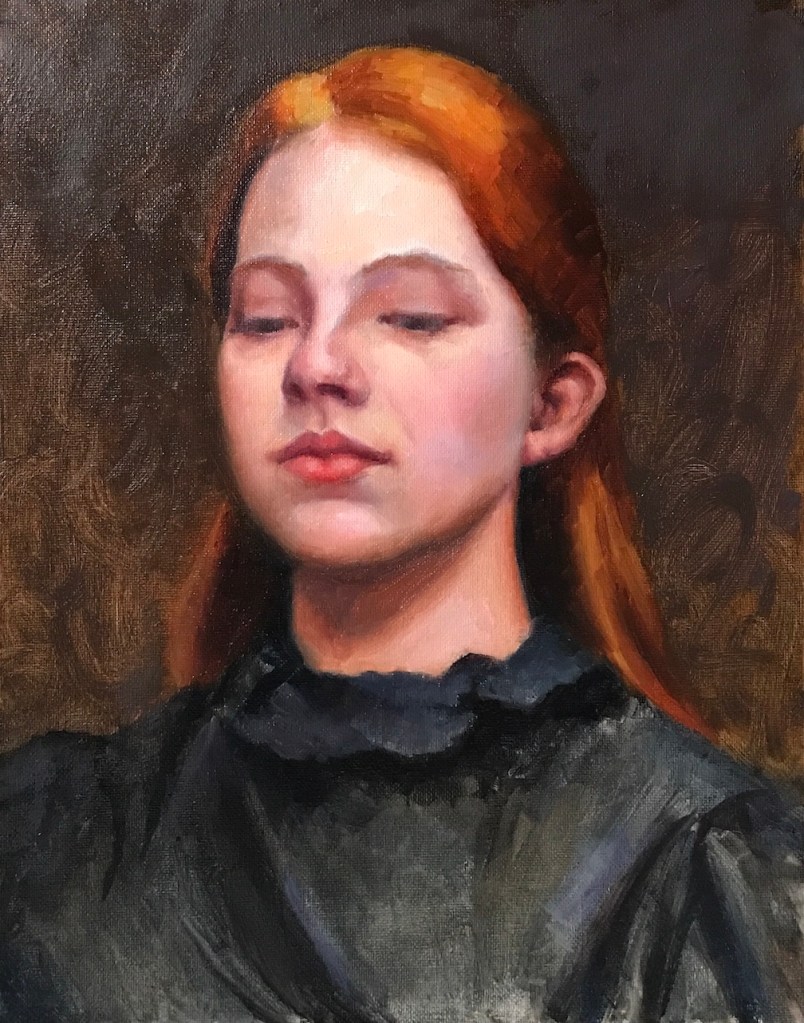
Abby, 16 x 20 in, oil on panel, November 2022

Another young artist I took lessons from recently is Alex J. Venezia. The lessons are a 12 hours video recording from East Oaks Studio, featuring also the portrait of a young woman. Mr. Venezia used a layered approach, and the videos were recorded over weeks. If you want to follow through, you need to be patient and let the paint dry in between. The artist is also extremely particular about the subtle changes of value and color in his paint. I feel like I need a better habit of organizing my palette and more practice in mixing colors to make the best out of these lessons. The painting I did during this series is a not a step by step following along and is abandoned halfway. I do plan to revisit the lessons in future:

Portrait of a Young Woman, 11 x 14 in, oil on panel, December 2022

A few more words on East Oaks Studio: While you do need a subscription to access the above mentioned videos and many other recorded and live lessons, East Oaks has plenty free content posted on their YouTube channel. They feature quite some established working artists. It’s a rich resource that takes time to digest.

Our turn, finally …

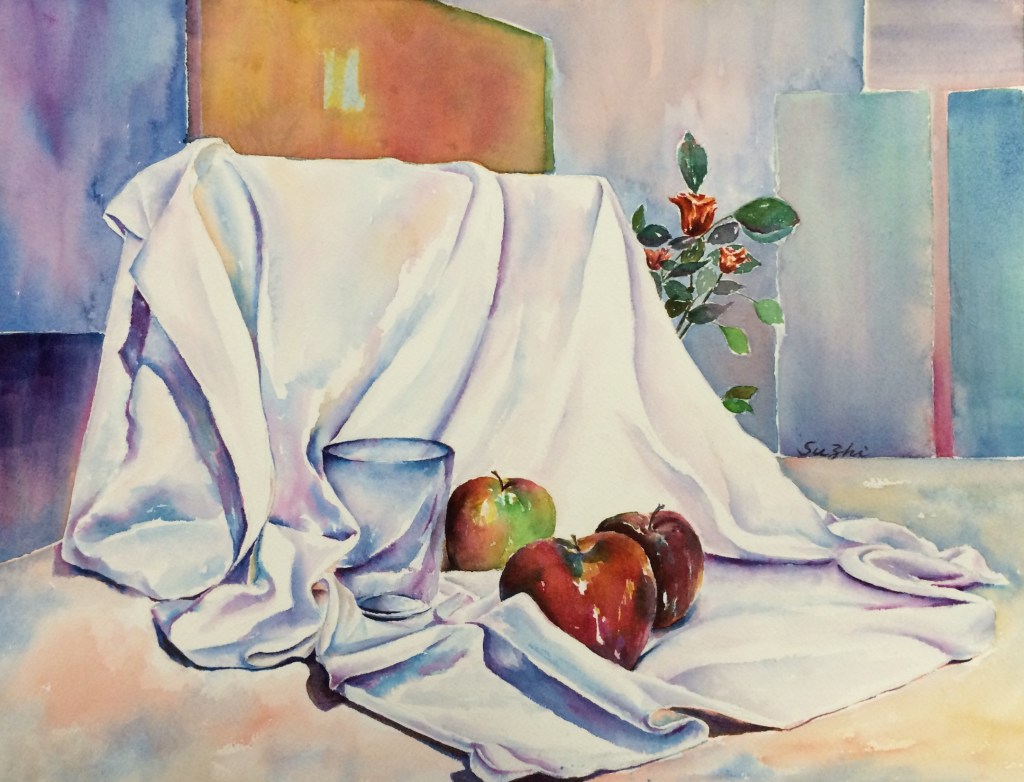
Years ago in a watercolor class, we practiced rendering glasses by choosing from a couple of setups. I got ambitious and turned the practice into a full painting:

Still Life, watercolor on paper, 14 x 20 in, c2015

The roses were supposed to be a different setting, and I didn’t choose it because I thought apples would be easier. However, in composing the whole piece, I thought the glimpse of the flowers would be interesting. As you can see, I indeed didn’t know how to handle those petals and leaves back then, but I think they added liveliness to the scene. I remember some fellow artist commented, “The roses are saying,’We are here! Our turn! Our turn!'”

Recently when looking through some old reference photos, I was surprised to see that I actually took a few shots of the roses at the time. Hence, their turn:

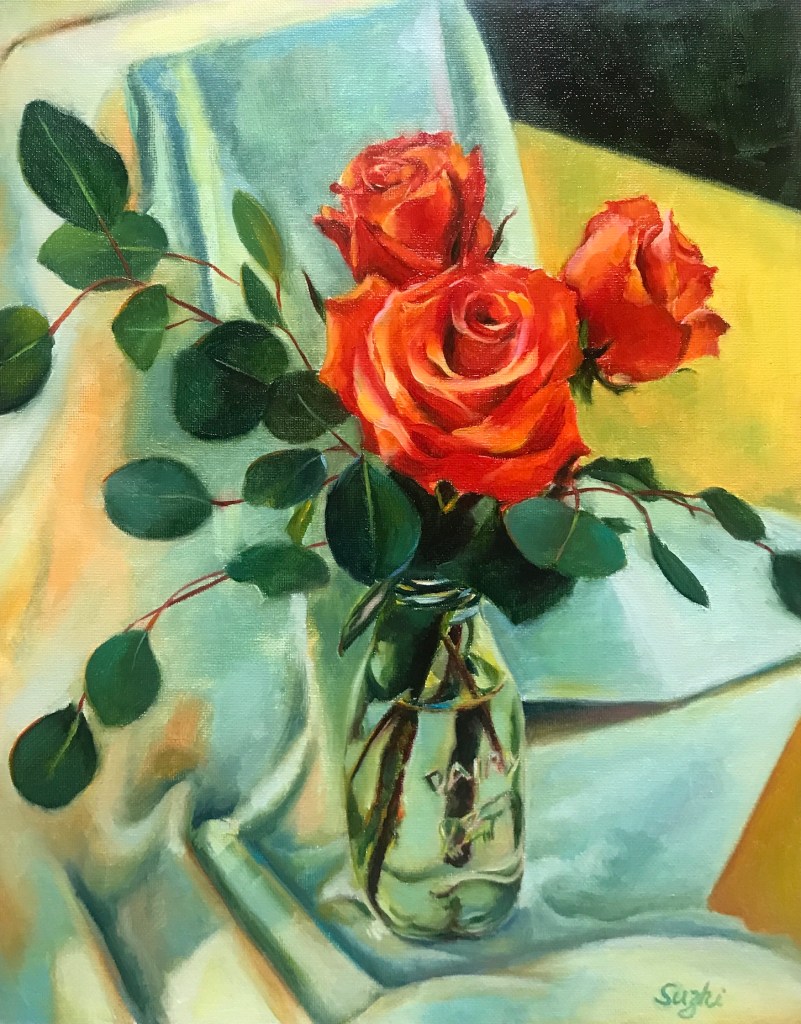
Red Roses, oil on canvas board, 11 x 14 in, August, 2022

Hehe, the petals and the leaves are still challenging, but I feel they are happy to be in the spotlight!

The Still Life Batch (1)

Speeding things up …

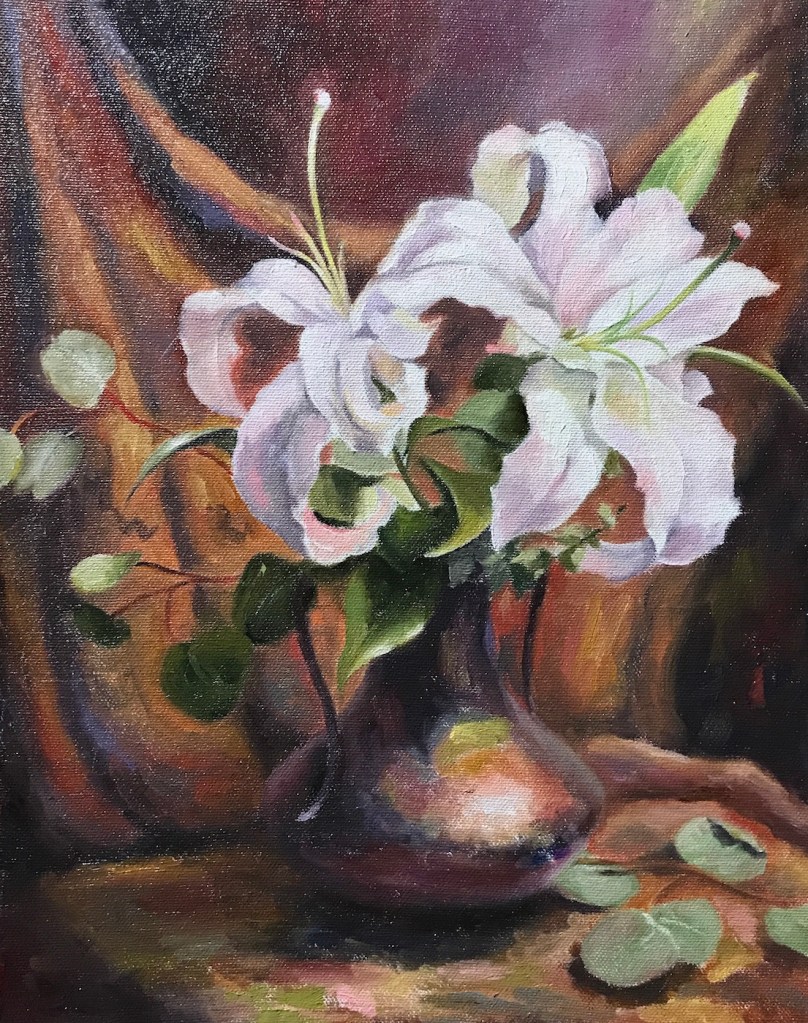
Lilies, oil on canvas board, 11 x 14, 2022
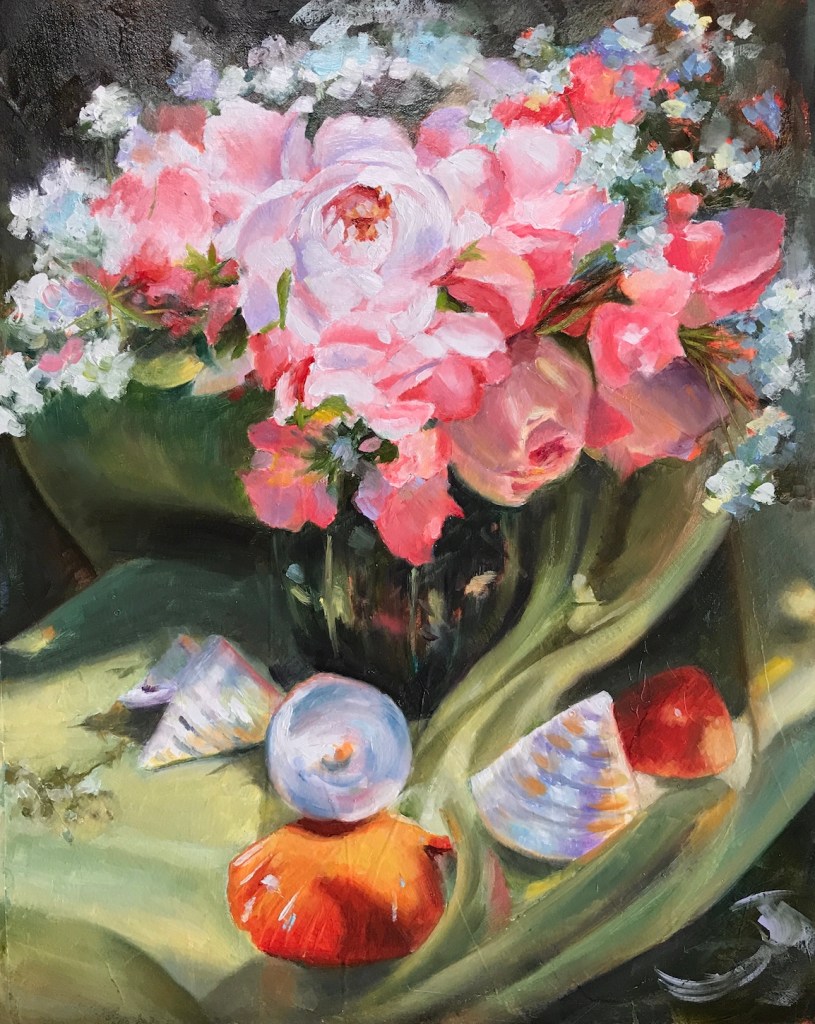
Flowers and Shells, oil on canvas board, 11 x 14, 2022
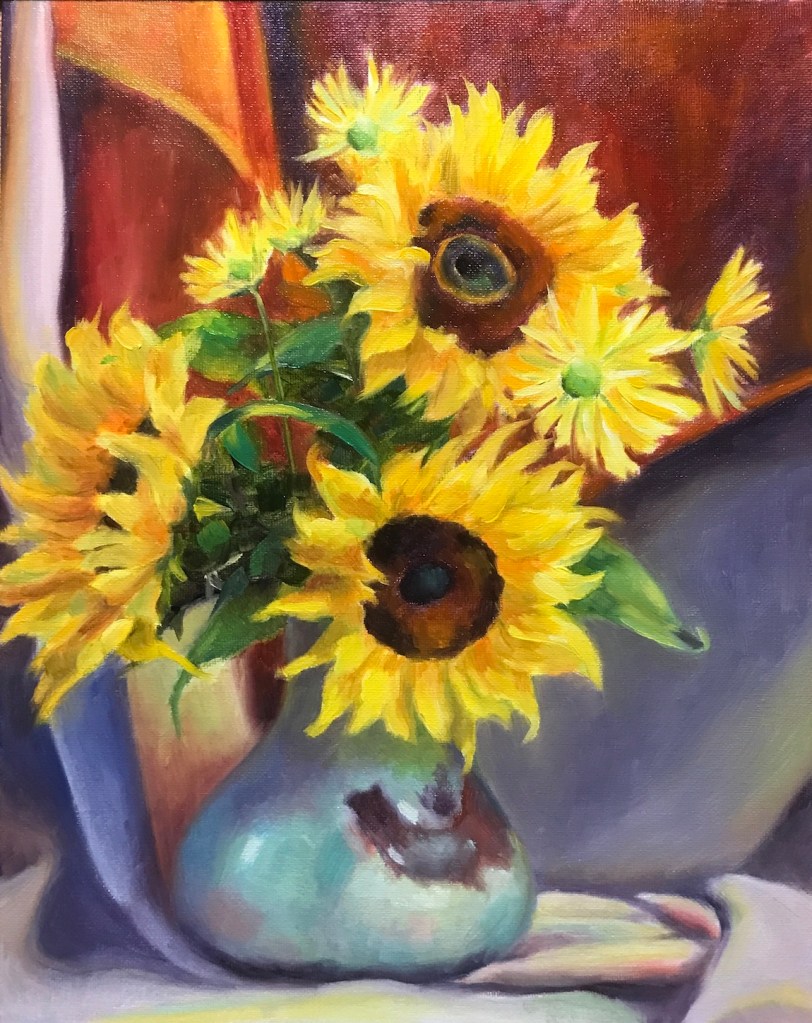
Sunflowers, oil on canvas board, 11 x 14, 2022
Still Life, oil on canvas board, 11 x 14, 2022

The first one is a Zorn palette without time limit, and the rest are supposed to be gesture with an open palette. My plan is to finish the still life course soon, and I will write more about it when it’s all done.

Show News

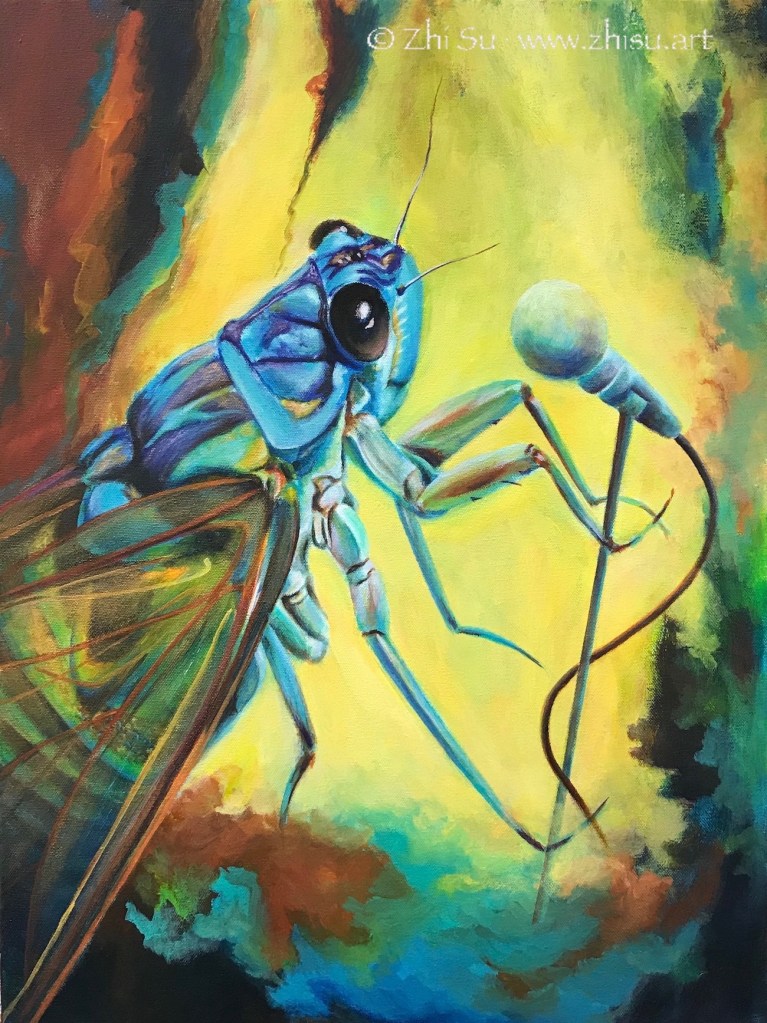
I am not a particular fan of insects, but the sound of cicadas is a constant in my childhood memory. Summer time in Beijing when the city was still haze free, kids with long bamboo sticks were searching for cicadas in the canopies of trees. The molt makes good ingredient in traditional Chinese medicine, probably for treating cold. When I first saw the picture of a blue cicada I was delightfully surprised. I never knew cicada could be this pretty. The ones we had in Beijing were black and brown. Yet, we all romanticize our memory, don’t we?

Acrylic painting of Blue Cicada with a microphone
Sing, acrylic on canvas, 18 x 24 in, 2020

“Sing” participated the annual show at the Pacific Art League last year and this year’s Santa Clara Valley Watercolor Society‘s annual show (accepting all water media now).

“Summer Dream,” which currently on view at the Pacific Art League gallery, was inspired by two of my previous pieces. The design came from “Marching” (not obvious, I know, long story still developing), while the color theme “Landscape.”

Summer Dream, acrylic on canvas, 22 x 28 in, 2021

By the way, naming the artwork is probably the hardest part of the creative process, at least for me. While “Sing” may be self-evident, it was still an afterthought. As for “Summer Dream,” hehe, I grabbed it out of nowhere the minute before submitting it for the show, and had to check the register sheet to remember what it was when I brought the artwork in. 😂

Colors Getting Loud

These are some of the portraits I’ve done recently. Palette wise I have pretty much opened myself to everything now:

Japanese Girl, oil on canvas board, 11 x 14 in, March, 2022
Male Model, oil on canvas board, 11 x 14 in, March, 2022
Female Model, oil on canvas board, 11 x 14 in, April, 2022

Here’s an old Zorn palette one:

Female Model, oil on canvas board, 11 x 14 in, December, 2021

A few notes:

  • The first three paintings are supposed to be gesture studies. I obviously overworked.
  • On the other hand, spending more time designing the background makes the process more interesting and the painting more finished. I like that.
  • Managing an open palette did distract me from better value control and cost more subtlety in skin tone.
  • I am thinking a two-step approach to improve: first spending more time preparing the palette – premixing most of the colors like I did with the Zorn palette; and then use a timer to push for a more gestural result. Two hours? Three? 🙂

Master Studies – Facial Features

It’s been a while since I did any master studies, and luckily the Watts’ program forced me to catch up. Here are some of the facial features I copied recently:

Eyes – Fechin

Nose – Rembrandt

Lips – Leyendecker

Ear – Bouguereau

A few notes:

  • The reference photos I used are provided by Watts Atelier, and some of them are not very close to the original. For example, I believe the last one is from William-Adolphe Bouguereau (1825 – 1905)’s Portrait de Gabrielle Cot. The original painting is high on realism. This doesn’t really affect the study though.
  • The most difficult thing I found is to re-create the texture, which is achieved by either manipulating the surface (Fechin) or brush strokes (Rembrandt). In the former case, it’s hard to guess how the manipulation was done. As for Rembrandt, it’s a laboring buildup that can’t be achieved in a few hours. For now, I am still focusing on the basics. Texture and brush strokes are like signatures. They are very personal and take long time to form.
  • I find choosing a topic and taking a small portion of the masterpiece to study is more effective than copying a whole painting. I also like the exposure to different styles. Bouguereau and Leyendecker are completely new to me and I find the highly stylized approach from the latter very refreshing.