Tag Archives: #midjourney

Petal Progress Continued

July kept the floral theme in my studio, with petals and my learning progressing. 

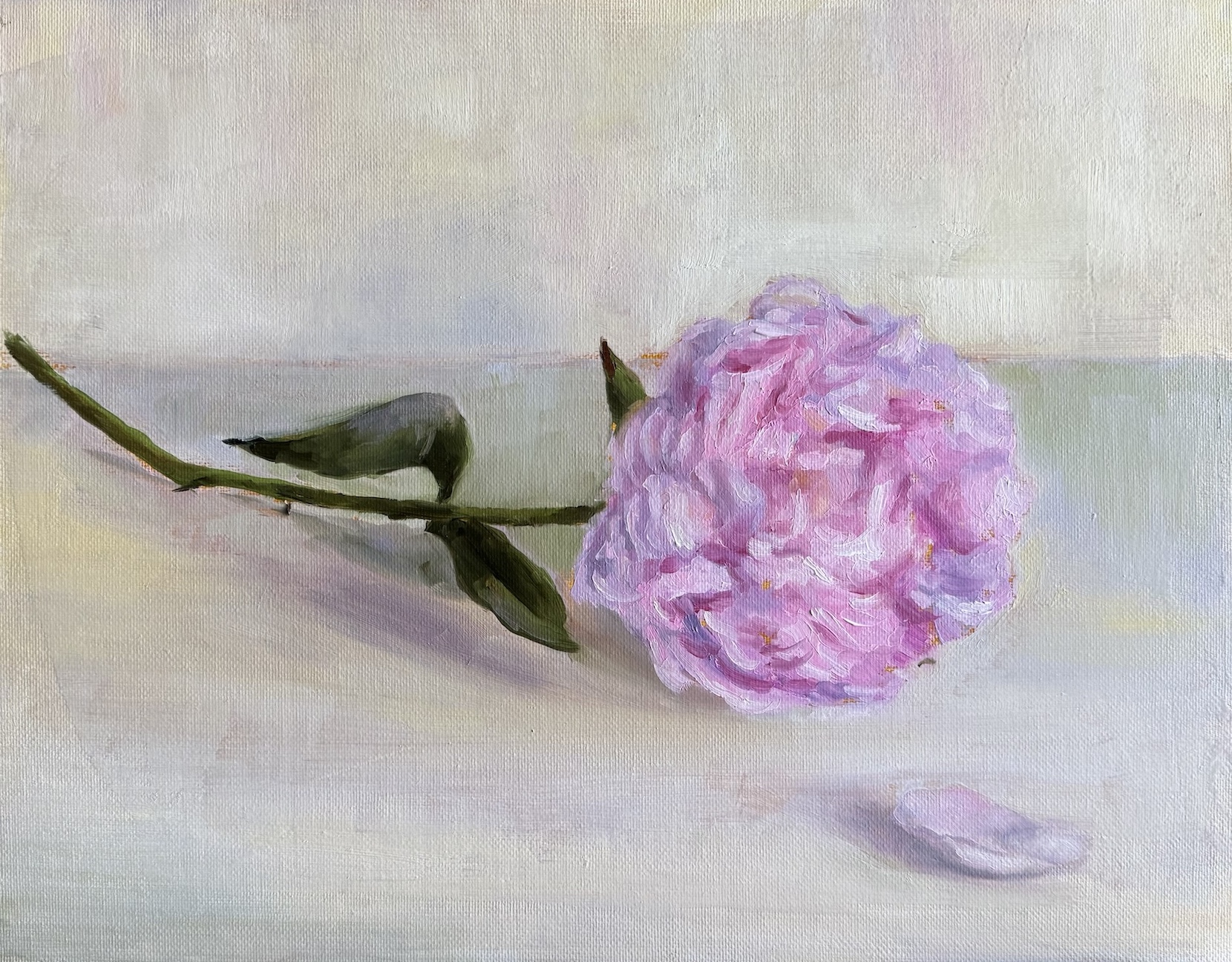
First up, I tried my hand at a peony. As I have mentioned before, Michael Klein is a big influence to me in the floral adventure, and peonies are featured in many of his creations. Those fluffy blooms look dreamy, but they’re a nightmare to paint and arrange. Petals were numerous and messy, dropping faster than I could arrange them in any manageable shape — whether in vase or on canvas. Soon I gave up my grand vision of a complex still life, and managed a simple single flower sketch.

Peony, oil on canvas board, 11 x 14, July 2025

To comfort myself afterwards, I moved back to roses, a familiar subject. I thought a Trompe l’oeil (French: deceive the eye) would make the painting of a single rose more challenging and fun. The idea was basically a hyper realistic painting. Getting the shadows and texture just right was trickier than I expected. My rose still looks like a painting. Here I have a better understanding of why people always say you don’t paint exactly what you see, even in a realistic painting. I used ambient room light in my setting, and the rose was largely in a unified color. To make it “pop”, I need to accentuate the value contrast, vary the saturation, and better define the edges. To make it look real, I need to invent the reality – how ironic! As you can see, I didn’t go through these steps. I am not entirely sure I have the skill to reach the final goal, and honestly, I like the painting as is now. Sometimes you call it done and move on.

Yellow Rose, oil on canvas board, 9 x 12, July 2025

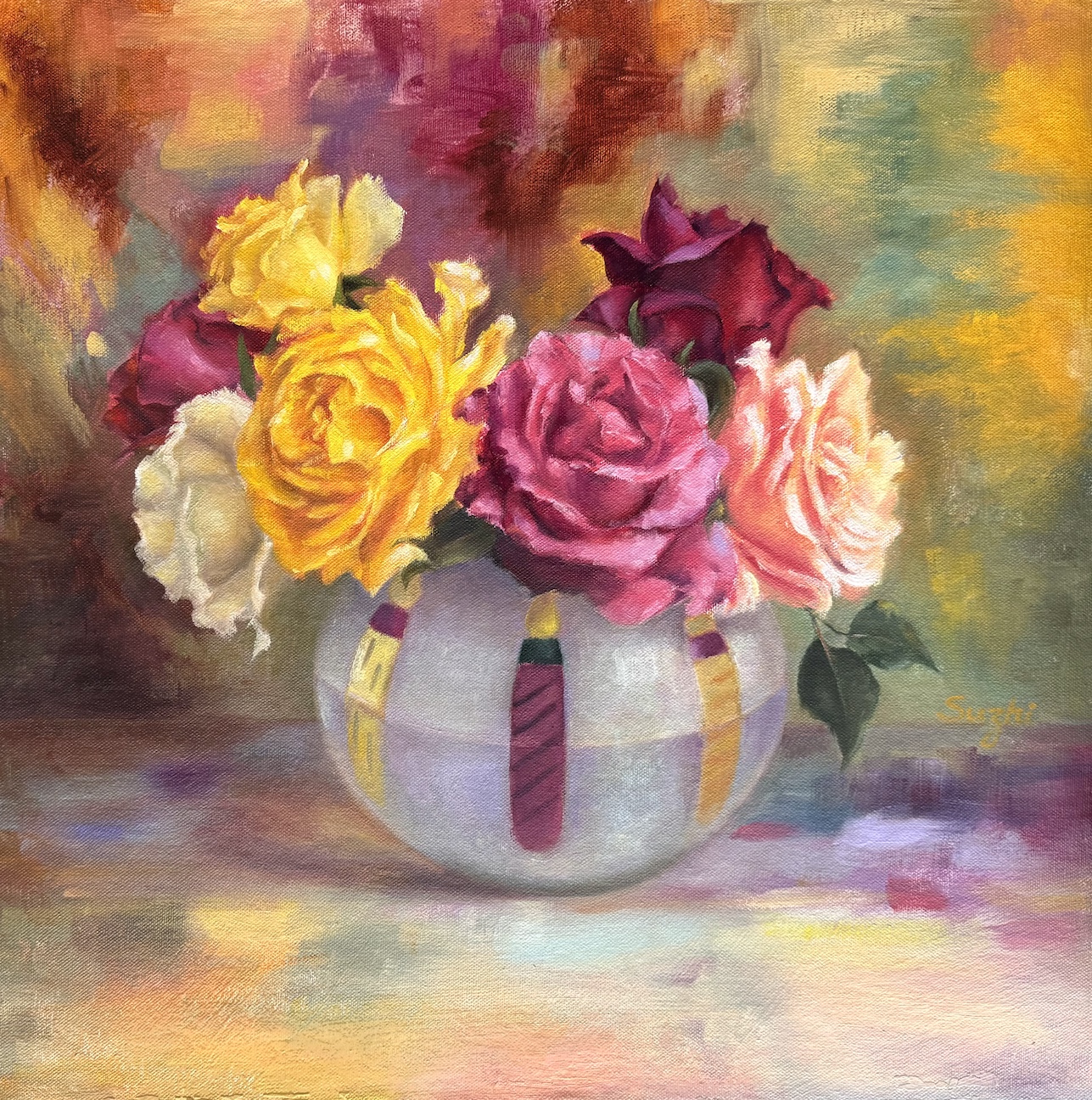
Next came a colorful bouquet, and my strong desire to paint something vibrant. In setting up the reference, my first thought was a dark, solid background for contrast. It worked, but it felt too safe. Leaning into the chaos, I draped a multicolored scarf behind the bouquet. I painted the scarf and surface in an abstract style, playing with saturation and value to keep things lively but balanced. 

Colorful, oil on canvas board, 18 x 18in, July 2025

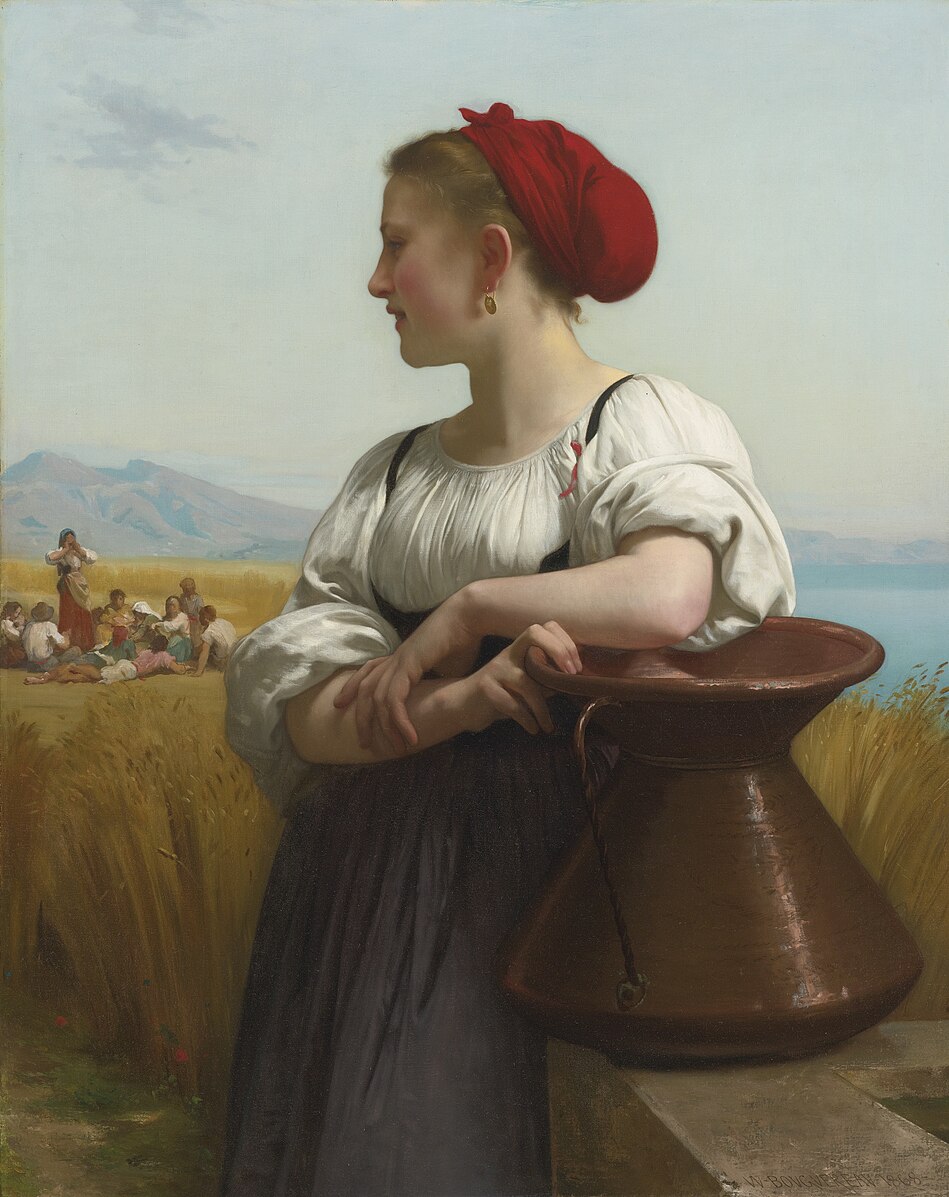
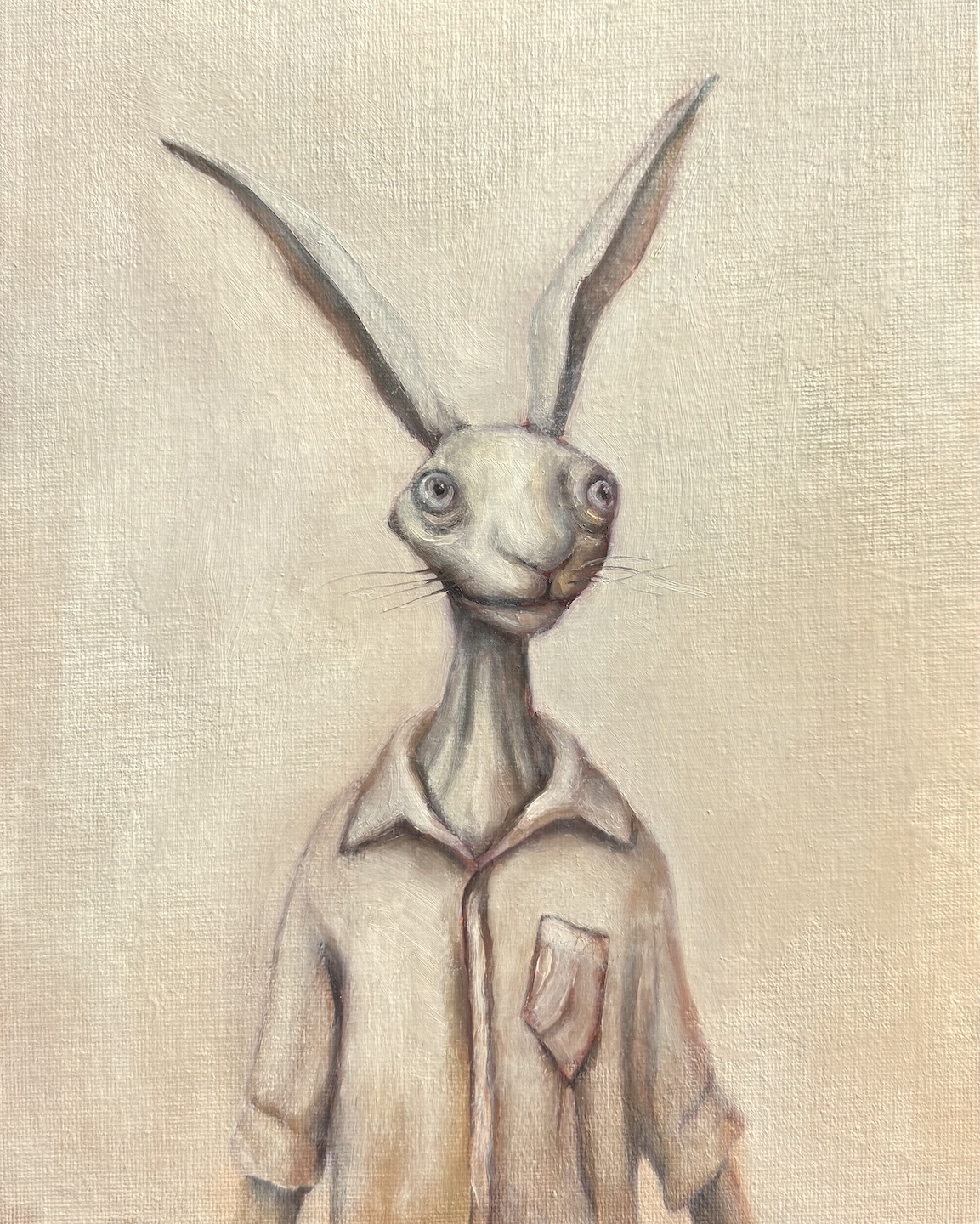
Between these floral adventures, I did a partial study of a Bouguereau painting. I’ve always admired his delicate and subtle handling of human faces, and this is also a study of handling backlighting. The softness is achieved through close value and gentle brushwork. When the entire face is away from light, the values are further condensed – something I still need to work on. I also painted a “selfie” as an alternate character—don’t ask. I was hoping for a Morandi-ish low-chroma tranquility… or, a quirky experiment in calm tones.

Selfie, oil on canvas board, 8×10 in, July 2025

Lastly, MidJourney has pushed out video generation in recent months, and now you can upload your own image for animation (see the painting for the first video here). Like these:

Don’t laugh. The bizarreness comes from my own skill issues – both in painting and in prompting. Look at the shadows in the second video, that wisdom wasn’t from me. There are millions of fantastic generative videos out there for us to see the potential of extending and alternating the life of our paintings. Always more things to experience and explore!

The Making of a Still Life Painting in Times of AI and More

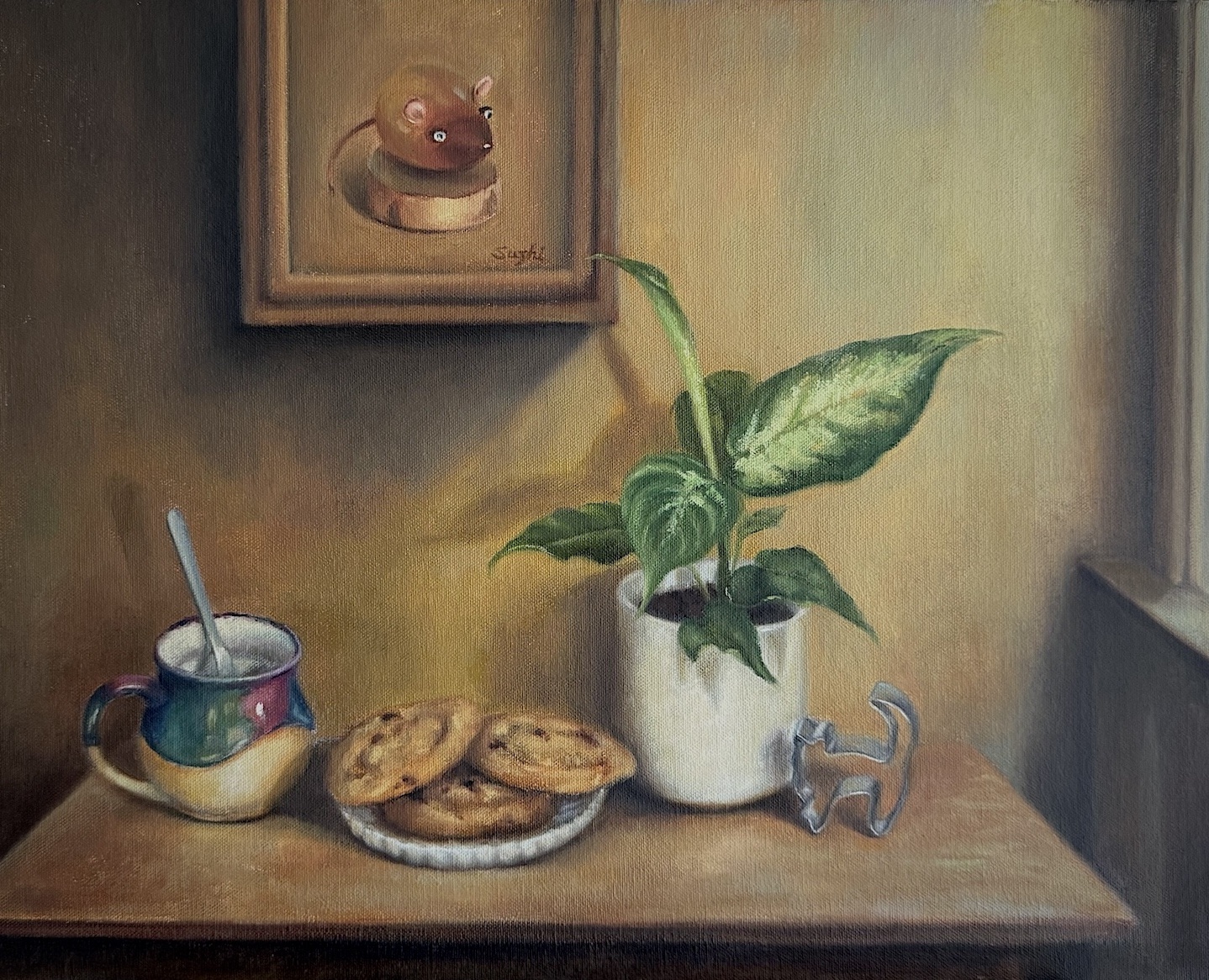
I don’t know what sparks the initial idea for a painting in other artists. For me, oftentimes, it has nothing to do with art. As someone genetically at high risk for diabetes, the only way I could justify buying a bag of cookies was to tell myself, “I’m going to use them in a painting!” 

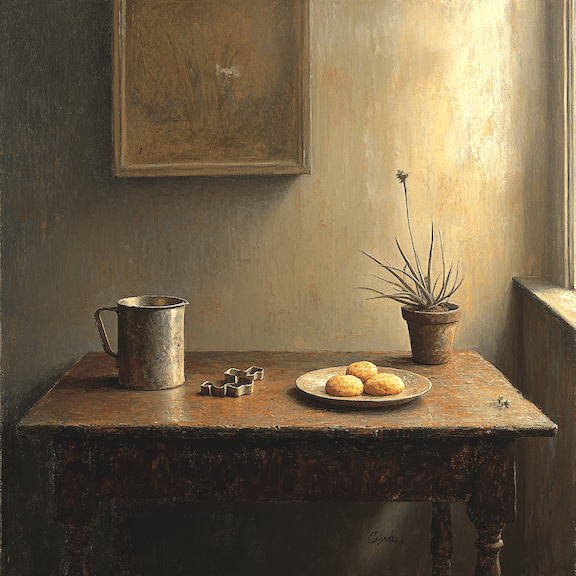
And so it began. Adding a few related items – a cookie cutter, a mug, a wooden table -I threw the ingredients into the AI pot of MidJourney. Among the results it generated, one caught my eyes. 

MidJourney v6.1

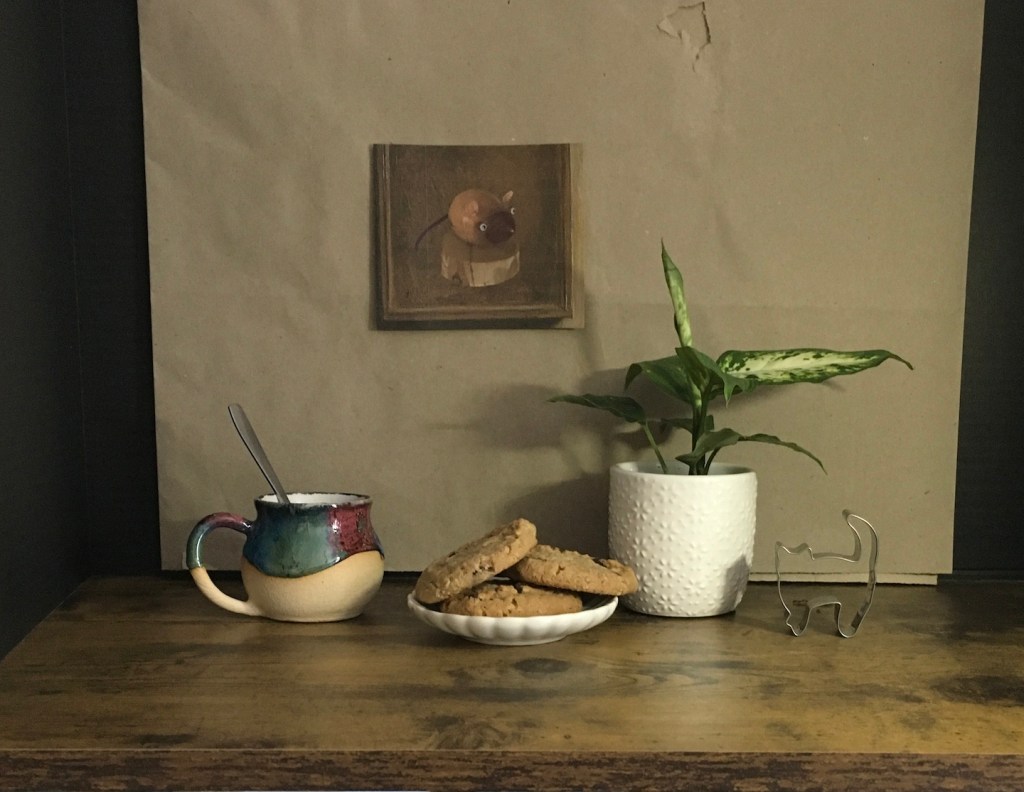
Using it as a guide, I set up my own reference: a small plate to hold the cookies, the new mug I just acquired from a craft show, and a potted plant I picked up from Home Depot. However, I didn’t care much about the background I devised. Why didn’t I just borrow MidJourney’s! I liked the idea of a painting hanging behind the objects, but I didn’t want it to feel generic. One of my cookie cutters was cat-shaped, so to add some fun, I featured a wooden mouse in the painting. The mouse is my zodiac sign, and the little wood carving was a gift from my daughter. This is how a still life became a self-portrait! 

Photo of my setup

When mixing reality with “fantasy,” lighting is the tricky part. I placed a light source on the right, but whether it replicated the effect in the AI-generated image is a question mark. Whether the lighting in the AI generation was accurate to begin with is an even bigger question mark. I decided to make the painting less about light and shadow!

After the plant’s leaves grew bigger and shifted positions, and after the cookies were replaced several times, I finally completed the painting.

Cookies, oil on canvas, 14 x 18 in, April 2025

The cookies were actually durable enough, but how else could I nibble an entire bag away without guilt? Though the painting is not strictly realistic, its atmosphere and staging accurately reflects my mood during the process. The objects were dear to my heart and the whimsical dynamism is quintessentially me. I’m grateful to live in a time with more tools to find inspiration and support in creating art.

PS: 

MidJourney has come a long way since I first used it, and I recently ran another comparison test by revisiting some old prompts. (Please see my first and second tests. )

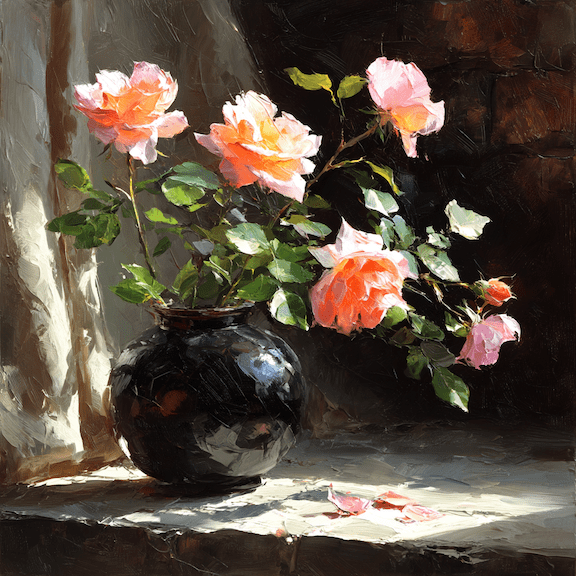
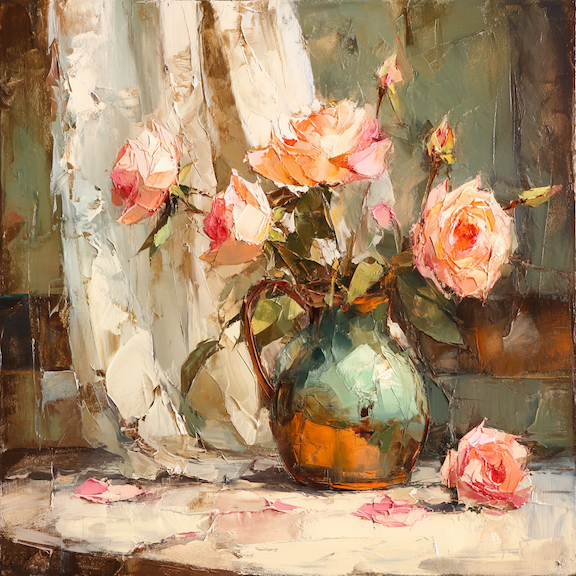
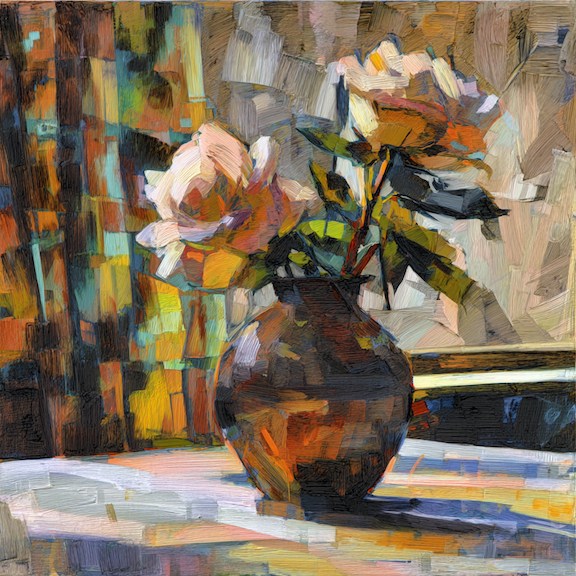
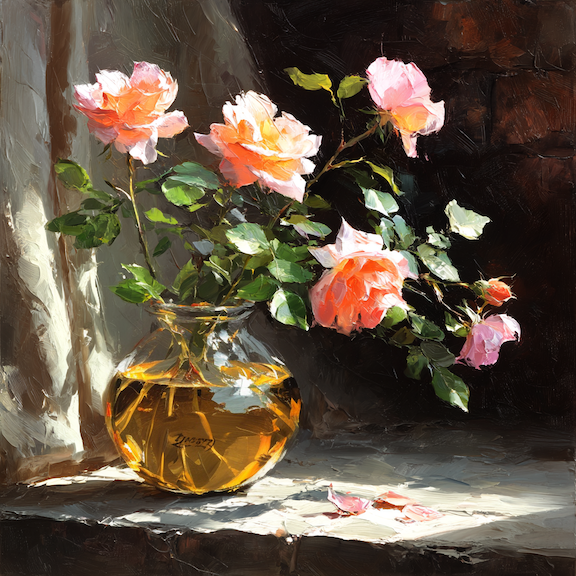
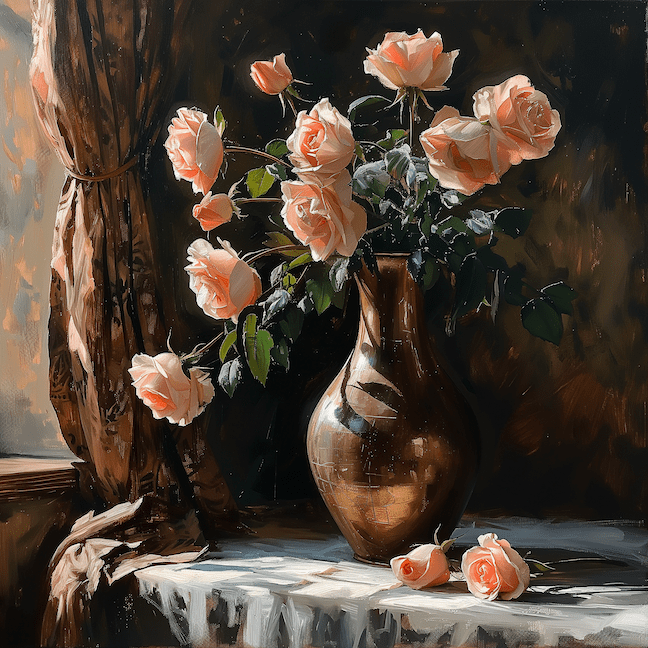
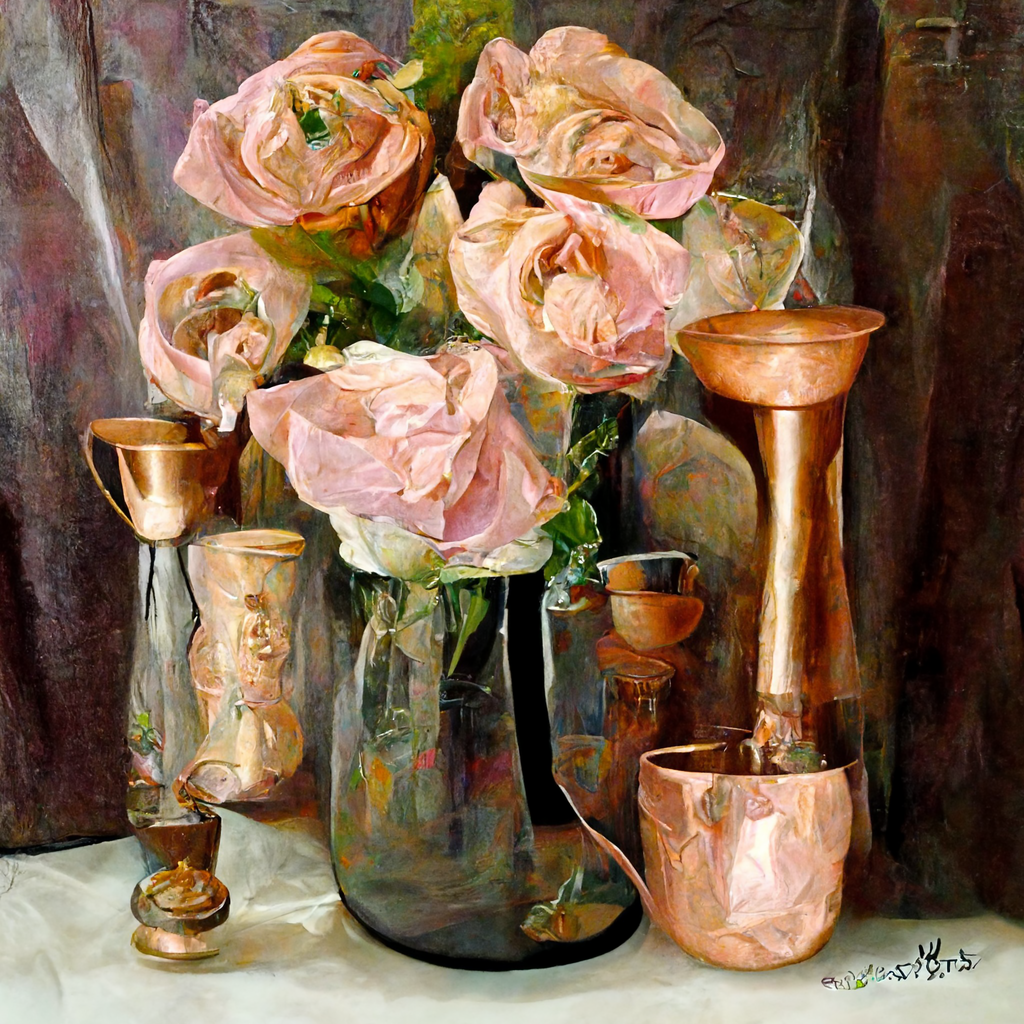
For “oil painting, still life, bronze vase, light pink roses, curtain, table, realism, expressive strokes, zorn palette,” now I got these:

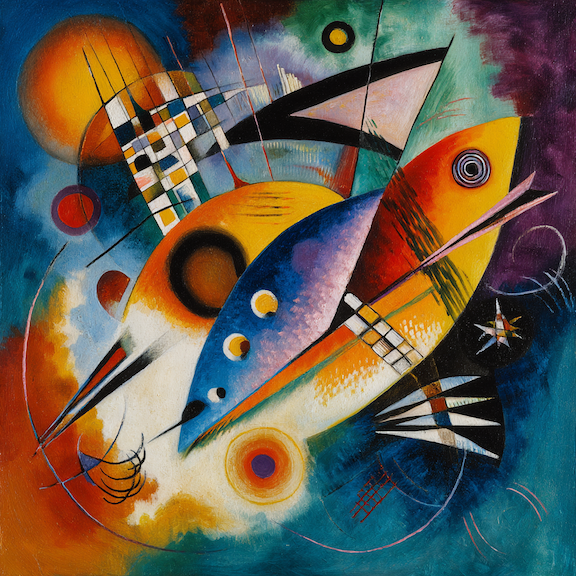
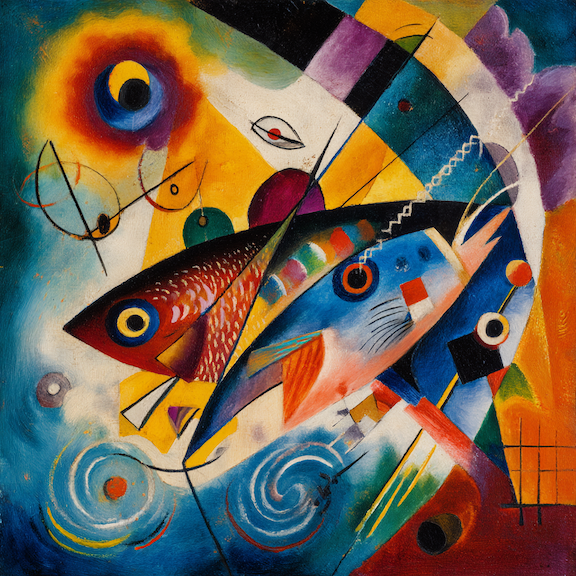
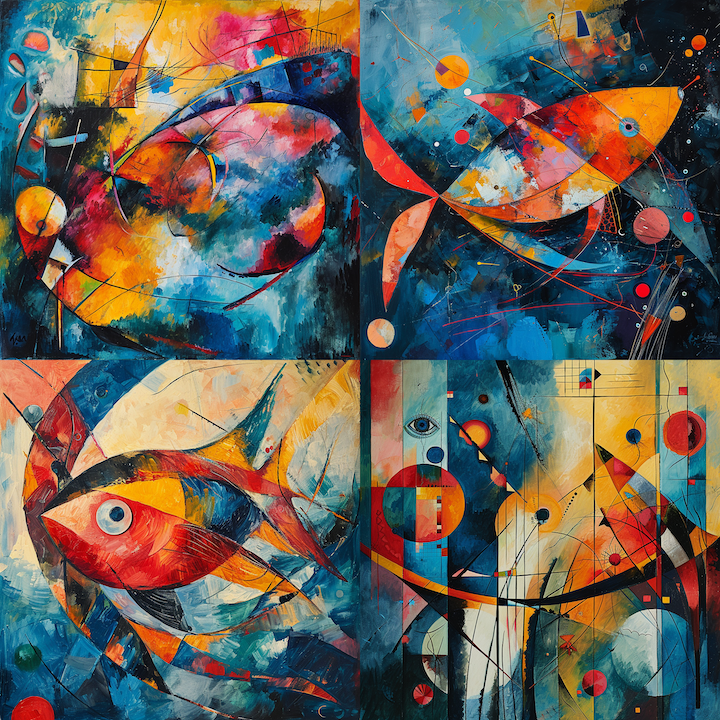
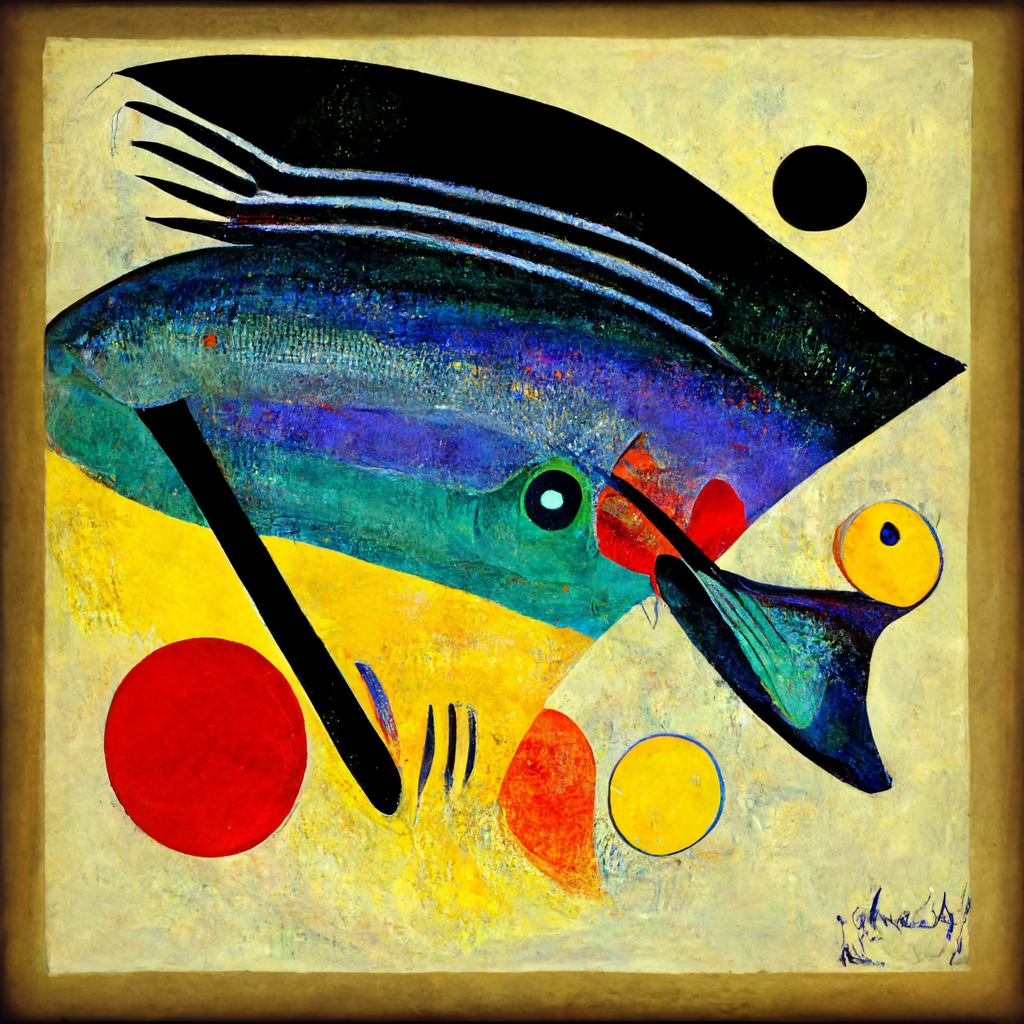
For “kandinsky with expressive bold strokes, fish, abstract colors:”

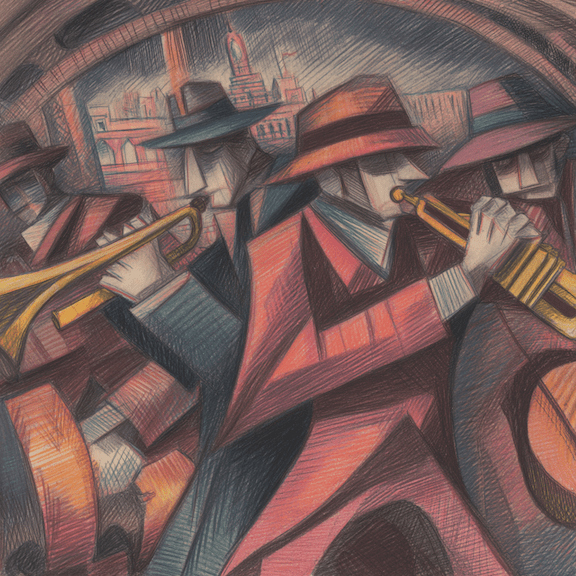
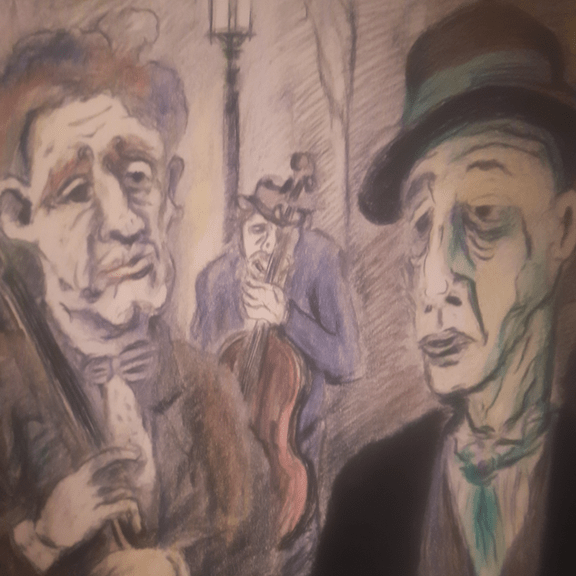
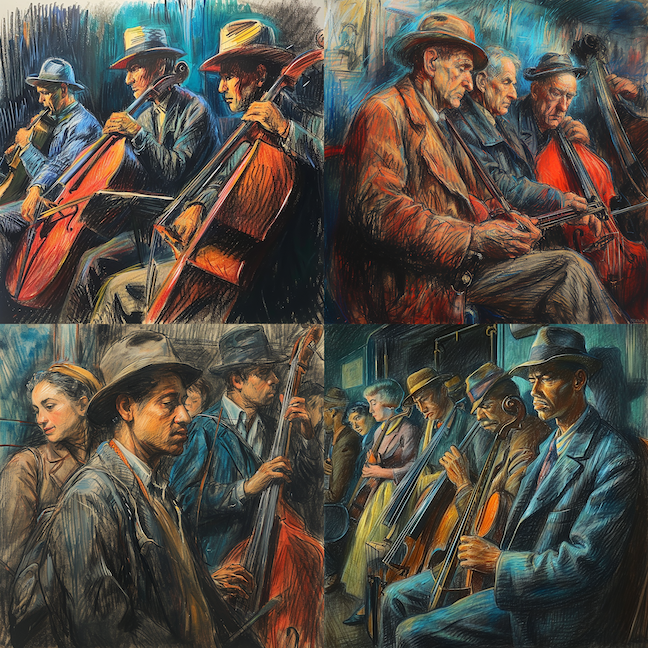
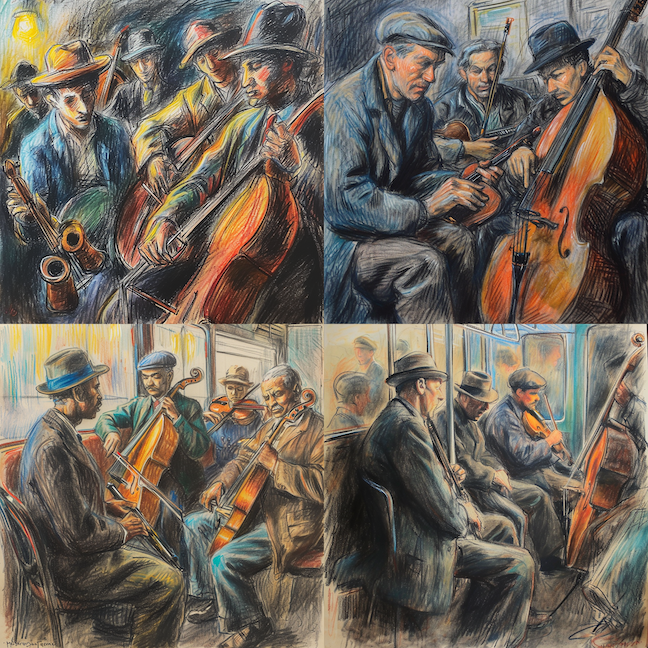
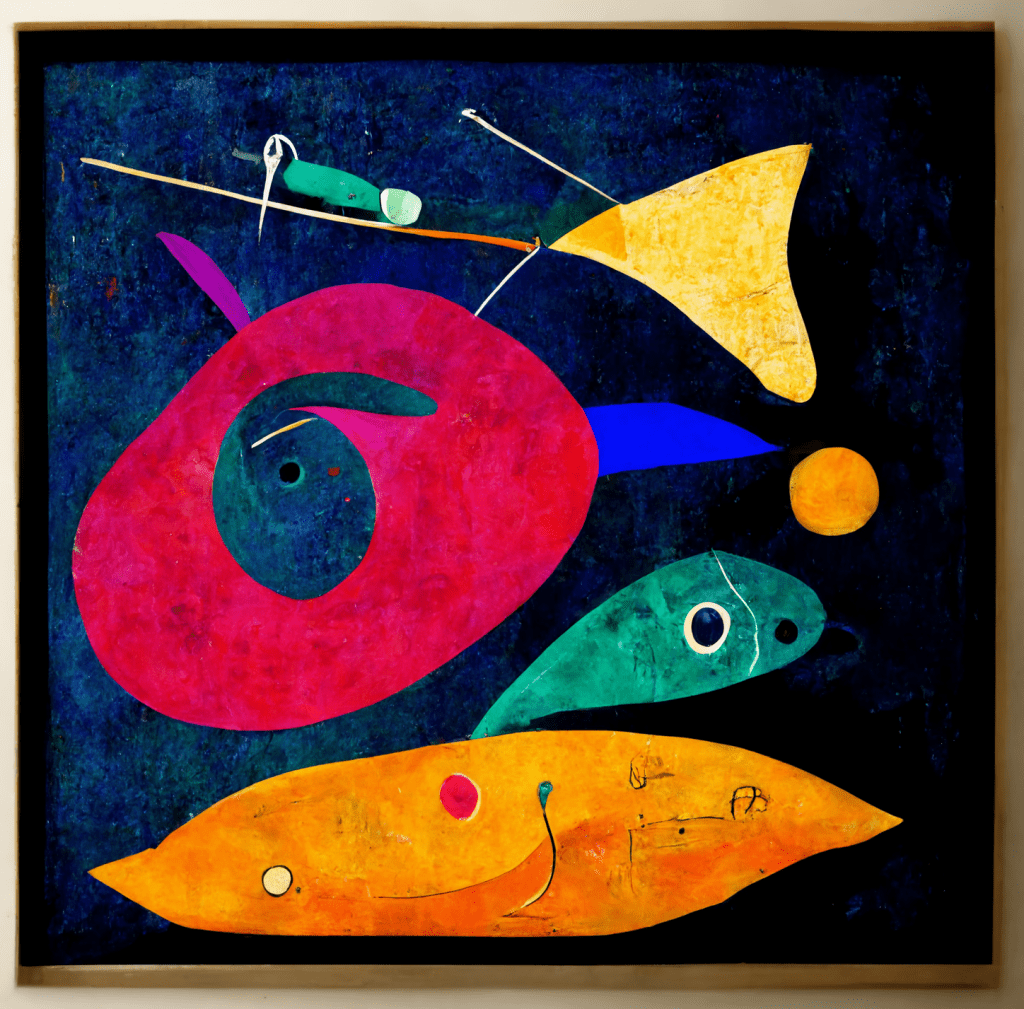
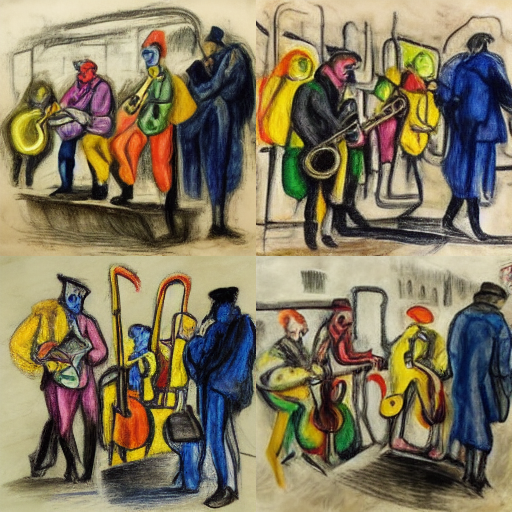
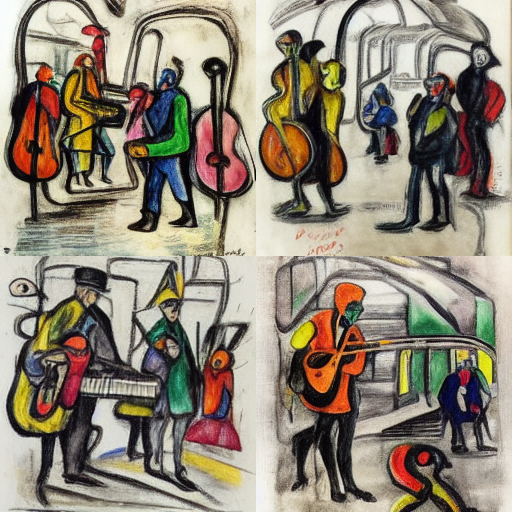
For “André Masson drawing, colored pencil, street musicians, metro, gloomy:”

This isn’t entirely a fair comparison because, as the model becomes more sophisticated, there are more ways to manipulate prompts for varied results. If you are willing to spend some time rating images, MidJourney builds a profile of your preferences, so the results start reflecting your taste, to some extent, regardless of the prompt.

with my profile added

You can also add style references to prompt for more control over the generated style:

You can even edit the result to your liking – not quite Photoshop yet, but the result can be wild. 

replaced the vase with a glass one using MidJourney Editor

What’s interesting is that, when comparing the Kandinsky and Masson results, it’s not always clear that the newer models are better.

Master Studies and Some More

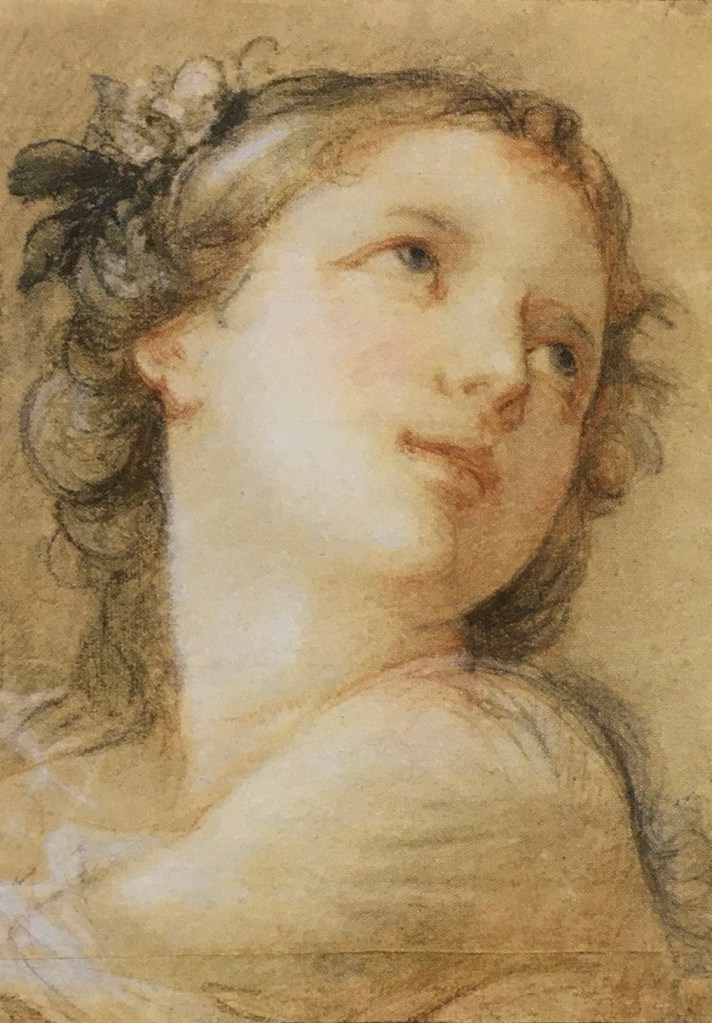
Charles-Joseph Natoire (1700-1777), a prominent French Rococo painter and draftsman, was celebrated for his decorative paintings, mythological scenes, and religious paintings. Natoire was one of the artists who helped popularize the use of pastels in the 18th century. He often employed delicate pinks, blues, and greens to create a light, airy atmosphere in his works. His paintings are characterized by their pastel hues, delicate brushwork, and a playful charm.

“Head of a Bacchante” (1741) is a fine example of his mastery in pastels. A bacchante, a female follower of Bacchus, the Roman god of wine, fertility, and theatrical performance, is often depicted in art as ecstatic or in states of divine possession.  Pastel allows for a softness and blendability not easily achieved with oil paints, making it ideal for capturing the delicate features and expressions of mythological figures.

I saw this painting at the Getty Center, where I was drawn to Natoire’s emphasis on grace, charm, and a certain lightness. The luminous quality of the skin tones, achieved through soft, atmospheric light, created a sense of intimacy and warmth. His fluid, graceful brushwork contributed to the overall elegance, and a well-controlled value range allows smooth transitions between forms.

In attempting a master copy, I focused on replicating the subtle value changes. I have a tendency of using high contrast and high saturation in my own portrait painting. I hope, by compress and control the two, I could achieve a softness and luminous effect that is missing in my works. While oil paint is not as ideal to achieve this goal as pastel, I figured I would still learn a lot by pushing it as far as I could. I started a bit too heavy handed, and later had to spend layer upon layer to lighten things up, and contract the range of values. The result still felt too defined in some places, lacking the ethereal quality of Natoire’s original. Some of the airiness of the original comes from Natoire’s dancing line work, which I don’t have the skill to imitate with a brush. While Natoire captured a goddess, I painted a mortal – a lovely one, I think. 

After Natoire, oil on canvas board, 9 x 12 in. August, 2024

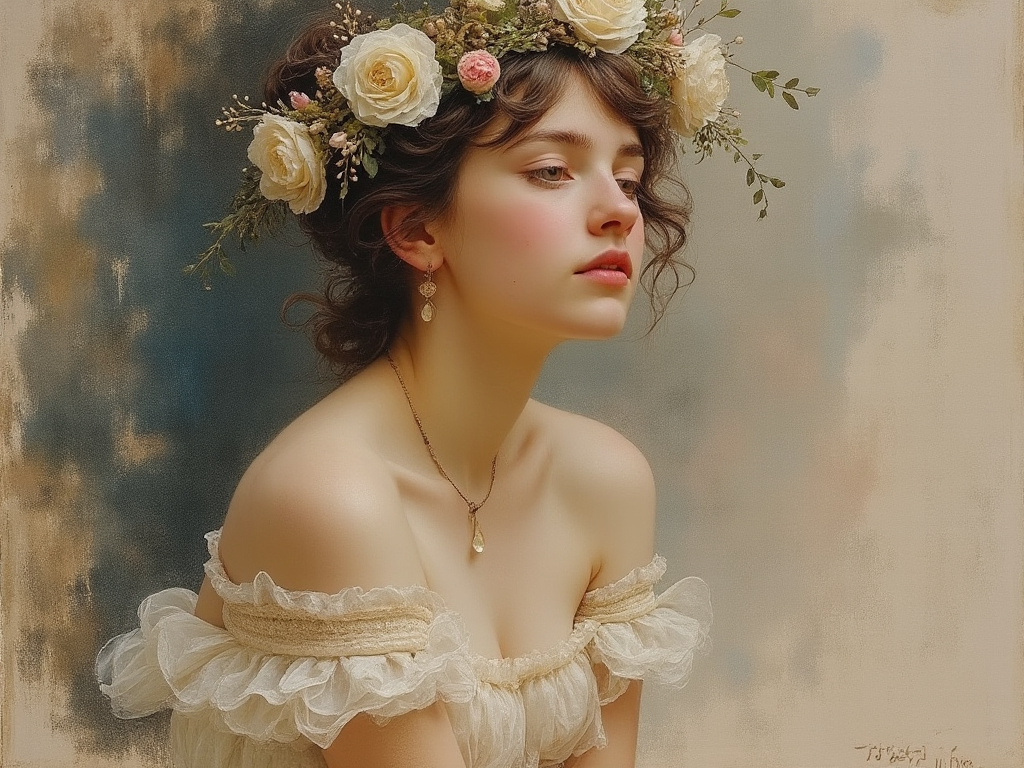
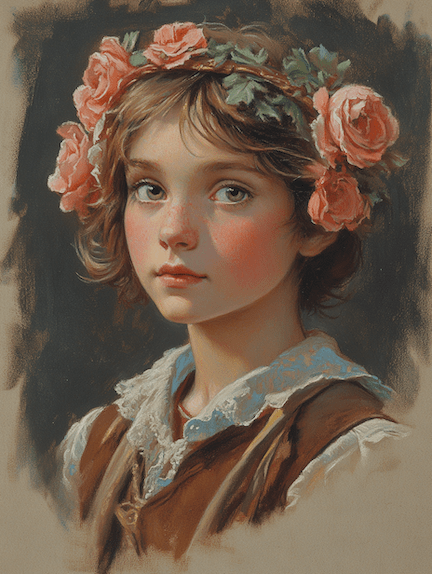
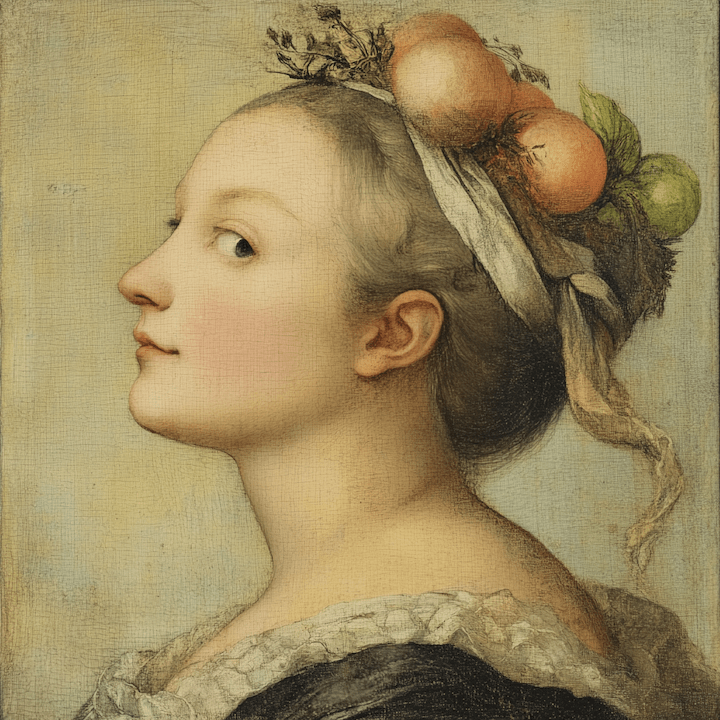
Curious about modern interpretations, I requested a pastel painting of a bacchante from both Grok 2 and MidJourney 6.1. Grok gave me a photo-realistic beauty with a somewhat painterly background. It seems Grok doesn’t respond well to traditional medium. MidJourney, on the other hand, at least attempted to emulate ‘a painting.’ 

One can also twig the many perimeters MidJourney offers to achieve varied result: 

If I provide Natoire’s original as a prompt, MidJourney could fake a couple of masterpieces:

Me and my bots, we all had fun!

MidJourney Revisited and Happy New Year!

In July 2022, I wrote a post about MidJourney AI art. That was version 3. Recently, MidJourney released its latest version 6. I thought it would be fun to check the progress of this “artist.” I ran the same prompts I used before, and these are some of the artwork it generated: 

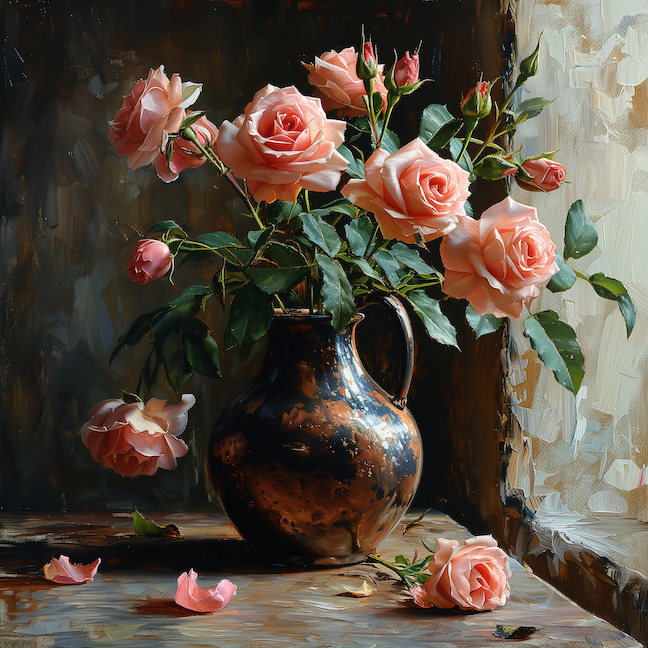
For “oil painting, still life, bronze vase, light pink roses, curtain, table, realism, expressive strokes, zorn palette:”

For “kandinsky with expressive bold strokes, fish, abstract colors:”

For “André Masson drawing, colored pencil, street musicians, metro, gloomy:”

I am not an AI artist, and there are now more perimeters to manipulate for better results. What I have here is definitely not the best MidJourney could do. However, we can still see how far it has become and the direction it goes. It has a better understanding of human language and more accuracy in rendering. If you go to any AI art community, you’ll see the strength of these tools lies in realistic and fantasy art. While it can mimic many other mediums and styles, I wouldn’t necessarily see the V6 Kandinsky and Masson pieces as progress. 

In comparison, this is what DALL-E (OpenAI) created in response to the same prompts for rose:

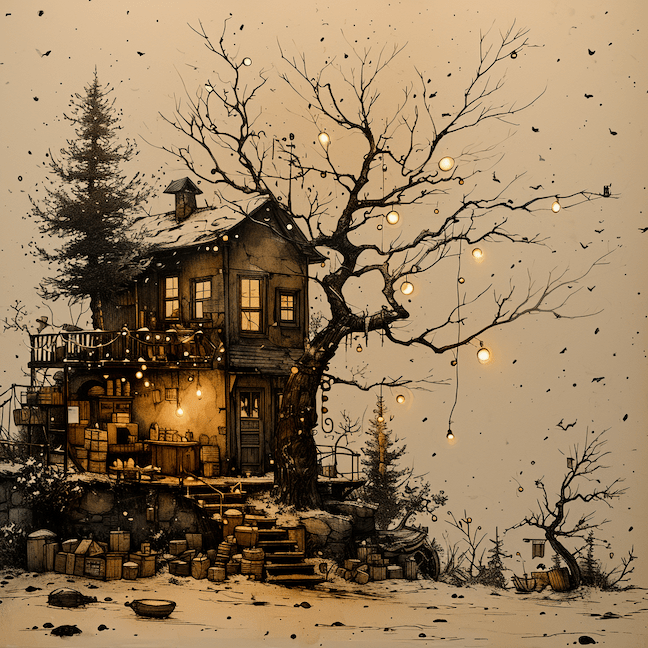
With my limited experience, DALL-E is a lesser artist, but it can understand human language much better. Instead of thinking about writing “prompts,” you can just rant. So, if you are to create an illustration for a story, give the story to it, ignore the picture it generates, ask for what prompts it uses, and give those prompts to MidJourney with some modification. That’s how I got the “Winter Evening” and “Solitude:”

By the way, DALL-E refused to work on the Kandinsky and the Masson prompts because they are against their content policy. I look forward to all the discussions and lawsuits in the AI realm. 

Finally, a very Happy New Year brought to you by MidJourney and Photoshop, with a poem by ChatGPT (based on the painting):

Twilight hues and earthenware, 
Berries red as the first blush of the year. 
Glass and glaze in silence share 
The quiet hope of joy sincere.

In this still life, time’s gentle pause,
Apples ripe with the future’s gaze. 
A tableau set without applause,
Whispers of the New Year’s haze.

Let vessels, stark, in patience wait, 
For mirth to fill them to the brim. 
In silent grace, they contemplate 
The dance of days about to begin.

LOL

Another Digression – MidJourney AI Art

You heard the buzz: there’s another way to do art. You type a few text prompts, and the AI will return results. One of the recent AI generative art lab is Midjourney. You can try it for free on MidJourney’s Discord server with a limited number of images.

Here are some of my attempts:

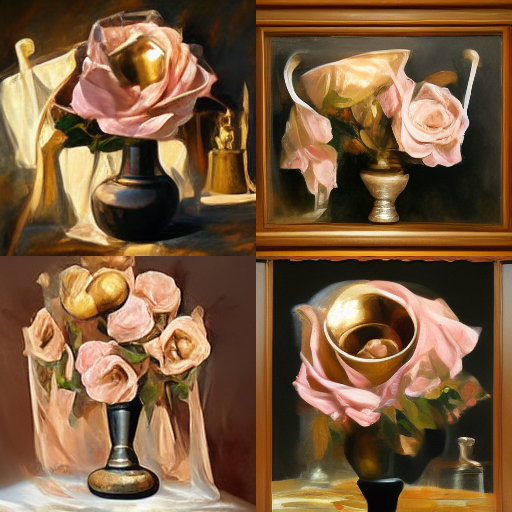
The prompts I gave are: “oil painting, still life, bronze vase, light pink roses, curtain, table, realism, expressive strokes, worn palette;” – basically, a Watts’ Atelier homework. The first result it returns contains 4 choices:

You can choose to further develop them and make variations till you are satisfied or give up. Some of the “final” ones:

Here are some of my Kandinsky (kandinsky with expressive bold strokes, fish, abstract colors) and André Masson (André Masson drawing, colored pencil, street musicians, metro, gloomy):

A few notes:

  • It’s a lot of fun. Thanks to the limited number of trials that I didn’t end up spending my life on it.
  • I don’t really know how to make the best out of this Midjourney. I have seen amazing artworks coming out of it. I assume the the prompts you give make all the difference, but I didn’t spend time digging what the algorithm handling better, more general or specific instructions, more or fewer words etc.
  • Also, if the attempts are not limited (with a subscription I assume), you can keep manipulating them. The result may get much better or worse.
  • If you are into digital art, this can be a tool, and if you are making abstract art, this can be a great idea generator.
  • But, who can claim the authorship? In a few pieces, there’s even an attempt of signature. Whose signature? It seems to me like Kandinsky or Mason. So does the algorithm aims at creation or imitation?
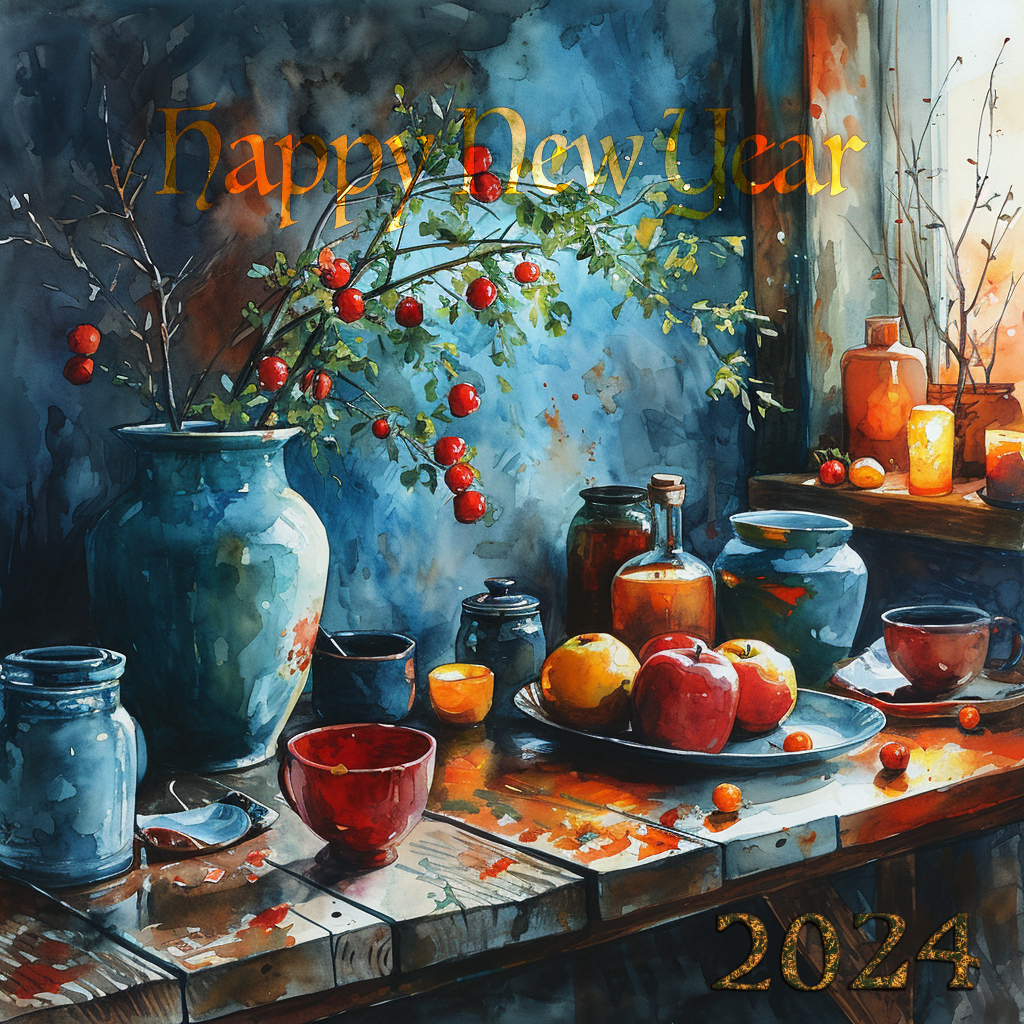
  • I also like the fact that in some cases the painting comes with a frame.
  • One thing for sure, if the big names in art history and all the prodigies online haven’t stopped us attempting new artworks, AI wouldn’t either. Back to painting! 🙂