Tag Archives: #stilllife

Daffodils 

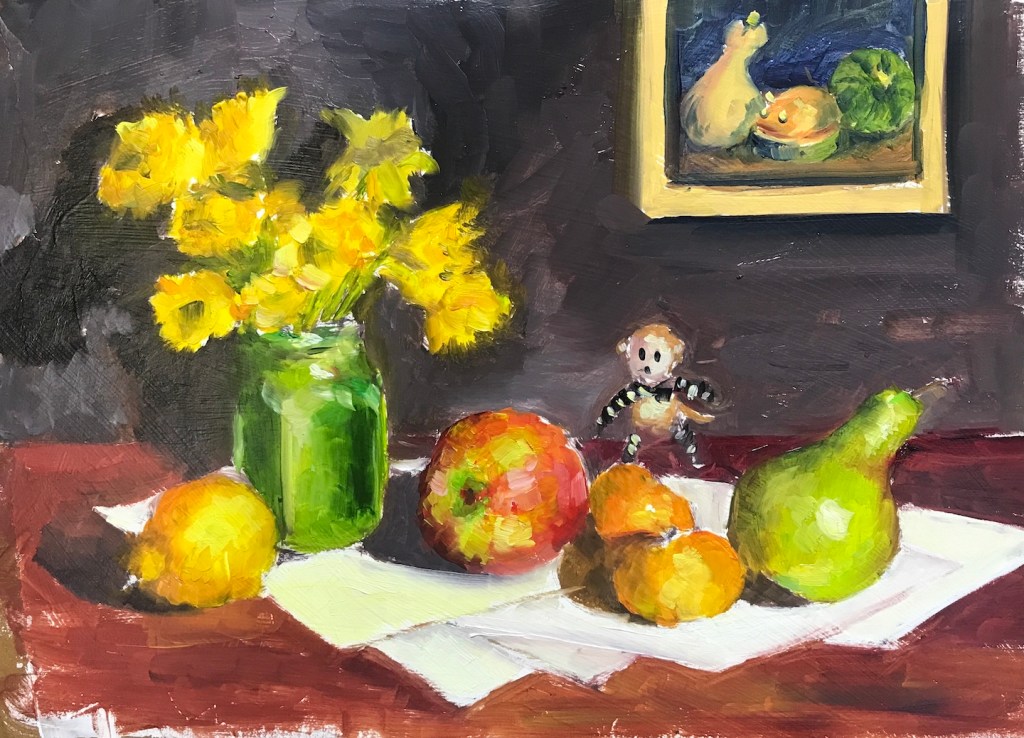
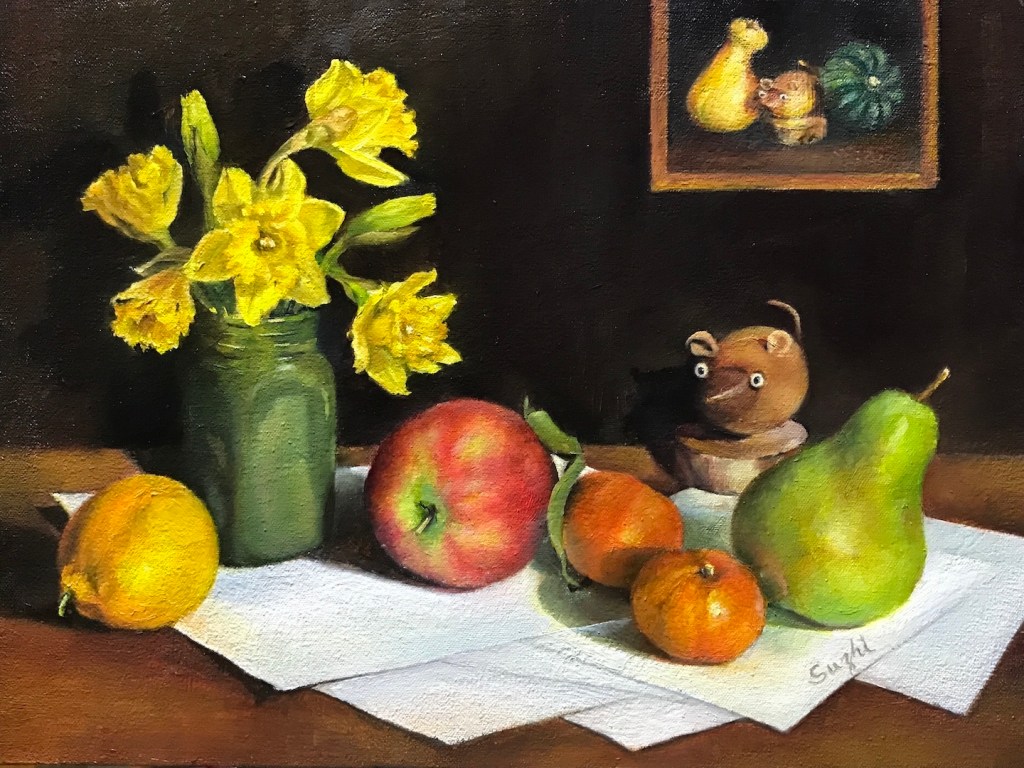
I know it’s the wrong season. I started these paintings in early spring, when Trader Joe’s still carried those cheap bunches of daffodils. It is a nostalgic flower for me; my father used to raise them around Spring Festivals. It is also a challenging flower to paint – yellow is not an easy color to keep clean. In addition, I wanted to try doing a quick preliminary study beforehand, a practice many accomplished artists advocate. 

Here they are:

Daffodils and Fruits, oil sketch on paper, 9 x 12 in. 2023
Daffodils and Fruits, oil on canvas board, 12 x 16 in, 2023
Daffodils and Eggs, watercolor sketch on paper, 10 x 10 in, 2023
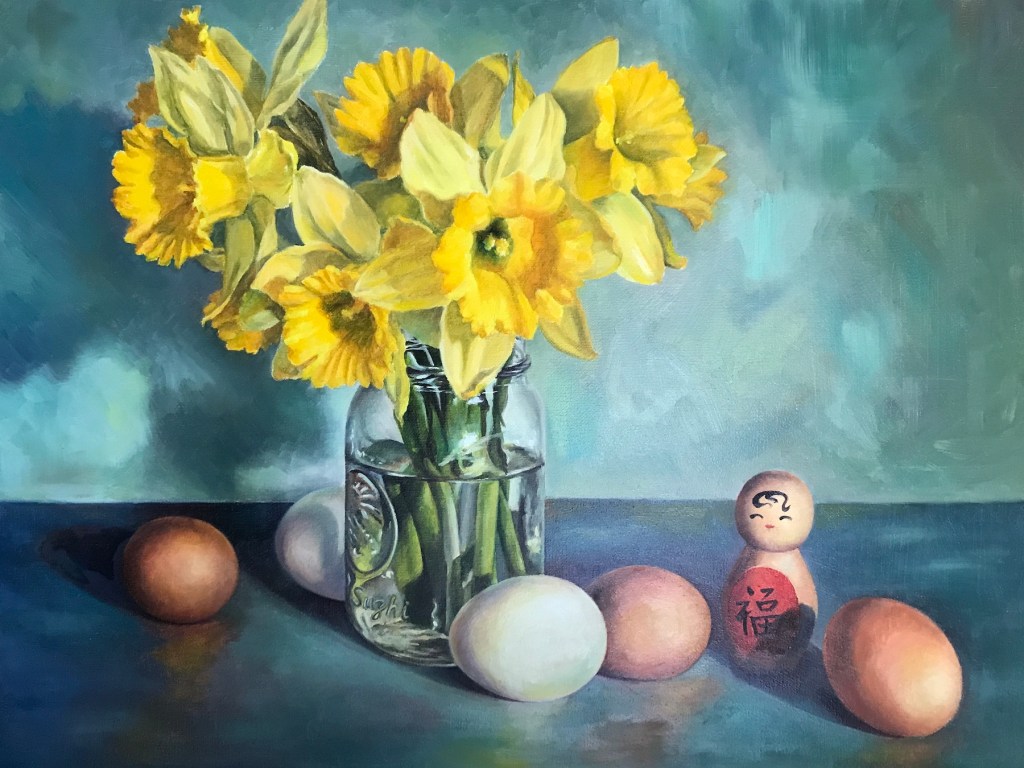
Daffodils and Eggs, oil on canvas, 18 x 24 in, 2023

And here’s what I got from this experience:

  • As your can see, I did a one hour oil sketch before Daffodils and Fruits, and I liked the sketch better than the final painting itself. The looseness brings out a movement and a sense of humor that diminished in the meticulously rendered final painting. I am seriously  considering setting a timer for my future paintings.
  • The study for Daffodils and Eggs was done in watercolor and it was overworked for the purpose.
  • The blue overtone was an improvisation. The original setting was dull and it worked better with the watercolor than oil medium. I wanted to add some drama and energy to the rather mundane setup. I feel I made the right choice.
  • For me, doing a study beforehand took a bit of freshness out of the final painting process. It could be I was just doing it for the sake of doing it rather than as a process of exploring.
  • It occurred to me that still life as a genre that could be the most expressive for a realistic artist. You don’t get to do that much “directing” in portraiture or landscape. Though at this state, my main focus is still honing my technique, I need to be more thoughtful in choosing and orchestrating the subjects.
  • I did put a signature on Daffodils and Eggs. Can you find it?

Summer and Peppers

For the first time in four years I was able to travel to Beijing and hence the absence of new posts. At the first glance the city seems largely unchanged, except for the long lines outside every gallery and museum. I don’t know if people are just hungry for art or it is the “lipstick effect” of the flagging economy, but the never ending queues didn’t go well with the scorching weather on record. Soon I noticed an apparent missing of international tourists, and a lack of liveliness in general everywhere we went. People are getting by, but not looking forward too much. It could be the weather, or the “laying back” that everyone was talking about. Regardless, I ended up not doing too much.

The couple of exhibitions I did managed to attend shared some commonalities in a strange way. The Graduation Show from The Central Academy of Fine Art – China’s most prestigious art academy was an expose of vibrant young minds. Walking among a hodgepodge of contemporary media, we were constantly attacked by explosions of lights, sounds, and immersive installations. While traditional techniques were not completely forgotten, they took a back seat to ideas and functions behind art.

Meanwhile, the National Gallery of China celebrated its 60th anniversary with a display of its permanent collection. For the domestic part, the media were conservative and the contents were propagandistic. The international part featured many crafts from the “One Belt One Road Initiative” member countries. It could very well be the most diverse exhibition I have ever seen. In terms of media and the ideas represented, this was the opposite of the students’ show above mentioned. However, art was equally sidelined in both cases, which brought to mind an online comment on Chinese rock music I once read, “I heard the rock, but where’s the music?”

The shows also caused a little panic inside when I looked back on my extremely lack of “idea” art, for example:

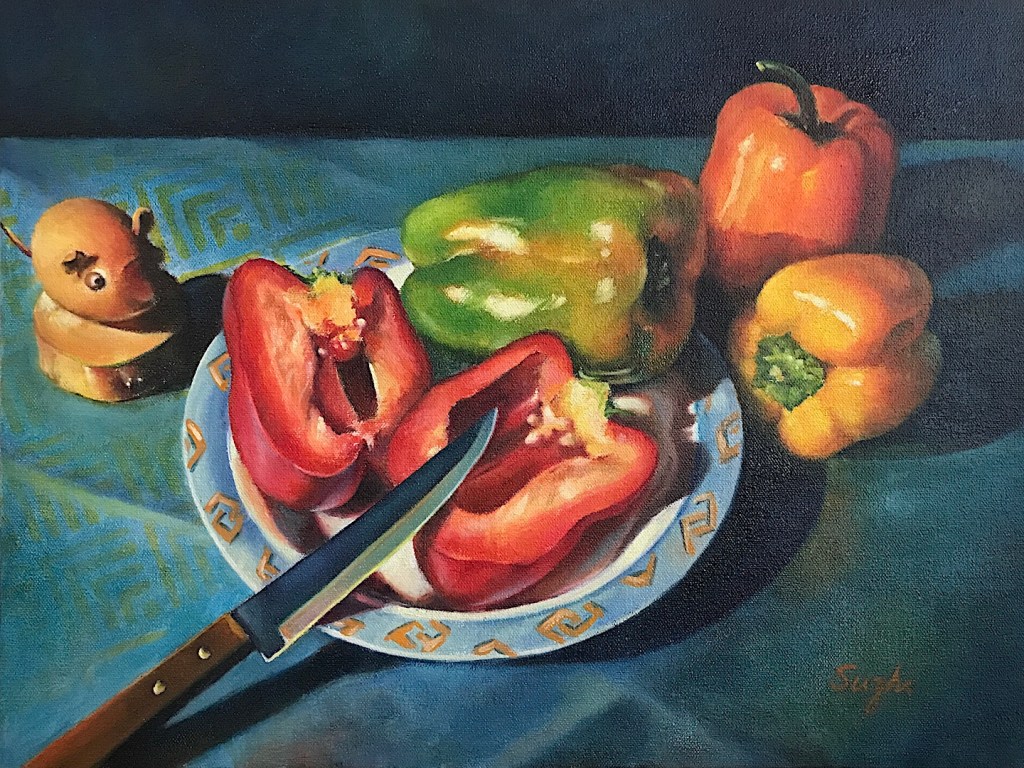
Three Peppers, oil on canvas board, 9 x 12 in., 2023
Peppers, oil on canvas board, 11 x 14 in, 2023

I’ve always cherished the simple joys of composition and color harmony, but these exhibitions had me questioning—do I need to dig deeper? Must I have something grander to say? Do I truly have something to say? In an era that one can put ideas into MidJourney and let it generate a picture, does this make the traditional artistic skills obsolete, or on the contrary, make them more important in defining what is art?

In China, schools commence each year on September 1st. It seems fitting to conclude may summer idling and wondering on this day. Time to get back to the basics, back to work (and leave the thinking part to GPT)! 🙂

More Flowers

Shadow Play, oil on canvas board, 11 x 14, 2023
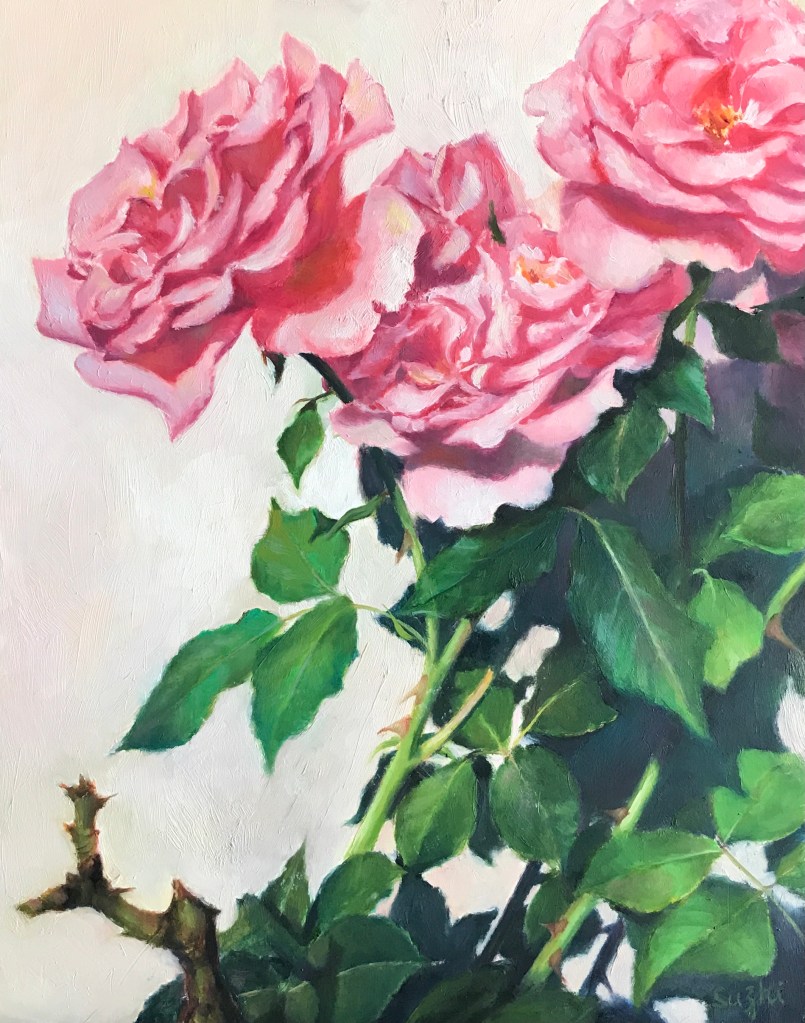
Pink Roses, oil on canvas board, 11 x 14, 2023
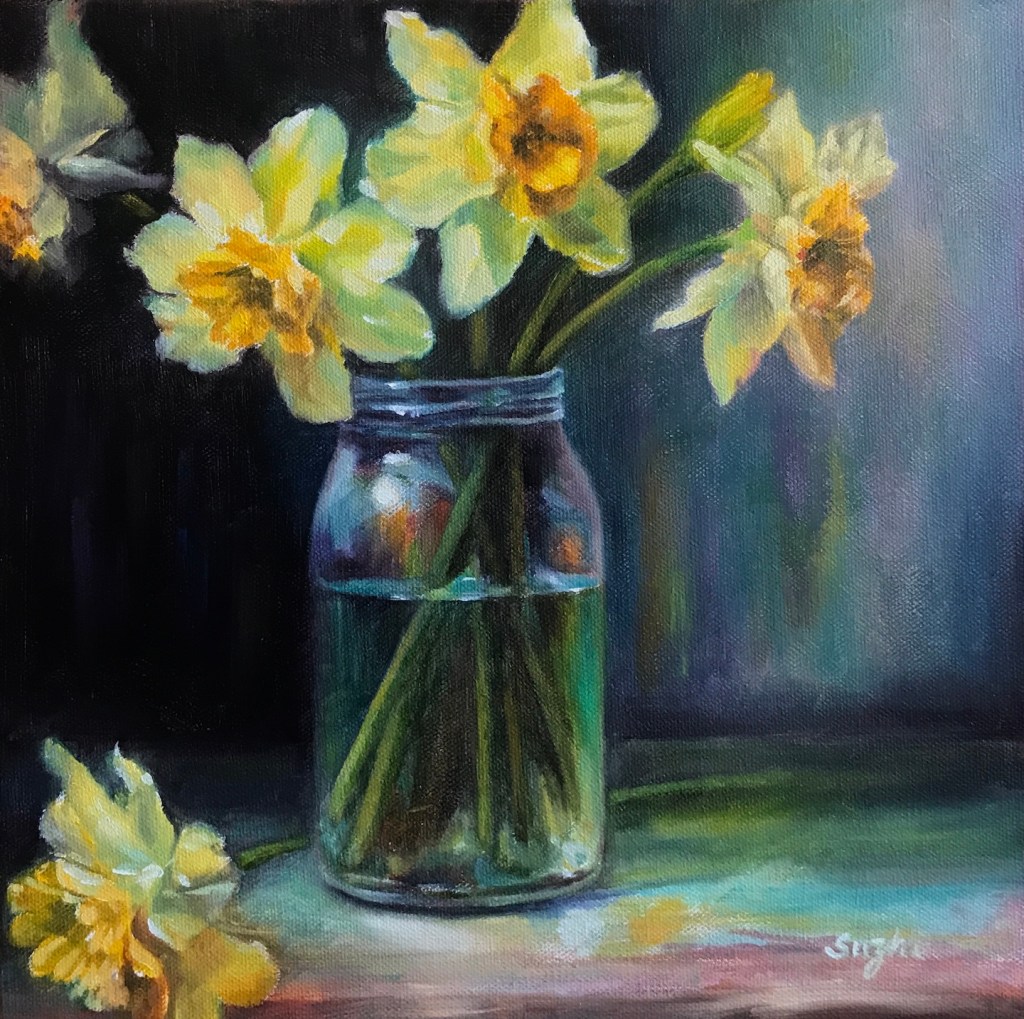
Daffodils, oil on canvas, 12 x 12, 2023
Company, oil on canvas board, 11 x 14, 2023

I don’t have much to say about these except that one of these is based on a MidJourney generated image :)))). Can you tell?

Cézanne – Reading Notes (2)

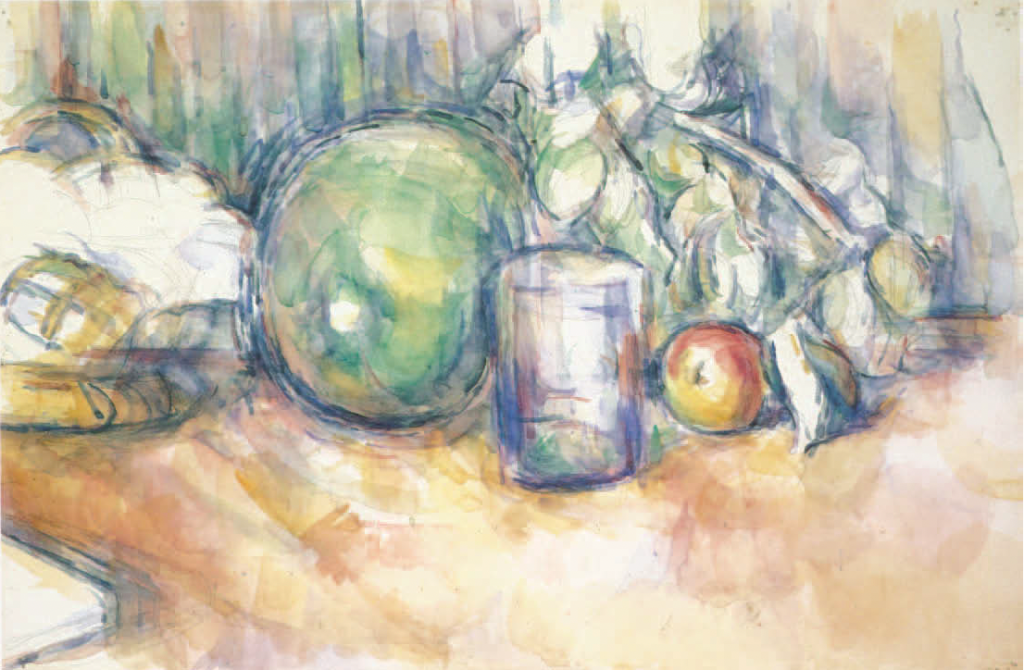
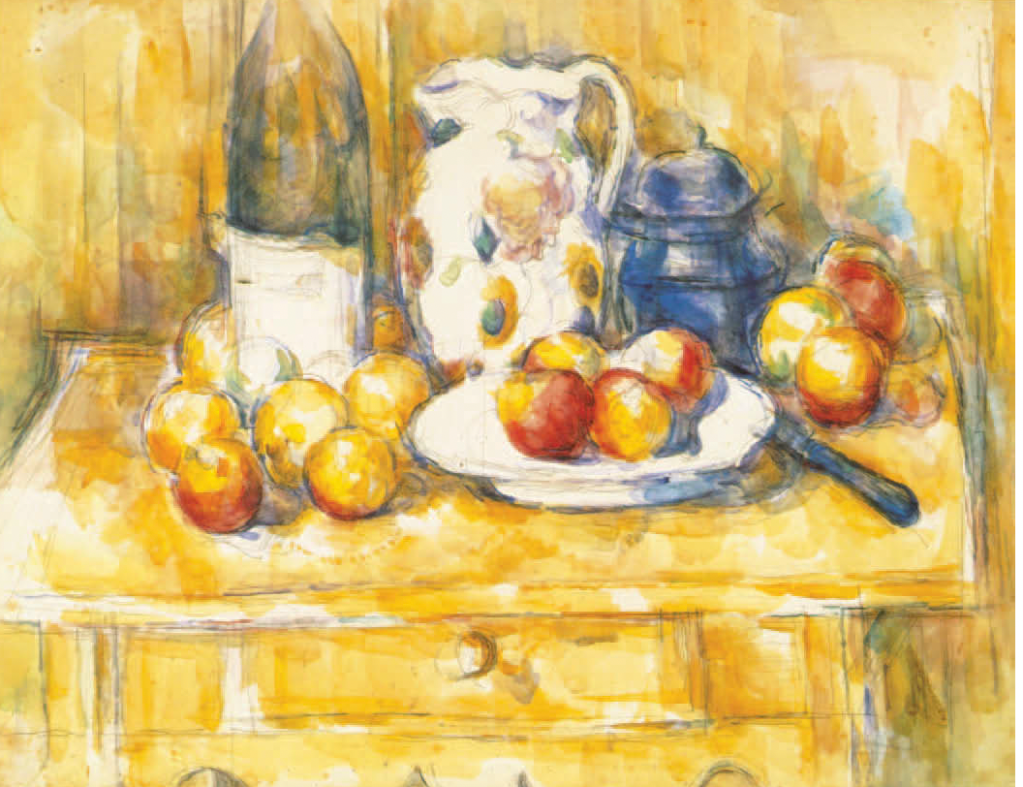
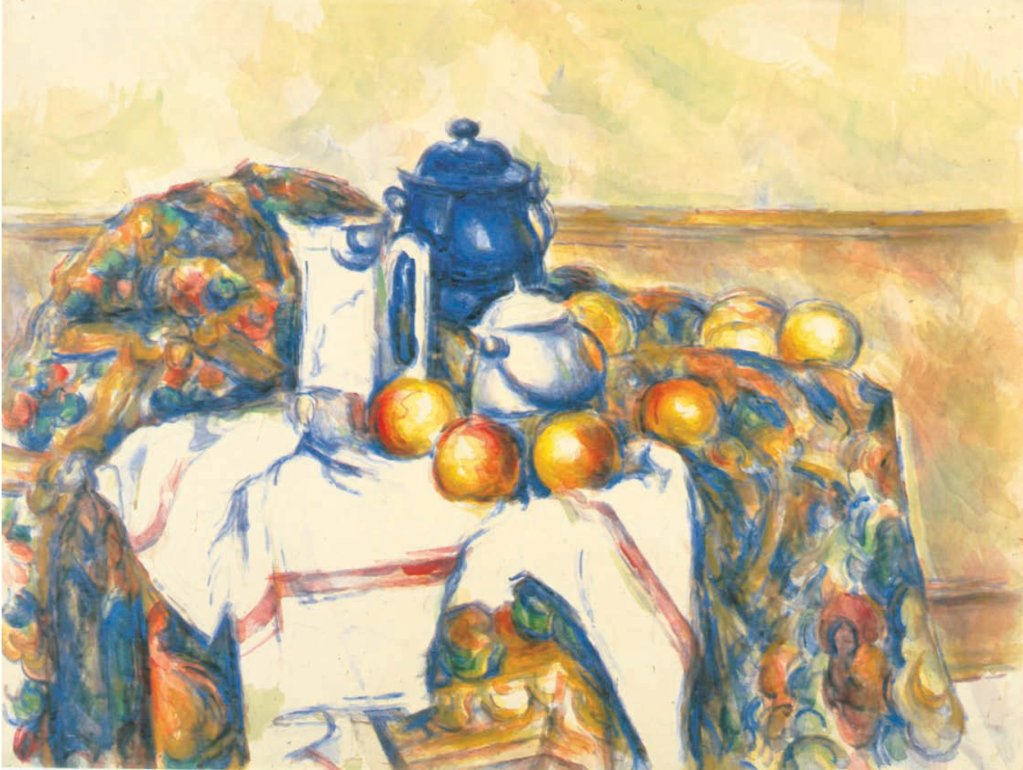
Among the books I read on Cézanne, two of them focuses on his watercolor. They are Cézanne in the Studio: Still Life in Watercolors by Carol Armstrong, and Cézanne’s Watercolors: Between Drawing and Painting by Matthew Simms.

The two watercolor books are a rich collection of the artist’s sketches, finished and unfinished works in the medium. Watercolor and gouache were often used by old masters as studies for a bigger oil piece, and it seems to the be case for Cézanne early on. However, later in his life, when his reputation began to be established, he increasingly make watercolors as independent works of art.

Cézanne’s watercolor is as unconventional as his oil paintings. The charcoal drawings, the white of the paper, and even the artist’s changing thought all become part of the composition. We see the draft, the negotiating and the final status on one page. This provides a unique window into the artist’s painting and the thinking process.

Still life with Green Melon, watercolor on paper, c.1906
Still Life with Apples, a Bottle and a Milk Pot, watercolor on paper, c. 1904

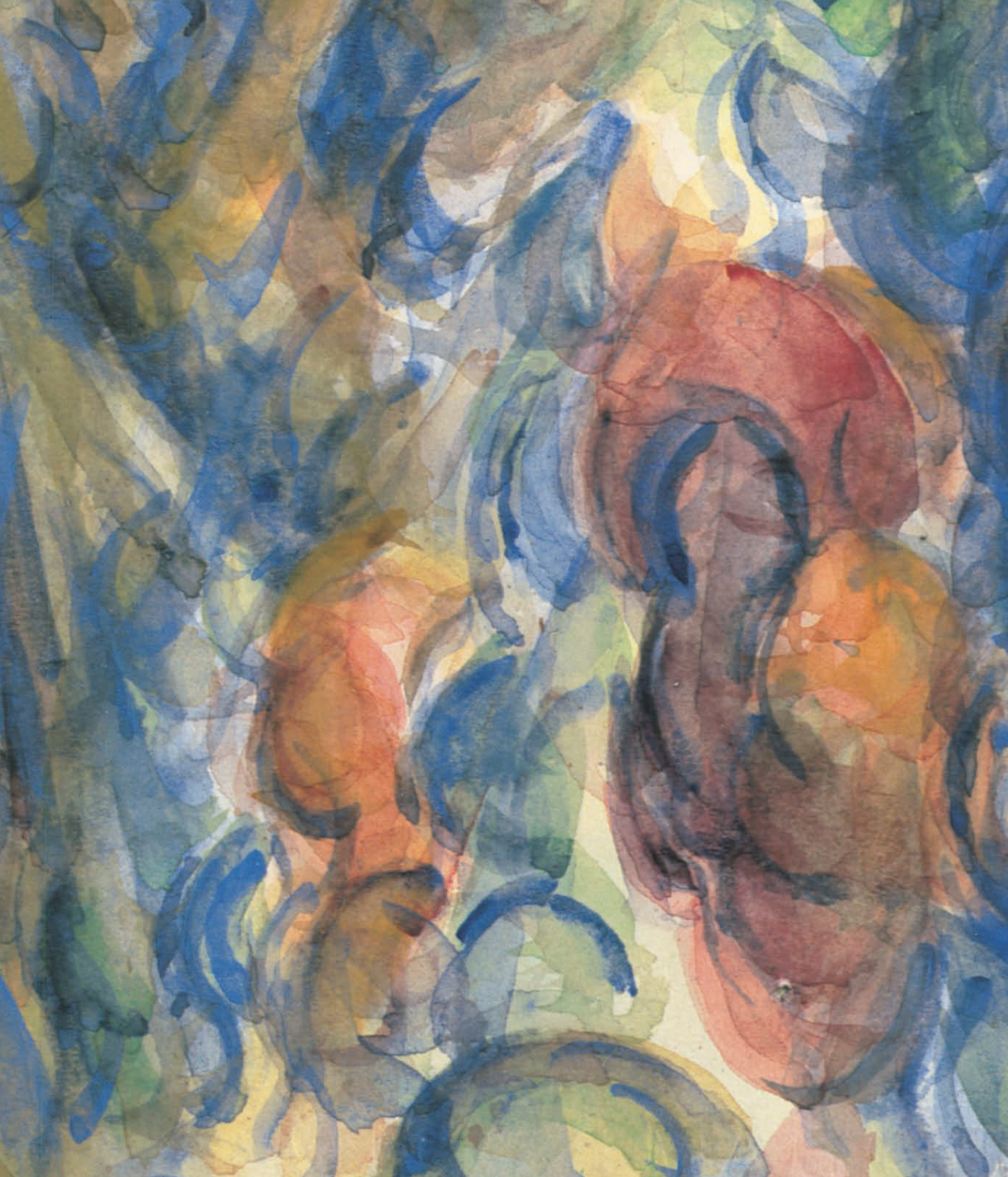
Unlike J. M. W. Turner (1775 – 1851) and other watercolorists, Cézanne adopts a touch by touch and color by color method. He layers translucent patches with gestural brushwork, resulting in a vibrant and casual overall appearance, with fragmentary and kaleidoscopic details. However, the actual process was deliberate and labor-intensive.

Still Life with Blue Pot, watercolor and graphite on paper, 48.1 x 632 cm, c 1900-1906

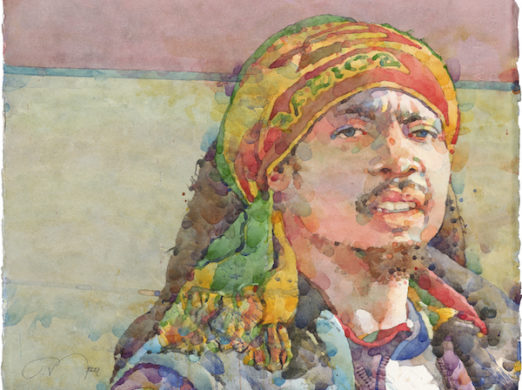
Contemporary figurative artist Ted Nuttall also employs transparent patches of colors to create energetic and vibrant paintings. While both artists are deliberate in their approach, Nuttall’s use of dots helps complete the painting, whereas Cézanne’s colors, used as lines, remain exploratory.

Africa, Ted Nuttall, watercolor on paper.

On a side note, for those interested, Cézanne uses a limited palette, as revealed by this nerdy study: “An Investigation of Paul Cézanne’s Watercolors With Emphasis on Emerald Green.”

Some Breakfast …

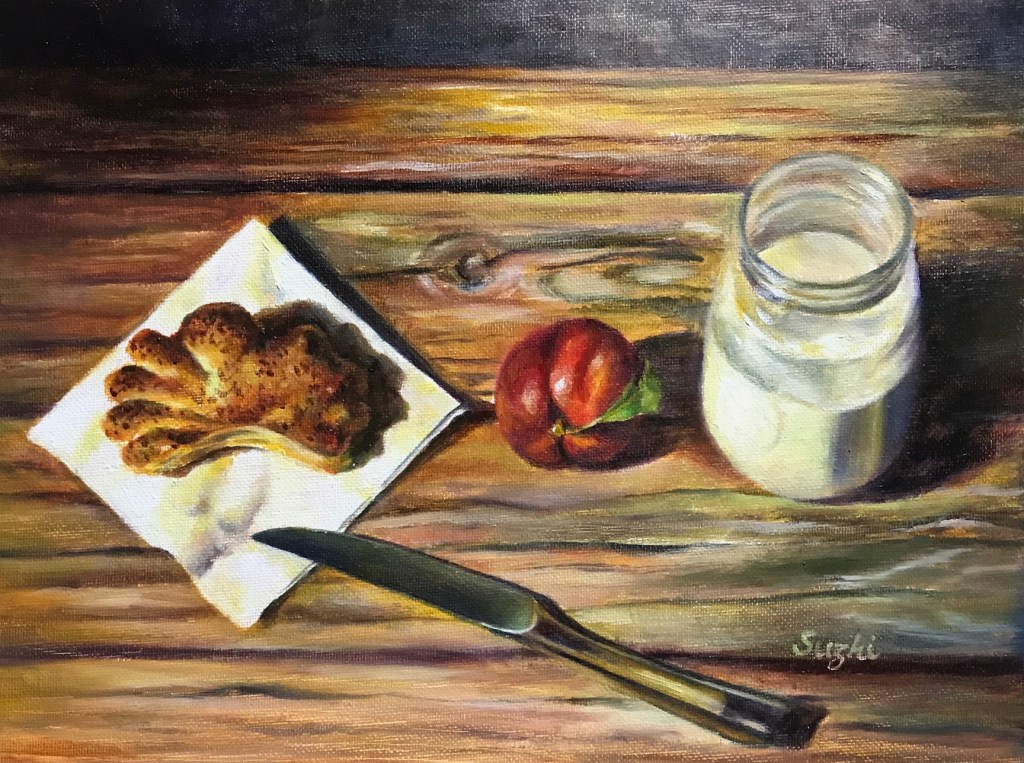
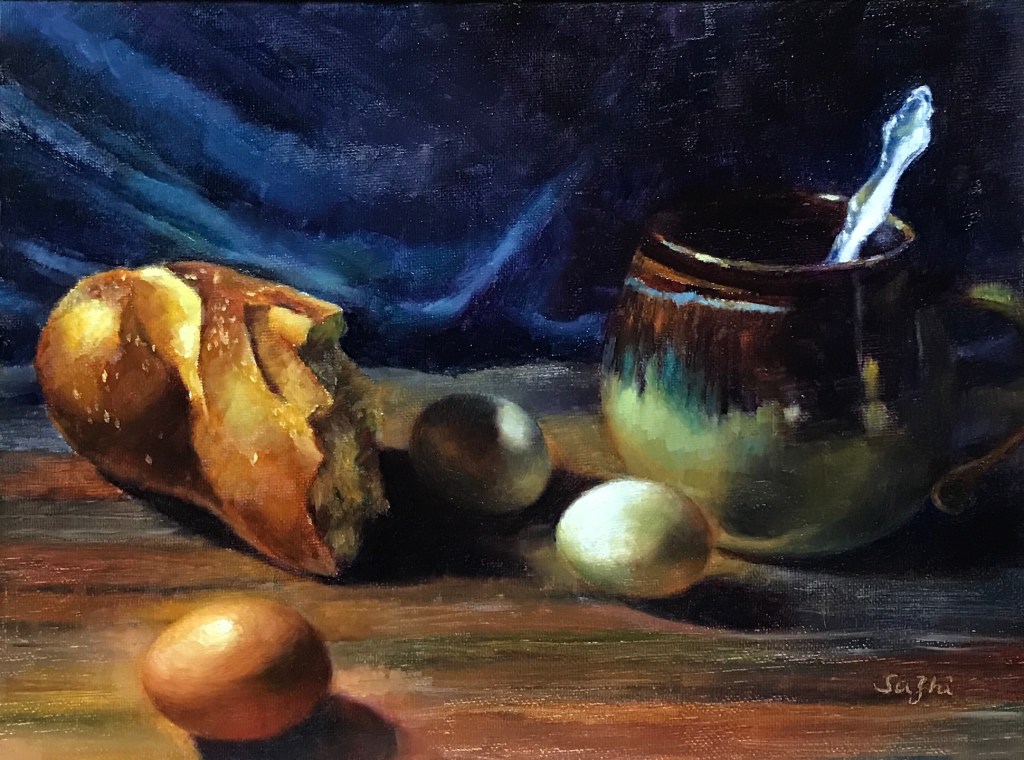
As promised, eggs and jars and some more:

A few notes:

  • All these are oil on canvas board, 11 x 14 in. I want to keep the studies small so that I could do more.
  • Eggs are difficult, either in terms of shape, value or solidity. There’s a fabricated story in China about how Da Vinci was forced by his master to sketch hundreds of eggs. Well, I do see the need of it.
  • My problem with over saturation manifested itself best with the bread. I probably wouldn’t eat that last one :))).

Our turn, finally …

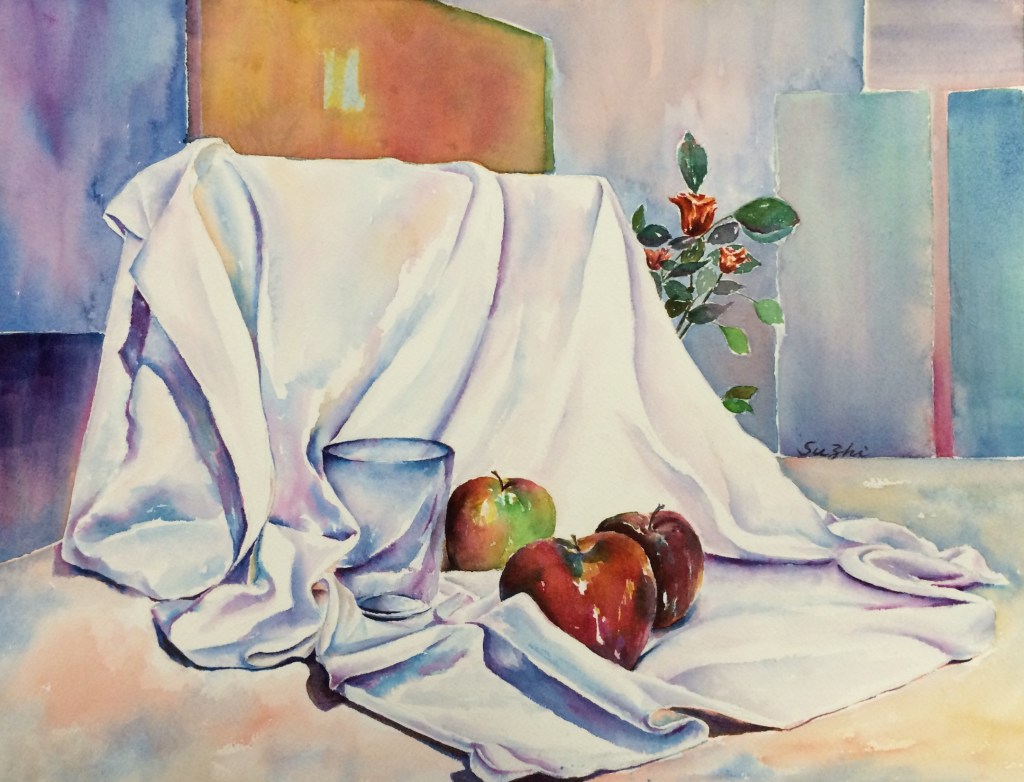
Years ago in a watercolor class, we practiced rendering glasses by choosing from a couple of setups. I got ambitious and turned the practice into a full painting:

Still Life, watercolor on paper, 14 x 20 in, c2015

The roses were supposed to be a different setting, and I didn’t choose it because I thought apples would be easier. However, in composing the whole piece, I thought the glimpse of the flowers would be interesting. As you can see, I indeed didn’t know how to handle those petals and leaves back then, but I think they added liveliness to the scene. I remember some fellow artist commented, “The roses are saying,’We are here! Our turn! Our turn!'”

Recently when looking through some old reference photos, I was surprised to see that I actually took a few shots of the roses at the time. Hence, their turn:

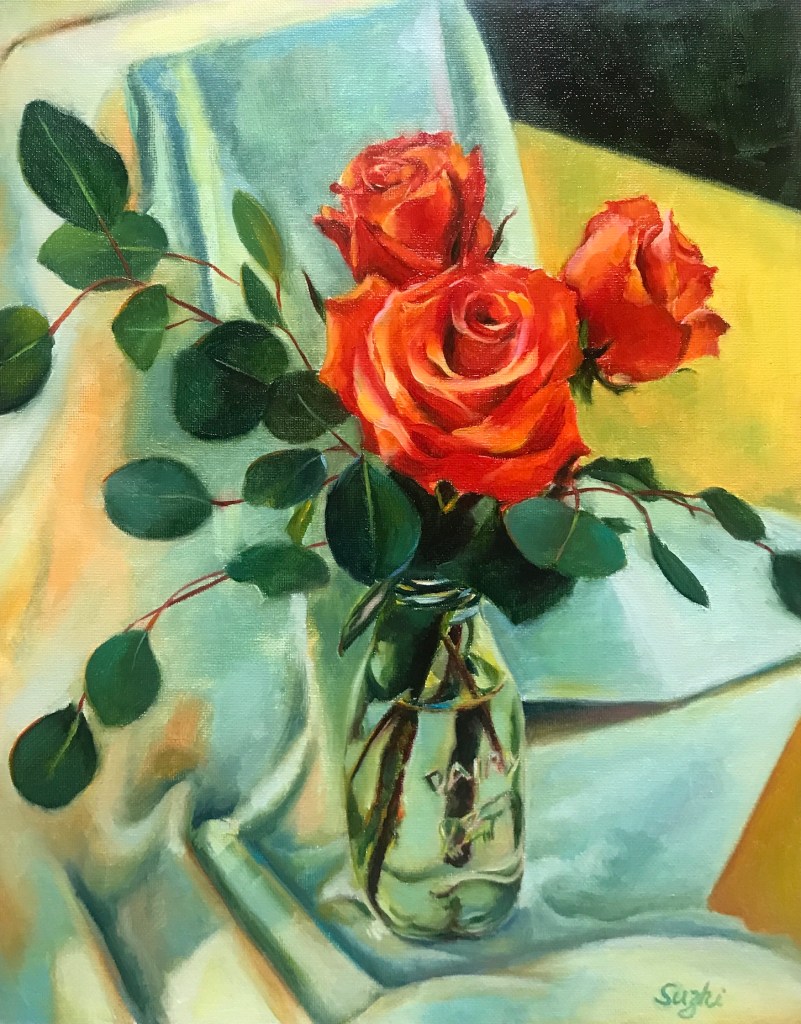
Red Roses, oil on canvas board, 11 x 14 in, August, 2022

Hehe, the petals and the leaves are still challenging, but I feel they are happy to be in the spotlight!

Oil and Watercolor

The way I learned to paint in oil, is to start with an underpainting. It could be a monochromatic value sketch, or a diluted full color draft. Either way, the underpainting would be covered by thicker paints as I progress and hopefully the process took the work to a better place. Once in a while, I just fell in love with the underpainting, and the continuation of the work was saturated with doubts.

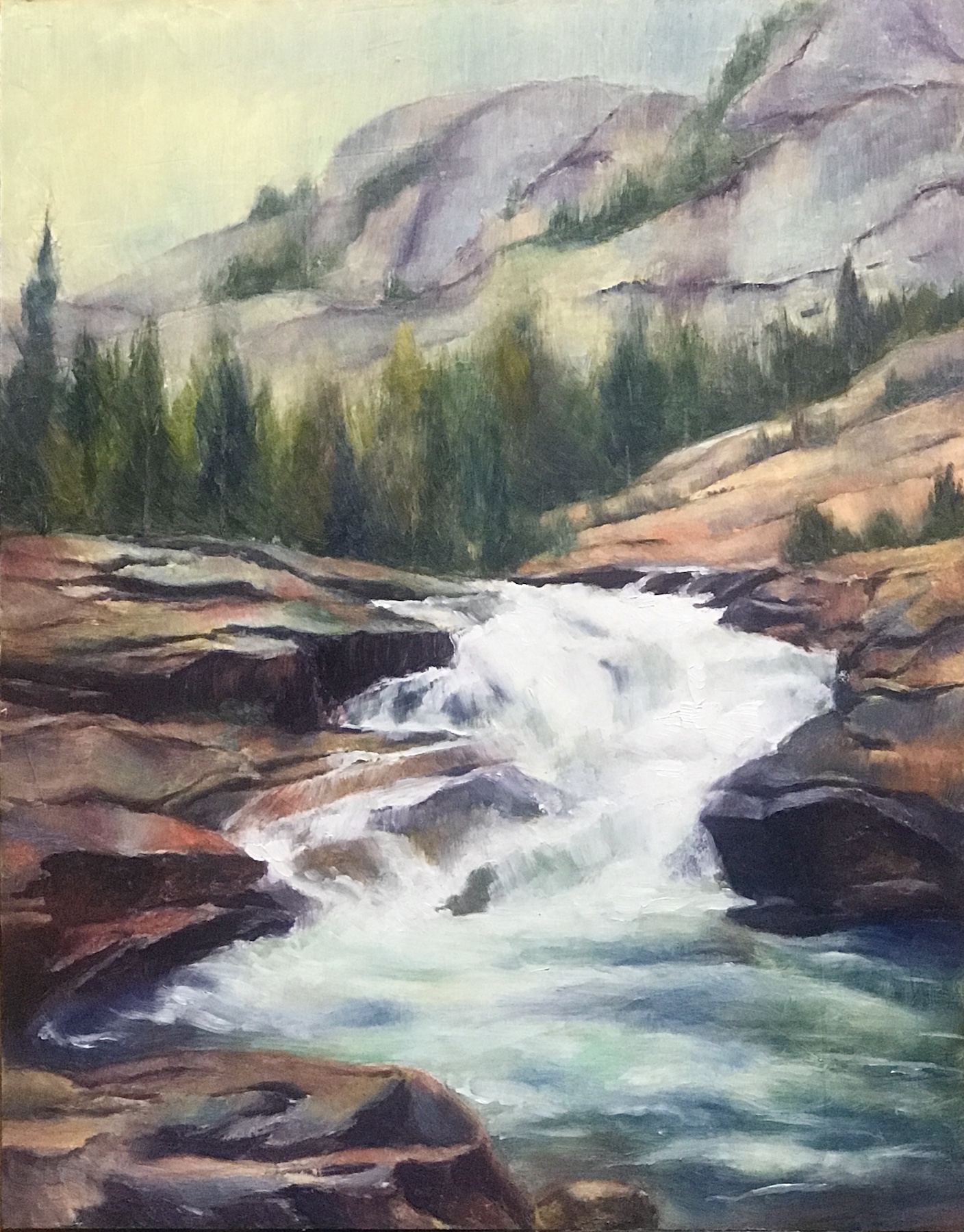
This river landscape (a Watts homework) was an example. The one on the left was the underpainting and the one on the right, the final work. I hesitated quite a while after the first draft about whether I should proceed at all. There was a liveliness and richness of color that I loved and didn’t know how to preserve when I added more paint to it. Also got lost was a sense of flatness, something more graphic and watercolor-y. This is not to say the underpainting was a better painting, but it makes me wonder the different directions I could have taken in finishing up this work (if it is not a homework in realistic landscape). Even some of the pencil marks begged to stay!

Moreover, can I achieve a watercolor effect with oil paints? Well, somebody can.

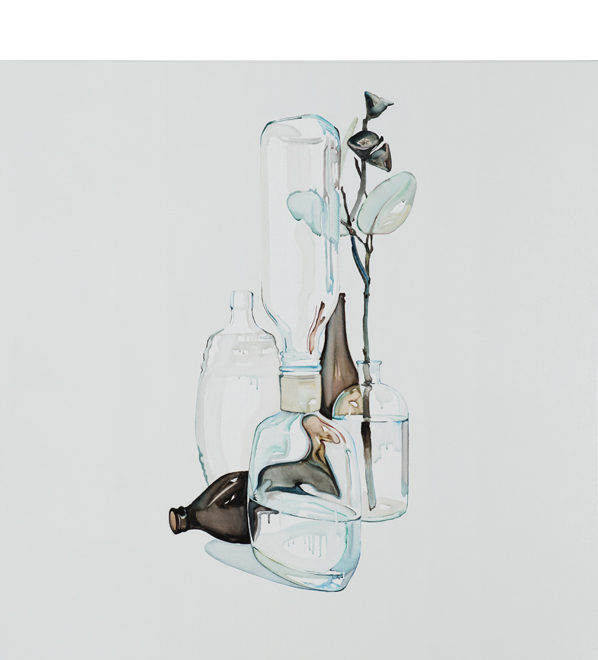
Those men were children once. Julian Meagher, 100 cm x 100 cm. Oil on linen, 2015

That’s Australian artist Julian Meagher, who painted in oil but managed to achieve the transparency and the lucid aesthetics of watercolor. Apart from his website, Amber Creswell Bell’s collection Still Life: Contemporary Painters has a good section on Mr. Meagher’s work. He painted with extremely diluted oil paint, and did not hesitate to use the white of linen canvas instead of white paint. The result is a good combination of precision and fluency.

His works remind me of Giorgio Morandi (1890 – 1964), one of my favorite still life artists (as I mentioned many times before). The technical approach couldn’t be more different. Morandi is opaque and static, while Mr. Meagher is more colorful and vibrant, cleaner and much more scaled up. However, the solitude, the quietness and the thoughtfulness are there.

The more I see good art, the more I am wowed by the range and the potential of the each medium. We are only limited by our skills! (Is this a good thing or a bad thing? :))) )

The Still Life Batch (2)

All done, for now:

Red Roses and Pot, oil on canvas board, 11 x 14, 2022
Roses, oil on canvas board, 11 x 14, 2022
Pomegranates and Vase, oil on canvas board, 11 x 14, 2022
Flowers and Vase, oil on canvas board, 11 x 14, 2022

According to Mr. Watts, there would be many more levels of still life courses after the gesture one. However, the people at the Atelier see no plans for new releases. I still have some catching up to do in the landscape area, but otherwise, I will focus on my own practice and projects in the coming months.

The Still Life Batch (1)

Speeding things up …

Lilies, oil on canvas board, 11 x 14, 2022
Flowers and Shells, oil on canvas board, 11 x 14, 2022
Sunflowers, oil on canvas board, 11 x 14, 2022
Still Life, oil on canvas board, 11 x 14, 2022

The first one is a Zorn palette without time limit, and the rest are supposed to be gesture with an open palette. My plan is to finish the still life course soon, and I will write more about it when it’s all done.

A Delayed Plan for 2022: Portrait, Still Life, Landscape and More

2022 for me is not only moving on from the beloved Zorn palette, but also a broadening of the subject matters. The plan is to keep practicing portrait and still-life, with an emphasis on loosening up and becoming more gestural. Meanwhile, I will add landscape and later figures to the learning schedule. For medium, oil is the focus for now, but I’d like to do more watercolor sketches with or without ink.

Here are some my recent homework from Watts:

Oil painting of orchid flowers and a Buddha statue with drapery, realism
Orchid and Buddha, 11 x 14, oil on canvas board, Dec. 2021
Pine trees in front of snowy mountain, oil painting, landscape
Pines, 11 x 14, oil on canvas board, Jan. 2022
Oil painting of crashing waves and rocks, seascape
Waves 1, 11 x 14, oil on board, Jan. 2022
Oil painting of an old man, gesture portrait, realism
Old man, 11 x 14, oil on canvas board, Feb, 2022

A few notes:

  • Landscape is not a particular interest of mine, but for years, I used it as a check-mark to see if I have made any progress in techniques. After doing other subject matters for a while, I would attempt a few landscapes to see if I feel more confident and comfortable. It never did!
  • It took me some time to figure out that apart from value control, the key to a successful landscape painting is shape design. To deliver a believable tree, on surface you have more leeway than doing a portrait, but the lack of definitive guidance (the shape of an eye, a nose etc.), you need to come up with your own. That freedom can be a curse.
  • Looking above, it suddenly hits me that before doing trees, it might be a good idea to practice more bearded and hairy portraits first! 😉