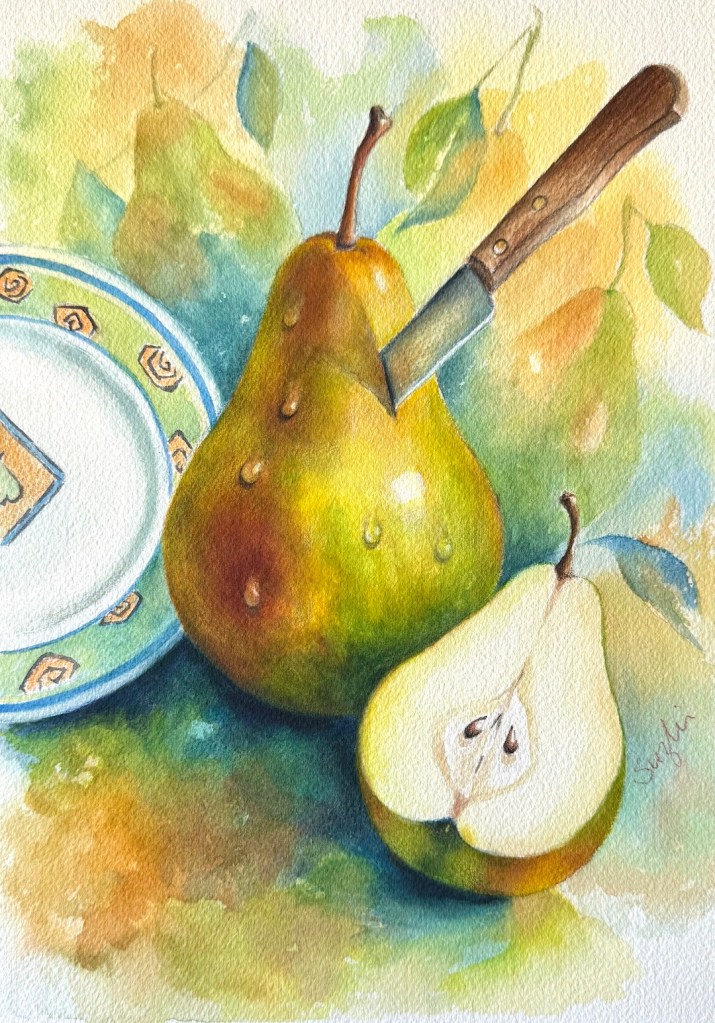
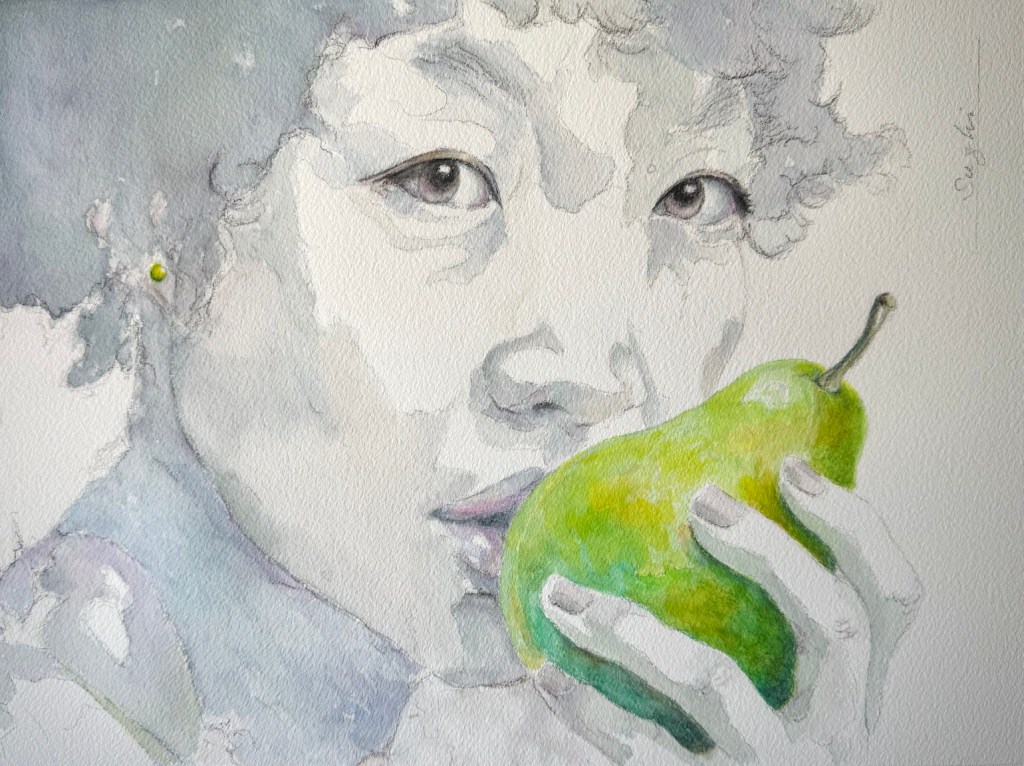
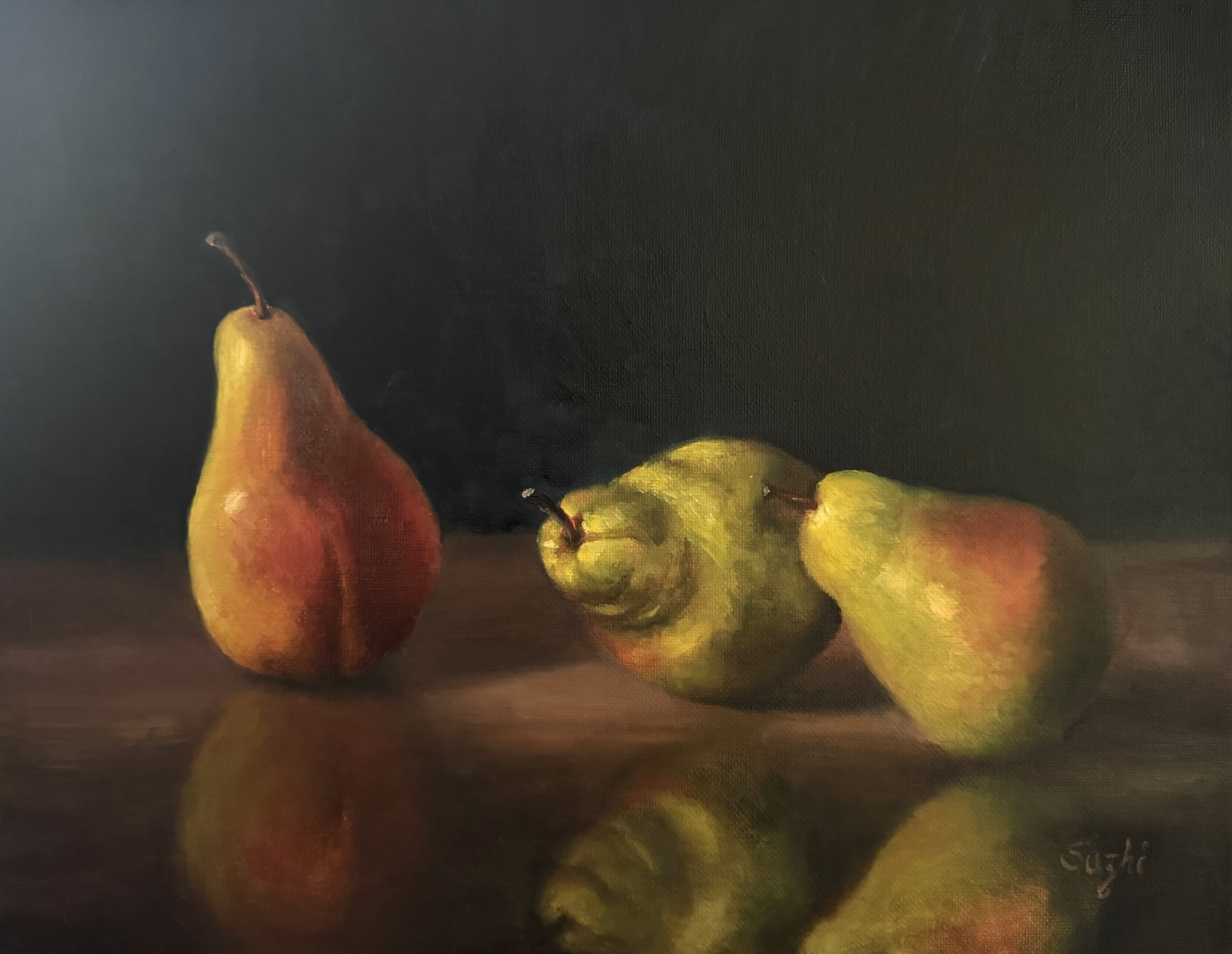
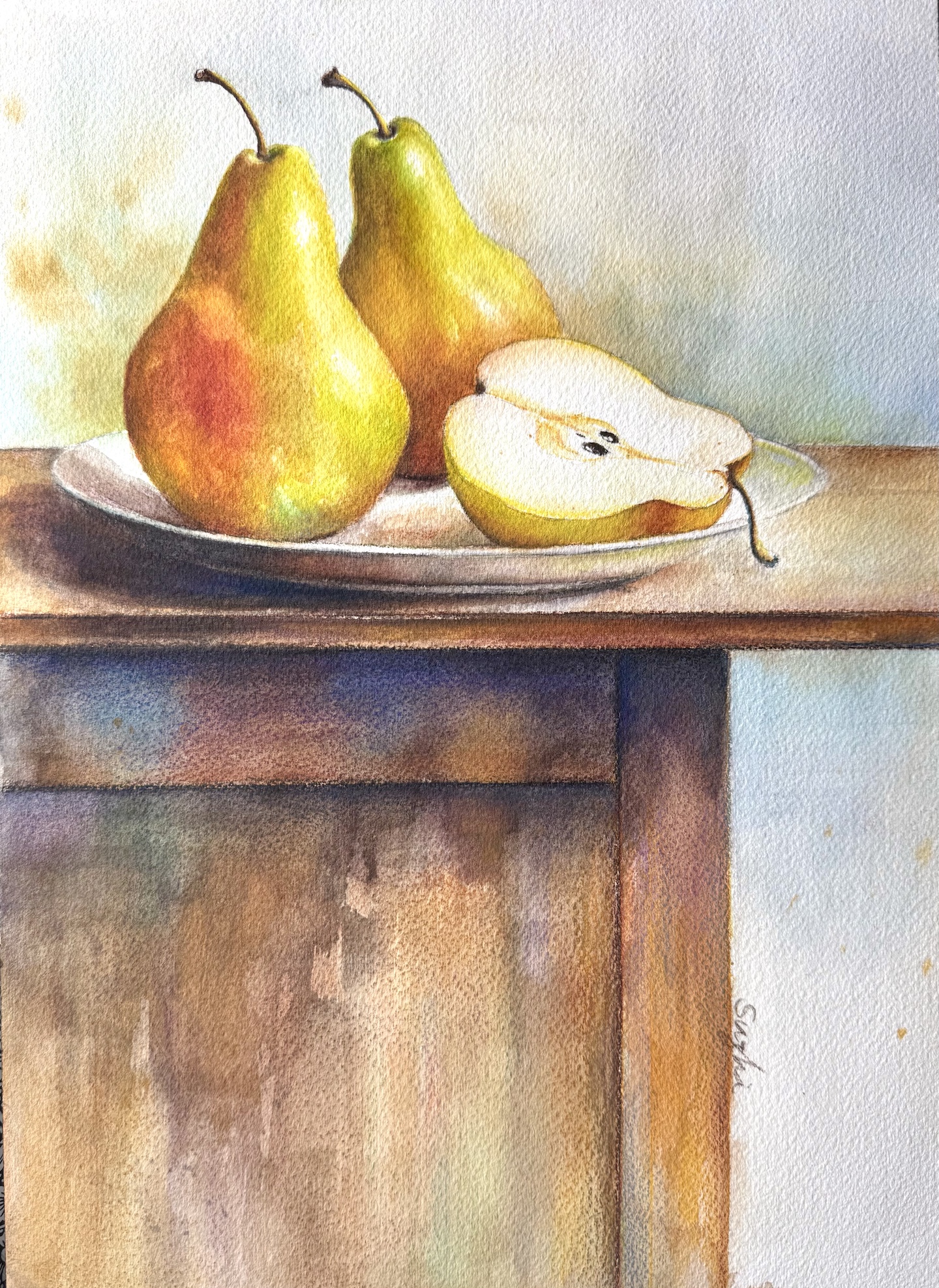
Category Archives: Watercolor

November’s Bits and Pieces

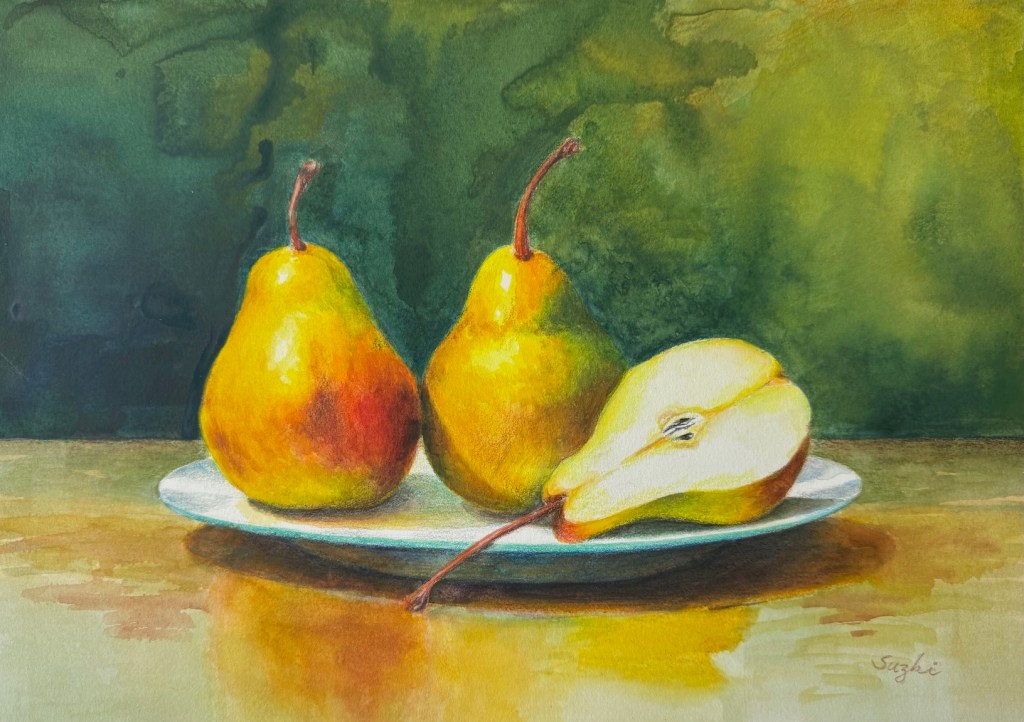
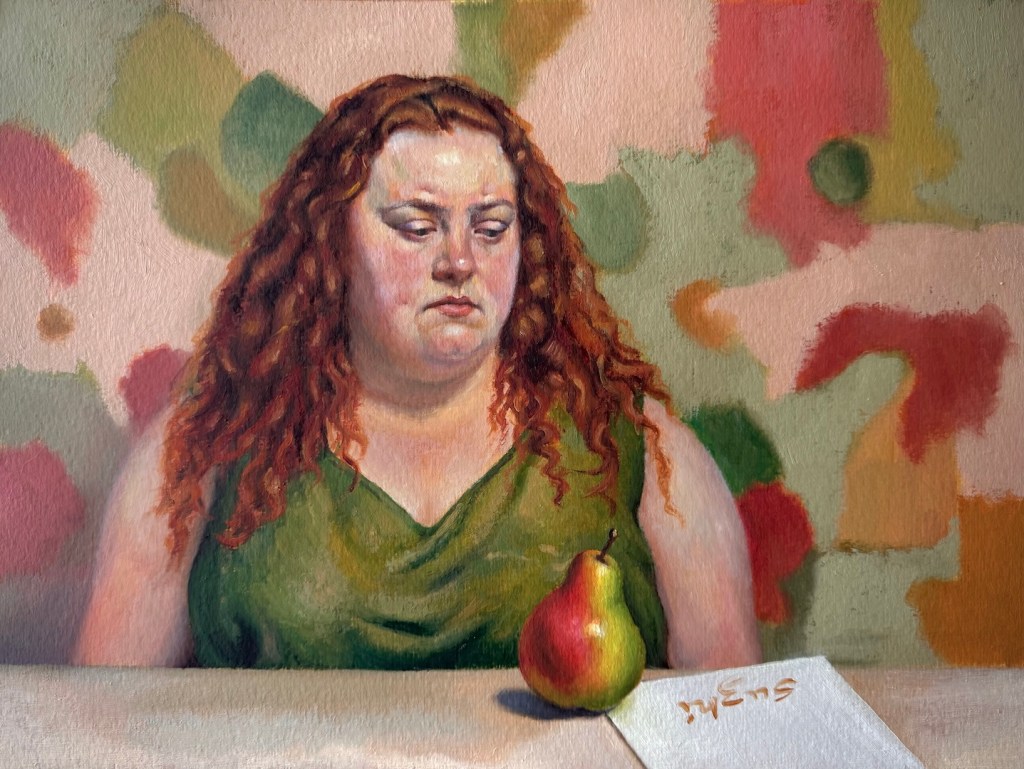
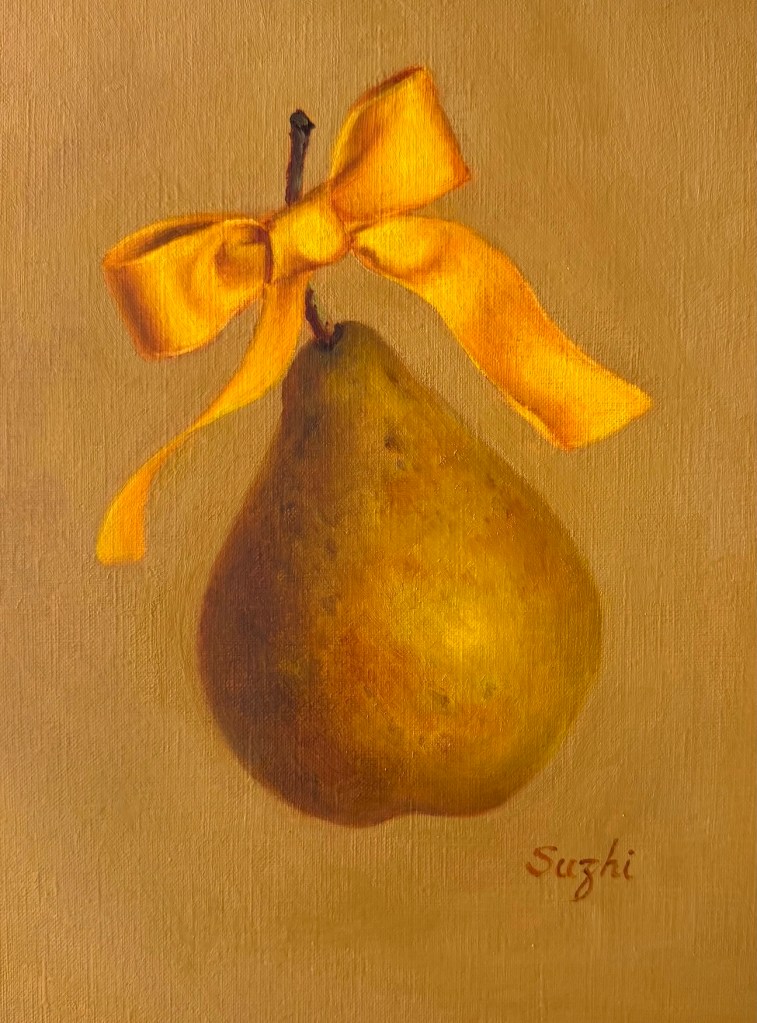
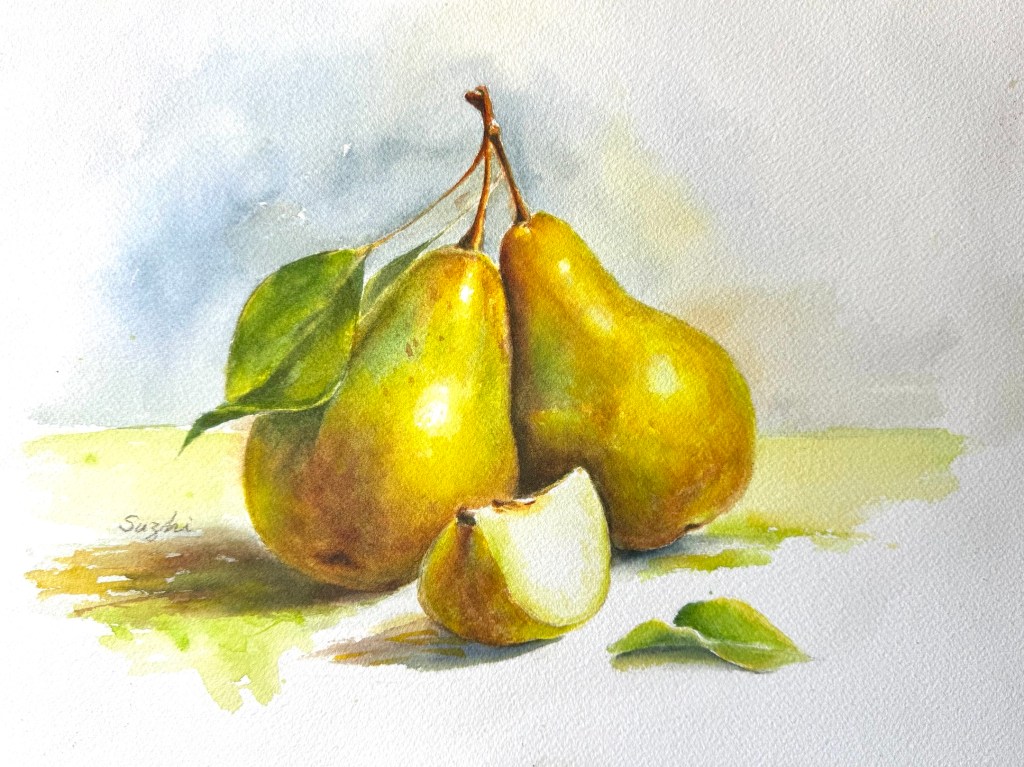
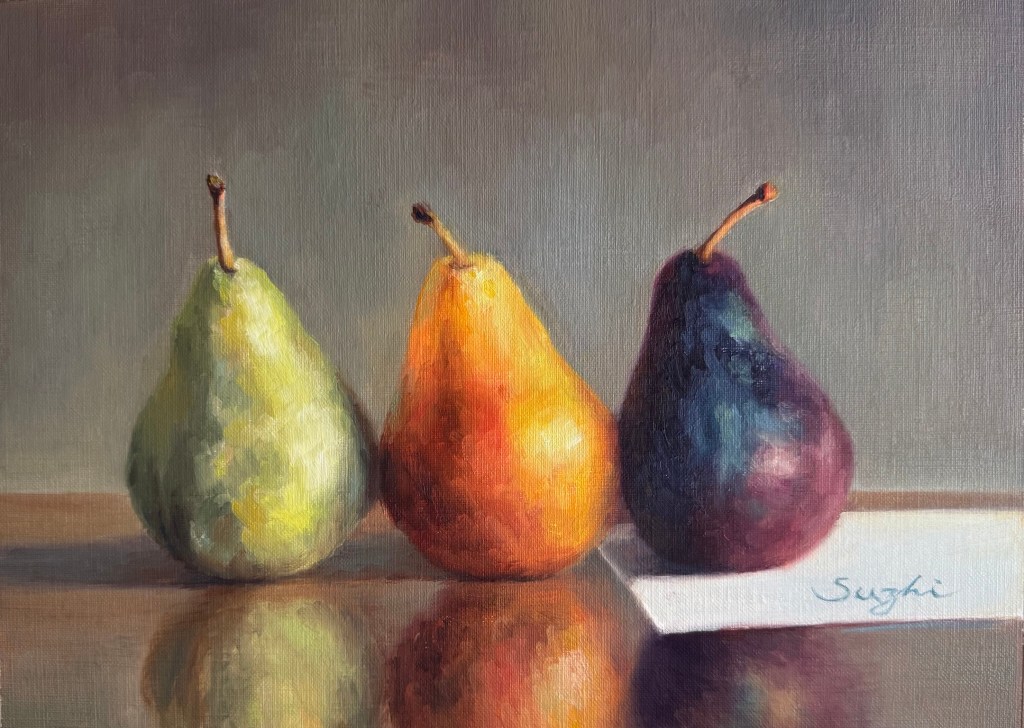
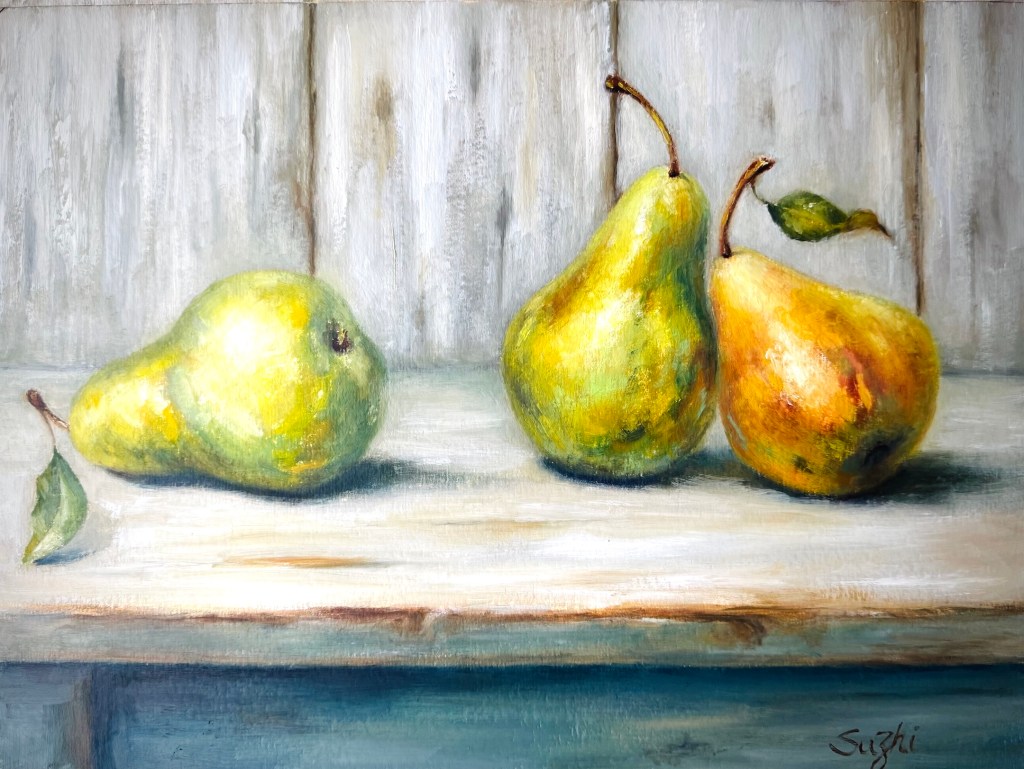
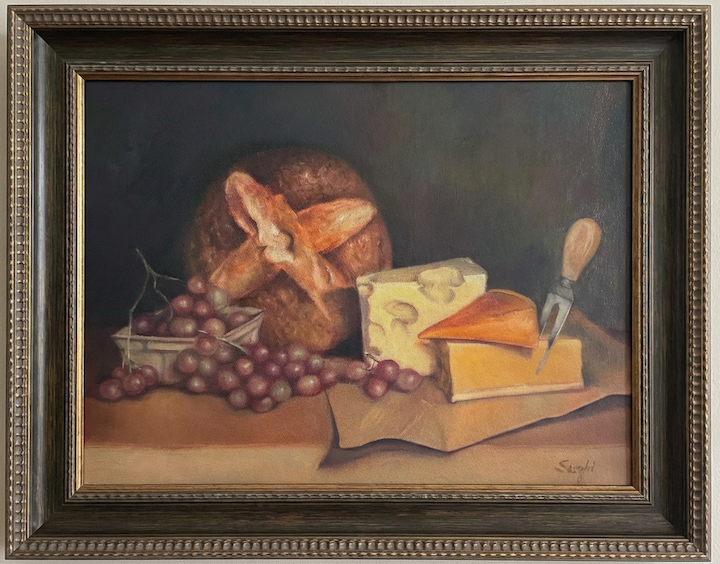
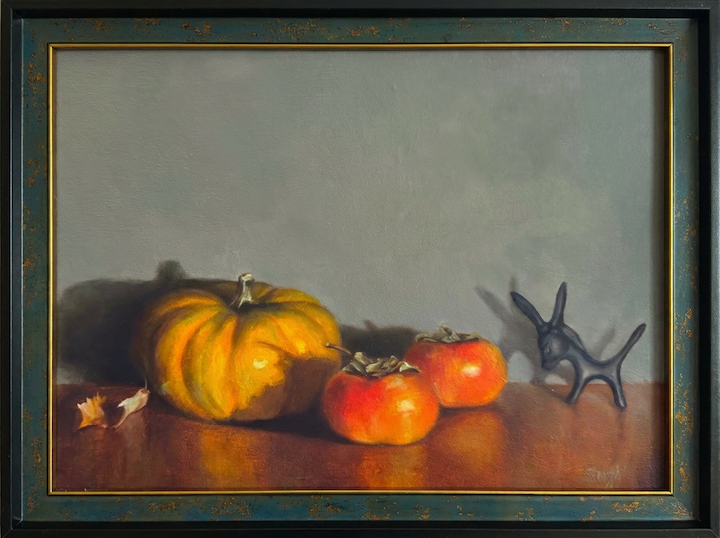
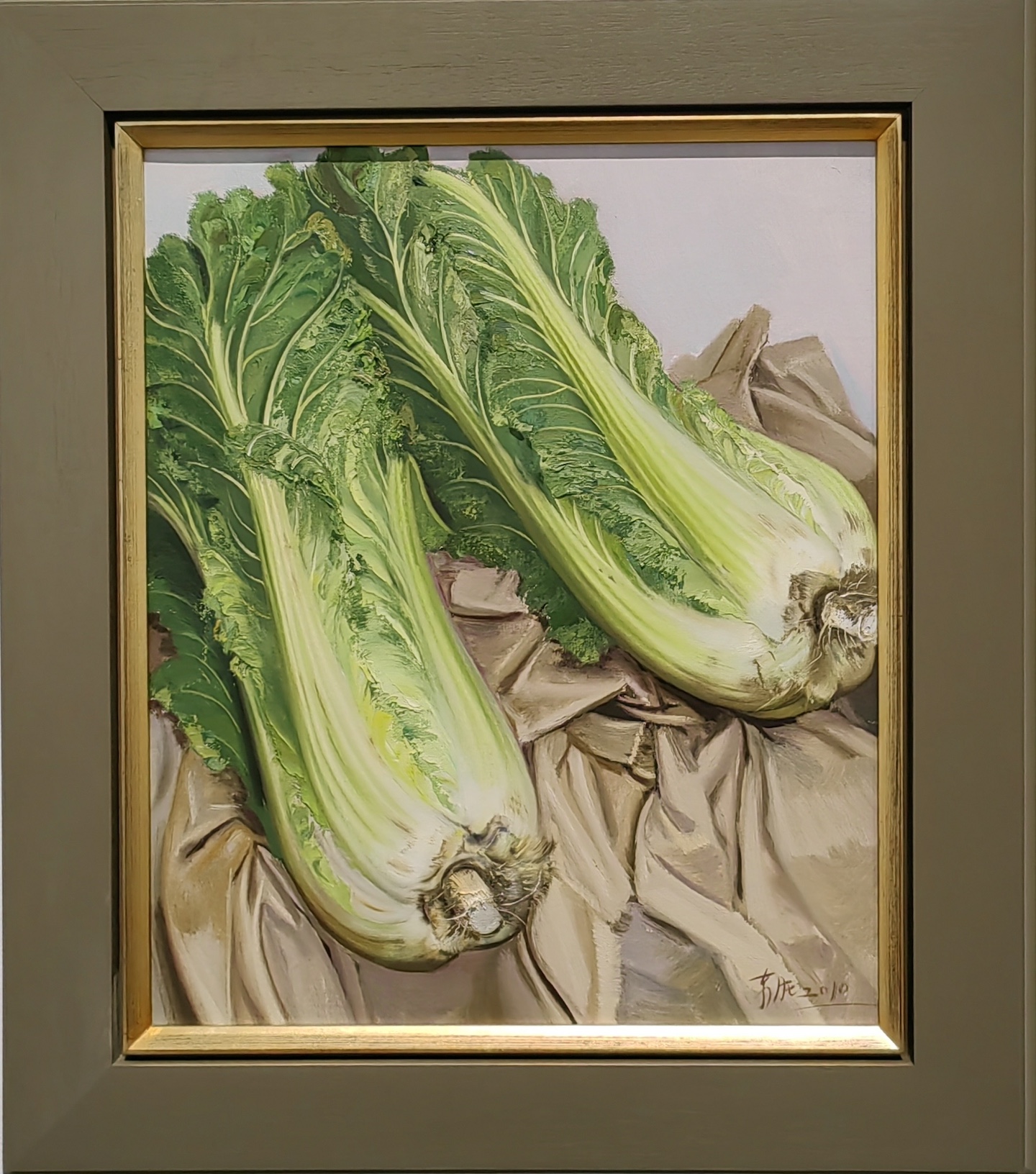
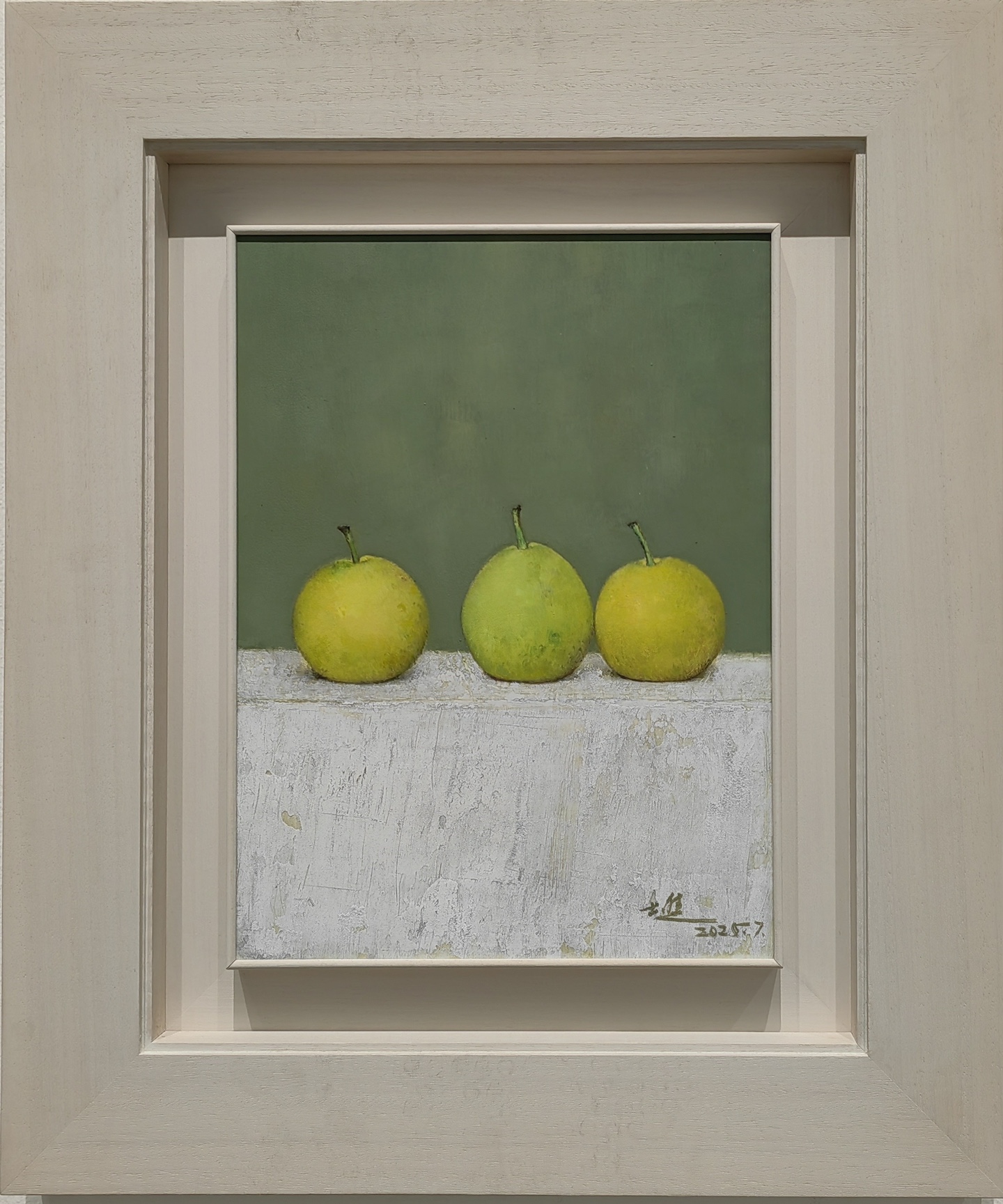
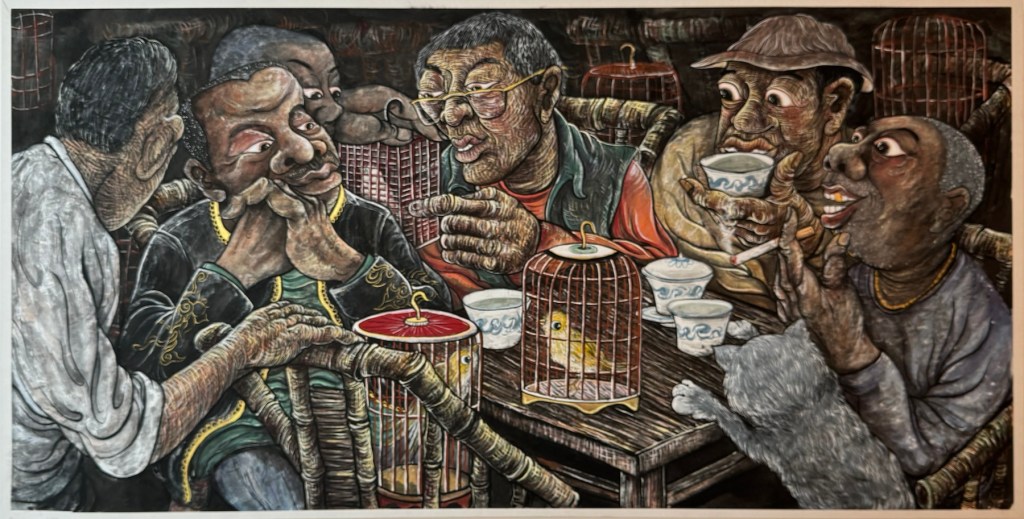
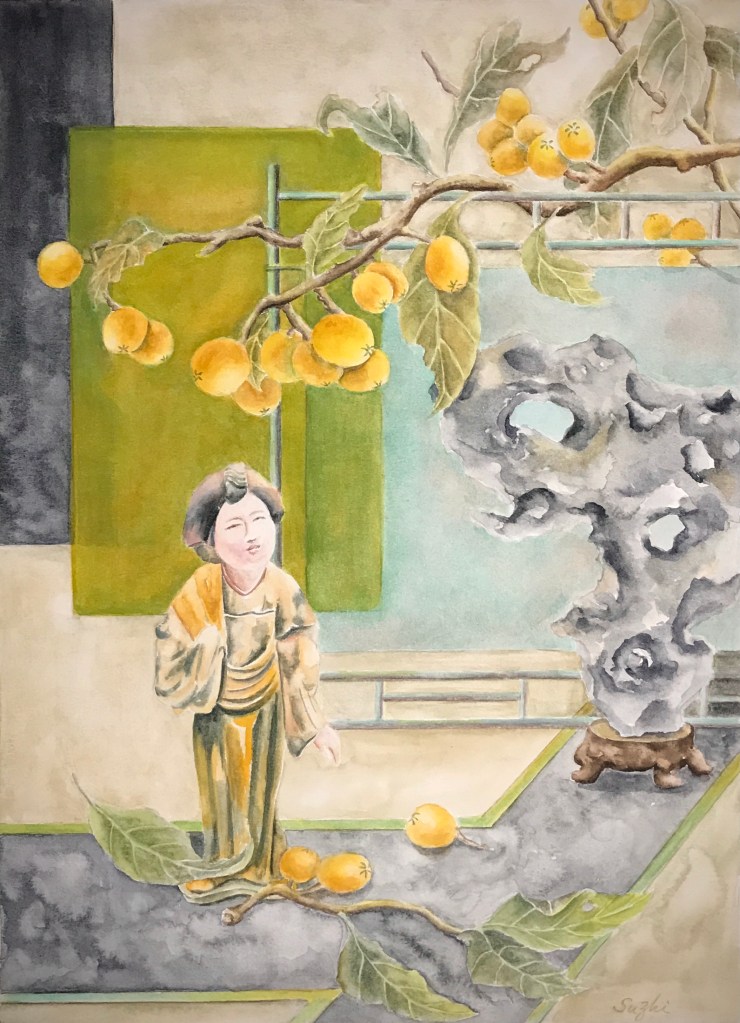
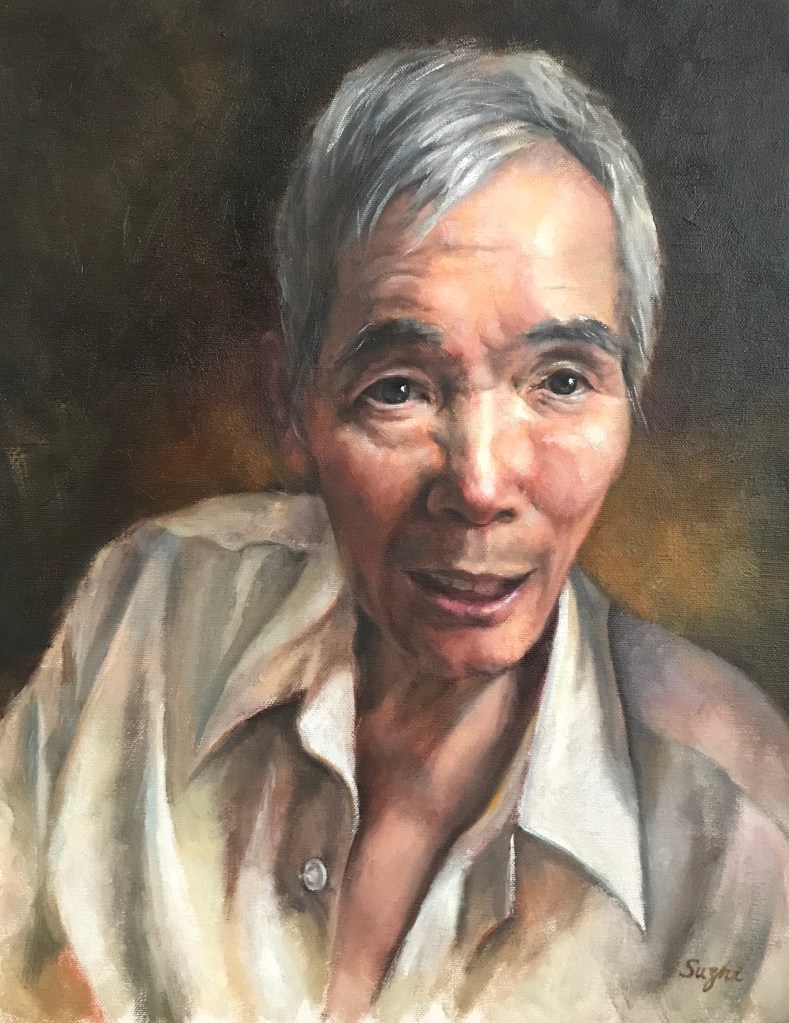
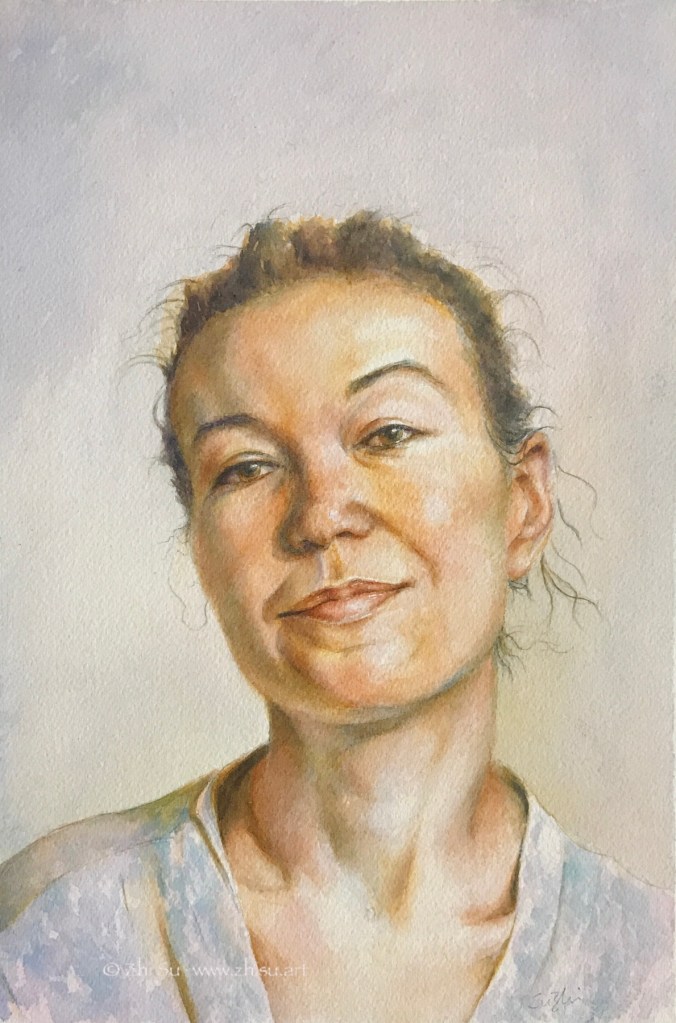
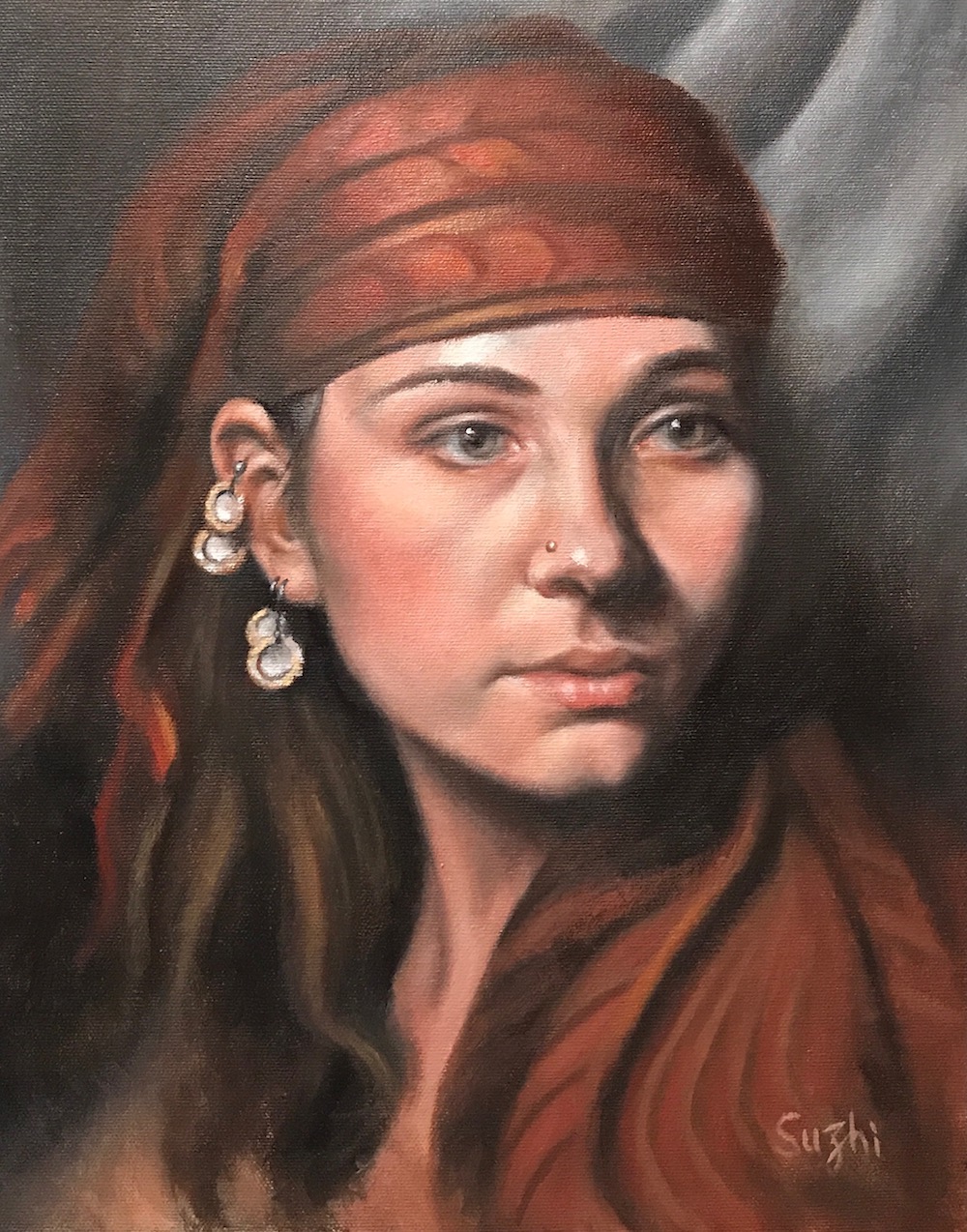
November had me on the other side of the globe again. This time I packed a couple of recent paintings to give as gifts for family. Lucky for me, framing in Beijing is much cheaper than in the States. I can afford to elevate my paintings a bit, which definitely makes the presentation better and adds to my confidence. Here are some of the paintings I gifted:

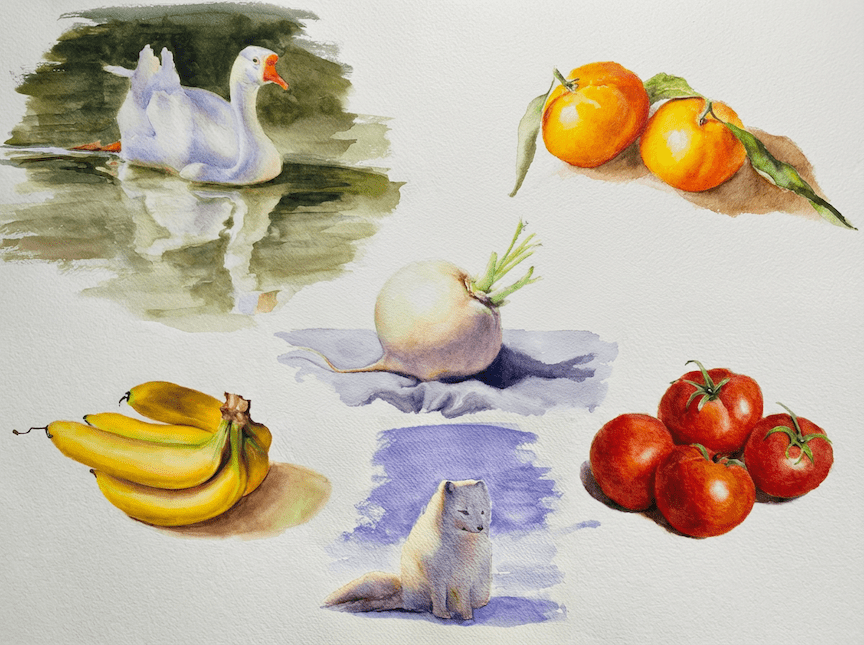
During my last long stay in Beijing, I decided to make the most of the situation by practicing watercolor. Oil wasn’t an option and watercolor stuff barely takes up any room. I am happy to report that I’ve actually stuck with the plan. My current goal in practice is trying to keep the colors clean. Small steps, but still moving forward.

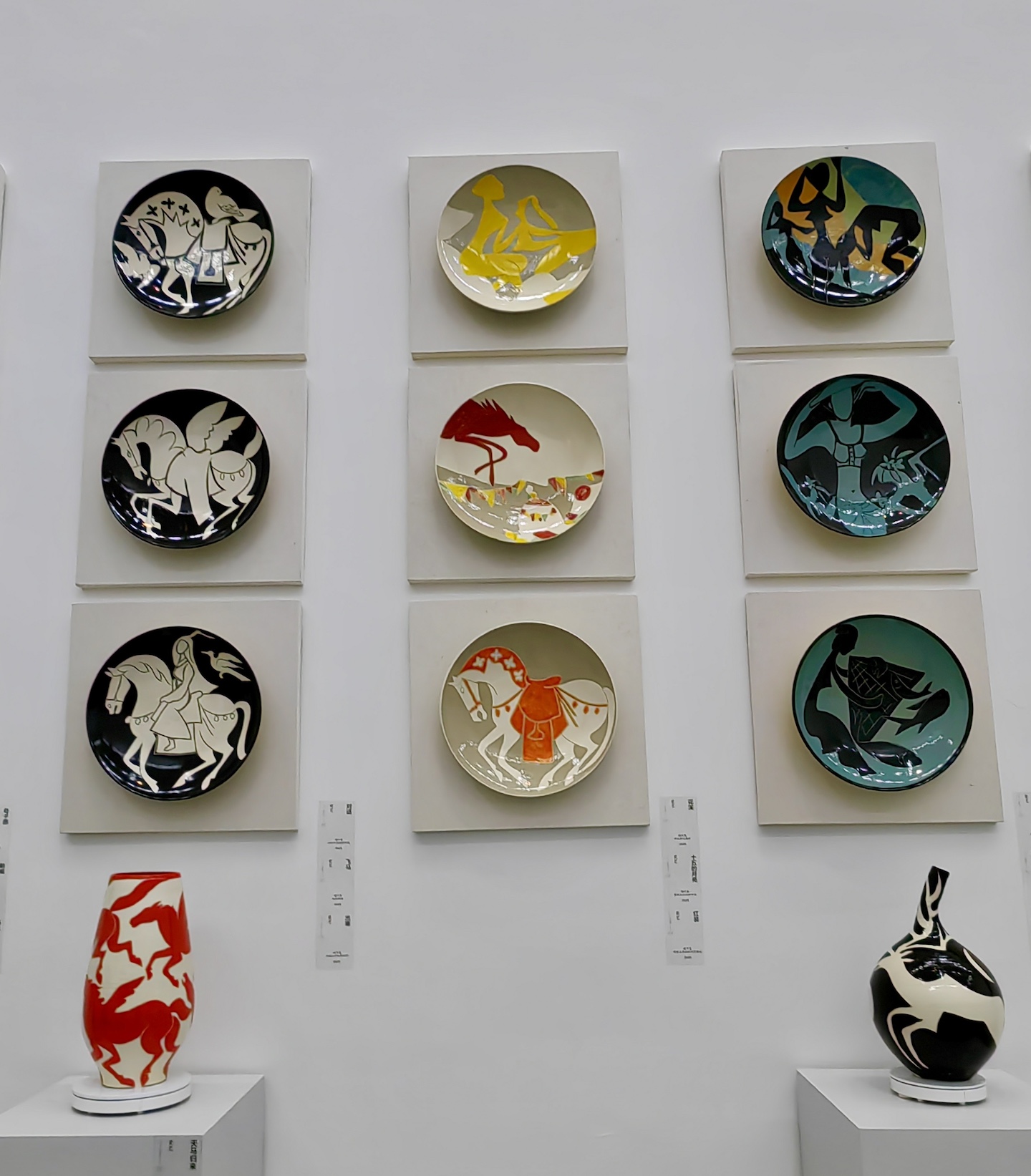
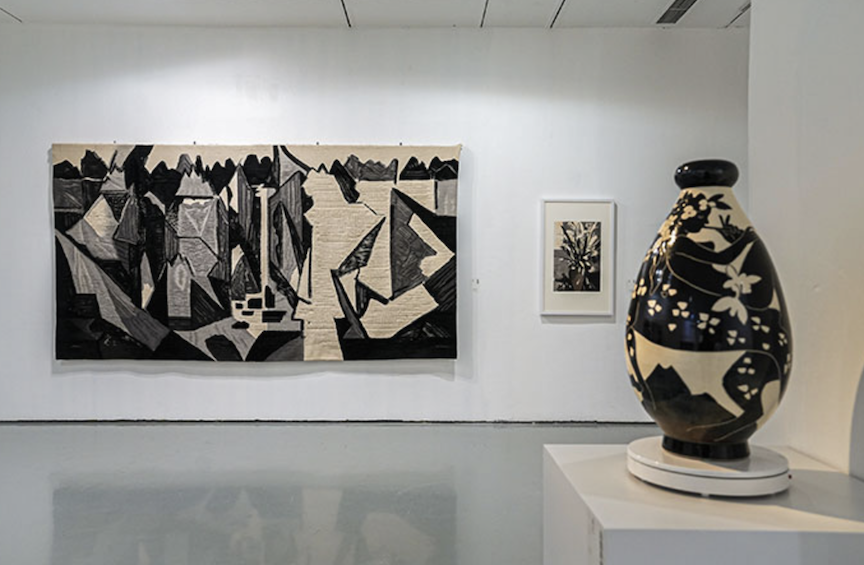
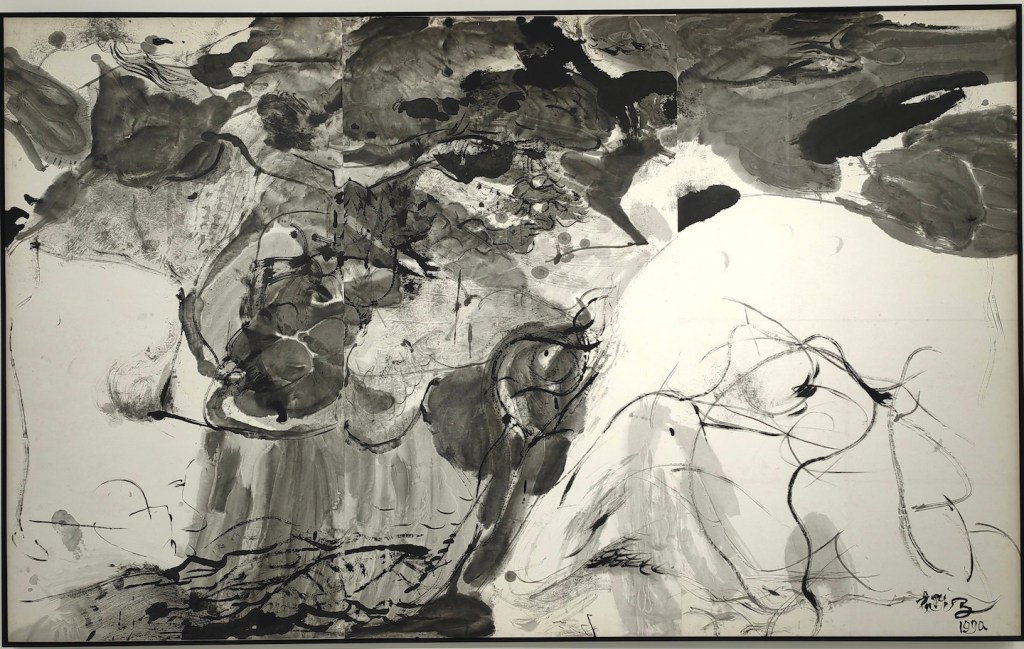
Gallery-wise, I saw Liu Jude’s 刘巨德 solo show at the Today Art Museum: Hearts Aflame for the Firmament. Liu studied at the Central Academy of Craft Art in 1965 and later worked under Pang Xunqin 庞薰琹 (1906 – 1985) in 1978, researching the comparison between traditional Chinese decorative art and Western modern art. He believes that painting should imitate the Tao that births all things: using the invisible Tao to paint visible objects, and using visible objects to paint the invisible Tao. His art isn’t constrained by the classification of genre or technique; he adheres to the traditions of Chinese decorative art but modernizes that formal beauty, making him unique in the Chinese art world. The exhibition featured over 200 new pieces by Liu and more than 100 ceramic debuts. Divided into “Ode to Peace” and “Ode to Hometown,” the show presented a kind of “chaotic beauty” and deep emotions for his roots.

In his artist statement, Liu mentioned: “Every time I paint, on the clean Xuan paper, I always put down thick black ink first, trying to occupy, grasp, and stabilize the whole space. As for what object that ink block, dot, or line represents, it is ambiguous, and I am not entirely clear. It is precisely this uncertain relationship of abstract points and lines that triggers me, pulling me to wander with it.”

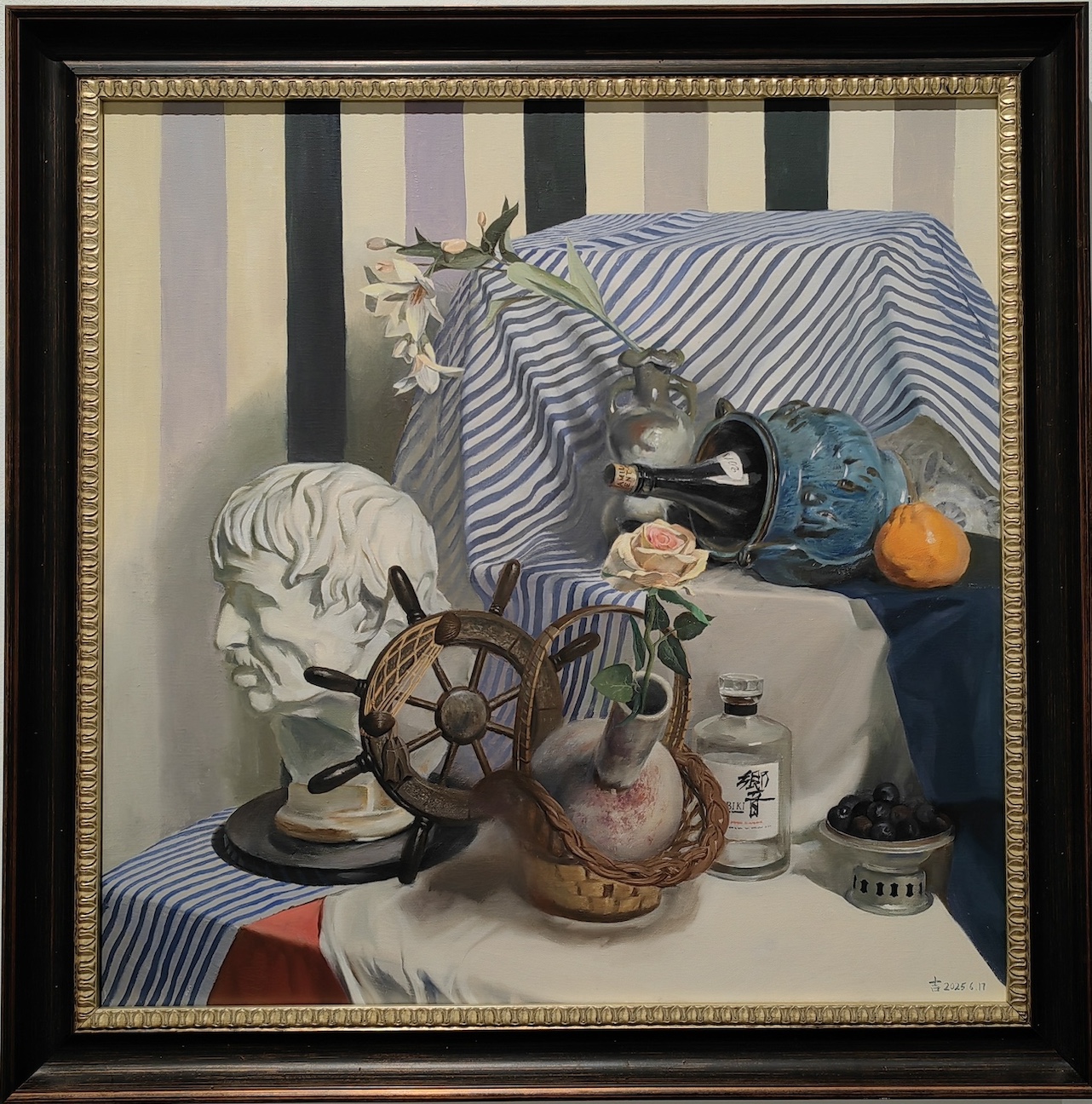
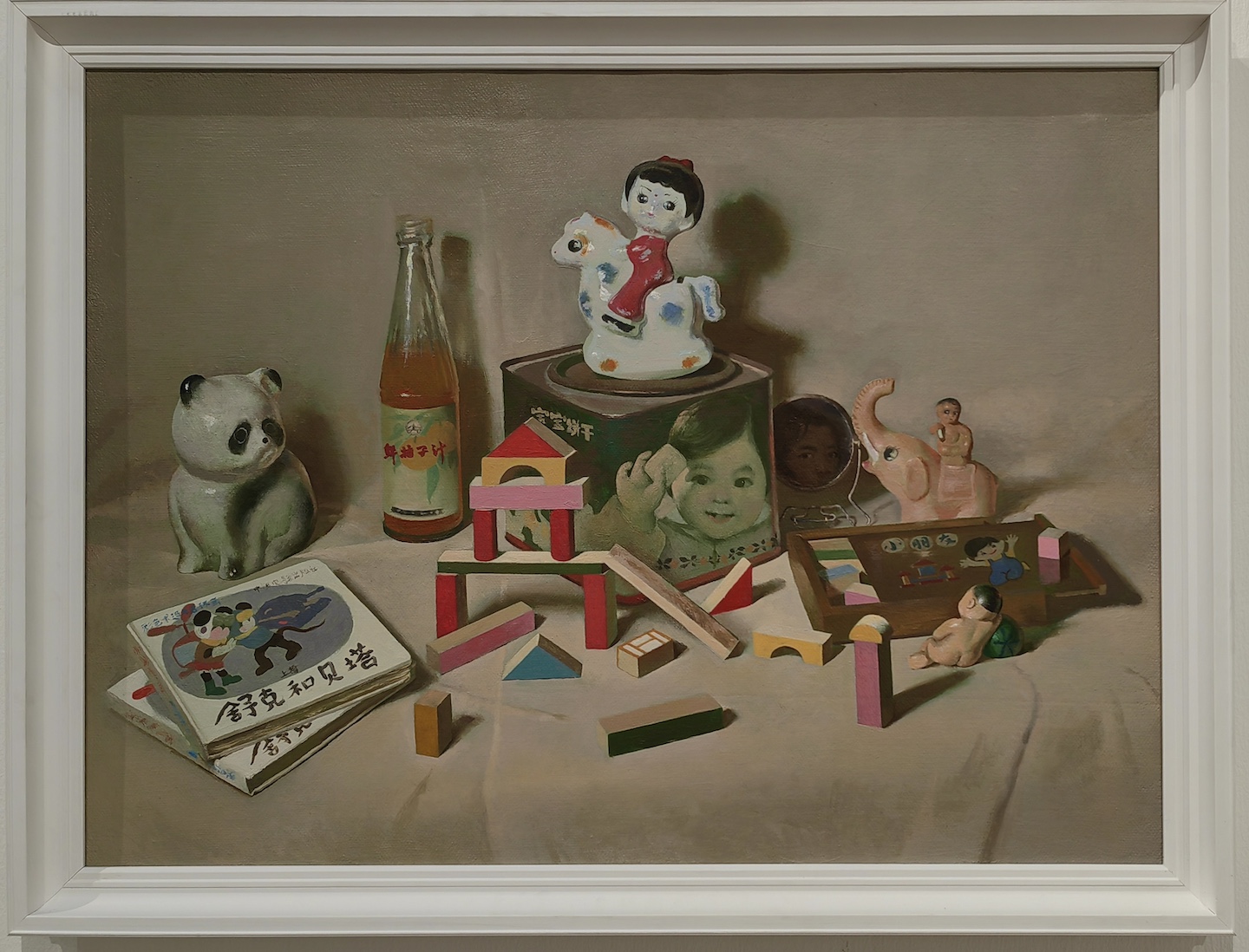
In comparison, the National Still Life Exhibition hosted by the Chinese Academy of Oil Painting felt … fine. Technically solid, just not particularly exciting.

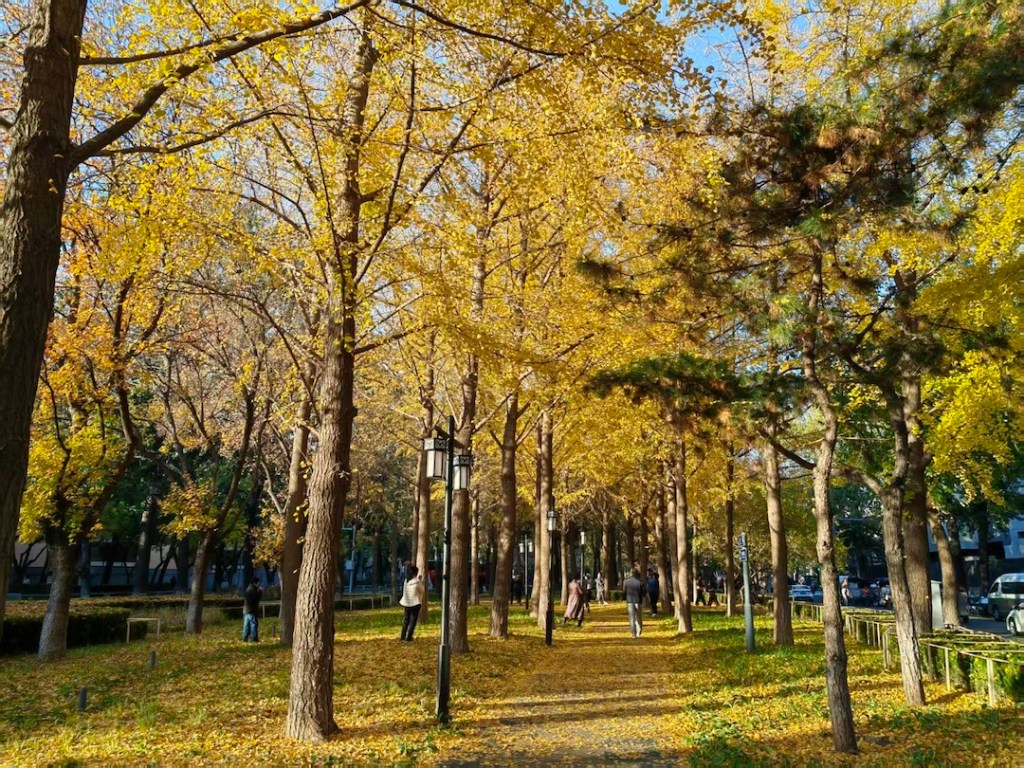
Finally, on one perfectly sunny mid-November day, I took this photo of a path covered in golden ginkgo leaves, a staple scene in Beijing’s autumn. Doubao, ByteDance’s (owner of TikTok) AI app, turned it into a watercolor painting. Love it or hate it, AI art will be a staple of the art world.

“He Makes the Distance Between All Things Disappear.”

[Note: The title is a quote from Spanish sculptor Francisco Baron’s preface to Car Li’s 1992 solo show in Spain.]

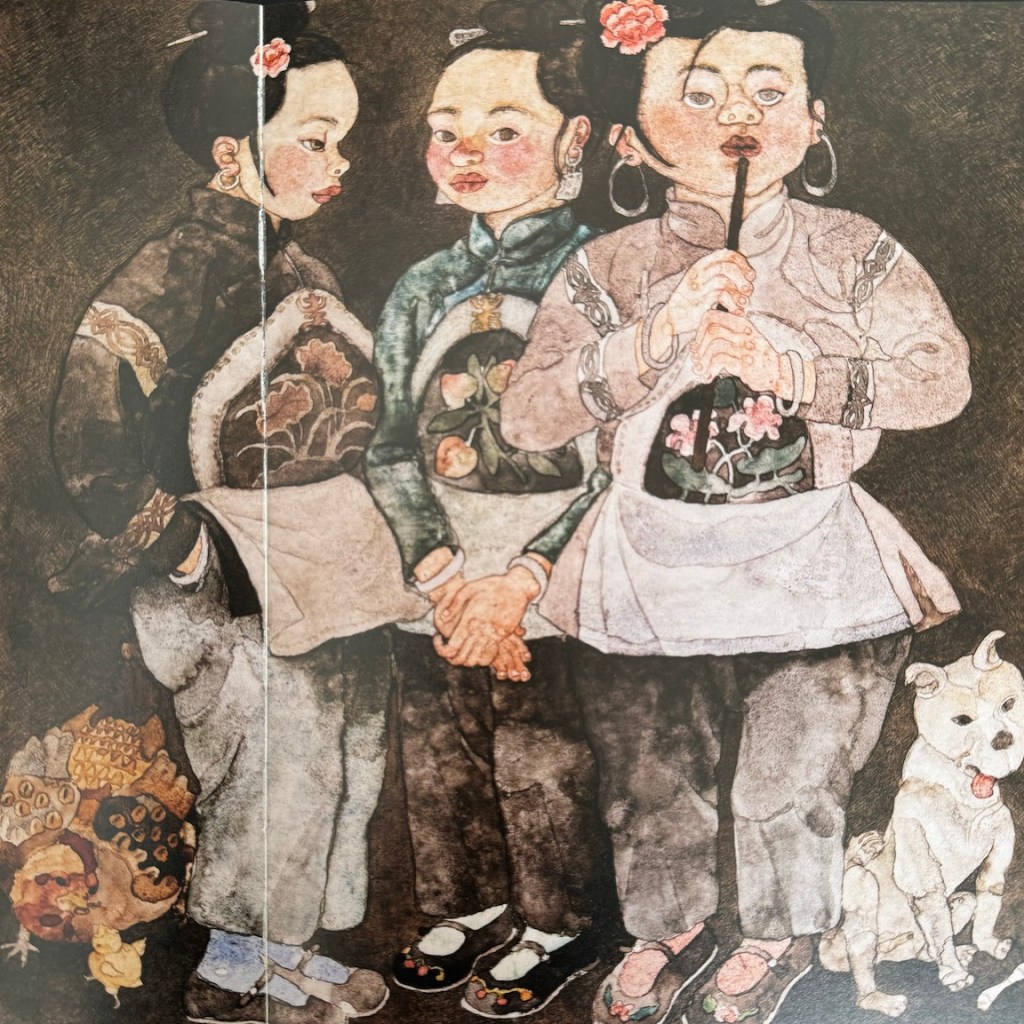
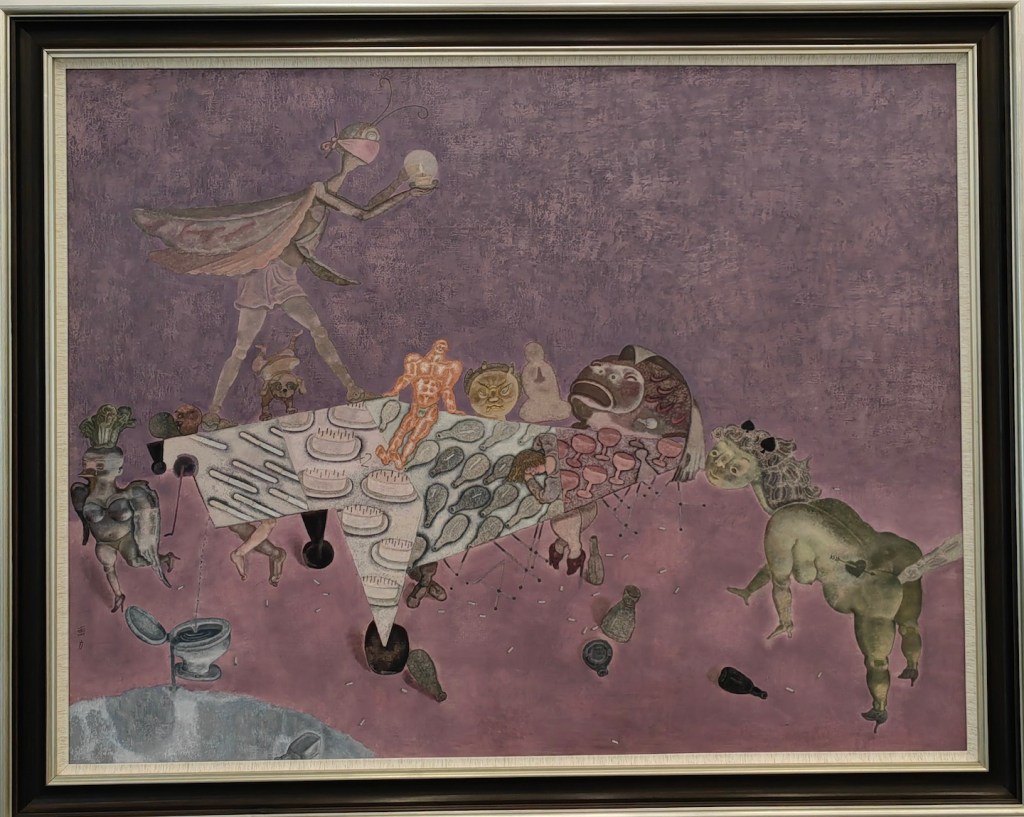
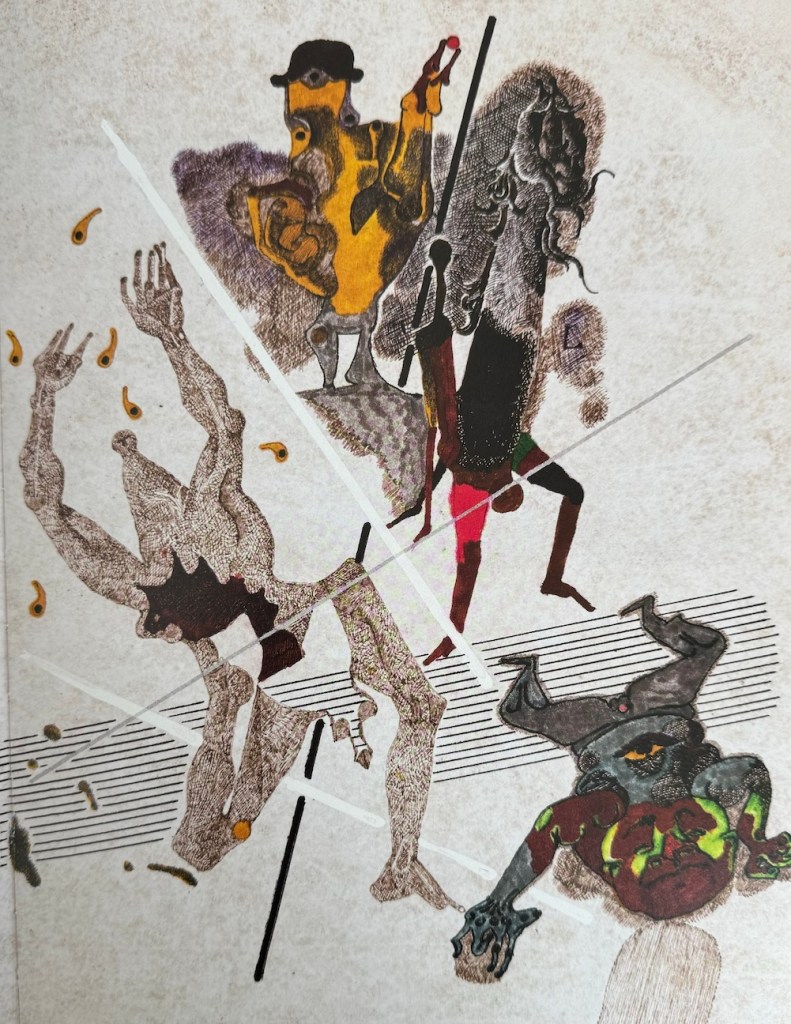
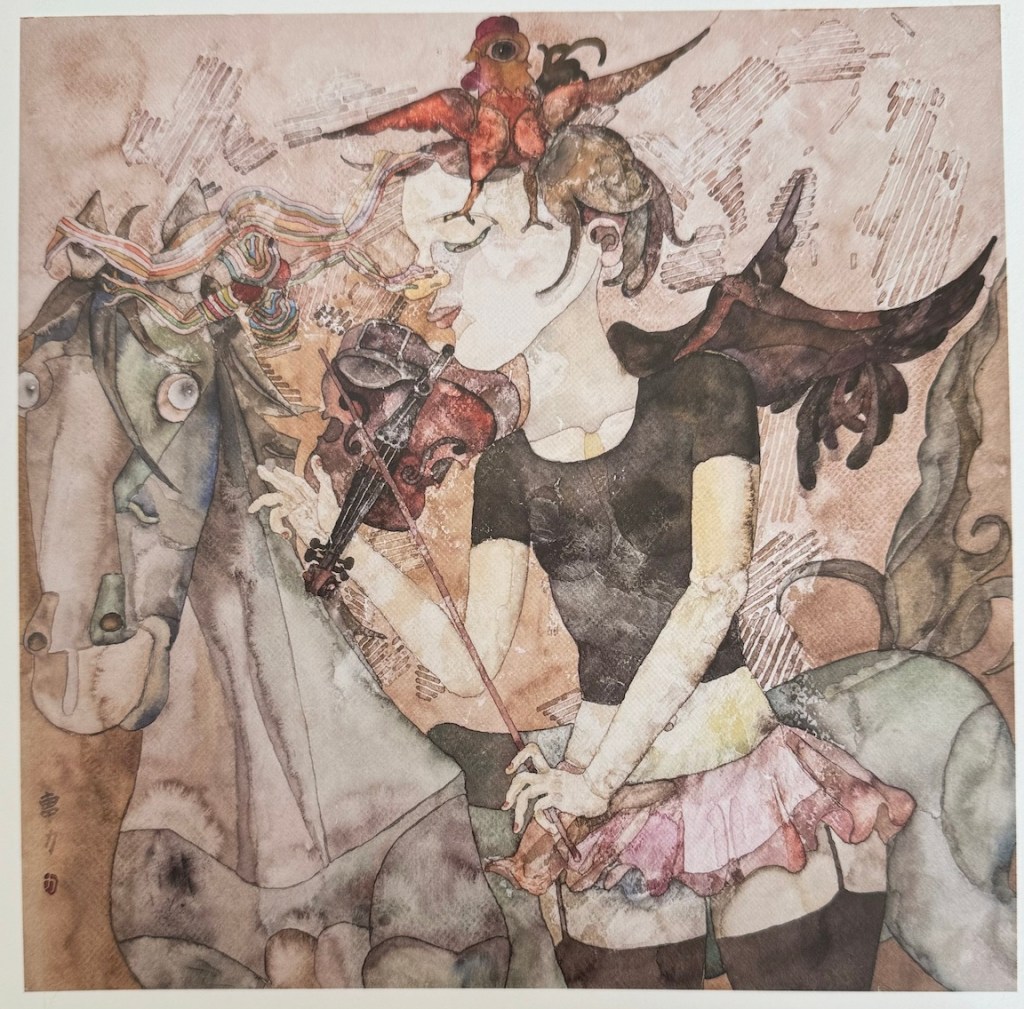
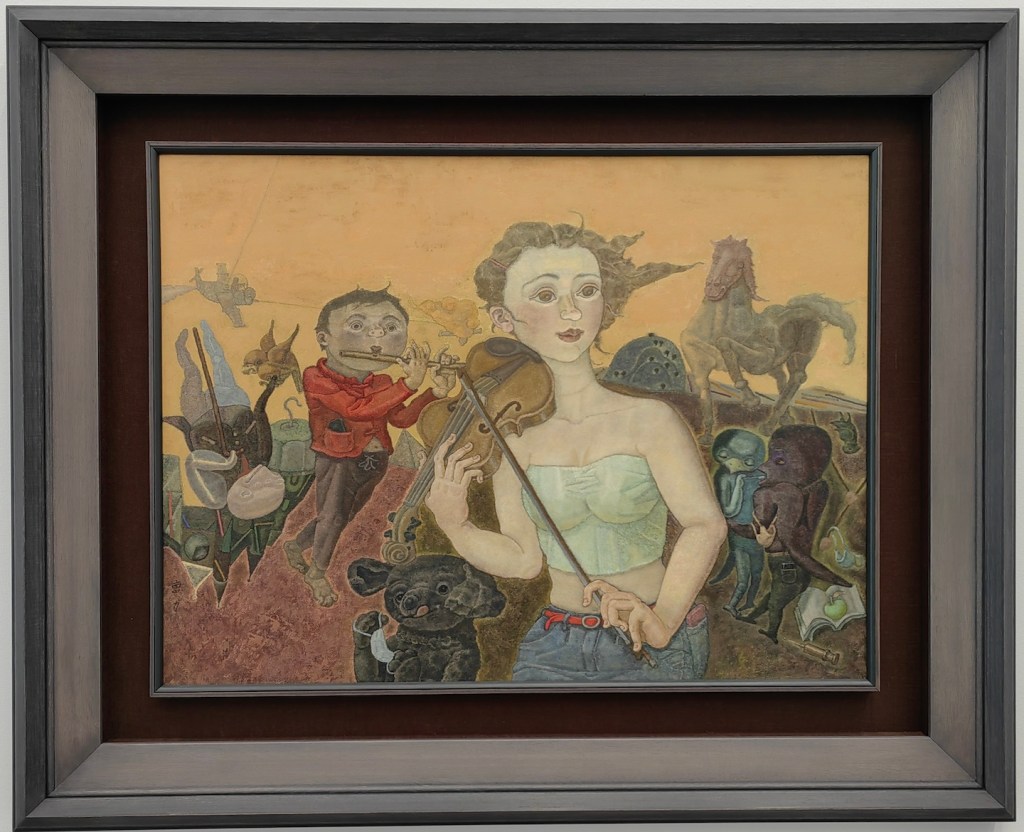
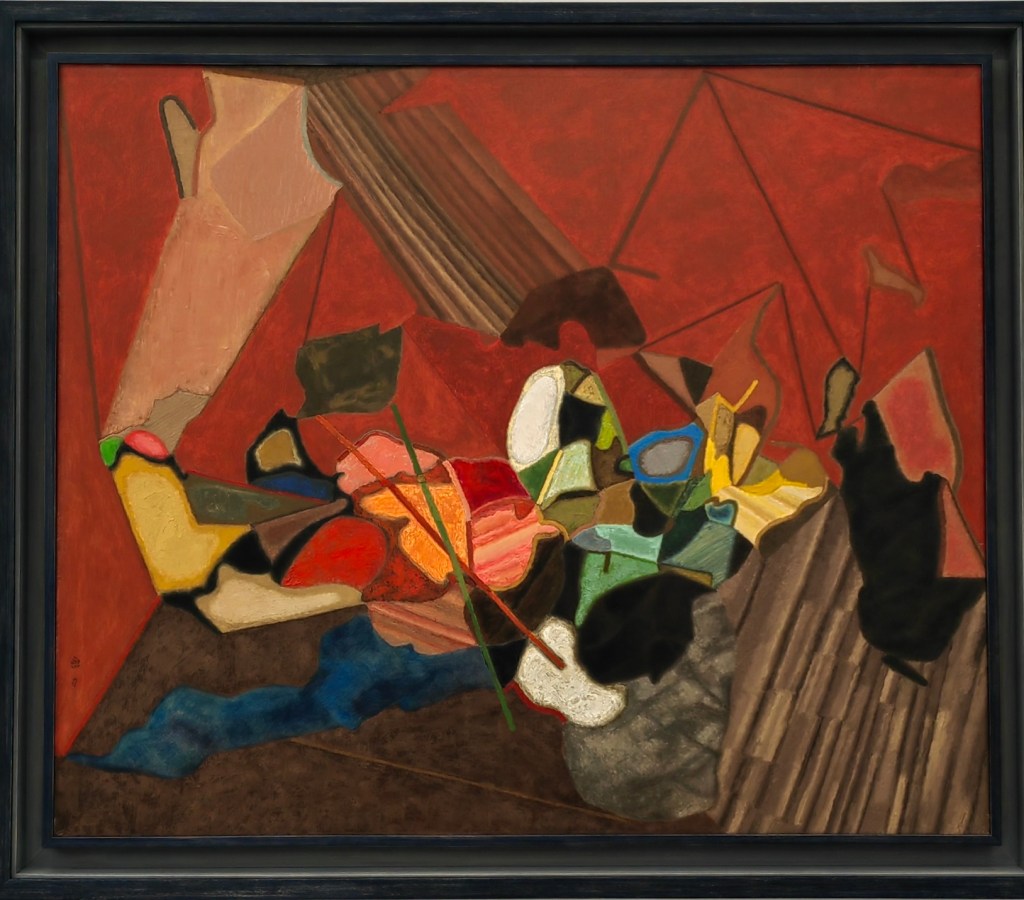
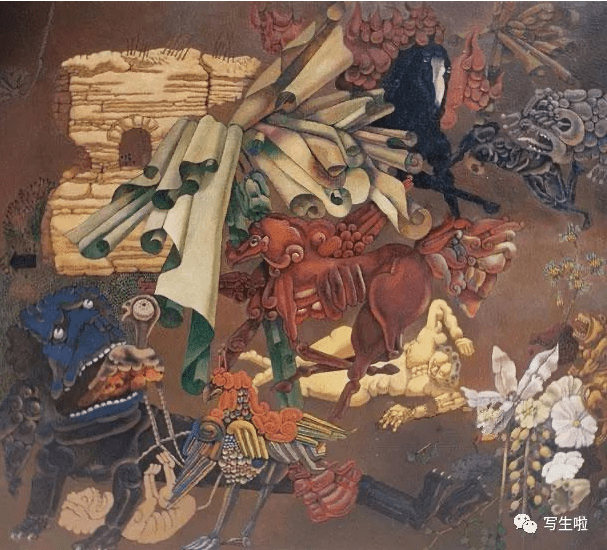
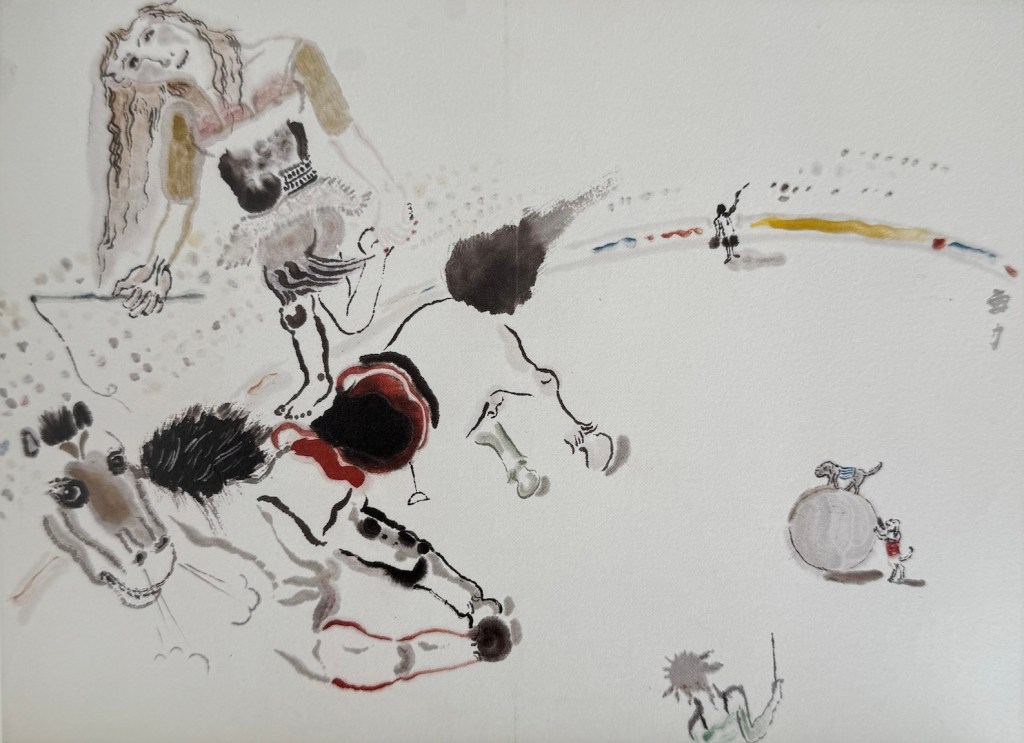
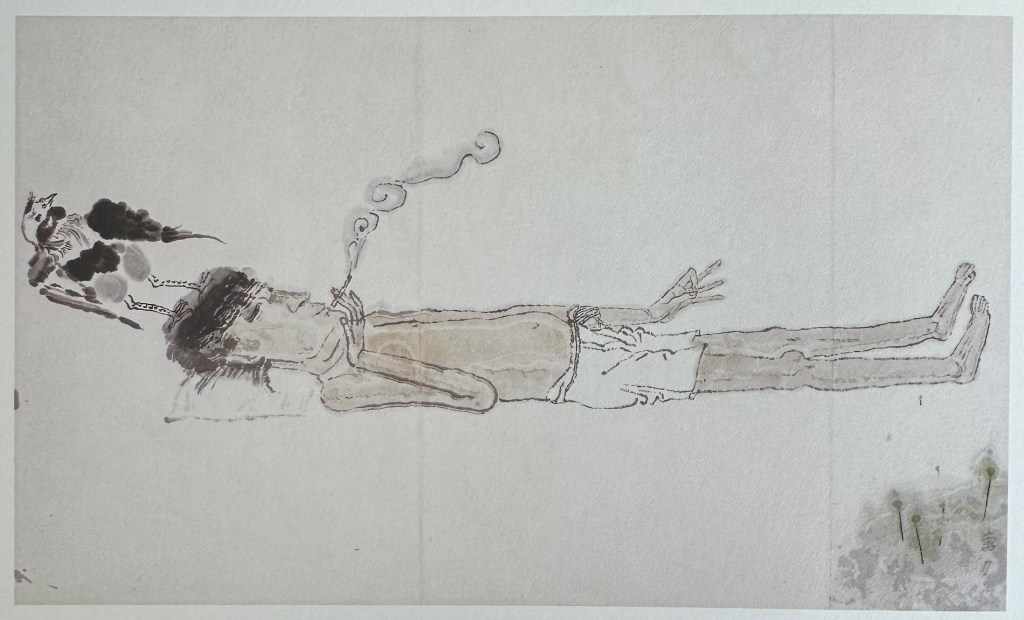
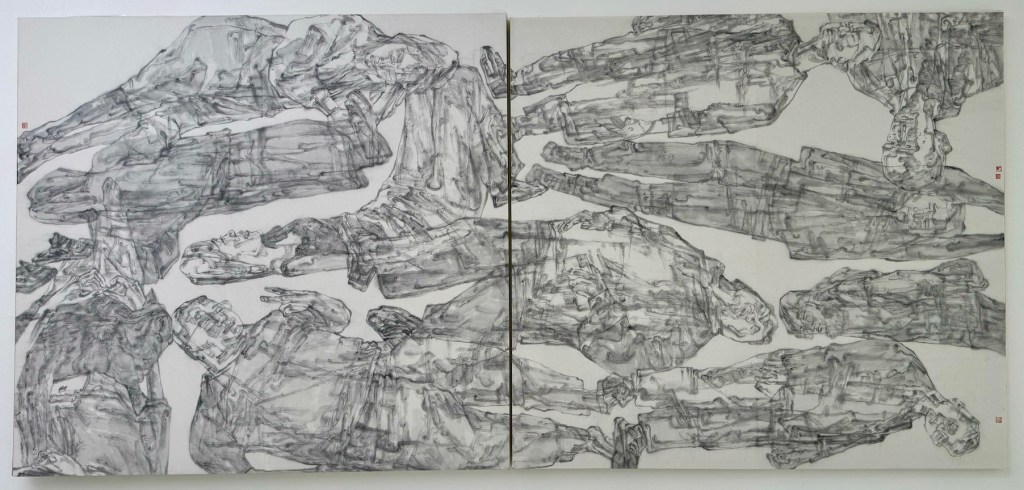
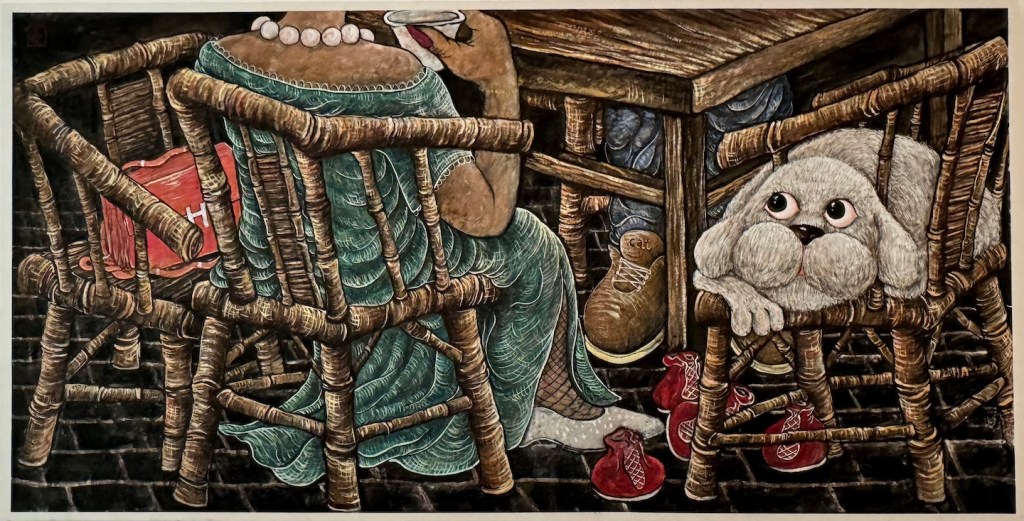
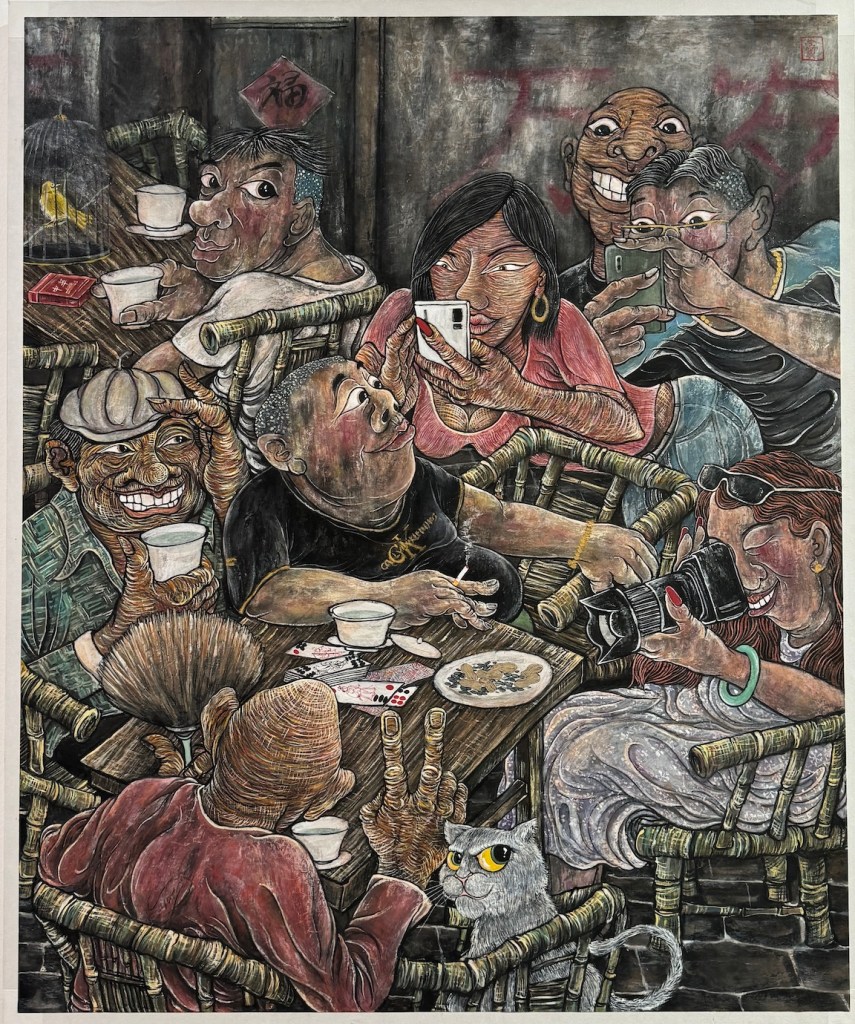
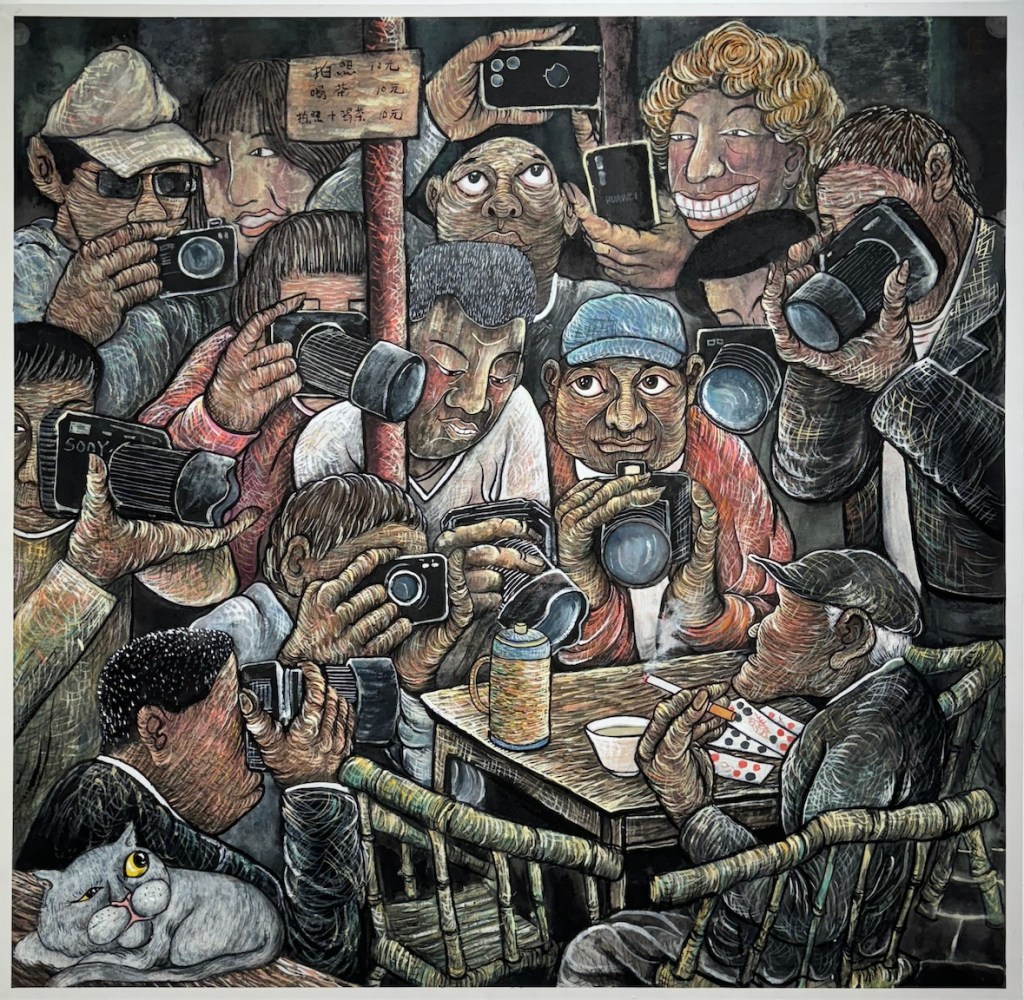
During my recent trip to China, I visited many exhibitions, and the works of one artist appeared in multiple shows, leaving a strong impression on me. He is Cao Li 曹力 (1954-), a professor of the Mural Department at the Central Academy of Fine Arts 中央美术学院. Cao Li has received traditional art training but does not carry the baggage of the academic style; in his work, he is unrestricted, and his imagination and artistic inspiration traverse ancient and modern, East and West. His themes range from reality to dreams, and his media include line drawing, watercolor, oil painting, wood carving, stone relief, etc.. His ability to move freely across different media reminds me of James Jean, though in terms of artistic expression, Cao Li is more mature and unrestrained. His works exhibit the absurdity of Dali, the seclusion of Klee, the alienating humor of Klimt, the multidimensional thinking of Picasso, the simplicity and innocence of Matisse, and the romantic imagination of Chagall. They also draw inspiration from traditional Chinese paintings, especially the murals of Dunhuang 敦煌, Yongle 永乐 Palace, and certain cave sculptures. 

In the artist’s own words, “Art knows no boundaries; it is the product of the soul, an expression of true feelings, the natural flow of life, a free flight. Nature itself is not art; only what flows through the filter of an artist’s soul can be called ‘art.’ It’s like the process of making wine: grains and grapes themselves do not intoxicate, but after brewing, impurities are removed, leaving the essence that can captivate and enchant people.”

Cao Li enjoys music, a recurring theme in his paintings. His lines, compositions, and colors move like melodies, possessing a lively rhythm. Influenced by his line drawings, his oil paintings almost always start with a planar structure of lines as the initial outline and main framework. He then enriches, thickens, and adds depth to the work through the organic organization of colors. He says, “I control the blocks of color, dots of color, color areas, and lines in the same way a composer arranges notes, tones, rhythms, and tempo. Once these ‘force points’ are placed in the right spots and combined in myriad ways, the disrupted calm space is reordered.”

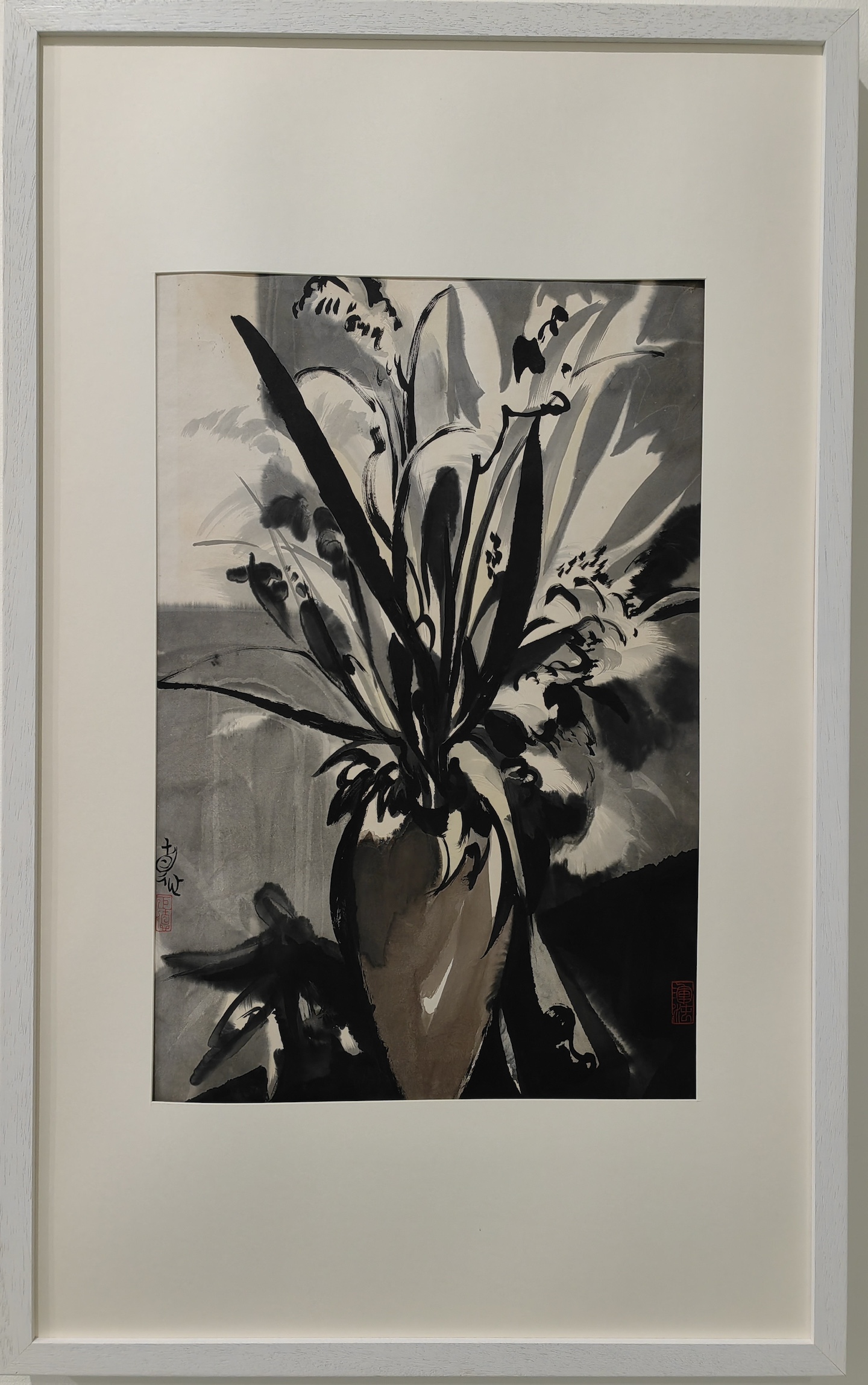
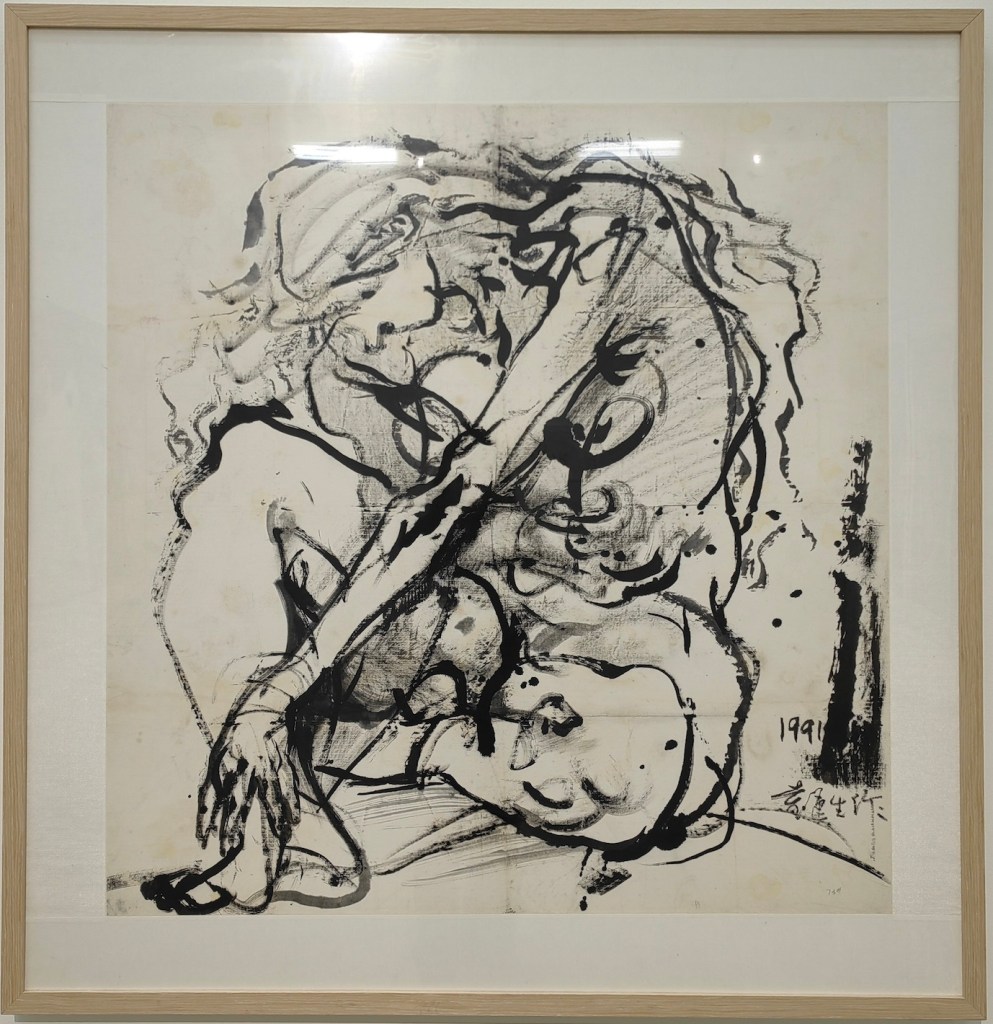
One aspect that interests me when viewing works by Chinese artists is their effort to blend traditional Chinese art with Western painting. The design of figures and the use of color in Cao Li’s works have a distinctly national character. His ink paintings even introduce modernist traditions. His teacher, the renowned artist Yuan Yunsheng 袁运生 (1937-), has taken this fusion even further by applying Abstract Expressionism to ink painting. In the 798 Art District in Beijing, I was fortunate enough to see an exhibition of his works.

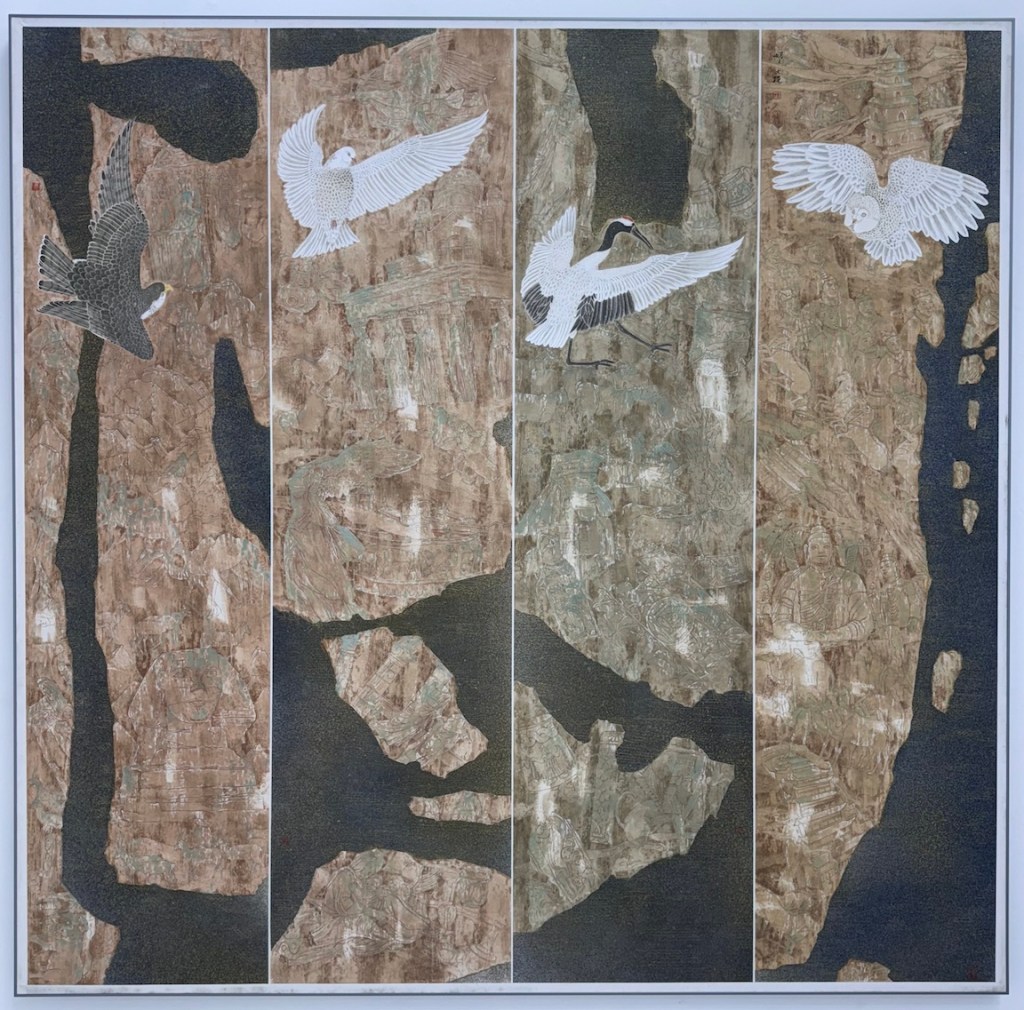
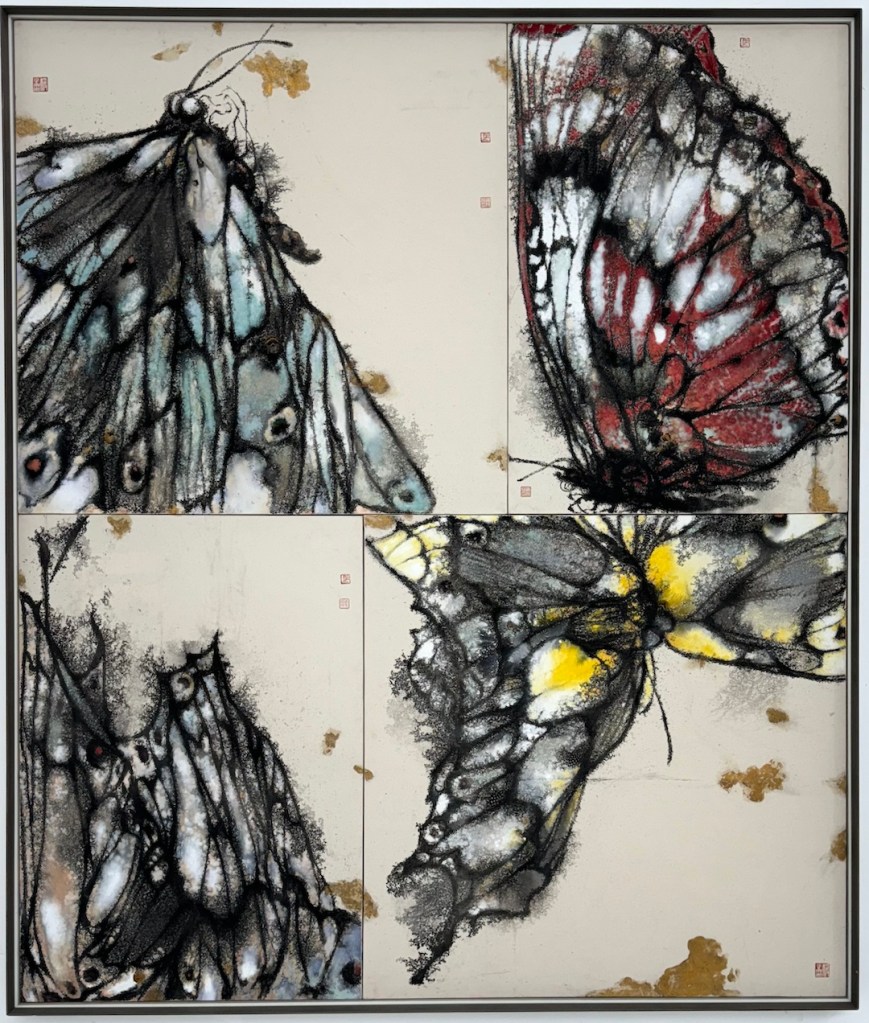
While visiting the Sichuan Fine Arts Institute 四川美术学院, I had the chance to view the “Chinese Painting MFA Invitational Exhibition 2000-2020.” These young artists originally studied Chinese painting, but now their works clearly show influences from oil painting, printmaking, and other art forms. Their use of media has also moved far beyond traditional paper and ink. They draw inspiration from the collision of diverse cultures, creating works that are more personal and profound. Unfortunately most of the artworks on display have glass cover, and makes it very difficult to photograph. I only captured a tiny portion of the treasures on display. 
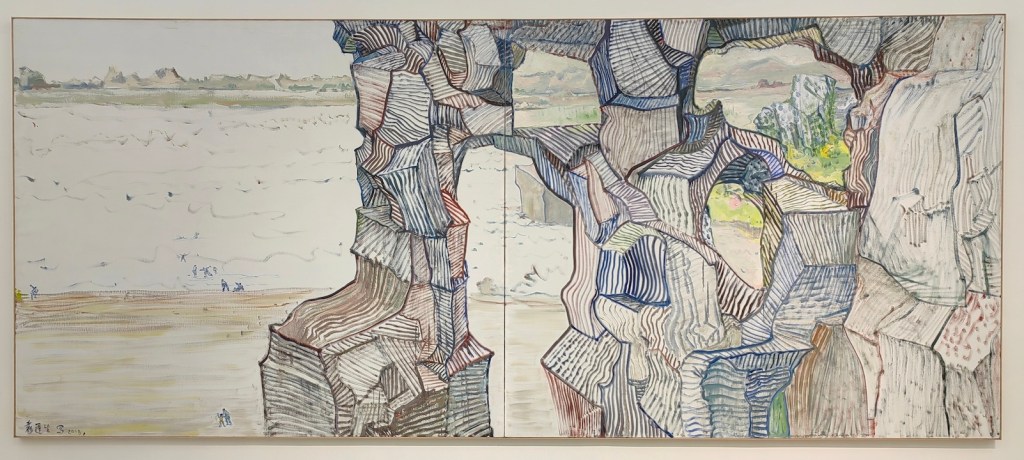
Here are some paintings from one of my favorite artists from the show:

Amid all the talking about the “lying flat” culture in China, it is quite exciting to see the art scene there is lively and flourishing.

P.S. Unlike in America, most of the Chinese artists don’t maintain personal websites. Artron 雅昌 is platform where many artists post their works, but the level of accuracy and maintenance vary. You can find more works from Cao Li here: 作品

Happy Halloween and the Forgotten Watercolor

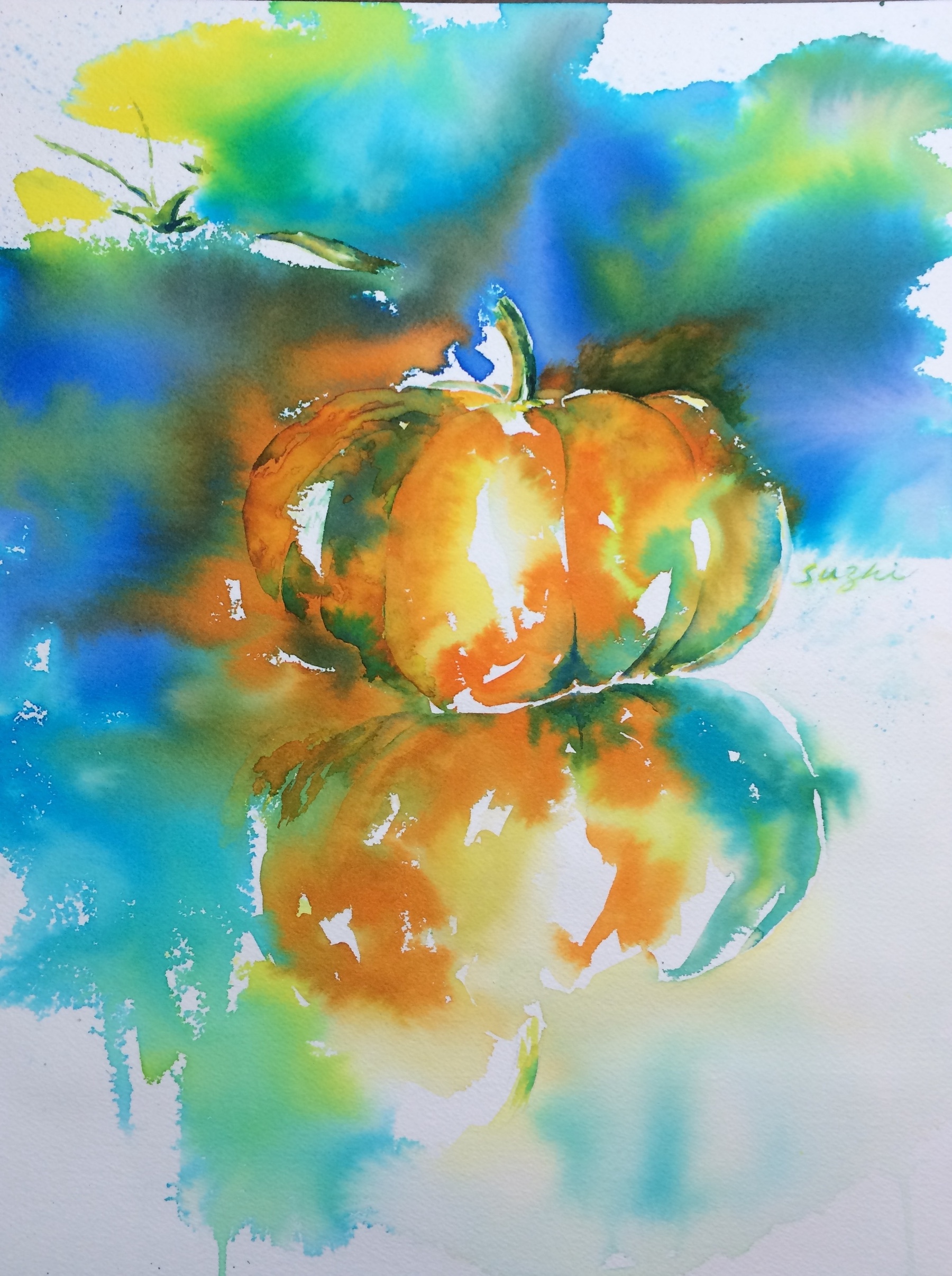
Nothing spooky here, just an old pumpkin! I can’t recall when I did this, maybe 10 years ago, when I could still feel the “water” in watercolor. Time flies!

Pumpkin, watercolor on paper, 9 x 12, 2015

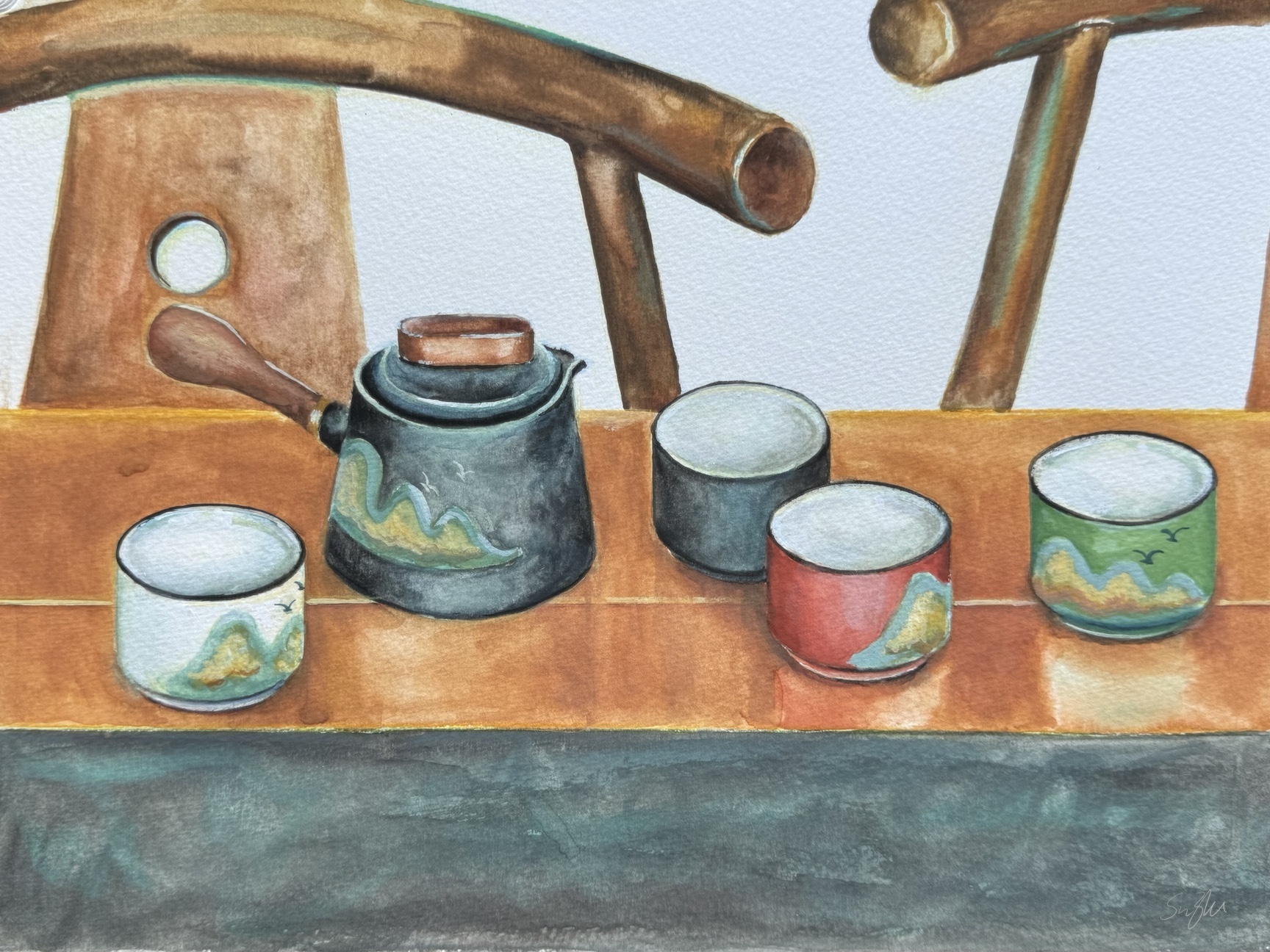
In the past, when I travelled, even with those lengthy stays abroad, I didn’t do any art. These past months when I stayed in China, inspired by all the art shows I attended (I will talk about these more in the future), I thought I should have kept things going. Oil being too troublesome, I managed to find watercolor paper and paint. My intention was to do some quick sketches or simple paintings, and these are what I’ve done:

Tea-set, watercolor on paper, 9 x 12, Sept. 2024
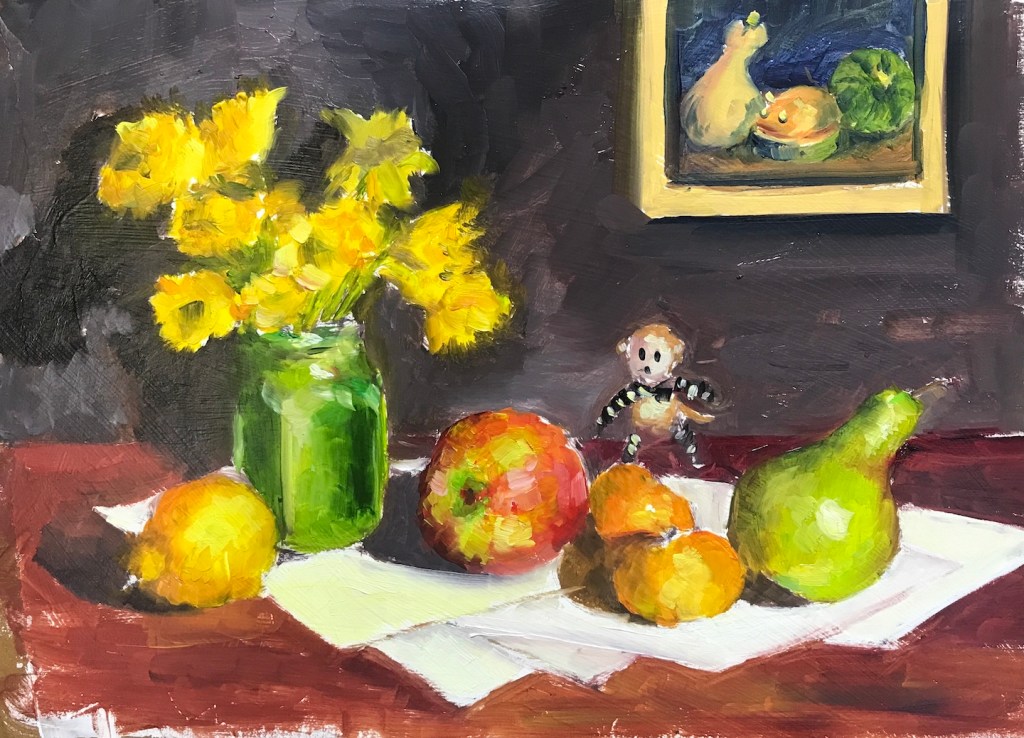
Fruit plate, watercolor on paper, 9 x 12, Oct. 2024

I found myself using watercolor the same way I use oil paint – controlled and layered. Despite their tight look, I didn’t spend that much time on each of these pieces, mainly because I gave up. I could have fine-tuned a lot more details, further emphasized the shadows and highlights, etc., but that was not what I set out to do. I missed the singing and dancing of colors in water.

In a way, the old pumpkin painting was not finished either, and the values probably don’t make sense. However, it was fun, and in my mind, it was what watercolor is supposed to be. 

I am not upset though. I haven’t practiced watercolor for a while so a bit lack of touch is fair game. I like my compositions and color choices, and that’s something. Most importantly, I didn’t let the trip completely cut off my art practice, and that’s quite a step forward!

Daffodils 

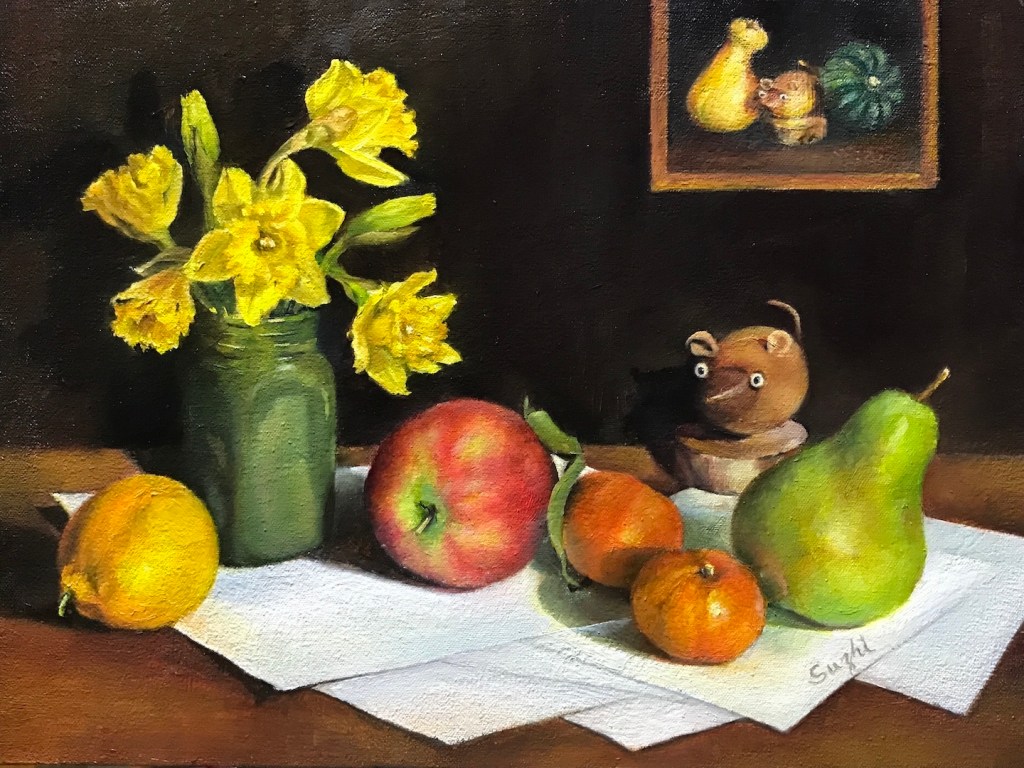
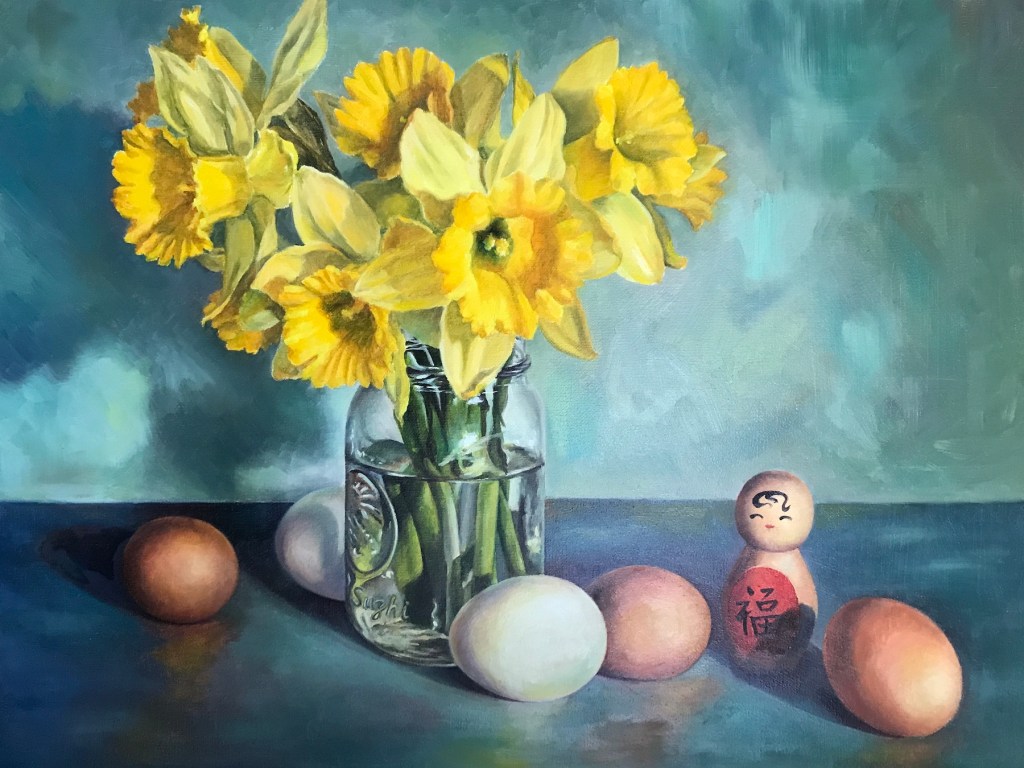
I know it’s the wrong season. I started these paintings in early spring, when Trader Joe’s still carried those cheap bunches of daffodils. It is a nostalgic flower for me; my father used to raise them around Spring Festivals. It is also a challenging flower to paint – yellow is not an easy color to keep clean. In addition, I wanted to try doing a quick preliminary study beforehand, a practice many accomplished artists advocate. 

Here they are:

Daffodils and Fruits, oil sketch on paper, 9 x 12 in. 2023
Daffodils and Fruits, oil on canvas board, 12 x 16 in, 2023
Daffodils and Eggs, watercolor sketch on paper, 10 x 10 in, 2023
Daffodils and Eggs, oil on canvas, 18 x 24 in, 2023

And here’s what I got from this experience:

  • As your can see, I did a one hour oil sketch before Daffodils and Fruits, and I liked the sketch better than the final painting itself. The looseness brings out a movement and a sense of humor that diminished in the meticulously rendered final painting. I am seriously  considering setting a timer for my future paintings.
  • The study for Daffodils and Eggs was done in watercolor and it was overworked for the purpose.
  • The blue overtone was an improvisation. The original setting was dull and it worked better with the watercolor than oil medium. I wanted to add some drama and energy to the rather mundane setup. I feel I made the right choice.
  • For me, doing a study beforehand took a bit of freshness out of the final painting process. It could be I was just doing it for the sake of doing it rather than as a process of exploring.
  • It occurred to me that still life as a genre that could be the most expressive for a realistic artist. You don’t get to do that much “directing” in portraiture or landscape. Though at this state, my main focus is still honing my technique, I need to be more thoughtful in choosing and orchestrating the subjects.
  • I did put a signature on Daffodils and Eggs. Can you find it?

Cézanne – Reading Notes (2)

Among the books I read on Cézanne, two of them focuses on his watercolor. They are Cézanne in the Studio: Still Life in Watercolors by Carol Armstrong, and Cézanne’s Watercolors: Between Drawing and Painting by Matthew Simms.

The two watercolor books are a rich collection of the artist’s sketches, finished and unfinished works in the medium. Watercolor and gouache were often used by old masters as studies for a bigger oil piece, and it seems to the be case for Cézanne early on. However, later in his life, when his reputation began to be established, he increasingly make watercolors as independent works of art.

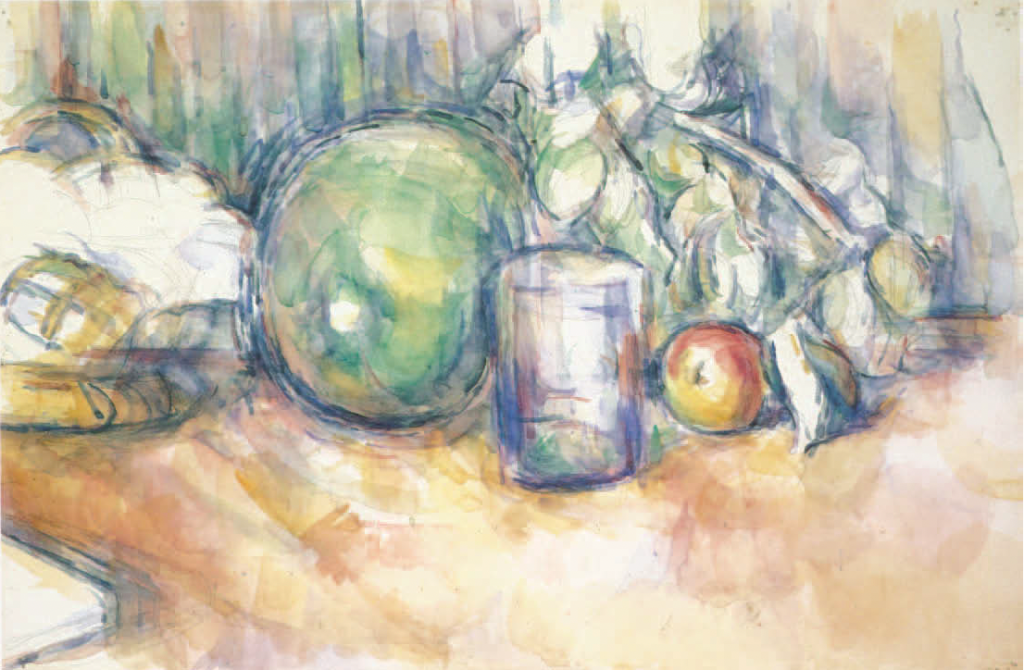
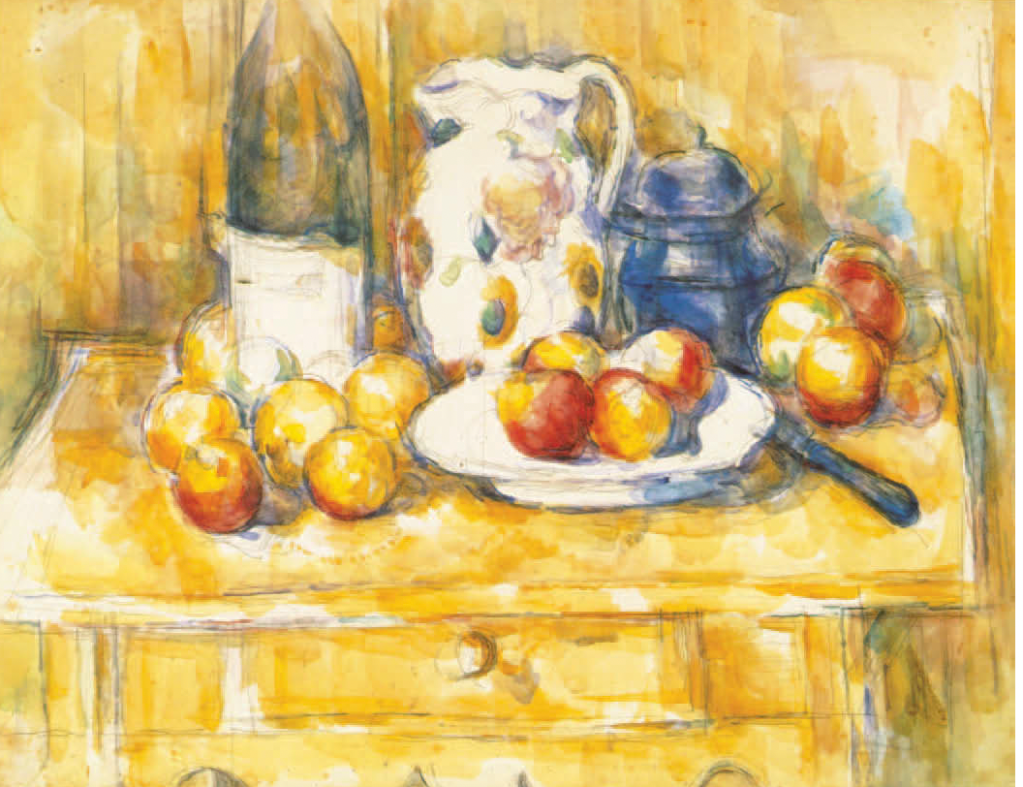
Cézanne’s watercolor is as unconventional as his oil paintings. The charcoal drawings, the white of the paper, and even the artist’s changing thought all become part of the composition. We see the draft, the negotiating and the final status on one page. This provides a unique window into the artist’s painting and the thinking process.

Still life with Green Melon, watercolor on paper, c.1906
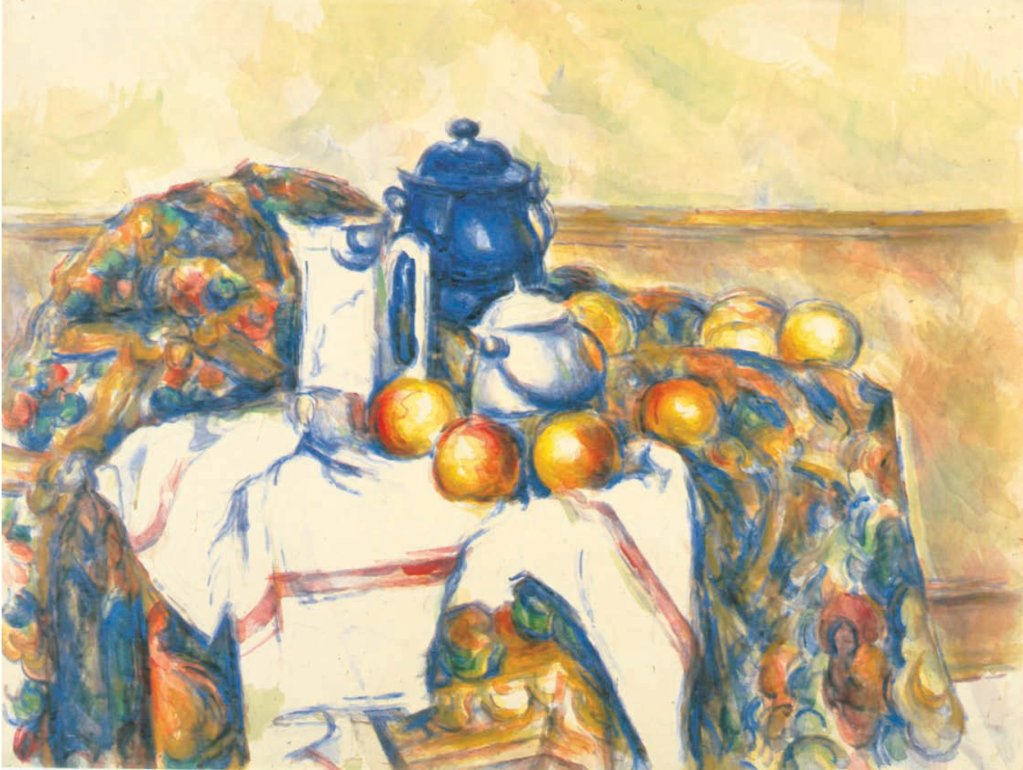
Still Life with Apples, a Bottle and a Milk Pot, watercolor on paper, c. 1904

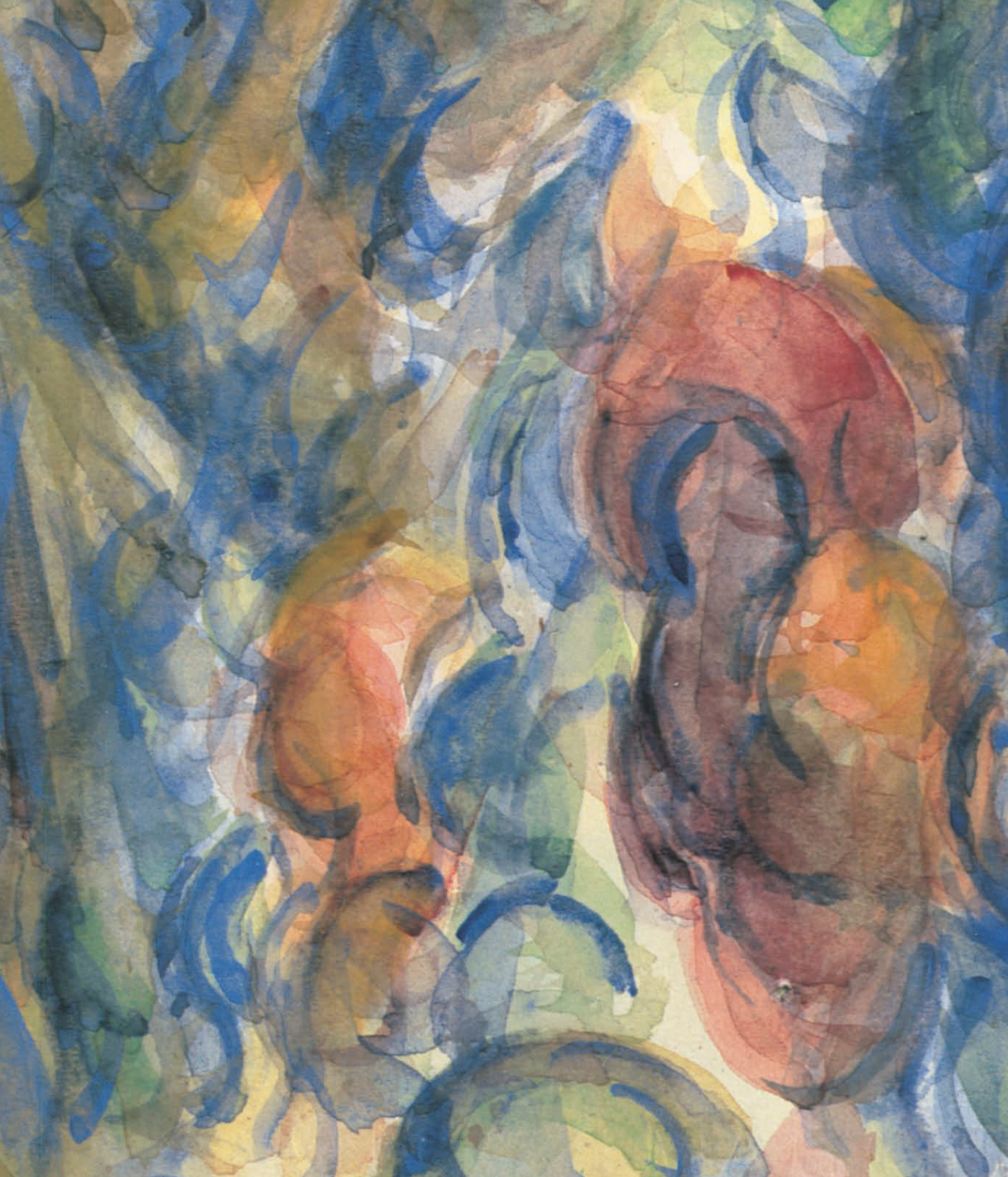
Unlike J. M. W. Turner (1775 – 1851) and other watercolorists, Cézanne adopts a touch by touch and color by color method. He layers translucent patches with gestural brushwork, resulting in a vibrant and casual overall appearance, with fragmentary and kaleidoscopic details. However, the actual process was deliberate and labor-intensive.

Still Life with Blue Pot, watercolor and graphite on paper, 48.1 x 632 cm, c 1900-1906

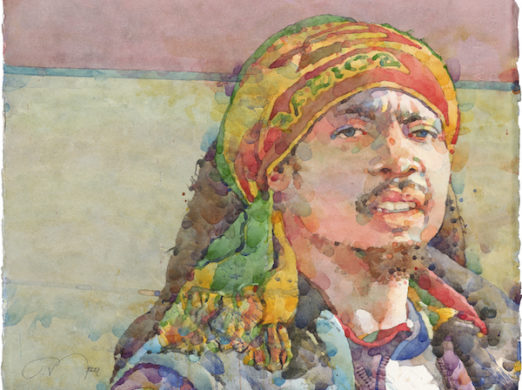
Contemporary figurative artist Ted Nuttall also employs transparent patches of colors to create energetic and vibrant paintings. While both artists are deliberate in their approach, Nuttall’s use of dots helps complete the painting, whereas Cézanne’s colors, used as lines, remain exploratory.

Africa, Ted Nuttall, watercolor on paper.

On a side note, for those interested, Cézanne uses a limited palette, as revealed by this nerdy study: “An Investigation of Paul Cézanne’s Watercolors With Emphasis on Emerald Green.”

Show News

Here are the group shows I participated recently:

“Works on Paper” exhibition, currently on view at the Pacific Art League:

Memory, watercolor on paper, 23 x 29 in.

Santa Clara Valley Watercolor Society 55th Annual Member’s Exhibition:

Once Upon A Time, watercolor on paper, 10.5 x 14 in.

“Portrait” Art Competition at Art Room Gallery:

Father, oil on canvas board, 14 x 18 in., February, 2023
Me, oil on canvas, 18 x 24 in, January 2023

A few notes:

  • The watercolors were originally painted a couple of years ago, but I did some major revisions this year before the shows. I have yet to figure out how to date works like these.
  • The experiment of revising past works gave me a lot of ideas. Some of the old paintings may find a new life, and some of the creating processes may never end!
  • The portraits are the first time I entered my oil paintings to a show. They both received “Honorable Mention.”
  • I feel lucky that the “Portrait” is an online show, because none of the pieces I entered is completely dry. Northern California was darn wet this past winter!

Zorn in Watercolor & Gouache

Watercolor portrait of model Felicia, Zorn palette, realism
Felicia, watercolor on paper, Fall, 2021
Watercolor portrait of old man, Zorn palette, realism
Old Man, watercolor on paper, Fall 2021
Gouache portrait of young girl, Charlotte, Zorn palette, realism
Charlotte, gouache on watercolor-board, Fall 2021

A few notes:

  • For the watercolor paintings, I planned two different approaches, a softer and muted one, vs a more vibrant and contrasted one. The results were somewhere in the middle. Especially for the first painting, I wish I had softened some edges and let go certain definitions instead of spelling out everything I saw.
  • The gouache one is a homework from Watts. It is a practice of the Zorn palette and the tiling technique. I found both the medium and the technique challenging. Tiling is to juxtapose thick layers of close-value paints and blend them (if necessary) later. It’s a good preparation and practice for oil painting, but it requires a lot of patience in value control and shape design. Hehe, patience! 😉

Recent Works, Still Zorn …

Oil:

Oil painting of a young woman with head wrap, earrings, Zorn palette, realism
Young Woman, oil on canvas board, 11 x 14 in, July 2021
Oil painting of a young woman with earring, Zorn palette, realism
Young woman, oil on canvas board, 11 x 14 in, July 2021

Watercolor:

watercolor painting of a young man with  green jacket,, Zorn palette, realism
Jeff, watercolor on paper, 9 x 12, July 2021

The more I learned about anatomy and head drawing, the more I am afraid of making mistakes, and the tighter my paintings become. Especially in watercolors, things were all under control (to the extend of my ability of course). They rarely just happened. The recent Draftsmen podcast mentioned how as a student, one learns and memorizes everything, and later forgets everything to become an artist. Hehe, we’ll see.

Zorn and Quasi Zorn

Zorn in oil, the usual approach:

Raven, oil on board, 11 x 14, June 2021

Quasi Zorn in watercolor:

Girl, watercolor on paper, 9 x 12, June 2021
Amanda, watercolor on paper, 9 x 12, June 2021

Quasi Zorn is 1) when I realized that I didn’t have ivory black and cadmium red in watercolor and replaced them with neutral tint and pyrrole red; and 2) when I couldn’t decide if the white of the paper counts or I should use the titanium white. The paper white doesn’t help in mixing colors, but the titanium white turns everything too opaque. I will keep digging and meanwhile order some new colors!

Show News

California watercolor artist Mike Bailey once said in his workshop that artists should keep going back to their old works and find inspiration there. In the past, that’s something I rarely did. My own works used to make me sad. If they are good, I feel like I haven’t made any progress, and if they are bad, I am bad. Last year when I started my social media presence: this blog and my Instagram, I managed to go through some of what I had done with Mike’s words in mind. It took some getting used to, but after many self-pitying moments, I saw sparks. There are things that generate ideas, things that remind me of techniques I learned and forgot, and things I simply want to re-do.

One of the sparks is an old abstract acrylic painting “Waterfall”, a design still excited me:

Abstract landscape, acrylic on canvas, primary colors
Landscape, acrylic on canvas, 24 x 30

I kept the design, but drifted away from the primary colors and brought in the fluidity of the watercolor medium. Here’s the new version:

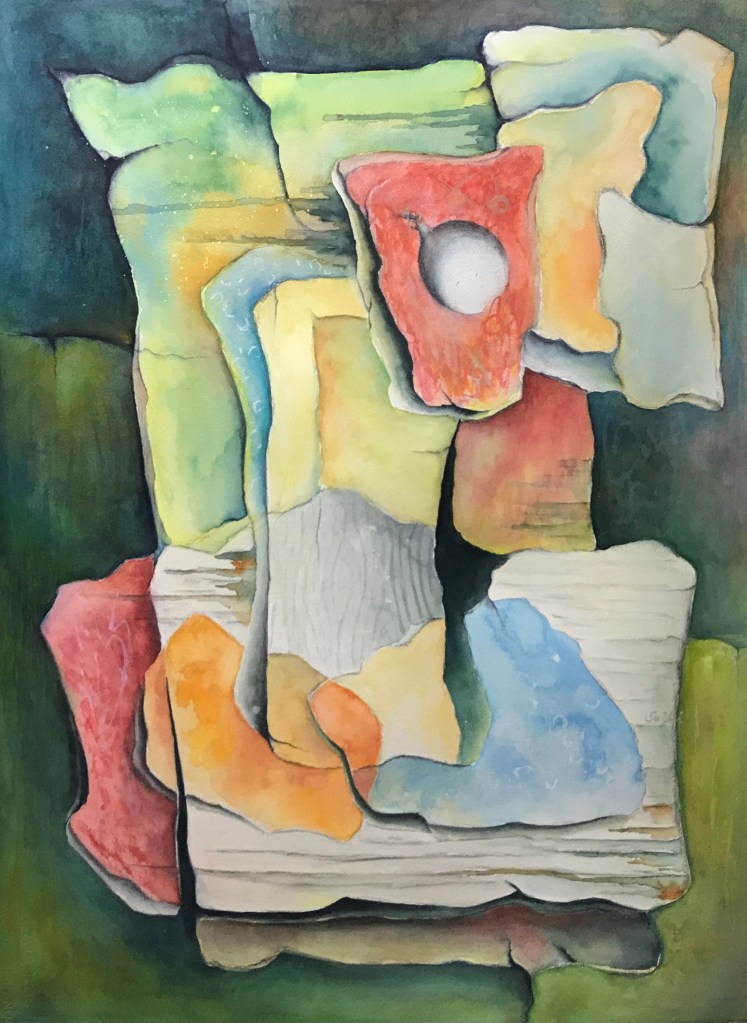
Abstract landscape, watercolor, colorful
Waterfall 2, watercolor on paper, 22 x 28 in, 2020

The new piece entered the juried Watercolor Group Show at Blue Line Arts Gallery last year and is also part of the Santa Clara Valley Watercolor Society 53rd annual show. SCVWS is rolling out the participating artworks on Instagram now.

The “treasure hunt” will keep going! 😁

Earlier this month I also submitted a self-portrait to Art Room Gallery’s Portrait Show, and received an “Honorable Mention.” Here’s the artwork:

Watercolor portrait of the artist, abstract, pouring
Decision, watercolor on paper, 9 x 13 in, 2021

As I mentioned before I have been focusing on portrait this year. Though techniques are still my major concern, and I understand it takes far more than the a few months to grasp it, I do often think about if I could go deeper than just the face. “Decision” is an attempt to bring out a bit of the inner world of the subject.