Tag Archives: #stilllife

Color Studies (1) – Complementary and Temperature

A most common way to practice complementary colors is simple choose a pair and limited your palette to those two (plus tints, shades, mixtures maybe). Like this:

Pastel drawing of a horse(?) skull
Skull (horse?), soft pastel on paper, 18×24 in, 2018

Whichever pair of colors we choose, it is most likely one warm and one cool. In a painting lesson I took years back, we used the complementaries a bit differently. We create a painting in cool colors, and paint the warm complementaries on top. Here’s the result:

Still life, acrylic on canvas board, 16×20 in, 2018

Unfortunately I failed to take a picture of the cool painting underneath, though I did let the cool colors showed through here and there. The colors were not strictly restricted to one pair of complementary colors, but it is within certain range.

I’d say the result is quite different than if I started with these topical colors. There’s a solidity and unity unique to this method.

Morandi (2) and Pairs (III)

This was a class assignment – choose an artist to study, and then paint in his/her style. I was very into Giorgio Morandi at the time (still am now), and he became the subject of my study. To my delight, during my research, I found out that Morandi was very much influenced by another favorite artist of mine, Paul Cézanne; and he in turn, heavily influenced a contemporary artist I admire, Wayne Thiebaud (b. 1920). Have I found my “art parents?” (A term I learned from Draftsmen Podcast, S1E5.)

So I set up a still life scene and gave it a try:

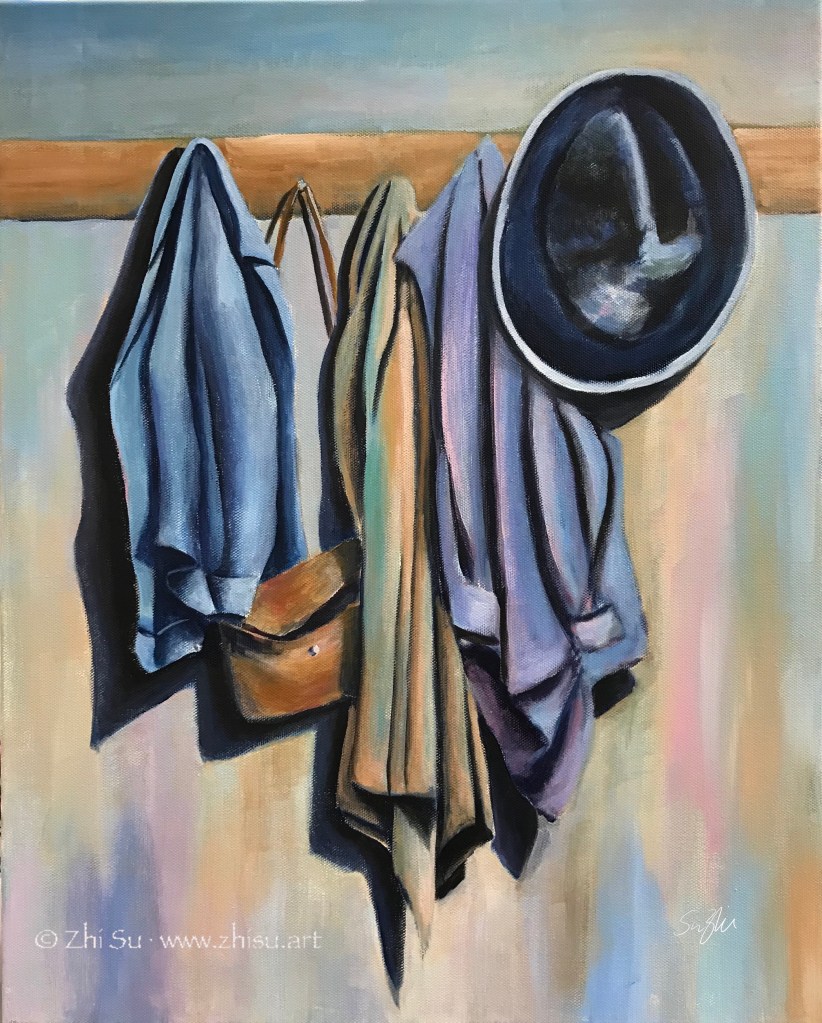
Acrylic painting of clothes hanging
Still life 1, acrylic on canvas, 16 x 20 in, Spring 2018

I know, there’s nothing Morandi about it (see my previous post about his style). The objects are asserting and the colors are singing. I don’t dislike it as a painting, but it’s definitely not the reservedness and tranquility I was after. So I gave it another try:

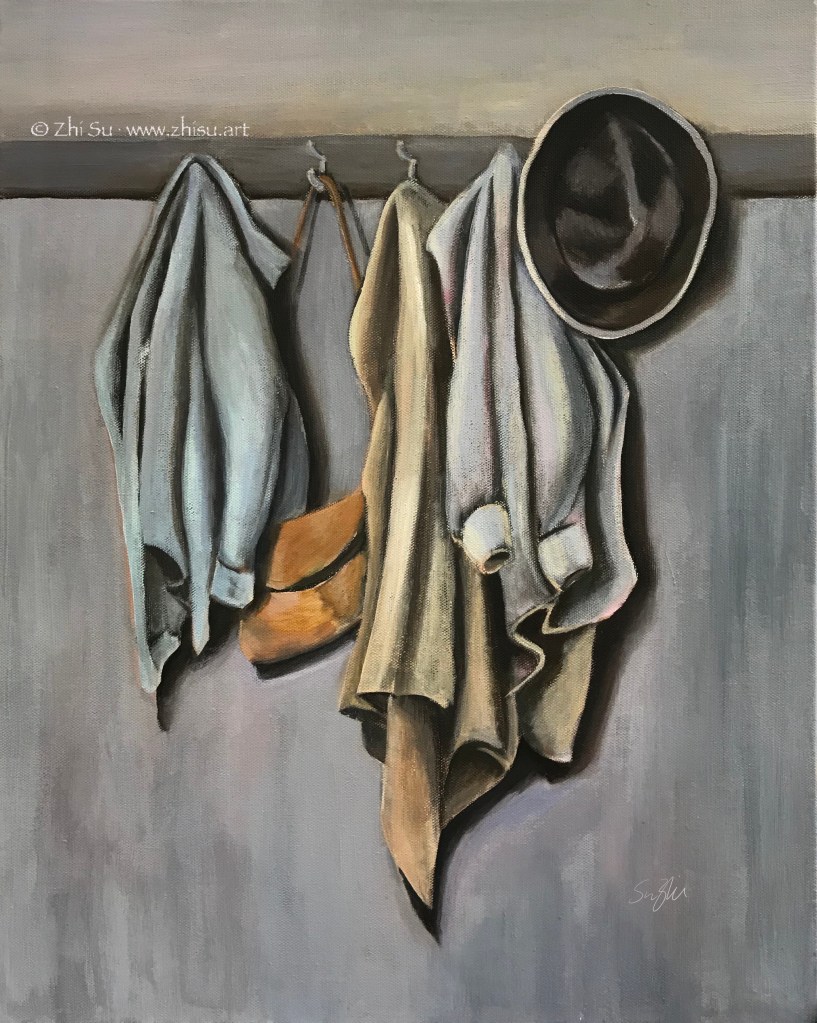
Still life 2, acrylic on canvas, 16 x 20 in, Spring 2018

Well, this is still not Morandi. It’s still me, and it’s very hard not to be me. I understand I will never be Morandi, and that’s not the point of studying a master. If every painting is a self expression, every study of other’s style is a self reflection. I have a lot of passions that I don’t know how to control, and observations I don’t know how to choose and let go.

For sure, I am not done with Morandi yet.

Copying Masters (9) and Morandi (1)

Some artists created wonders with limited subject matters. Like Cezanne, who famously claimed “with an apple I will astonish Paris.” He did, and the world. I don’t know if Italian artist Giorgio Morandi (1890-1964) ever made any statement about the bottles and jars, but he did say, “To achieve understanding it is necessary not to see many things, but to look hard at what you do see.” He did look at those bottles and jars of his very hard, for almost a life time.

Most of Morandi’s still life featuring nondescript household objects on tabletop against an unremarkable background. They look like a humble crowd pushed onto a stage, but nothing in the composition is random. Morandi spent days, even weeks arranging these objects. The assuming is carefully achieved. Just like his use of color. The paintings often have a monochromatic look, even though he employed a rich range of earthy colors.

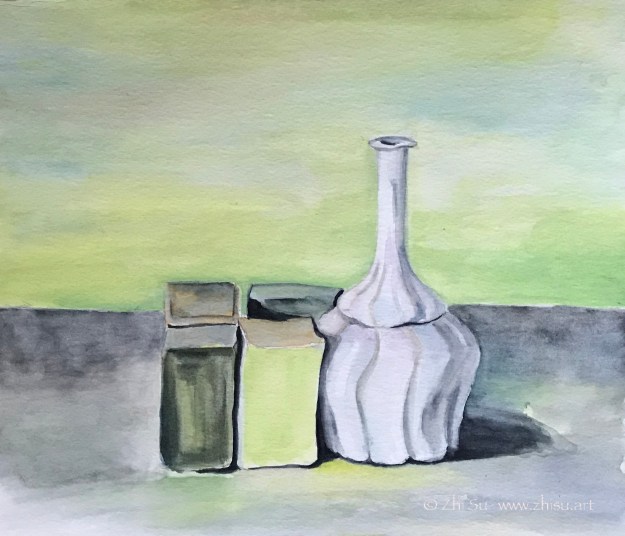
There’s a sense of calm and tranquil in Morandi’s paintings that I find very attractive. Maybe because my own paintings are the opposite. Even when I limited my palette, the result is often loud or even noisy. My first copying attempts were done in watercolor. In retrospect, gouache could be a better choice. Here they are:

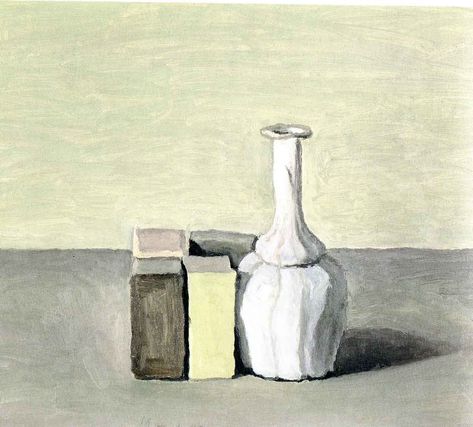
The originals:

Morandi, Natura morta, 1954
Morandi, Vase and Still Life, 36 x 40 cm, oil on canvas, 1951
Morandi, Natura morta, 40 x 46 cm, oil on canvas, 1954

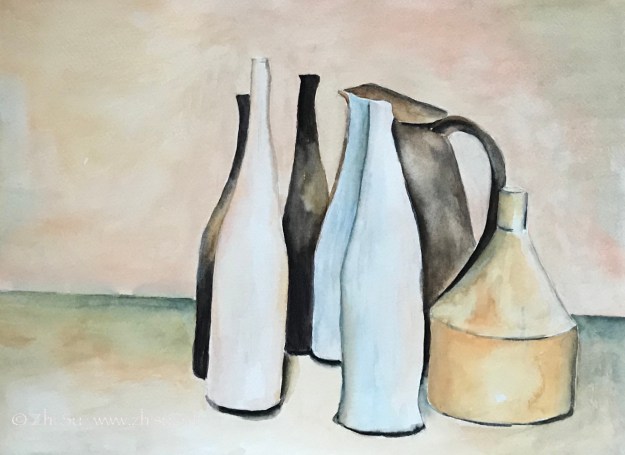
My copies:

After Morandi, watercolor on paper, 9×12 in, 2018
After Morandi, watercolor on paper, 10 x 12, 2018

Copying Masters (5) – John William Hill

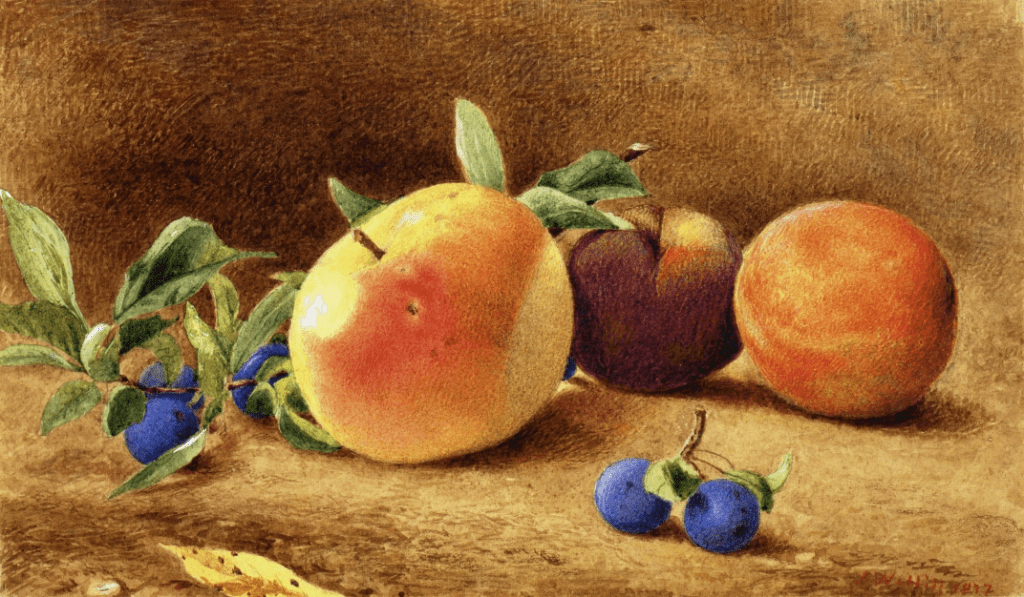
J. W. Hill (1812-1879) was a British born American watercolorist and lithographer. I came across his work in a still life anthology and was taken with soft, serene and tangible feeling he created with watercolor, quite different from the wet-in-wet method I was taught in. Upon close-up examination, it is full of tiny strokes, like an engraving. Some of the strokes in the background created interesting patterns and was applied in a very painterly way. Maybe that’s how you do impasto with watercolor! 😁

In my copy, I didn’t go for the strokes. I was at a moment that my colors often ran wild. I think Hill’s Study of Fruit is a good example of unity and harmony with colors, and that’s what I went for.

I almost missed this: obviously yesterday was J. W. Hill’s birthday. So happy birthday Mr. Hill! 🎂

J. W. Hill, Study of Fruit
J.W. Hill, Study of Fruit, 1877. Watercolor on paper, 6.13 x 10.63 in.

My copy:

JWHill study
After J.W.HIll “Study of Fruit,” Watercolor, 2018

Around the Kitchen (IV) – Ginger

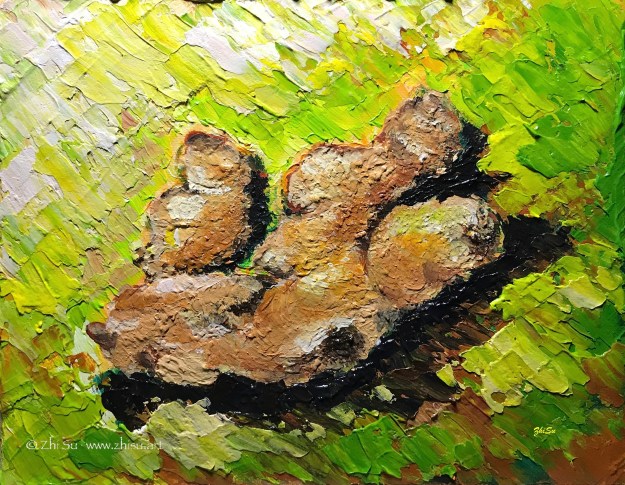
This was an assignment from a painting class (acrylic) a while ago. The purpose was to learn impasto. I chose ginger because I thought the bumpy, textured surface might go well with the technique, and also I usually bought them in bulk from Costco.

It’s a small painting with a single object, and I figured I could get it done in no time. I was so wrong.

There were two things that I couldn’t get used to. First, as someone who started painting first with watercolor, I wasn’t used to putting a lot of paint on canvas. For the purpose of this assignment, we were supposed to achieve a measurable thickness. And acrylic, a water-based medium, dries flat! I ended up working in layers, waited for a long time (longer then usual acrylic time at least) for the paint to dry, and went back to add more and more.

Another thing was the purpose of impasto technique itself. It supposed to be more about expressiveness than rendering, and I had trouble leaving my strokes in and my details out. So I kept going back and forth adding things in and taking them out. I have done so many paintings on this tiny canvas, and what a heavily loaded ginger! 🙂

Ginger, acrylic
Ginger, acrylic on canvas, 10 x 8, 2018

Throwback (probably) 2015 Continued – Watercolor

I did some cleaning today and found a few old paintings. None of them was dated and my memory is just a blur. The only thing I could say is they were done around or before 2015. Lesson learned: date your artwork.

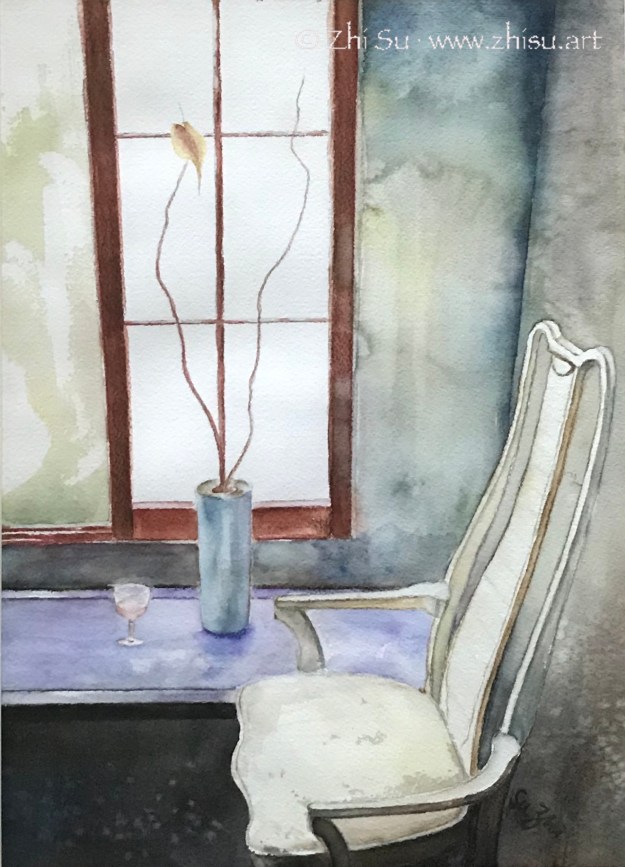
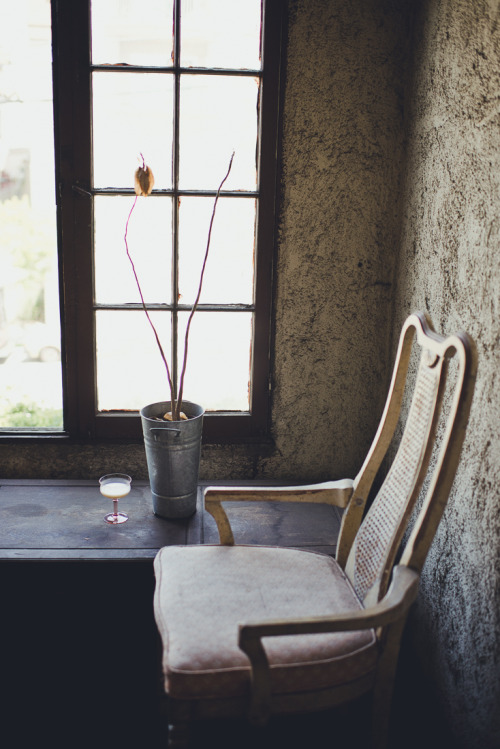
This one is after a photo I found online. Here’s the link, but I don’t know how to find the photographer’s information. (Google image search leads me to furniture stores and all sort of club chairs.) So, whoever took the beautiful photo, thank you. You can see back then I wasn’t able to go beyond the reference.

Chair, watercolor
Chair by the window, watercolor, 2015

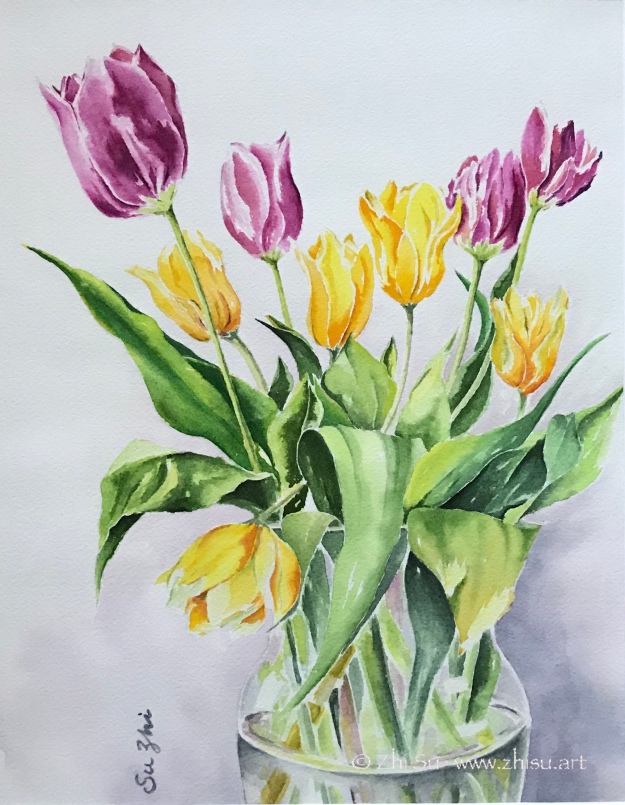
Now some flowers for the holidays:

Tulips, watercolor
Tulips, watercolor, 2015
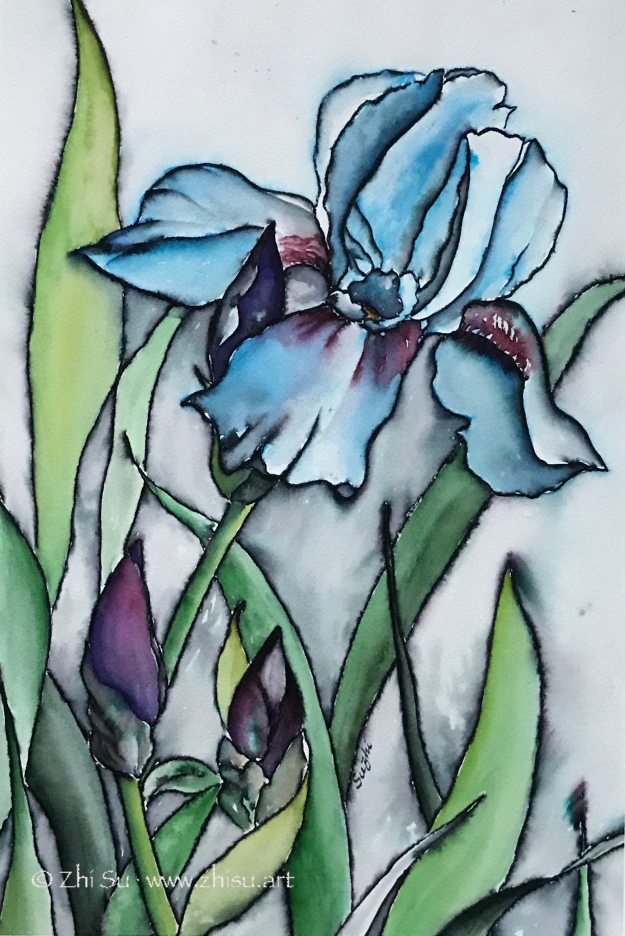
Irises, watercolor
Irises, watercolor, 2015

Copying Masters (3) – Paul Cézanne

Paul Cézanne  (1839–1906) is probably the most influential Post-Impressionist artist, and definitely the most inspiring for me. His colors are layered and strokes deliberate. It takes a lot more work than it seems. In this study I copied only a small section of the original painting.

Original:

File:Cézanne, Paul - Still Life with a Curtain.jpg
Still Life with a Curtain, circa 1898, oil on canvas

My copy:

Cezanne still life study, acrylic
Cezanne still life study, 2015