Tag Archives: #stilllifepainting

Throwback (probably) 2015 Continued – Watercolor

I did some cleaning today and found a few old paintings. None of them was dated and my memory is just a blur. The only thing I could say is they were done around or before 2015. Lesson learned: date your artwork.

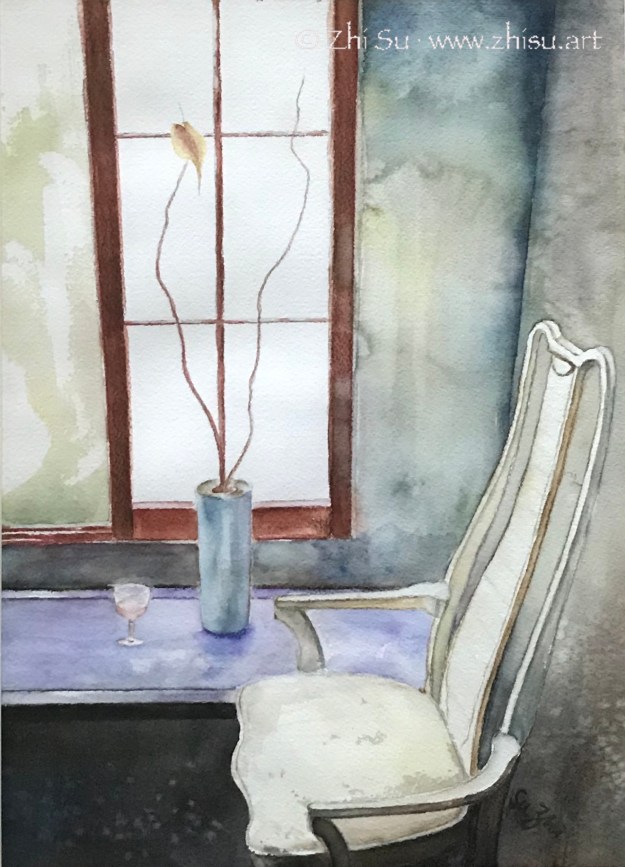
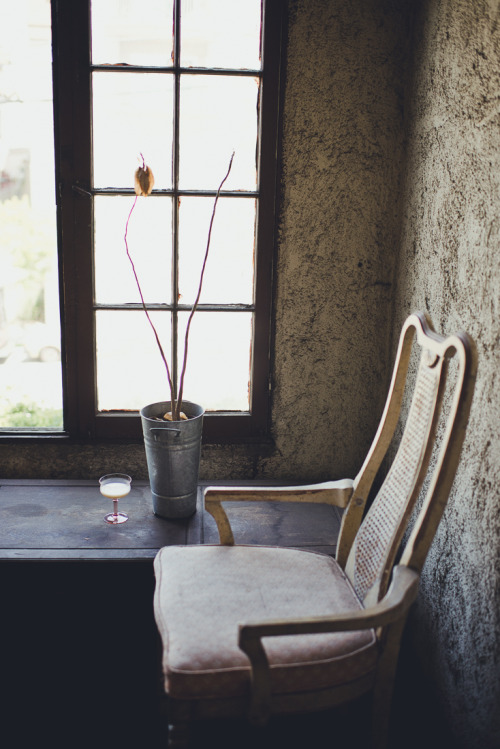
This one is after a photo I found online. Here’s the link, but I don’t know how to find the photographer’s information. (Google image search leads me to furniture stores and all sort of club chairs.) So, whoever took the beautiful photo, thank you. You can see back then I wasn’t able to go beyond the reference.

Chair, watercolor
Chair by the window, watercolor, 2015

Now some flowers for the holidays:

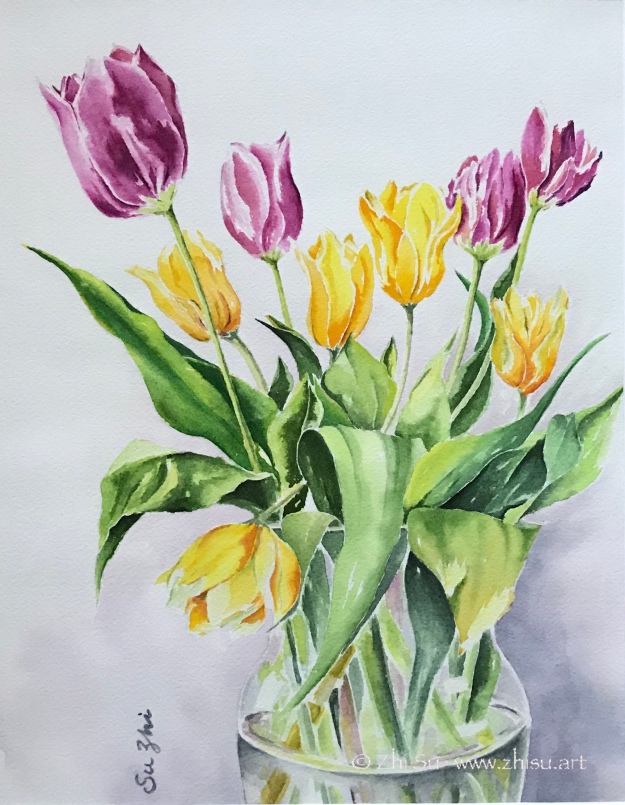
Tulips, watercolor
Tulips, watercolor, 2015
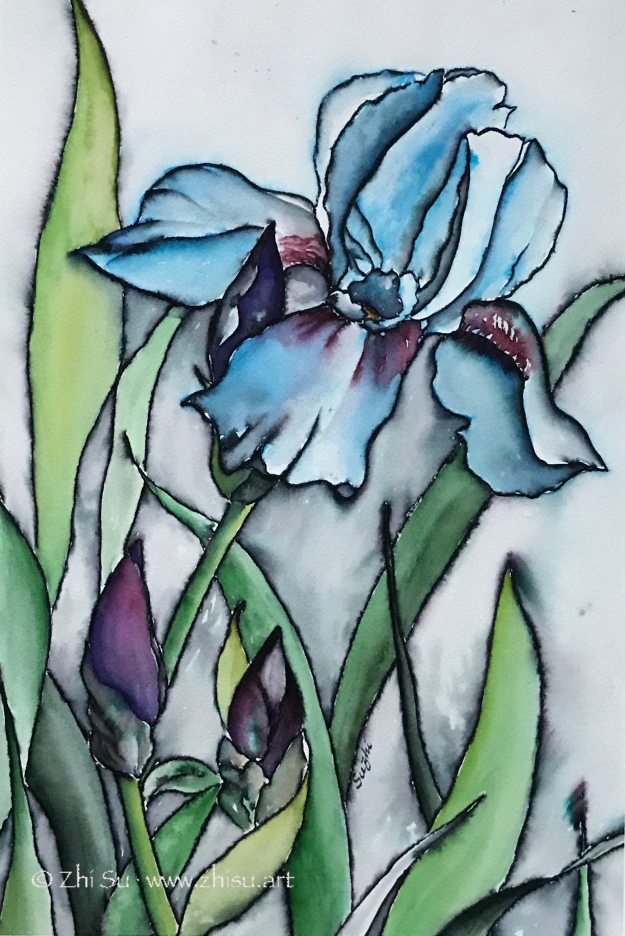
Irises, watercolor
Irises, watercolor, 2015

Copying Masters (3) – Paul Cézanne

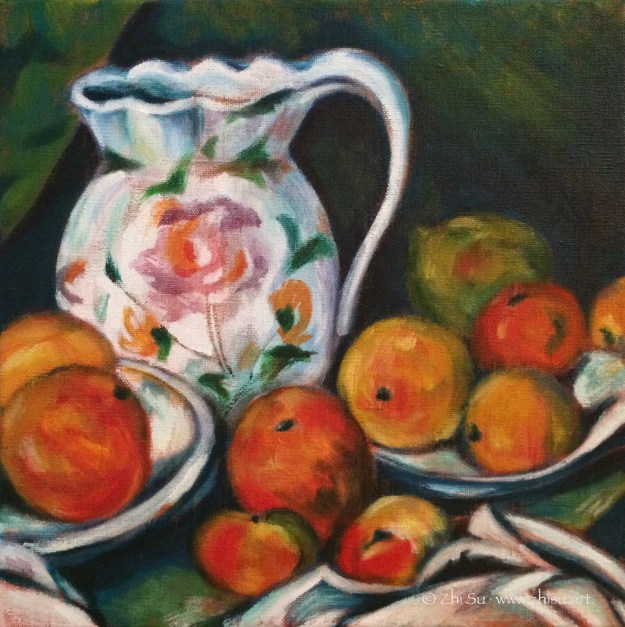
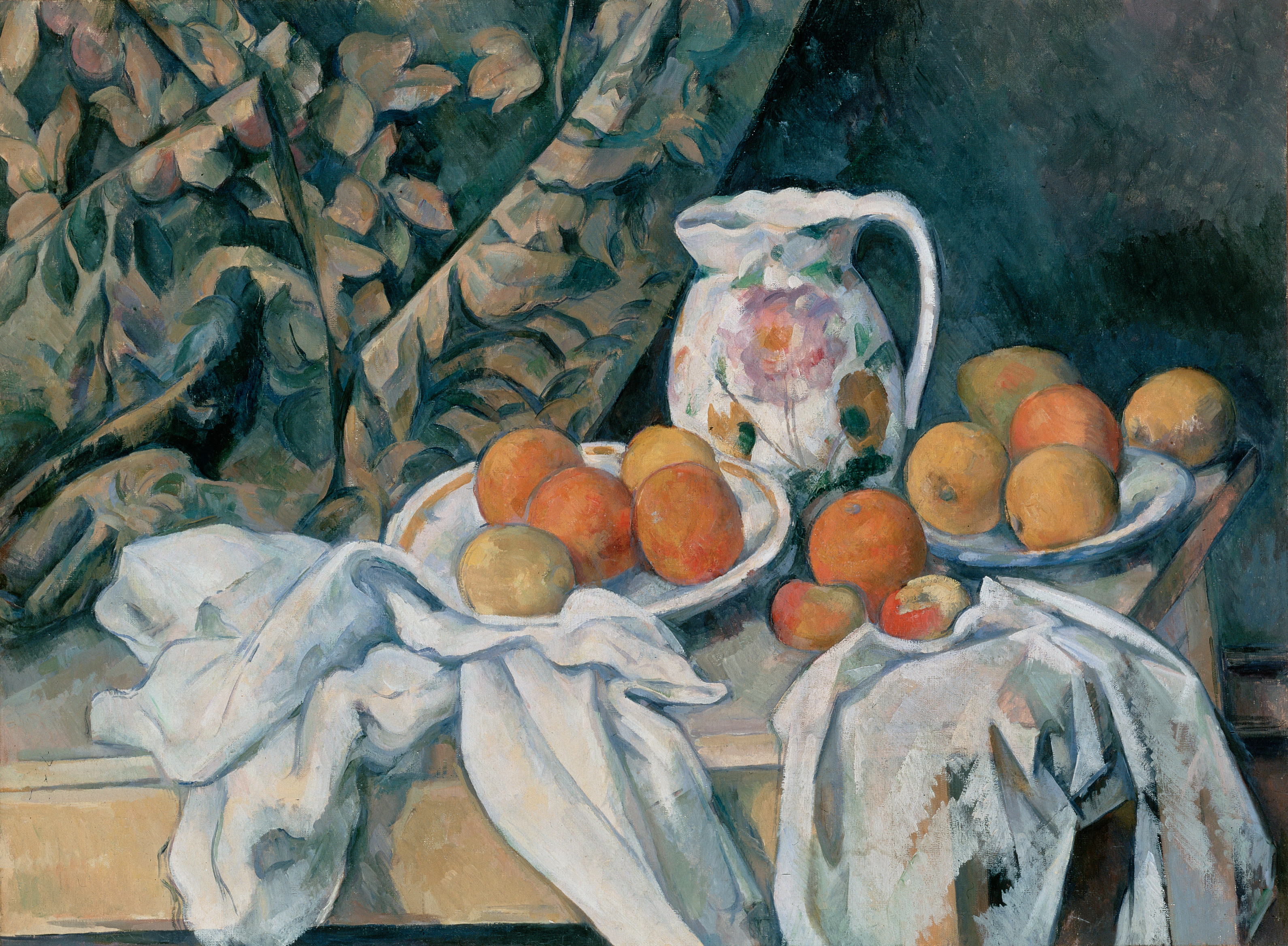
Paul Cézanne  (1839–1906) is probably the most influential Post-Impressionist artist, and definitely the most inspiring for me. His colors are layered and strokes deliberate. It takes a lot more work than it seems. In this study I copied only a small section of the original painting.

Original:

File:Cézanne, Paul - Still Life with a Curtain.jpg
Still Life with a Curtain, circa 1898, oil on canvas

My copy:

Cezanne still life study, acrylic
Cezanne still life study, 2015

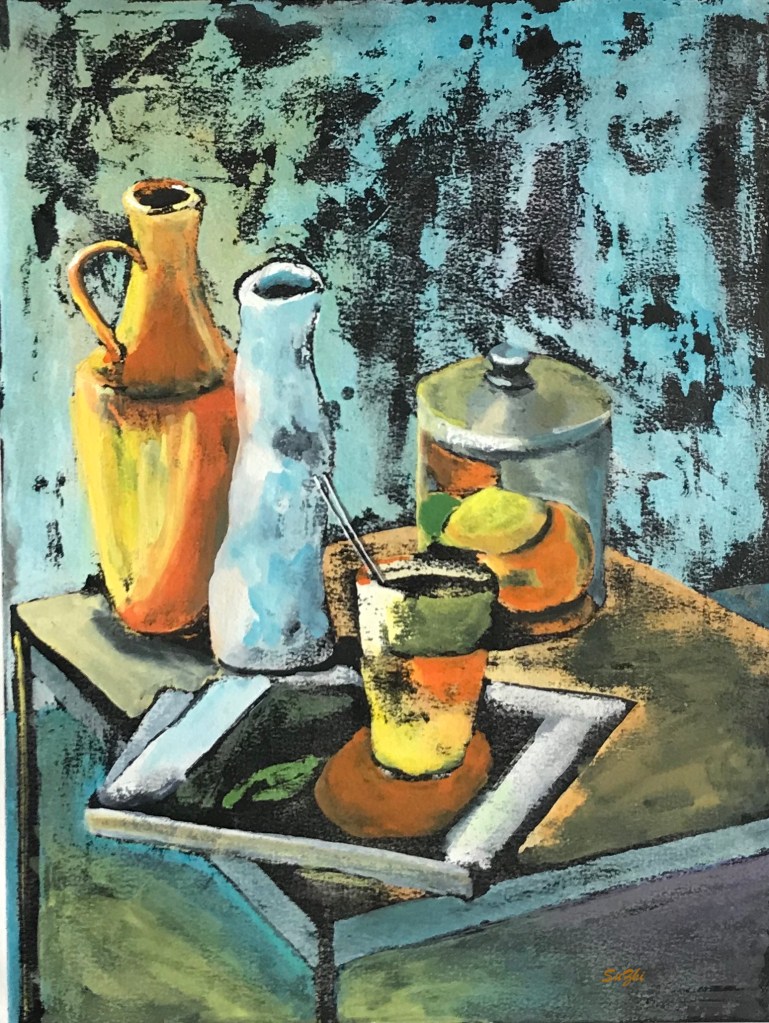
Try New Things (1) – Ink Resist with Gouache

I only recently came to know there’s such a thing called ink resist, and was pretty impressed by some of the artworks with this method. So I gave it a try. The result is a meh, but I l had fun and learned something.

Still life, ink and gouache on watercolor paper

So these are the steps I followed:

  • pencil drawing;
  • painting with gouache but leave some area blank; (some people leave only the pencil marks uncovered to achieve neat outlines)
  • after the painting is completely dry, covered the whole page with sumi ink;
  • again, wait till it’s completely dry, wash off the ink (I used the garden hose, no kidding.)
  • and again, wait till it’s dry, and went back to fix here and there. (This step is optional, but I wasn’t that lucky.)

And here are the things I learned:

  • Like drawing on black paper, this method is a bit counter-intuitive. The areas left blank in the first painting round will be the darkest after the wash. So planning ahead is important, which I didn’t do. In my painting, the blacks serve more like random texture than an organic part of the value pattern.
  • The paint should be thick, to “resist” the ink and also because gouache is easy to wash off.
  • This process asks for a lot of patience. 😜

Copying Masters (2) – Van Gogh

This is a study done when I first experimented with acrylic (or painting with anything). I stared at the original for days couldn’t figure out how to achieve that sense of unity. Eventually I decided to paint the whole canvas with a dark shade of burnt sienna and “drawing” on top of it.

Original (from vangoghonline.com)

Still Life With Yellow Straw Hat , 1881-5, oil on paper mounted on canvas (14.25 × 21 in)

My copy: