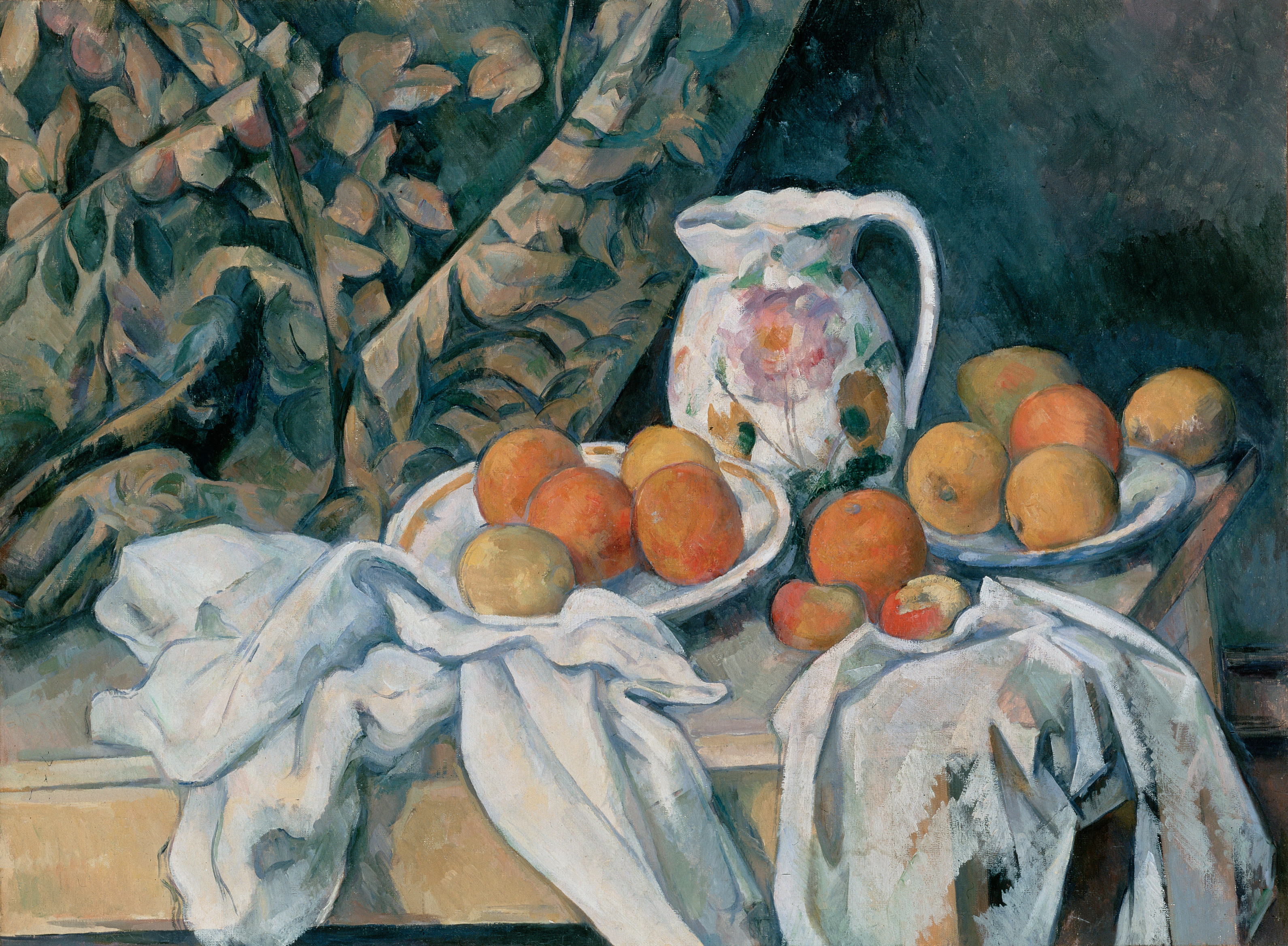
The original:

My copy:
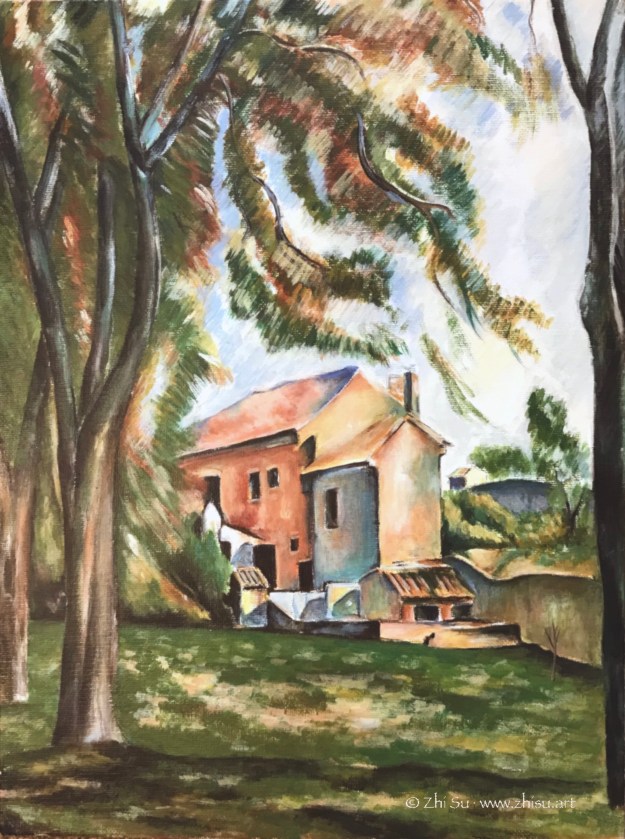
Cézanne’s original is packed with details, there’s subtle changes of color and value on every plane of the house. The trees are built with expressive but economic strokes. I got lost among the leaves.

The original:
My copy:
Cézanne’s original is packed with details, there’s subtle changes of color and value on every plane of the house. The trees are built with expressive but economic strokes. I got lost among the leaves.
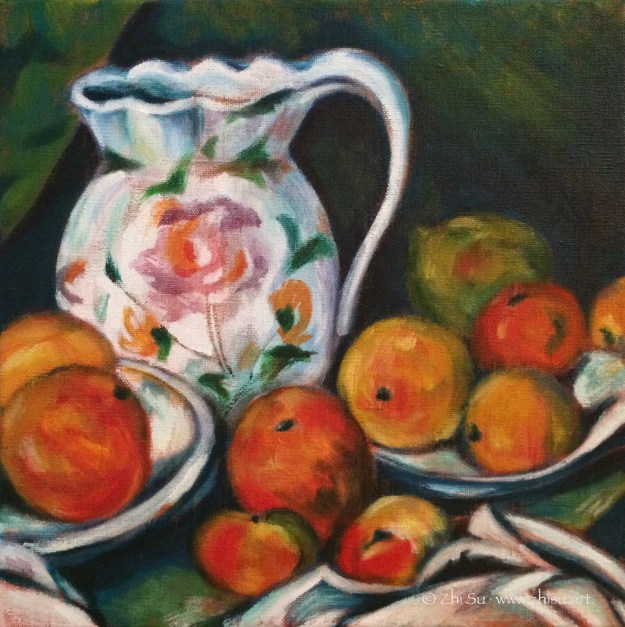
Paul Cézanne (1839–1906) is probably the most influential Post-Impressionist artist, and definitely the most inspiring for me. His colors are layered and strokes deliberate. It takes a lot more work than it seems. In this study I copied only a small section of the original painting.
Original:

My copy:
I only recently came to know there’s such a thing called ink resist, and was pretty impressed by some of the artworks with this method. So I gave it a try. The result is a meh, but I l had fun and learned something.
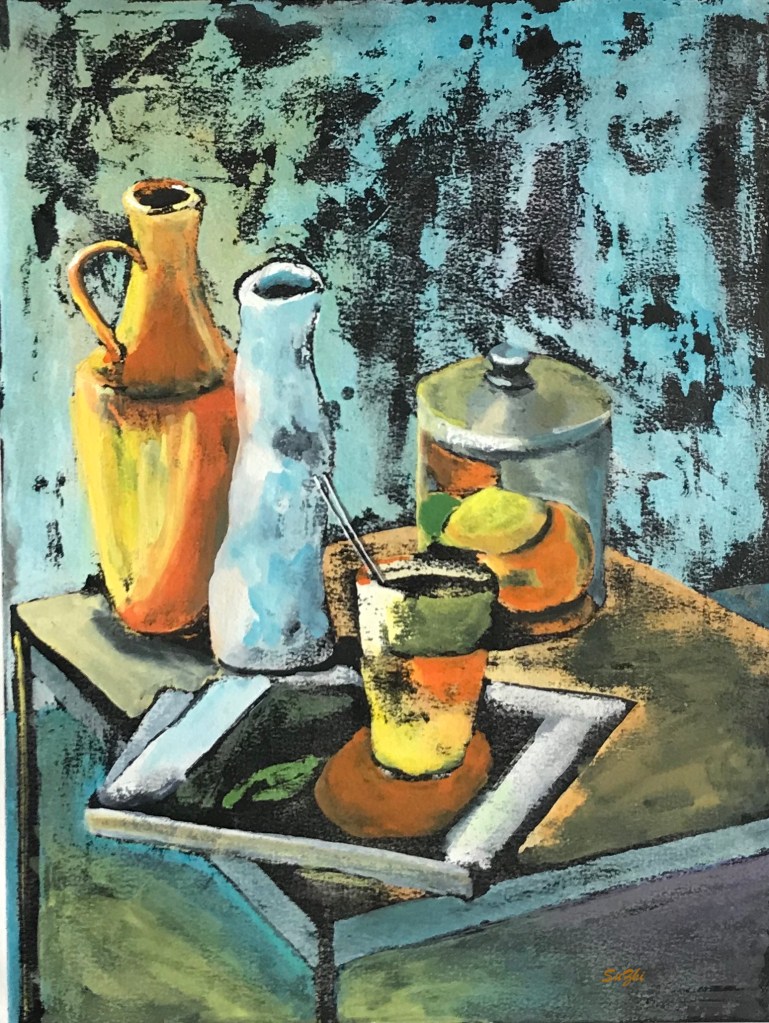
So these are the steps I followed:
And here are the things I learned:
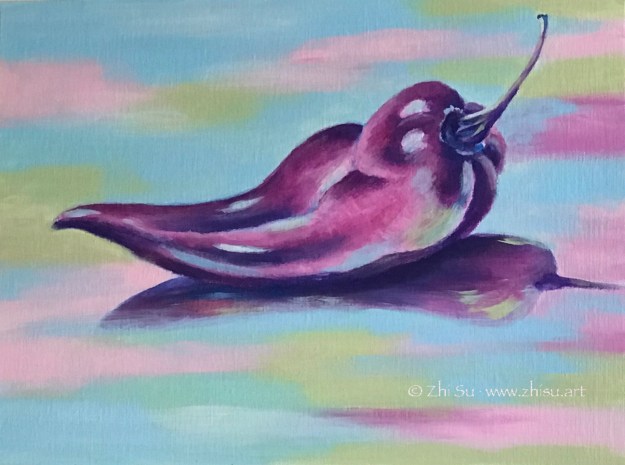
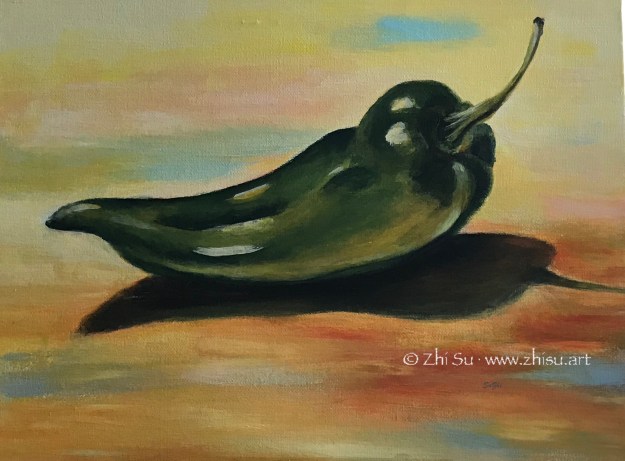
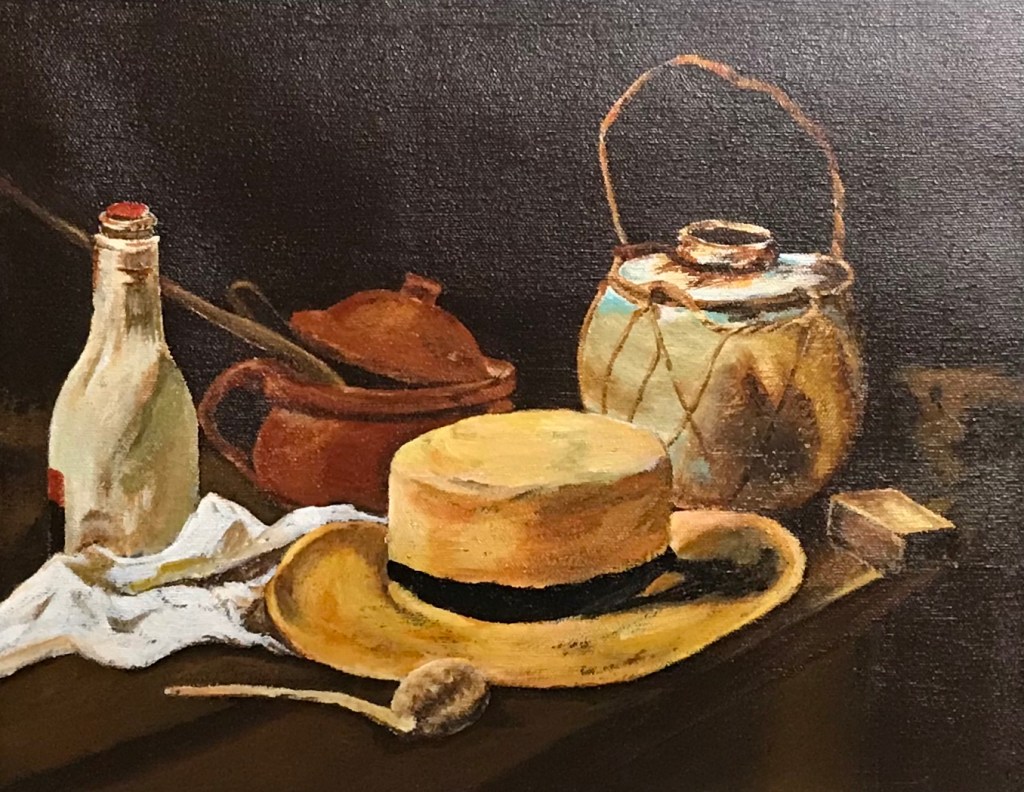
This is a study done when I first experimented with acrylic (or painting with anything). I stared at the original for days couldn’t figure out how to achieve that sense of unity. Eventually I decided to paint the whole canvas with a dark shade of burnt sienna and “drawing” on top of it.
Original (from vangoghonline.com)

My copy:
I believe if there’s a shortcut in learning art, that would be copying masters. It forces me to look at each piece so closely, I start to see not just their composition, color or value choices, but also the procedures in execution. It helps a lot in thinking through and carrying out my own work. I just wish I could do more and more often. [*Most of the copies in this series were done a while ago and the link to the “original” was not necessarily the reference I used at the time.]
The first one is an assignment from a years ago drawing class. Courbet’s (French painter leading the 19th century Realism movement) original is an oil painting, and my copy is done with soft pastel.
Courbet’s (from Wikimedia):
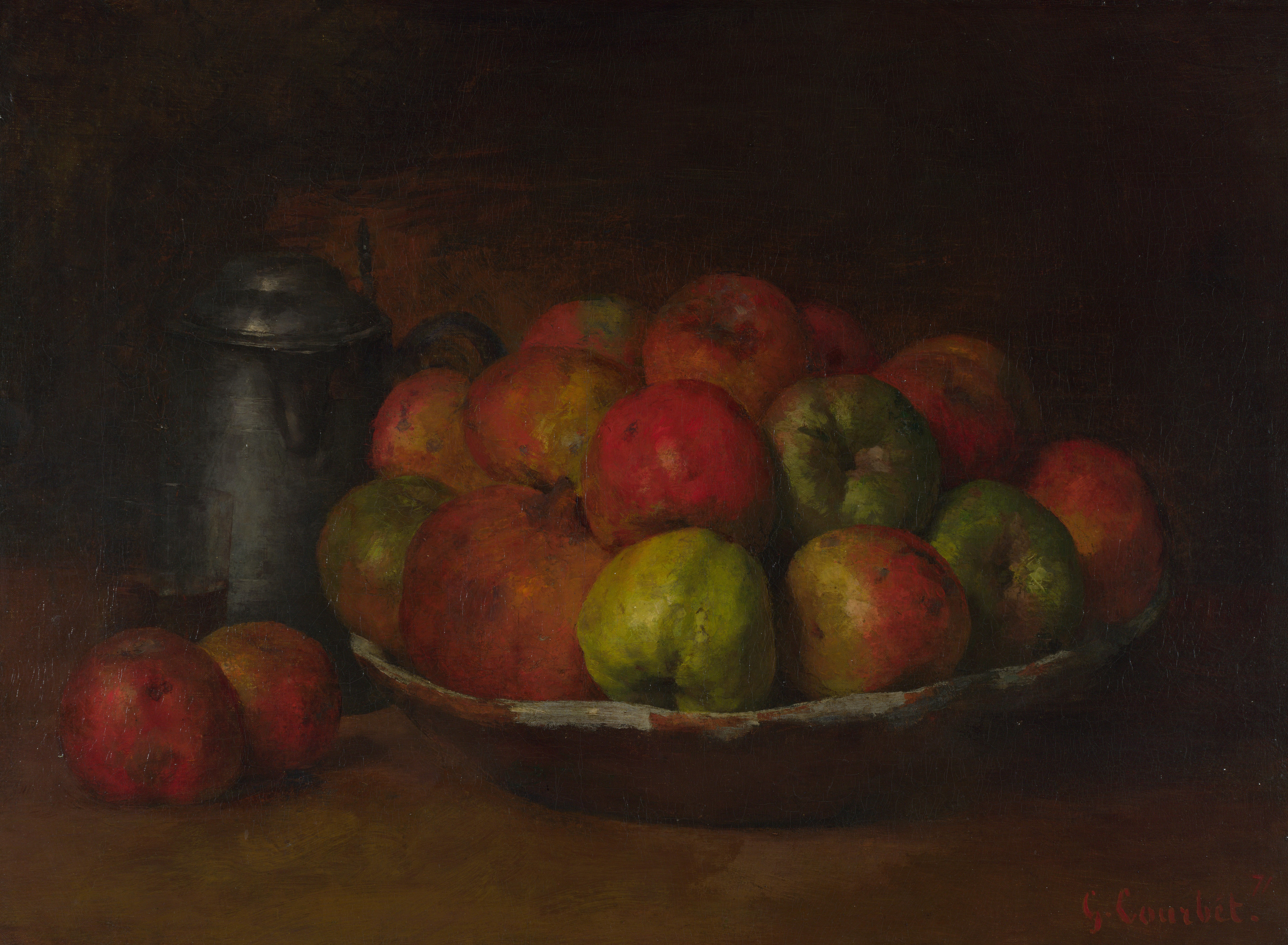
My copy:
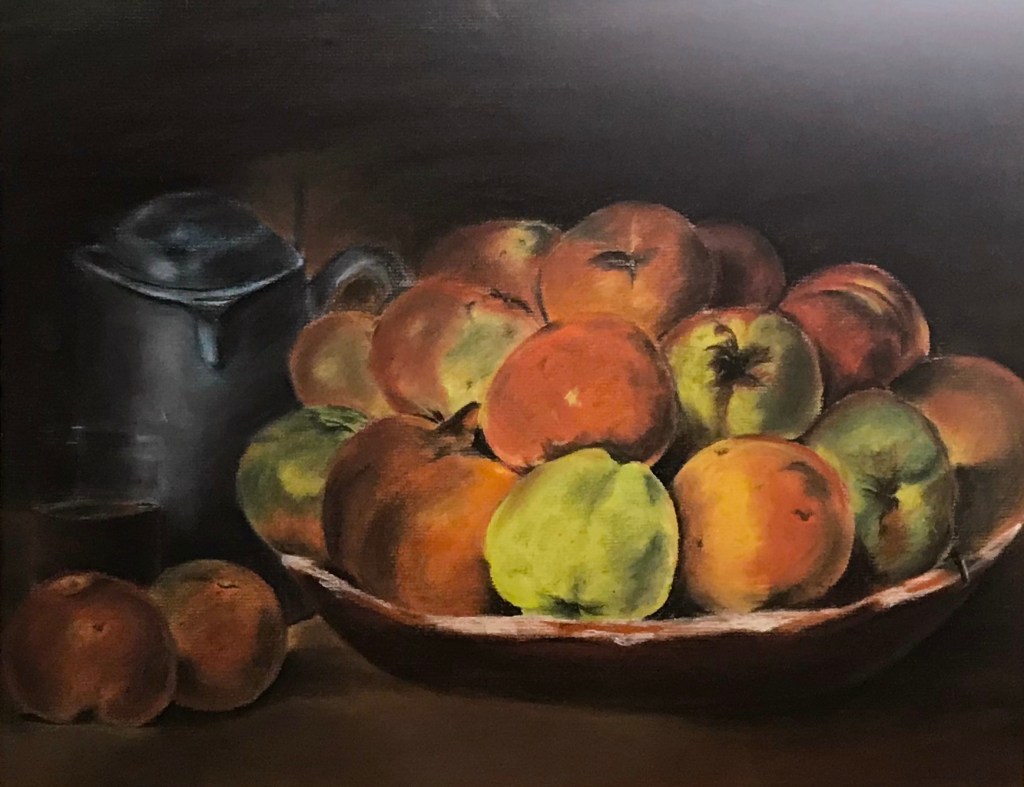
What I learned is that pastel is a powerful and versatile painting tool, but it takes patience to build it up. Secondly, it’s not easy to “let it go.” Certain things meant to fade into the background or merge with the environment, but it takes skill and vision to achieve that.

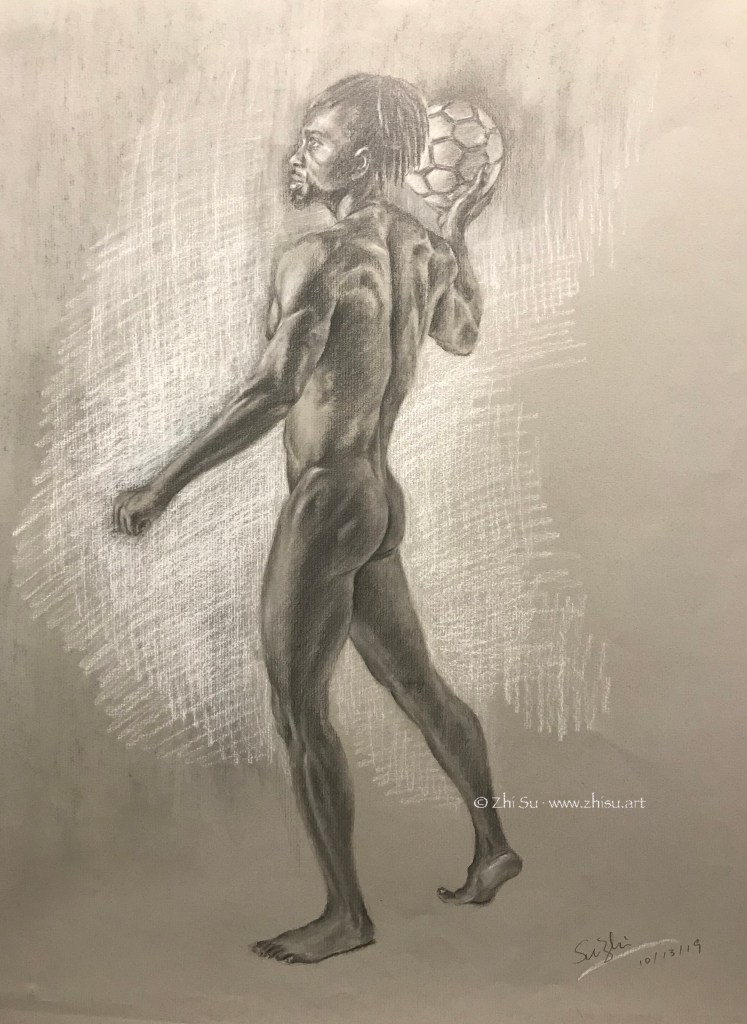
Model from Croquis Cafe
 ZHI SU