Tag Archives: #acrylicpainting

Morandi (2) and Pairs (III)

This was a class assignment – choose an artist to study, and then paint in his/her style. I was very into Giorgio Morandi at the time (still am now), and he became the subject of my study. To my delight, during my research, I found out that Morandi was very much influenced by another favorite artist of mine, Paul Cézanne; and he in turn, heavily influenced a contemporary artist I admire, Wayne Thiebaud (b. 1920). Have I found my “art parents?” (A term I learned from Draftsmen Podcast, S1E5.)

So I set up a still life scene and gave it a try:
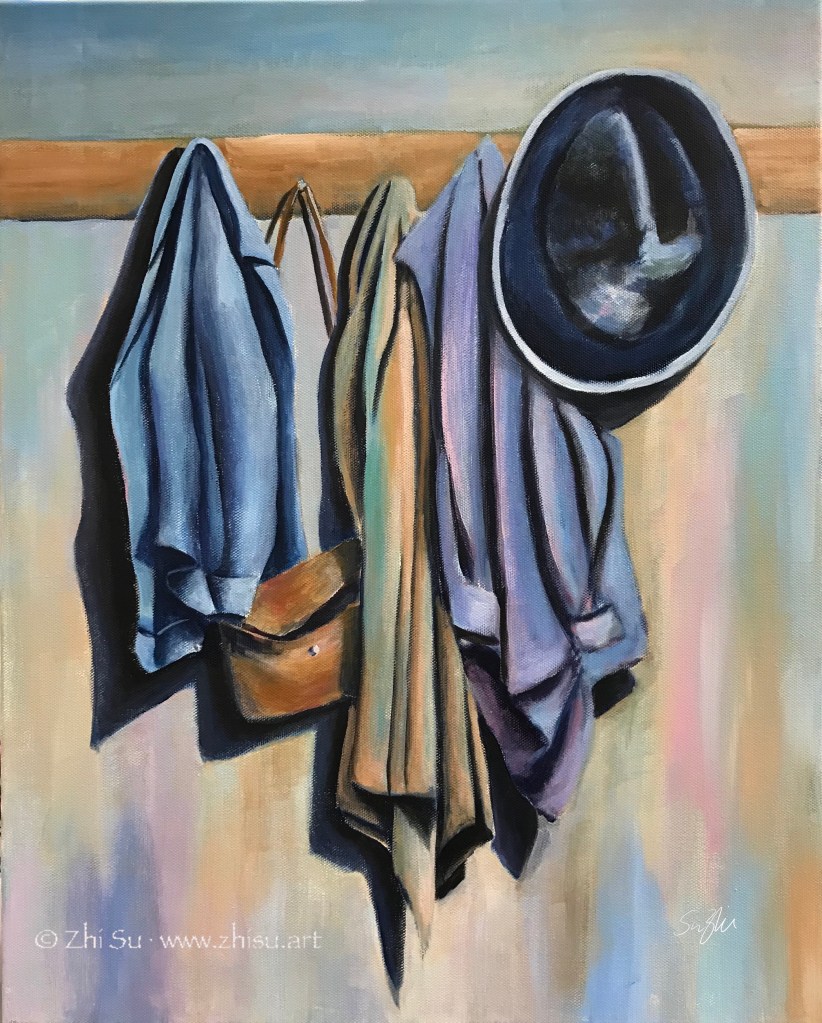
Acrylic painting of clothes hanging
Still life 1, acrylic on canvas, 16 x 20 in, Spring 2018

I know, there’s nothing Morandi about it (see my previous post about his style). The objects are asserting and the colors are singing. I don’t dislike it as a painting, but it’s definitely not the reservedness and tranquility I was after. So I gave it another try:
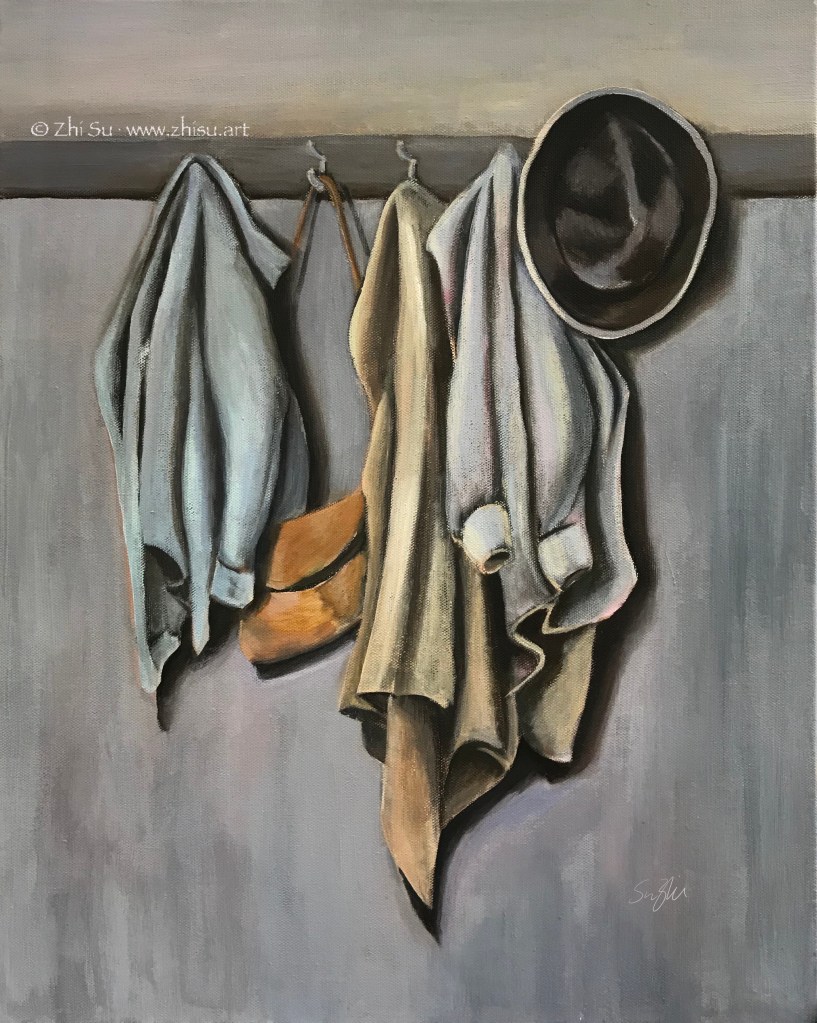
Still life 2, acrylic on canvas, 16 x 20 in, Spring 2018

Well, this is still not Morandi. It’s still me, and it’s very hard not to be me. I understand I will never be Morandi, and that’s not the point of studying a master. If every painting is a self expression, every study of other’s style is a self reflection. I have a lot of passions that I don’t know how to control, and observations I don’t know how to choose and let go.

For sure, I am not done with Morandi yet.
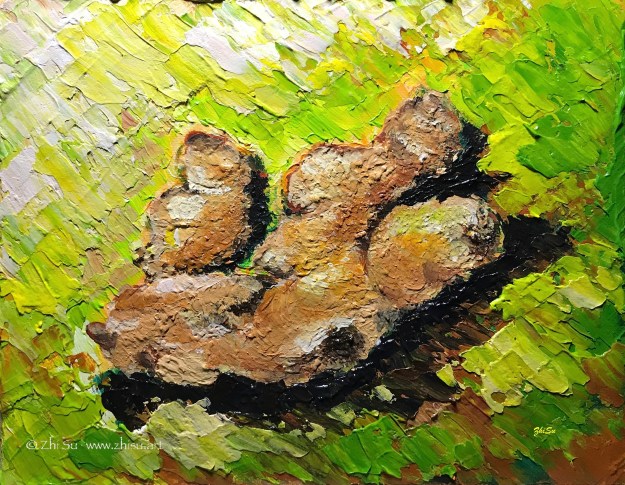
Around the Kitchen (IV) – Ginger

This was an assignment from a painting class (acrylic) a while ago. The purpose was to learn impasto. I chose ginger because I thought the bumpy, textured surface might go well with the technique, and also I usually bought them in bulk from Costco.

It’s a small painting with a single object, and I figured I could get it done in no time. I was so wrong.

There were two things that I couldn’t get used to. First, as someone who started painting first with watercolor, I wasn’t used to putting a lot of paint on canvas. For the purpose of this assignment, we were supposed to achieve a measurable thickness. And acrylic, a water-based medium, dries flat! I ended up working in layers, waited for a long time (longer then usual acrylic time at least) for the paint to dry, and went back to add more and more.

Another thing was the purpose of impasto technique itself. It supposed to be more about expressiveness than rendering, and I had trouble leaving my strokes in and my details out. So I kept going back and forth adding things in and taking them out. I have done so many paintings on this tiny canvas, and what a heavily loaded ginger! 🙂

Ginger, acrylic
Ginger, acrylic on canvas, 10 x 8, 2018

Pairs (I) – Watercolor vs Acrylic

I posted this landscape in acrylic before, and I recently uncovered a watercolor version of it. So, sorry for repeating myself, but it’s interesting to look at them together:

landscape, trees, acrylic
Path, acrylic on canvas board, 12 x 16, 2015
landscape, trees, watercolor
Path, watercolor, 2015

I like the less defined forms and more spontaneous color ranges a wet-on-wet watercolor creates, but I also like the dark values the acrylic painting can bring out. The reference I used for the two is the same, and whatever difference you see from the these paintings are not by design. It seems the mediums just lead me there. How bizarre!

Copying Masters (4) – Another Cézanne

The original:

Farmhouse and Chestnut Trees at Jas de Bouffan, circa 1884, oil on canvas

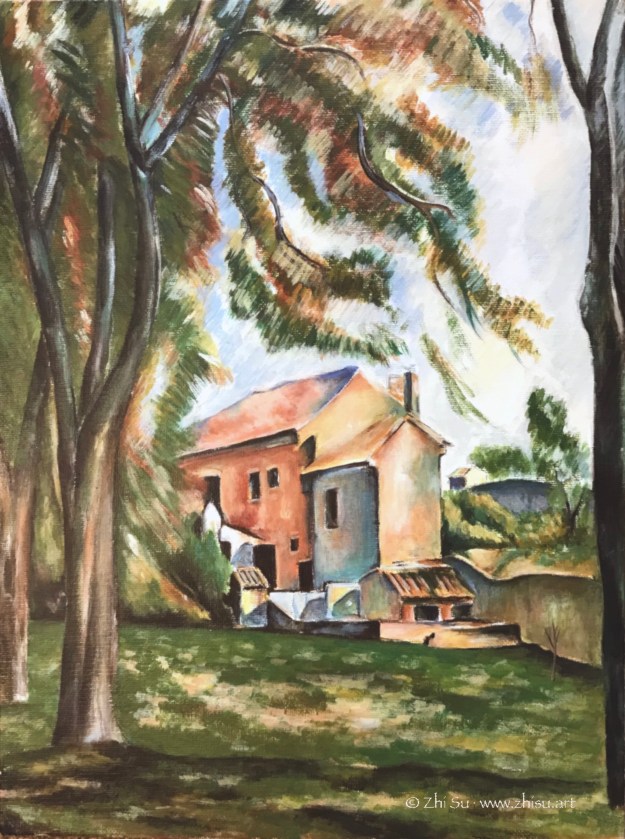
My copy:

Cezanne landscape study, acrylic
Cezanne Landscape Study, acrylic, 16 x 12, 2016

Cézanne’s original is packed with details, there’s subtle changes of color and value on every plane of the house. The trees are built with expressive but economic strokes. I got lost among the leaves.

Copying Masters (3) – Paul Cézanne

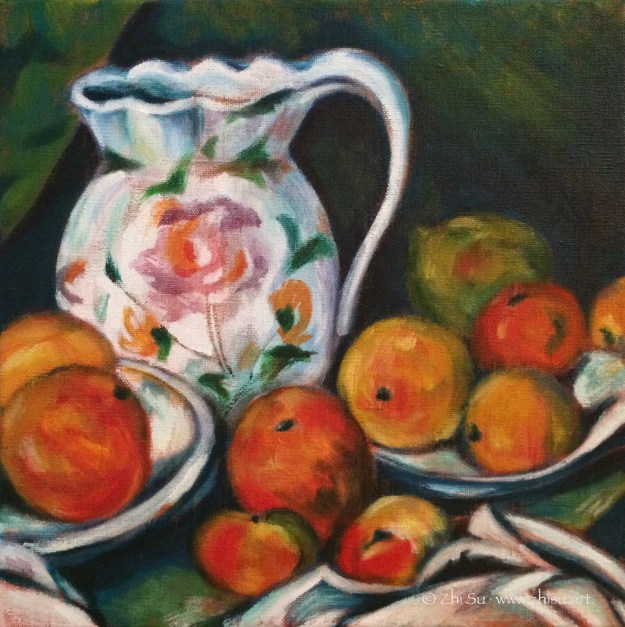
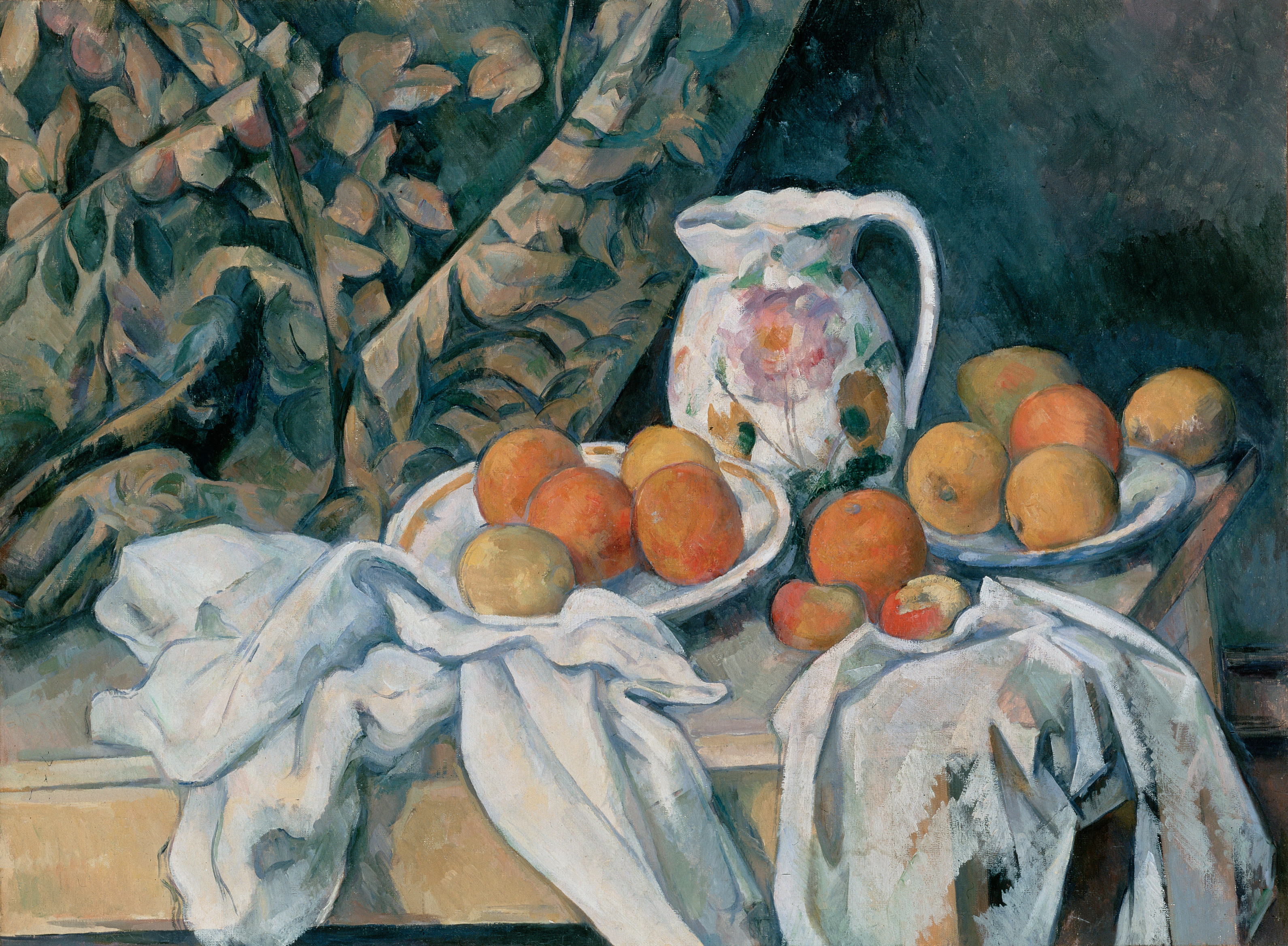
Paul Cézanne  (1839–1906) is probably the most influential Post-Impressionist artist, and definitely the most inspiring for me. His colors are layered and strokes deliberate. It takes a lot more work than it seems. In this study I copied only a small section of the original painting.

Original:

File:Cézanne, Paul - Still Life with a Curtain.jpg
Still Life with a Curtain, circa 1898, oil on canvas

My copy:

Cezanne still life study, acrylic
Cezanne still life study, 2015

Copying Masters (2) – Van Gogh

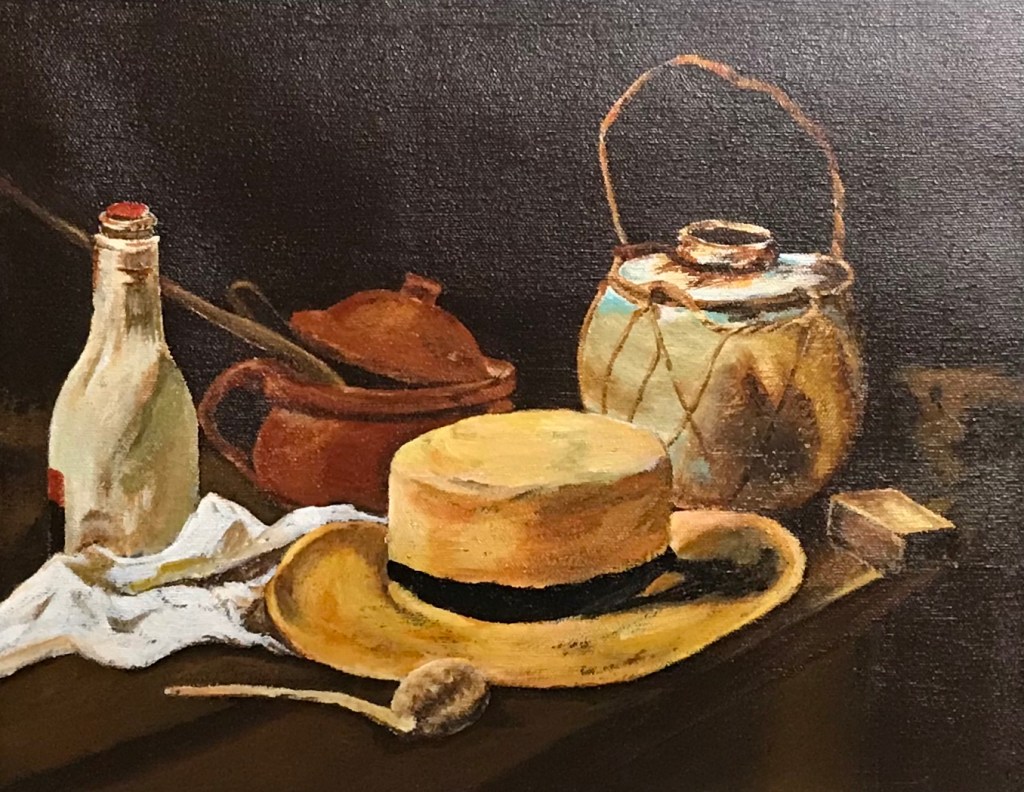
This is a study done when I first experimented with acrylic (or painting with anything). I stared at the original for days couldn’t figure out how to achieve that sense of unity. Eventually I decided to paint the whole canvas with a dark shade of burnt sienna and “drawing” on top of it.

Original (from vangoghonline.com)

Still Life With Yellow Straw Hat , 1881-5, oil on paper mounted on canvas (14.25 × 21 in)

My copy: