Tag Archives: #portrait

Portrait Sketches (1)

It is always a mystery to me how long it takes an Alla Prima painter to finish her work. Most of the demos I watched online were one to three hours long, and never did an artist claim it as a finished work. It is also hard to tell if the artist doing the demo was aiming at a complete work or just an oil portrait sketch. Plus, how do you even define the completeness of a piece? Those lovely and highly admired vignettes by the late Richard Schmid, are they finished works? 

When I was taking online classes at Watts Atelier, Jeff’s demo was usually a one-hour video, and he expected students to finish their piece in no more than 1.5 to 2 hours. That was a guideline I rarely followed. Not that I wasn’t willing to; I just didn’t have the adequate skills and mindset to achieve it. I took a video lesson from Susan Lyon earlier this year thanks to my East Oak Studio subscription. She advocates an exercise of doing a live portrait within one hour and then doing the same pose 2 more times in a row. The idea is to focus on the essence – what you can see when you squint. With repetition, you could improve your focus along the way. You go into these exercises with good preparation. She used a limited palette – transparent red oxide, ultramarine blue, and white, and she would premix colors into a value scale. The most important part is the mental preparation. You decide in advance where your darkest dark and lightest light is, and if they appear in multiple places in your reference (more than often, that’s the case), you must choose one. You also need to decide where the strongest edge would be – where the sharp contrast is (because when values are close to each other, the edge disappears). Other things that need to be considered include composition, what atmosphere to create, what types of strokes you want to employ, etc. I would say this is a great checklist to start any painting. Festina lente – as Sean Cheetham said, “Take your time on everything if you want to paint fast.”

East Oak Studio does a monthly free streaming called “Oil Painting from Life.” You can paint portraits and sometimes still life along with their resident artists and hear them chat. Most sessions are between 2 and 3 hours. I enjoyed the program very much, but I find myself constantly struggling when the time is up. Should I leave it as it is or keep working on it?  Deep down, I see myself as an indirect painter. I like to take my time and work in layers, just like most artists at East Oak, but they all vouched for the benefit of doing these shorter Alla Prima paintings. Leaving those paintings as they are is against my nature, but keeping going could yield diminishing returns. So far, I have managed to not go beyond the streaming timeframe. Before each painting, I reviewed the decision list from Susan Lyon’s lessons and tried to make my practice more effective. 

From the Portrait Society of America’s auction page, we can see artists do sell their sketches. Who knows, maybe after a million hours of practicing, someday, I will look at my two-hour painting and think, “Yep, that’s a thing.”

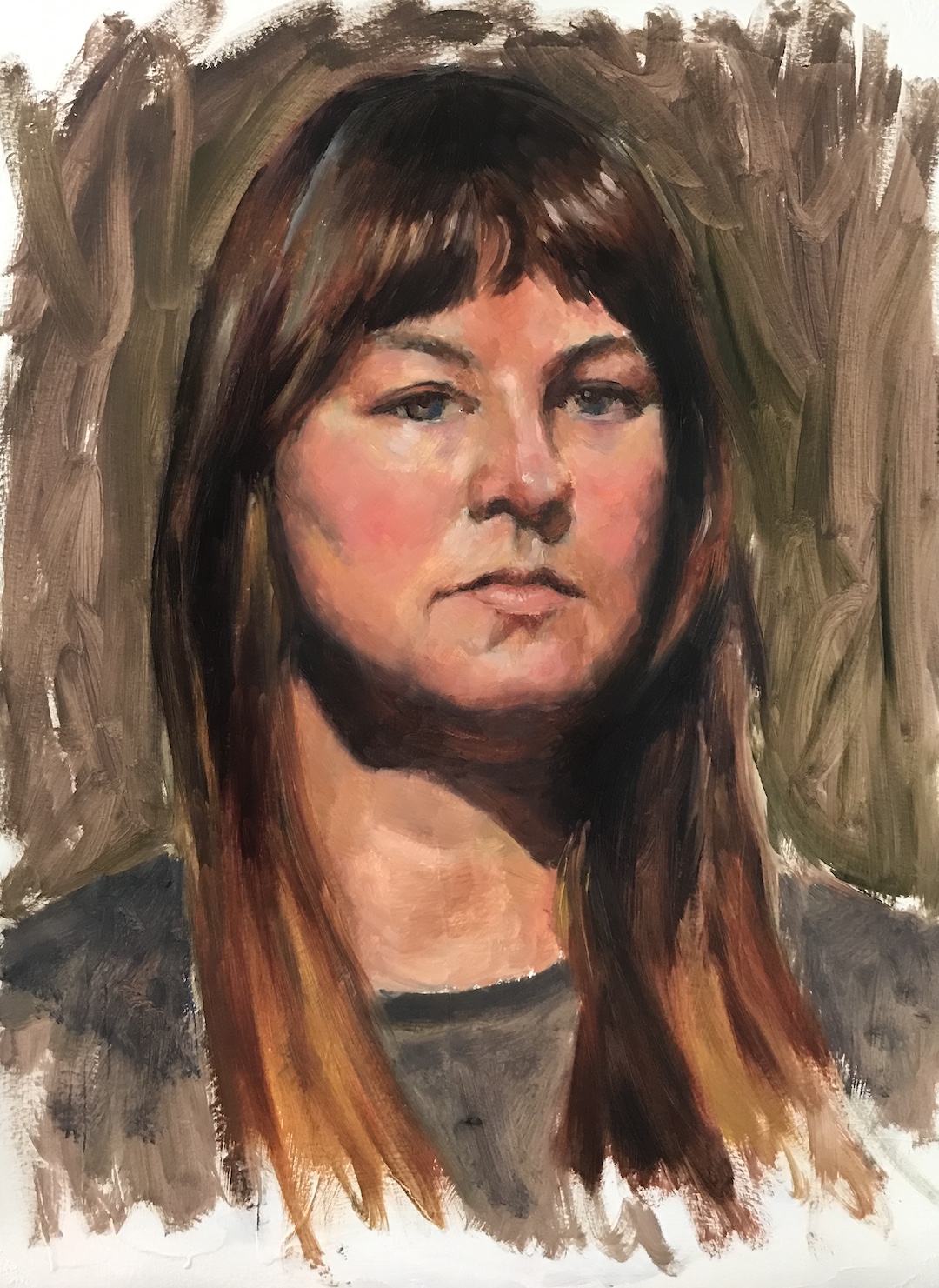
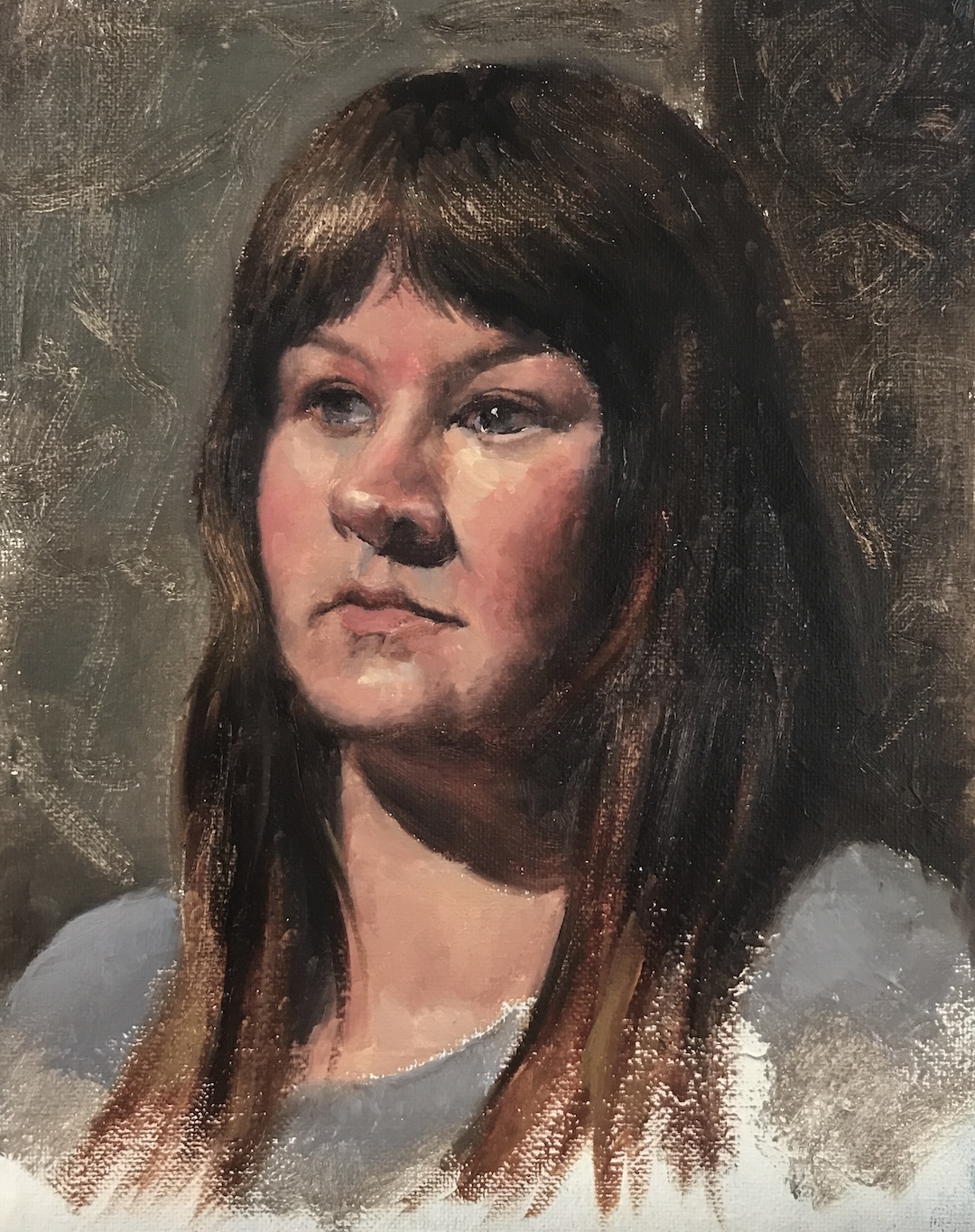
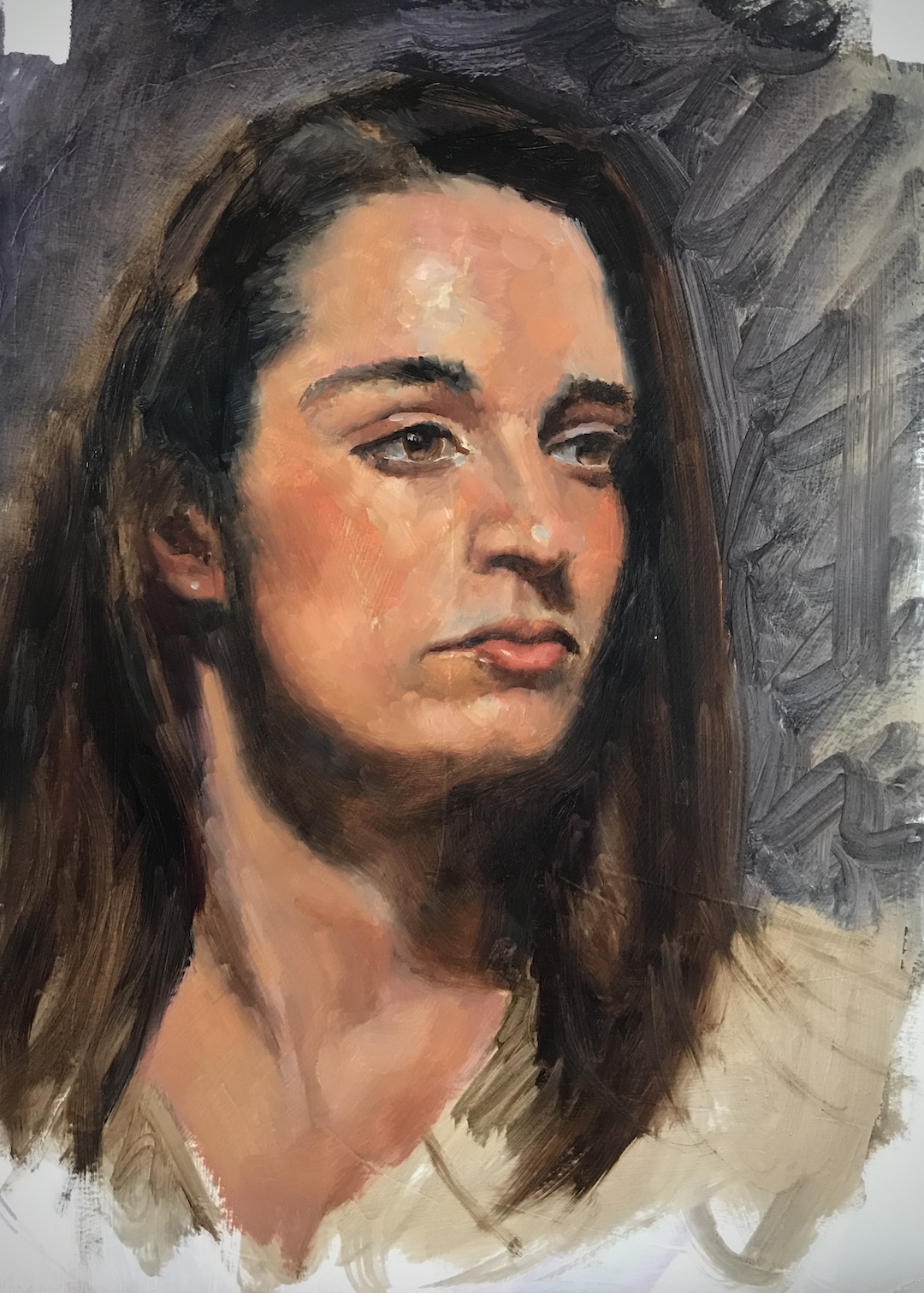
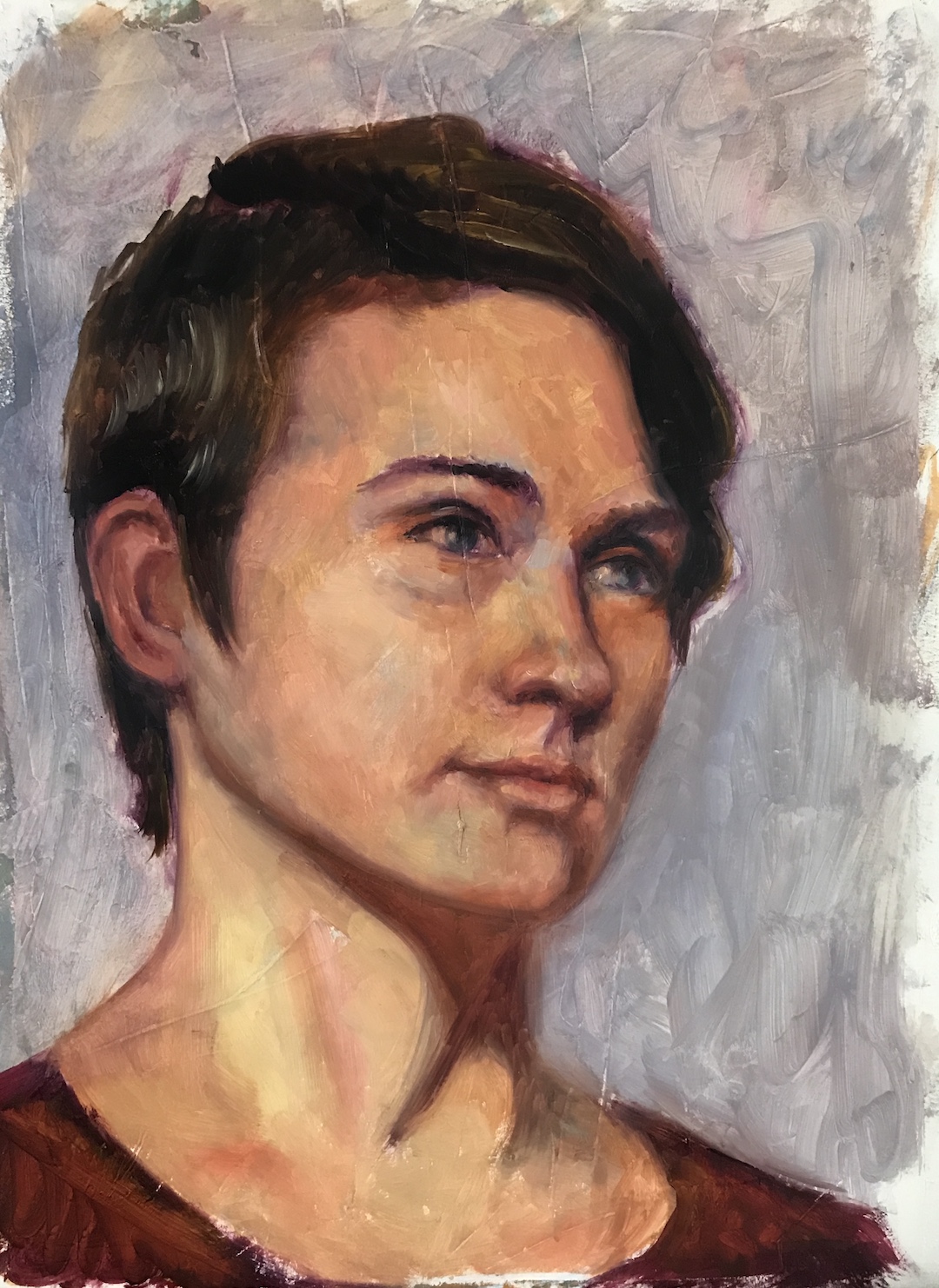
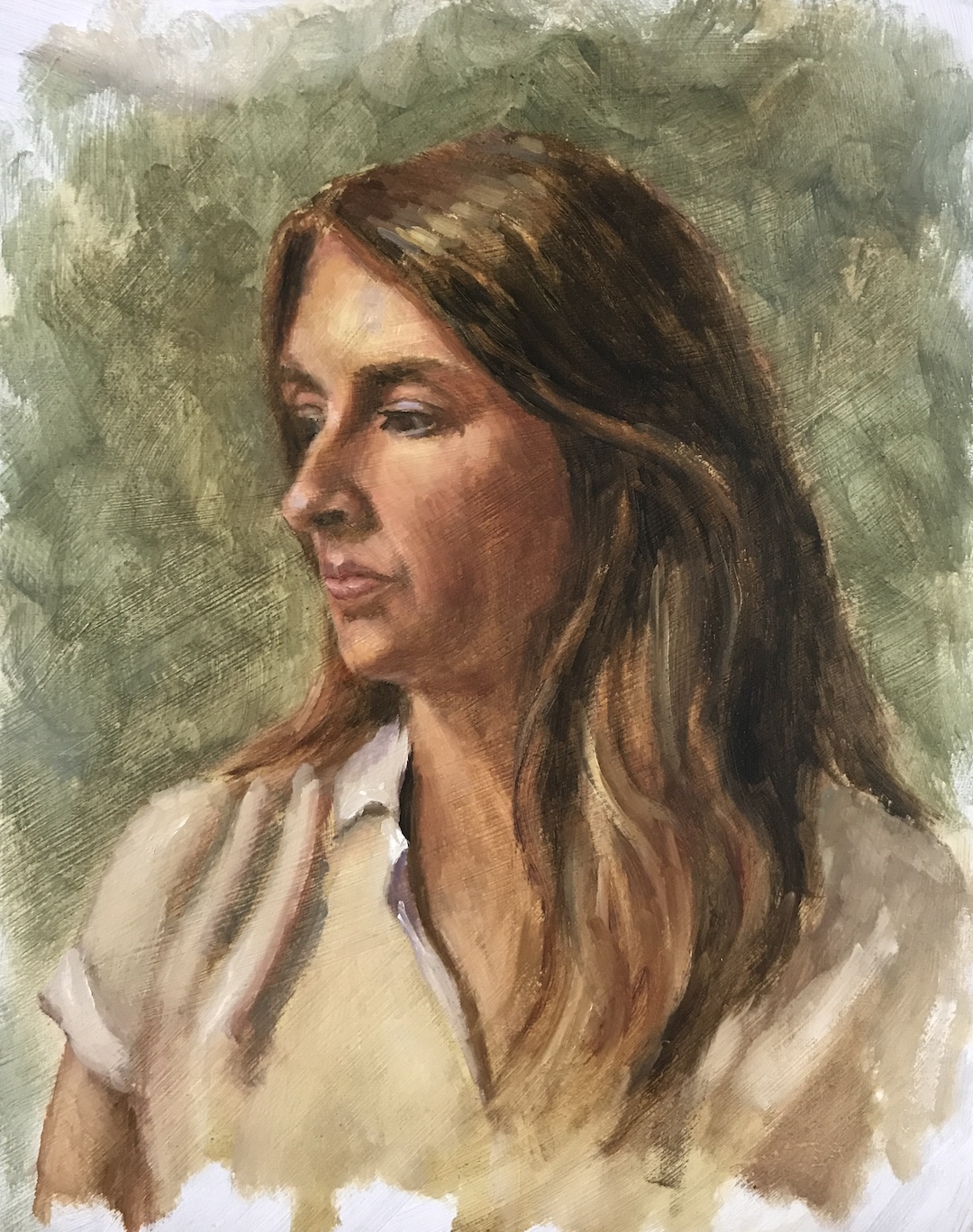
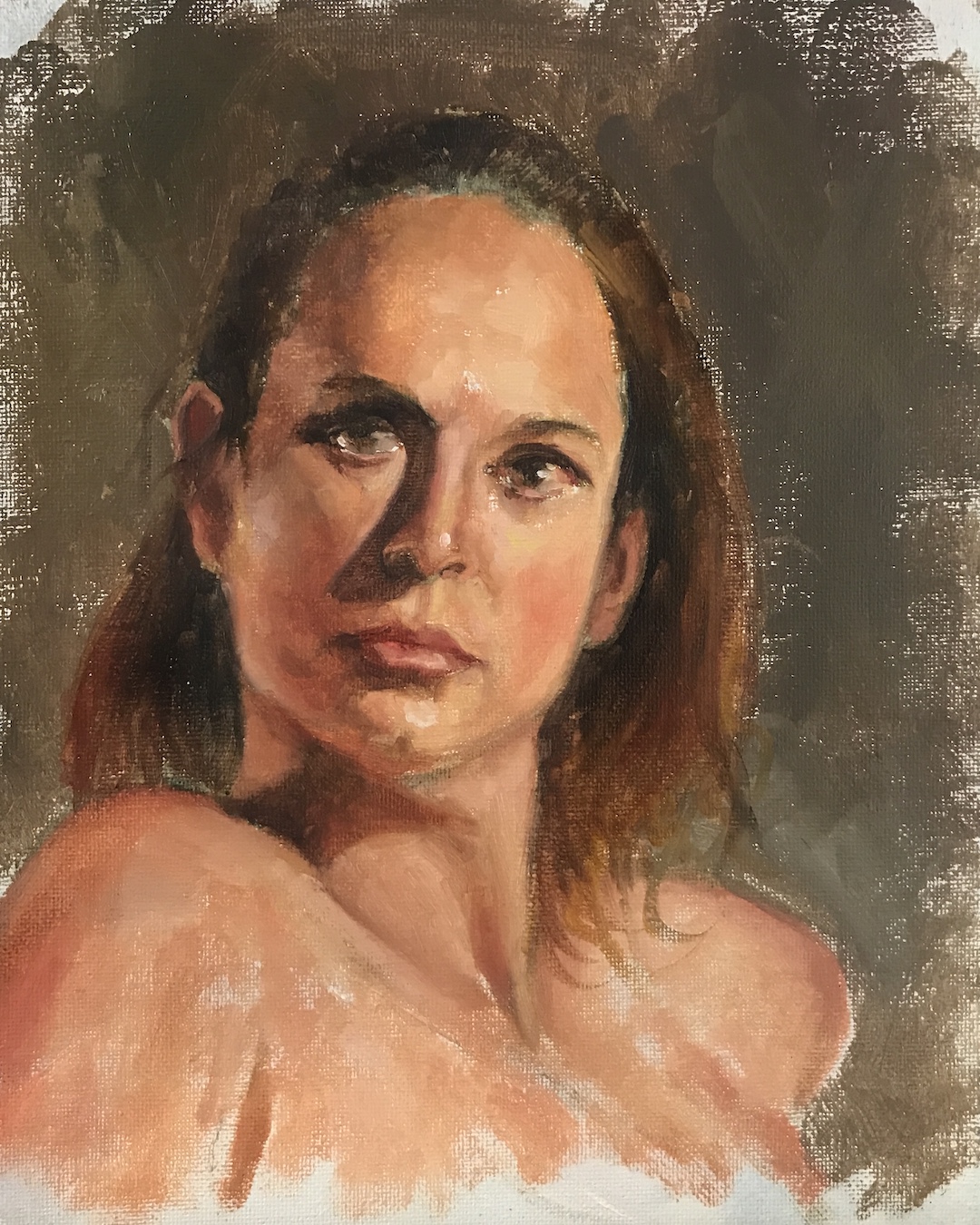
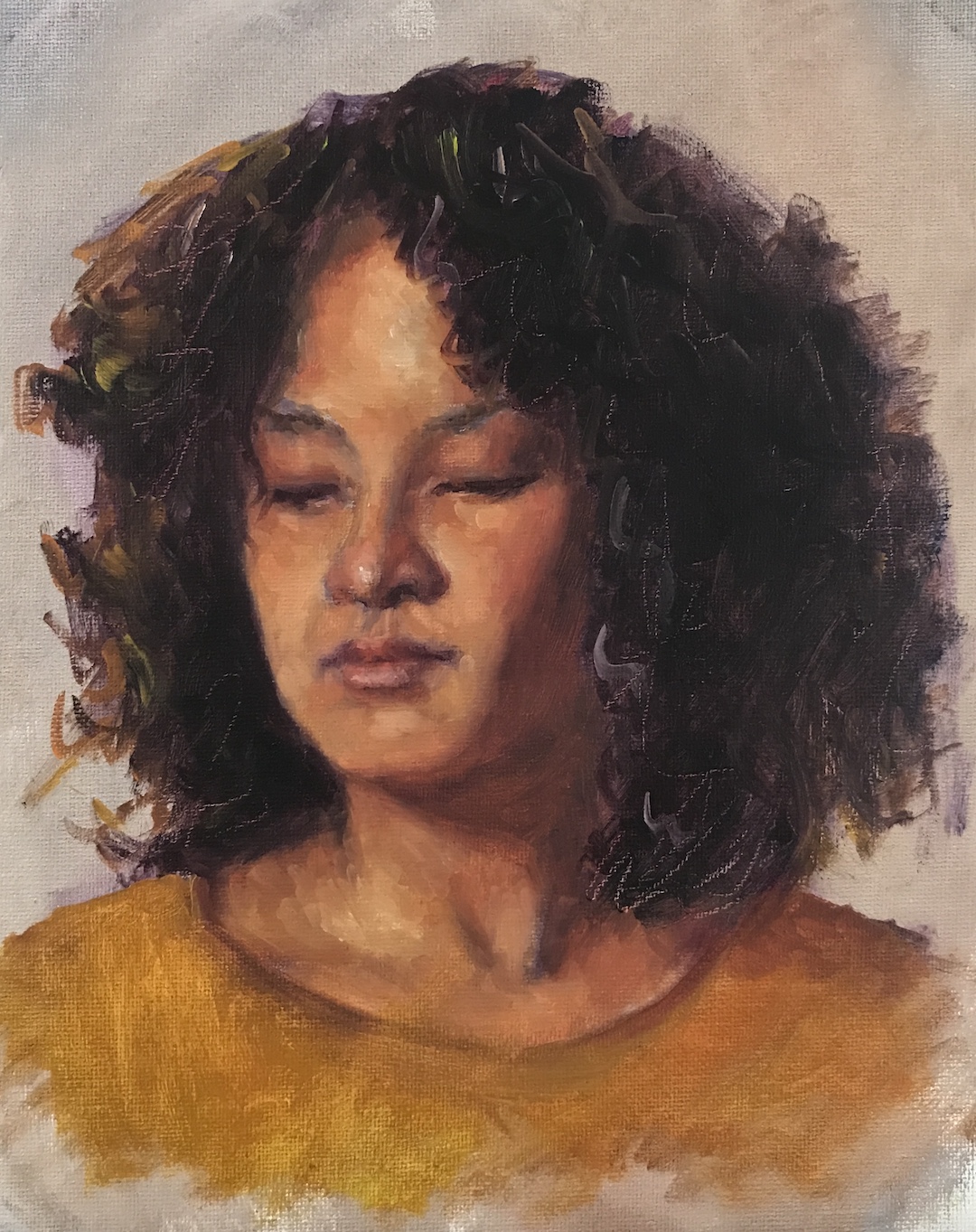
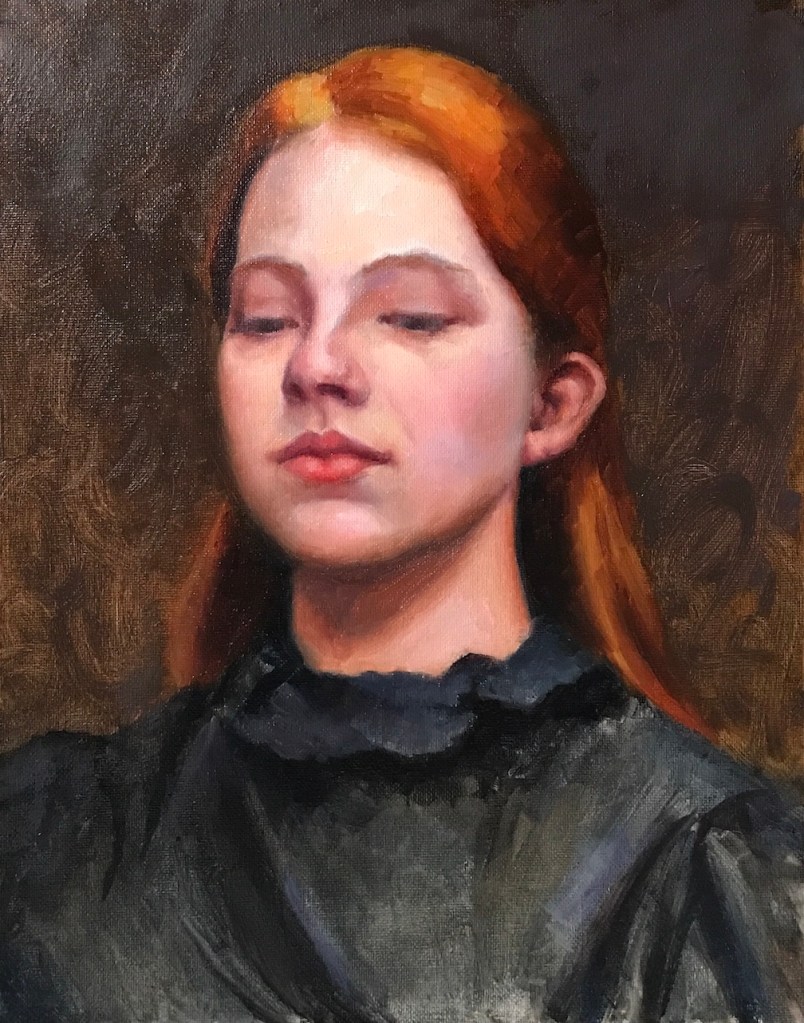
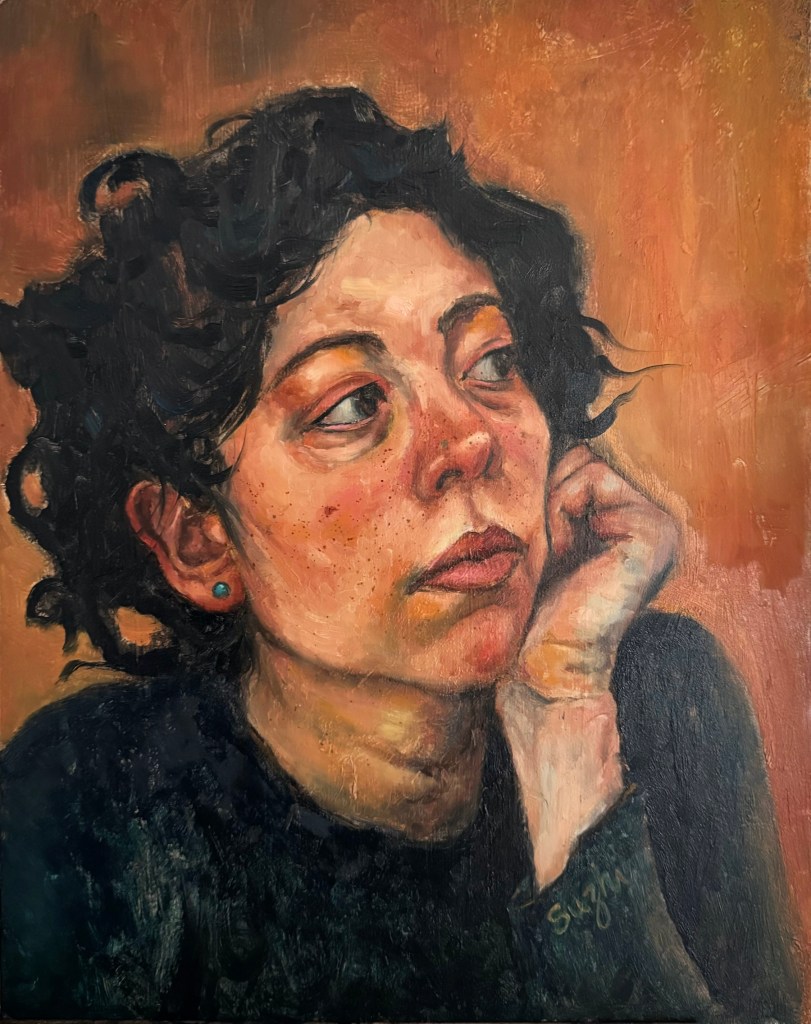
Here are some recent sketches I did, most of them are 9 x 12 or 11 x 14 and done within 2.5 hours:
Cézanne – Reading Notes (2)

Among the books I read on Cézanne, two of them focuses on his watercolor. They are Cézanne in the Studio: Still Life in Watercolors by Carol Armstrong, and Cézanne’s Watercolors: Between Drawing and Painting by Matthew Simms.

The two watercolor books are a rich collection of the artist’s sketches, finished and unfinished works in the medium. Watercolor and gouache were often used by old masters as studies for a bigger oil piece, and it seems to the be case for Cézanne early on. However, later in his life, when his reputation began to be established, he increasingly make watercolors as independent works of art.

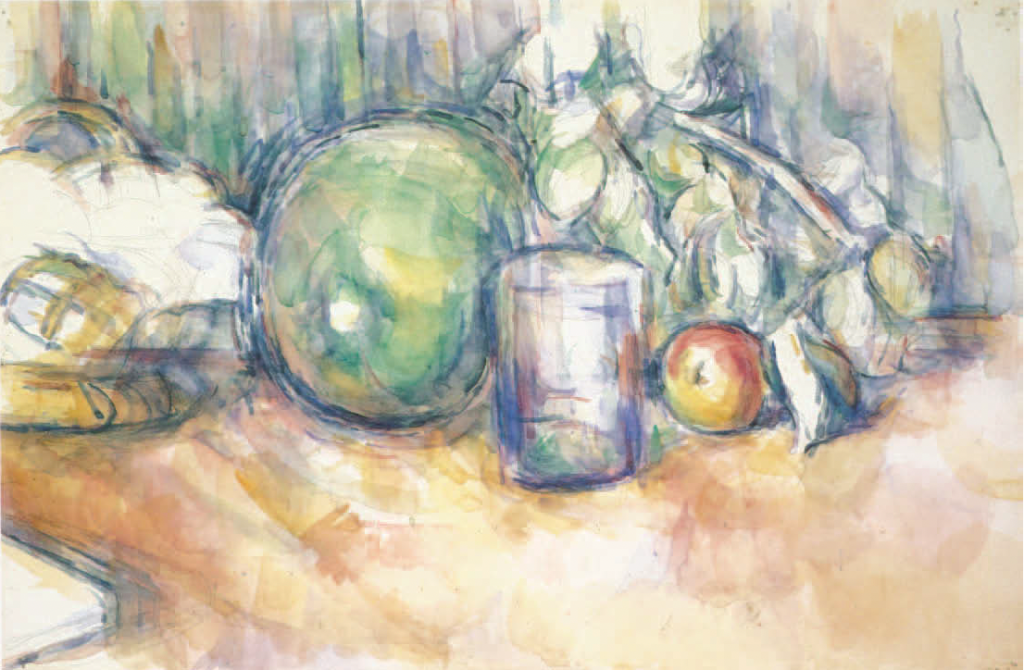
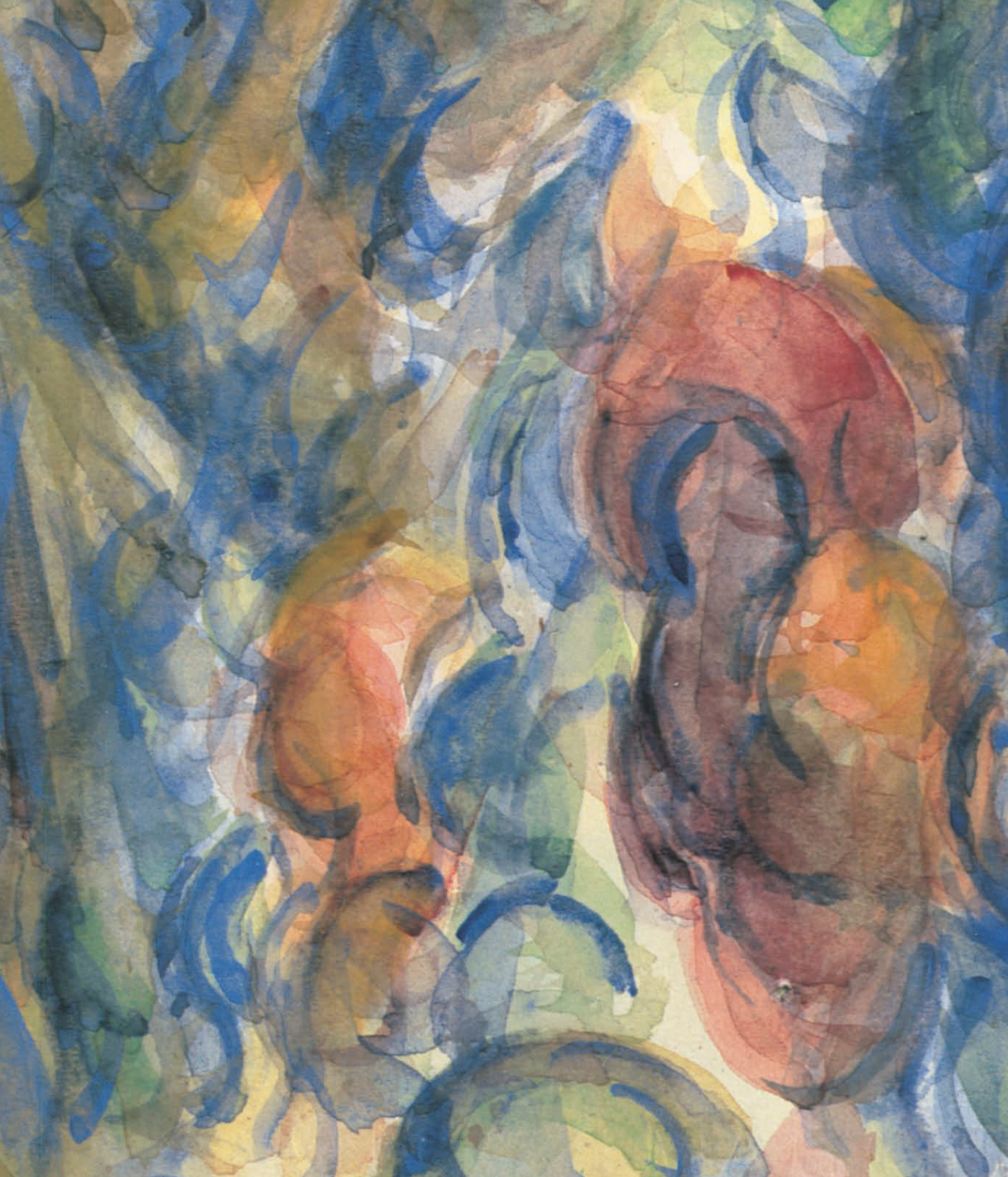
Cézanne’s watercolor is as unconventional as his oil paintings. The charcoal drawings, the white of the paper, and even the artist’s changing thought all become part of the composition. We see the draft, the negotiating and the final status on one page. This provides a unique window into the artist’s painting and the thinking process.

Still life with Green Melon, watercolor on paper, c.1906
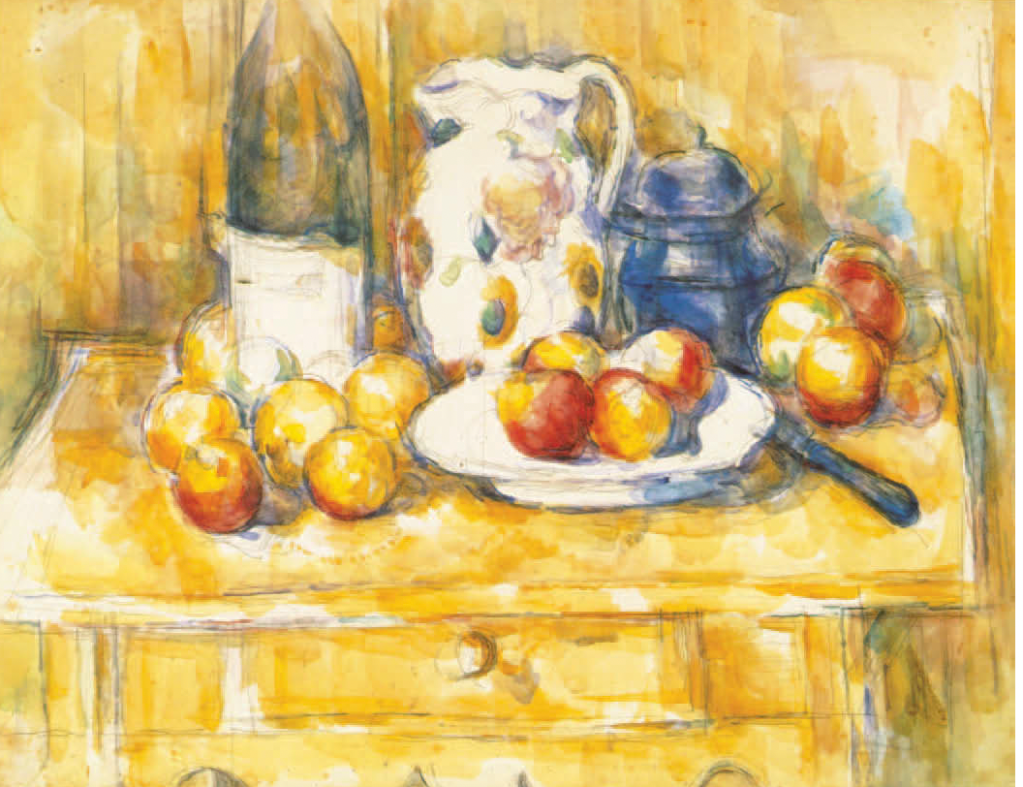
Still Life with Apples, a Bottle and a Milk Pot, watercolor on paper, c. 1904

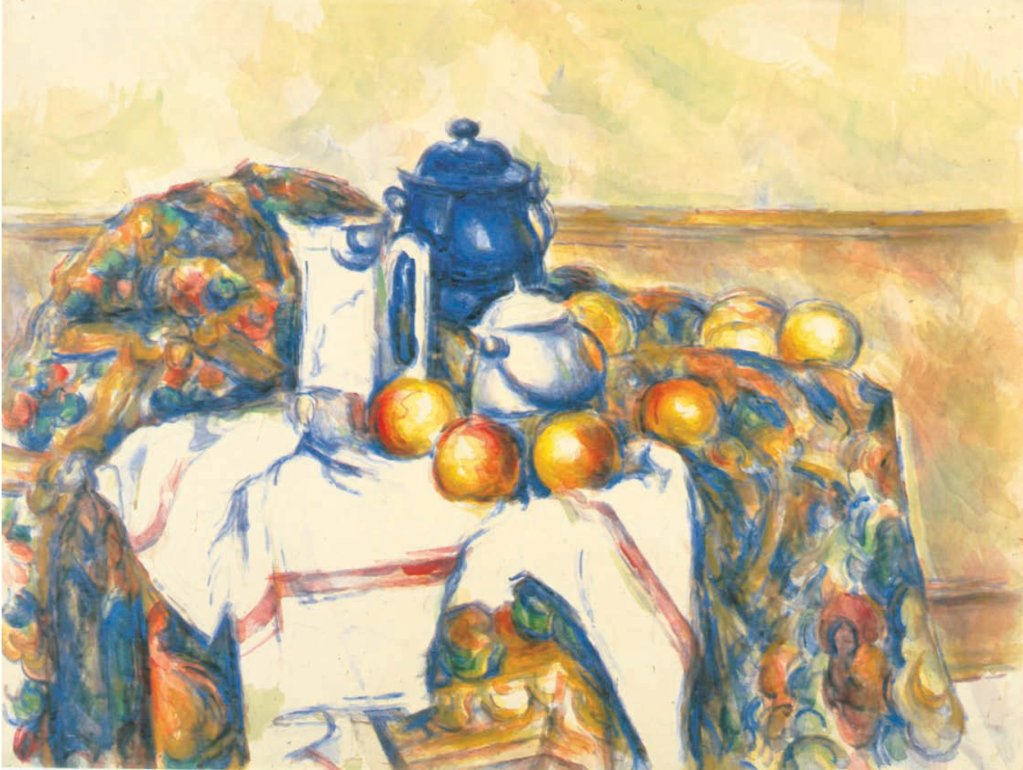
Unlike J. M. W. Turner (1775 – 1851) and other watercolorists, Cézanne adopts a touch by touch and color by color method. He layers translucent patches with gestural brushwork, resulting in a vibrant and casual overall appearance, with fragmentary and kaleidoscopic details. However, the actual process was deliberate and labor-intensive.

Still Life with Blue Pot, watercolor and graphite on paper, 48.1 x 632 cm, c 1900-1906

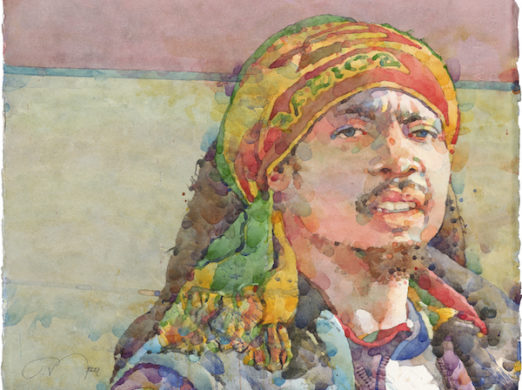
Contemporary figurative artist Ted Nuttall also employs transparent patches of colors to create energetic and vibrant paintings. While both artists are deliberate in their approach, Nuttall’s use of dots helps complete the painting, whereas Cézanne’s colors, used as lines, remain exploratory.

Africa, Ted Nuttall, watercolor on paper.

On a side note, for those interested, Cézanne uses a limited palette, as revealed by this nerdy study: “An Investigation of Paul Cézanne’s Watercolors With Emphasis on Emerald Green.”

Show News

Here are the group shows I participated recently:

“Works on Paper” exhibition, currently on view at the Pacific Art League:

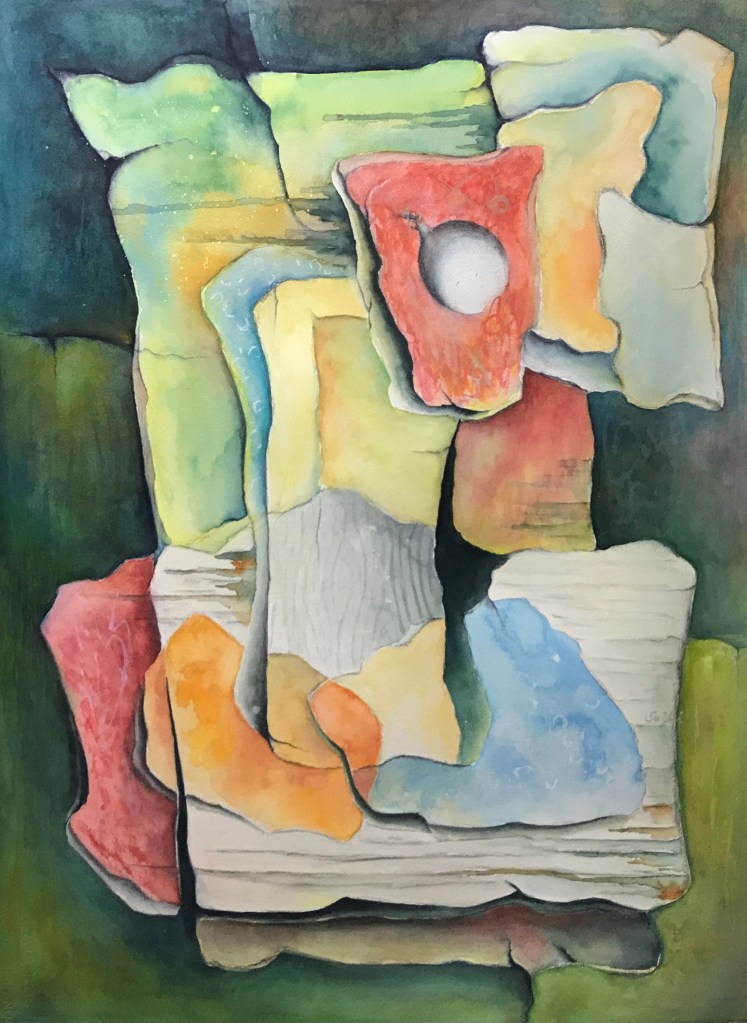
Memory, watercolor on paper, 23 x 29 in.

Santa Clara Valley Watercolor Society 55th Annual Member’s Exhibition:

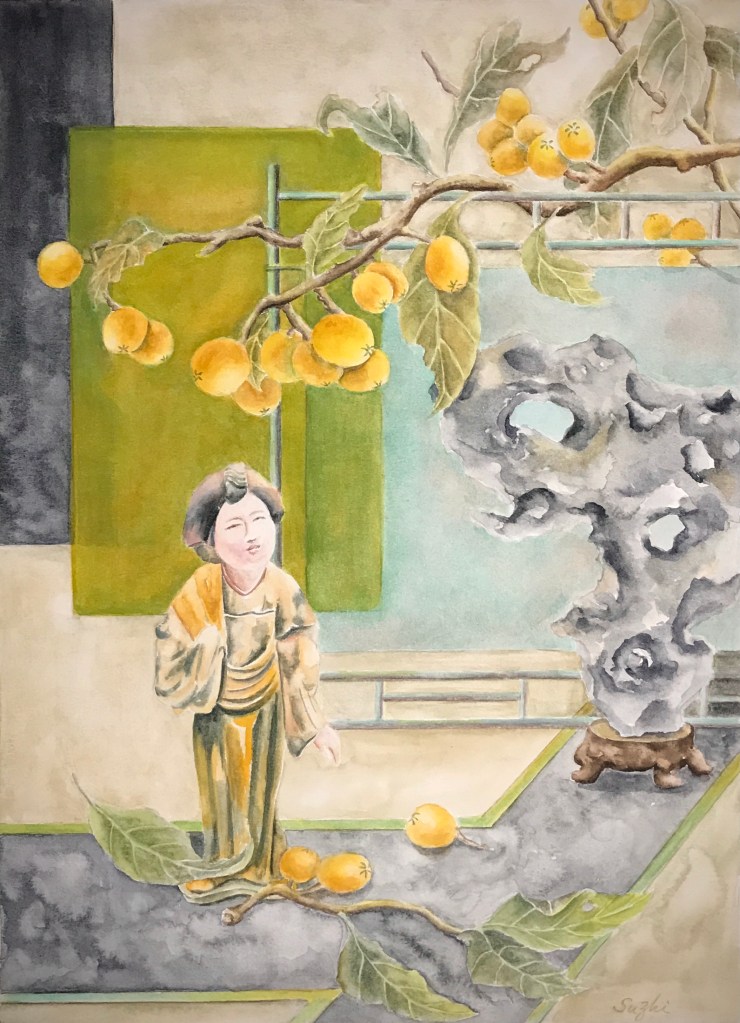
Once Upon A Time, watercolor on paper, 10.5 x 14 in.

“Portrait” Art Competition at Art Room Gallery:

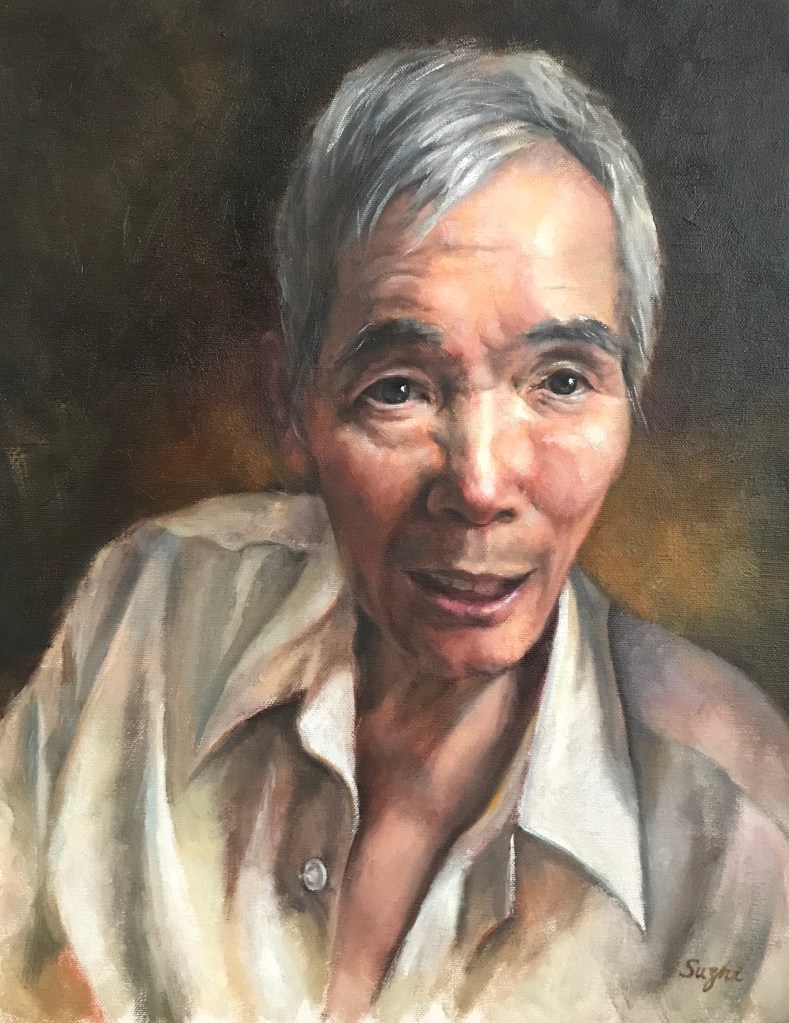
Father, oil on canvas board, 14 x 18 in., February, 2023
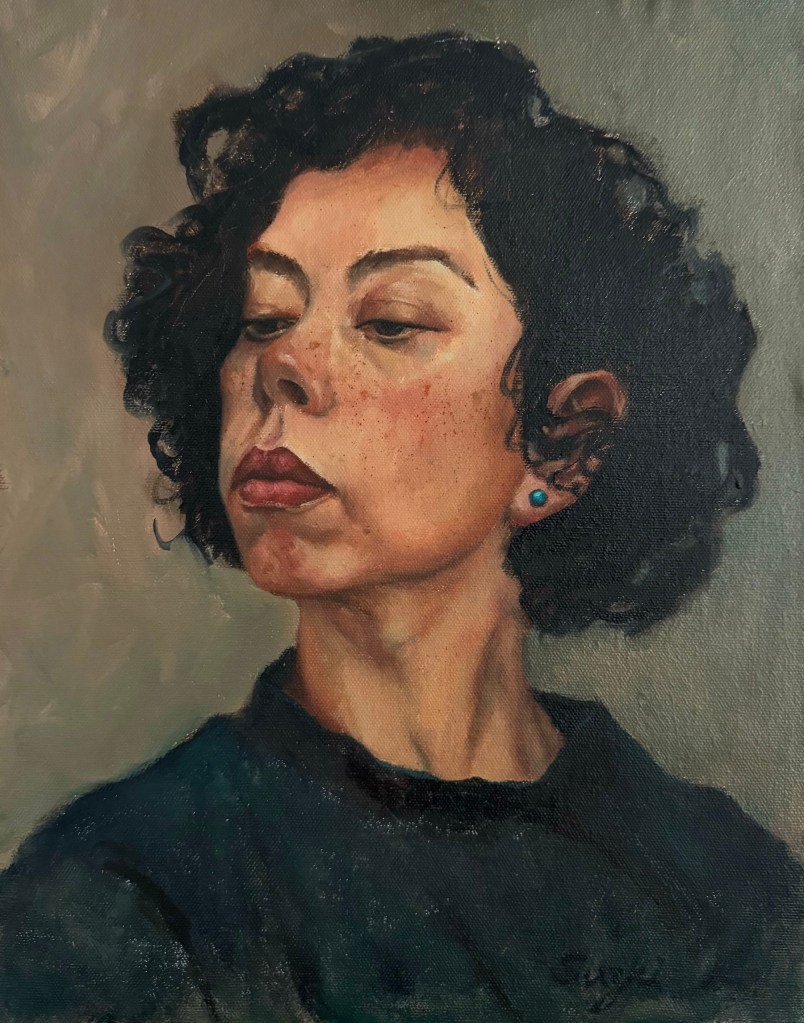
Me, oil on canvas, 18 x 24 in, January 2023

A few notes:

  • The watercolors were originally painted a couple of years ago, but I did some major revisions this year before the shows. I have yet to figure out how to date works like these.
  • The experiment of revising past works gave me a lot of ideas. Some of the old paintings may find a new life, and some of the creating processes may never end!
  • The portraits are the first time I entered my oil paintings to a show. They both received “Honorable Mention.”
  • I feel lucky that the “Portrait” is an online show, because none of the pieces I entered is completely dry. Northern California was darn wet this past winter!

Portrait of Abby and More

In early 2021, I audited an online workshop by artist Joseph Todorovitch (see a brief description here). At the time I felt the content was too advanced for me. It may still be. It came to my knowledge recently that the artist had a more fundamental series in 2020 called “Painting the Portrait with Ease.” It is a nearly 9 hours video series featuring step by step painting of the portrait of Abby. You can buy or rent (for 48 hours) from Vimeo.

It is more fundamental because the portrait involves no complex background and clothing, and the palette is limited (not as monochromatic as it seems though). The “ease” part comes from the artist’s clear explanation of his choices and thought process. If you are looking for shortcuts circumventing learning and practices, there’s none. In fact the artist’s approach is quite meticulous and laborious. He shows no hesitation in scraping off the “finished” part of a painting and going at it again. While there are plenty basic information on portrait painting for a student, the process he used is the same for completing advanced works. This is a series that deserves revisit from time to time.

Here’s the painting I did while following along the series:
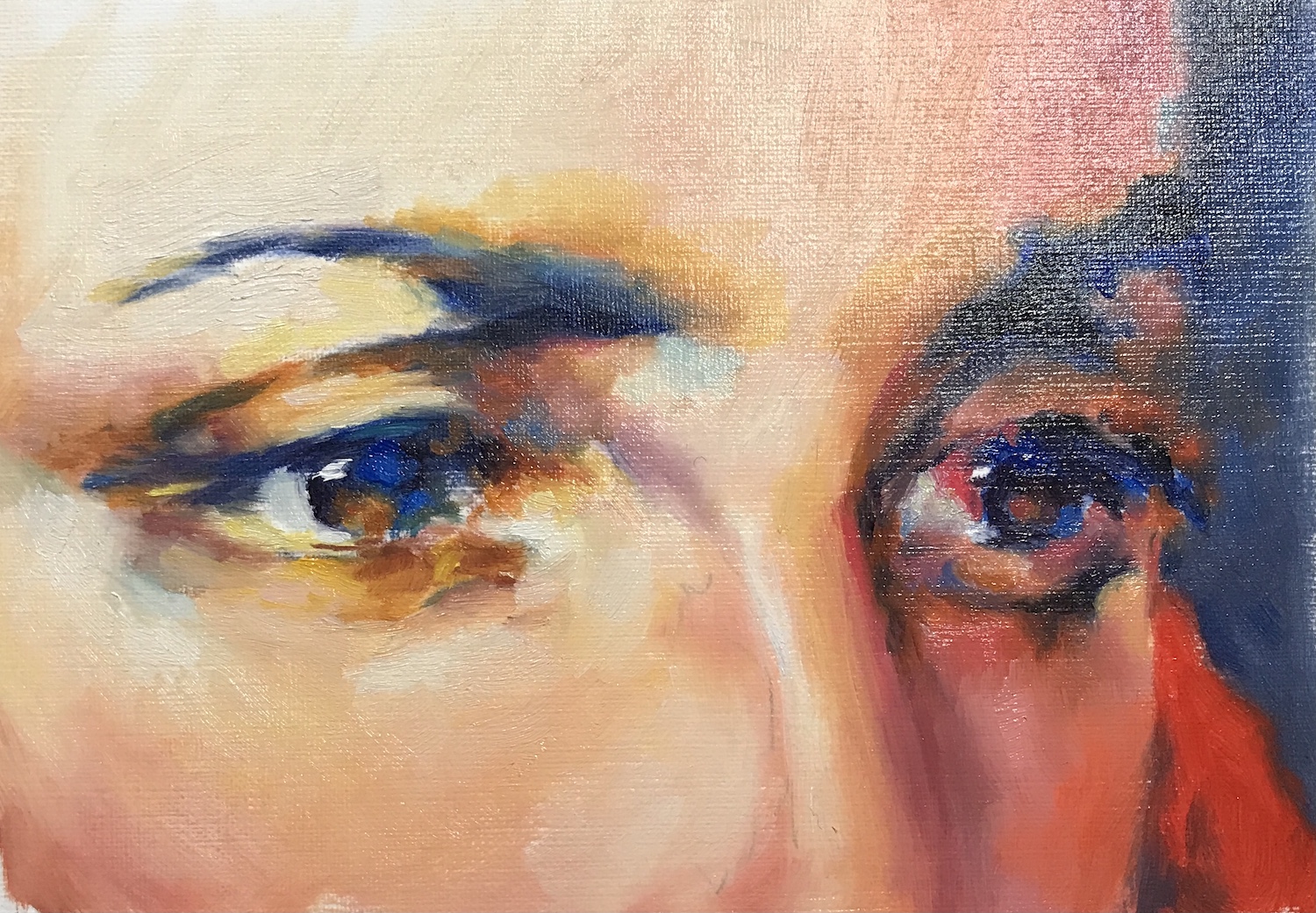
Abby, 16 x 20 in, oil on panel, November 2022

Another young artist I took lessons from recently is Alex J. Venezia. The lessons are a 12 hours video recording from East Oaks Studio, featuring also the portrait of a young woman. Mr. Venezia used a layered approach, and the videos were recorded over weeks. If you want to follow through, you need to be patient and let the paint dry in between. The artist is also extremely particular about the subtle changes of value and color in his paint. I feel like I need a better habit of organizing my palette and more practice in mixing colors to make the best out of these lessons. The painting I did during this series is a not a step by step following along and is abandoned halfway. I do plan to revisit the lessons in future:

Portrait of a Young Woman, 11 x 14 in, oil on panel, December 2022

A few more words on East Oaks Studio: While you do need a subscription to access the above mentioned videos and many other recorded and live lessons, East Oaks has plenty free content posted on their YouTube channel. They feature quite some established working artists. It’s a rich resource that takes time to digest.

Turquoise in Earth’s World

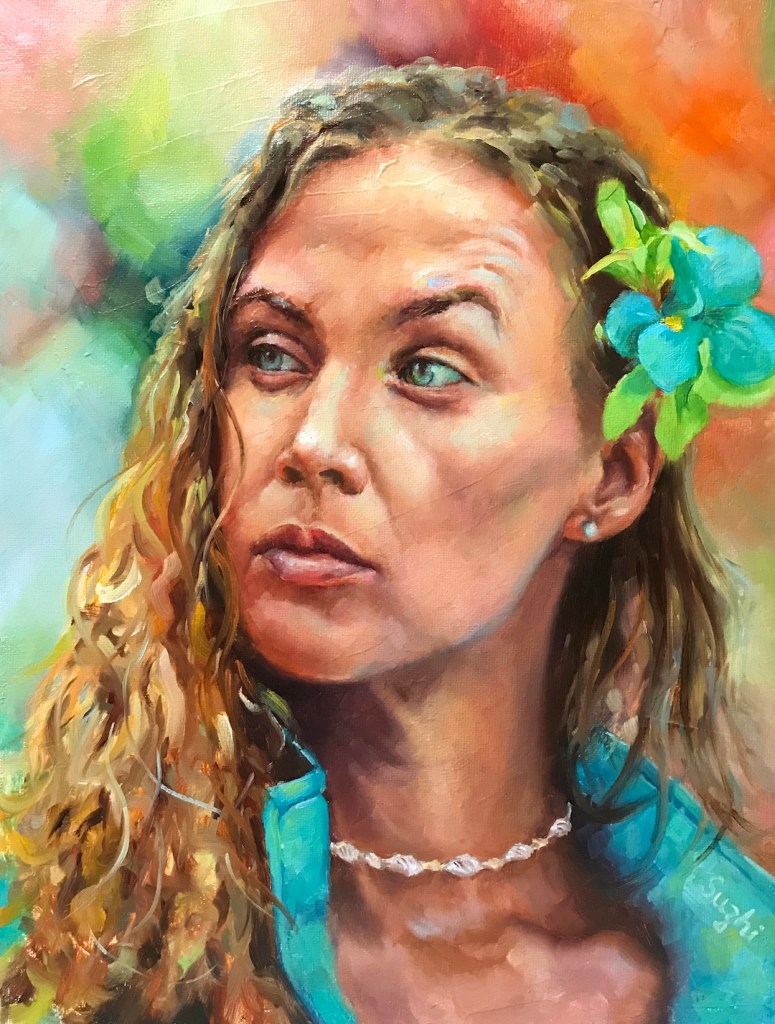
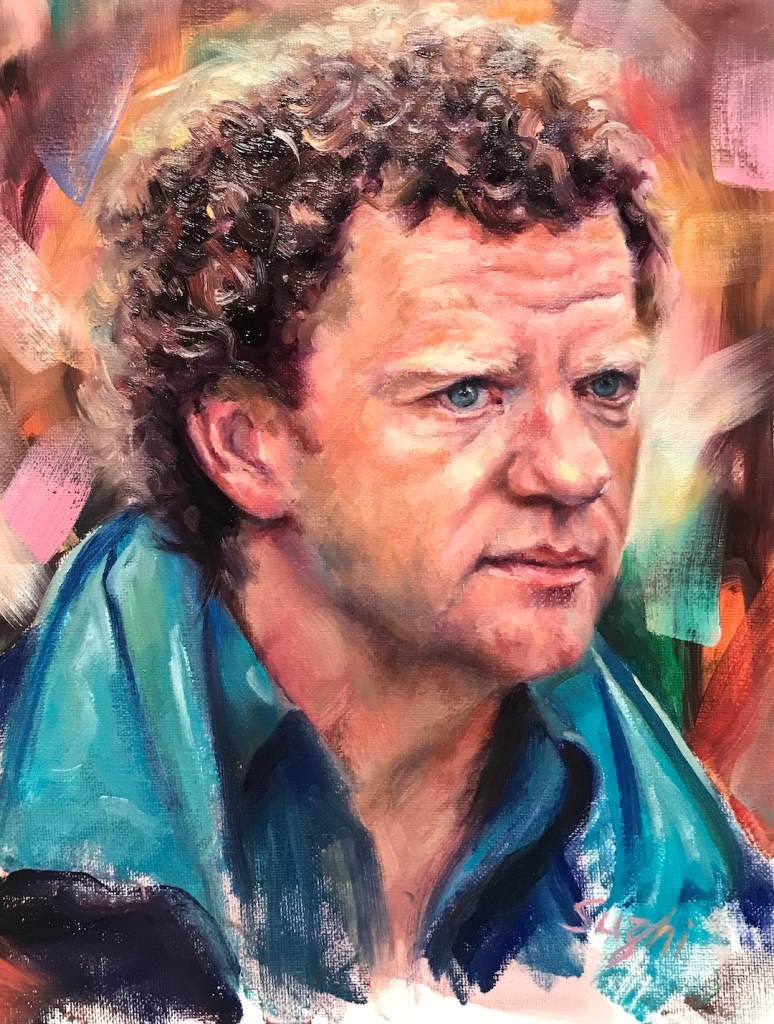
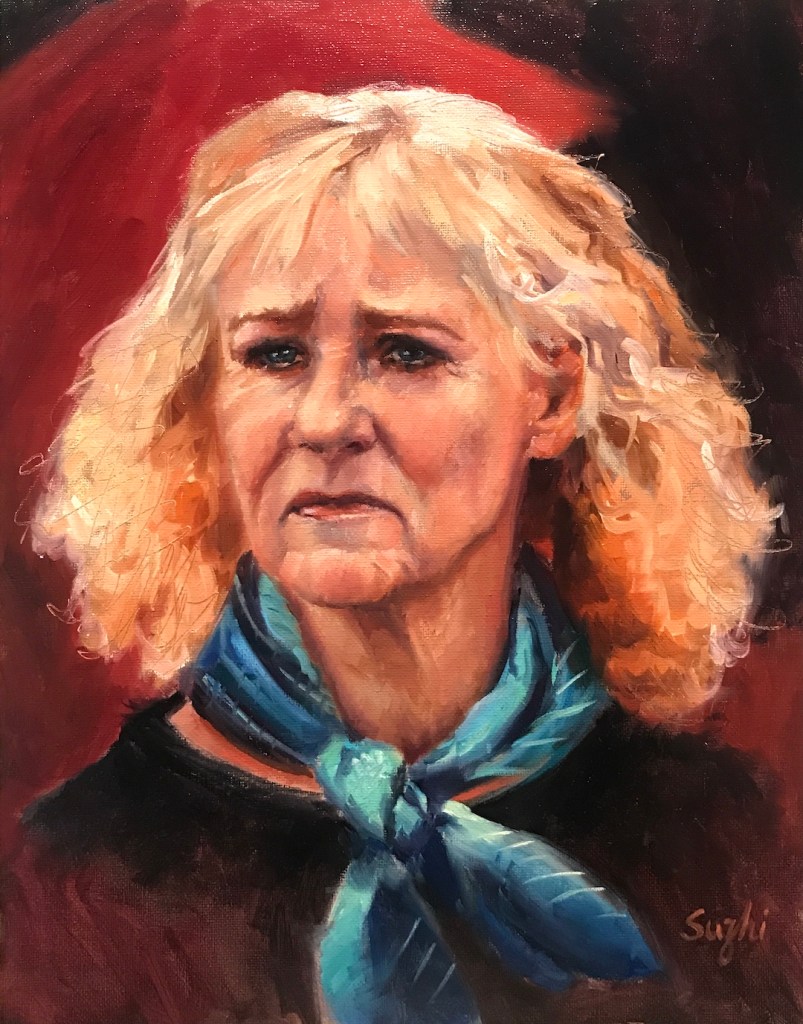
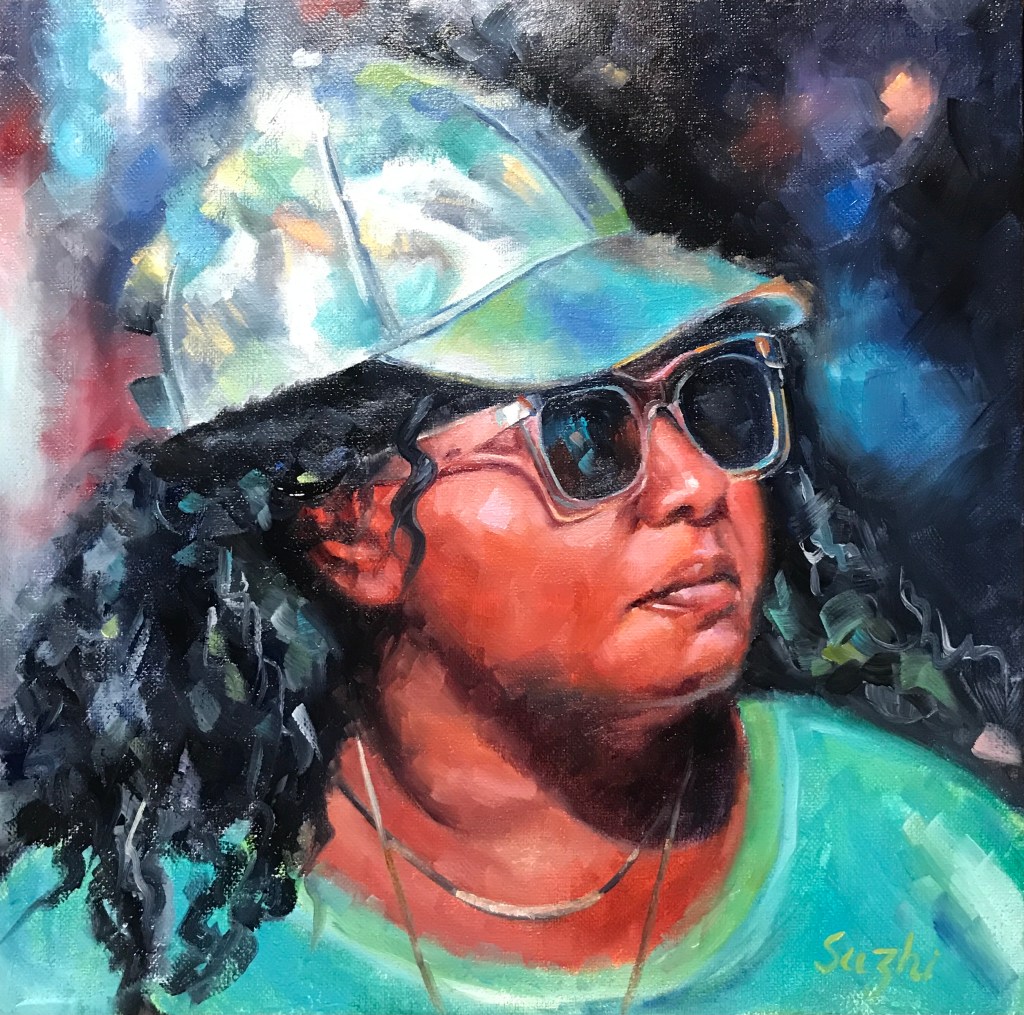
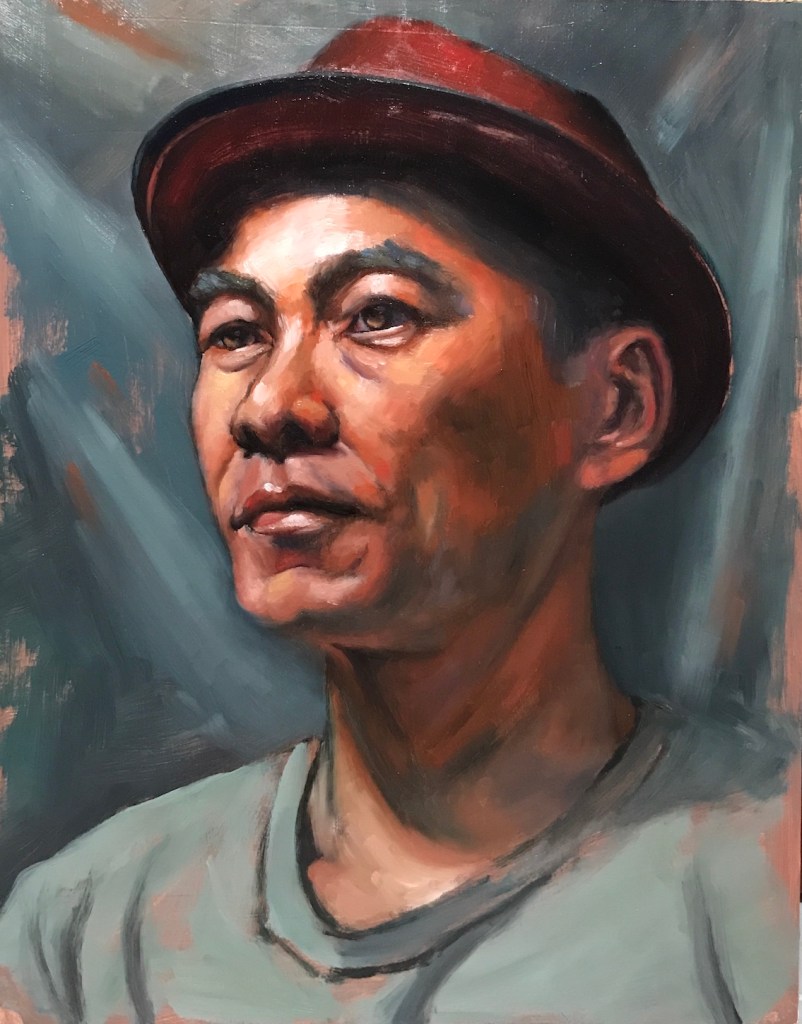
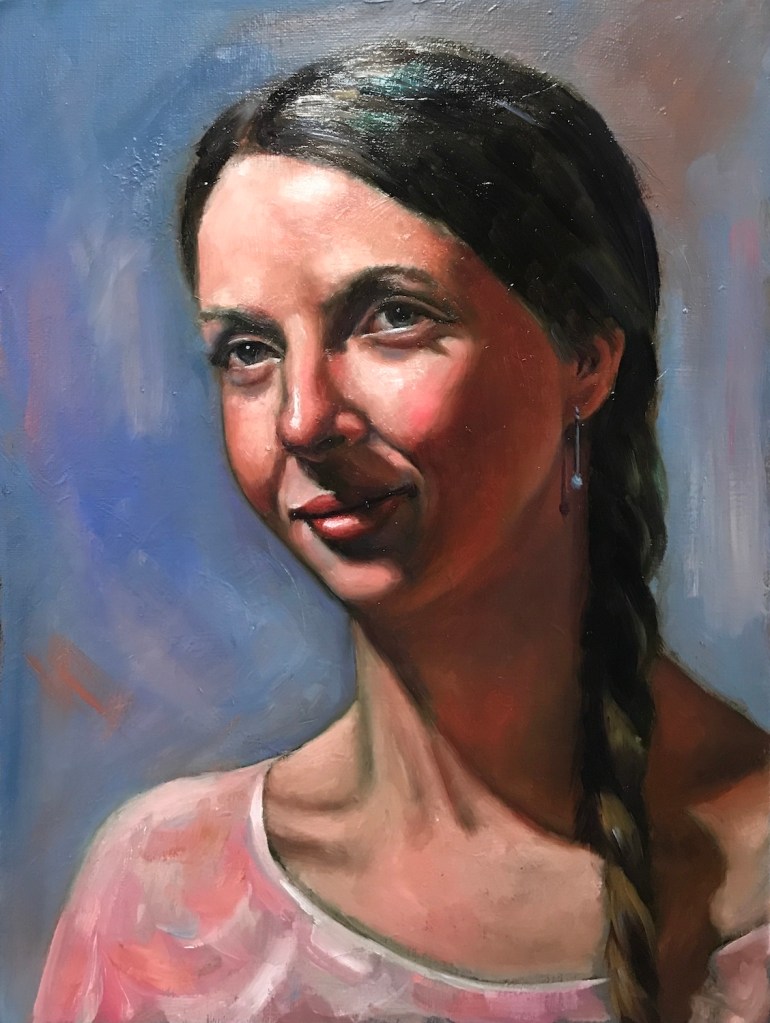
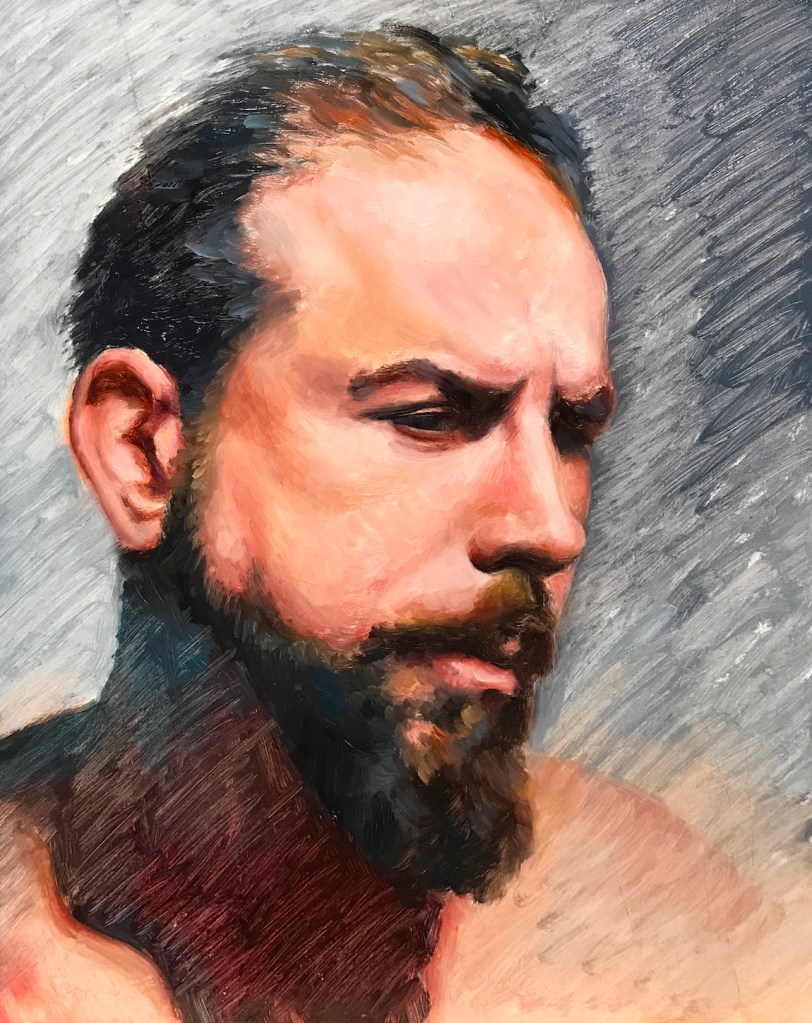
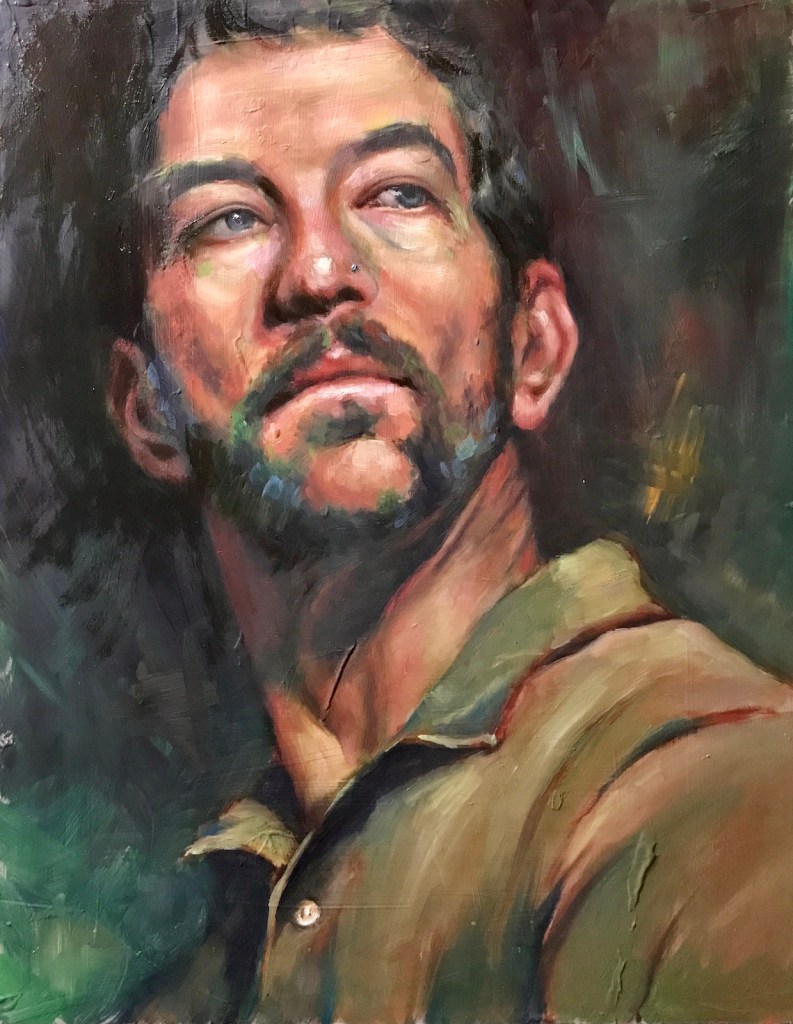
If you are interested in portrait art, you’ve probably heard of “earthsworld” – a photographer that took Candid photographs of Americans at county fairs. Over the years, I have multiple artists recommended this photographer to me. Take a look at the website or the Instagram account and you’ll know why this is such a rich resource for portrait painter, character designer and people watcher. To me, it opens up a side of America that beyond my natural habitat.

I picked a few photos from the collection as references to practice portrait painting, and only to notice that the ones I chose all features a touch of bluish green. Hence the title of my small series – “Turquoise in Earth’s World:”

A few notes:

  • Again, the above paintings all used references from various earthsworld’s county fair collections. They are all painted with oil on canvas board.
  • The collection is very helpful in practicing non-typical studio model expressions and props.
  • The nature of the subject matters do push me to loosen up a bit (not as much as I wished) and be creative with the composition and background design.
  • It’s such a wonderful treasure. Do check it out!

The Recent Batch of Portraits

These are the final ones from Phase IV of Watts Atelier’s portrait painting courses:

Oil on canvas board, 11 x 14, 2022
Oil on canvas board, 9 x 12, 2022
Oil on canvas board, 11 x 14, 2022

A few notes:

  • This phase focuses on the “loose style and expressive edge work of gesture portrait painting.” It’s quite obvious that I need more practice and confidence to be more gestural. It takes a lot of effort to achieve the look of effortless.
  • Color wise, this stage is pretty open, but I still start with Zorn, and add others if necessary. It’s nice to have a familiar starting point.
  • According to Mr. Watts, there would be several more levels of portrait painting courses after this. However, I don’t see they have any plan for new releases in the near future.
  • For the time being, my “guided practice” of portrait painting will take a break and I will move on to “independent study.” The plan is to continue focusing on the looseness, giving more variety to the background design and trying to achieve a less rendered but more finished look.

Colors Getting Loud

These are some of the portraits I’ve done recently. Palette wise I have pretty much opened myself to everything now:

Japanese Girl, oil on canvas board, 11 x 14 in, March, 2022
Male Model, oil on canvas board, 11 x 14 in, March, 2022
Female Model, oil on canvas board, 11 x 14 in, April, 2022

Here’s an old Zorn palette one:

Female Model, oil on canvas board, 11 x 14 in, December, 2021

A few notes:

  • The first three paintings are supposed to be gesture studies. I obviously overworked.
  • On the other hand, spending more time designing the background makes the process more interesting and the painting more finished. I like that.
  • Managing an open palette did distract me from better value control and cost more subtlety in skin tone.
  • I am thinking a two-step approach to improve: first spending more time preparing the palette – premixing most of the colors like I did with the Zorn palette; and then use a timer to push for a more gestural result. Two hours? Three? 🙂

Master Studies – Facial Features

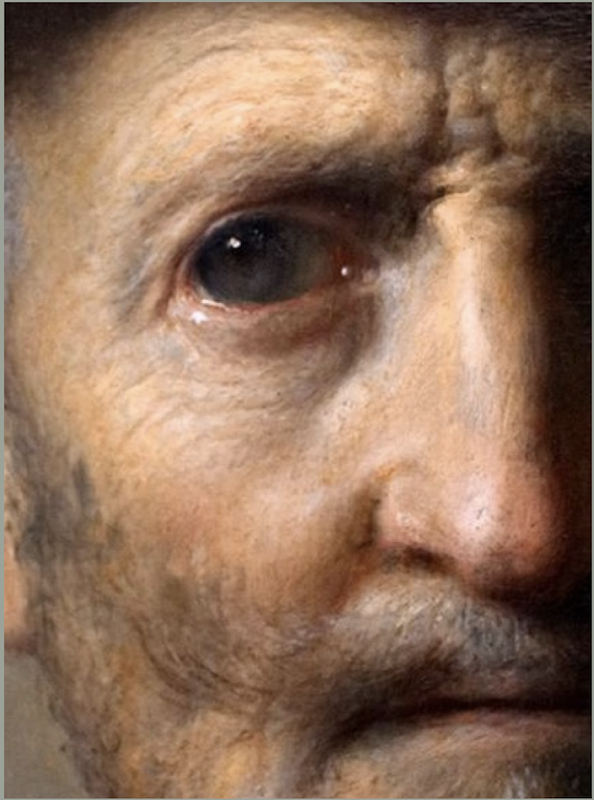
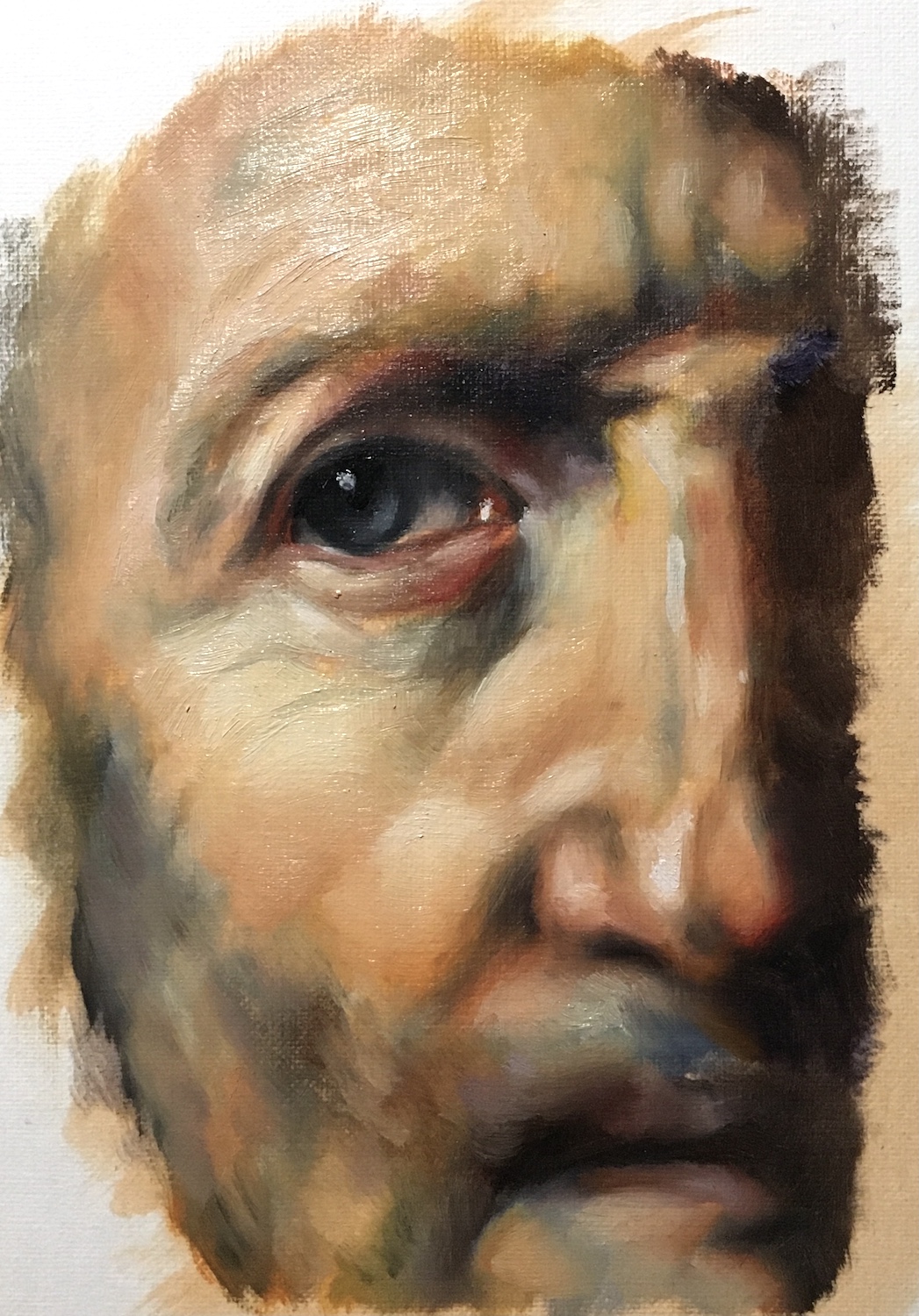
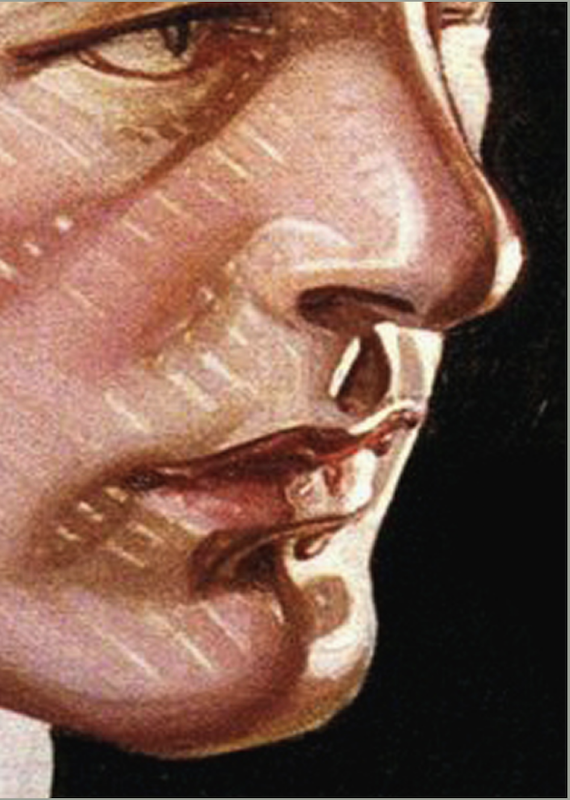
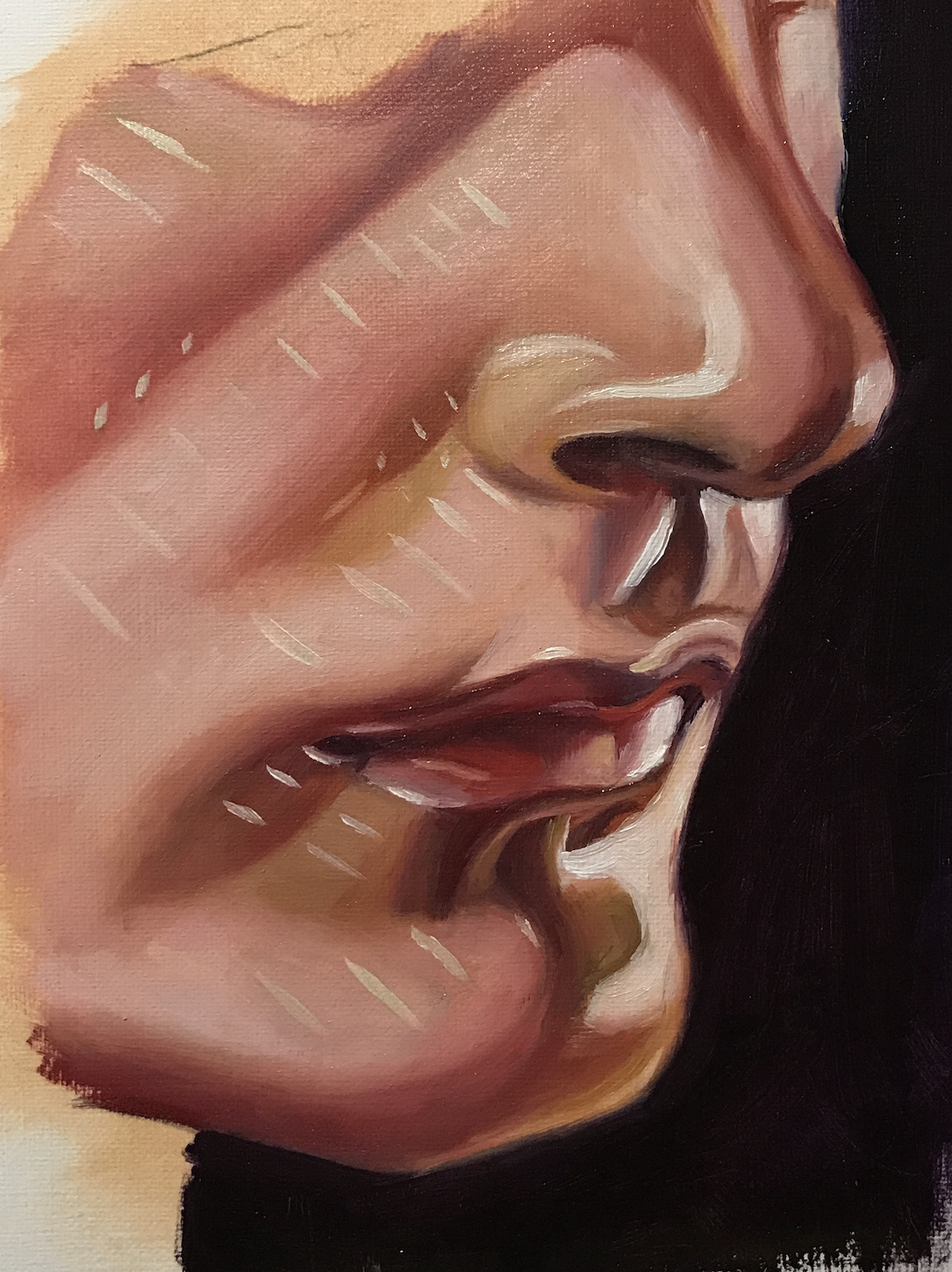
It’s been a while since I did any master studies, and luckily the Watts’ program forced me to catch up. Here are some of the facial features I copied recently:

Eyes – Fechin

Nose – Rembrandt

Lips – Leyendecker

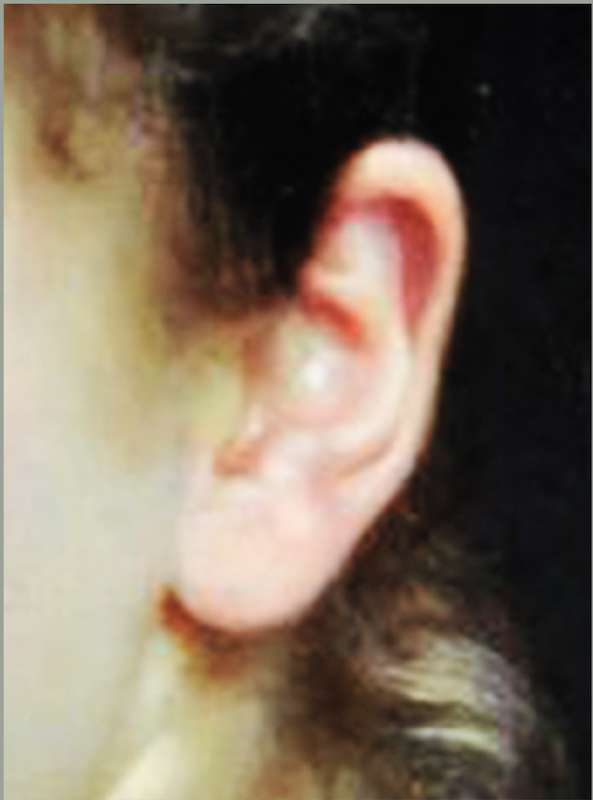
Ear – Bouguereau

A few notes:

  • The reference photos I used are provided by Watts Atelier, and some of them are not very close to the original. For example, I believe the last one is from William-Adolphe Bouguereau (1825 – 1905)’s Portrait de Gabrielle Cot. The original painting is high on realism. This doesn’t really affect the study though.
  • The most difficult thing I found is to re-create the texture, which is achieved by either manipulating the surface (Fechin) or brush strokes (Rembrandt). In the former case, it’s hard to guess how the manipulation was done. As for Rembrandt, it’s a laboring buildup that can’t be achieved in a few hours. For now, I am still focusing on the basics. Texture and brush strokes are like signatures. They are very personal and take long time to form.
  • I find choosing a topic and taking a small portion of the masterpiece to study is more effective than copying a whole painting. I also like the exposure to different styles. Bouguereau and Leyendecker are completely new to me and I find the highly stylized approach from the latter very refreshing.

A Delayed Plan for 2022: Portrait, Still Life, Landscape and More

2022 for me is not only moving on from the beloved Zorn palette, but also a broadening of the subject matters. The plan is to keep practicing portrait and still-life, with an emphasis on loosening up and becoming more gestural. Meanwhile, I will add landscape and later figures to the learning schedule. For medium, oil is the focus for now, but I’d like to do more watercolor sketches with or without ink.

Here are some my recent homework from Watts:

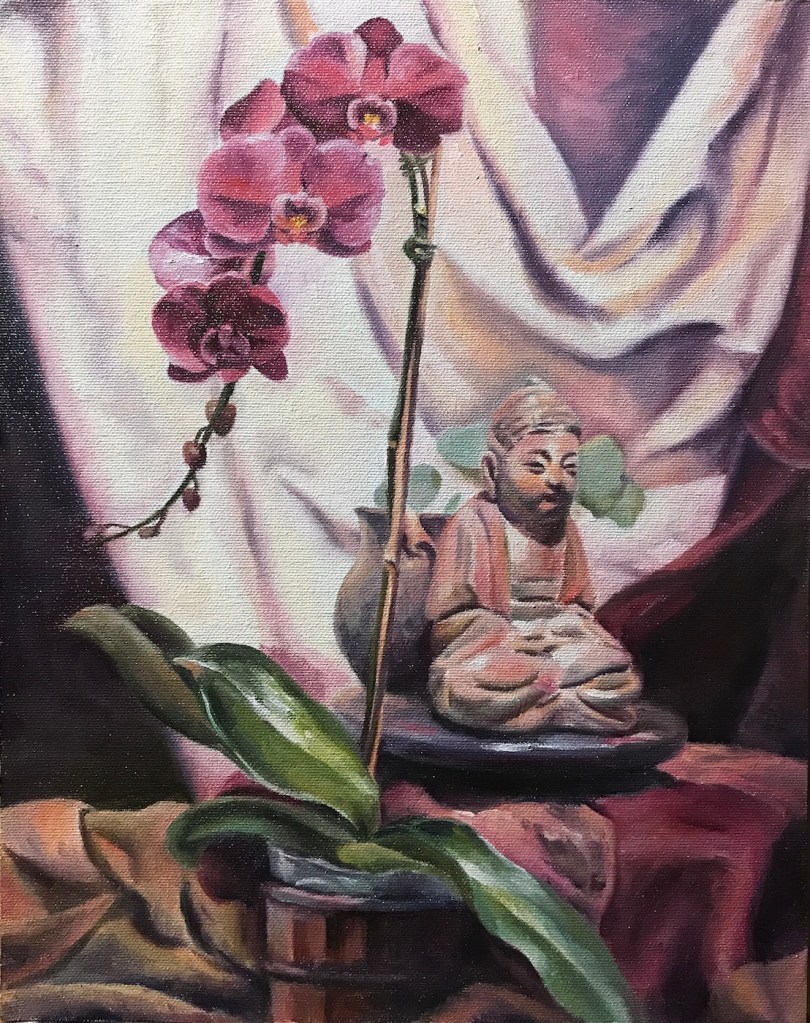
Oil painting of orchid flowers and a Buddha statue with drapery, realism
Orchid and Buddha, 11 x 14, oil on canvas board, Dec. 2021
Pine trees in front of snowy mountain, oil painting, landscape
Pines, 11 x 14, oil on canvas board, Jan. 2022
Oil painting of crashing waves and rocks, seascape
Waves 1, 11 x 14, oil on board, Jan. 2022
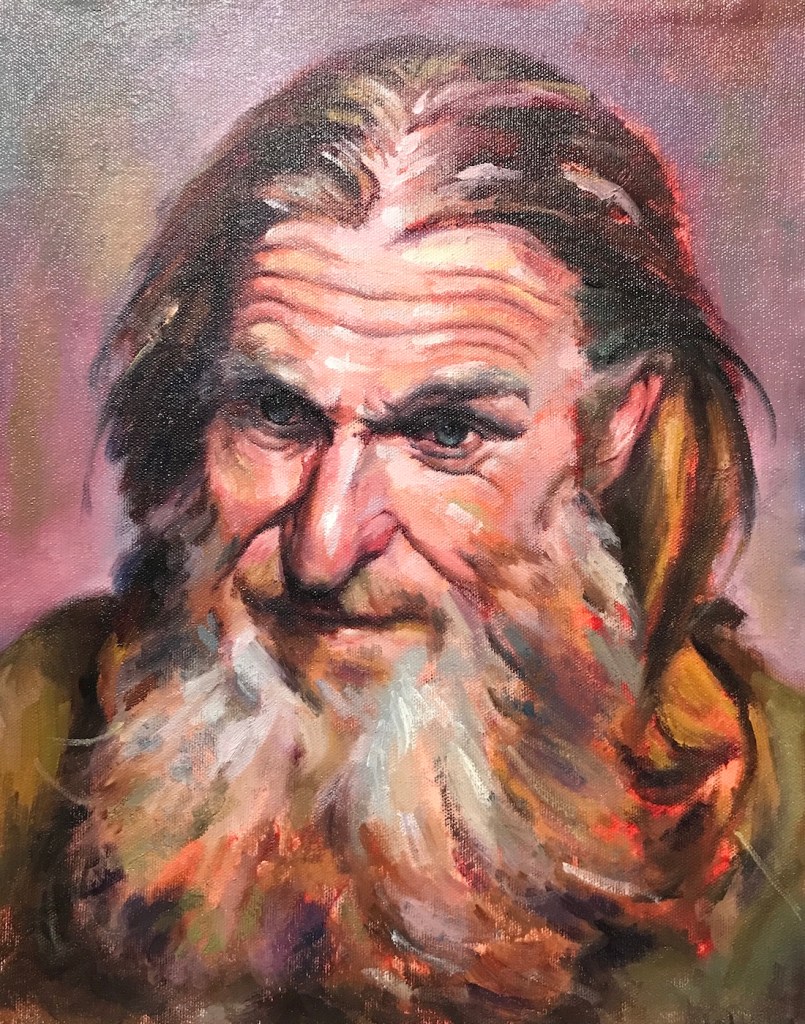
Oil painting of an old man, gesture portrait, realism
Old man, 11 x 14, oil on canvas board, Feb, 2022

A few notes:

  • Landscape is not a particular interest of mine, but for years, I used it as a check-mark to see if I have made any progress in techniques. After doing other subject matters for a while, I would attempt a few landscapes to see if I feel more confident and comfortable. It never did!
  • It took me some time to figure out that apart from value control, the key to a successful landscape painting is shape design. To deliver a believable tree, on surface you have more leeway than doing a portrait, but the lack of definitive guidance (the shape of an eye, a nose etc.), you need to come up with your own. That freedom can be a curse.
  • Looking above, it suddenly hits me that before doing trees, it might be a good idea to practice more bearded and hairy portraits first! 😉

Zorn in Watercolor & Gouache

Watercolor portrait of model Felicia, Zorn palette, realism
Felicia, watercolor on paper, Fall, 2021
Watercolor portrait of old man, Zorn palette, realism
Old Man, watercolor on paper, Fall 2021
Gouache portrait of young girl, Charlotte, Zorn palette, realism
Charlotte, gouache on watercolor-board, Fall 2021

A few notes:

  • For the watercolor paintings, I planned two different approaches, a softer and muted one, vs a more vibrant and contrasted one. The results were somewhere in the middle. Especially for the first painting, I wish I had softened some edges and let go certain definitions instead of spelling out everything I saw.
  • The gouache one is a homework from Watts. It is a practice of the Zorn palette and the tiling technique. I found both the medium and the technique challenging. Tiling is to juxtapose thick layers of close-value paints and blend them (if necessary) later. It’s a good preparation and practice for oil painting, but it requires a lot of patience in value control and shape design. Hehe, patience! 😉