Tag Archives: #watercolor

November’s Bits and Pieces

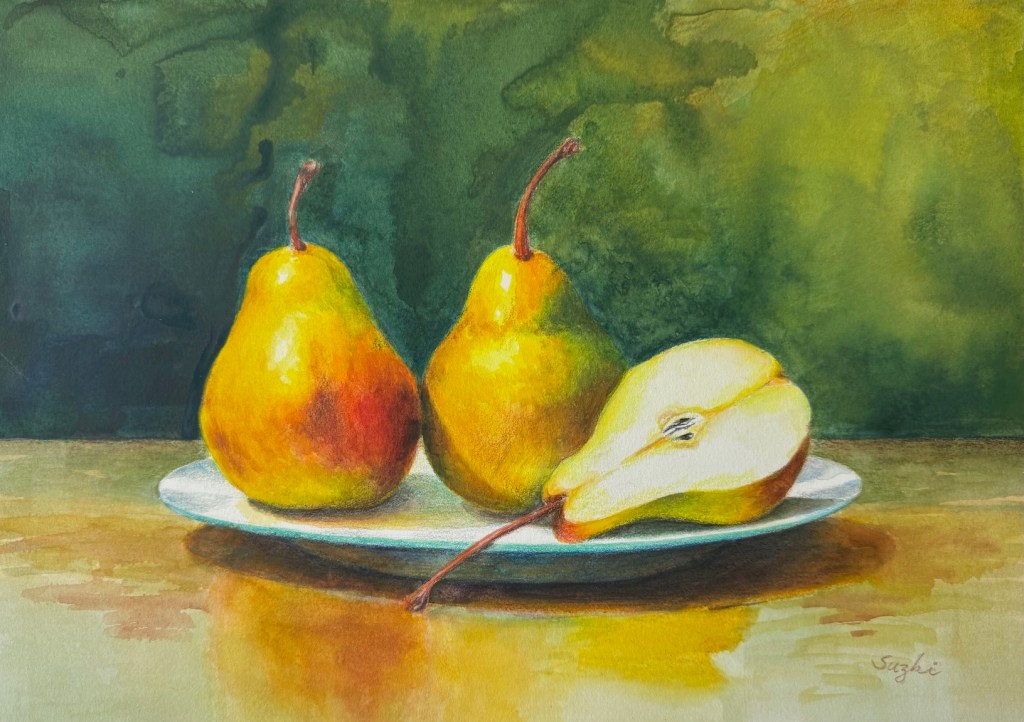
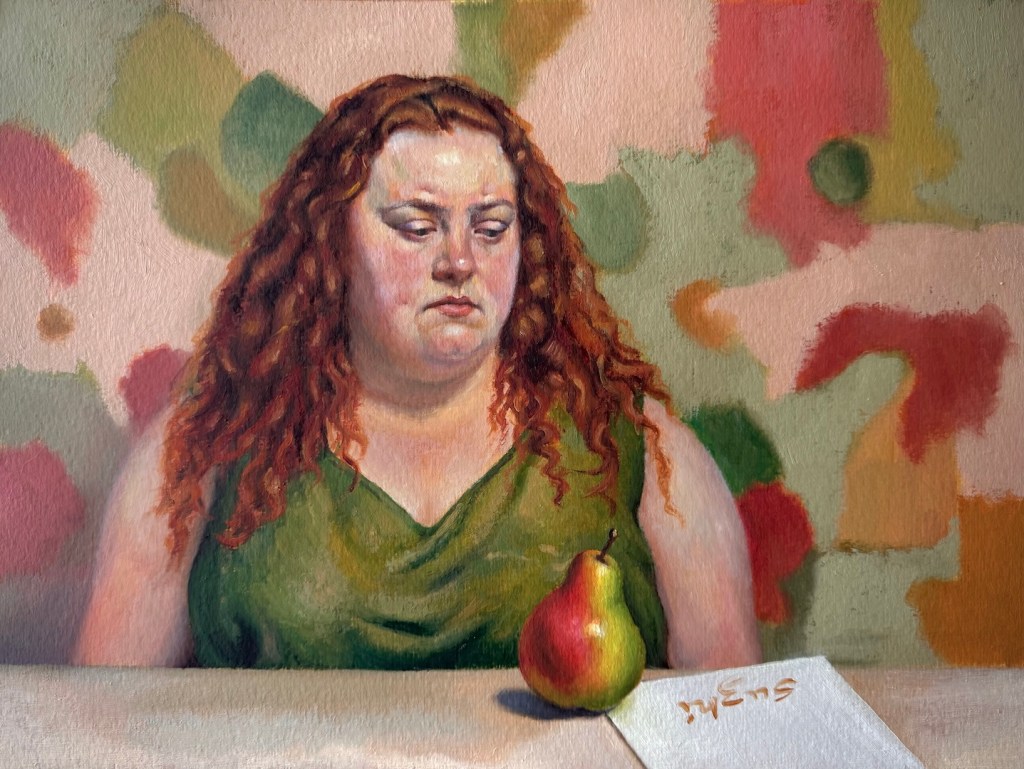
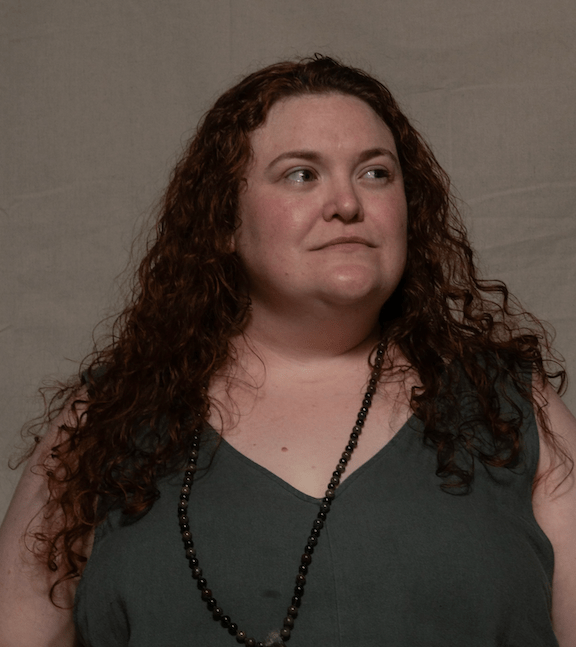
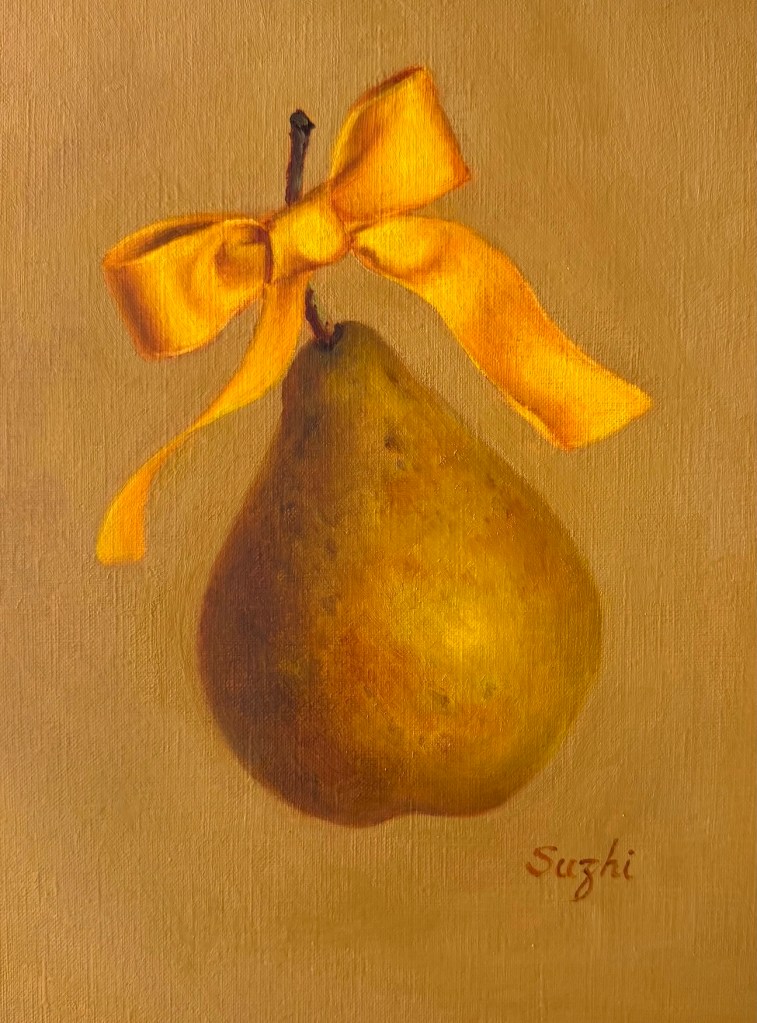
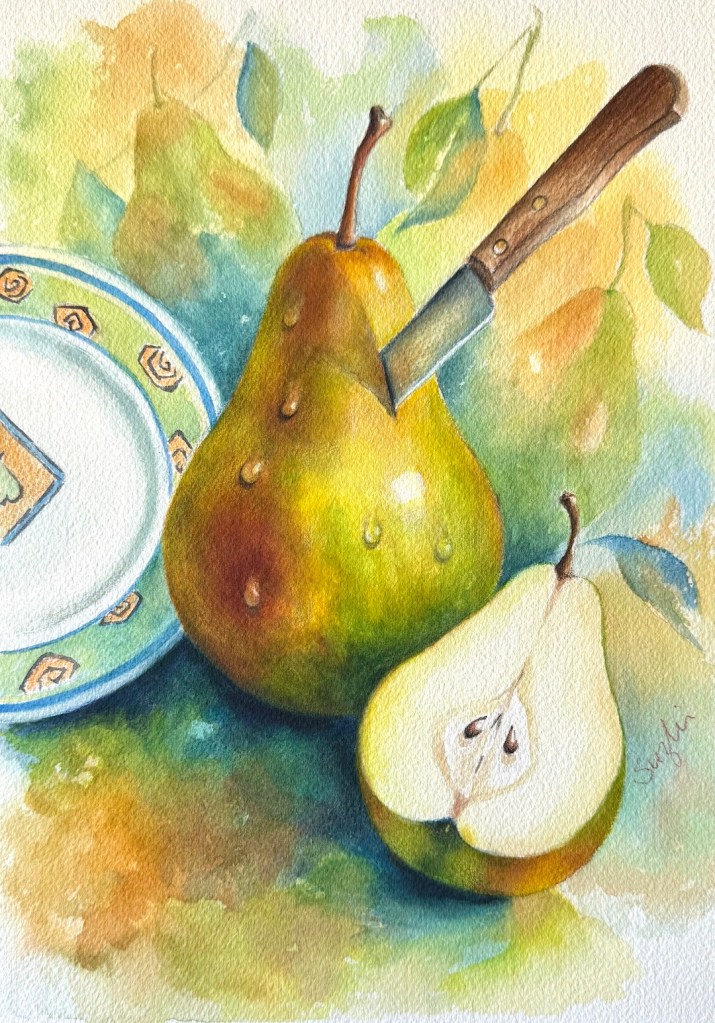
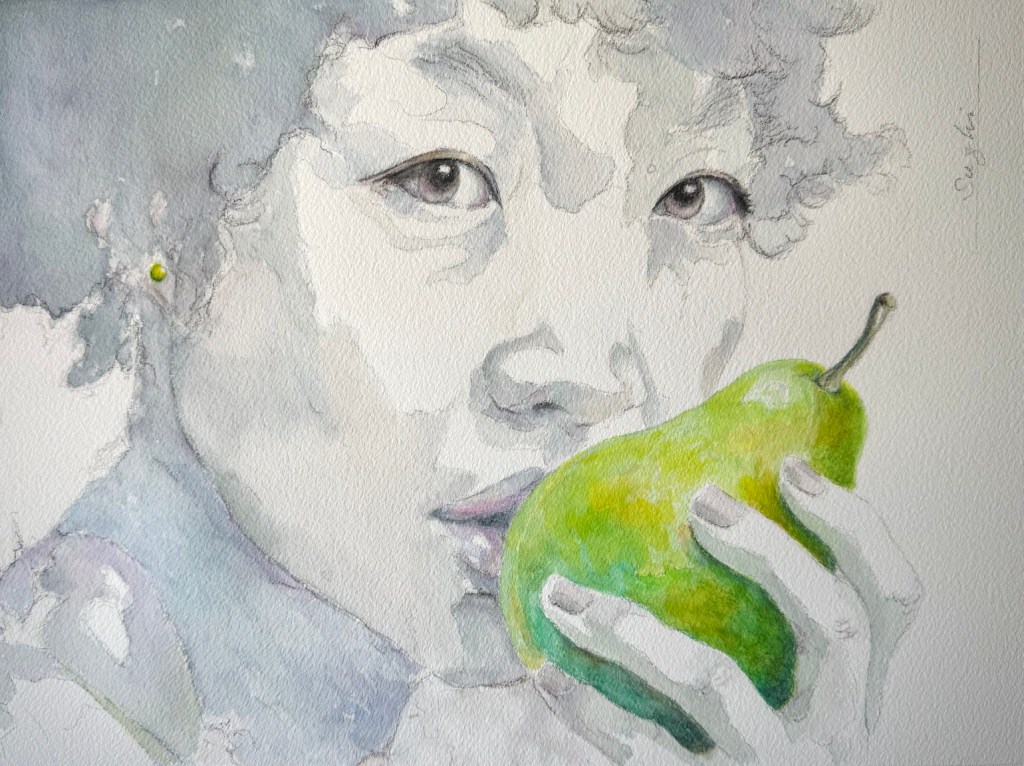
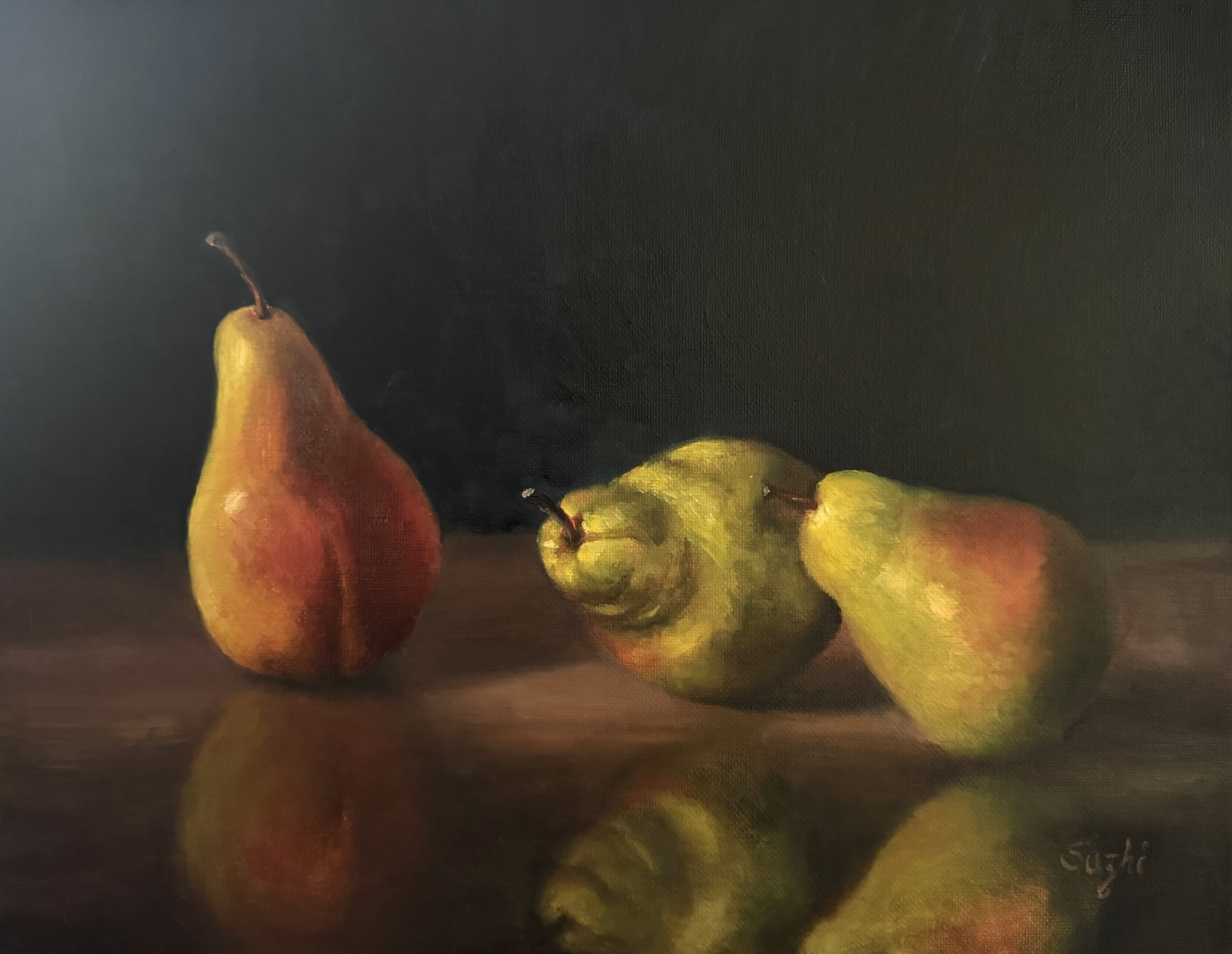
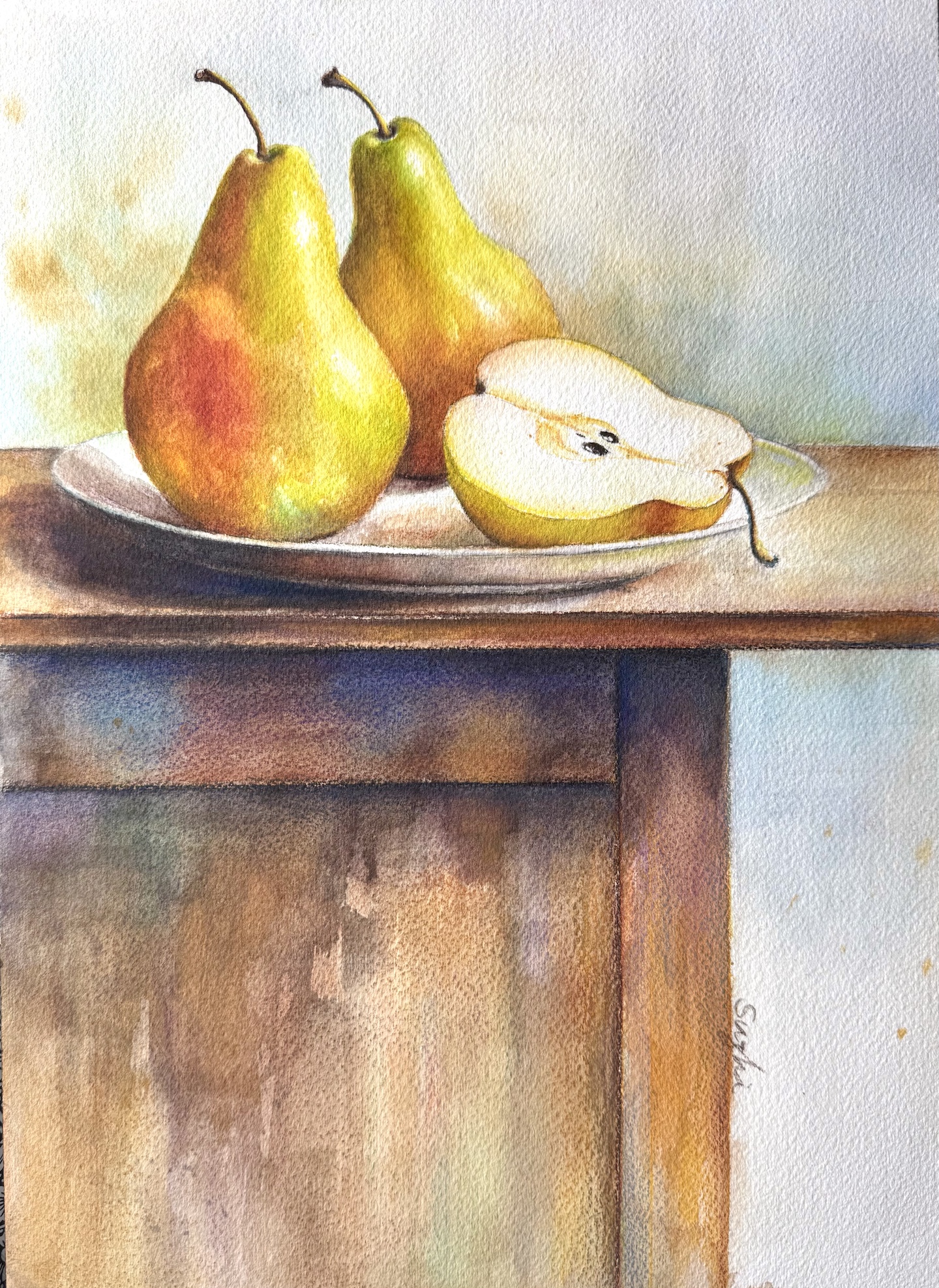
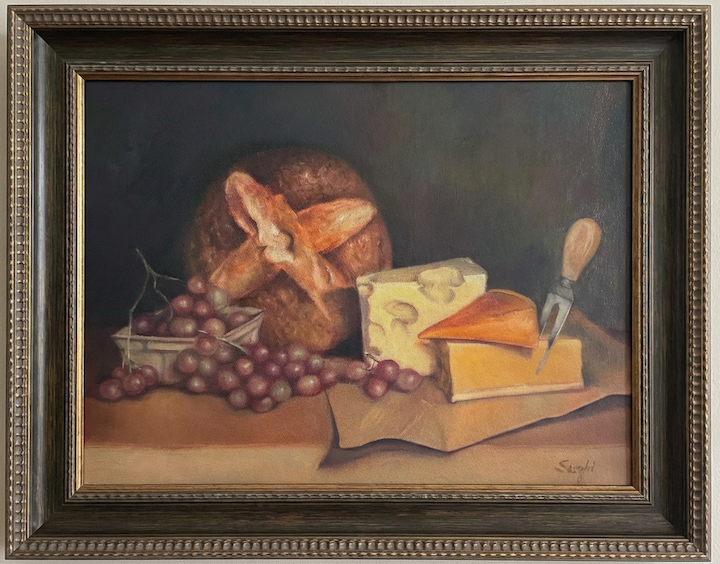
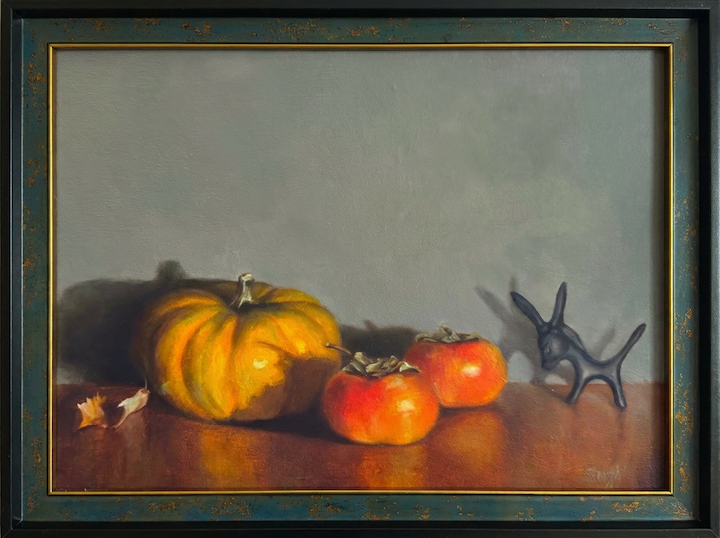
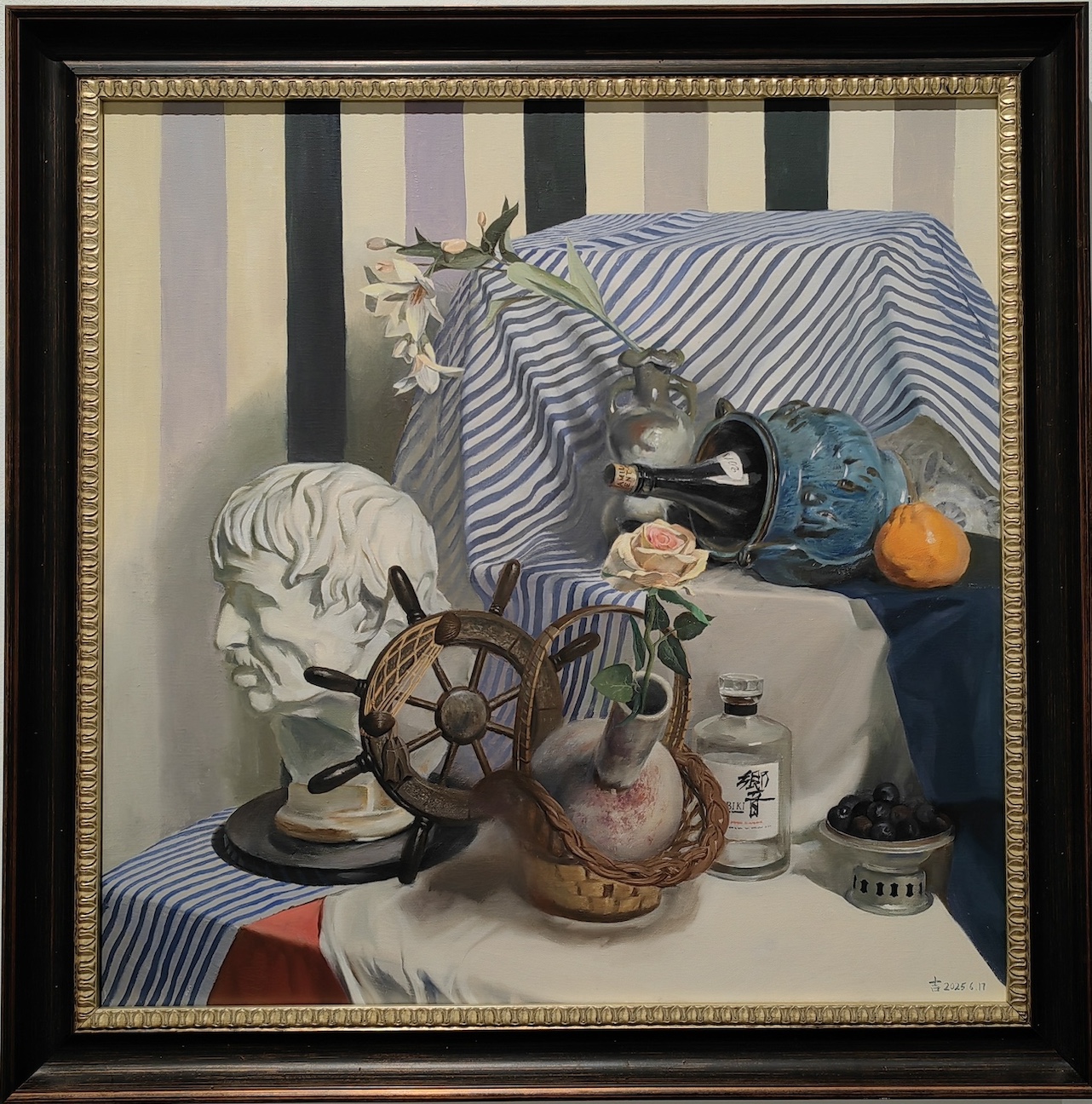
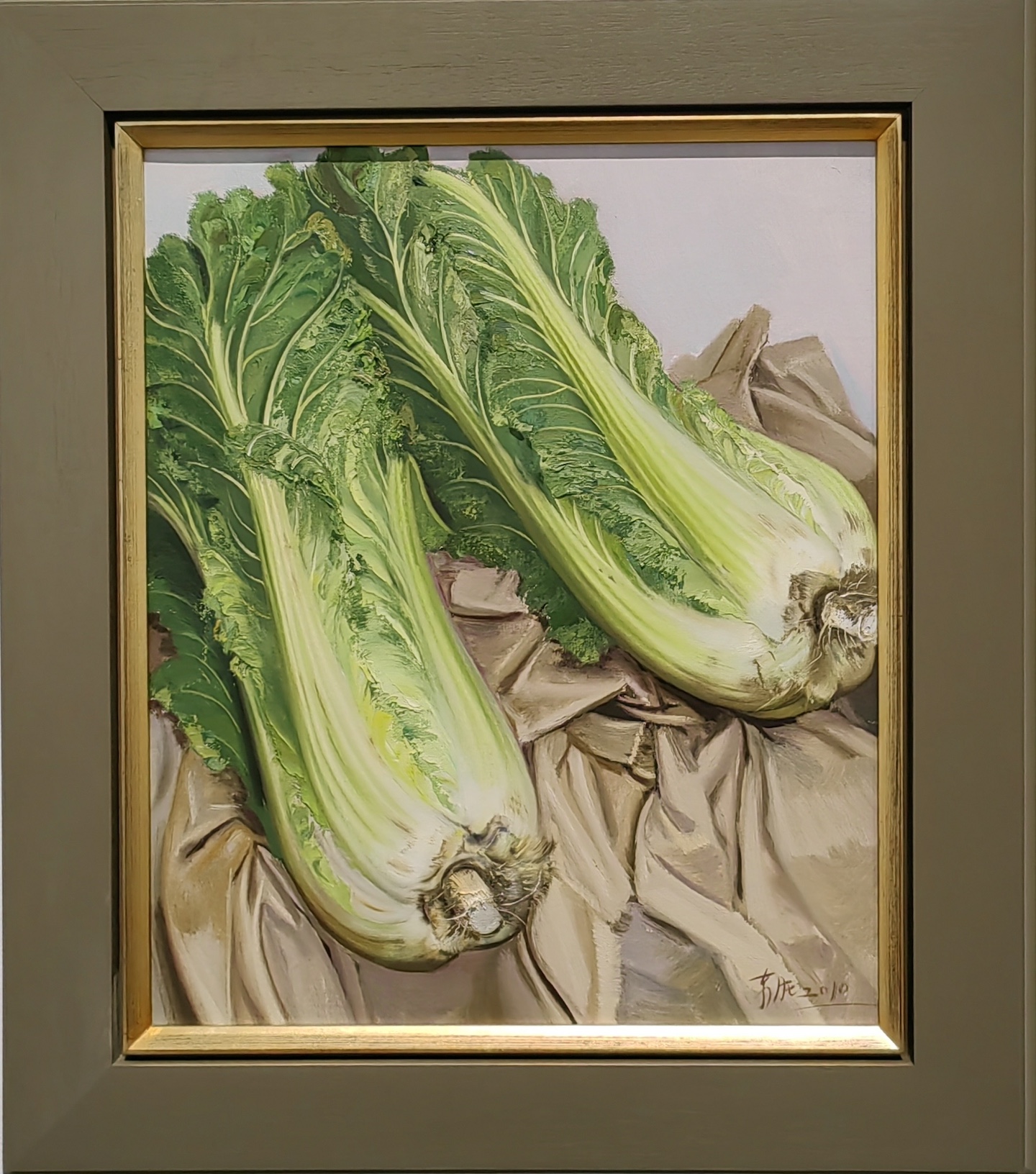
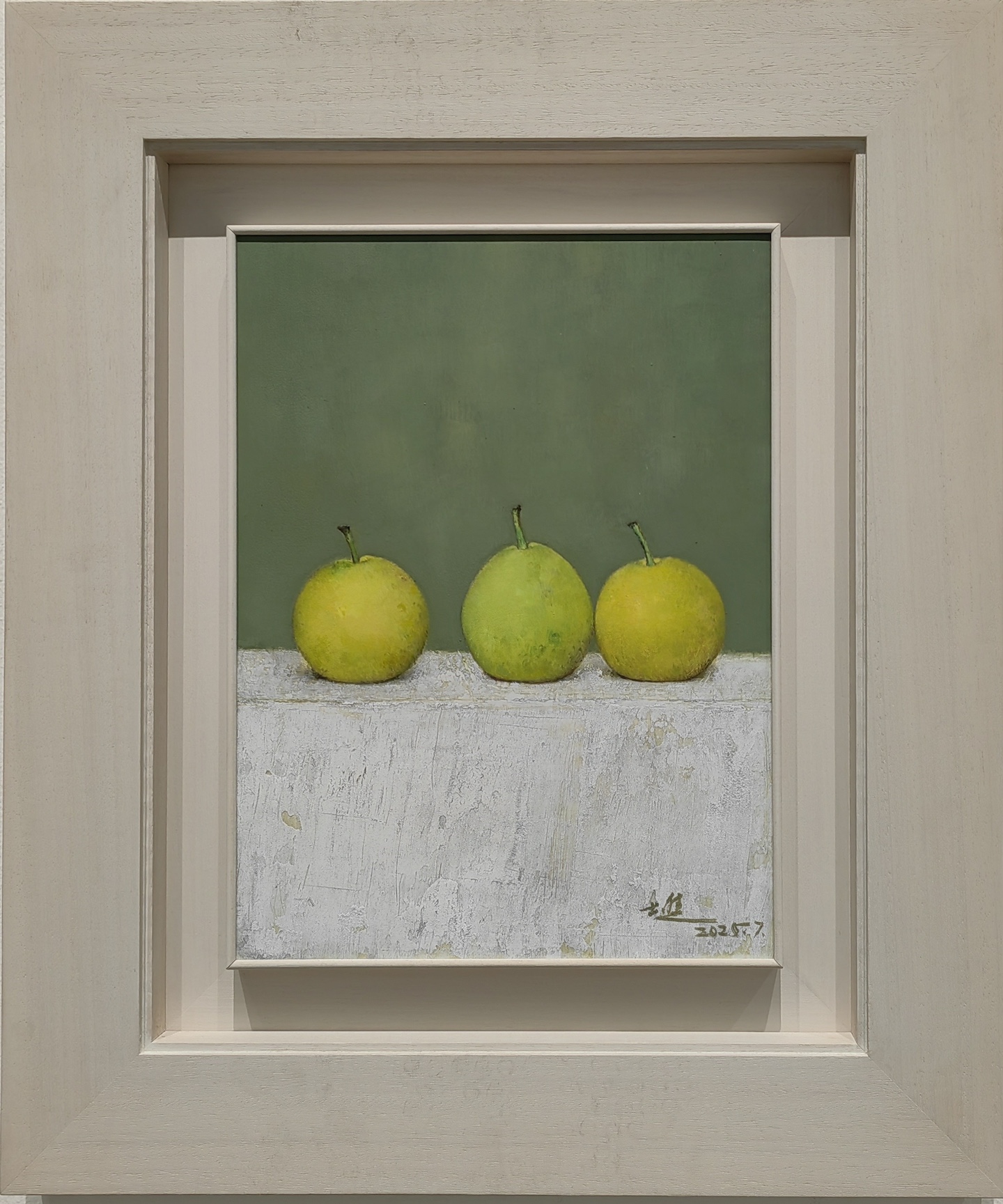
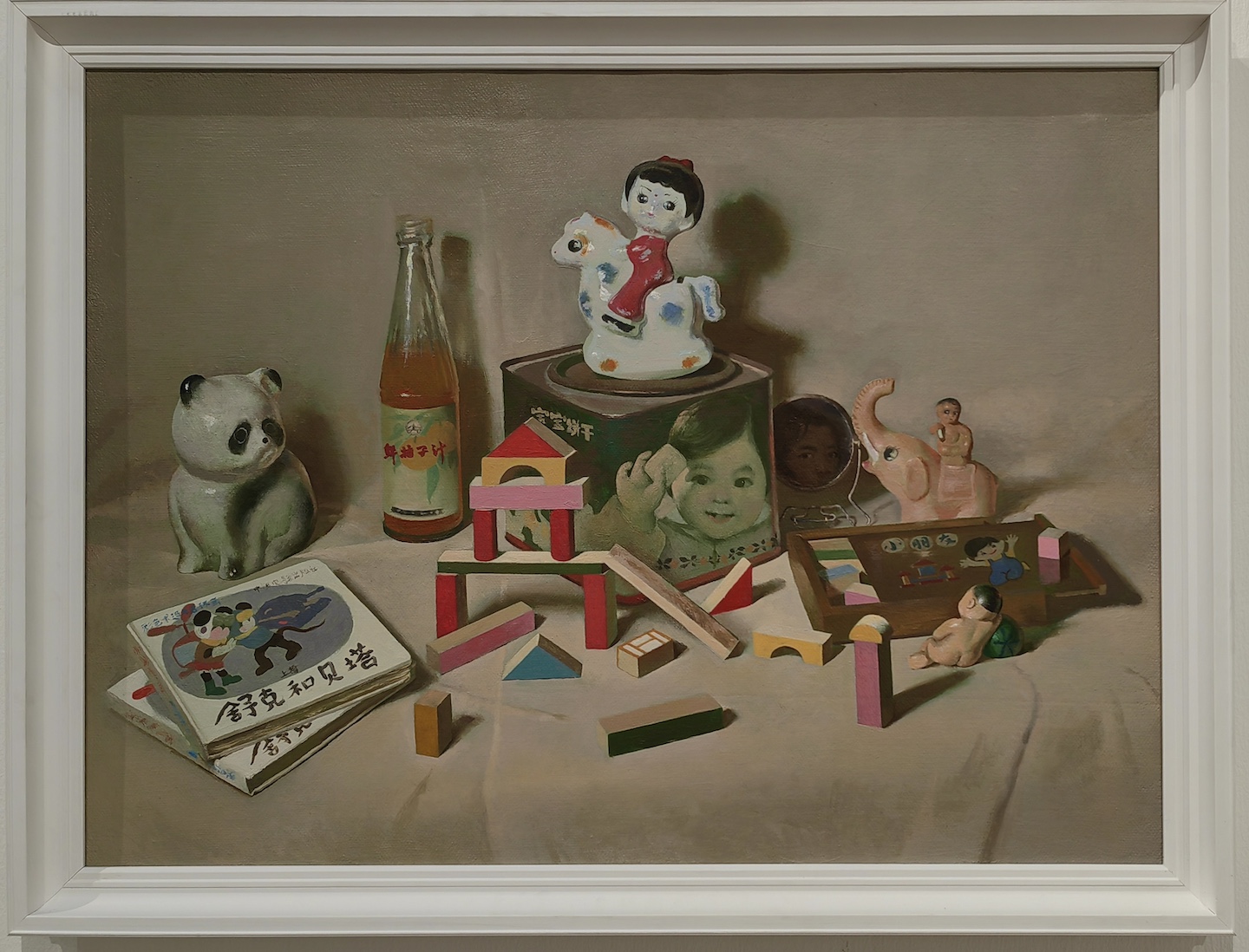
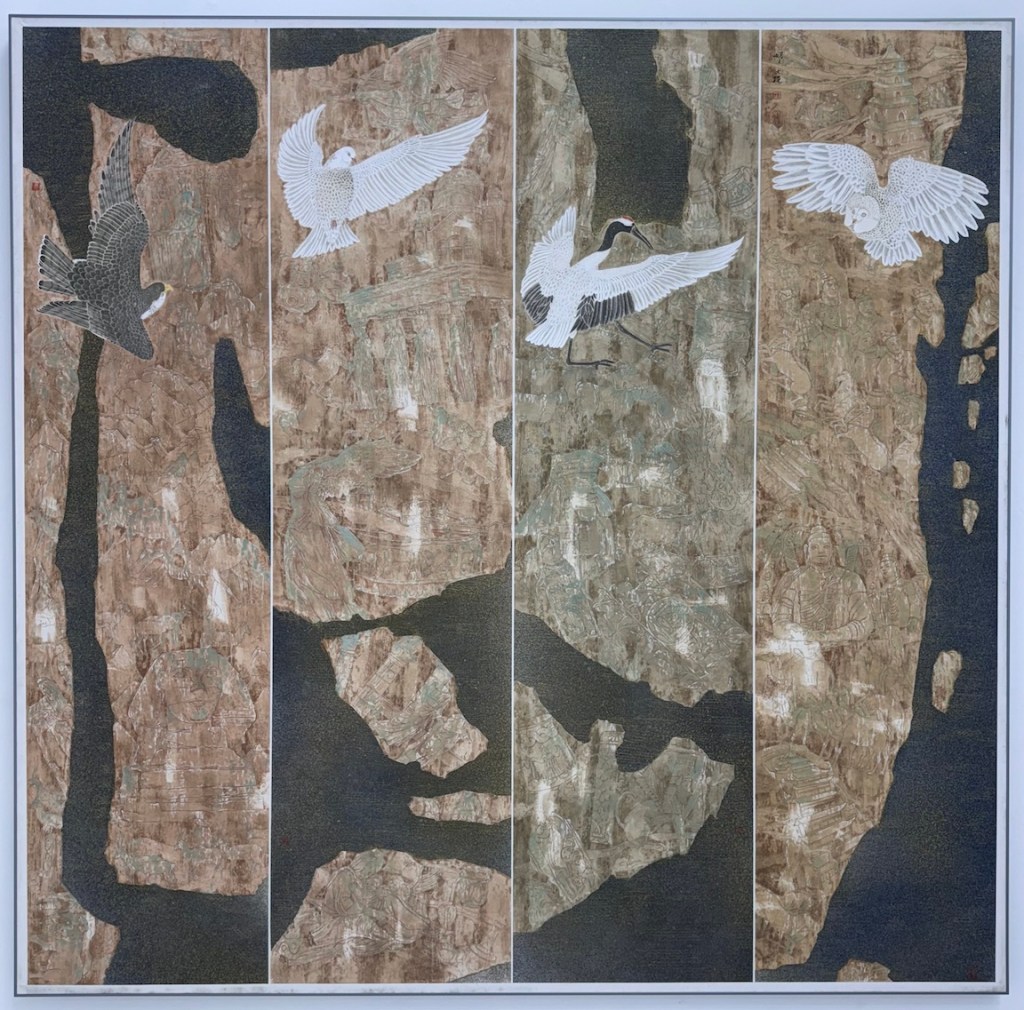
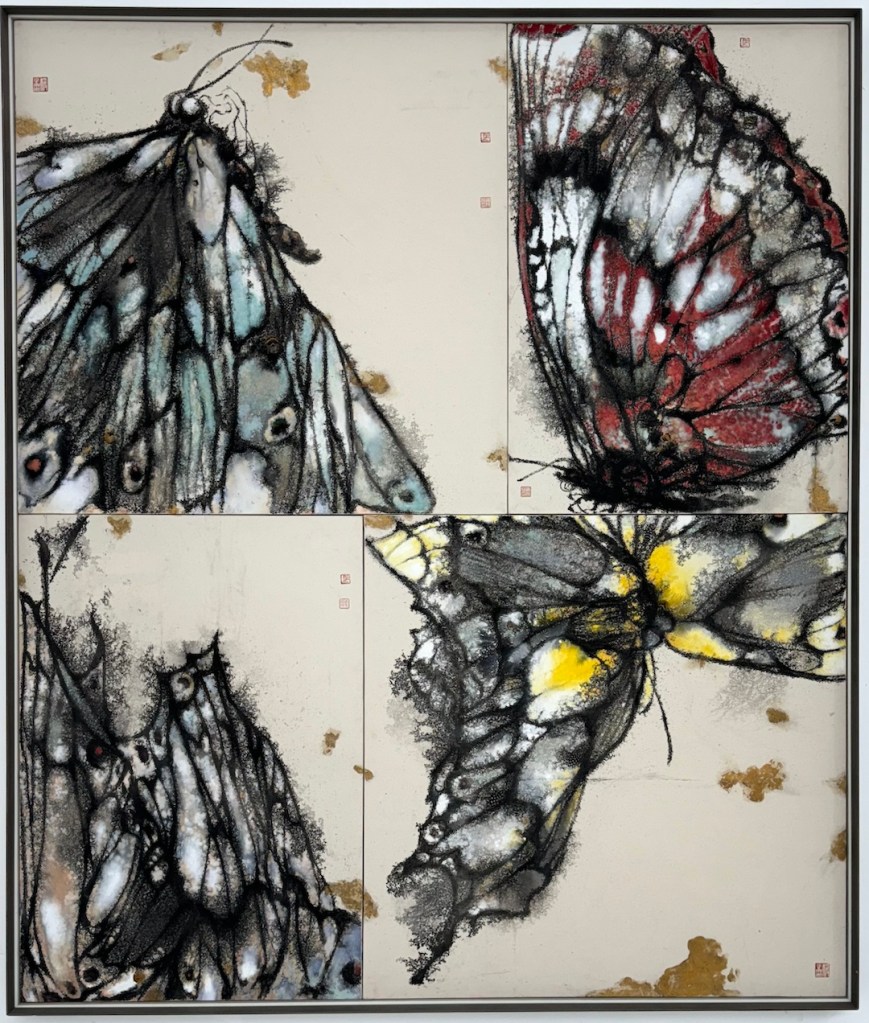
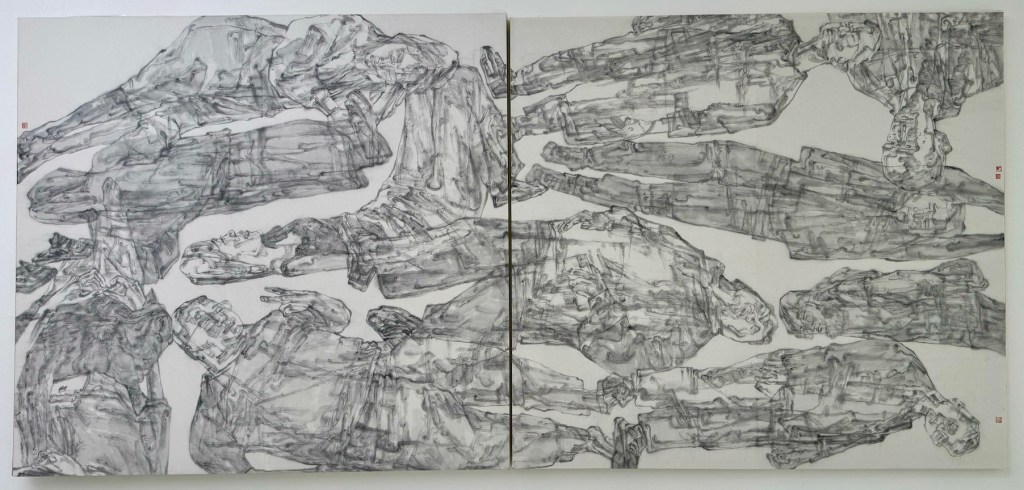
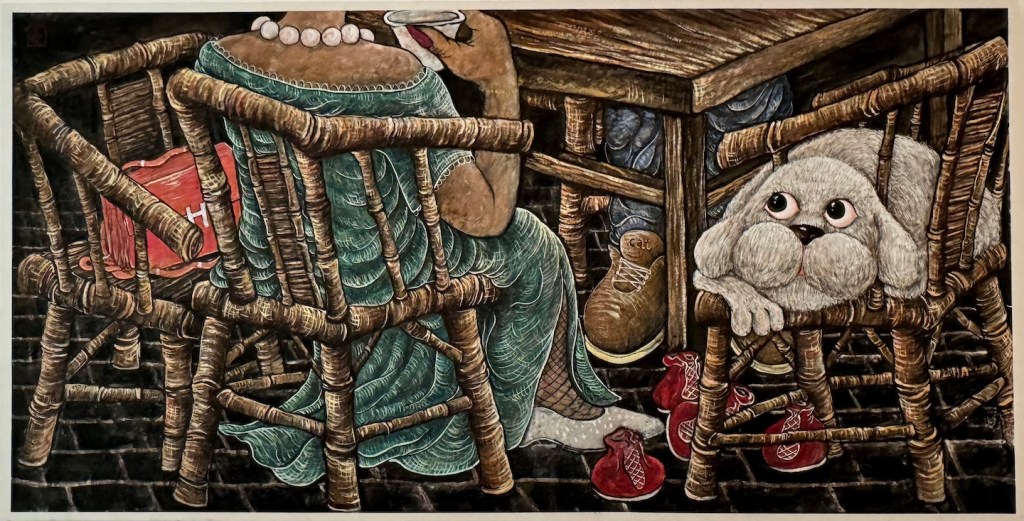
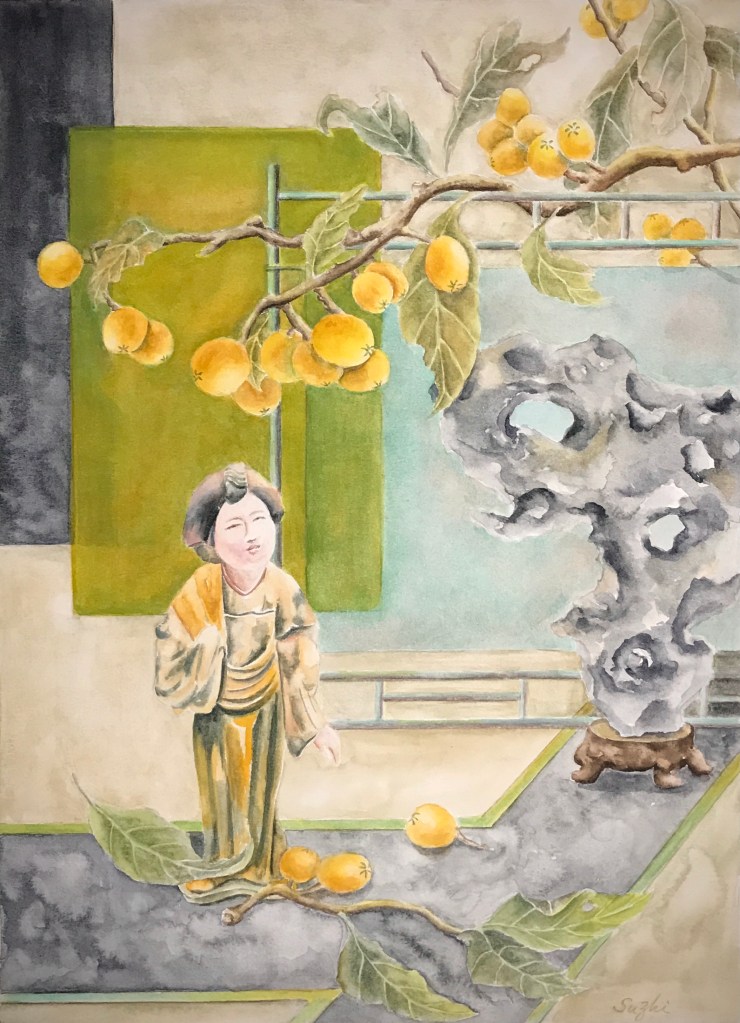
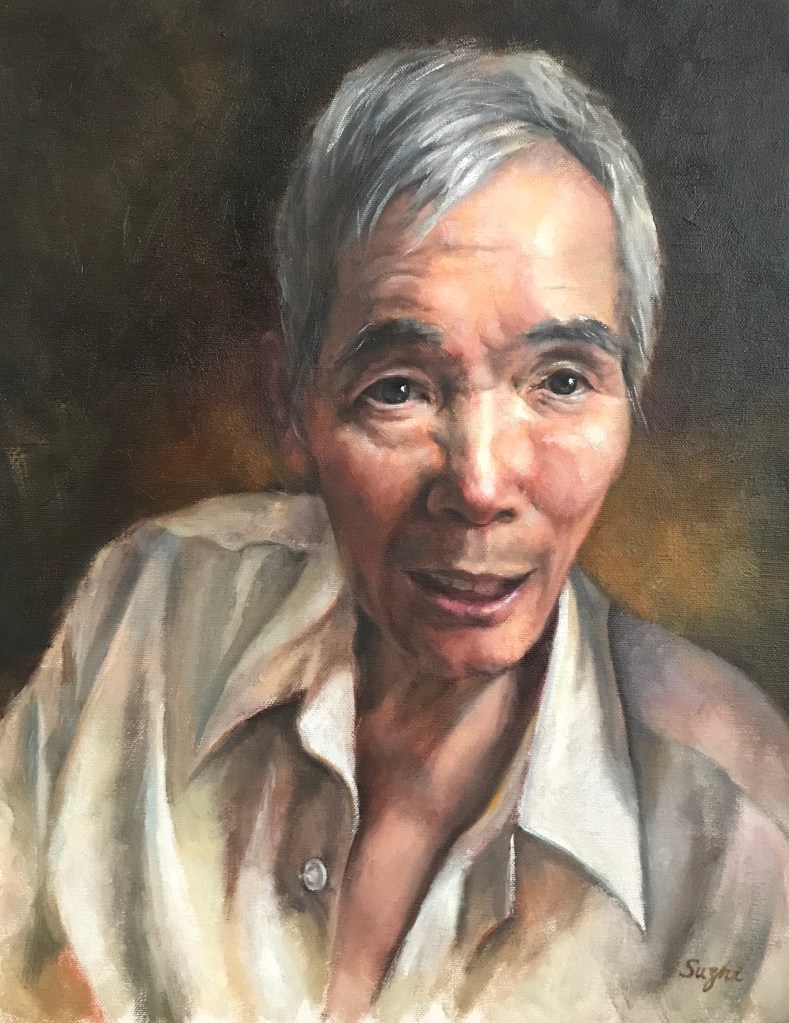
November had me on the other side of the globe again. This time I packed a couple of recent paintings to give as gifts for family. Lucky for me, framing in Beijing is much cheaper than in the States. I can afford to elevate my paintings a bit, which definitely makes the presentation better and adds to my confidence. Here are some of the paintings I gifted:

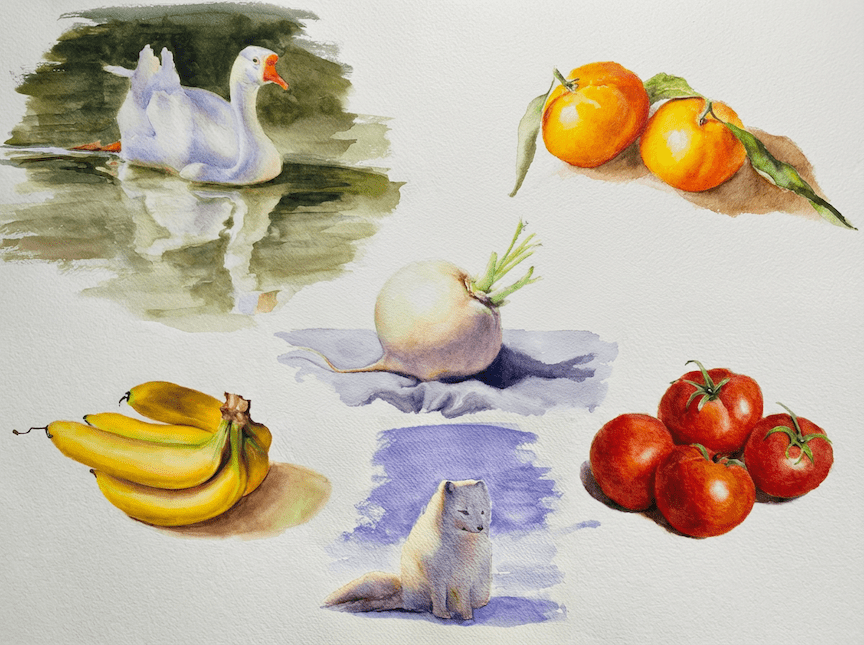
During my last long stay in Beijing, I decided to make the most of the situation by practicing watercolor. Oil wasn’t an option and watercolor stuff barely takes up any room. I am happy to report that I’ve actually stuck with the plan. My current goal in practice is trying to keep the colors clean. Small steps, but still moving forward.

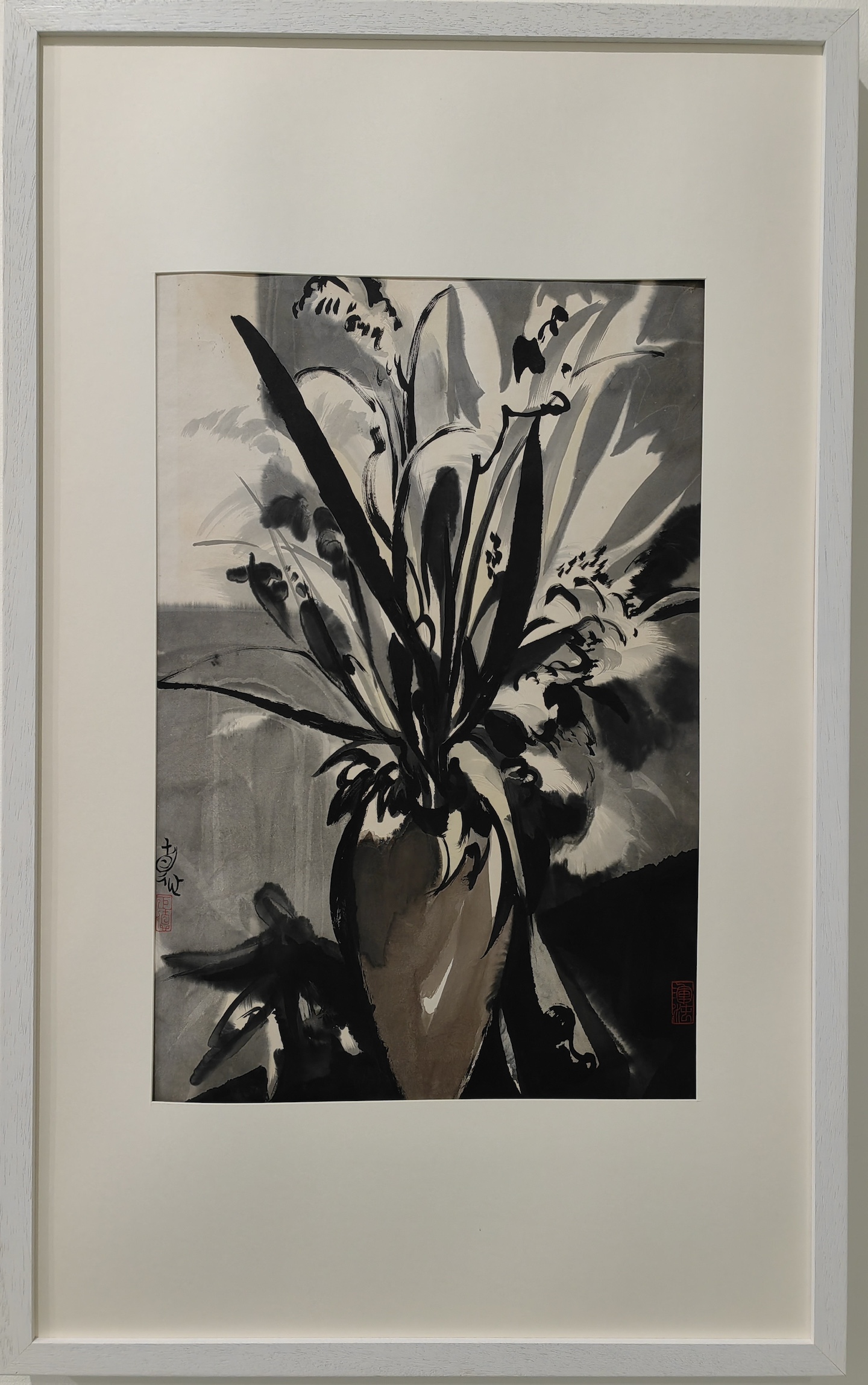
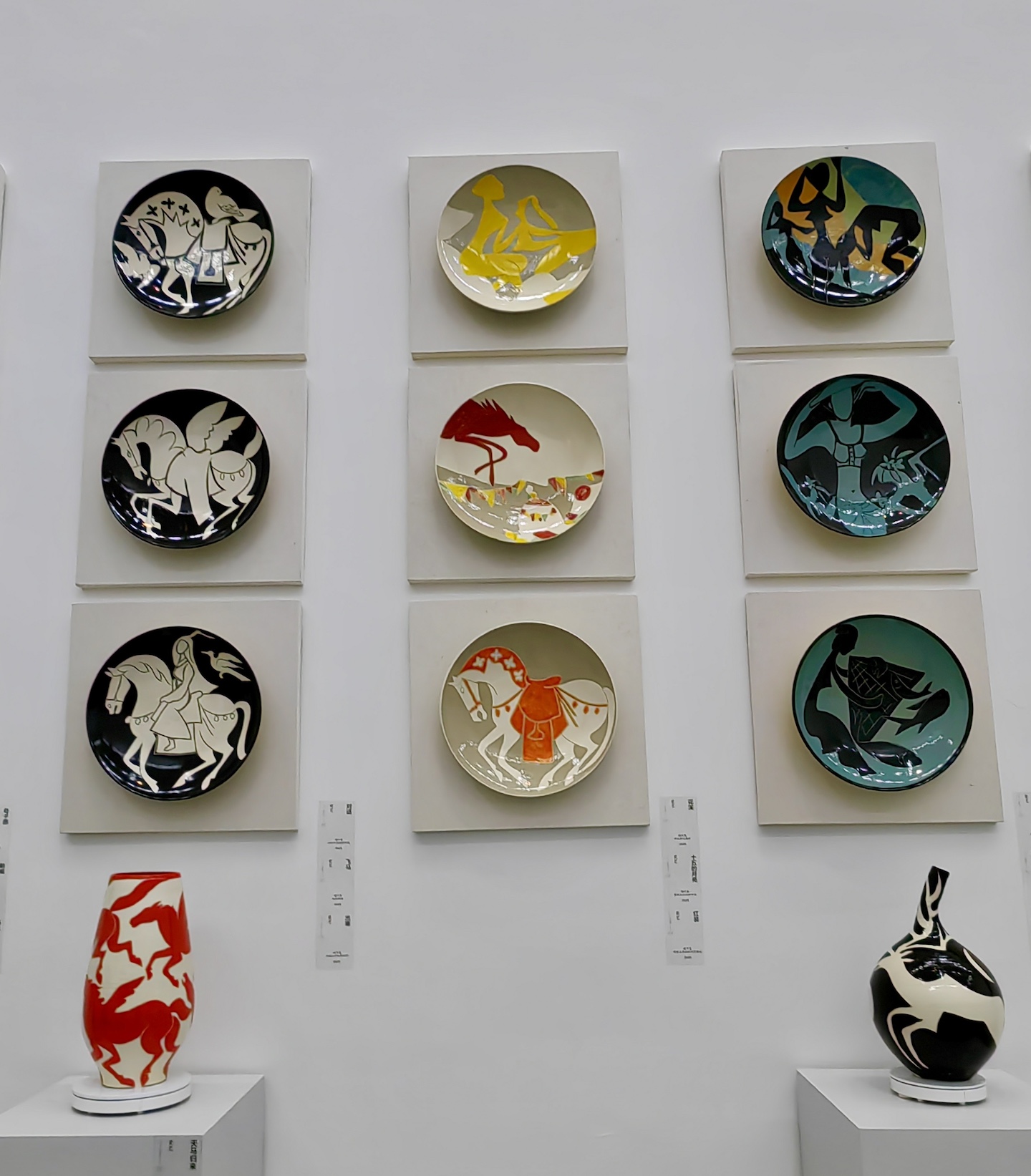
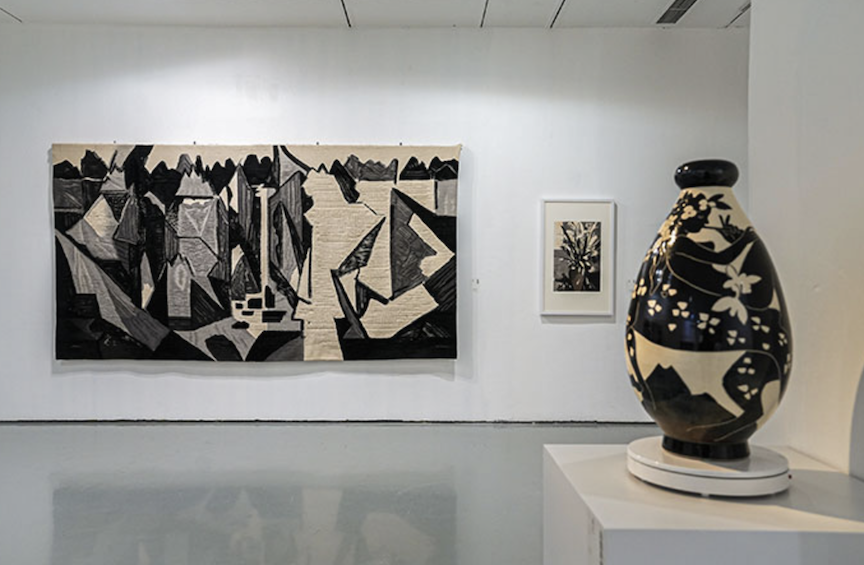
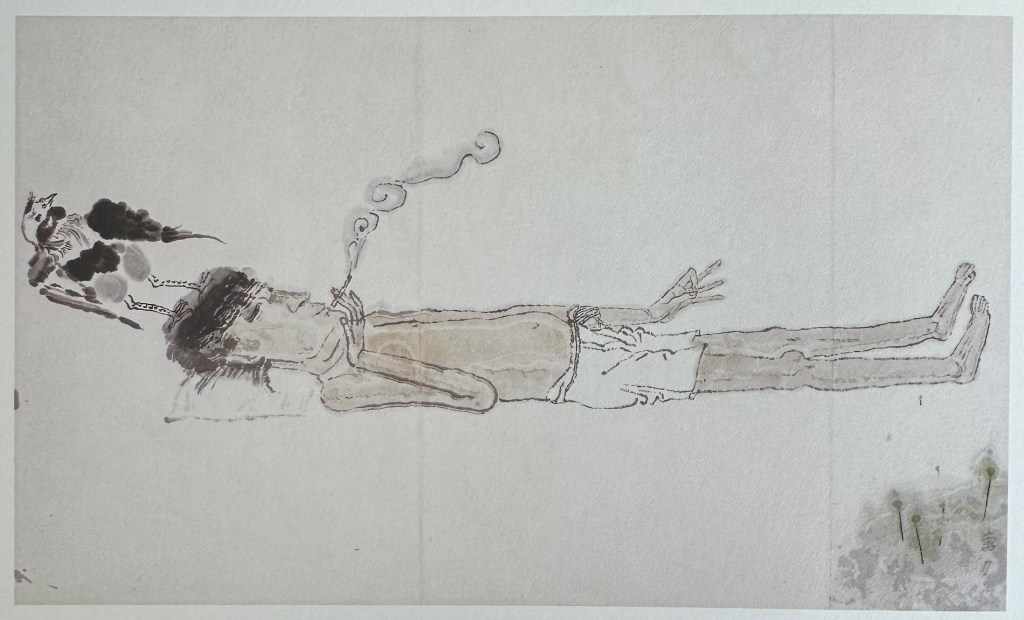
Gallery-wise, I saw Liu Jude’s 刘巨德 solo show at the Today Art Museum: Hearts Aflame for the Firmament. Liu studied at the Central Academy of Craft Art in 1965 and later worked under Pang Xunqin 庞薰琹 (1906 – 1985) in 1978, researching the comparison between traditional Chinese decorative art and Western modern art. He believes that painting should imitate the Tao that births all things: using the invisible Tao to paint visible objects, and using visible objects to paint the invisible Tao. His art isn’t constrained by the classification of genre or technique; he adheres to the traditions of Chinese decorative art but modernizes that formal beauty, making him unique in the Chinese art world. The exhibition featured over 200 new pieces by Liu and more than 100 ceramic debuts. Divided into “Ode to Peace” and “Ode to Hometown,” the show presented a kind of “chaotic beauty” and deep emotions for his roots.

In his artist statement, Liu mentioned: “Every time I paint, on the clean Xuan paper, I always put down thick black ink first, trying to occupy, grasp, and stabilize the whole space. As for what object that ink block, dot, or line represents, it is ambiguous, and I am not entirely clear. It is precisely this uncertain relationship of abstract points and lines that triggers me, pulling me to wander with it.”

In comparison, the National Still Life Exhibition hosted by the Chinese Academy of Oil Painting felt … fine. Technically solid, just not particularly exciting.

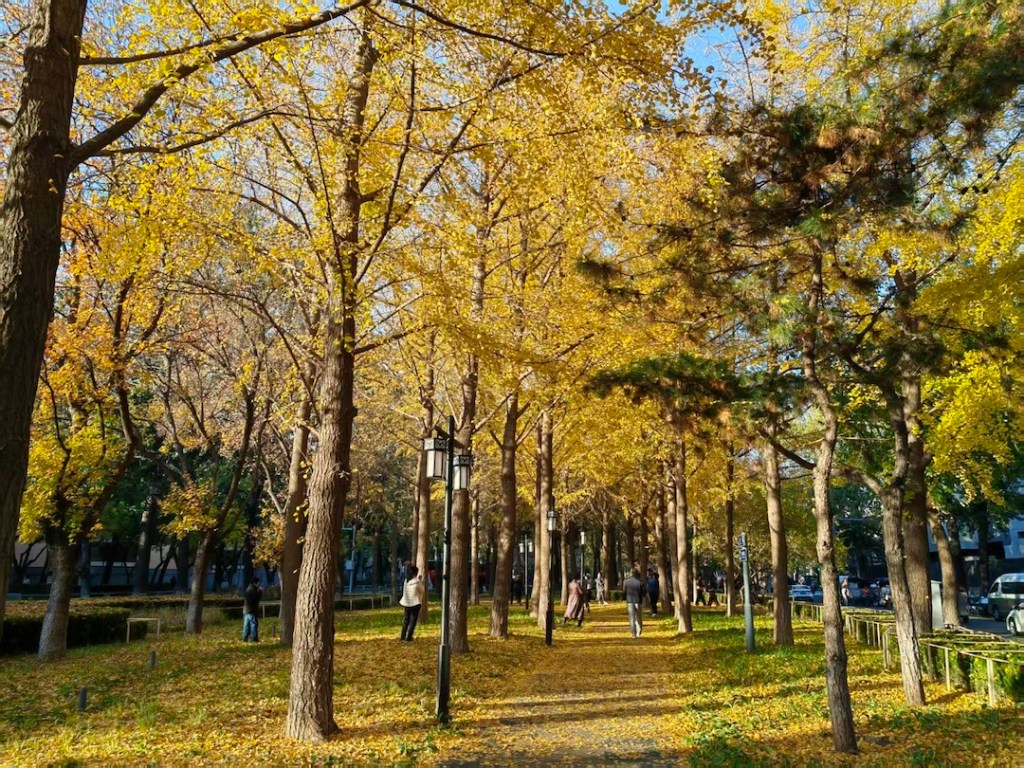
Finally, on one perfectly sunny mid-November day, I took this photo of a path covered in golden ginkgo leaves, a staple scene in Beijing’s autumn. Doubao, ByteDance’s (owner of TikTok) AI app, turned it into a watercolor painting. Love it or hate it, AI art will be a staple of the art world.

Experimenting with Portrait Creation

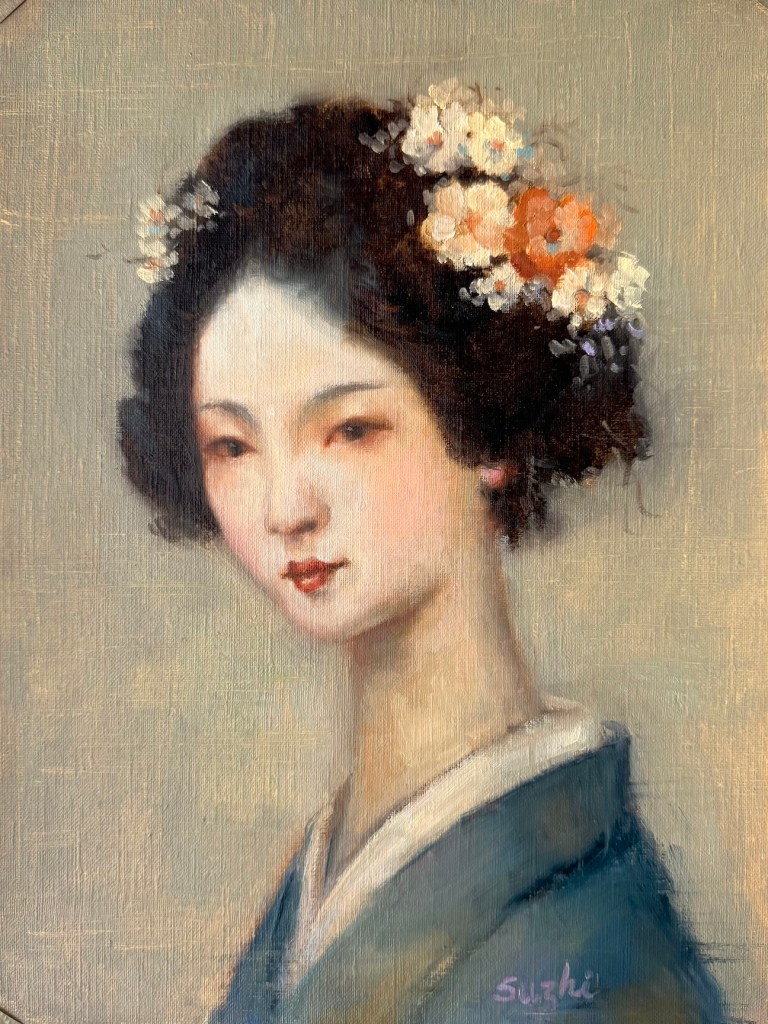
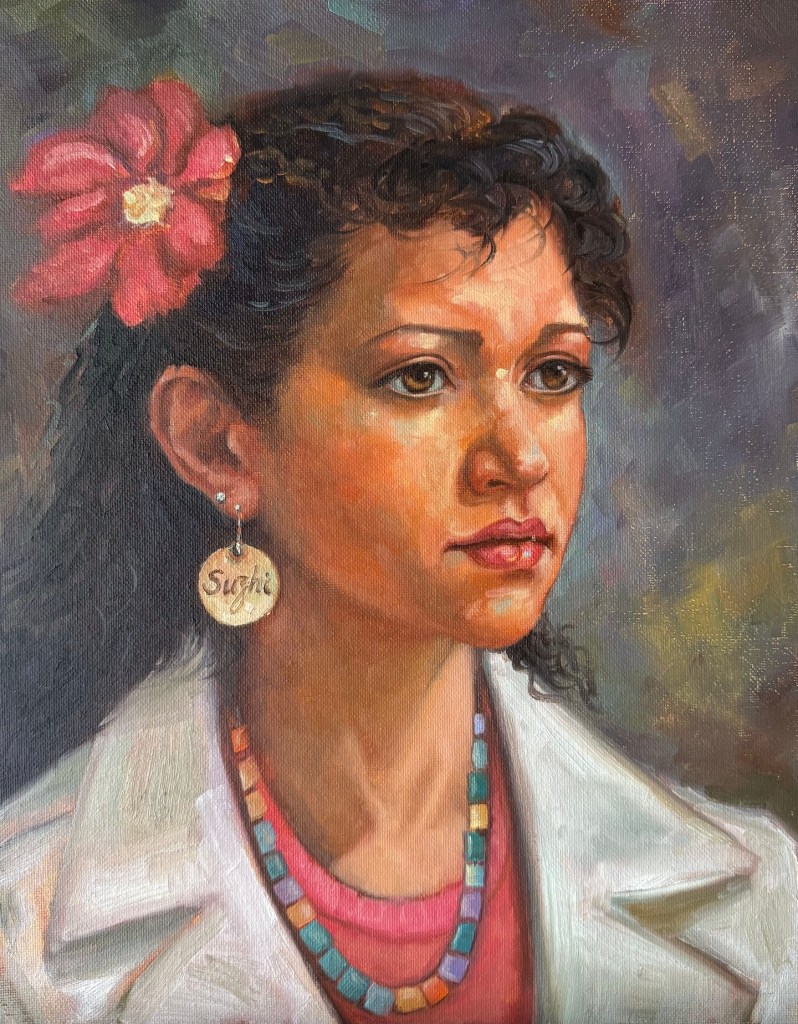
The freedom I enjoyed while painting the last sketch in August encouraged me to keep experimenting along the same path. I began September by completely abandoning human references. My logic was simple: if I didn’t have a photo to lean on, I could concentrate on artistic expression. Too often, when I started a portrait, I had ideas beyond likeness and accuracy, but as the work progressed, those ideas got lost in the pursuit of a “correct” painting.
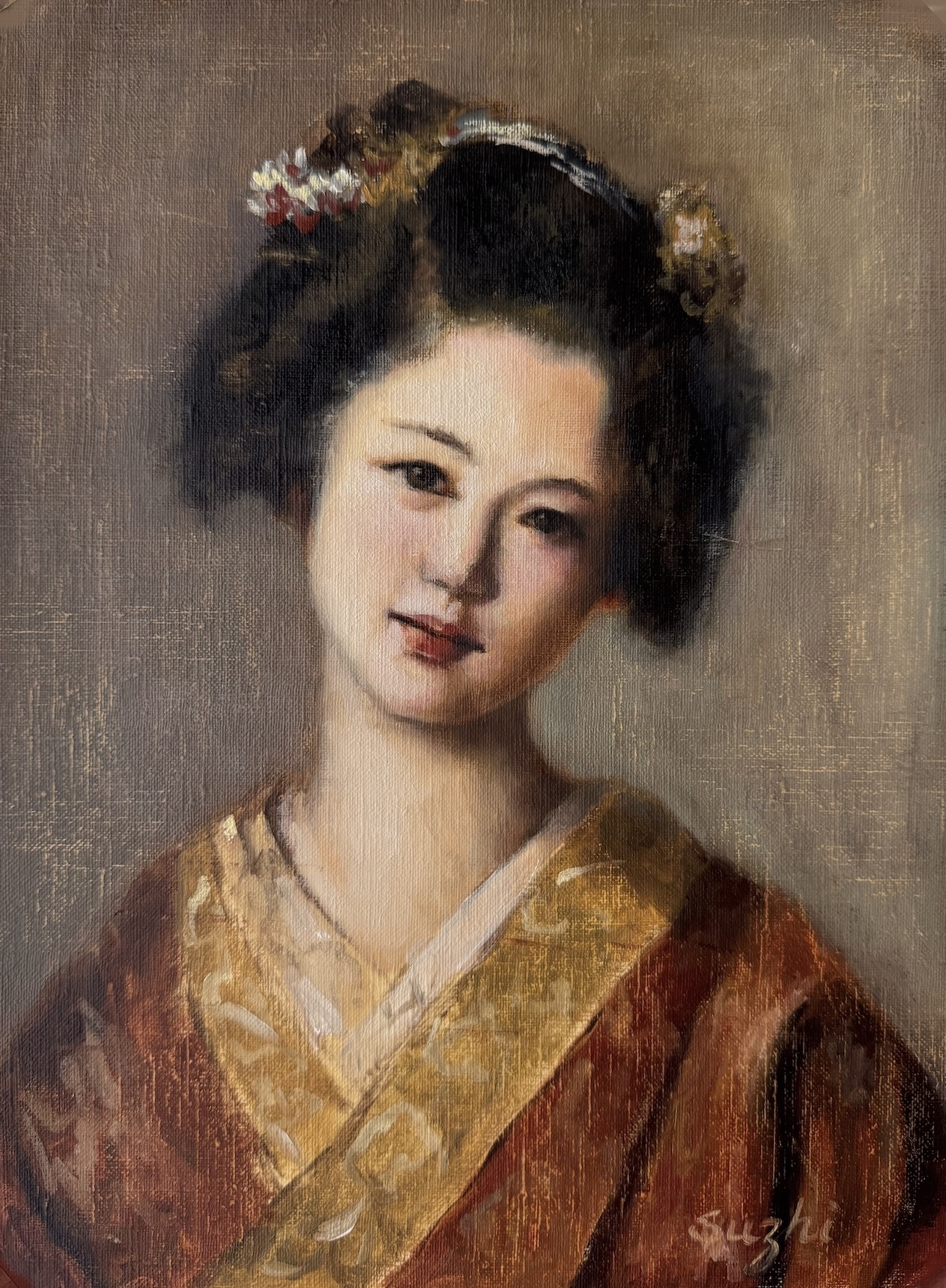
I began with two portraits of traditional Japanese women, aiming for an atmosphere of softness and antiquity. Next came two modern women, with a focus on expressiveness. Here are the paintings:

To some extent, I think I achieved what I set out to do—especially in the paintings of the modern women. Looseness has always been difficult for me when a photo sits in front of me. But these exercises also revealed a problem: without a reference to a real person, my “inventions” tend to drift toward the generic and idealized. If I kept going this way, the future paintings might all start looking alike.

So in the next piece, I returned to reworking an actual photo reference. While I liked the result, the painting tightened up compared to those done without references.

Then I tried something in between. I didn’t use a photo, but I did use a face I know very well. Instead of inventing features from scratch, I largely followed what I thought was me (with plenty of upgrades, of course). The result was also somewhere in between. It’s not as loose as the invented portraits, but more relaxed than those painted from a photo. And to be honest, I really like my new look.

One more thing delighted me in these experiments: I’ve been thinking and tried in recent years about returning watercolor (without abandoning oil). In some of these works, I managed—at least partly—to capture the fluidity of watercolor I’ve missed so much. It’s not perfect, but it’s got me excited to keep playing around.
“He Makes the Distance Between All Things Disappear.”

[Note: The title is a quote from Spanish sculptor Francisco Baron’s preface to Car Li’s 1992 solo show in Spain.]

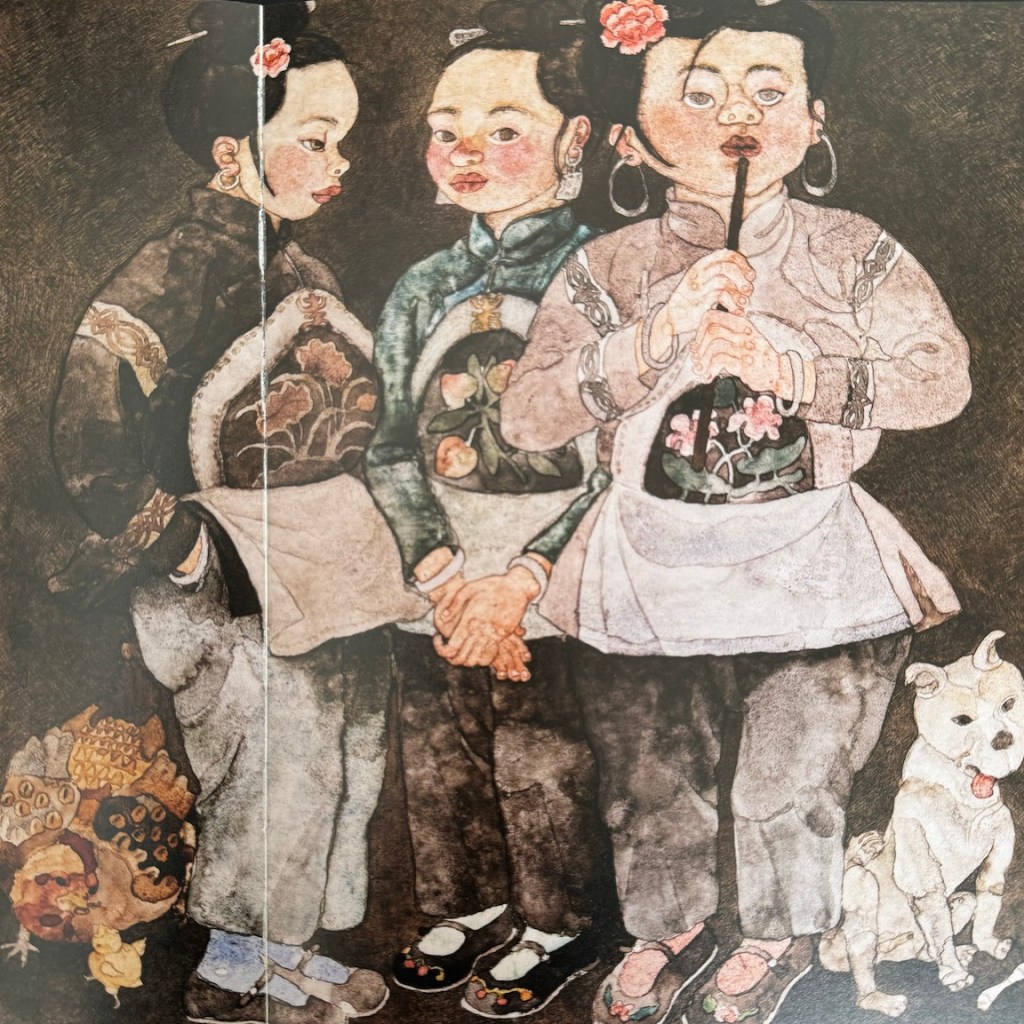
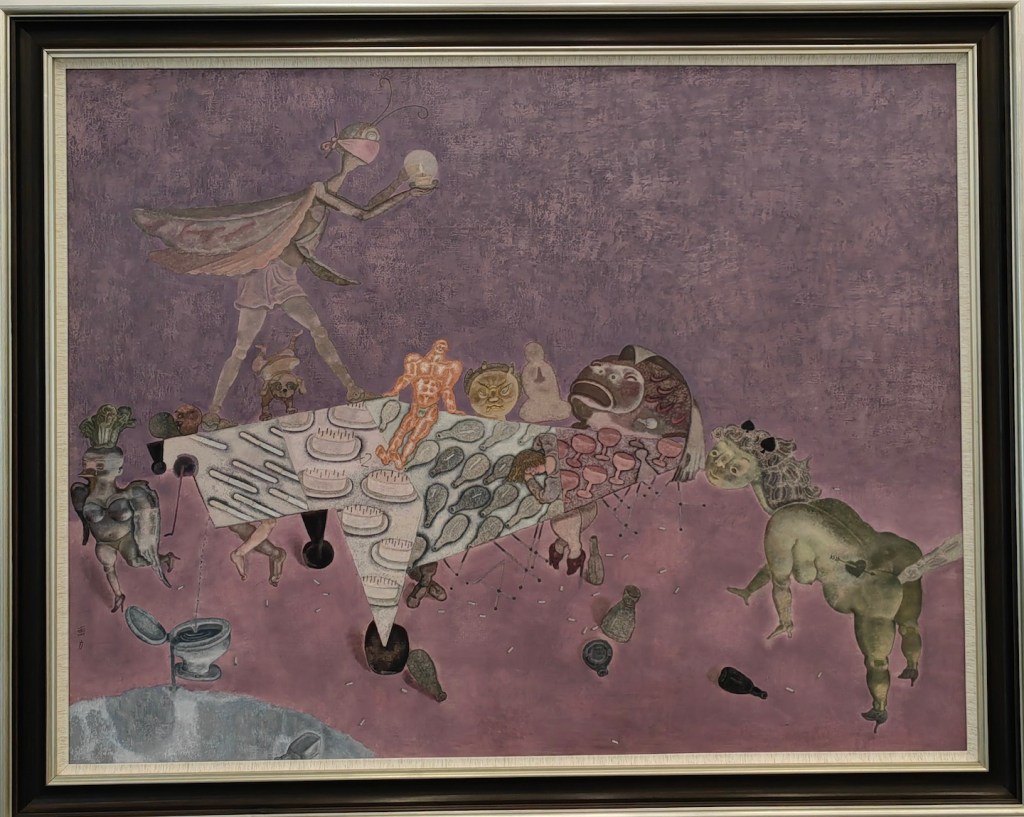
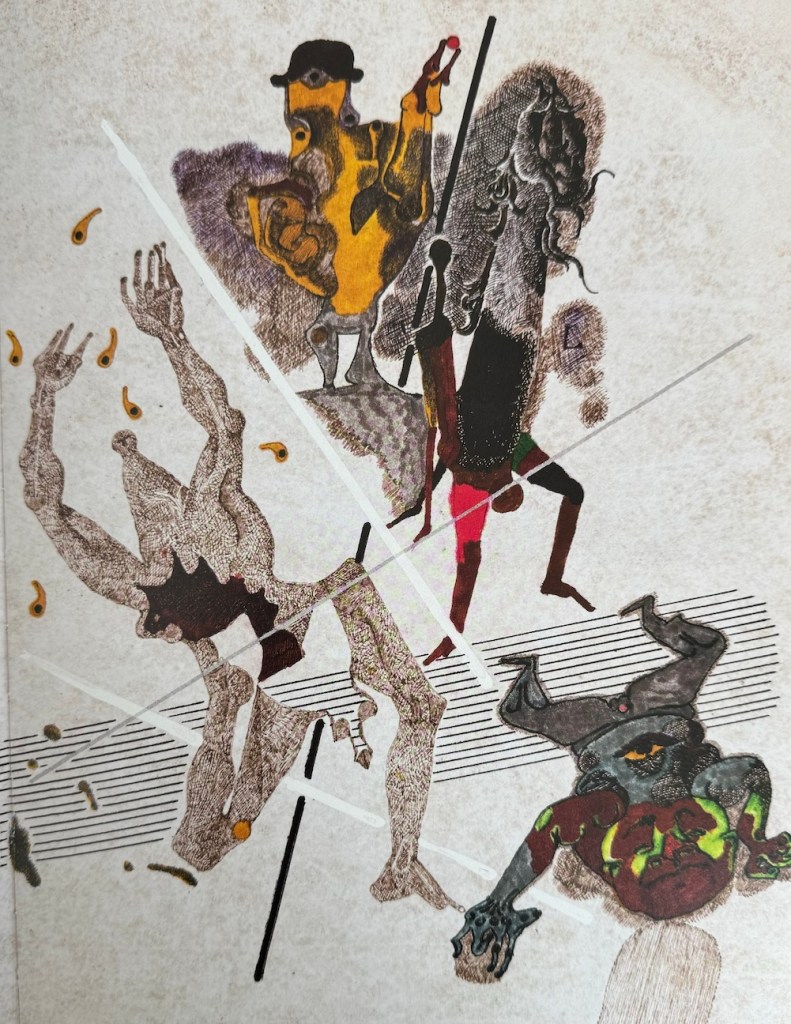
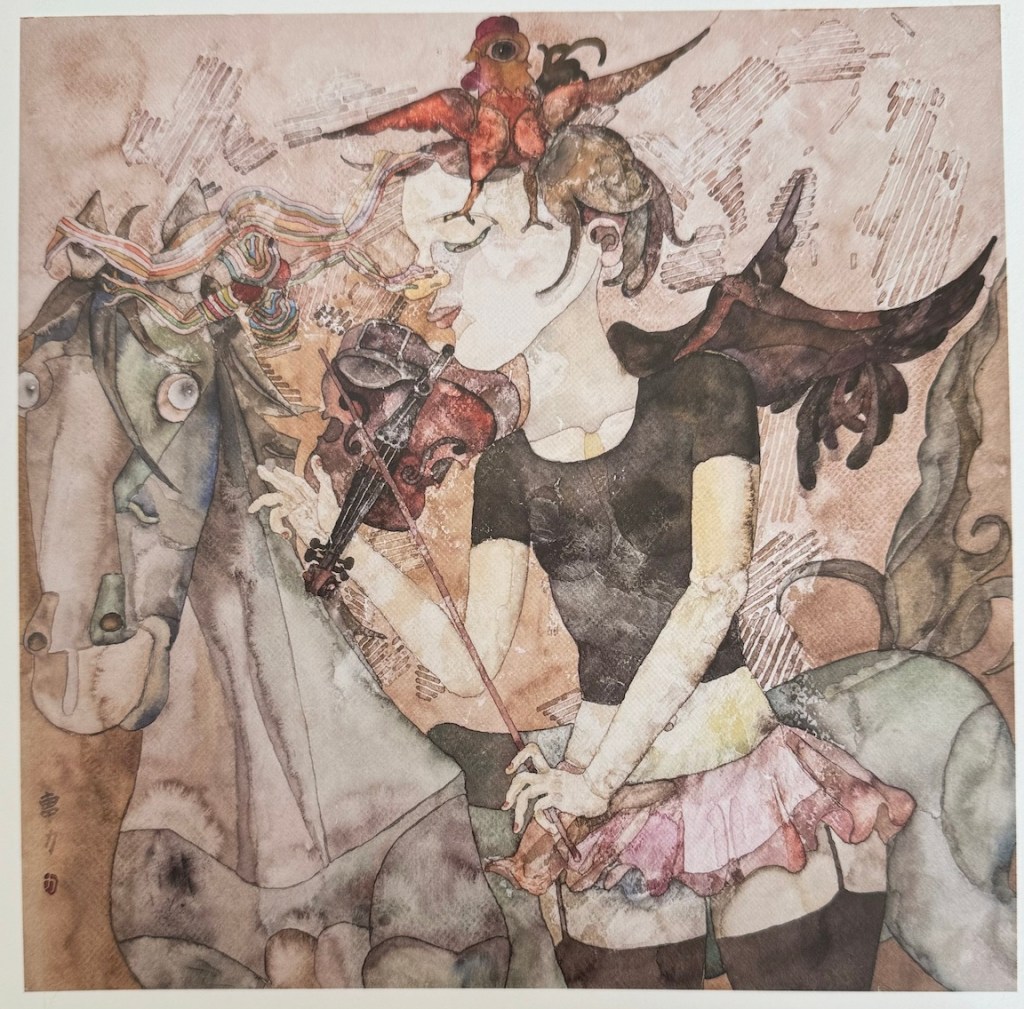
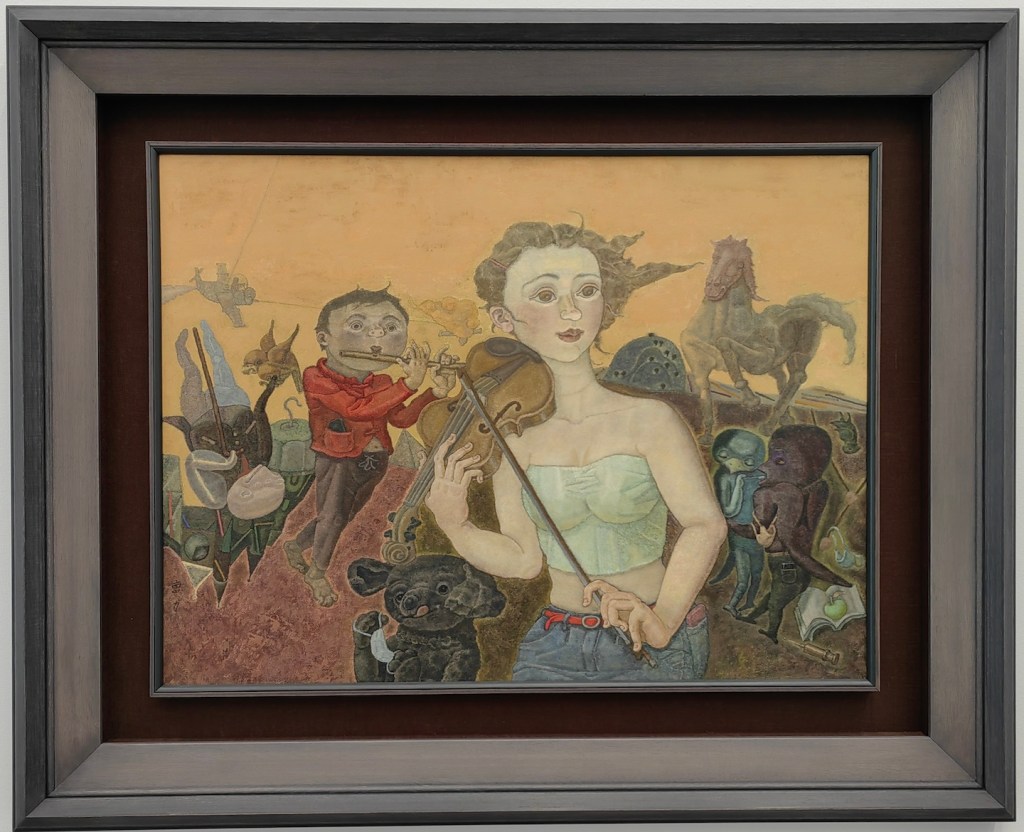
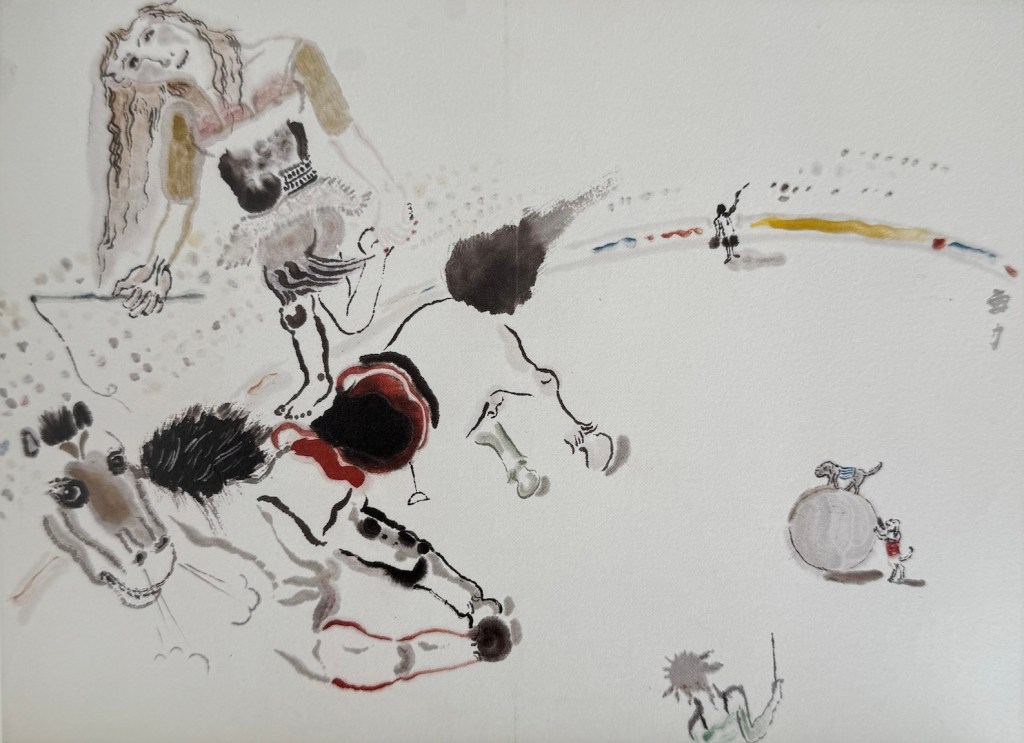
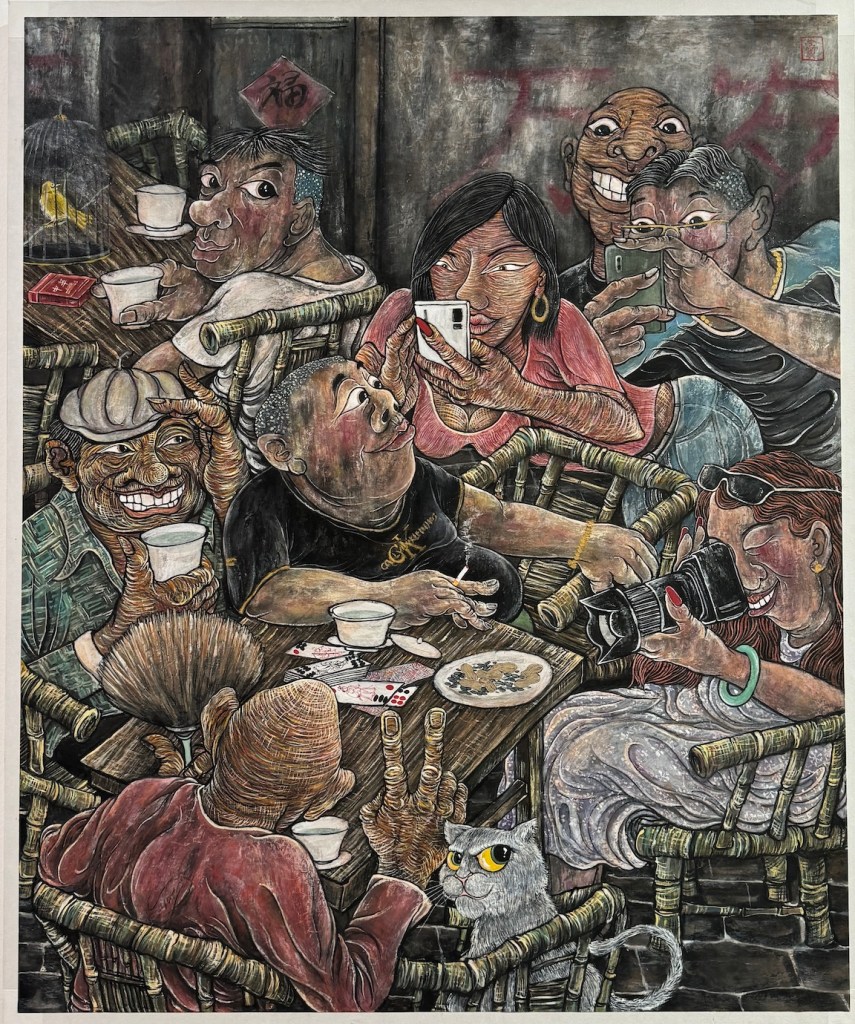
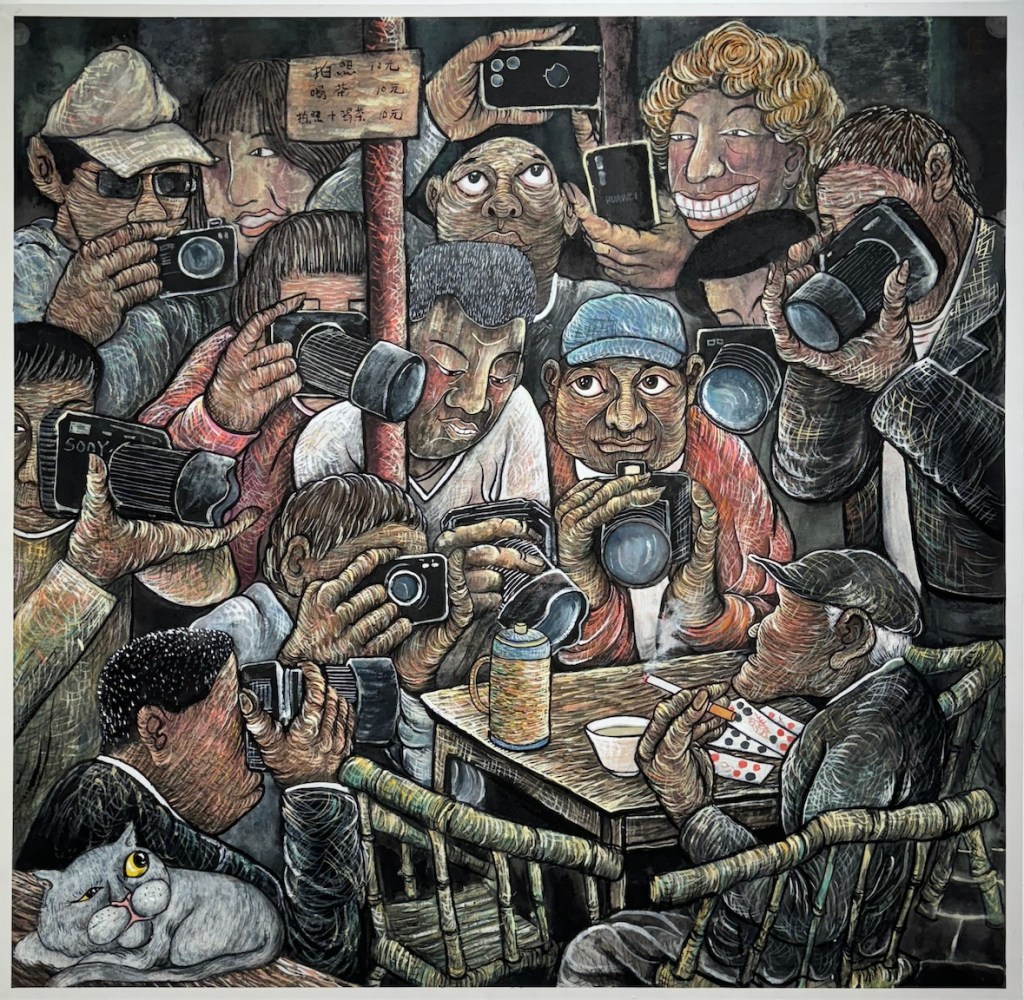
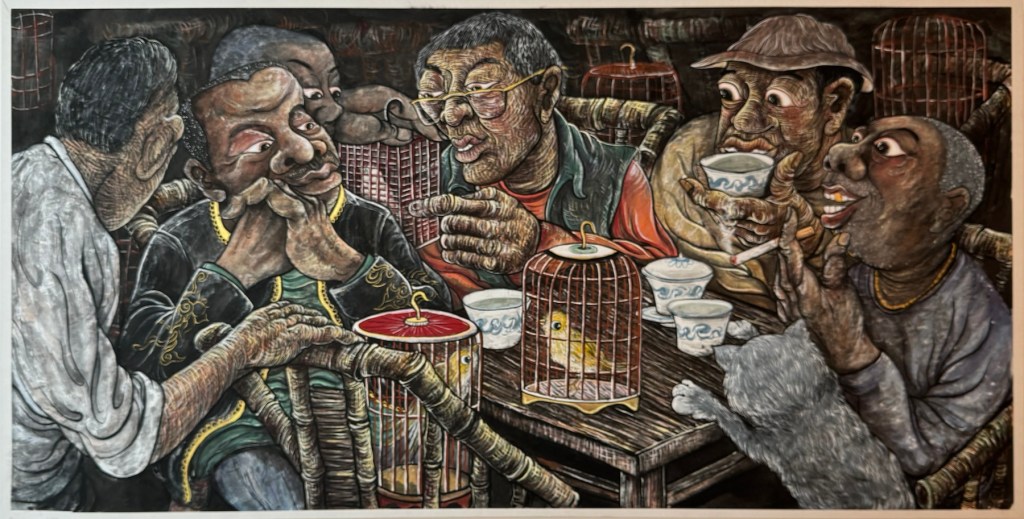
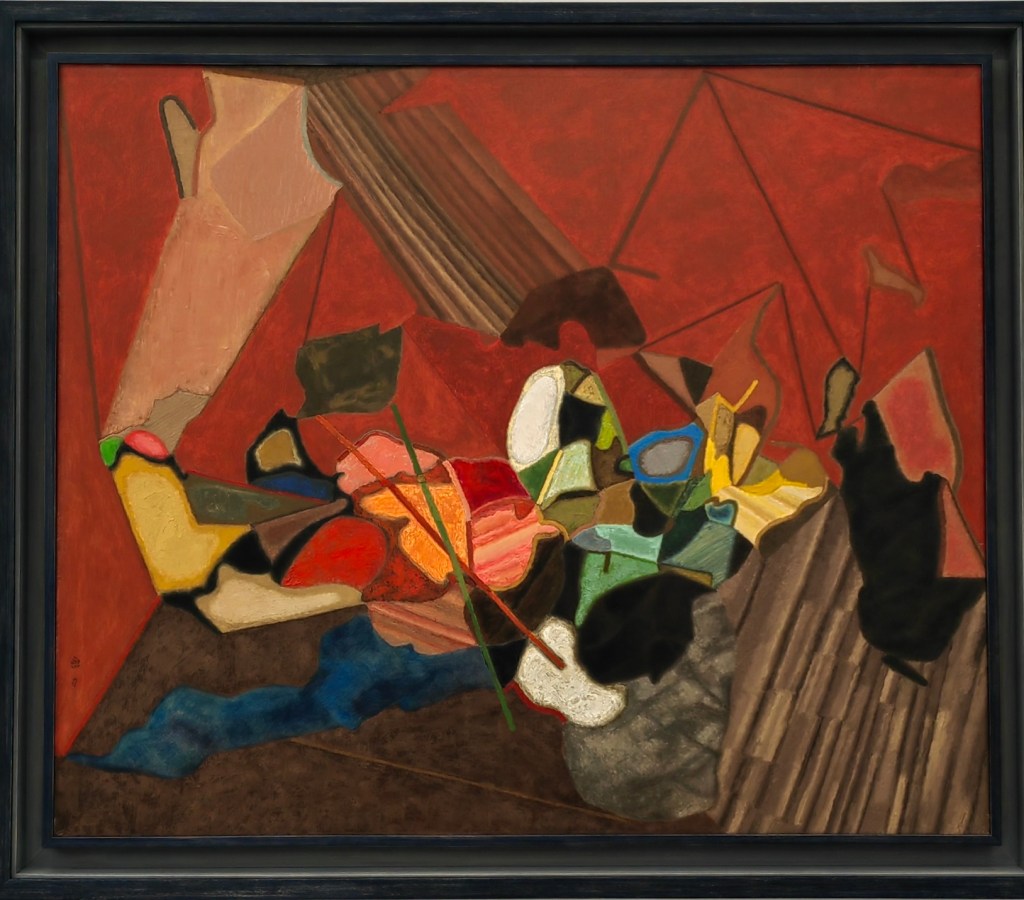
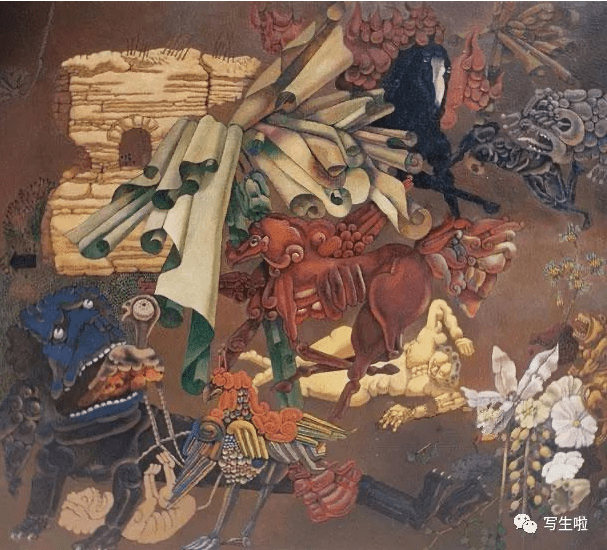
During my recent trip to China, I visited many exhibitions, and the works of one artist appeared in multiple shows, leaving a strong impression on me. He is Cao Li 曹力 (1954-), a professor of the Mural Department at the Central Academy of Fine Arts 中央美术学院. Cao Li has received traditional art training but does not carry the baggage of the academic style; in his work, he is unrestricted, and his imagination and artistic inspiration traverse ancient and modern, East and West. His themes range from reality to dreams, and his media include line drawing, watercolor, oil painting, wood carving, stone relief, etc.. His ability to move freely across different media reminds me of James Jean, though in terms of artistic expression, Cao Li is more mature and unrestrained. His works exhibit the absurdity of Dali, the seclusion of Klee, the alienating humor of Klimt, the multidimensional thinking of Picasso, the simplicity and innocence of Matisse, and the romantic imagination of Chagall. They also draw inspiration from traditional Chinese paintings, especially the murals of Dunhuang 敦煌, Yongle 永乐 Palace, and certain cave sculptures. 

In the artist’s own words, “Art knows no boundaries; it is the product of the soul, an expression of true feelings, the natural flow of life, a free flight. Nature itself is not art; only what flows through the filter of an artist’s soul can be called ‘art.’ It’s like the process of making wine: grains and grapes themselves do not intoxicate, but after brewing, impurities are removed, leaving the essence that can captivate and enchant people.”

Cao Li enjoys music, a recurring theme in his paintings. His lines, compositions, and colors move like melodies, possessing a lively rhythm. Influenced by his line drawings, his oil paintings almost always start with a planar structure of lines as the initial outline and main framework. He then enriches, thickens, and adds depth to the work through the organic organization of colors. He says, “I control the blocks of color, dots of color, color areas, and lines in the same way a composer arranges notes, tones, rhythms, and tempo. Once these ‘force points’ are placed in the right spots and combined in myriad ways, the disrupted calm space is reordered.”

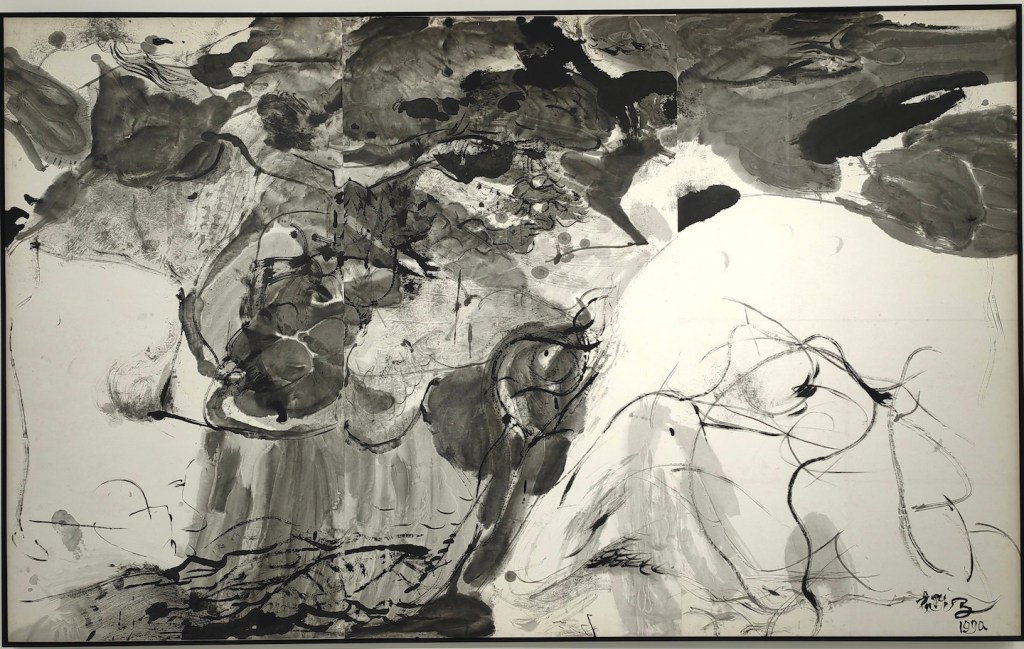
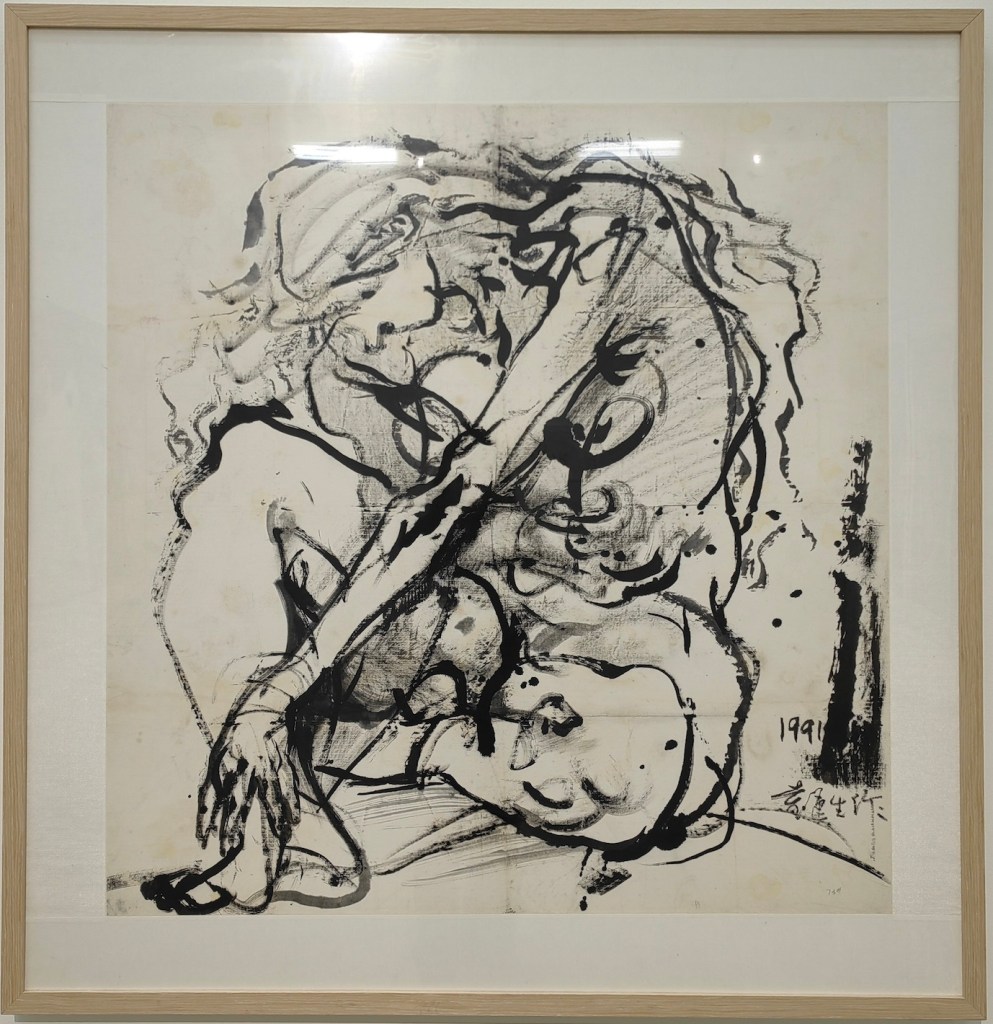
One aspect that interests me when viewing works by Chinese artists is their effort to blend traditional Chinese art with Western painting. The design of figures and the use of color in Cao Li’s works have a distinctly national character. His ink paintings even introduce modernist traditions. His teacher, the renowned artist Yuan Yunsheng 袁运生 (1937-), has taken this fusion even further by applying Abstract Expressionism to ink painting. In the 798 Art District in Beijing, I was fortunate enough to see an exhibition of his works.

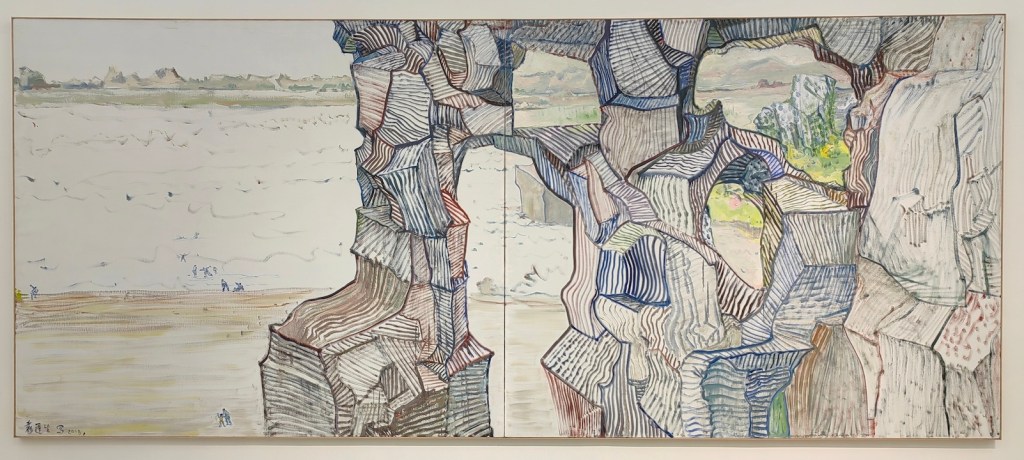
While visiting the Sichuan Fine Arts Institute 四川美术学院, I had the chance to view the “Chinese Painting MFA Invitational Exhibition 2000-2020.” These young artists originally studied Chinese painting, but now their works clearly show influences from oil painting, printmaking, and other art forms. Their use of media has also moved far beyond traditional paper and ink. They draw inspiration from the collision of diverse cultures, creating works that are more personal and profound. Unfortunately most of the artworks on display have glass cover, and makes it very difficult to photograph. I only captured a tiny portion of the treasures on display. 

Here are some paintings from one of my favorite artists from the show:

Amid all the talking about the “lying flat” culture in China, it is quite exciting to see the art scene there is lively and flourishing.

P.S. Unlike in America, most of the Chinese artists don’t maintain personal websites. Artron 雅昌 is platform where many artists post their works, but the level of accuracy and maintenance vary. You can find more works from Cao Li here: 作品

Happy Halloween and the Forgotten Watercolor

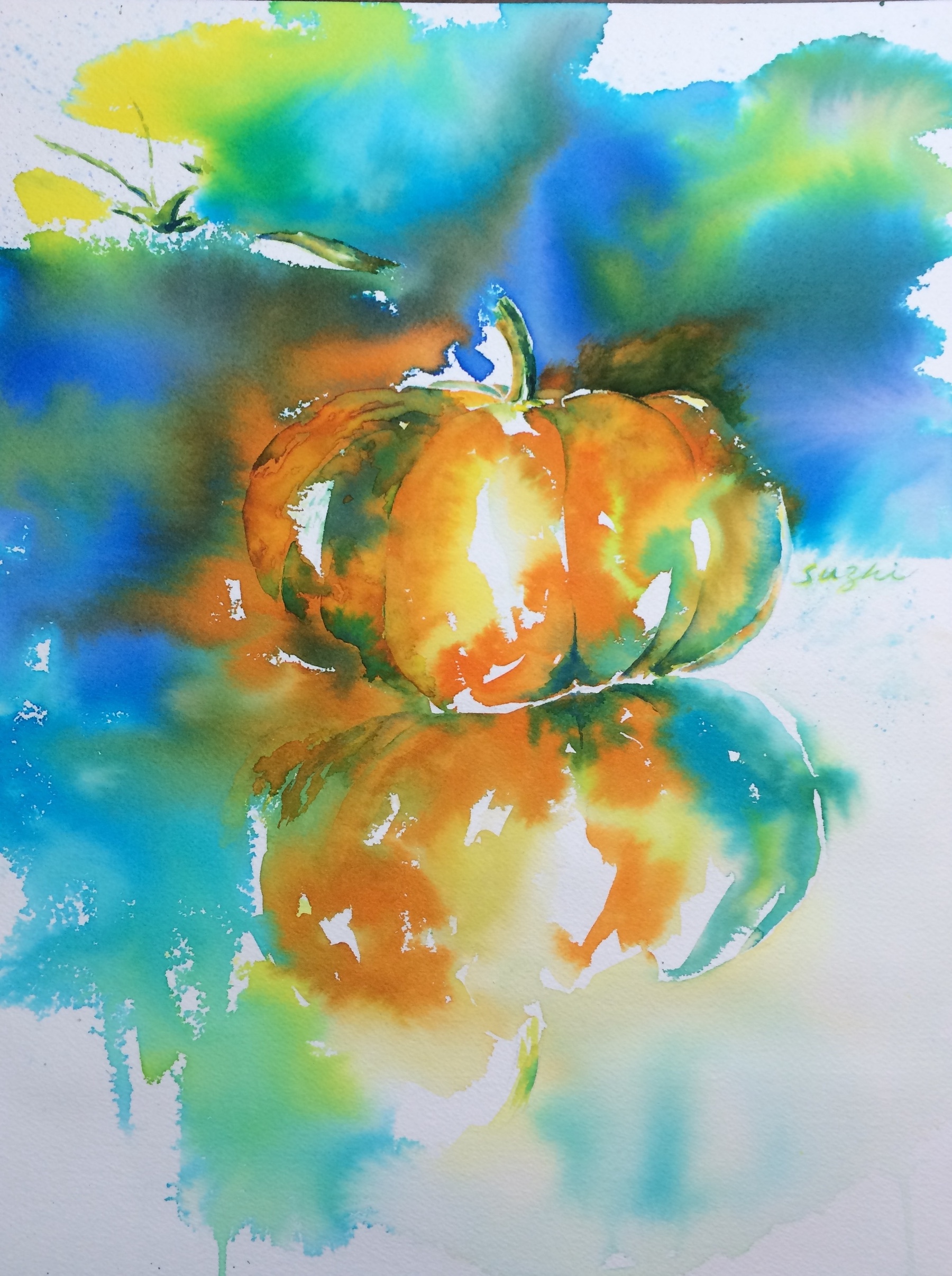
Nothing spooky here, just an old pumpkin! I can’t recall when I did this, maybe 10 years ago, when I could still feel the “water” in watercolor. Time flies!

Pumpkin, watercolor on paper, 9 x 12, 2015

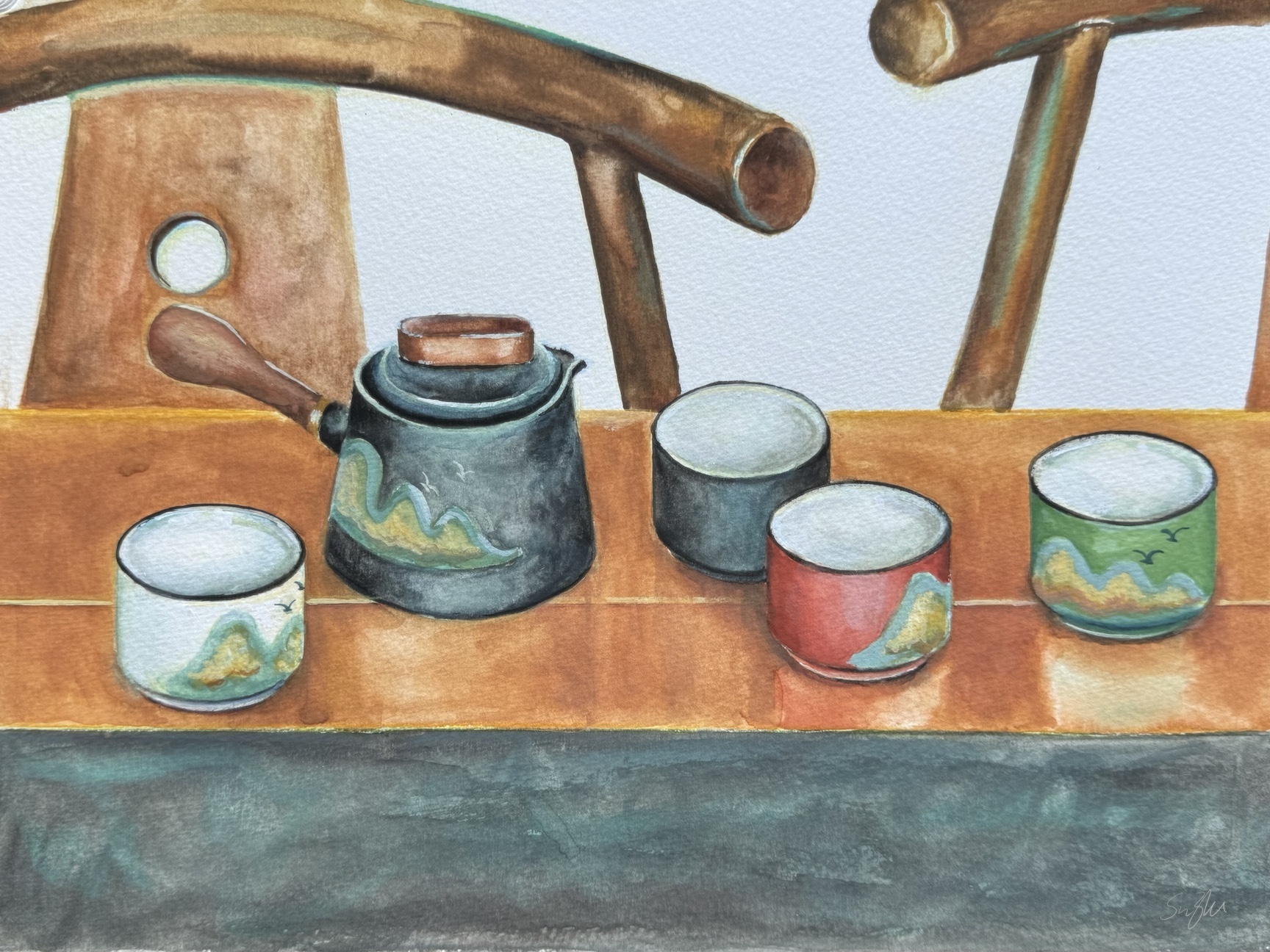
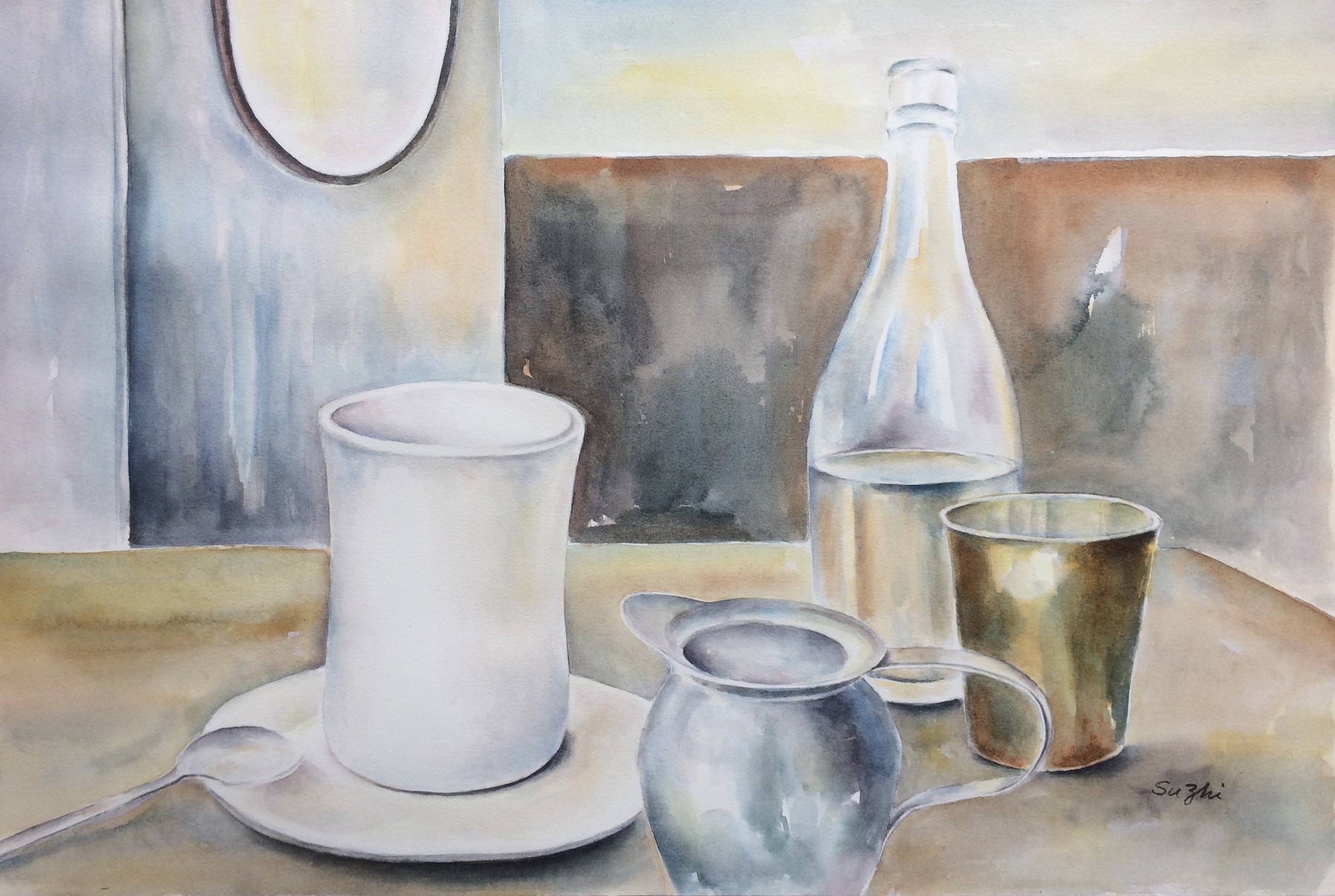
In the past, when I travelled, even with those lengthy stays abroad, I didn’t do any art. These past months when I stayed in China, inspired by all the art shows I attended (I will talk about these more in the future), I thought I should have kept things going. Oil being too troublesome, I managed to find watercolor paper and paint. My intention was to do some quick sketches or simple paintings, and these are what I’ve done:

Tea-set, watercolor on paper, 9 x 12, Sept. 2024
Fruit plate, watercolor on paper, 9 x 12, Oct. 2024

I found myself using watercolor the same way I use oil paint – controlled and layered. Despite their tight look, I didn’t spend that much time on each of these pieces, mainly because I gave up. I could have fine-tuned a lot more details, further emphasized the shadows and highlights, etc., but that was not what I set out to do. I missed the singing and dancing of colors in water.

In a way, the old pumpkin painting was not finished either, and the values probably don’t make sense. However, it was fun, and in my mind, it was what watercolor is supposed to be. 

I am not upset though. I haven’t practiced watercolor for a while so a bit lack of touch is fair game. I like my compositions and color choices, and that’s something. Most importantly, I didn’t let the trip completely cut off my art practice, and that’s quite a step forward!

When to Stop – Never?

I have a vivid memory of my early watercolor classes. As we busily worked on our pieces, our teacher, peeking from behind, said suggestively, “Know when to stop! Don’t ruin it…” We all felt nervous, guessing if it is “me” she was insinuating. Knowing when to stop becomes a thing always rings in the back of my mind when I am painting in watercolors. Understandably, it is not easy to remove the paints when they are on paper. Even when I moved to acrylic and oil, in theory you can keep piling paints on, I still hear that question being asked in classes and workshops. The obvious answer is you should stop when a piece works, but do you always know that? Then let’s say, you know it doesn’t work yet, should you keep trying or move on to the next one?

In one of the East Oaks’ early livestream, Michael Klein answered both parts of the question. I am paraphrasing here: I always know what kind of result I want to achieve and there’s no such a thing as overworking a piece. If you think a piece is overworked, it probably means you haven’t worked enough yet. You only stop when a painting works, and it is better to make the current one works before moving on to the next piece. If you haven’t solved the problem with the current piece, how could you make the next one better? 

Mr. Klein’s remarks shook me, but it also makes perfect sense. The concept that there was a moment in the past that the painting was perfect is faulty. If you don’t know where to end, should you even start? If you do know, what made you keep working on it in the first place? 

Klein’s answer also reminds me what Jeff Watts repeated in some of his demo videos, that you should paint each painting as if this is the one by which the world would judge you. Dale Zinkowski, whose tutorial I am following nowadays, echoed something similar. In a way, this is inline with the concept of “holding yourself responsible” that we discussed previously. We learn from making and correcting our own mistakes. 

So, to know when to stop, before starting each painting, sort out your goal as clear as possible in terms of the mood and aesthetics you want to achieve. Traditionally, you do that with thumbnails or draft paintings. Nowadays you can employ Photoshop or ProCreate in the design and drafting process. You can modify the digital version till it looks like the painting you want before you start, judge the progress against it, and keep working on it until you reach the goal. When not sure, put the painting aside and look at it from time to time. I used to do that for days or weeks, but according to the talented and prolific Scott Burdock, he sometimes leave a piece open-ended for years. You don’t need to decide if a painting is done on spot. Give it time, and then give it more time. (Unless you are working on something with a deadline, then the deadline calls for you.)

This process is more challenging for a watercolorist. Watercolor paper, however high quality, only takes so much beating. The innovative artist Niel Murphy found a way to expand the design process to the entire art making process. He started with a watercolor painting, scan it into Photoshop to keep working on it digitally, then print it out and paint more on top of that. This process is very expandable – you can work on the piece forever – at least in theory. 

A logistic problem rises. If every painting has the potential to be worked into something, we should only work with the best materials we could afford at any time, right? What if? This is the advice many artist give. Do not waste your time on poor materials. It is very against my stingy nature, but I find using better materials help to hold myself responsible. I am less likely to give a half-hearted effort or abandon a piece by telling myself it is just a practice. I just need to find more affordable but good materials. MDF or aluminum board, limited palette, there are some options. 

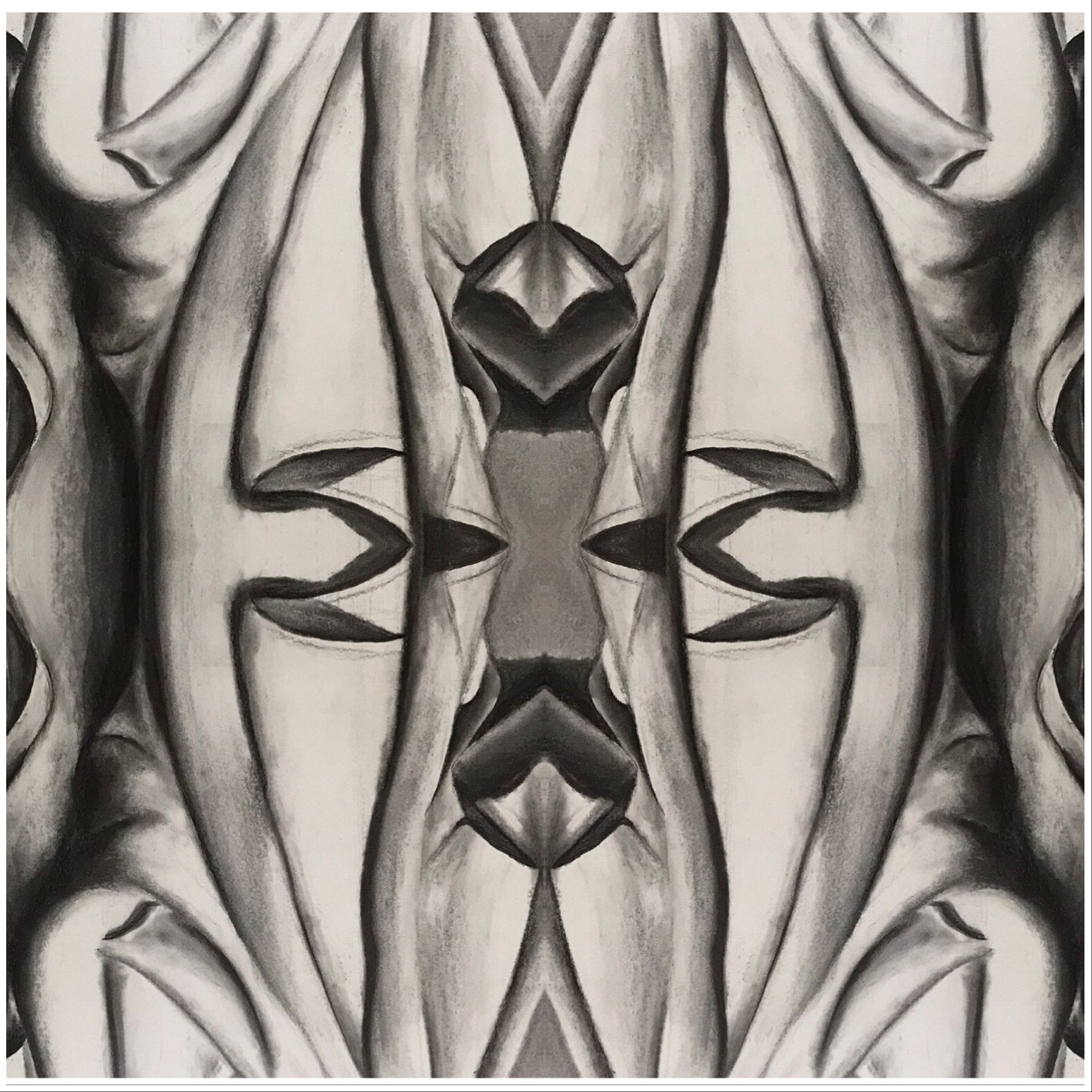
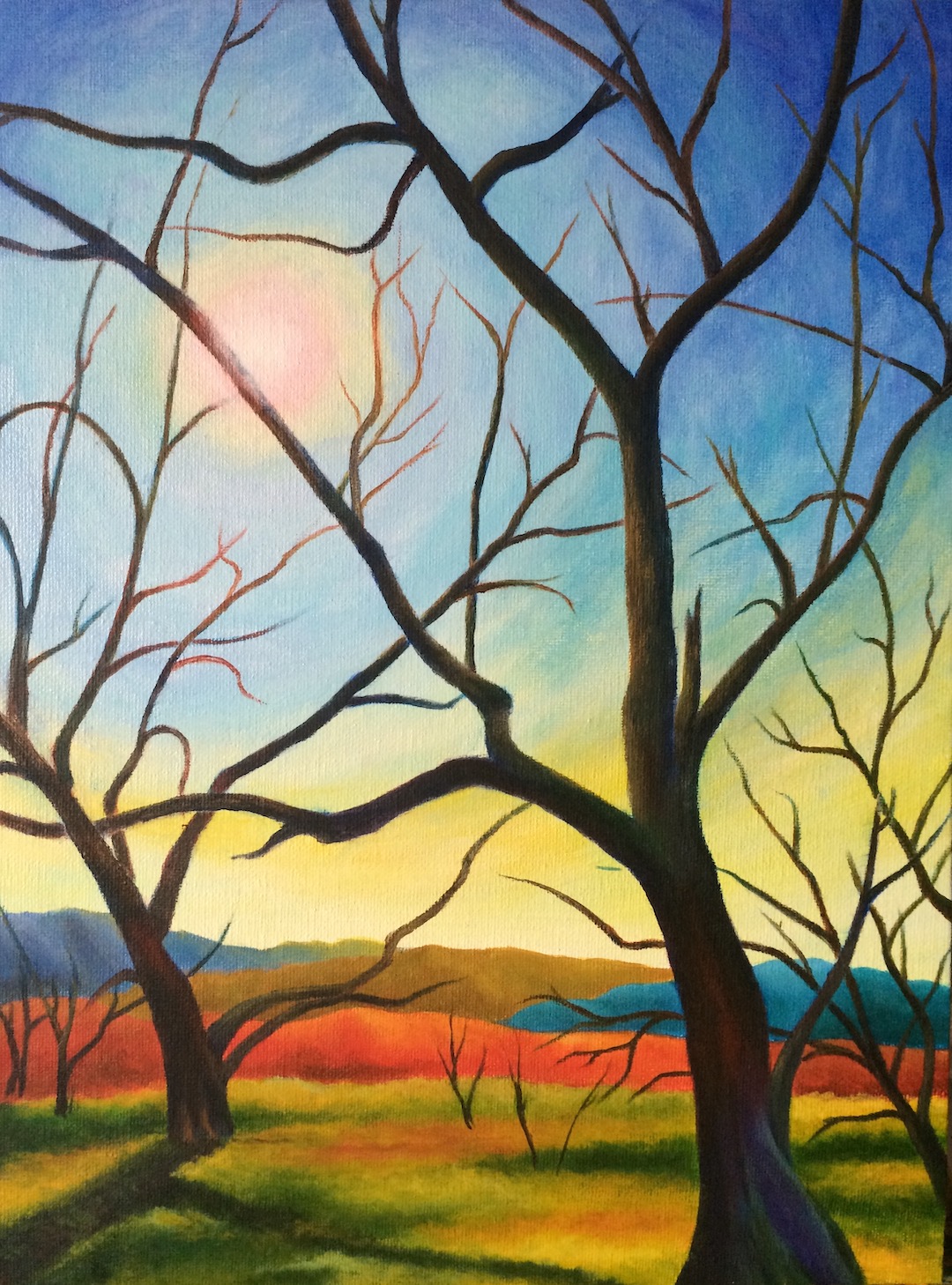
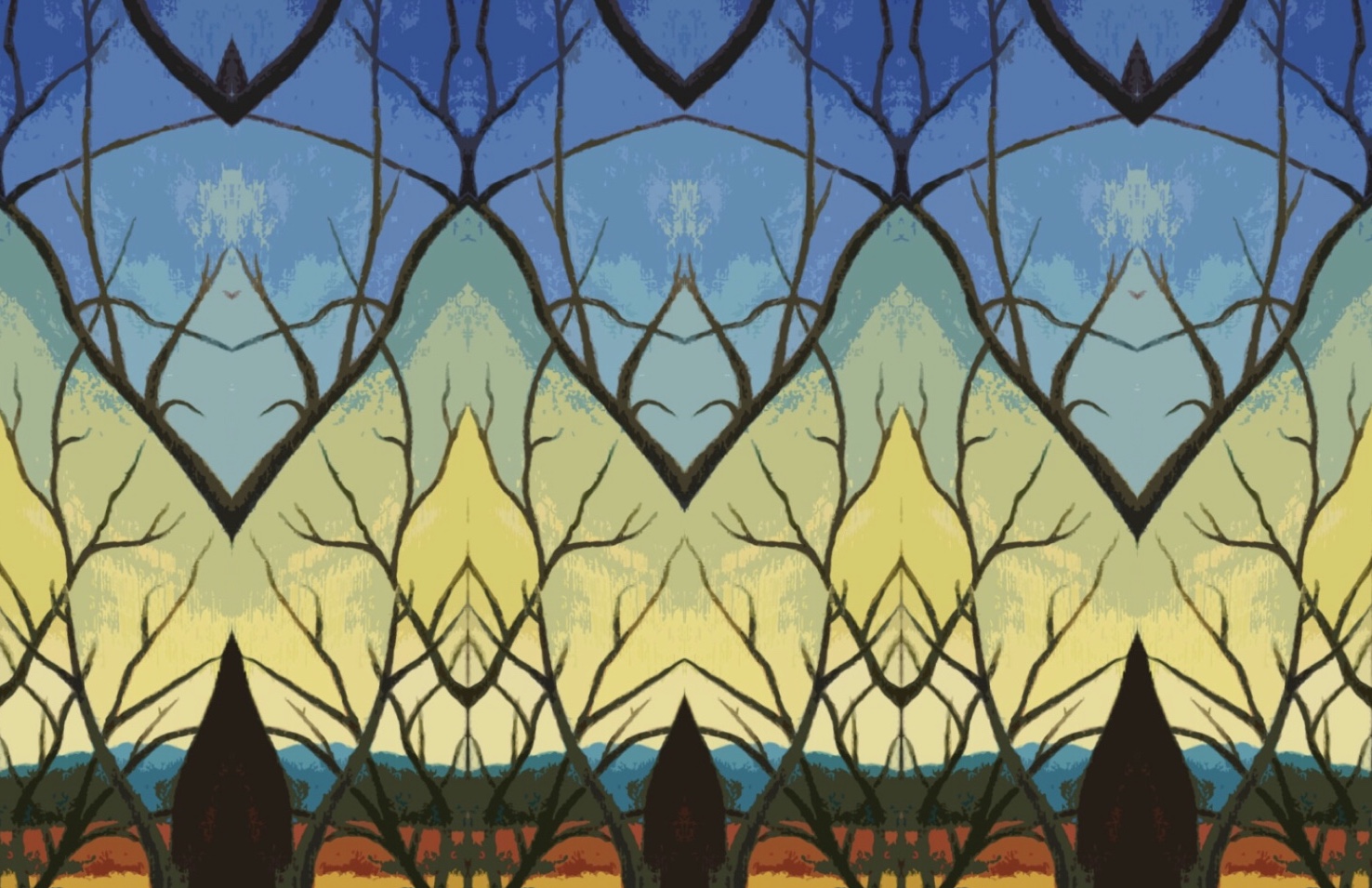
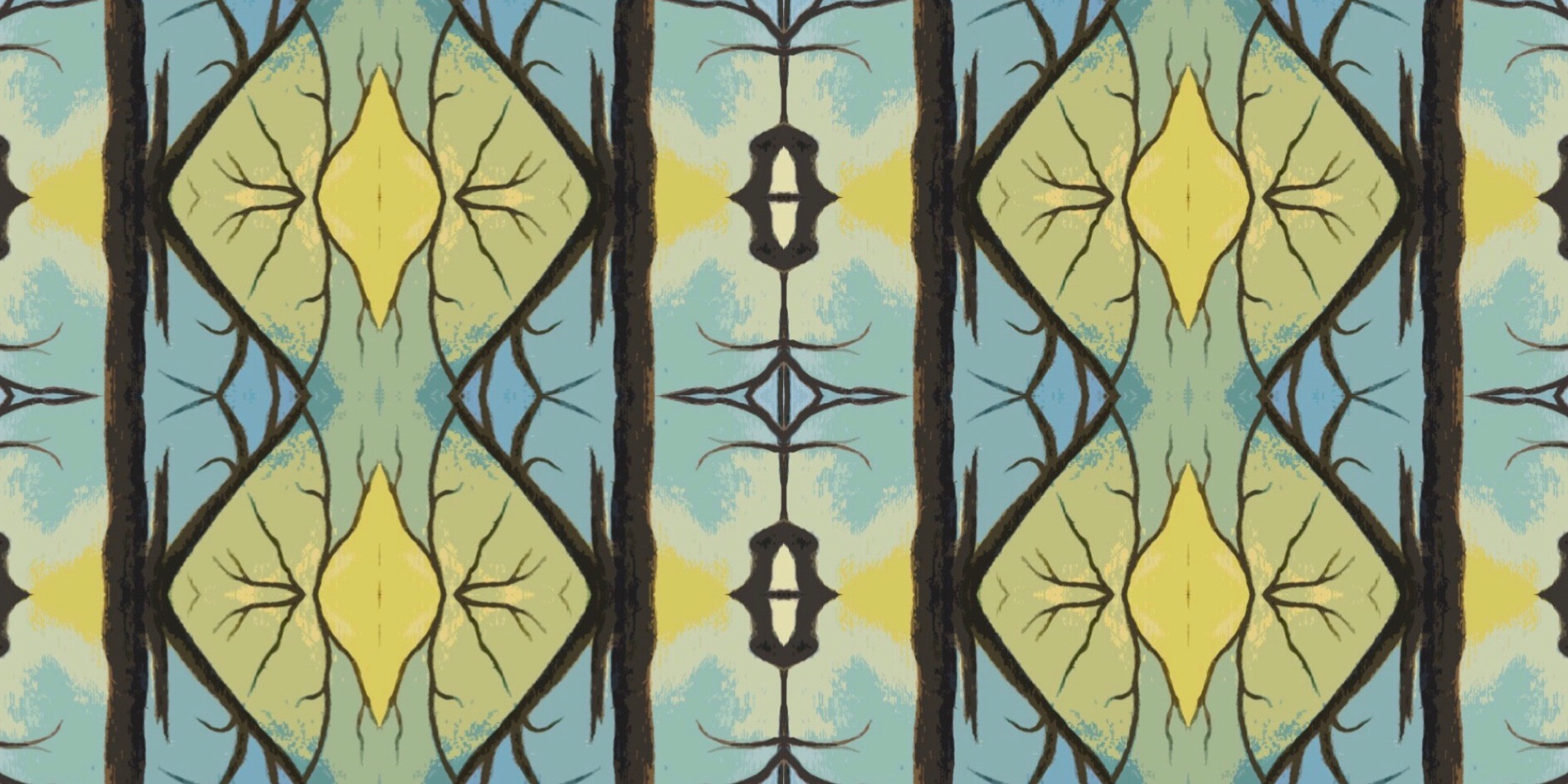
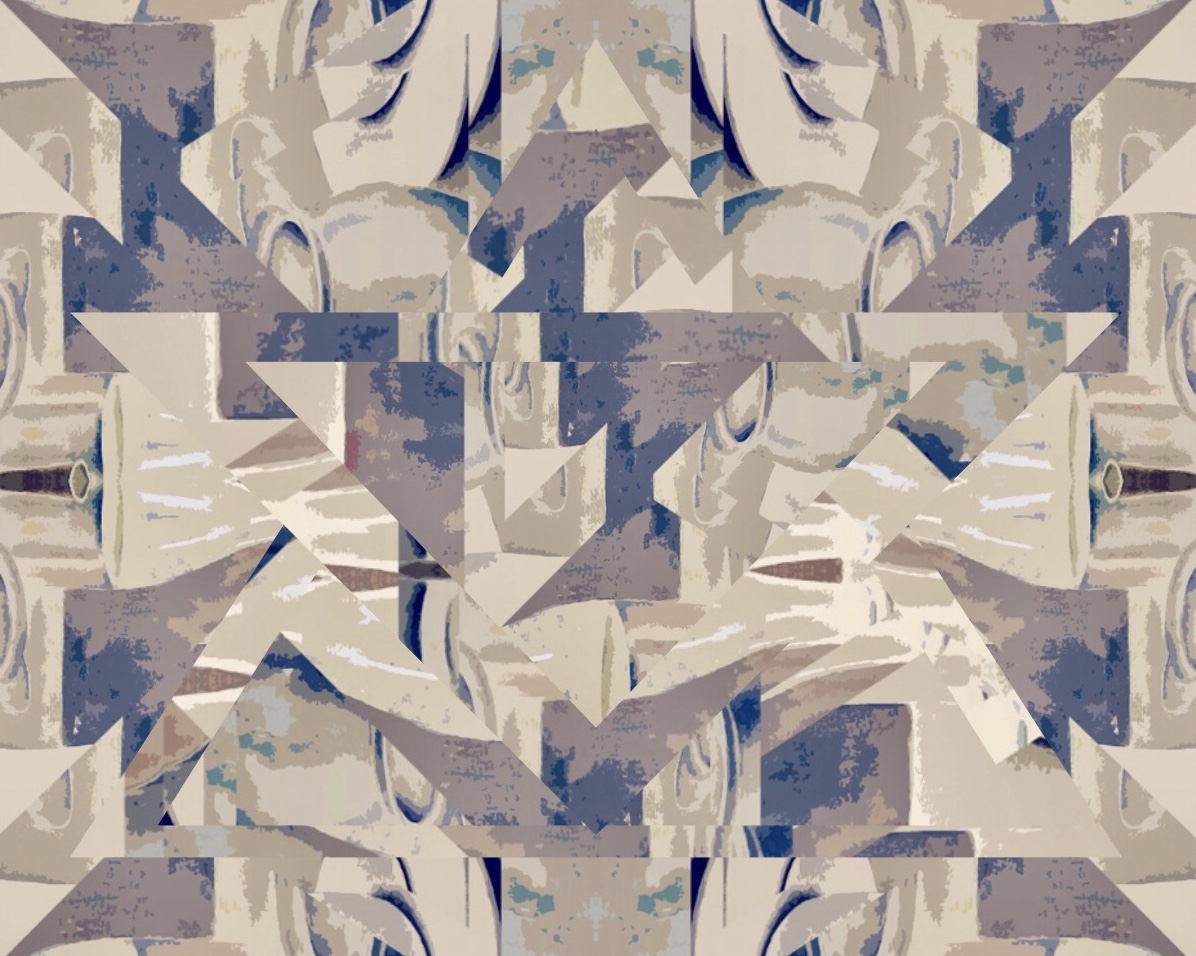
Of course in the process of learning and practicing, not every initiative marches toward a gallery.    I can’t possibly make everything work as it intended to be, but there are ways to keep options open. I used to throw out or paint over the old paintings. I still do, but I remember to keep a digital copy. In the days that I am too languid to pick up a brush, but feel obligated to do something art related, I turn the into digital patterns.

Any piece of art has the potential to morph into longevity. 

Here are some of the patterns I made from old art pieces (shown first):

Daffodils 

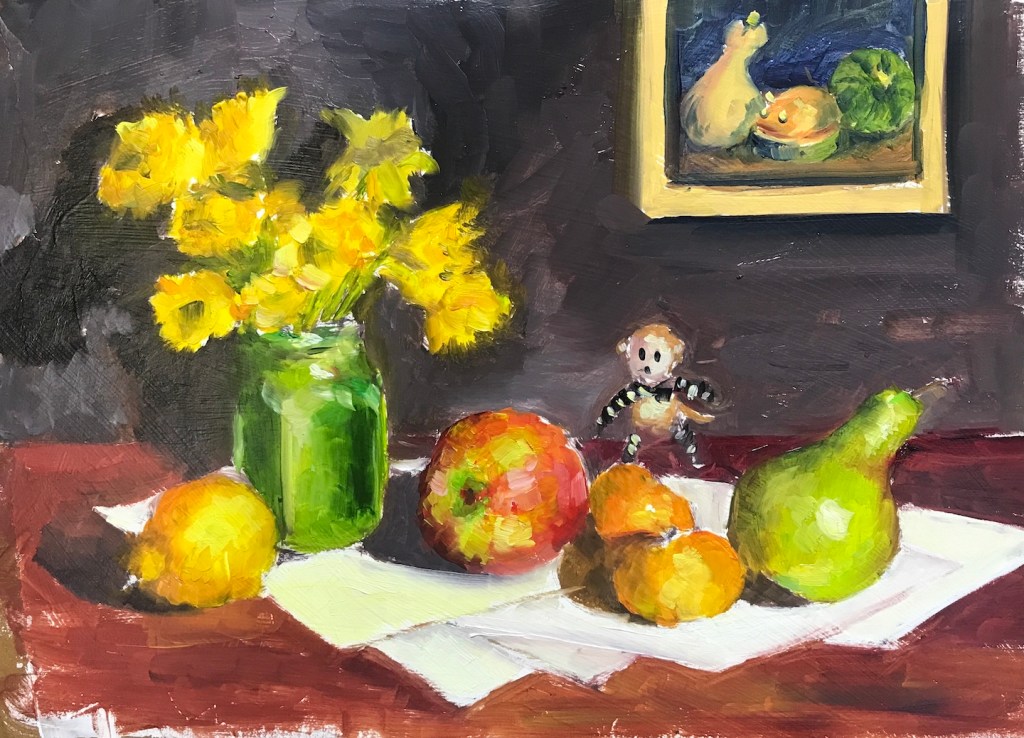
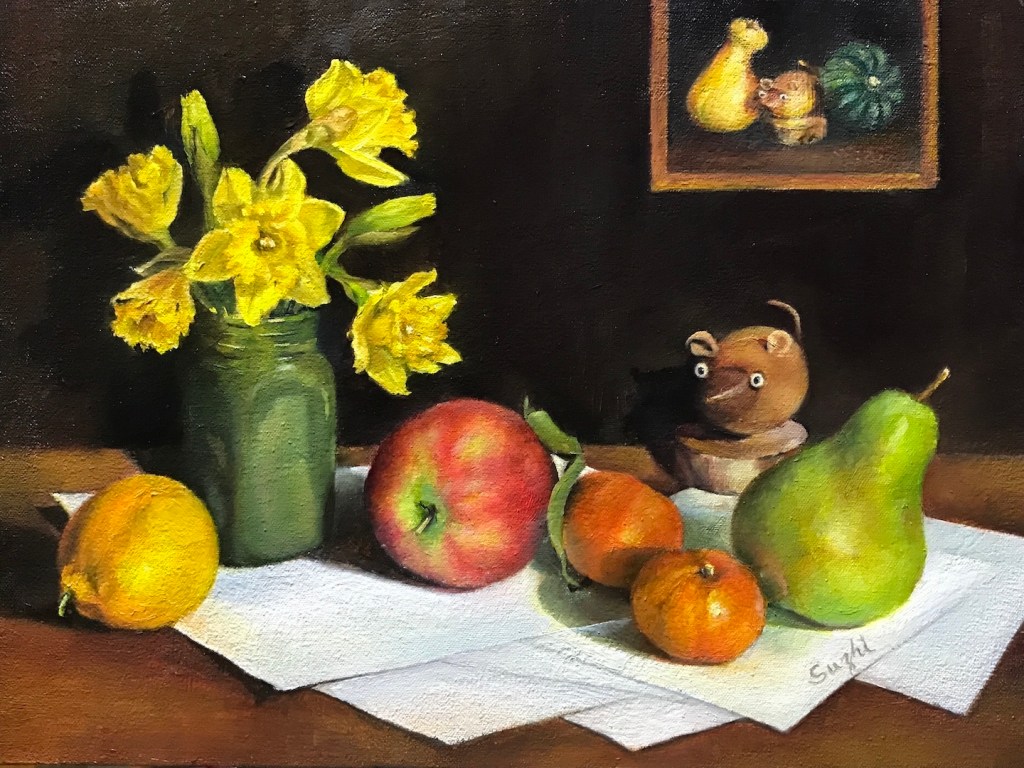
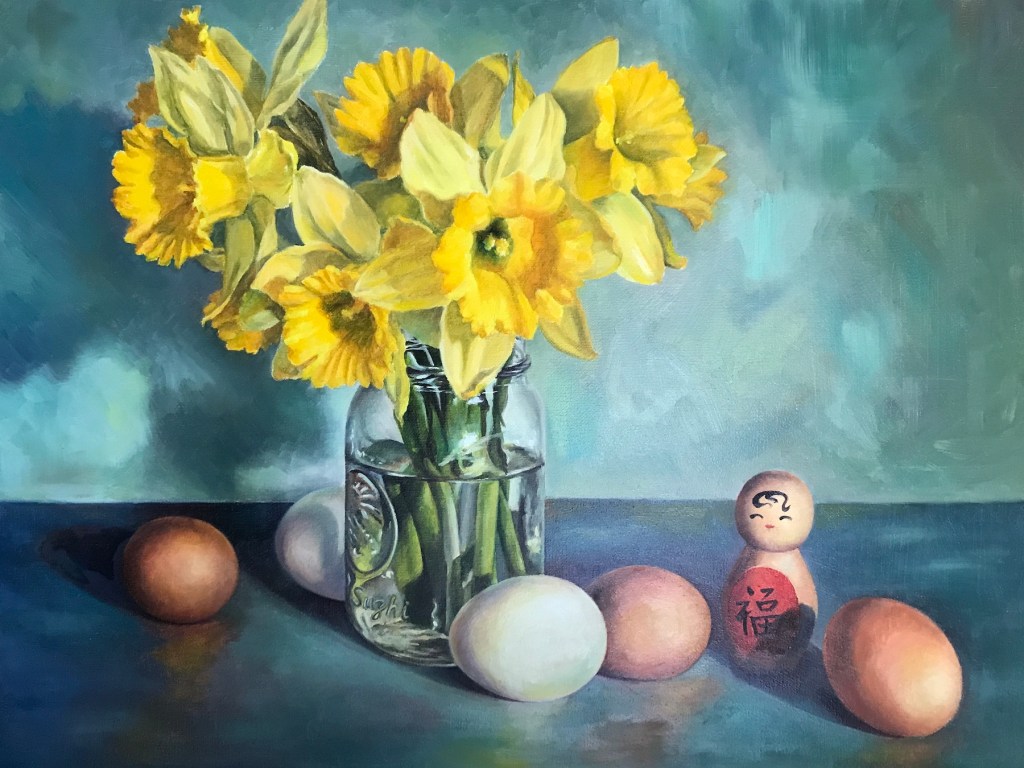
I know it’s the wrong season. I started these paintings in early spring, when Trader Joe’s still carried those cheap bunches of daffodils. It is a nostalgic flower for me; my father used to raise them around Spring Festivals. It is also a challenging flower to paint – yellow is not an easy color to keep clean. In addition, I wanted to try doing a quick preliminary study beforehand, a practice many accomplished artists advocate. 

Here they are:

Daffodils and Fruits, oil sketch on paper, 9 x 12 in. 2023
Daffodils and Fruits, oil on canvas board, 12 x 16 in, 2023
Daffodils and Eggs, watercolor sketch on paper, 10 x 10 in, 2023
Daffodils and Eggs, oil on canvas, 18 x 24 in, 2023

And here’s what I got from this experience:

  • As your can see, I did a one hour oil sketch before Daffodils and Fruits, and I liked the sketch better than the final painting itself. The looseness brings out a movement and a sense of humor that diminished in the meticulously rendered final painting. I am seriously  considering setting a timer for my future paintings.
  • The study for Daffodils and Eggs was done in watercolor and it was overworked for the purpose.
  • The blue overtone was an improvisation. The original setting was dull and it worked better with the watercolor than oil medium. I wanted to add some drama and energy to the rather mundane setup. I feel I made the right choice.
  • For me, doing a study beforehand took a bit of freshness out of the final painting process. It could be I was just doing it for the sake of doing it rather than as a process of exploring.
  • It occurred to me that still life as a genre that could be the most expressive for a realistic artist. You don’t get to do that much “directing” in portraiture or landscape. Though at this state, my main focus is still honing my technique, I need to be more thoughtful in choosing and orchestrating the subjects.
  • I did put a signature on Daffodils and Eggs. Can you find it?

Cézanne – Reading Notes (2)

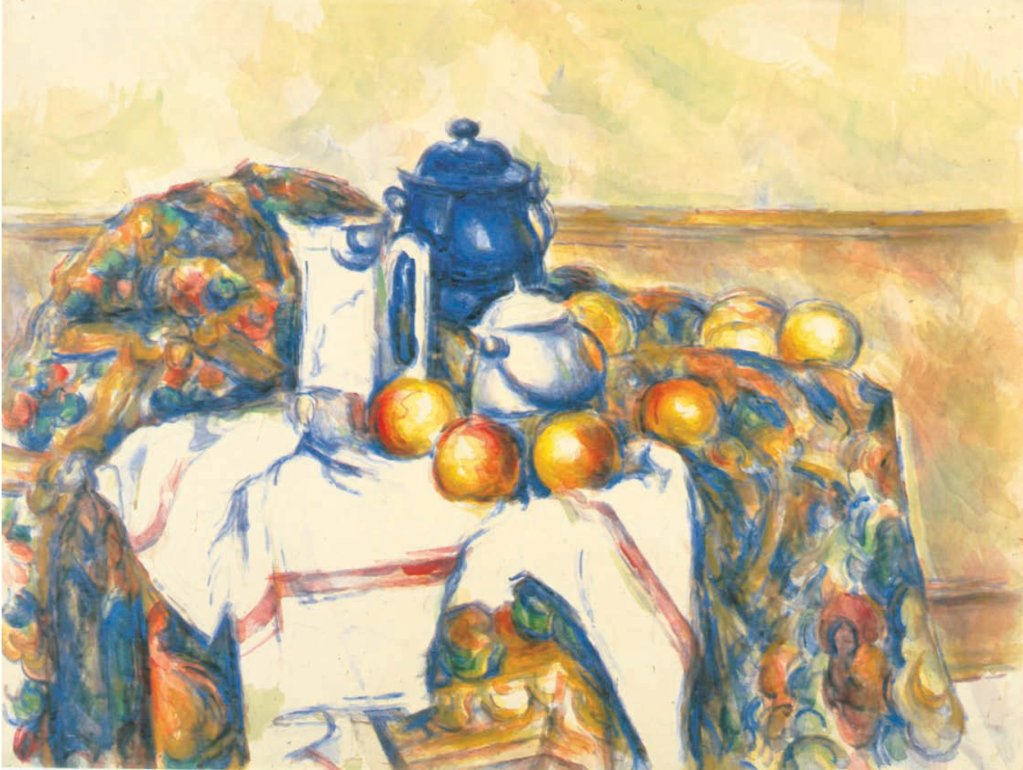
Among the books I read on Cézanne, two of them focuses on his watercolor. They are Cézanne in the Studio: Still Life in Watercolors by Carol Armstrong, and Cézanne’s Watercolors: Between Drawing and Painting by Matthew Simms.

The two watercolor books are a rich collection of the artist’s sketches, finished and unfinished works in the medium. Watercolor and gouache were often used by old masters as studies for a bigger oil piece, and it seems to the be case for Cézanne early on. However, later in his life, when his reputation began to be established, he increasingly make watercolors as independent works of art.

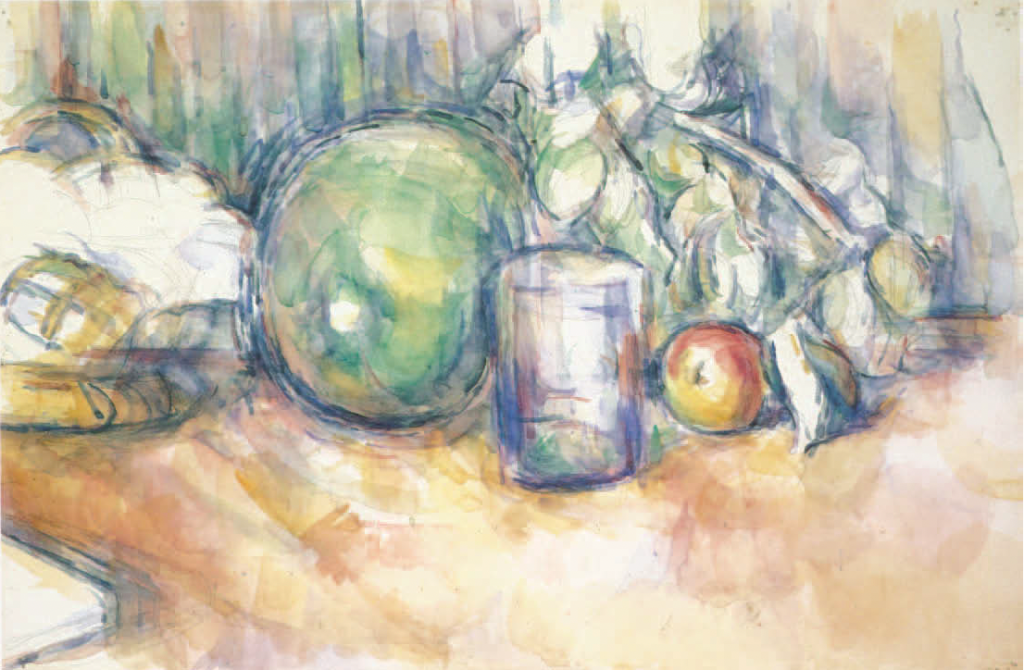
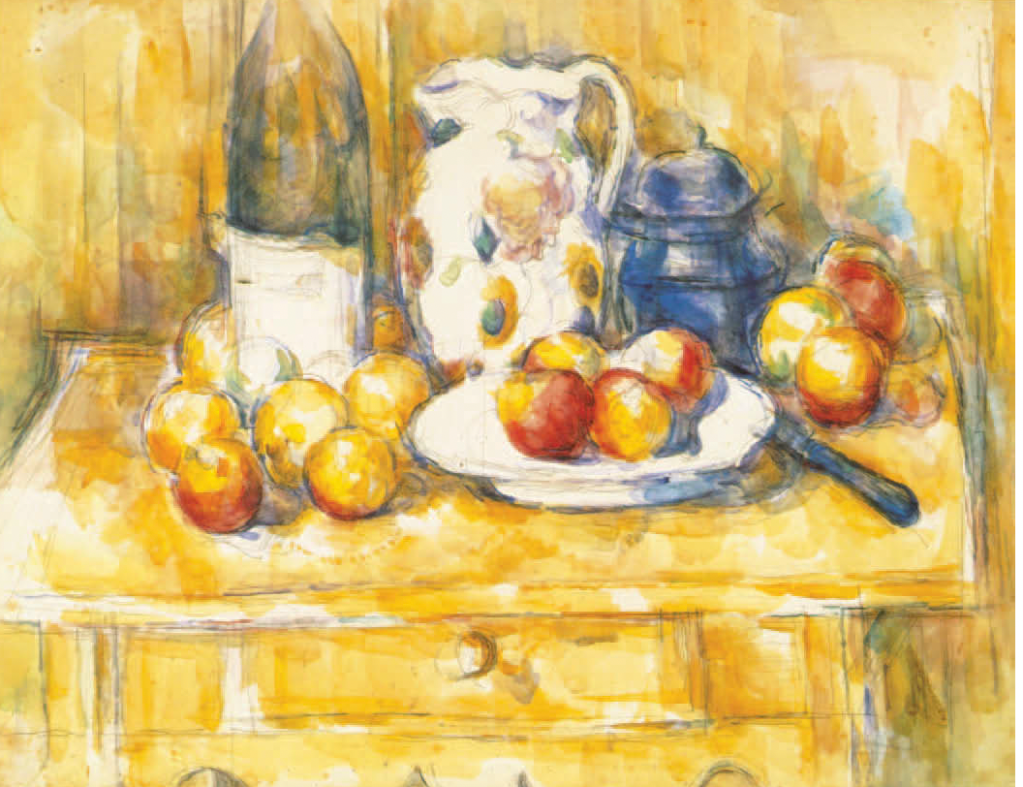
Cézanne’s watercolor is as unconventional as his oil paintings. The charcoal drawings, the white of the paper, and even the artist’s changing thought all become part of the composition. We see the draft, the negotiating and the final status on one page. This provides a unique window into the artist’s painting and the thinking process.

Still life with Green Melon, watercolor on paper, c.1906
Still Life with Apples, a Bottle and a Milk Pot, watercolor on paper, c. 1904

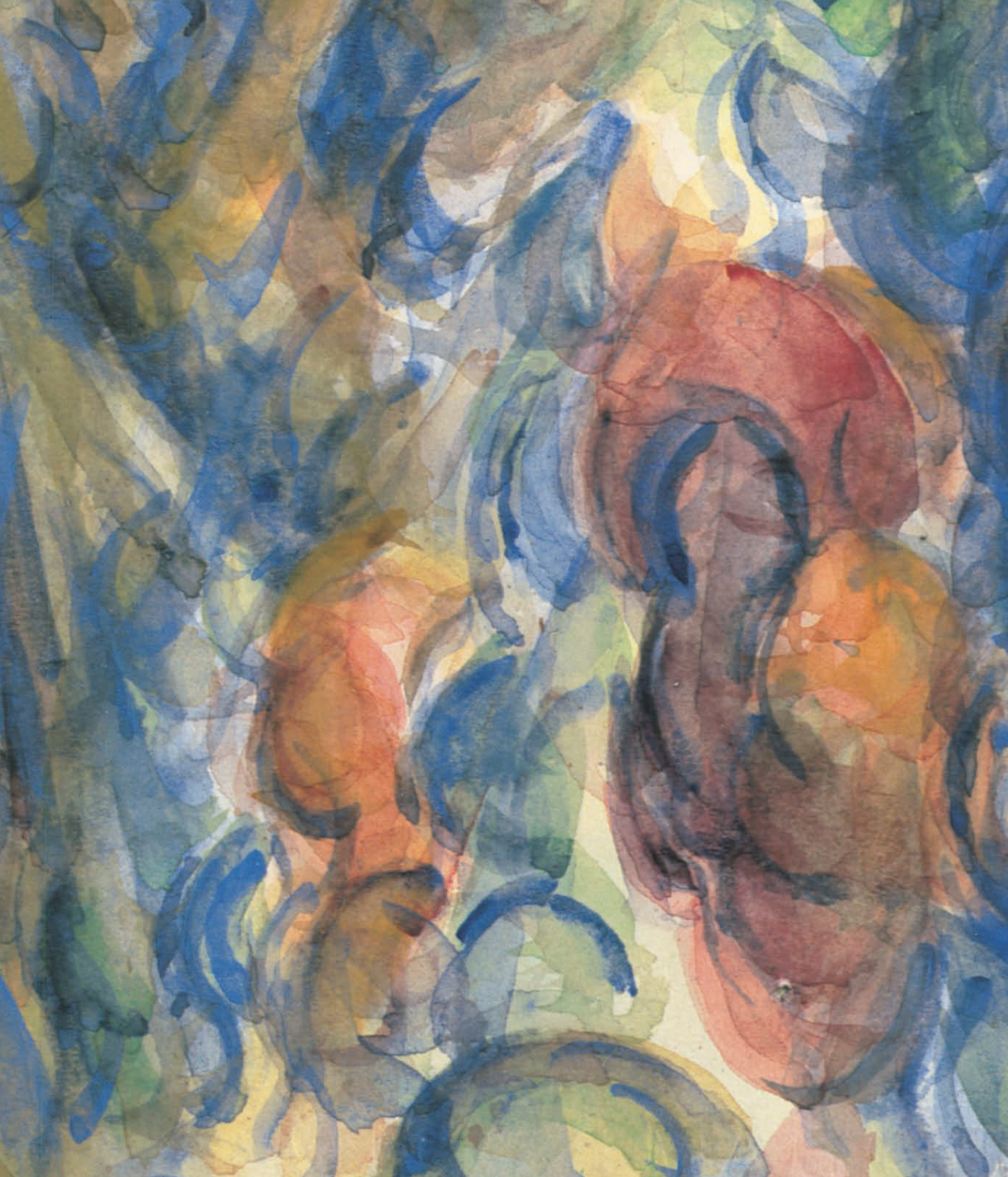
Unlike J. M. W. Turner (1775 – 1851) and other watercolorists, Cézanne adopts a touch by touch and color by color method. He layers translucent patches with gestural brushwork, resulting in a vibrant and casual overall appearance, with fragmentary and kaleidoscopic details. However, the actual process was deliberate and labor-intensive.

Still Life with Blue Pot, watercolor and graphite on paper, 48.1 x 632 cm, c 1900-1906

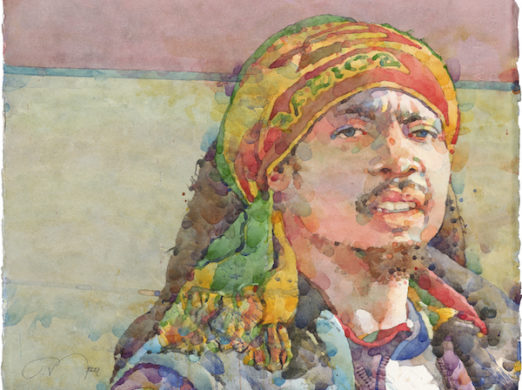
Contemporary figurative artist Ted Nuttall also employs transparent patches of colors to create energetic and vibrant paintings. While both artists are deliberate in their approach, Nuttall’s use of dots helps complete the painting, whereas Cézanne’s colors, used as lines, remain exploratory.

Africa, Ted Nuttall, watercolor on paper.

On a side note, for those interested, Cézanne uses a limited palette, as revealed by this nerdy study: “An Investigation of Paul Cézanne’s Watercolors With Emphasis on Emerald Green.”

Show News

Here are the group shows I participated recently:

“Works on Paper” exhibition, currently on view at the Pacific Art League:

Memory, watercolor on paper, 23 x 29 in.

Santa Clara Valley Watercolor Society 55th Annual Member’s Exhibition:

Once Upon A Time, watercolor on paper, 10.5 x 14 in.

“Portrait” Art Competition at Art Room Gallery:

Father, oil on canvas board, 14 x 18 in., February, 2023
Me, oil on canvas, 18 x 24 in, January 2023

A few notes:

  • The watercolors were originally painted a couple of years ago, but I did some major revisions this year before the shows. I have yet to figure out how to date works like these.
  • The experiment of revising past works gave me a lot of ideas. Some of the old paintings may find a new life, and some of the creating processes may never end!
  • The portraits are the first time I entered my oil paintings to a show. They both received “Honorable Mention.”
  • I feel lucky that the “Portrait” is an online show, because none of the pieces I entered is completely dry. Northern California was darn wet this past winter!

Oil and Watercolor

The way I learned to paint in oil, is to start with an underpainting. It could be a monochromatic value sketch, or a diluted full color draft. Either way, the underpainting would be covered by thicker paints as I progress and hopefully the process took the work to a better place. Once in a while, I just fell in love with the underpainting, and the continuation of the work was saturated with doubts.

This river landscape (a Watts homework) was an example. The one on the left was the underpainting and the one on the right, the final work. I hesitated quite a while after the first draft about whether I should proceed at all. There was a liveliness and richness of color that I loved and didn’t know how to preserve when I added more paint to it. Also got lost was a sense of flatness, something more graphic and watercolor-y. This is not to say the underpainting was a better painting, but it makes me wonder the different directions I could have taken in finishing up this work (if it is not a homework in realistic landscape). Even some of the pencil marks begged to stay!

Moreover, can I achieve a watercolor effect with oil paints? Well, somebody can.

Those men were children once. Julian Meagher, 100 cm x 100 cm. Oil on linen, 2015

That’s Australian artist Julian Meagher, who painted in oil but managed to achieve the transparency and the lucid aesthetics of watercolor. Apart from his website, Amber Creswell Bell’s collection Still Life: Contemporary Painters has a good section on Mr. Meagher’s work. He painted with extremely diluted oil paint, and did not hesitate to use the white of linen canvas instead of white paint. The result is a good combination of precision and fluency.

His works remind me of Giorgio Morandi (1890 – 1964), one of my favorite still life artists (as I mentioned many times before). The technical approach couldn’t be more different. Morandi is opaque and static, while Mr. Meagher is more colorful and vibrant, cleaner and much more scaled up. However, the solitude, the quietness and the thoughtfulness are there.

The more I see good art, the more I am wowed by the range and the potential of the each medium. We are only limited by our skills! (Is this a good thing or a bad thing? :))) )

Zorn in Watercolor & Gouache

Watercolor portrait of model Felicia, Zorn palette, realism
Felicia, watercolor on paper, Fall, 2021
Watercolor portrait of old man, Zorn palette, realism
Old Man, watercolor on paper, Fall 2021
Gouache portrait of young girl, Charlotte, Zorn palette, realism
Charlotte, gouache on watercolor-board, Fall 2021

A few notes:

  • For the watercolor paintings, I planned two different approaches, a softer and muted one, vs a more vibrant and contrasted one. The results were somewhere in the middle. Especially for the first painting, I wish I had softened some edges and let go certain definitions instead of spelling out everything I saw.
  • The gouache one is a homework from Watts. It is a practice of the Zorn palette and the tiling technique. I found both the medium and the technique challenging. Tiling is to juxtapose thick layers of close-value paints and blend them (if necessary) later. It’s a good preparation and practice for oil painting, but it requires a lot of patience in value control and shape design. Hehe, patience! 😉