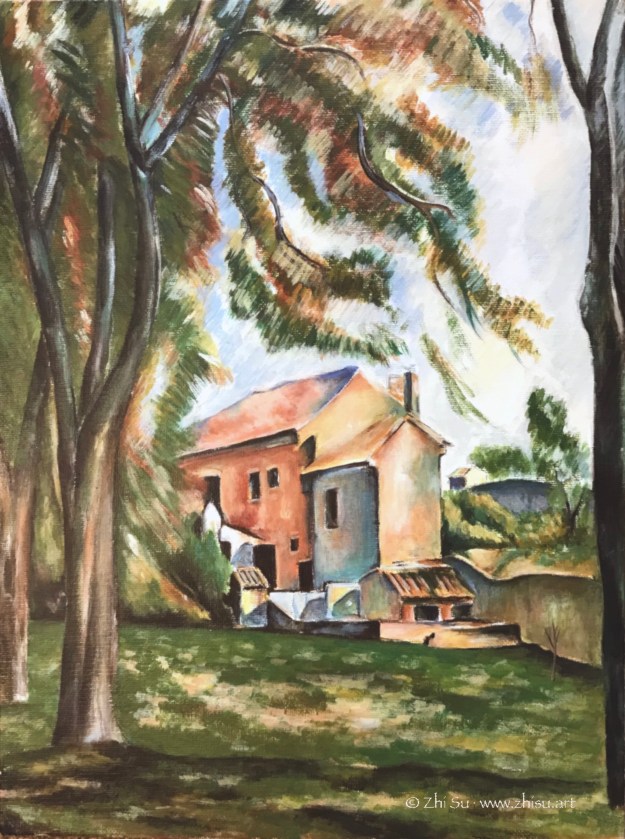
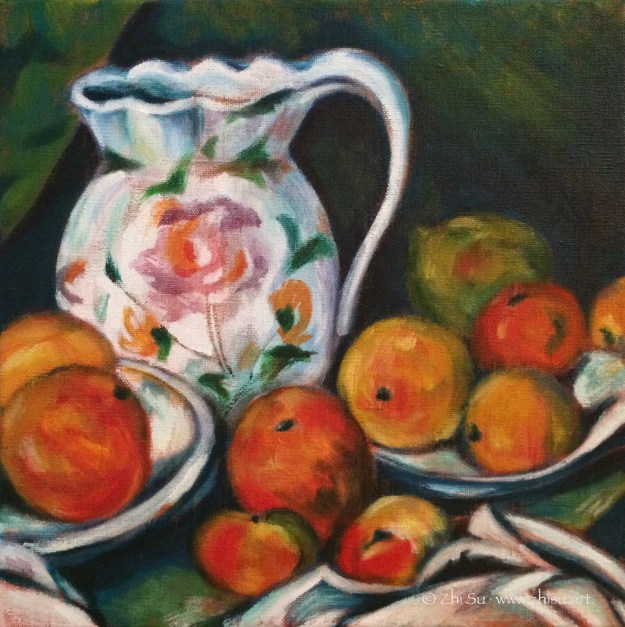
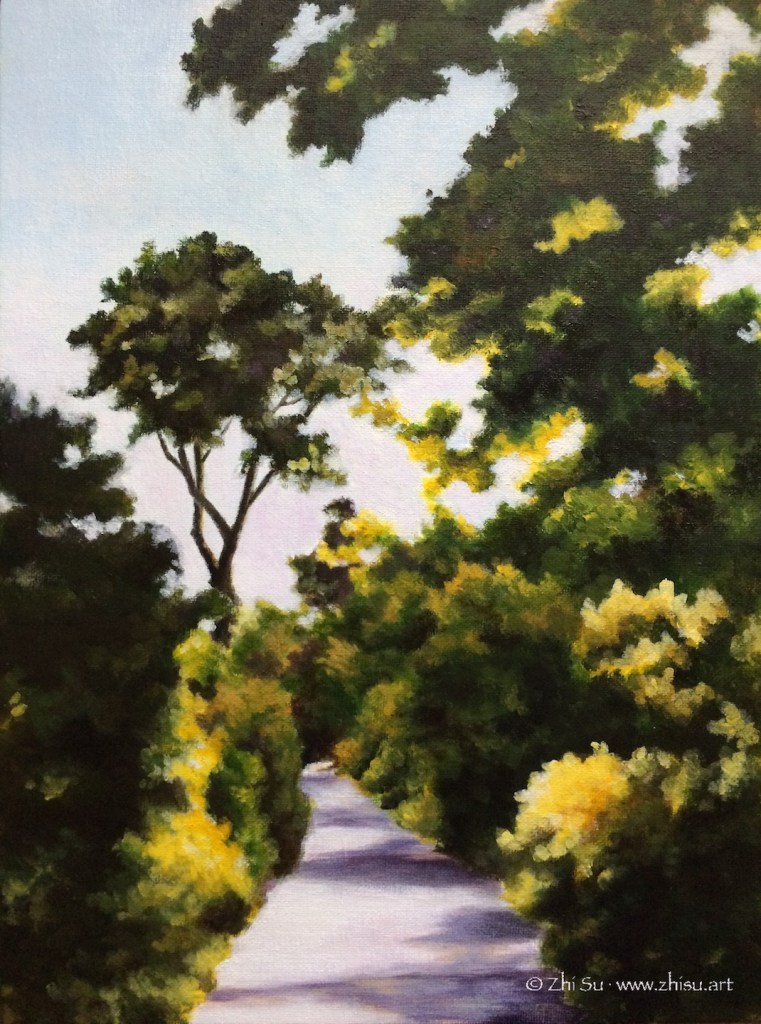
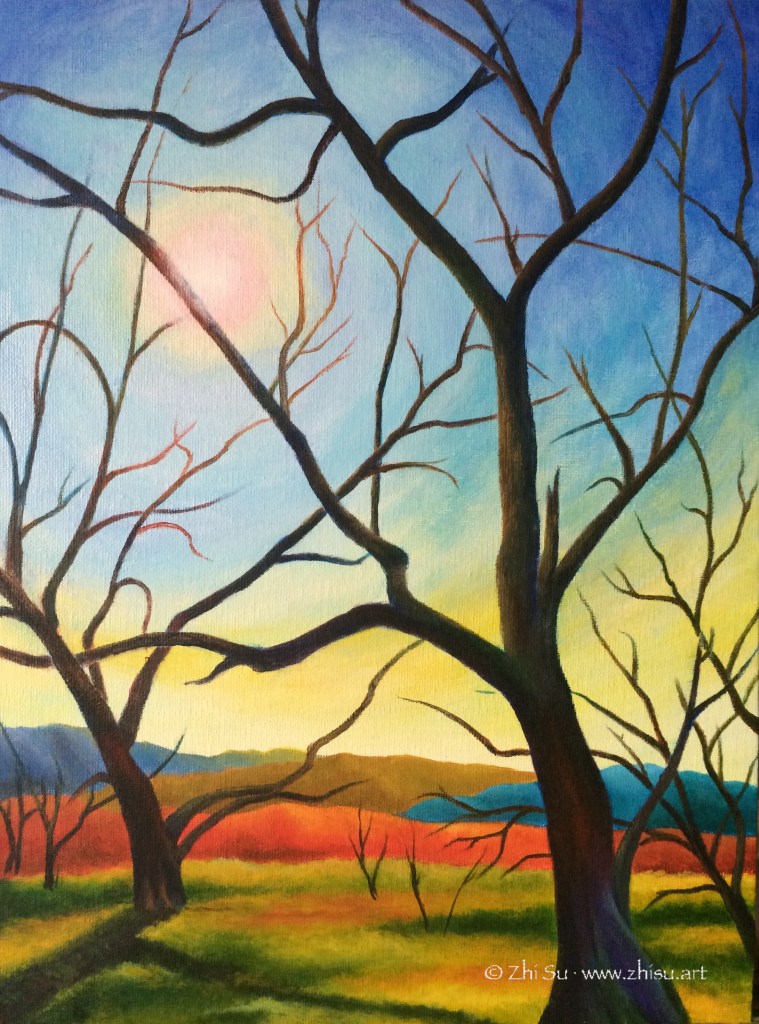
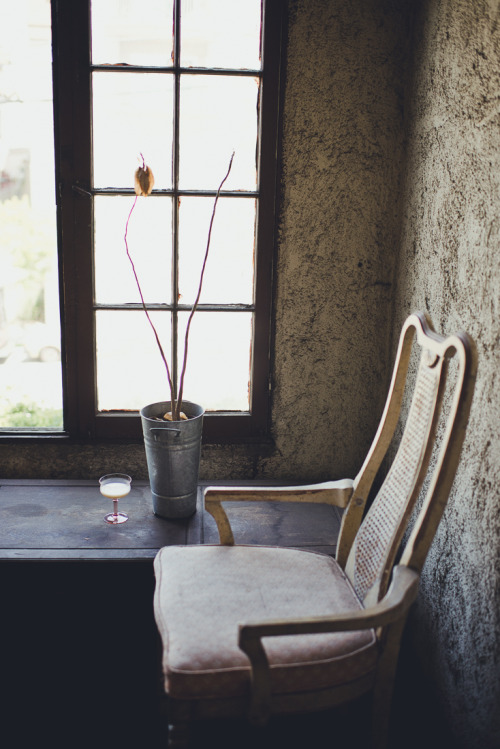
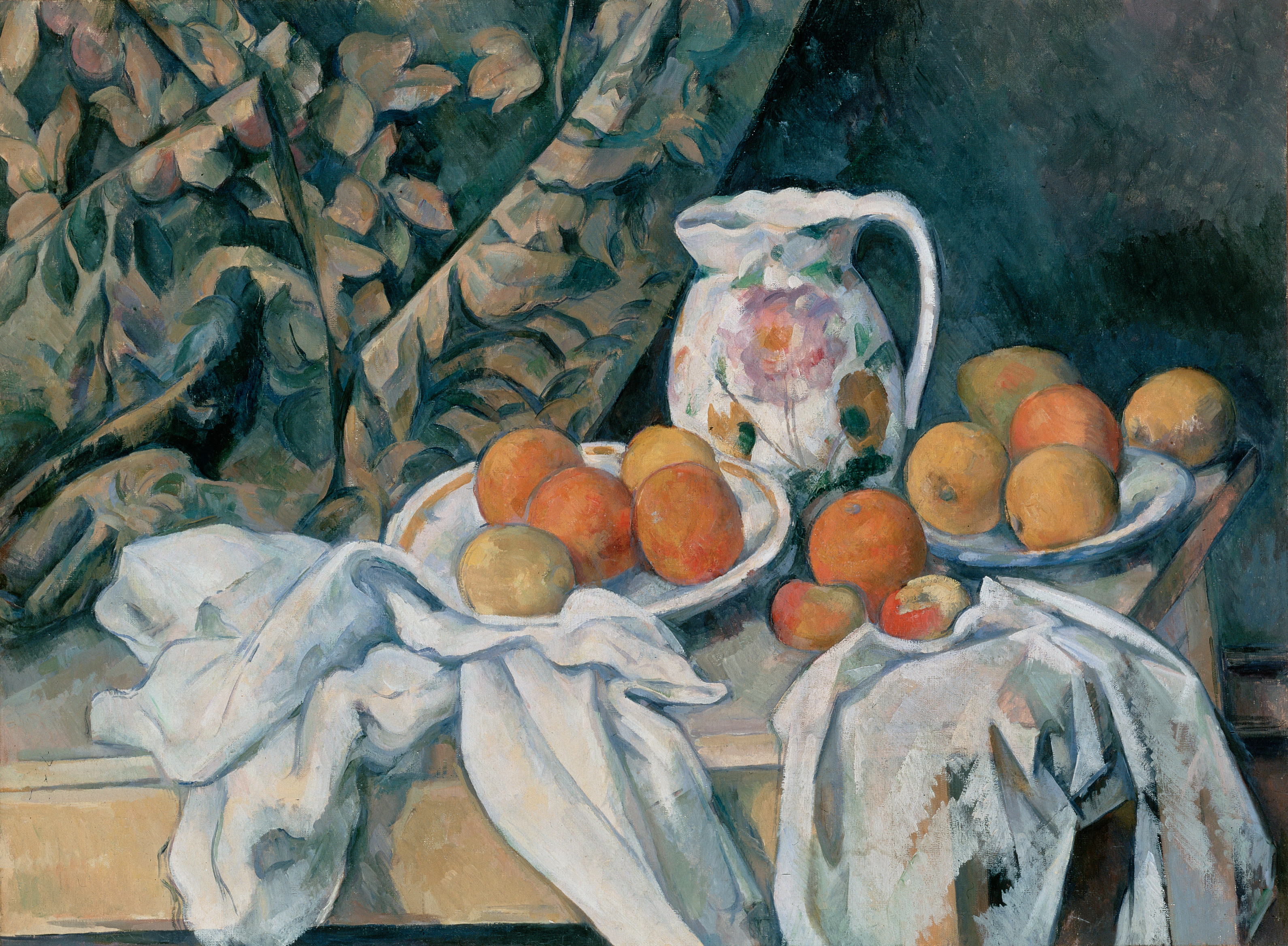
Paul Cézanne (1839–1906) is probably the most influential Post-Impressionist artist, and definitely the most inspiring for me. His colors are layered and strokes deliberate. It takes a lot more work than it seems. In this study I copied only a small section of the original painting.
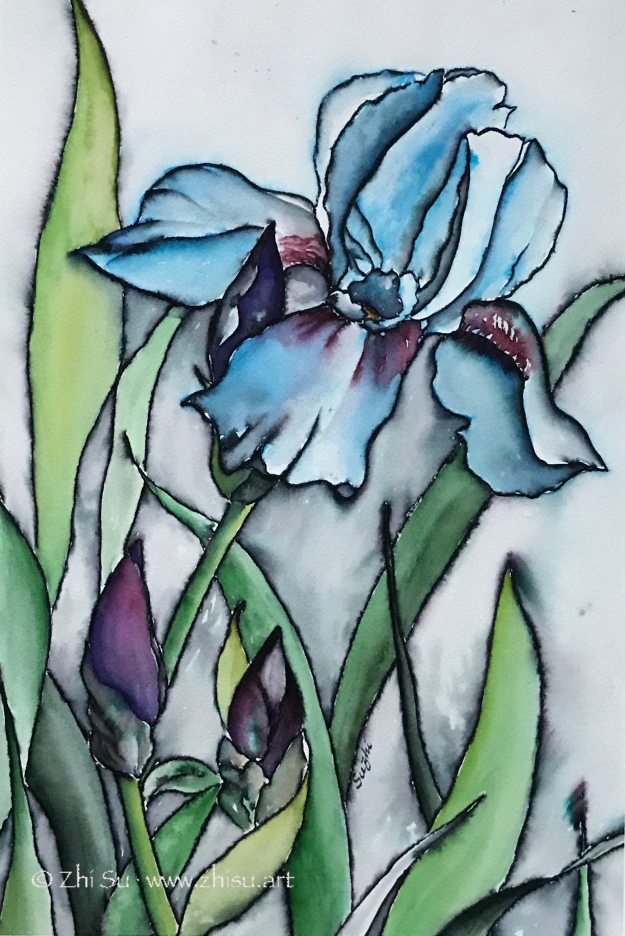
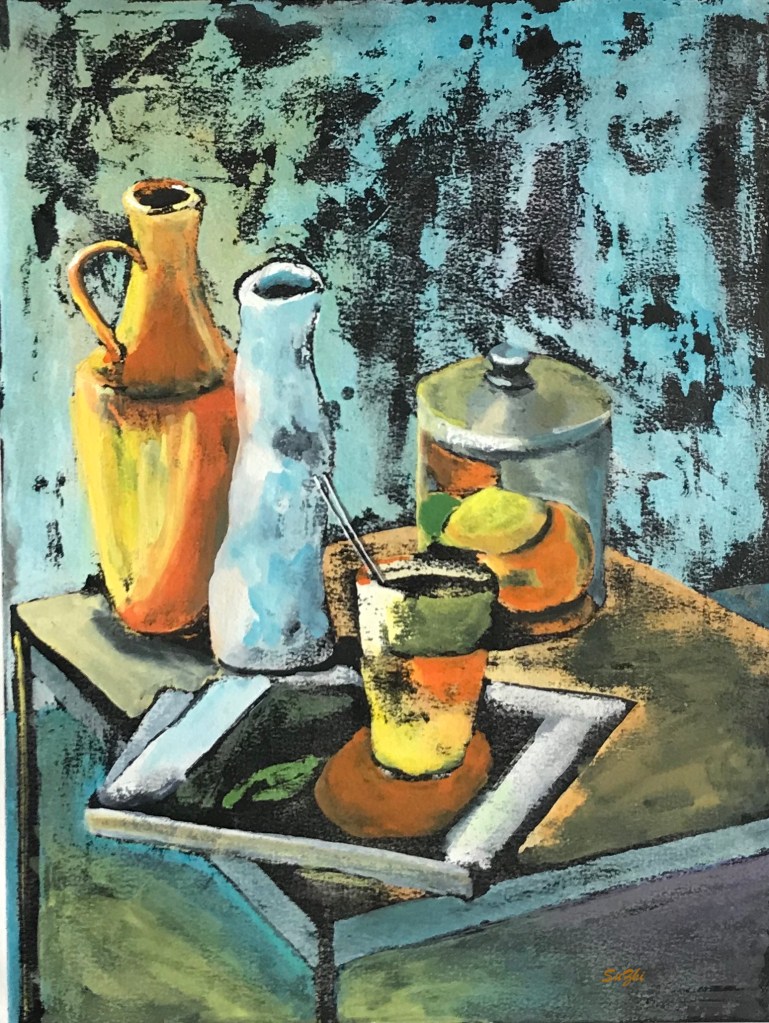
I only recently came to know there’s such a thing called ink resist, and was pretty impressed by some of the artworks with this method. So I gave it a try. The result is a meh, but I l had fun and learned something.
Still life, ink and gouache on watercolor paper
So these are the steps I followed:
pencil drawing;
painting with gouache but leave some area blank; (some people leave only the pencil marks uncovered to achieve neat outlines)
after the painting is completely dry, covered the whole page with sumi ink;
again, wait till it’s completely dry, wash off the ink (I used the garden hose, no kidding.)
and again, wait till it’s dry, and went back to fix here and there. (This step is optional, but I wasn’t that lucky.)
And here are the things I learned:
Like drawing on black paper, this method is a bit counter-intuitive. The areas left blank in the first painting round will be the darkest after the wash. So planning ahead is important, which I didn’t do. In my painting, the blacks serve more like random texture than an organic part of the value pattern.
The paint should be thick, to “resist” the ink and also because gouache is easy to wash off.