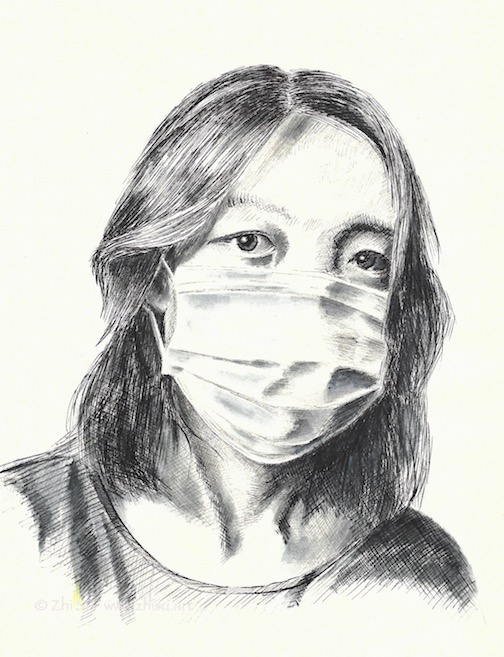
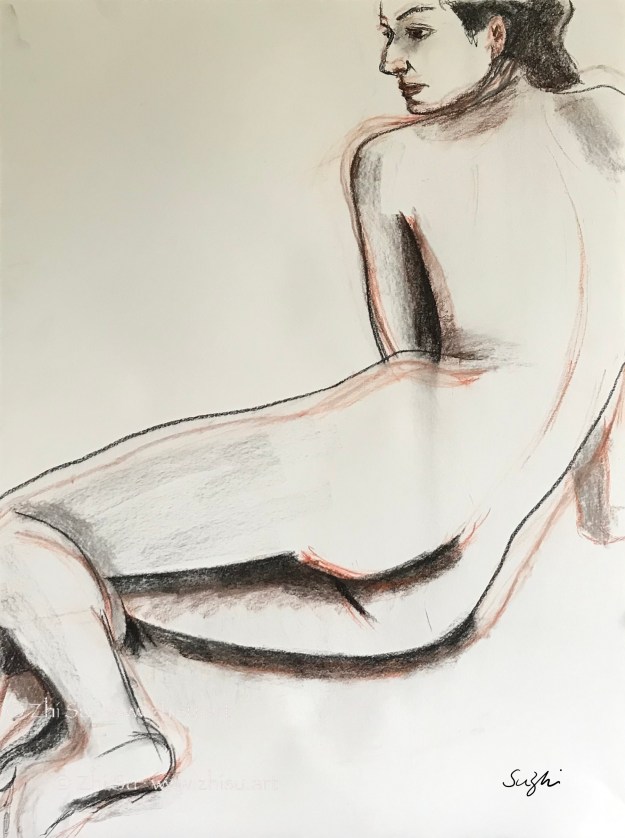
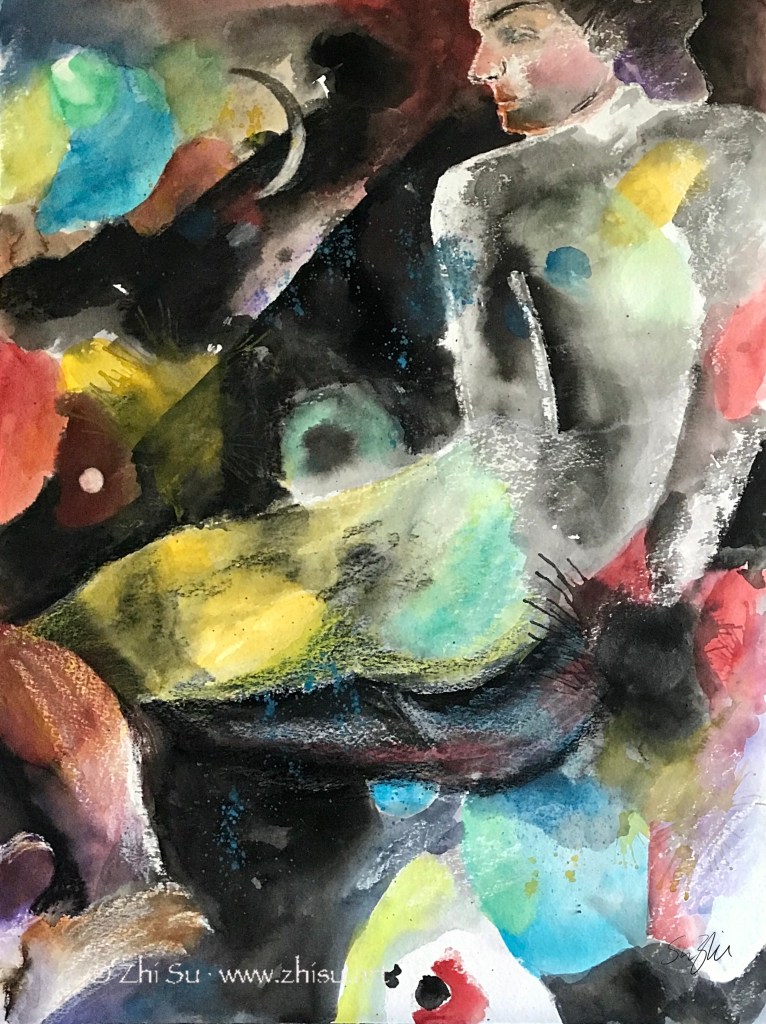
Category Archives: Drawings

Copying Masters (11) – Yoshitoshi

Japanese woodblock printing (ukiyo-e) has a profound influence in western art since 19th century. “Japonism” has a visible presence in the art of many big names, such as Van Gogh, Degas, Gauguin etc.

Tsukioka Yoshitoshi 月岡芳年 (1839 -1892; also named as Taiso Yoshitoshi 大蘇芳年) was generally regarded as the last great master of the this art tradition. He was a very bold, imaginative and prolific artist. Some of the images he created are regarded as gruesome and disturbing. His most famous series are One Hundred Aspects of the Moon (1885–1892), and New Forms of Thirty-Six Ghosts (1889–1892).

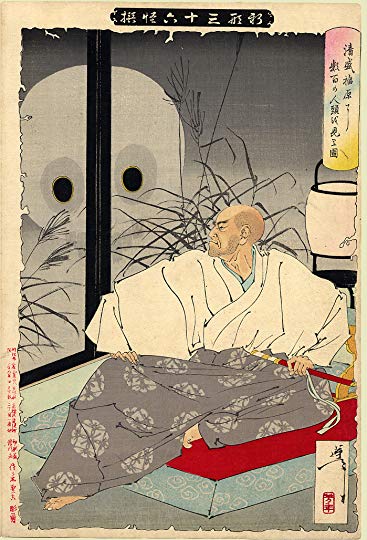
In “Kiyomori sees hundreds of skulls at Fukuhara,” from the series New Forms of Thirty-Six Ghosts, Yoshitoshi portrayed the famous Japanese general (or soldier-dictator) Taira Kiyomori (平清盛, 1118 – 1181), who created the the first samurai-dominated government. The main attraction for me is the decisive and effective line work, and the presence of the character:

The original:
My copy:

After Yoshitoshi, watercolor and ink on paper, 11 x 15 in, 2020

A few notes:

  • This is not an exact copy, partially because the paper I used was a failed texture experiment. I have to work with un-intended marks here and there.
  • Copying line work is a tricky business: you want to be careful because the ink is permanent; but if you are too careful you’ll lose the force and the gesture of the line.
  • Sometimes having random textures or marks on paper is not necessarily a bad thing. You are forced to be creative since you have to work around or work against it.
  • My general has funny little hands.

Here’s my attempt of the ukiyo-e style:

Where to, watercolor and ink on paper, 11 x 15 in, 2019

This earlier post is in that line too:
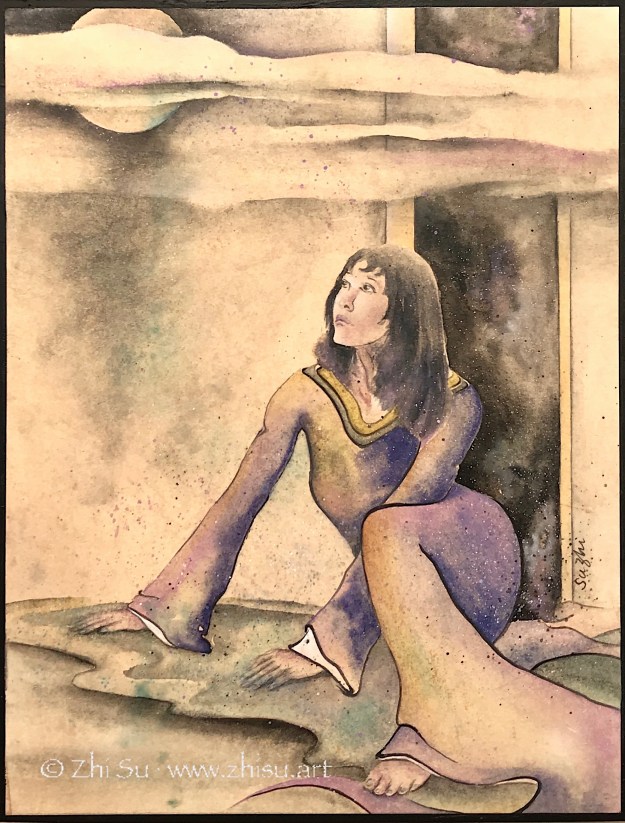
Full moon, watercolor on paper, 11 x 14, 2019

By the way, the art of ukiyo-e fell out of fashion in Japan in the late 19th century but saw a come back since the 70s in Asia. Some young artists incorporated the line works and the fanciful contents into Chinese fine brush painting or watercolor painting.

Copying Masters (10) – Bernini

I am quite into drawing and painting humans recently, both portrait and figure. I find it a great way to practice hand eye coordination, and overall drawing and painting skills. While human faces and bodies are complicated, they are more organized than landscape. Learn the anatomy and you’ll have a sure way to approach them. They are also less forgiving than many other subjects – when you do it wrong, it’s quite obvious.

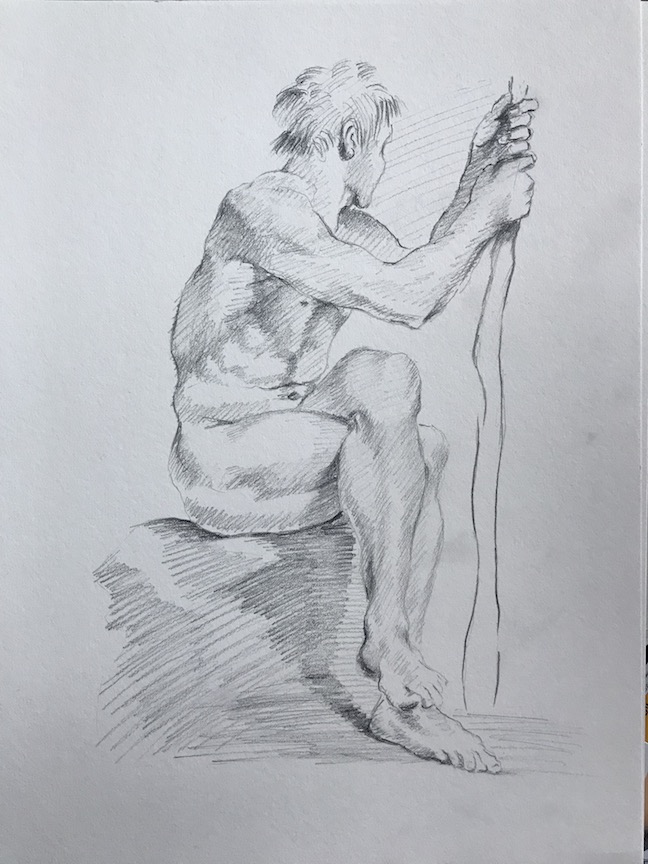
As always, copying masters is an effective way of learning. This time I chose an early drawing by Gian Lorenzo Bernini (1598 – 1680), the father of Baroque sculpture. The drawing, Seated Male Nude, was collected by Princeton Art Museum. I am attracted to this drawing by its succinct use of marks, especially the highlights, so economic and so effective. I tried to draw on tinted paper before, and often ended up drawing a figure on top of the paper, instead of letting the color of the paper show through.

I figured if I wanted to let the paper work, I’d better keep it clean. So instead of jumping on it, I did some practice before hand. For example:

After Bernini, ink on newsprint
After Bernini, pencil on paper

Finally, the copy:

After Bernini, pastel pencil on paper, May 2020

A few notes:

  • I am glad I did those hatchings last week. My lines are still not neat and organized as the master’s (of course), but the hatching practice do help.
  • The preliminary studies paid off (I did more than those shown above). I did a very light-handed drawing first and managed not to disturb the paper too much (less erasing). The final lines are sharper and cleaner this way.
  • I only recently started to pay attention to this issue. In both drawing and watercolor painting, if the paper is too disturbed, it affects the final result. I know some watercolor artist draw on a different piece of paper and then transfer the image to the watercolor paper (carbon paper, light box, projector etc.)
  • I had a lot of fun drawing the effect of an old paper. LOL.

Hatching, Cross Hatching

I love artworks with beautiful lines or expressive brush strokes. Mark making is an art in itself. One good way to practice line quality is to use a non erasable tool. I used a variety of pens before, dipping pen, micron pen, even ballpoint pen. This week I dug out a cheap fountain pen (the type that Chinese kids used in school to learn writing) and some Faber-Castell Pitt pen, and decided to practice hatching and cross hatching.

There are at least two ways to do hatching (cross or not), one is to follow the form to the object (with the direction of the lines), the other is to use one direction only, and let the value changes indicate the form. My plan was to use the latter approach and focus on value studies, but what I found out is that it’s very counterintuitive not to chase the form.

Portrait of Diana, Faber-Castell pitt pen, 9 x 12 in, April 2020
Serge, Faber-Castell pitt pen, 9 x 12 in, May 2020
Self-portrait, fountain pen, 9 x 12 in, May 2020

Faber-Castell is permanent, while fountain pen ink is somewhat water-soluble. I used a little bit water to wash over part of the drawing and reapplied lines here and there.

I find the sound of a pen scratching over paper very therapeutic, and hatching a great way to exercise control and study value.

Life Drawing Gone Crazy in a Crazy Time

I’ve been taking a life drawing class at a community college this year. My professor is great at teaching and extremely knowledgeable about anatomy. This is her last year at the school and she planned a happy ending to her teaching career and a smooth transition back to a full time artist. Now she has to move her class online through Zoom, and for someone who’s not particularly tech savvy, this is not easy. It’s been a couple of weeks now, but our class is still not on track. Meanwhile, she has found some really good materials for us to practice on our own. Here’s a list of stuffs she recommended and/or I’ve been using:

  • Proko – by Stan Prokopenko. It contains some of the best instruction videos on figure drawing. Enough free stuffs, but if you pay, more structured lessons and practice materials. I personally have been using this site for a while, and am a big fan of their Draftsmen Podcast.
  • Love Life Drawing – Great advice for beginners or artist seeking improvement.
  • New Masters Academy – They have a subscription plan that allows access to tons of good art classes or master classes. The free stuffs including many timed life drawing videos featuring photos of clothed or nude models.
  • Croquis Cafe – Videos and photos of models for life drawing. This is probably the closest you can get online to a real life drawing experience. Great models and so many to choose from. My only problem with it is that after they moved to Vimeo, the streaming is less smooth.

This is not just a time for staying in, but also coping, adapting and discovering!

Here’s a quick drawing I did:

Shanon, Charcoal on paper, 18 x 24 in.

Obviously, it asked for more. Hence:

Shanon, Gouache on paper, 18 x 24 in.

More on Color Studies (1) – Verdaccio

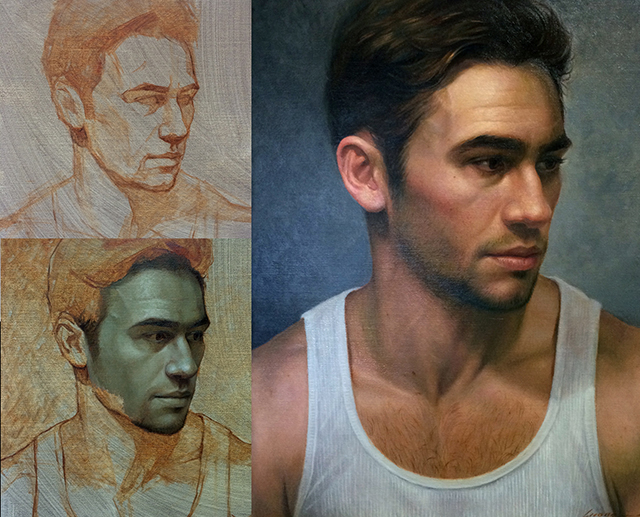
Verdaccio is a greenish gray color achieved by mixing of black (often mars , yellow, and white. It’s used by old masters for underpainting, especially in fresco painting. In portrait or figure painting, the greenish gray served as a complementary to the pinkish flesh color, and it also creates a contrast in temperature. The result is a more vibrant skin tone.

Contemporary artist Cuong Nguyen applies the verdaccio technique to not only oil painting, but also pastel and watercolor, with stunning result.

Here is a poster from his oil painting workshop:

MICHAEL.jpg
Cuong Nguyen, oil painting, workshop poster.

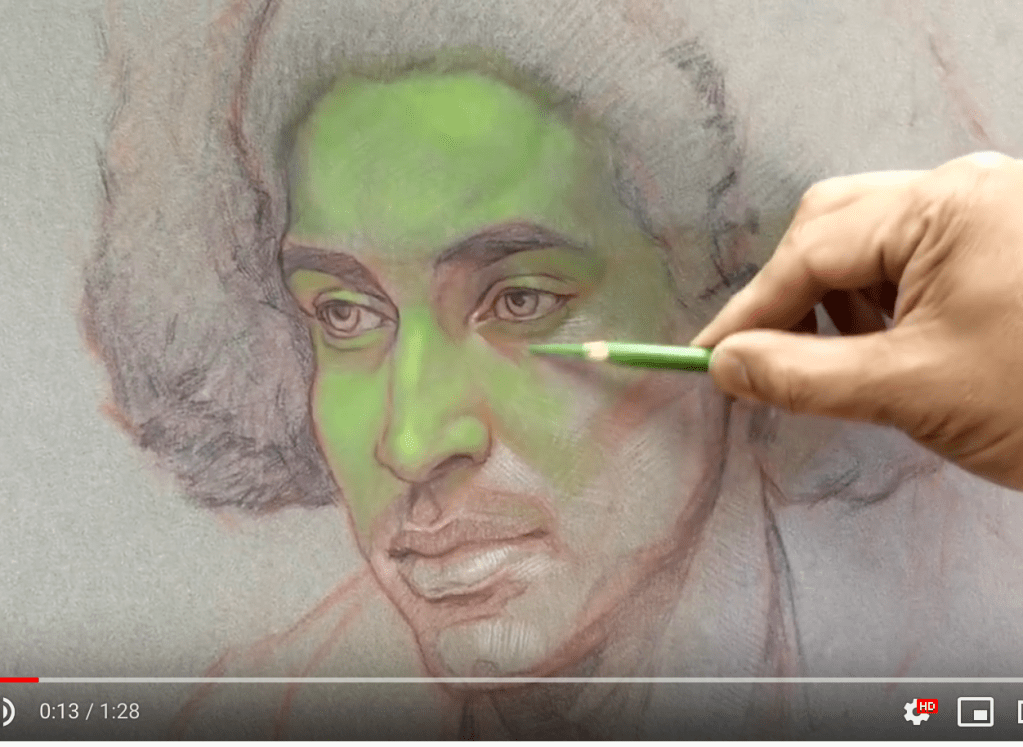
Here is a screenshot from his pastel drawing youtube video:

You can see in pastel drawing, Cuong really pushes the green. Another sample from him:

Cuong_Nguyen_workshops

Don’t be fooled by the layout of the above poster though. This is not a 4 or 5 step drawing. You need to sharpen your pastel pencils, apply lightly, and work many, many, many layers.

I tried this method in a simplified way during a life drawing session, and here’s the result:

Wenda, pastel on paper, 18 x 24 in, 2019

Since camera was not allowed during life drawing, I didn’t record the early stage of this piece. I did start with leaf green, and my fellow artists thought I was going for a Halloween theme. Here are some other things I noticed:

  • CarbOthello pastel pencils are great. Versatility and control at the same time.
  • While it takes many layers to cover the green, a little bit showing through is not that bad. After all, our veins are sort of that color.
  • If you want to achieve Cuong’s level realism, you need a better quality paper to take more layers; keep your pencils sharp (which I totally ignored), and a lot of patience.
  • Be careful about the fixatives. I used Krylon Workable Fixatif. It makes my drawing darker and grainier.

Some day, I’ll try this verdaccio technique in oil.

Copying Masters (8) – Mary Cassatt

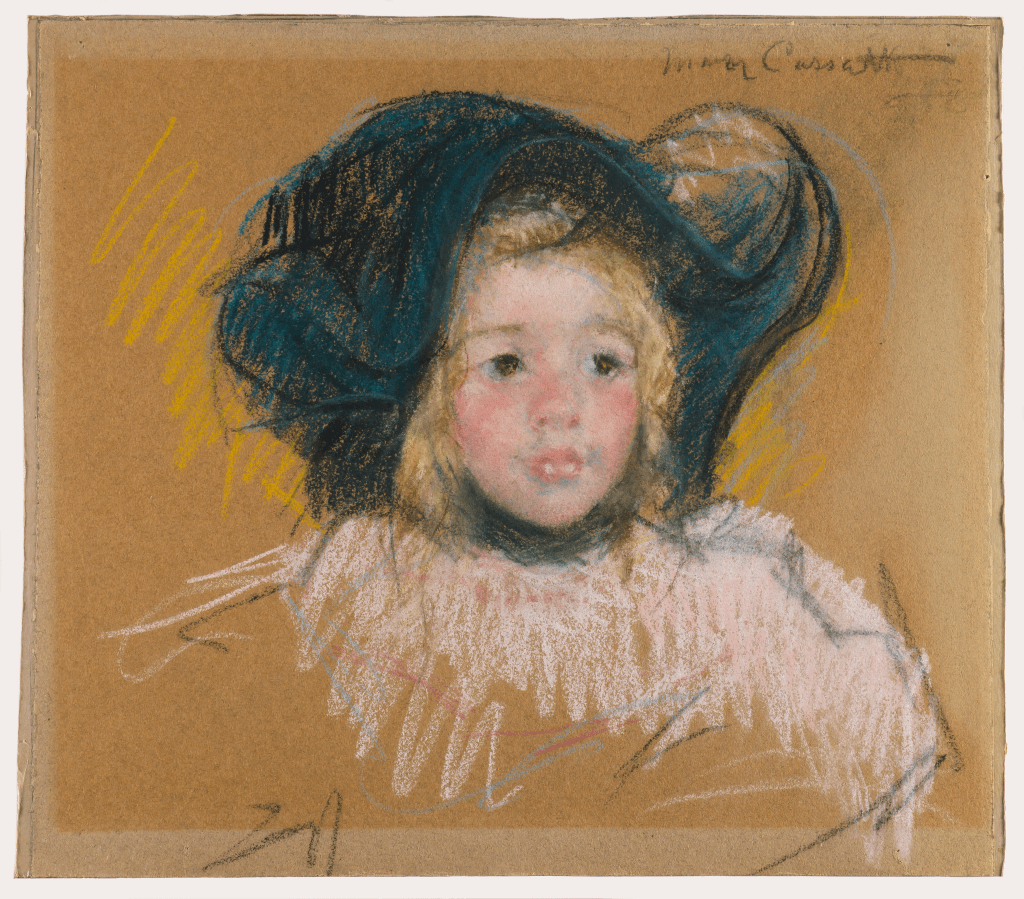
A couple of years ago, I went to Degas, Impressionism, and the Paris Millinery Trade exhibition at the Legion of Honor Museum in San Francisco. Among the 40 Impressionist paintings and drawings about French fashion, American artist Mary Cassatt (1844 – 1926)’s pastel drawing made quite an impression on me. The gentle and soft gradation on the face of the little kid is surrounded by quick and dynamic lines, showcasing of the caring nature of a woman and the expressiveness of an artist.

The original:

Mary Cassatt, Head of Simone in a Green Bonnet with Wavy Brim (No. 2), c. 1904, pastel on paper, 16 x 17.875 in.

My copy:

Pairs (II) – Color or No Color?

Park in Beijing, Ink drawing
Park in Beijing, micron pen on sketchbook
ink drawing with watercolor glaze
Park in Beijing, mixed media on canvas

I did a sketch with micron pen while traveling in Beijing many years ago. I quite like the result, but also wondered what it would look like with some color. I didn’t want to paint over the drawing, fearing that I might ruin it. So this was the solution I came up with:

  • I first made a photocopy of the drawing.
  • Then I transferred it onto a canvas (‘Glue’ the photocopy onto the canvas with acrylic medium and scrubbed off the paper when it’s dry. The image will stay.)
  • Next I glazed over the image with watercolor. The surface was not comparable to regular watercolor paper, so I only did a few layers of light washes.
  • When it’s bone dry, I varnished it with acrylic medium (gloss). I didn’t know there were spray-on varnishes back then, so I brushed on the medium, It did disturb the paint a bit, but since it’s very dry and very light layers, it’s not that bad.
  • Since it’s varnished, I could hang it without glass. And I still have my original sketch! 🙂

Try New Things (2) – Ballpoint Pen

I’ve seen many people doodling and sketching with ballpoint pen before, but I never tried. I like the flow and the fineness of a micron or sharpie better. A ballpoint pen is just something you use for it’s conveniency and economy, right? How far can you push it as an art tool? Well, according to British artist James Mylne, this far:

James Mylne (b. 1981), Polo Pony 1 (2008), Ballpoint pen on paper

Look at the range of values a single Bic Cristal could deliver!

No, I am not going to attempt that. I have neither the skill nor the patience. Mr. Mylne’s drawings average 60-100 hours per piece, with the longest 310 hours. While photorealism is probably always time-consuming regardless of the medium, ballpoint pen is extremely tricky because it’s a one way street. You can only go from light to dark, no erasing, no lifting, no painting over.

Still intrigued, I decided to at least give sketching with the Bic a try:

Portrait of a man, ballpoint pen
Portrait of a man, ballpoint pen, 2019. Model from NMA.

And here’s what I learned:

Compare to micron or sharpie, the touches are closer to those of using a graphite pencil. Especially in shading, with good control, you can go lighter than an ink pen, and build up a wider range of values.

Just like a micron or sharpie, since you can’t erase, it exposes all the weakness in your drawing. You need to be mindful about each mark throughout the working process. Scary, right? But also good learning opportunity. If there’s a unwanted mark, the only remedy is to work it into the drawing somehow. This is challenging, may not be possible sometimes, but lots of fun. A few missteps can lead to something unexpected:

Portrait of Jorgie, ballpoint pen
Portrait of Jorgie, ballpoint pen, 2019 Model from Croquis Cafe

Don’t forget to keep a tissue paper handy because you need to constantly remove the buildup at the tip.

By the way, do check out James Mylne’s gallery. It’s not just photorealism, but also a lot of humor.

Copying Masters (1) – Gustave Courbet (1819 -1877)

I believe if there’s a shortcut in learning art, that would be copying masters. It forces me to look at each piece so closely, I start to see not just their composition, color or value choices, but also the procedures in execution. It helps a lot in thinking through and carrying out my own work. I just wish I could do more and more often. [*Most of the copies in this series were done a while ago and the link to the “original” was not necessarily the reference I used at the time.]

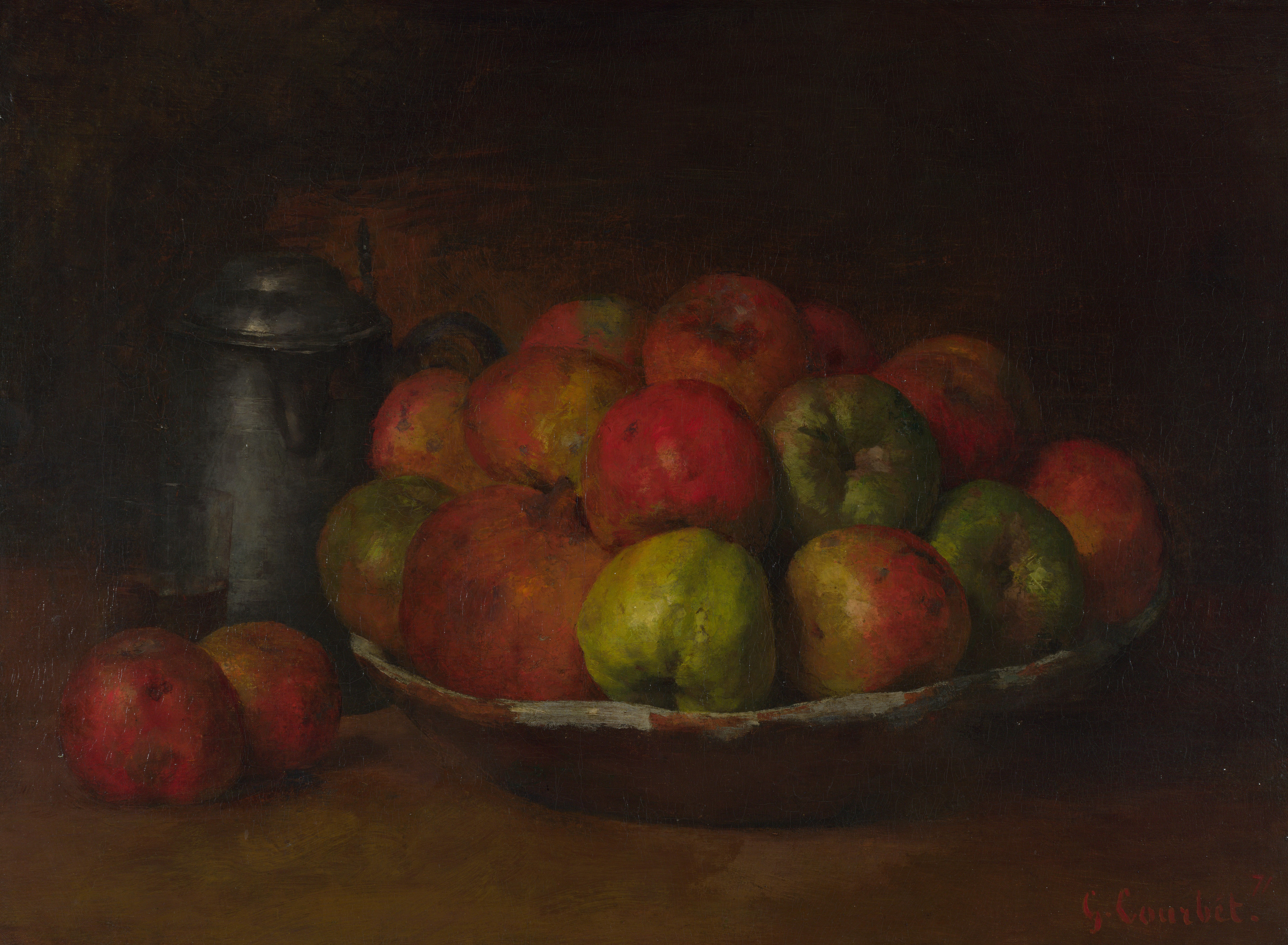
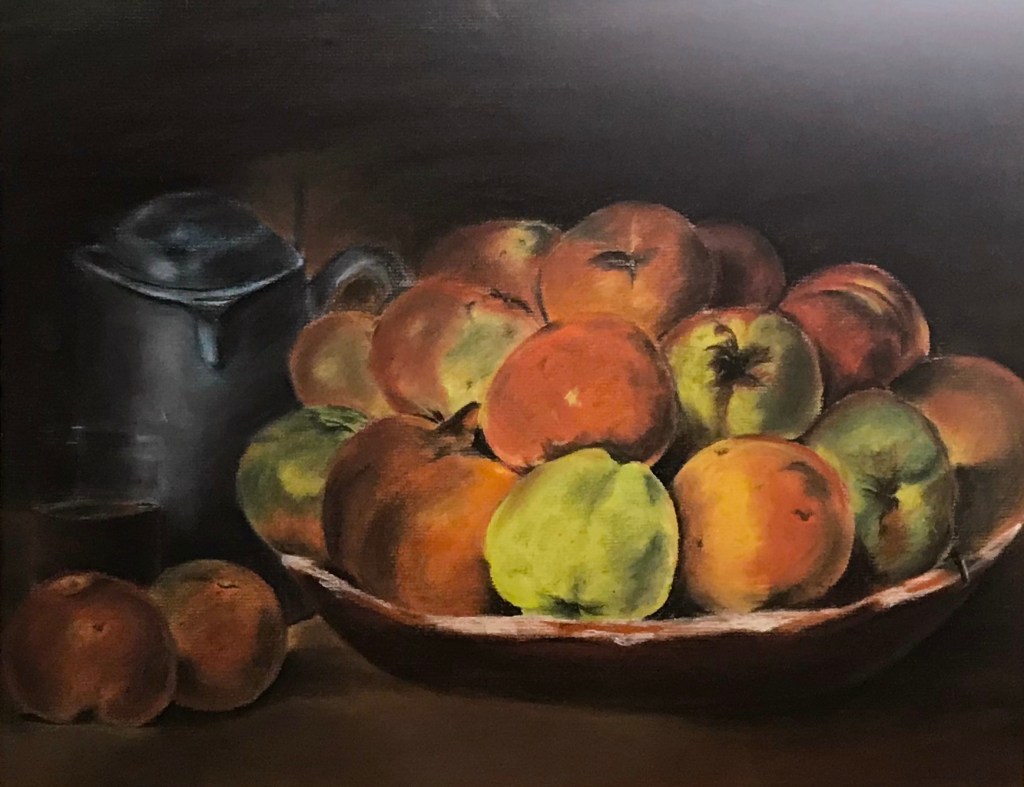
The first one is an assignment from a years ago drawing class. Courbet’s (French painter leading the 19th century Realism movement) original is an oil painting, and my copy is done with soft pastel.

Courbet’s (from Wikimedia):

Still Life with Apples and Pomegranate Oil on canvas 17 3/8 x 24 in (44 x 61 cm)

My copy:

What I learned is that pastel is a powerful and versatile painting tool, but it takes patience to build it up. Secondly, it’s not easy to “let it go.” Certain things meant to fade into the background or merge with the environment, but it takes skill and vision to achieve that.