Speeding things up …
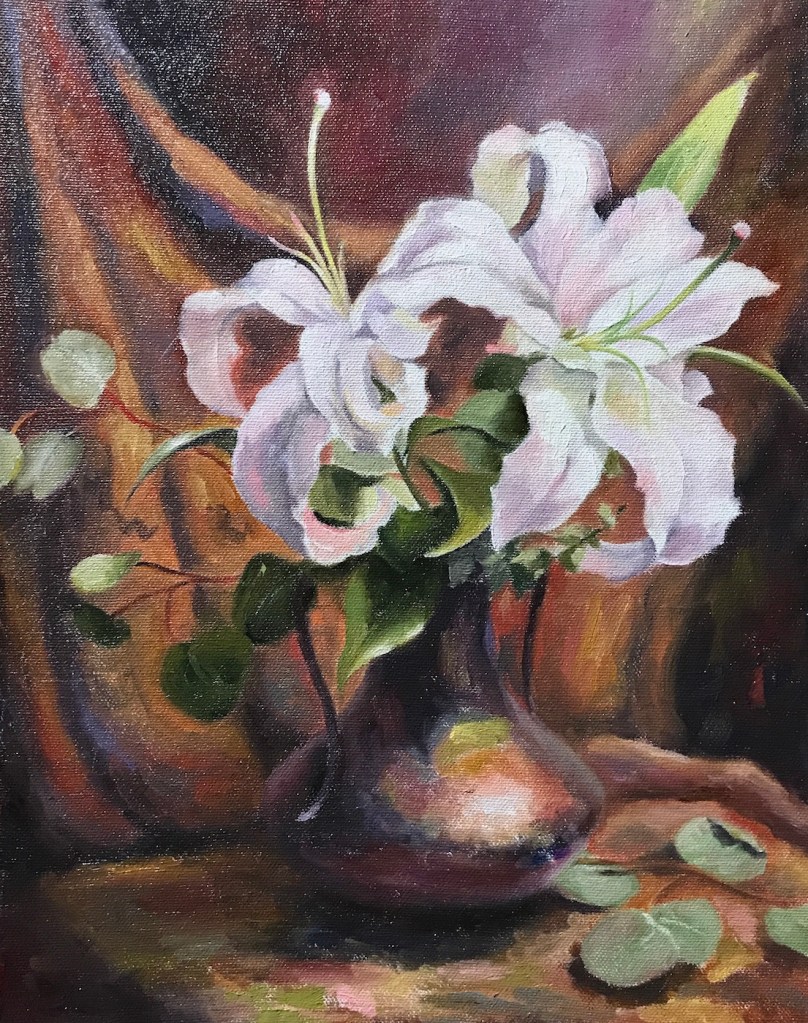
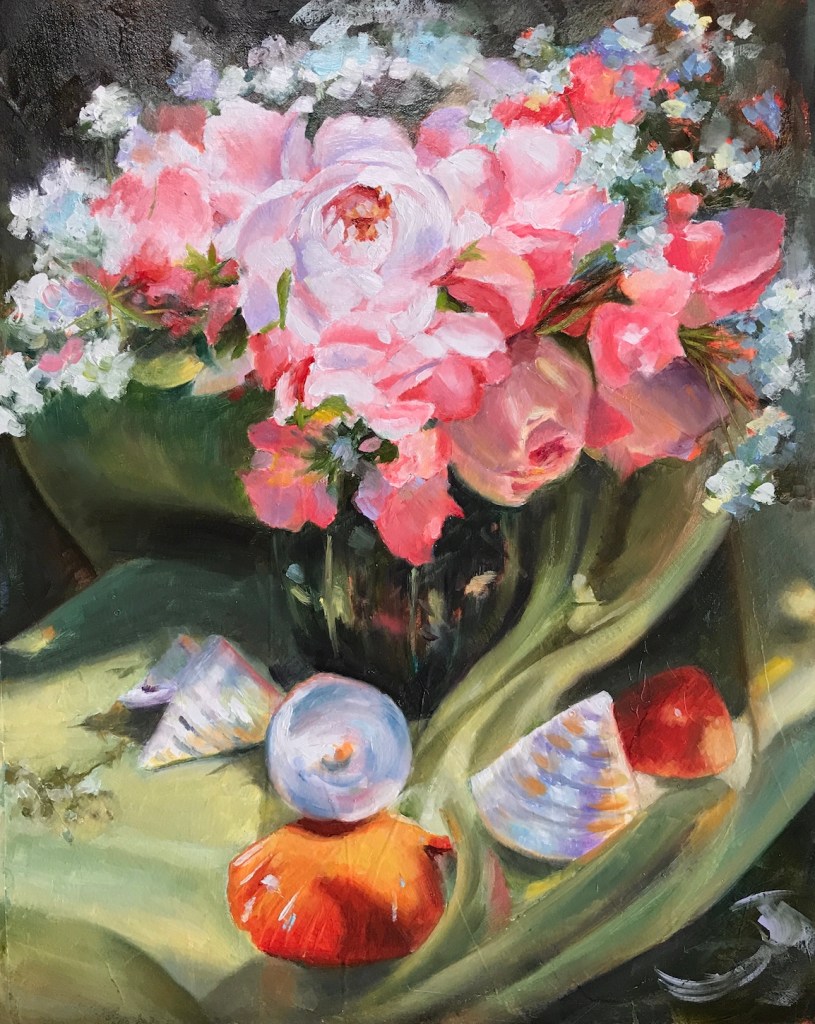
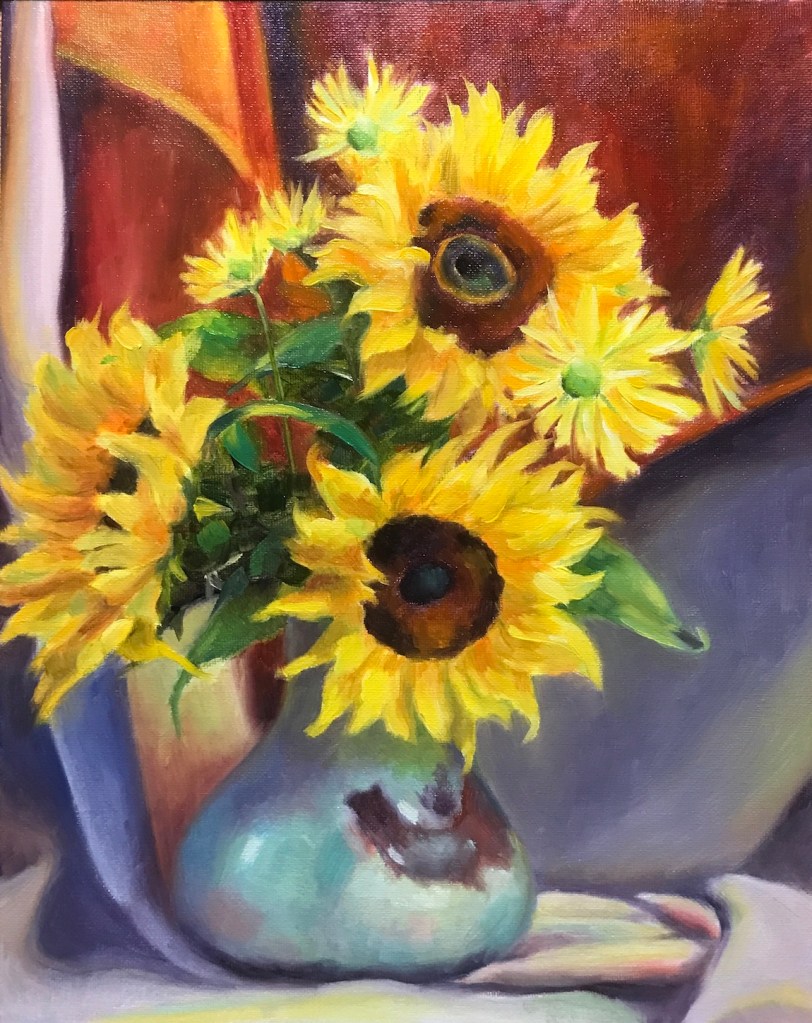

The first one is a Zorn palette without time limit, and the rest are supposed to be gesture with an open palette. My plan is to finish the still life course soon, and I will write more about it when it’s all done.
Speeding things up …
The first one is a Zorn palette without time limit, and the rest are supposed to be gesture with an open palette. My plan is to finish the still life course soon, and I will write more about it when it’s all done.
2022 for me is not only moving on from the beloved Zorn palette, but also a broadening of the subject matters. The plan is to keep practicing portrait and still-life, with an emphasis on loosening up and becoming more gestural. Meanwhile, I will add landscape and later figures to the learning schedule. For medium, oil is the focus for now, but I’d like to do more watercolor sketches with or without ink.
Here are some my recent homework from Watts:
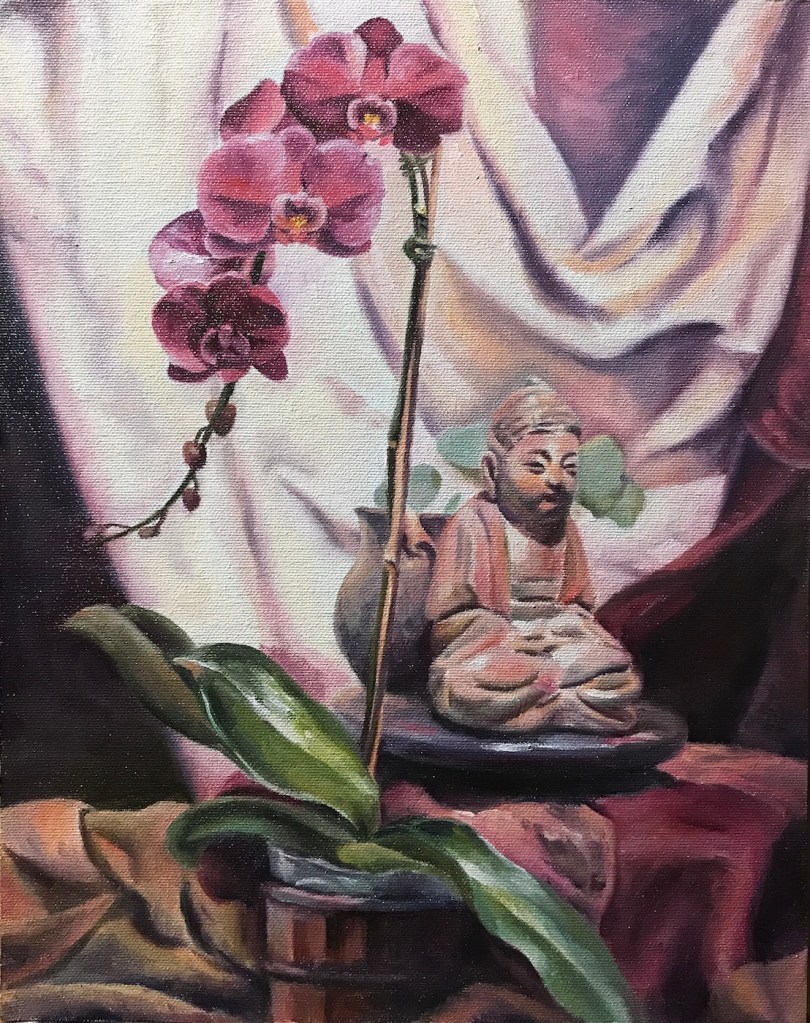


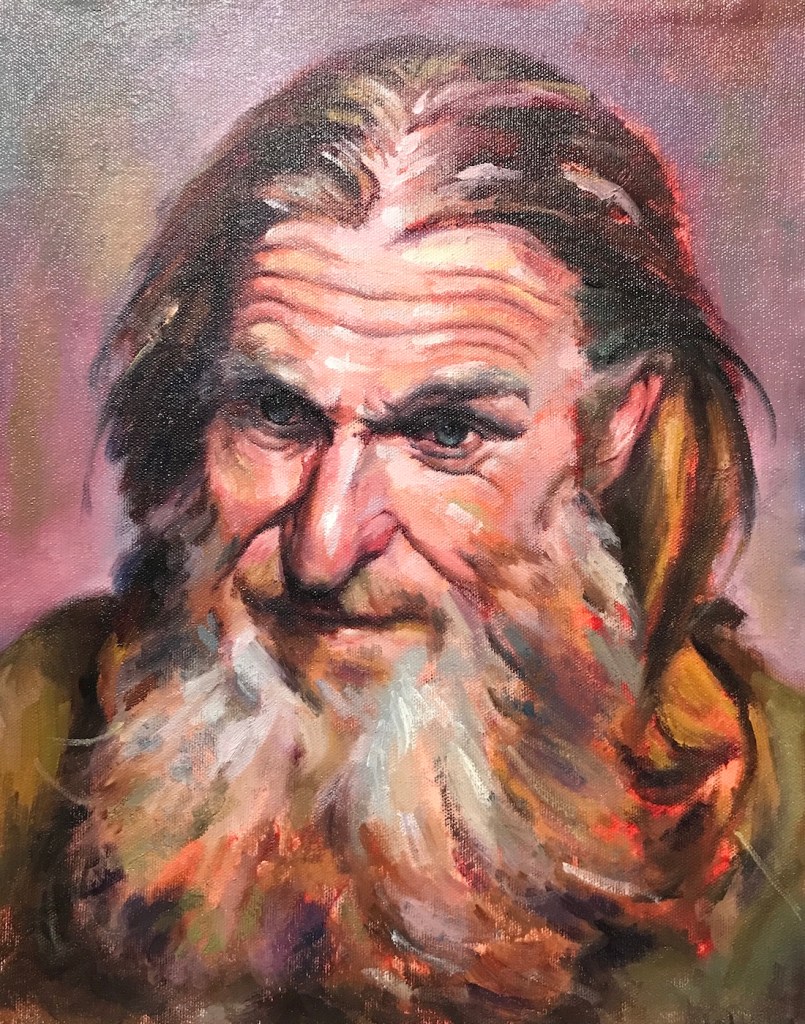
A few notes:
Zorn is not the only limited palette used by artists. Well-known landscape artist Scott L. Christensen stayed with lemon yellow, cadmium red, ultramarine blue and white for many years, and his method has many followers. Presidential portrait artist Mark Carder teaches a palette of 5 colors, permanent alizarin crimson, cadmium yellow pale, french ultramarine, titanium white and burnt umber. Karen Blackwood painted her award winning coastal sceneries mainly with alizarin crimson, cadmium yellow pale, ultramarine blue, titanium white and viridian.
It’s not hard to see that all these are some versions of the primary colors. Replacing Zorn’s ivory black with Ultramarine and yellow ochre with a brighter yellow allows a more chromatic and less muted approach to painting.
Using a limited palette doesn’t mean you can’t use other colors. The above mentioned artists, Zorn included, all supplement their palette whenever necessary. Limiting color choices is to create harmony and in training, helps us focusing more on values. Eventually, we need to listen to the painting itself for what color comes in.
I have been staying with Zorn for months now, and it serves well for portrait painting. As I moving on to more still life and floral paintings, I began adding more colors to my palette. Zorn is still my starting point and foundation for each painting. Here are some recent exercises from my Watts classes:
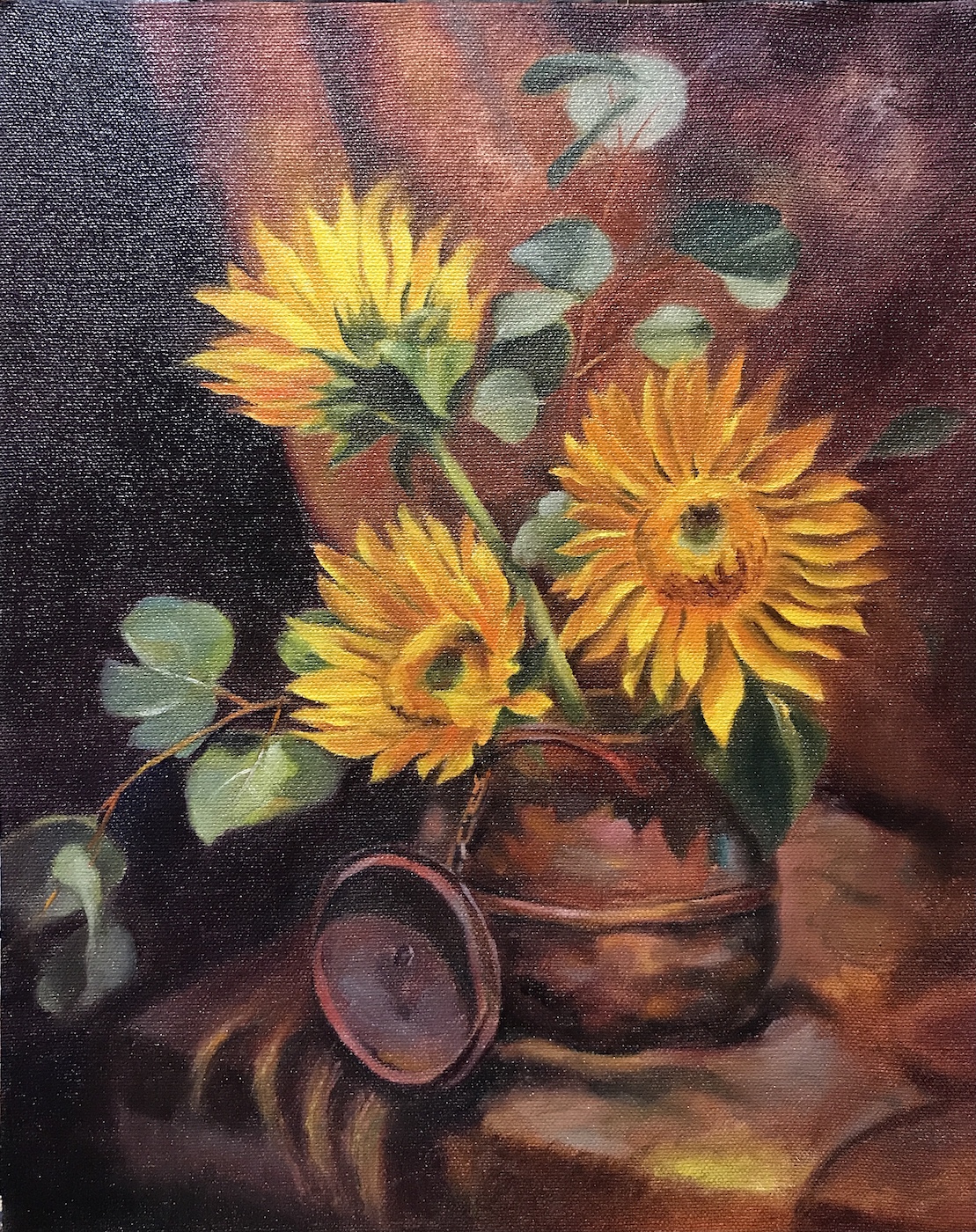
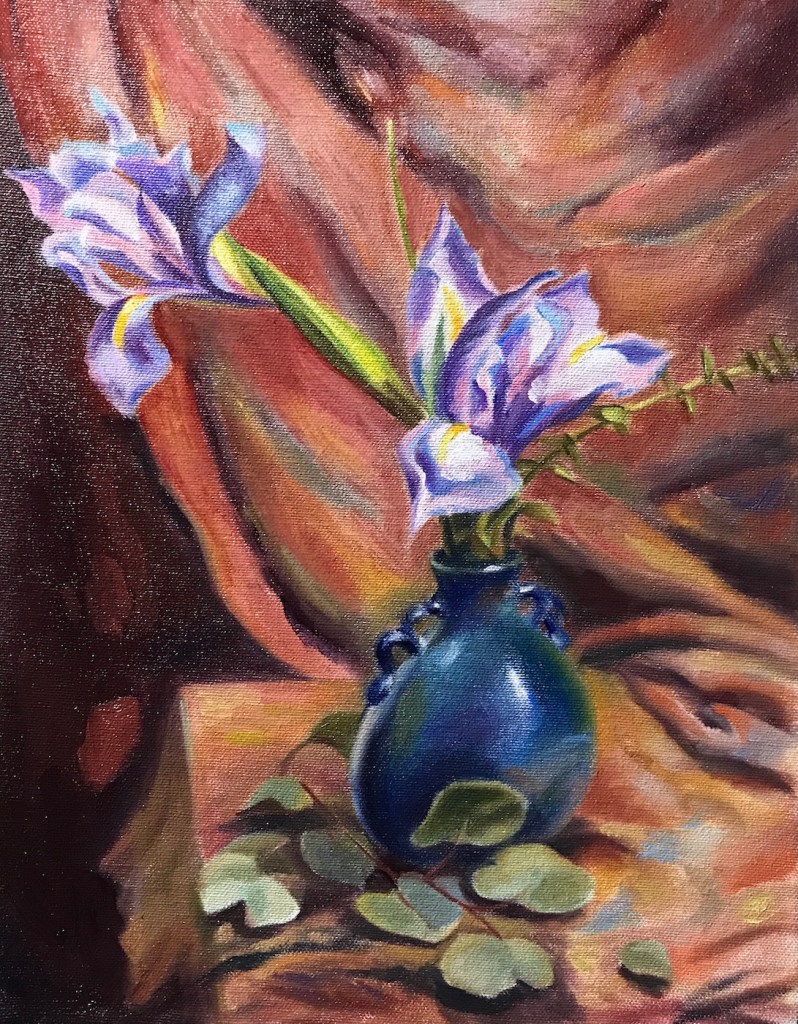

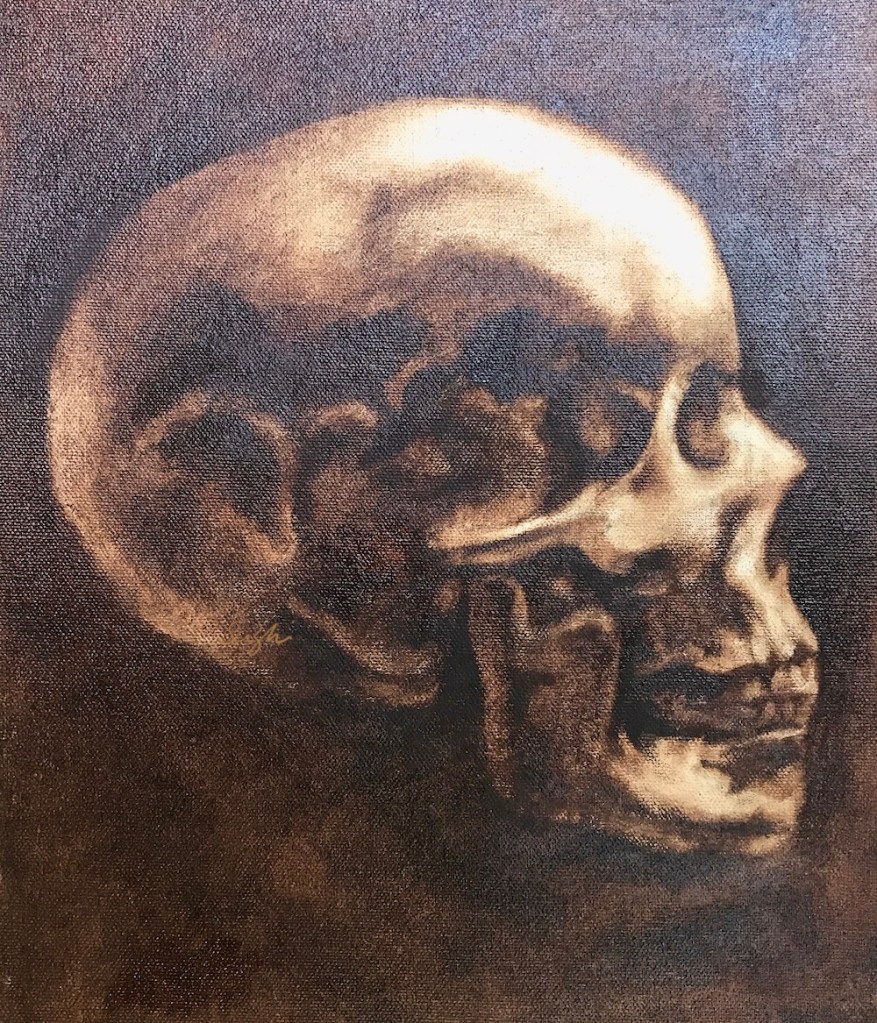
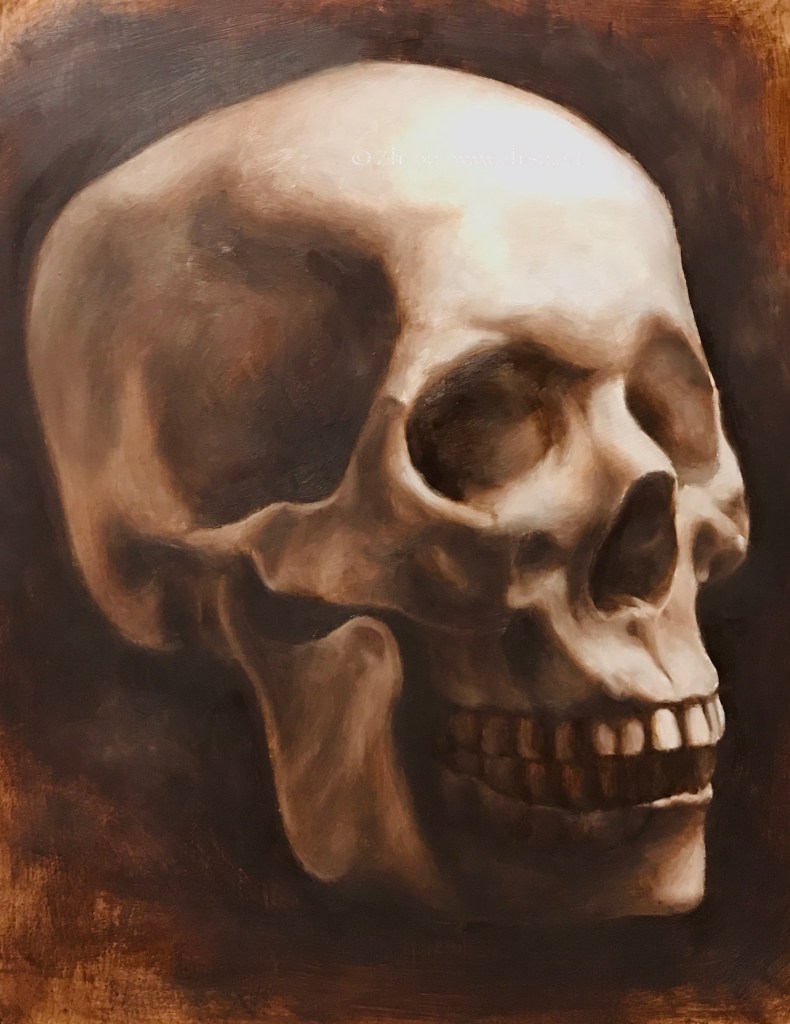

A few notes:
After some deliberation, I signed up for Watts Atelier‘s online program in July. The program has a drawing and a painting part, and both start with the basics. There are video demos, handouts, and homework to turn in. It is probably good enough for the money even if you just watch Jeff Watts doing the demos, but you don’t want to skip anything to do it right. That is to say, it is not a small commitment.
Here are a couple of paintings from the Phase I Portrait and Phase I Still Life homework:
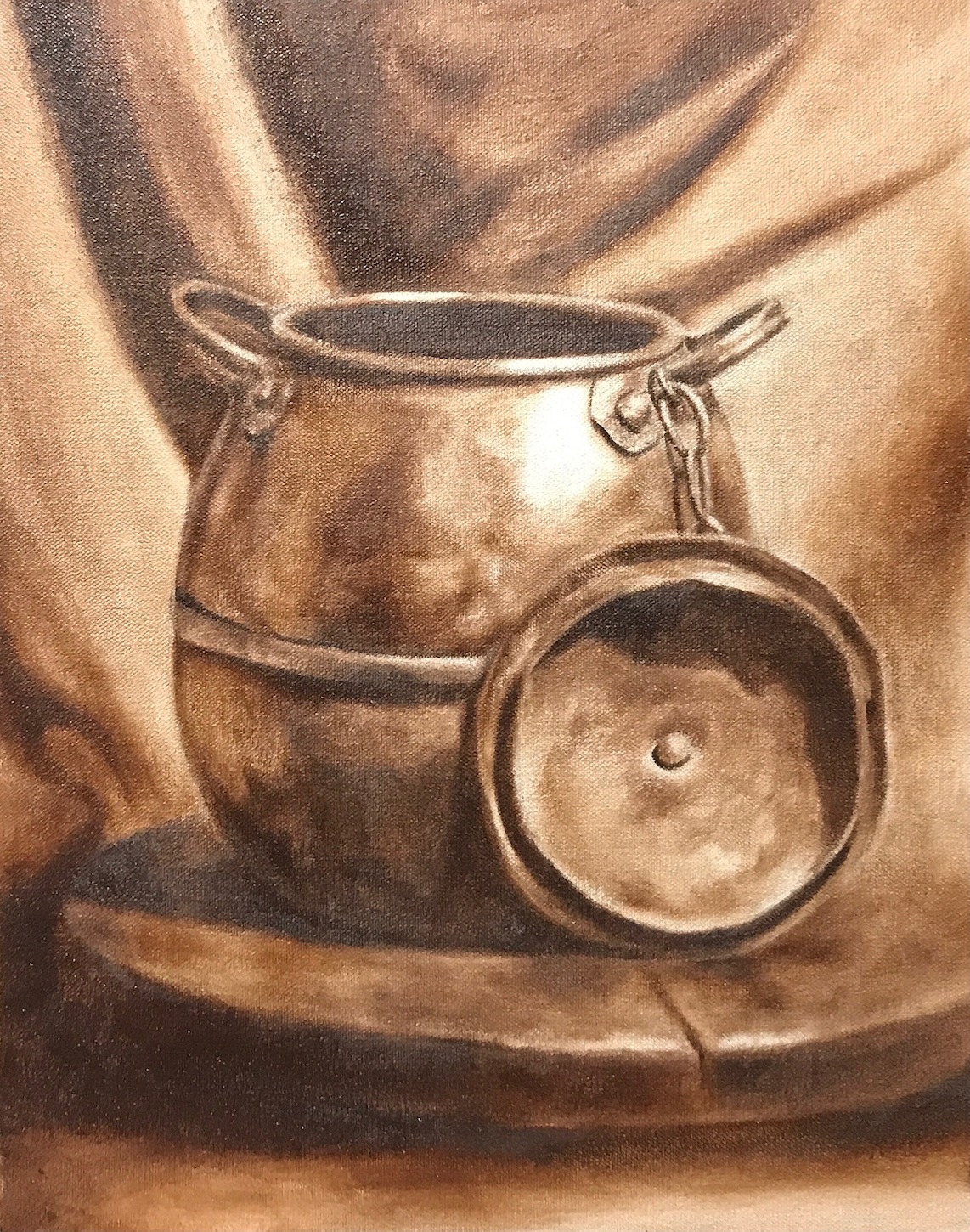
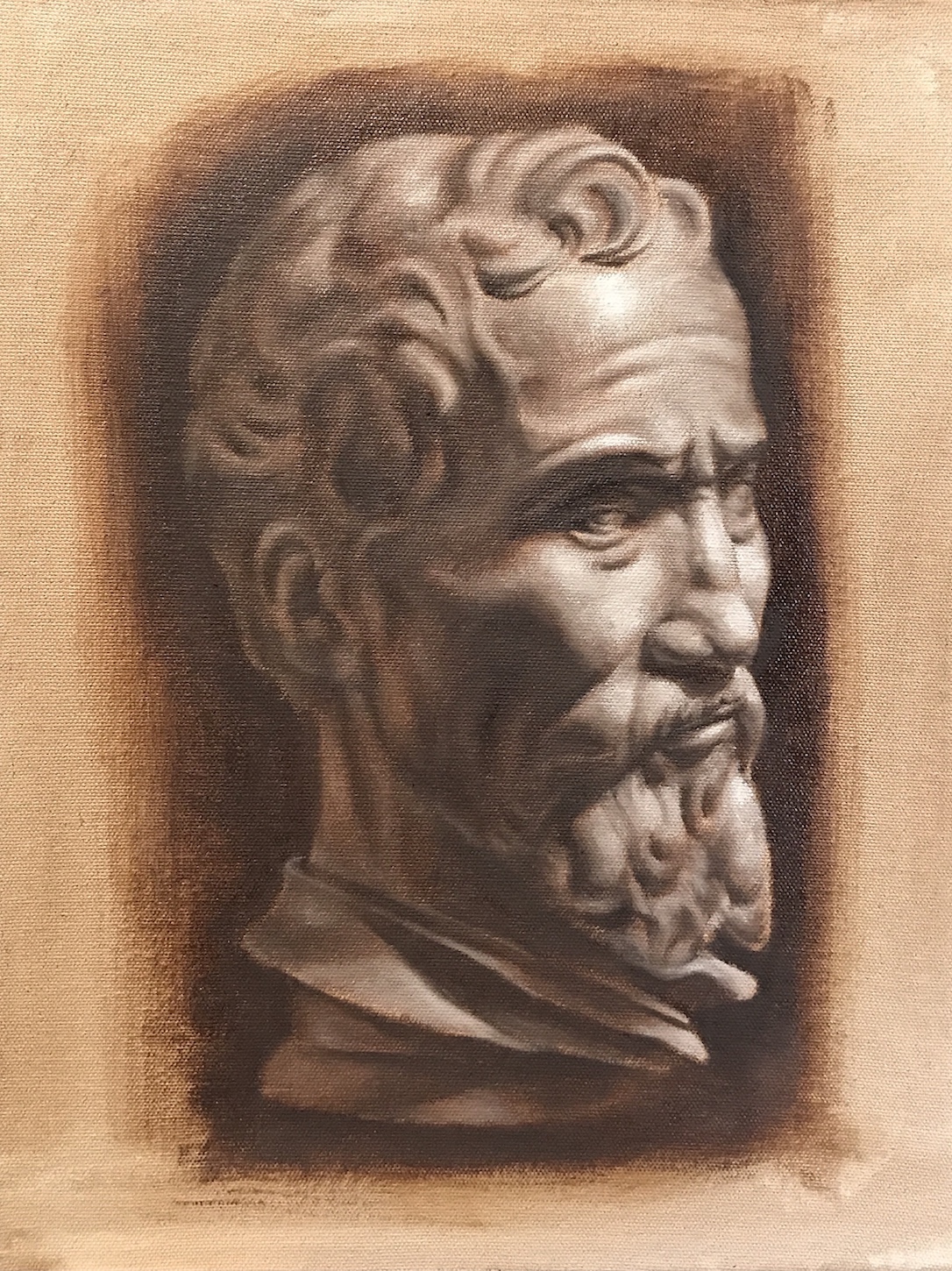
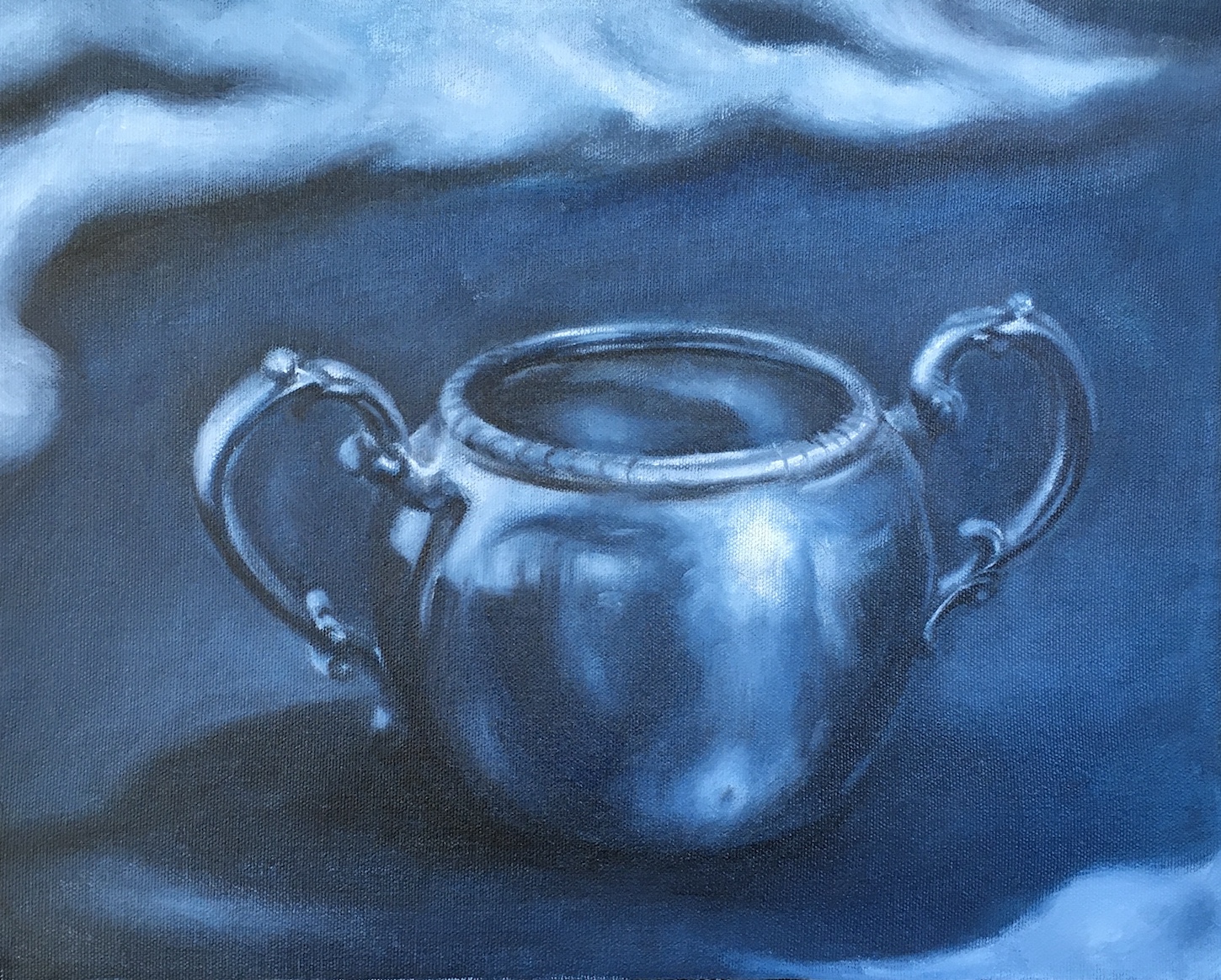

A few notes:
The rich colors of the season remind me of a series I did years ago. It consists of four still life paintings, done in watercolor and ink pen. It was the first series I ever did and was done before I had any appreciation of doing things in some sort of consistency. My natural inclination is always jumping around among different things.
As I have better understanding of the creative process, I start to see the benefit of staying for a while with a particular technique, a color theme, a subject matter, a design concept, etc. It reenforces your strength, challenges your thought, and often leads to new discoveries.
Anyways, here they are:
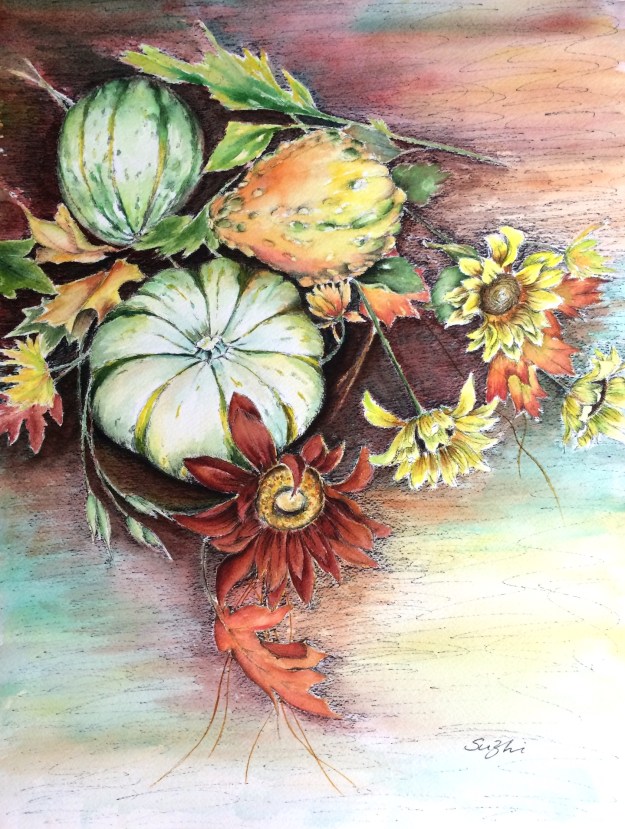
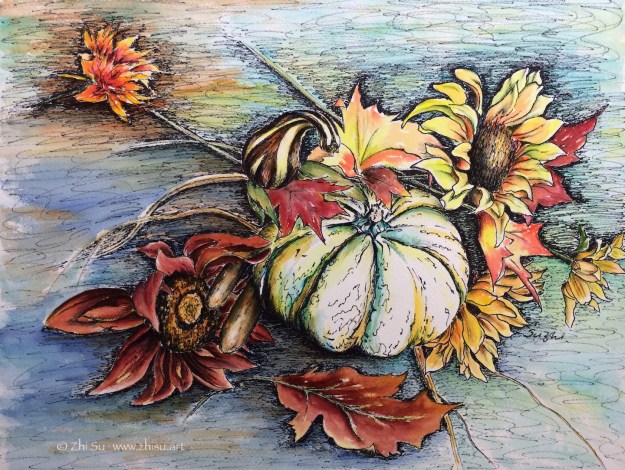
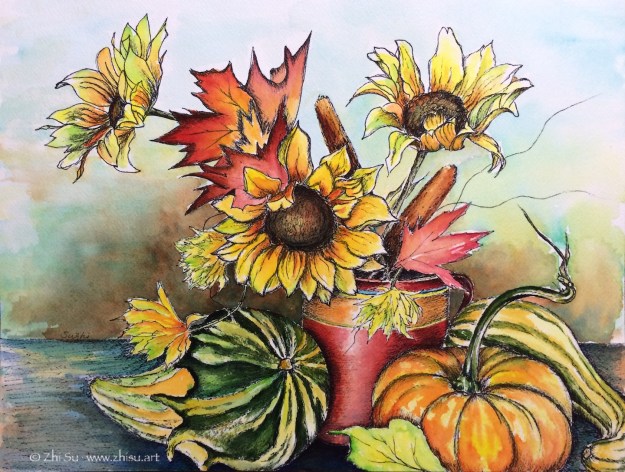
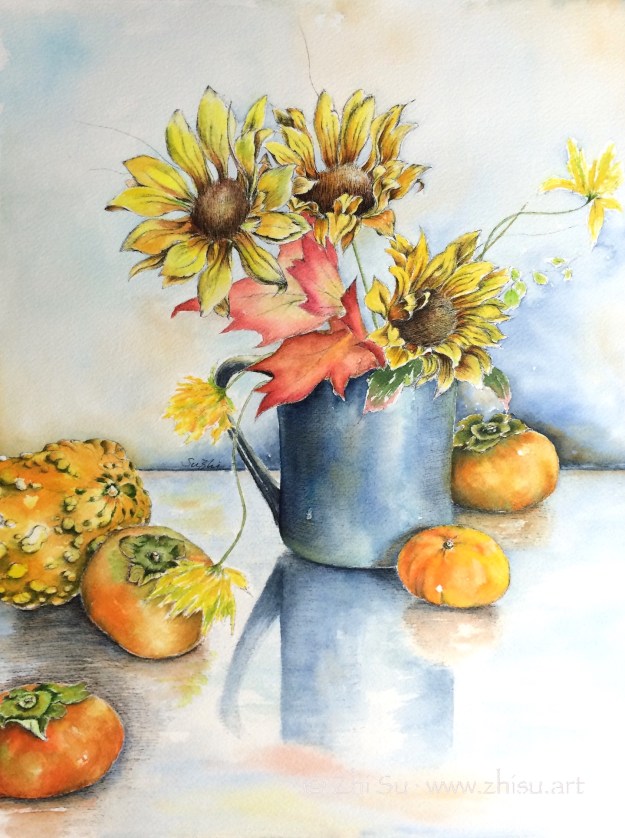
The things that connect this series are techniques and subject matters. I set up some “fall” related objects and chose four settings. They are parallel to each other in terms of relationship. Another way to develop a series is to derive new pieces from the old one. I am in the process of an experiment of that and hope I will be able to show it soon.
I recently became a member of the Pacific Art League and joined their 99th Anniversary Exhibit, “Beyond 2020.” My painting “Sail” was selected into the gallery show, and will be on view at their Palo Alto gallery till January 2021. Here’s the piece:
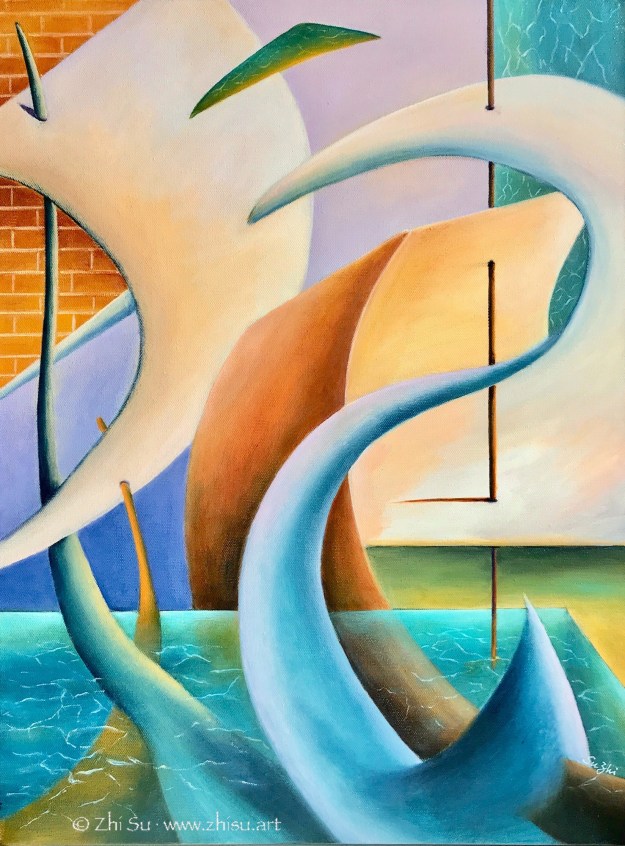
The painting was inspired by a still life study I did before:
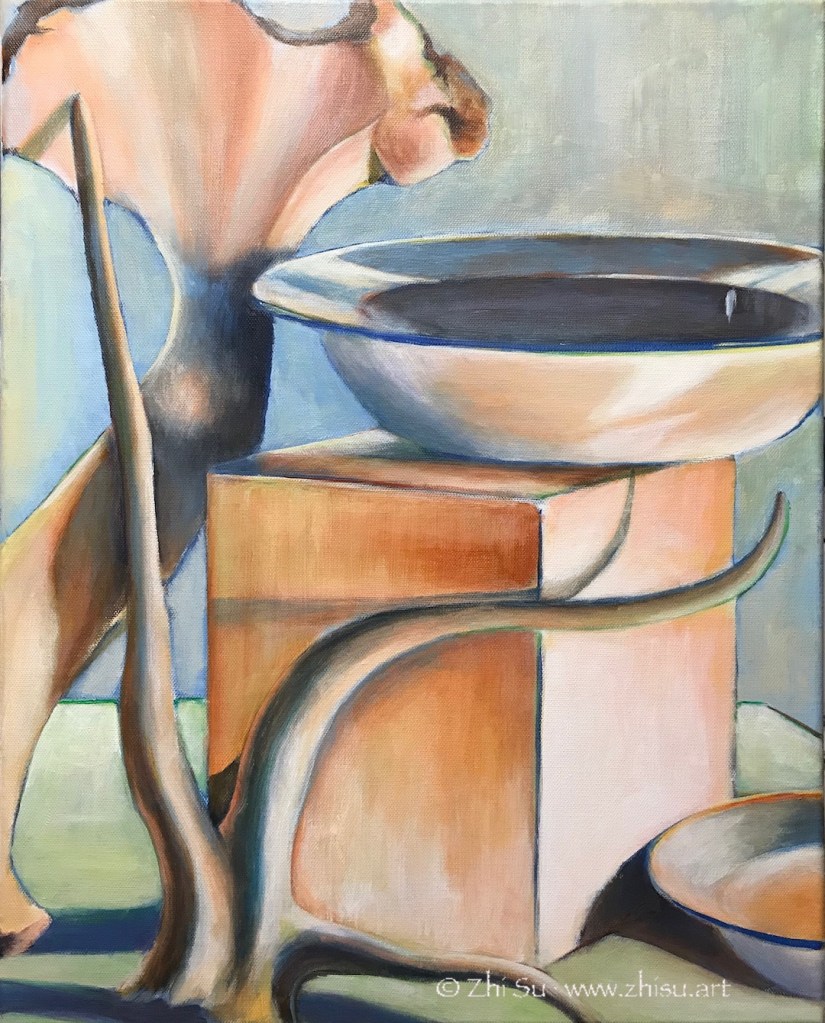
My still life study was focused on how to paint white with color, but I found the way the lines curved, meandered and crossed very intriguing. After the painting was done, I kept looking at it and tried to follow those lines in my mind and in my sketchbook. The objects gradually disappeared and the lines and shapes led me to new ideas, and eventually, a new painting.
As I mentioned before, the paintings of Giorgio Morandi (1890-1964) often have a monochromatic look, even though he used a lot of colors. The result is a very restful and understated effect – something I always find difficult to achieve. Usually the more time I spent on a piece, the more colorful it becomes, as if keeping quiet on canvas or paper is against my nature. The same goes with details and edges. The more time spent, the more definition, and the looseness and gestures are lost.
So I tried a couple with limited time and clear goals. 1)No more than 2 hours per piece; 2) limited palette to create near monochromatic effect; 3) less definition; 4) lost edges; 5) be quiet.
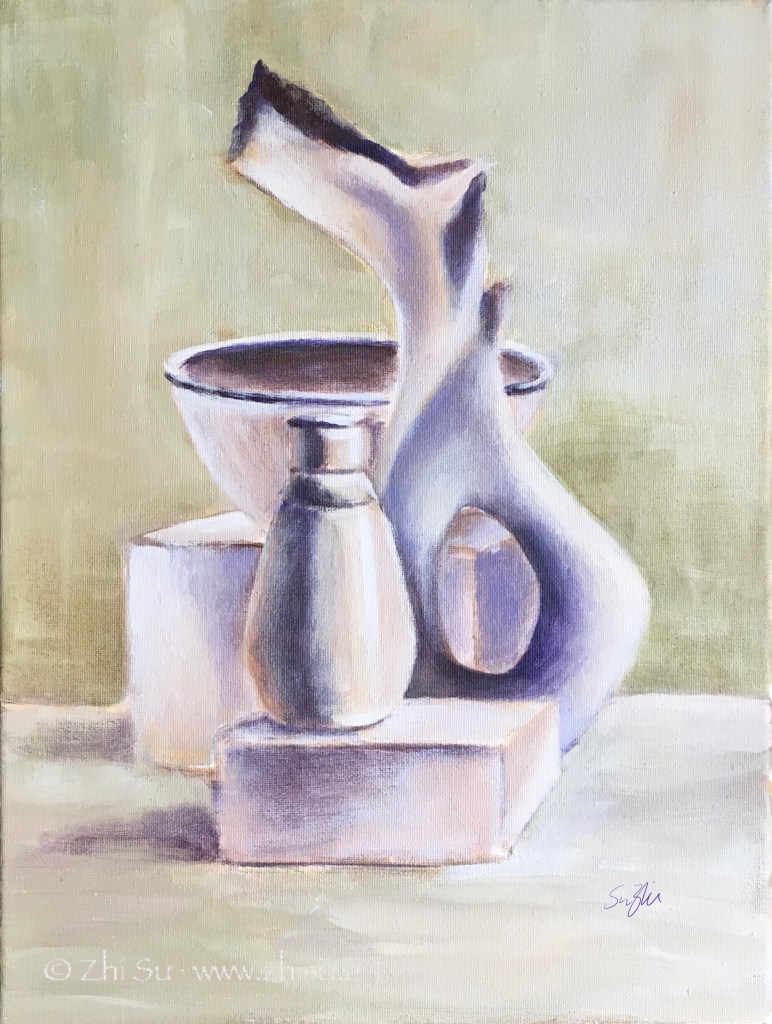
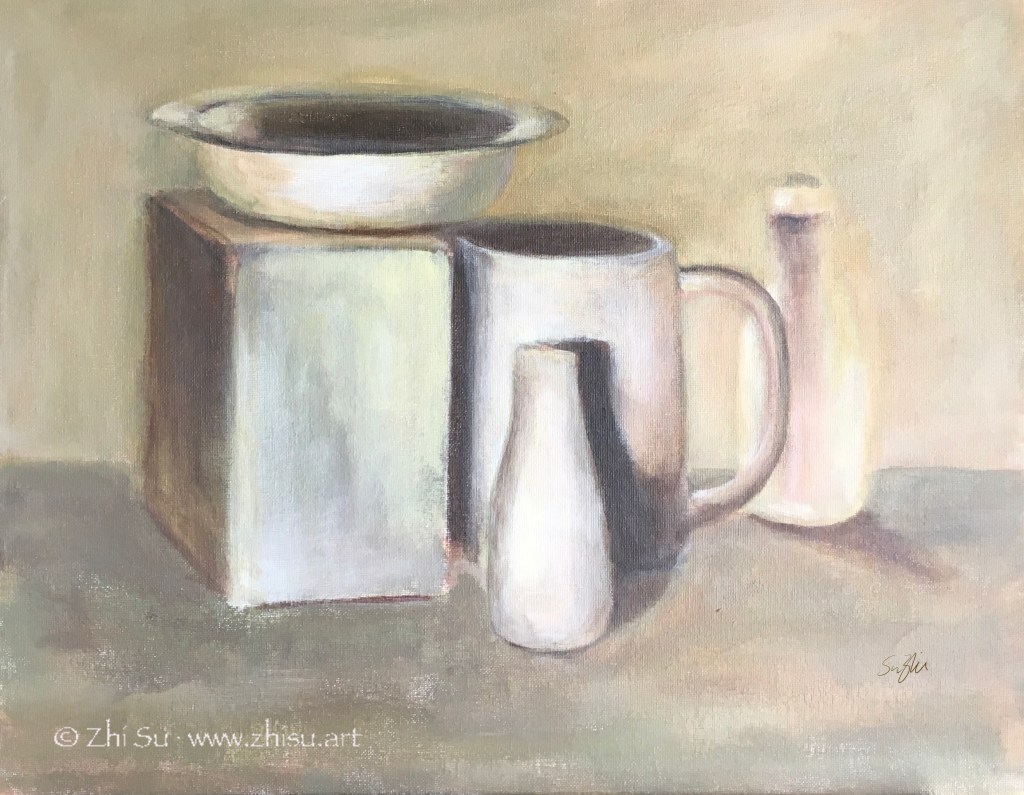
I think goal setting with time restriction is an effective way of practicing. Right? :))
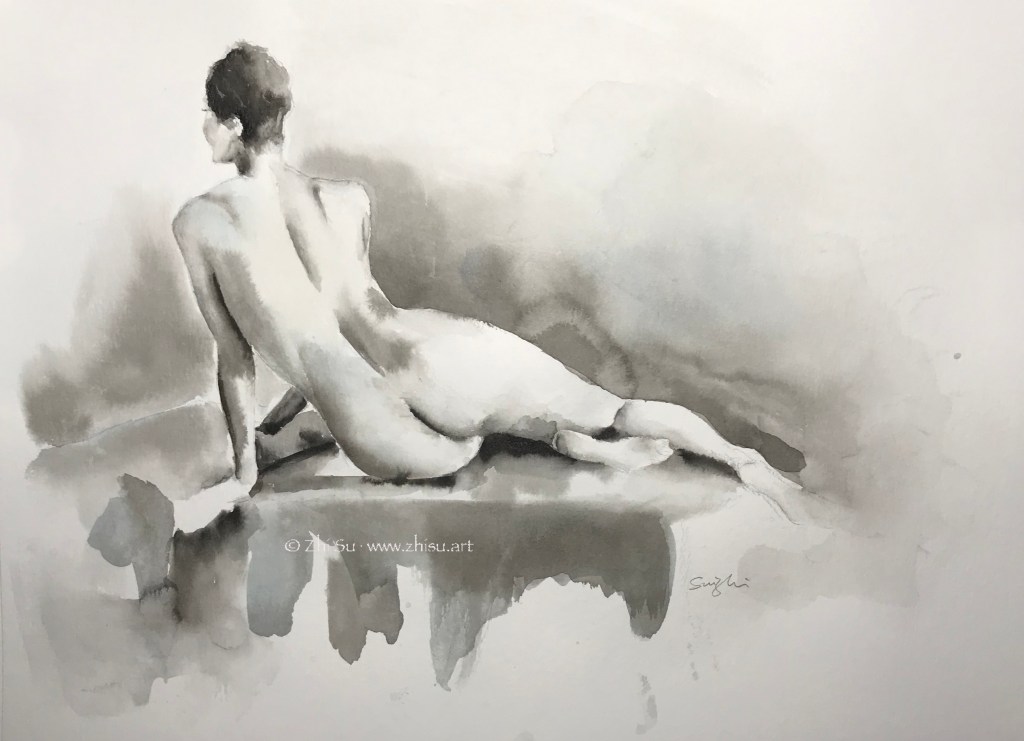
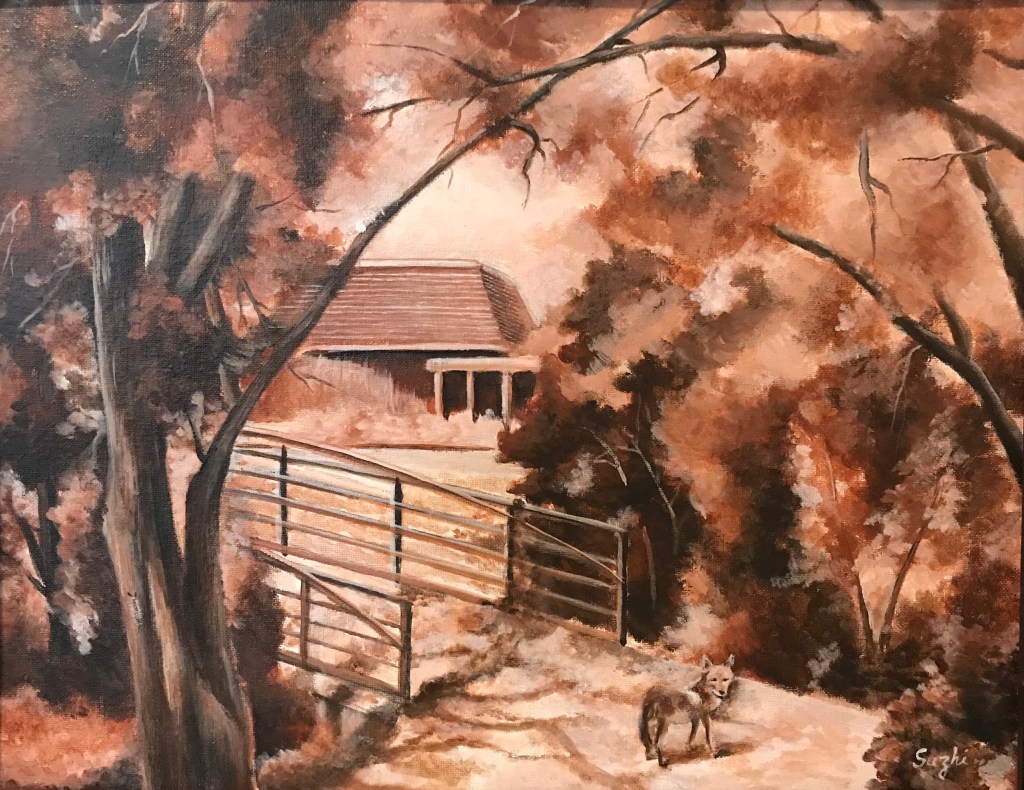
Of the three components of color, hue, value and saturation, I personally find value the most difficult. Colors are attractive and distracting, and it could be difficult to discern values accurately from all the colors in front of us. Monochromatic painting is a great way to train your eyes this way.
In traditional Chinese brush paintings, many of which are monochromatic, it’s the value changes through the control of water that create the art. I took a few lessons of Chinese brush painting one summer, and lessons were mainly copying old masters. This is one of the paintings I copied:
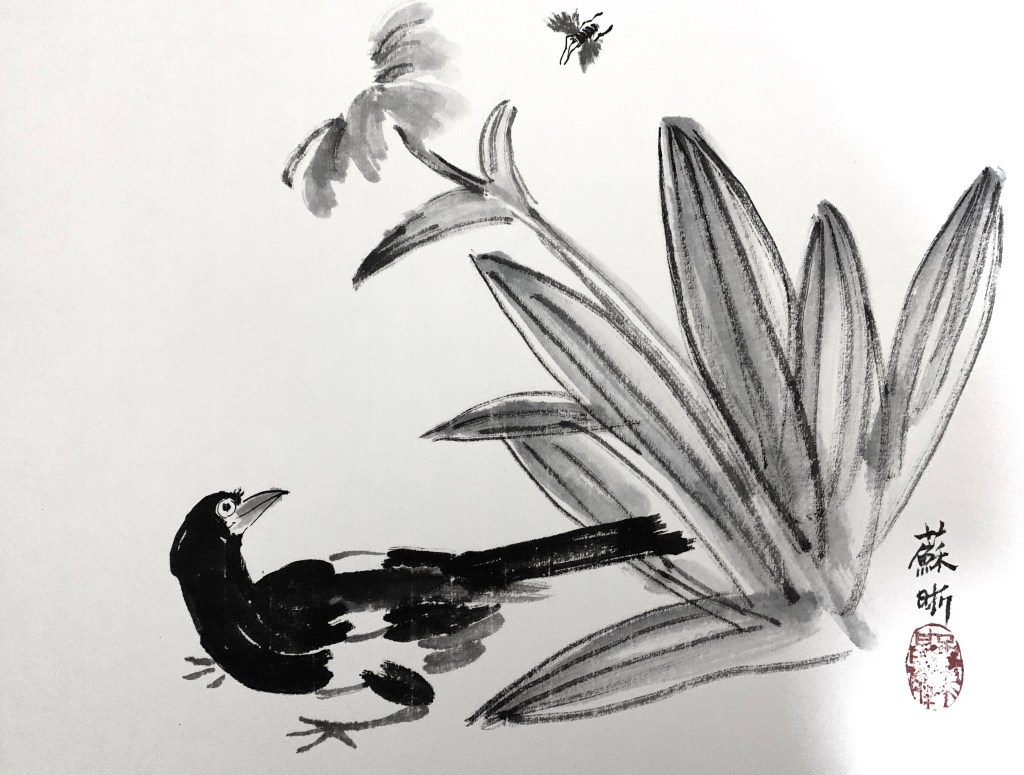
Monochromatic is a good strategy when time is limited. In life painting, it saves the trouble of finding the right skin color and allows me to focus on value and shape.
In landscape scene with overwhelming branches and leaves, monochromatic approach simplifies the view. This plein air was done in burnt sienna. I included some of the visitors I had during the painting – out of proportion, I know, but a lot of fun.
More than often, monochromatic painting is used as underpainting. It serves as a value map, but also allow some color strategies. (I found this post by Mitchel Albala very helpful.)
Another approach is to do a monochromatic underpainting, and glaze over it with transparent colors, often times many layers. For acrylic, that means adding quite some medium to the color. My selfie is done this way – dozens of layers. I have to admit, I doubt I will ever use this method again. Too tedious.
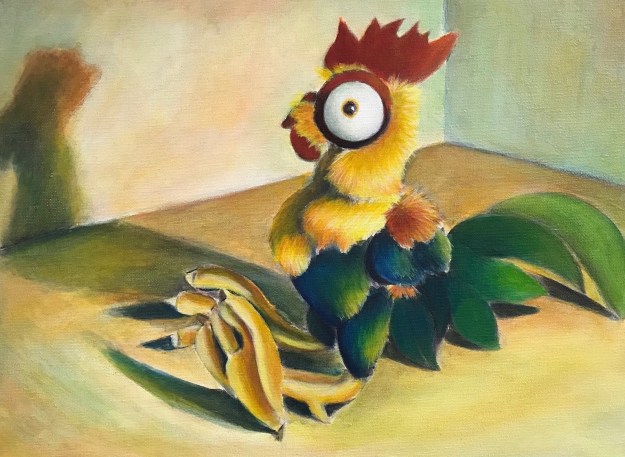
I think in theory it could be done with watercolor too, for watercolor is transparent in nature. Even the opaque ones, with enough water, become transparent to some extent. From what I heard, to glaze in watercolor, the key is to wait for the underpainting or the previous layer really really dry, bone dry. Maybe someday I will try it.
A most common way to practice complementary colors is simple choose a pair and limited your palette to those two (plus tints, shades, mixtures maybe). Like this:

Whichever pair of colors we choose, it is most likely one warm and one cool. In a painting lesson I took years back, we used the complementaries a bit differently. We create a painting in cool colors, and paint the warm complementaries on top. Here’s the result:

Unfortunately I failed to take a picture of the cool painting underneath, though I did let the cool colors showed through here and there. The colors were not strictly restricted to one pair of complementary colors, but it is within certain range.
I’d say the result is quite different than if I started with these topical colors. There’s a solidity and unity unique to this method.
 ZHI SU